




★★½
“Woman Bites Dog.”
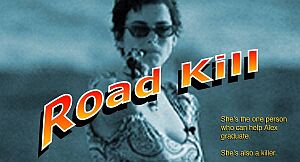 Advertised with the fetching slogan, “Guns don’t kill people – she does”, this is a film about a film, specifically the graduation documentary being made by Alex (Palladino), who has the good fortune to live opposite hitwoman, Blue (Rubin). She just happens to be going on her final job, and agrees to let him and sound-man Lars (Jayne) come along. On the way, however, things come out of the closet about Blue’s background, and Alex finds himself crossing the line between documentarian and instigator.
There are certainly good ideas here, but not enough to keep you interested – Alex is a bland, uninteresting character with little to reveal beyond him almost becoming a pro-baseball player. Blue is better, but the details and mechanism of her job, its origins and her motivations are never made clear either. Lars is actually the most interesting character, a flakey artist with lactose intolerance, who doesn’t believe in daylight saving time. Lovely. There’s also a loan shark who specialises in student loans and a barman missing a toe. Oh, if only Alex were half as entertaining.
 Rubin, given the chance, does a good job, though it’s only in the final confrontational scene that we get to see what she is really capable of doing. Until then, the job of assassin seems little more interesting than that of a travelling salesman – she drives cross-country, pop-pop, and drives home again. It’s all rather too prosaic, making it hard to see why Alex (or, indeed, the viewer), would want to get so involved. It certainly isn’t the glamour or the excitement.
Dir: Matthew Leutwyler
Star: Jennifer Rubin, Erik Palladino, Billy Jayne
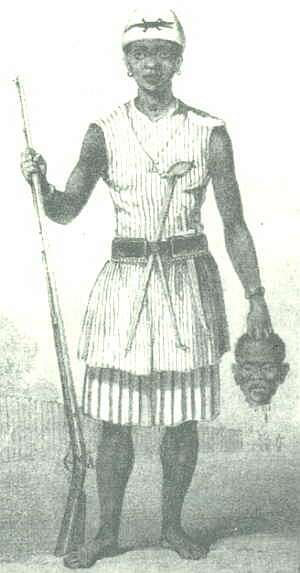 Back in the mid-19th century, the West African kingdom of Dahomey had a singular army, led not by men, but by women. Even now, the “Amazons” of Dahomey represent an almost unique fighting force, the only confirmed case in history where the best soldiers in a male-led society were female. Their origins date back to rules forbidding men from being in the royal palace after dusk, leaving women to act as palace guards. When King Gezo took the throne in 1818, he was so impressed by the loyalty of his female protectors that he made them his army’s elite. So they remained, as many as 8,000 of them, until wiped out at the century’s end by vastly better-armed French colonial troops. Even then, they commanded respect. “These young women were far and away the best men in the Dahomeyan army, and woman to man were quite a match for any of us” – and this wasn’t any regular French soldier writing, but a member of the elite Foreign Legion.
 After thirty minutes, I was toying with the idea of giving this the first ever 0 star rating. On that basis, eventually creeping up to two counts as something of a miraculous recovery. The heroine is an alien, transporting her child across the English countryside, while being pursued by white-masked hunters. There is almost no dialogue, which is so obviously a penny-pinching device it hurts – the video stock and woeful “martial arts” don’t help.
 This is probably the first WWF bio from a wrestler who never won the world title. Yet Chyna made her mark, largely through her abandoning the T&A of the women’s division, to take on the likes of Triple H and Stone Cold. This would seem to be an interesting angle, from which to report. So why is the result so goddamn…well, whiny? Part of the problem is that any wrestle-bio has to compete with the genius which was Mick Foley’s first book, Have a Nice Day – for insight and sheer good humour, it’s almost impossible to beat. Yet that doesn’t mean you shouldn’t bother trying. Chyna, on the other hand, runs out little more than a “woe is me!” tale about what a horrible life she had, all the way from her childhood, up until the WWF plucked her from obscurity to make her a star.
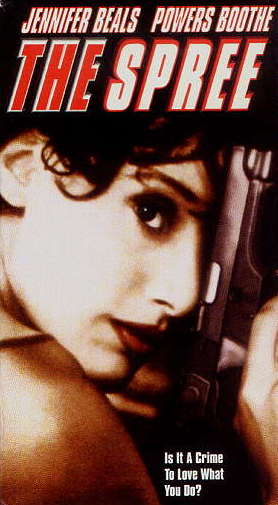 Good films about women burglars are hard to come by, for some reason. Mind you, good films about
  I guess Blood Sport was already taken? It’s softball beauties vs. rednecks after: a) the visiting ladies thump the home side 17-2, b) the team owner has to extract his fee at gunpoint, and c) the gals resist – forceably – the crude advances of the locals. Before you can say, “duelling banjos”, they’re being pursued through the woods, and picked off one by one.
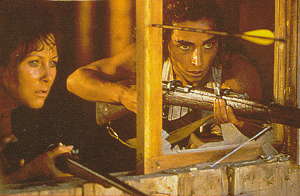 Playing Babe, daughter of team owner Ross Hagen, Laura Albert is about the only one of the girls to make any impression as a character; she’d go on to become a stuntwoman, working on the like of Starship Troopers. The rest of her colleagues take showers, get assaulted (a sequence verging on the nastily gratuitous), die, turn psycho and take revenge, all without exhibiting any significant personality traits. Quite an achievement in itself. Another one of those movies which will put you off going to rural, Southern parts of America.
 This comes from Vista Street Entertainment, whom you might remember produced some of the worst entries in the
  If I ever become an evil overlord, I will conduct thorough background checks on all entrants to my martial arts tournament, to ensure they are not related to anyone I may previously have had killed. I will also teach my guards that if a prisoner is apparently not in his cell, they will use mirrors to examine all its corners, rather than rushing in and allowing him to drop from the ceiling onto them.
 Worthy of note as one of the first pieces of anime made available to an English-speaking audience, (not long after its original 1985 Japanese release), BGC is set in 2032, when Tokyo has been rebuilt, post-earthquake. The Genom corporation are fiddling with Boomers, biomechanical robots of immense strength but with a nasty tendency to run amok. Standing guard are a mysterious team, the Knight Sabers, with their own technological strengths, who alternate between merc work and more altruistic concerns.
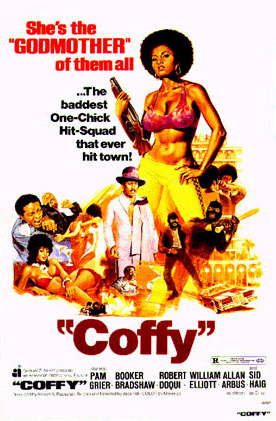 Neither star Grier nor director Hill were exactly strangers to the world of exploitation when they made this, but their combination here created a whole new subgenre, crossing action heroineism with black cinema. Following her would come Foxy Brown, Cleopatra Jones and the rest, but let it be said, Coffy was the first of any significance.