



 ★★★½
★★★½
“Hammer time!”
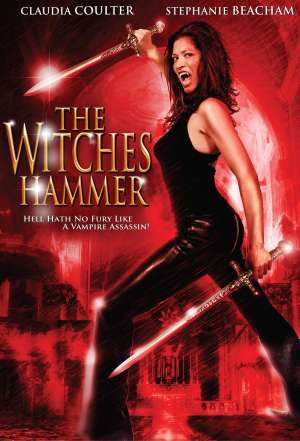 If never quite escaping its low-budget roots, or producing enough compensations or fresh imagination to make you forgive them, this is a robust enough vehicle and a decent entry in a sadly-small sub-genre: British girls-with-guns. It’s perhaps closest to the 1998 movie, Razor Blade Smile – which I really should get round to covering here, except it was pretty freakin’ awful. Similarly, Hammer involves a vampire assassin, though you can also lob in a shedload of other influences, conscious or otherwise, from Buffy, through Nikita to Bloody Mallory. If originality is not the movie’s strong suit, it is at least stealing from some of the best action heroines.
Rebecca (Coulter) is resurrected from the dead by a secret (government?) program, Project 571. They turn her into a vampire, giving her enhanced speed, reflexes, strength, agility, etc. – with the downside that she’s explode into flames if she goes out in daylight. After one assignment, she discovers her handlers have been killed, but is contact by Madeline (Beacham), who runs the imaginatively-named Project 572. Together with sidekick Edward (Sidgwick), she is sent to retrieve a mystical tome a the necessary first-step to slay the head vampire, Hugo (Dover), who… Ok, I’m somewhat hazy on the specifics, but he’s the bad guy, alright? Rebecca has to martially-art her way through an ever more dangerous series of witches, vampires and self-replicating ninjas (I assure you, it’ll make sense when you see the movie, to the point where you’ll probably go, “Oh! Self-replicating ninjas! That’s what Jim meant…”) until the final encounter with what a certain action heroine would certainly call The Big Bad.
Pluses? It’s actually shot on 35mm – while HD video has become the staple of low-budget cinema, it still doesn’t have quite the same feel as film, and the atmosphere here benefits as a result. Stephanie Beacham is magnificent, possessing a calm assurance that is marvellous to watch: she breezes through her scenes like a galleon at full sail, befitting her status as a genre icon. And the little and large duo of vampire, Oscar and Charlotte, are entirely endearing – their moments of comic relief work very nicely. [The idea of a midget vampire has been used before, as anyone who saw the truly appalling Ankle Biters will know.] The digital effects are nicely done too, with the vampires collapsing into a shower of glowing sparks, in a way that would also gladden the heart of Sunnydale’s favourite slayer.
 Minuses? There’s a certain unevenness of tone which doesn’t quite work. At various moments, the film wants to be exciting, poignant, self-aware, slapsticky and dramatic: these individual moments work with varying degrees of success, and the combination, with the frequent gear-changes which result, occasionally seem clunky. Camp also needs to be played completely straight to work, and that isn’t always the case here. Hayes is over-fond of flashbacks: there are at least four here, and that’s probably three more than are necessary, with the only truly significant back-story belonging to Kitanya, the Russian witch who supposedly wrote the Malleus Maleficarum, the magic book which everyone seeks. As noted above, Eaves doesn’t really bring much new to the show: if you can find a review that doesn’t mention, say, Blade, your Google-fu is stronger than mine, and it is a very obvious comparison.
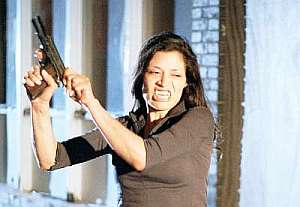
Coulter is acceptable in the central role – she reminded me most of Yancy Butler from Witchblade. She just doesn’t have quite the right attitude for a supposedly ruthless killer: Olivia Bonamy, in Bloody Mallory, brought the appropriate level in such things, such as her gloves with FUCK EVIL on them. Coulter is a shrinking wallflower in comparison, and this is shown in a sequence where she’s rescued from a morgue by one of her Project 571 colleagues. Rebecca clings on to the sheet with an obvious death-grip, rather than showing any skin, almost keeping it up to her neck. Hard to imagine a stone-cold assassin caring too much about nudity in front of another woman, and a less coy approach would perhaps be more appropriate.
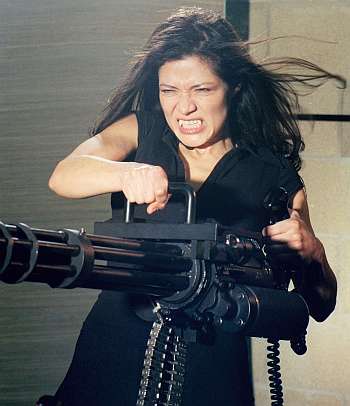 The action is solid, if generally short of spectacular. There doesn’t seem to be much doubling of Coulter – or if there is, it’s not obvious. She get to use a selection of weapons, which adds a nice sense of variety; from swords through staffs to the F-sized rail-gun pictured top left (even if the cartridges being ejected were rather too obviously digital), Kris Tanaka was the action choreographer, and also appeared as one of the vampires near the end; it’s clear he knows his stuff. I’m not quite so sure Eaves does, as the editing of the sequences – for which he is also responsible – seems to be choppy and occasionally difficult to follow, though not to the level of MTV-style editing, the bane of my life as a viewer.
This was probably better than I expected it to be. The low-budget is not often obvious, and there are enough moments of charm to tide you over the less successful elements and make up for a certain lack of genuine freshness. Finally, despite the director’s protestations to the contrary, I’m still fairly sure there’s an apostrope missing from the title, which would only be grammatically correct in a context such as “The witches hammer at the door.” Eaves claims the apostrophe-less version is an accurate translation of Malleus Maleficarum, let’s just say, Wikipedia begs to differ. It probably doesn’t matter as much as I find it does, but while we can expect apostrophically-chalenged titles from Hollywood (I’m looking at you, Two Weeks Notice), good grammar costs nothing. ;-)
Dir: James Eaves
Star: Claudia Coulter, Jon Sidgwick, Stephanie Beacham, Tom Dover
 ★★★½
★★★½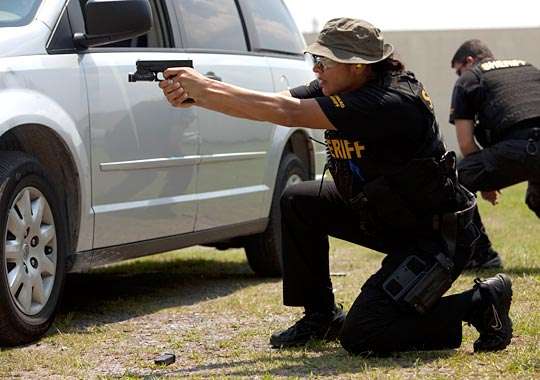 Twenty years ago, Cops debuted on Fox, and has become a part of the cultural landscape, leading to an avalanche of spin-offs, ranging from the serious to the complete spoofs (Reno 911 being the most notable). The very first episode took place in Broward County, Florida and, two decades later, the latest in the field returns there. PoBC, as I’m going to refer to it for obvious reasons, follows four women members of the Sheriff’s Department there, both at home and on duty, as they take down the bad guys and deal with the public.
 Despite Murillo’s unquestioned position as Empress of Lip-gloss, it’s blonde, blue-eyed Penoyer who is the glamour queen of the show – though the illusion is somewhat damaged when she starts yelling commands at suspects in a voice that’s probably the audio equivalent of getting Tazered. Though as she points out, such an attitude is necessary: “When someone walks in a room and you got a cop who is 6’5″ and 300 pounds, he looks intimidating. So we have to act intimidating: we have to be very, very serious and let people know we’re not playing around.” Well, not all the time, anyway. We also get to see Penoyer and her policewomen friends shopping for guns, and relaxing on the beach. In their bikinis.
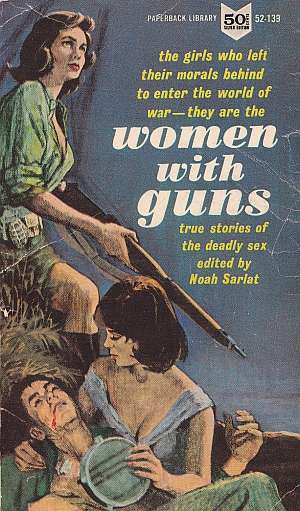 The tender sex – and the terrible things they can do. Violence, savagery, sudden death on the battle field, torture and butchery behind enemy lines – these are the facts of war. It is a man’s world… but what of the women trapped in it? What of women such as:
  Michael Dublin (Ortis) is a wheeler-dealer, swinging between fixing underground fights and selling dodgy auto parts as need and opportunity arises. When the latter goes wrong, causing the car to explode rather than go faster, he is rescued from a beating by Katherine Parker (Neuenswander), a girl who easily disposes of the attackers, giving Dublin an idea. Instead of rigging the bets by getting good fighters to take a dive, what about winning with someone like Kat, who can win straight-up, but on whom no sane gambler would ever wager? Initially, things go as planned, despite her qualms about being labelled “Kid Vixen”. But Dublin’s reputation precedes him, and he is requested by Richter (Hanover), who runs the underground ring, for his fighter to lose a bout. Ok, “requested” might be the wrong word there. However, Kat is having none of it, leaving her manager with a very difficult choice to make, and choices have consequences.
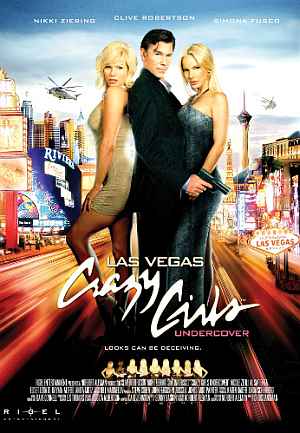 Written and produced by the man behind the ‘Crazy Girls’ topless revue at the Riviera in Las Vegas. Really, that’s about all you need to know: much like most Vegas shows, it’s quite shiny and glossy, but if you look behind the surface, it doesn’t have any real heart and possesses no brain at all. It centres on Damon Archer (Robertson), a freelance CIA operative whose day-job is running said revue – I dunno, but I always thought these shows consisted of more than five women [mind you, all I know about such things was learned from Paul Verhoeven’s epic]. They are investigating shady arms-dealer Hamid Marzook, a man with terrorist links who, it turns out, was previously responsible for the death of Archer’s wife and child. So, it’s personal as well as national security being at risk, with the terrorists seeking to detonate a bomb on Las Vegas Strip [though let’s not get involved in why Archer calls it a “chemical bomb”. Merely containing chemicals – half a ton of nitrates – does
  Despite being directed by the same man as part one, this is only tangentially-connected to the first two films. The most obvious difference is no Shin Eun Kyung, who was the glue that held those movies together. Instead, as noted above, there is no wife at all: Shu Qi stars instead, as Lim Aryong, a mobster’s daughter forced to flee Hong Kong after her apparent involvement in murdering the leader of a rival gang. She goes to Korea and is put under the protection of Ki-Chul (Lee), a fairly crap mobster whose sole qualification for the job is a few words of Chinese. However, his star begins to rise and he develops a tough-guy rep: it’s really Lim who is responsible, but the local criminals would rather credit Ki-Chul than admit they got their asses kicked by a girl. Eventually, her hiding-place becomes known, and a team of vengeful assassins is dispatched to Korea to take care of Lim.
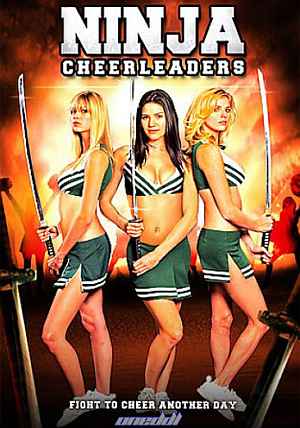 Probably half a star should be taken off if you’re not a fan of really bad movies like us, for this is a bad movie. Really. Let me begin with a straight-faced recap of the plot. Courtney, April and Monica are junior college students who are trying to earn the quarter-million bucks necessary for them to go to an Ivy League college. They earn this by go-go dancing at a strip-club, Their plans are thrown into disarray when the owner of the club (Takei), who has been looking after their savings, is kidnapped by the mob. Fortunately, he is also their martial arts sensei, and they just qualified as ninja. Can they rescue him, get their cash back
 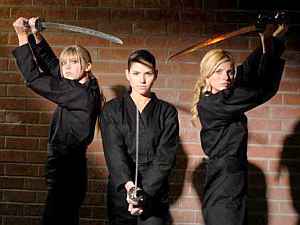 The action isn’t exactly breathtaking either, with the ninja costumes used to conceal body-doubling [save in Takei’s case, where it’s pretty damn obvious]. As a result, it’s never exactly convincing; while there are a couple of fights where the girls have to take on various low-level Mafia people, it’s only at the end, when they face Kinji, that things are interesting. And it’s kinda odd to have the bad girl outnumbered three-to-one by the heroines, which just doesn’t seem fair. Overall, it just about scrapes by if you find it as a freebie on cable. Spending any more than ninety minutes of your time on this is probably not recommended.
 Ayane tries out for the All-Japan Women’s pro-wrestling federation, but is rejected. However, on the way home, she meets a mysterious trainer, who recruits her for his indie group, promising that if she does well, AJW will likely pick her up. What Ayane doesn’t know, is that her trainer has no interest in pro-wrestling, but wants to use our heroine’s lethal leg skills to make her a kick-boxing champion. Ayane eventually discovers the truth, literally in the ring at her first bout; after the inevitable struggles, she wins, in spectacular style, but vows to quit the sport. However, her victory grabbing the headlines infuriates a rival, who turns up at Ayane’s school to issue a challenge. Which is not good, since the vice-principal is just looking for an excuse to expel her.
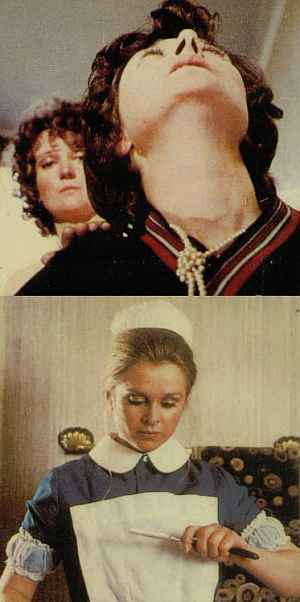 An intriguing premise is ground into the dirt, with execution which could hardly be more tedious. An agency of hit-women are run by an antiques dealer (Reed), taking on clients from all walks of life, who can use the skill-set of her assassinettes. Flaky business partner? No problem. Trapped in an unloving marriage? Will that be cash or charge? It’s imbued with a curious degree of social commentary, as the scenes are intercut with newspaper front-pages, intended to convey the impression that 1976 society is on the edge of collapsing into predatory carnage, anarchy and chaos. Which, in the post-9/11 world, really seems more quaintly ironic than remotely threatening.
 Shirow has certainly done his fair share of anime works that are regarded as classics – his best-known creation is probably Appleseed. This is from relatively early in his career; indeed, coming out in 1991 made it one of the first anime to be ‘properly’ distributed in the West [and, by that, I mean subtitled and not cut down for a child audience]. It centers on the titular pair of military androids, who are released after their transport craft goes down in the middle of a forest. The army cordon off the area, which draws the attention of Sybel (Sakakibara), a reporter, unwilling to let anything stand in the way of her story. She witnesses a hellacious fire-fight in which one ‘droid is destroyed, while the other escapes, and discovers the goal for the android is to kill the inventor’s young grand-daughter, Ferris. As the only person who knows the current location of the daughter, it’s up to her to save the child.