




★½
“The world’s first Christian soft-porn ninja film. And probably the last.”
This one is so obscurist I couldn’t even find an IMDB entry for it, despite a fairly high-profile release from Tokyo Shock. I can perhaps see why. It’s more an excuse for a series of coupling, mostly involving Hara, who has gone on to greater fame in the 3-D Sex and Zen movie. She plays a blue-eyed ninja called Hijiri. She gets frames for the theft of a scroll which can be used to gain immortality, and ends up falling off a cliff. She is nursed back to health by a Christian named Seitaro (Yoshioka), but their peaceful existence is threatened, as the scroll’s previous owner sends out minions to retrieve it, and another religious sect also vows to convert adherents to the ‘heathen’ religion, by any means necessary.
So many problems here, not least that no-one involved in this can fight their way out of a paper-bag, in particular Hara, who manages to block full swings from samurai swords with something better suited for opening envelopes. There’s a whole subplot about her mother also being a ninja, and abandoning the heroine for her own protection, shortly before she was killed, which has left Hijiri with issues. It is not very interesting, and serves largely to provide the McGuffin necessary for the final battles, when she has to take on the “Saint” at the head of the rival sect, and defeat someone who has read the scroll of immortality.
It deserves some credit for the blue-eyed ninja idea – Hijiri’s father was a Portuguese trader – and it’s got an unusual take on both xenophobia and religion, unashamedly depicting Christians as the good guys [while I’m agnostic, I appreciate seeing something you rarely get, even in the West]. However, it’s executed with such a complete lack of skill, as to have me reaching for the fast-forward through significant chunks [and I confess to actually using it in the sex scenes]. Despite my summary up top, there is apparently a Part 2 of this knocking about. It’ll likely be quite some time before I can be bothered to review it.
Dir: Jiro Ishikawa
Star: Saori Hara, Mutsuo Yoshioka, Akari Hoshino
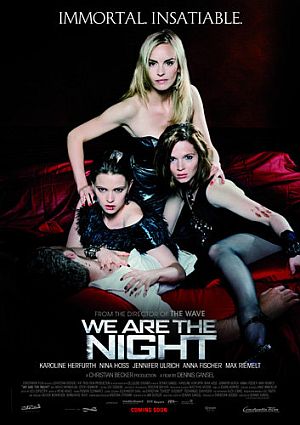
 Lena (Herfurth) lives on the edge of society: stealing from other criminals, and running from the cops. But her life changes forever, when she comes to the attentions of Louise (Hoss), a rich socialite, who runs with her pack of friends. Louise is actually a centuries-old vampire, who sees something in Lena’s eyes, something for which Louise has been searching for many decades. She bites Lena, and her transformation into a creature of the night begins. It’s not without its issues: to force Lena to come to terms with her new-found strength and speed, she is handed over to a pimp, a scenario which turns into a blood-bath. While Lena does adapt, the police investigate the killings and Tom (Riemelt), who knew Lena from her street days, realizes there’s a connection between her and what happened.
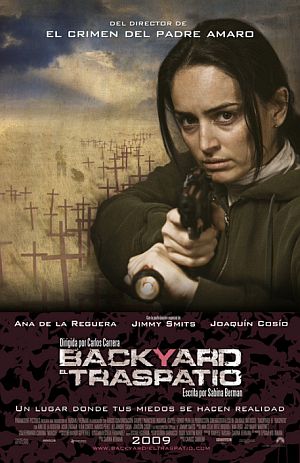 The US border is all that separates El Paso, Texas, from Ciudad Juarez in Mexico, but the two cities’ ways of life are worlds apart. On the Mexican side, the bodies of women turn up, almost every week: sexually assaulted, with signs of torture and/or body parts missing. The police barely bother to investigate; the victims tend to be far from home, low-paid workers in the factories which drive Juarez’s employment. Into this comes police captain Blanca Bravo (de la Reguera), who vows to track down the perpetrators. But doing so pits her against the multinationals who could do without the bad publicity; against her commander, who says to her face that “women make good nurses, but lousy police officers”; and state politicians, who are uneasy about exactly what she might uncover.
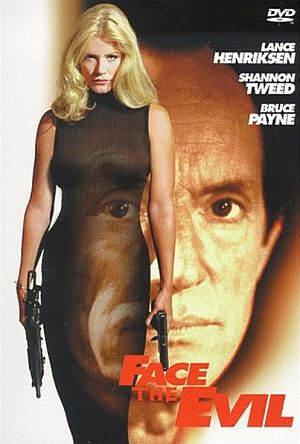 In many ways, this is a shameless rip-off of a shameless rip-off, trying to recapture the success of the original. It’s not quite as successful, lacking the gleeful sense of energy which help its predecessor overcome its (obvious) limitations. Once more, Tweed plays action actress Sharon Bell, this time filming her latest work in Eastern Europe. She arranges for the film to do some location work in a gallery owned by sister, Bobbi (Heitmeyer), which is just about to open an exhibition, showcasing artefacts that were looted by the Nazis in World War II. The gallery is taken over by Eric Dane (Henriksen) and his crew, who seal the place off from the outside world, intent in stealing a lethal German nerve agent hidden in the base of one of the sculptures. Unfortunately, inside at the time are both sisters, along with the movie director Jack Terry (Payne), who is scouting the place out.
 An almost-entirely shameless Die Hard rip-off, this stars Tweed as Shannon Bell, the host of a beauty-pageant, which is interrupted by Oz (Clay) and his gang, who take a half-dozen of the beauty-queens and Bell hostage, up in the penthouse, and demand $10 million in diamonds for their release. Bell manages to slip away and, fortunately, her character is an actress, famous for playing action heroines [yeah, it’s all a bit ‘meta’ – except, it came out in 1992, largely before ‘meta’ became popular…]. So she gets to go all John McClane on their asses, crawling round air-ducts and assisting ex-federal agent Crane (Davi), who was bodyguarding one of the participants, who is a politician’s daughter, but popped outside the building for a fortunately-timed smoke.
 I think this really comes down to a question of managing expectations. Hearing this was a film based on the life of Monica Proetti, Canada’s premiere female bank-robber, responsible for 20+ hold-ups before being gunned down by the cops… Well, seems like plenty of potential for action, doesn’t it? The reality is less concerned with the robberies, than the events which lead up to them. Monique Sparvieri (Bonnier) lives in the Montreal slums, working part-time as a hooker, for fun and profit. Her first husband Michael (Schorpion), is a safe-cracker who vanishes after his planned robbery is snatched from under his nose. She then hooks up with Gaston (Huard), another member of the team, and begins her own life of crime. When he is sent to jail in the mid-1960’s, she is left with limited options to provide for her children, and goes full-bore into the banking business, with yet another lover, Gerald (Dupuis).
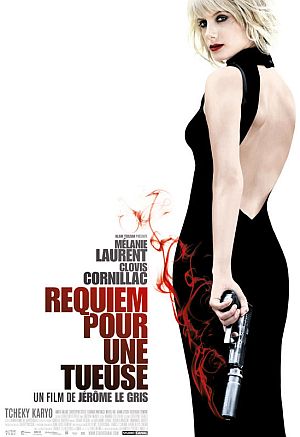 The French have a decent pedigree of action heroines, going back to Joan of Arc. Cinematically, the likes of Bloody Mallory, Adele Blanc-Sec, and one of the most influential of them all, Nikita, have kept the tricouleur flying. This is closest to the last-named, with Lucrece (Laurent) fed up of the assassin game, but talked into that old standby of the genre, one final mission, by her agent (Karyo, who of course was also in Nikita). This involves posing as a classical singer and taking part in a performance of Handel’s Messiah. For the target is the bass singer (Stills), whose Scottish distillery occupies land an oil company wants for their pipeline. Lucrece is pretty disenchanted with the whole thing, and this may explain why her early attempts mis-fire. Fortunately, the special agent (Cornillac) sent to track her down, is equally as unenthusiastic. But is Lucrece the only killer in play?
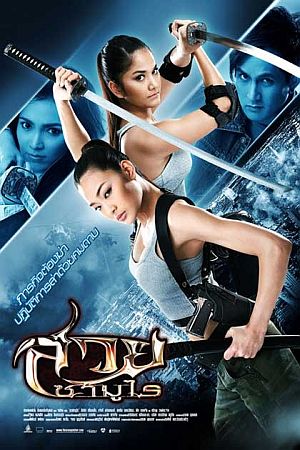 Thailand appears to have become a hot-bed of action-heroines in the past couple of years. Jeeja Chocolate Yanin is obviously a key component, but others appear to be leaping on the bandwagon: this one plays like an entry in the Angel series, a Hong Kong classic in its day. Unfortunately, so little effort is put into explaining what is going on, or who is doing what to whom, that the copious action feels like a showreel for participants. Both Chris and I nodded off for a bit in the middle, which is about the worst condemnation any action film can receive. Hence, I turn to Amazon.com for a synopsis.
 66% extra free! That’s the major difference here, as five, rather than three, little girls, who get their orders from an unseen “boss” and his faux Bosley, take on a variety of disguises and kick butt, in between romantic dalliances. Of course, with a budget approximately one-eightieth of the Hollywood version, certain economies have to be expected. But there are unexpected bonuses in the lunatic invention department, such as the when the villainous henchmen drops a cage, out of nowhere, onto four of our Angels, only for the fifth to come to their rescue, for no apparent reason either, in a
  In a dark, grim future, Michelle (Ling) is an assassin, taking out DNA hackers for pay. However, her income is drained as fast as she earns it by her Jackie (Shen), her brother, who has a gambling addiction. To try and pay off his mob debts, he breaks into the apartment of their next-door neighbour, Christian (Newman), a renegade DNA hacker himself, and steals a device on which he was working. The “transcoder” can take a subject’s DNA and, more or less, rewrite it, thereby having the potential to end disease – yet it could also be turned into an enormously destructive weapon. Needless to say, when word gets out that Jackie has this device, everyone wants to get their hands on it.