★★★★

 Ten years after Maggie Q got her career as an action heroine kickstarted with Weapon, and twenty after Killer rampaged its way into cult status, Jennifer Tse takes over – bearing more than a passing resemblance to her predecessor, I think. I think it’s kinda cool how the series gets revisited every decade, regular as clockwork: maybe famed producer Wong Jing has a house payment to make or something? Admittedly, there’s not much more than a tangential connection between the entries; three different directors, three different stars, and not much overlap in terms of plot. However, they still share a common approach, fetishising the female form and the act of assassination, with no shortage of style, and are the longest-running (in terms of years) GWG series around.
The story of this third installment opens with a prologue from 15 years ago, when Interpol agent CK Long (Sammo Hung) intercepts a $35 million shipment of drugs. As punishment, its owners unleash Madam Rosa and her killers on him, as he enjoys a nice family Christmas in Florida: most of his relations are killed, Long barely escapes with his life as his house is blown up, but watches as his daugher is whisked away by Rosa, to be brainwashed and trained as one of her army of assassins. Back in the present, Rosa is now sending our her minions to kill the five leaders of a proposed international drugs cartel. Long is assigned to the cases, because of his familiarity with the way Rosa operates, and is startled, to say the least, when DNA testing shows one of the killers appears to be his long-lost daughter. Not as startled as he will be, when she turns up in his apartment, with murder in mind. Naturally, his investigating partner (On) meets Phoenix in her undercover role as a student, and falls in love with her, at a speed only ever seen in movies more concerned about action than relationships.
There’s a lot to enjoy here, not least the presence of Hung, who has always been an under-rated talent in my eyes. He’s pretty damn sprightly for a 60-year old: a step slower perhaps, but there are still moments to treasure here, such as the chopstick duel with his other daughter. He served another important purpose here: for my wife, his early presence legitimized watching a film called Naked Soldier, which I suspect might otherwise have led to some dripping sarcasm – even though she remembered and enjoyed Weapon, and as in its immediate predecessor, the actual nudity in this is confined to the title. There’s another veteran of HK cinema who shows up at the end. While I’ll avoid spoilers, it was someone whom we were equally delighted to see – even though he was single-handedly responsible for putting Chris off Chinese food for a year!
However, these are supporting roles and here, we’re more interested in how Tse and the other ladies acquit themselves. And there are a number on both sides, even if, early on, things do move relatively slowly into gear. Despite token male killer, Black Dragon, Madam Rosa still has her admirable fondness for female assassins, and we see them in action early on as Ivy, Selina (Beilke) and Phoenix carry out their missions in a Vegas hotel, boxing gym and at a funeral respectively. [Selina’s viciousness is quite belied by her final haircut, which appears to have come straight from a Flock of Seagulls fan convention!] One of their targets is an ass-kicking Thai gangsteress, who teams up with a gay Dutch guy against one of the assassins, in a nice handicap brawl at a boutique.
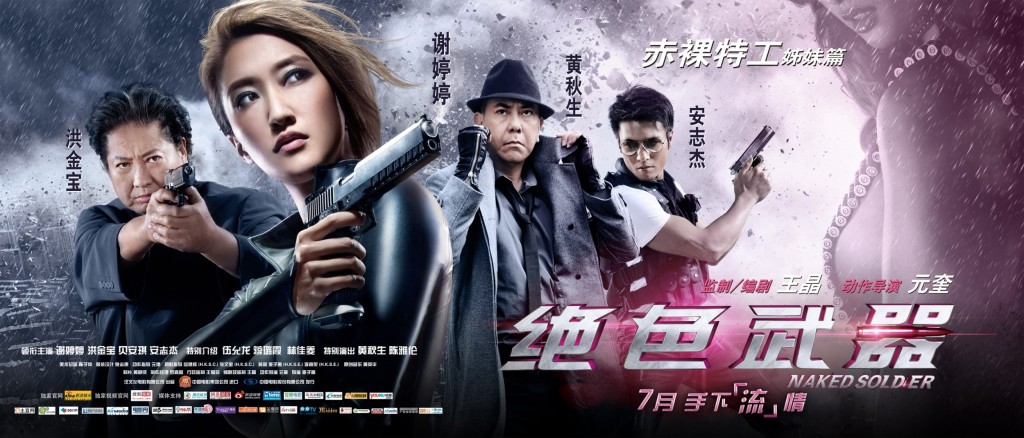 It’s mostly the end, when Long, his daughter and Phoenix head off to Madam Rosa’s island, that things really kick in, as it turns out that betrayal is a two-headed beast. There, we get an excellent series of battles: one-on-one, two-on-one, many-on-one, that mor than make up for the relatively relaxed pace over the first hour or so, and feel like a throwback (not least becauge of Hung’s presence). Corey Yuen does the action: his track record speaks for itself, with solid action heroine entries such as So Close and D.O.A. on his resume, and this would be another. There’s plenty of variety and invention on view, up to and including the climactic battle between Phoenix and her nemesis, on one of the lethal training apparatus in Rosa’s lair.
There are some negatives, not least Long’s daughter, who serves little or no purpose beyond unfunny comedy, and appears to be played by an actress significantly older than she needs to be. And certainly, aspects of this don’t make much sense. For instance, why did Rosa’s efforts at revenge take a sabbatical for 15 years, after having killed everyone but her intended target? Or why are proceedings supposedly set in 1995, when it obviously isn’t 1995, for example, the tech everyone uses? However, there’s nothing a genre fan won’t be able to overlook, and plenty they’ll be able to appreciate, making this a worthy entry in the series: I wouldn’t mind if they skipped the 10-year waiting period for the next entry. Failing that: roll on, 2022!
Dir: Marco Mak
Stars: Jennifer Tse, Sammo Hung, Andy On, Ankie Beilke




 There seem to have been a spate of these recently. Not just zombie flicks – though there’s been no shortage of those – but zombie flicks set in or around strip clubs. This is the Japanese take, and follows more or less the expected pattern of such things, combining nudity, violence and self-awareness in varying degrees. At least initially, this is definitely leaning towards a 70’s, grindhouse aesthetic, but after a few minutes, that aspect vanishes, and never really returns. Instead, it’s a fairly straight-forward tale of a motley crew of stereotypical strippers, e.g. the money-hungry one, the intellectual one (who quotes George Bataille), who work at a pretty crap club in a spa town, but who find a tunnel leading across the street, which brings them to a book of dark magic and a well containing an apparently infinite supply of zombies.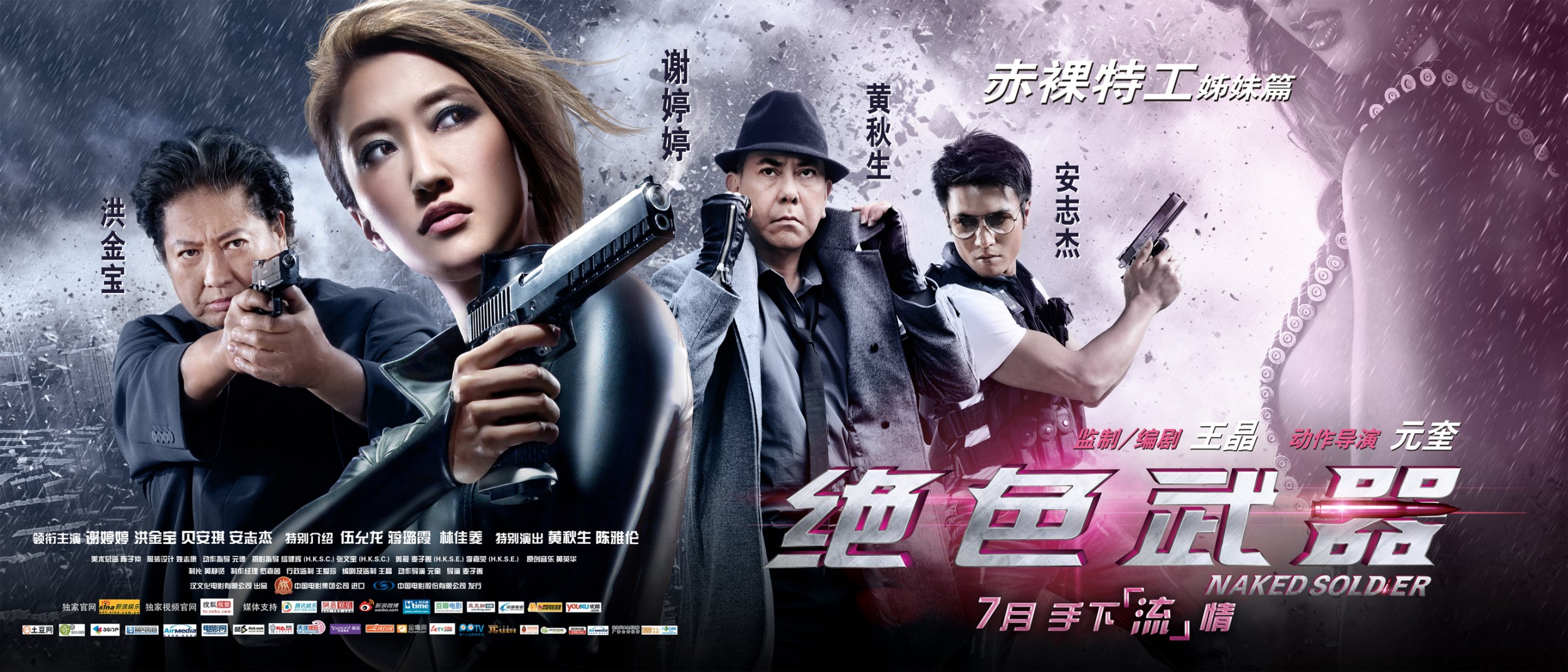
 Ok, it has become the biggest-grossing action heroine film
  Two gangsters are having a discussion in a sauna, when they are brutally attacked by Raina (Katic), the former girlfriend of one. The Mexican is almost decapitated; the other, Greek mob boss Virgil Vadalos (Berenger) is gutted, but survives. He vows to track down his ex-squeeze and unleashes his forces to do so. They include the near-psychotic Lee (Biehn), who has just returend from London with an even more insane sidekick, plus dirty cop Beck (Sloan), who owes Vadalos a favour, and is involved in the investigation from the inside. Keeping those aspects separate becomes more difficult, as the waters become increasingly muddied as more bodies show up, murdered with the titular weapon, the Mexican’s colleagues plot their own revenge, and there’s also the tricky matter of several million dollars in cash which has gone missing.
 Cherry (Julin – yep, that appears to be her surname) is a stripper, whose life takes a turn for the worse when she is assaulted by five customers in a private room at the club where she works. The cops aren’t able to do anything, so she takes the law into her own hands, with the help of her brother (Rodriguez), who accidentally kills one of the perpetrators when he goes to demand help with Cherry’s medical bills – no prizes for guessing how that request goes. As the others realize someone is out to get them, and who that someone ins, they hire Bull (Hackley), a gigantic hitman, to stop Cherry before she gets to them.
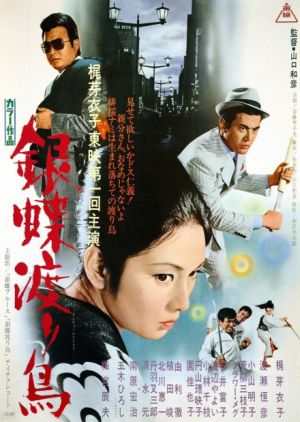 Nami is sent to jail for killing a Yakuza boss, and when she is released, returns to the Ginza district of Tokyo to live with her uncle, who runs a pool hall. She gets a job as a hostess in a bar, with the help of her new friend Ryuji (Watase), but the quiet life doesn’t last for long, even as she tries to help the widow of the man she killed – whose petition on behalf of Nami is what helped lead to her early release. For the local mob, in the shape of Okada (Nanbara) and his gang, are sniffing around the bar, seeking to take it over. To settle things, Nami offers to take on Okada’s champion at billiards, a challenge the gangster readily accepts, not realizing he has just been hustled, and that Nami is no mean player herself. Can she win – and even if she does, will Okada live up to his side of the bet?
 Cassie Naylor (Wareing) is struggling to keep her head above water on the farm she’s now running almost single-handed, eight months after her husband vanished. What the locals don’t know is that she buried him in a remote spot on the Derbyshire moors, with the help of part-time farmhand Cooper (Bradley), for reasons not initially clear. The arrival of a transient, Aden (Regan, looking not unlike a rougher version of Gerard Butler), seems like a godsend, and they agree he can work in exchange for food and lodgings. However, it’s not long before Aden’s less-desirable tendencies start to show through. While he’s fiercely loyal – dispatching anyone whom he perceives as a threat – he seems to regard Cassie and her two daughters as “his” family, and seems to know rather too much about them.
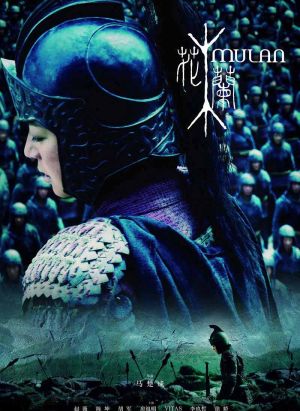 Inspired by the same poem as Disney’s much-loved feature, this has the same basic idea – a young woman impersonates a man in order to save her father from being drafted in the army. However, this takes a rather different approach, being much darker in tone, not that’s this is much of a surprise, I guess. It’s also a lot longer in scope, with Mulan (Zhao, whom you may recognize as the heroine/goalkeeper from Shaolin Soccer), rather than fighting a single campaign, becoming a career soldier and rising through the ranks as a result of her bravery in battle, eventually becoming a general, tasked with defending the Wei nation from the villainous Mendu (Hu). He has killed his own father in order to take control, and has united the nomadic tribes of the Rouran, amassing an army of 200,000 to invade Mulan’s home territory. She comes up with a plan to lure him into a trap, but when she is betrayed by a cowardly commander, things look bleak indeed for Mulan and Wentai (Chen), one of the few who know her secret.
 Five mountaineers are exploring the remote Scottish highlands, when they stumble across an underground box containing a terrified, near-dead young girl who speaks no English. Two of the party are sent, by the most direct but not child-friendly route, back to civilization to get help, but it’s not long before they discover the parties who buried the girl are not too happy with her removal. For they are two kidnappers, Mr. Kidd (Harris, who also plays a psychotic killer in The Borgias) and Mr. McRae who are negotiating with her father’s emissary, Darko (Roden) to pay the ransom, not aware that Darko has hired some ex-soldiers to resolve the matter. Having lost the child, the pair set out to recapture her, and don’t care how many bodies are left in their wake.
 In the near-future, Japan is plagued by “engineers” – criminals who have voluntarily undergone genetic modifications, which not only mutate their bodies in bizarre ways, but give them near superpowers and the ability to sprout weapons from their wounds. To combat this, the privatized Japanese police force under their chief (Benny) has an absolutely no-holds barred policy of shoot first, ask questions… Well, don’t bother asking questions. Their top “engineer hunter” is Ruka (Shiina, whom you may recognize from Audition), the daughter of a police officer who was killed in the line of duty while she was just a young girl. She is tracking down the scientist behind the engineers, known as “Key Man” (Itao) because of the key-shaped tumours which trigger the mutations. But when they meet, he infects her – and also reveals the truth behind the deaths of both their fathers.