★★★
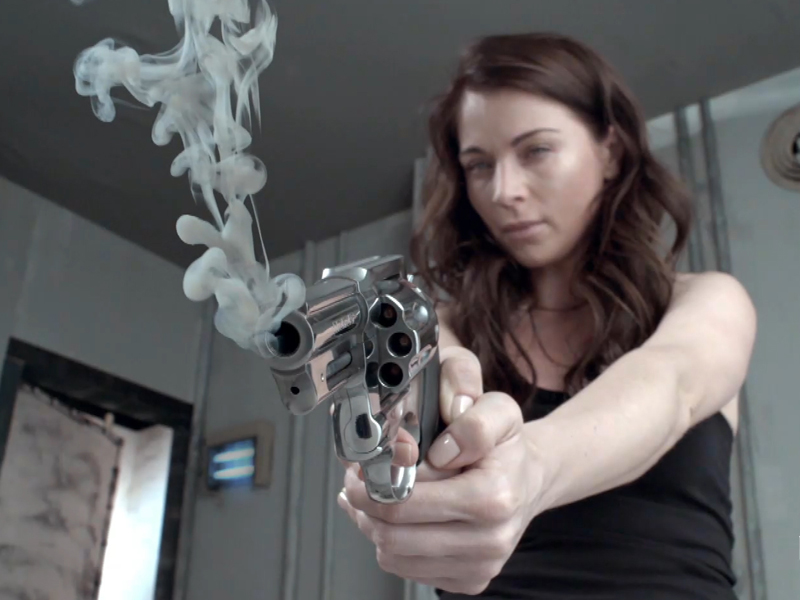
“The name is Bond. Lisbeth Bond!”
It’s always difficult writing about a new entry in the so-called Millennium series: the whole franchise always comes with so much baggage and you never know how much a reader is aware of it or not. But I will try to spare you as much superfluous information about the books and the legal right battles between Larsson’s relatives as possible. A lot of it was in the press already in 2009 when the first Swedish film of the now almost classic Millennium-trilogy, based on the famous novels of late journalist-turned-author Stieg Larsson, came out and then with the aftermath of David Fincher’s ill-fated remake of the first movie in 2011.
After seeing the enormous worldwide success of the original movies, Sony bought the remake rights to Larsson’s books with the intent to launch a new successful movie franchise. It’s difficult to calculate what Sony exactly expected but my feeling is they thought they would have their next Hunger Games or Twilight in their hands, including similar great financial turnovers. Unfortunately, their plans didn’t work out as Fincher’s remake, while well-reviewed, didn’t make as much money as hoped. Even their aspirations for awards failed, compared to the original movies, which won many prizes, with Noomi Rapace’s performance making her a break-out star all over Europe in 2009.
 In 2012 MGM (who had co-financed the movie) stated that the movie would have at least to have made 10% more to meet their expectations. Looking at the numbers, Fincher’s The Girl with the Dragon tattoo-remake cost around $90 million and made $103m in the US and a little bit over $230m world-wide. If you compare that with the original, which cost $13m (but according to Rapace, closer to $10m), with a world-wide gross of $100m. That may give you an idea what kind of disappointment the remake must have been for Sony and MGM. Why do I mention all this here? Well, I want to show how economic considerations can change an entire franchise and maybe even a main character. Because the results of the conclusions from these numbers, lead directly to this new movie, The Girl in the Spider’s web.
The big problem for Sony: They had paid good money for the film rights of the saga and already had David Fincher and screenwriter Steven Zaillian under contract for the planned two sequels. In the past it usually had been no big problem of taking a successful European movie, re-making it for an American audience and having an even larger financial success at the box-office. I think this kind of film-making model started somewhere in the 80s with French film hits like Three men and a Baby, albeit with some strange results e. g. My Father the Hero, both times with Gerard Depardieu being. [Sony did ask Rapace to repeat her role for the remake; she declined]
But times have changed and foreign films are much easier available, even to American audiences. What Sony perhaps did not consider was that the Millennium movies had already been seen by most of those people interested in them (even though in the US they played in the usual far-away arthouse cinemas. The films were even available in an acceptably English-dubbed version, if you were one of those people who couldn’t read or stand subtitles. So, for a large part of the audience this story was nothing new and – going from what I have heard about high American cinema ticket prices (I live in Germany) – were probably thinking twice about paying well-earned bucks to see the same story again, only spoken by American and British actors in a higher-budgeted, glossier version.
One of the reasons, Fincher’s movie didn’t do so well, may have been its release date. A movie advertised as “the feel-bad movie of the year”… is not very well placed at Christmas! Sony definitely has learned from this, starting their The Girl in the Spider’s Web in all countries either this October or November, a more appropriate time for darker movies. This year, it was a period which saw the release of Venom, Halloween and the Suspiria remake in cinemas. Sony also realized before the 2011 movie came out, that while people were aware of the upcoming movie, a lot of them didn’t plan on seeing it. This resulted in the studio releasing the first 8 minutes online, a desperate emergency measure.
While a large part of the female readership in the US loved to read the suspenseful novels, following the adventures of their heroine, they were perhaps less keen on seeing the character they identified with being raped on the big screen. The graphic content that is part of the Larsson-parcel is one thing between the covers, but a totally different matter to watch in a movie. I myself felt very awkward (and a bit ashamed) when watching the respective scene/s in the original movie in cinema in 2009. The simple fact is: The Millennium books are not “feel-good novels”. They are dark “Scandi noir“, strongly inspired by a lot of other dark crime novels of Scandinavian authors going back to the early 70s.
These stories very often feature acts of gross violence; realistic descriptions of destroyed corpses, long before American crime novels featuring crime-solving female forensics started doing the same; and social criticism that started somewhere in the early 70s. It also reminds me of the German crime-TV-series Tatort, where very often the social backgrounds of murderers were the focus, rather than the classical “Whodunnit”. Gone were larger-than-life investigators like Sherlock Holmes or the “big bad” who is evil incarnate.
Granted, Larsson’s novels still feature some of these classic elements. His books often read like a summary of every crime novel he ever read: according to sources he was very proficient in the crime novel genre, both the classics as well as modern. There’s some Silence of the Lambs creepiness in the first book; the strange mysterious heroine with incredible hacker skills and asocial behavior (a kind of modern female Sherlock Holmes-version for the new… millennium); a bit of rape-revenge-fantasy going on; some Agatha Christie-like puzzles; followed by Swedish secret service intrigues (inspired by real-life events of the early 70s), followed by a courtroom drama in the last book. And overall a big round-house kick against the so-called peaceful social state of Sweden.
 Larsson probably felt like a rebel, though he hadn’t really done anything others hadn’t done before him. But the strength and intensity of his attitude and convictions always did shine through his novels and were very well translated into the Swedish movies. The Fincher remake (probably because a lot of American audiences wouldn’t understand or be interested in it) left the social criticism out. Which is ironic, as this was probably the main reason why Larsson wrote his books in the first place.
The big problem was how to make a sequel for less money, that would make Sony’s investment finally profitable. Key, of course, were the overly large payments made when doing The girl with the dragon tattoo. If we subtract the money paid for “star-director” David Fincher, screenwriter Steve Zaillian and star Daniel Craig from the original film’s budget of $90m or more, the movie would have only cost half as much!
Just let that sink in. I’ll wait.
But then everyone has his price tag, and these kind of sums make sense when you expect your movie to make big bank, right? Sony simply overestimated the appeal of the product they were offering. Also, there was an expensive, ill-fated marketing campaign (for which Fincher himself was originally responsible
So, what to do? Well, negotiations with David Fincher are always problematic; he’s seen as “difficult”. He had a “play or pay” contract, and would be paid anyway, even if they didn’t make the next film with him in order to produce a less costly sequel. I don’t know how the arrangement with Fincher ended but he did another movie for Sony and is an “executive producer” of the new movie, an absolutely meaningless title – director Fede Alvarez admitted he never met Fincher during the production). But Fincher proved he can make a very successful thriller for less money, two years later, with the very successful and lower-priced (around $60m) adaptation of Gillian Flynn’s bestseller Gone Girl, with Ben Affleck and Rosamond Pike.
Second problem: Daniel Craig. While the studio probably thought for a long time that it could hold him and continue with him and Rooney Mara, it turned out that Craig expected a pay rise after Skyfall became the first Bond movie to make more than one billion dollars worldwide. That let to heavy re-writes of the script on which Zaillian had already worked. The executives of Sony came up with a lot of dumb ideas, such as making books 2 and 3 into one movie (rather than the usual Hollywood tack of splitting the last book into two movies!), or taking Mikael Blomkvist completely out, to focus solely on the Lisbeth Salander character.
To understand what kind of… stupidity that is (I’m not using more vulgar language here, though it definitely would be appropriate!), one either has to have read the books or at least seen the original movies. The second and third books cover Lisbeth Salander’s backstory, revealed like a puzzle that’s slowly put together over a story-arc that encompasses both. It makes her appearance in Dragon Tattoo similar to what Red Dragon was for the Hannibal Lecter-character, but Mikael Blomkvist is essential for that story.
While he was arguably the main character in the first book, his and Salander’s storylines cross in the second and third, running parallel as they carry out independent research on two different cases, connected with each other (this is the way Raymond Chandler structured his Philip Marlowe novels). He saves her at the end of the second book, giving us an open ending. The beginning of the third finds Salander unconscious after dangerous brain surgery in hospital, with Blomquist doing the research and police their own investigation, resulting in a big court room trial. I would say over all of these books and films Blomkvist’s and Salander’s “screentime” is approximately 50:50: both are equally essential for and contribute to the stories.
Of course, you always can invent a new character, or give that poor computer nerd Plague, briefly shown in the movies, a much, much more prominent role. But this would be as nonsensical as telling a Sherlock Holmes story without Dr. Watson (or Holmes, depending on how you see Salander and Blomkvist). Simply put, Sony found themselves in a corner with no good solution at hands. They had paid for expensive film rights, produced a costly movie that didn’t make much money, and the right-holders blocked a proposed American TV series. This could well have been the end of Blomkvist’s and Salander’s cinematic exploits.
Enter Daniel Lagercrantz, who had been hired by the publishers to take over the series in 2013. They were in dire need of a hit, so Lagercrantz was hired to write new books based on Larsson’s characters. [We may never see the next entry in the series that Larsson had already started to write before his untimely death. It is reportedly saved on a laptop owned by his partner Eva Gabrielson] I haven’t read Lagercrantz’ book so can’t judge how close the new movie is to his novel. But according to those who have, the film follows the book very loosely. It seems the director and screenwriters have more or less built their own story, in particular ending differently from the novel. It’s up to you whether that makes the story better or worse.
His first, The Girl in the Spider’s Web came out in 2015, followed by The Girl Who Takes an Eye for an Eye in 2017, and became immediate bestsellers. It may not have been due to his writing qualities – many critics and fans of the original books have really torn it apart – so much as that for many this was a chance to read new material with their beloved characters after almost 10 years. This isn’t new. Arthur Conan Doyle’s son released new “official” Sherlock Holmes stories in the 1950s and Dorothy L. Sayers’ Lord Peter Wimsey novels have also been getting additional entries after her death. And let’s not forget the myriad of Bond novels written since Ian Fleming passed away in 1964.
So why not do the same for the Millennium series? It’s just as legit as all the others. Just be aware, this is not the original. Not the original author, not the original novels and… yeah… maybe…these aren’t really the same characters anymore, either? Your enjoyment may depend greatly on being able to ignore this or not care about it. For comic book fans that may be easier as they are more used to this kind of thing: I mean, how many people have written Superman or Batman over the years?
At least for Sony, it was the solution for all of their problems. The danger of a direct comparison isn’t there anymore, as this has never been filmed before. Also the question of faithfulness is less important, as this is not based on anything Larsson wrote. They could restart, reboot or whatever term you prefer, just jump over all the complicated stuff in the second or third book, and have this series be whatever they want it to be. A fresh start, so to speak. As far as I can see this is exactly what they did with it: I just have no idea to what degree this was Lagercrantz’ doing and to what degree Sony’s.
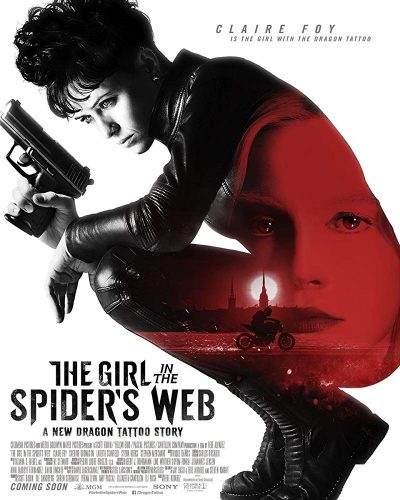
The new Millenium movie is therefore quite a different beast. The question is if audiences will accept or reject it, and also of course if these characters still resonate with general audiences 13 years after the first book became a bestseller. With Fede Alvarez, Sony chose a competent director who has already proven that he can make very successful “darker” movies with a smaller budget as evidenced by his Evil Dead remake and his own Don’t Breathe, a recent surprise success. As a matter of fact, I think Alvarez is a very good technical director. And if you would have asked me before the movie if Alvarez is a more stylish director than Fincher, I probably would have said no. But indeed TGitSW is even more style-oriented than Fincher’s movie. Alvarez simply does know how to make things look “cool”. Pity that he has to work with such average material.
Interestingly, the movie was filmed to a large degree in the Berlin-Babelsberg-studios in Potsdam, as well as elsewhere in Berlin, Hamburg, the airport Halle/Leipzig and other parts of Germany. The reason for this is that makers can participate in German film funds that co-finance movies with money if you film in the respective “Bundesländern”. Alright, now I know what is being done with my taxes! But it’s definitely nice to see the well-known Berlin “Teufelsberg” (Devil’s Mountain – named that because a considerable number of children have broken their necks there while sledging it down over the centuries!) doubling for a place in Sweden.
It’s also worth noting, no “big” names are to be found in the cast this time. No Craigs, Plummers, Skarsgards, Robin Wrights or Steven Berkoffs, with neither Claire Foy nor Sylvia Hoeks highly paid stars (as of yet!). Foy, an acclaimed actress thanks to the series The Crown, is the third actress to play Salander and may have an advantage that Rooney Mara did not have: She doesn’t come immediately after Noomi Rapace! While everyone might have had one’s own idea of Lisbeth Salander before the first movie, it really was Rapace who put her stamp on the character and – as evidenced by many interviews – her influence on how the character should be portrayed was much larger than one would imagine. She had a very specific idea of how to bring this character to life on screen and even told director Niels Arden Oplev to worry about other things, because she would know the character better than him.
And it has to be said, Rapace set the blueprint, the parameters for the character on film. This can be compared to Sean Connery becoming the first James Bond: it is difficult for any other actor to come after someone has defined a role so strongly. When Roger Moore became James Bond – though he later admitted he then wondered if he had just committed career suicide – he was not in the same position as George Lazenby trying to imitate Connery’s 007 in 1969. People get used to different actors playing the same character eventually (think of Holmes or Tarzan) but it takes time, and any immediate successor will always be seen as a cheat!
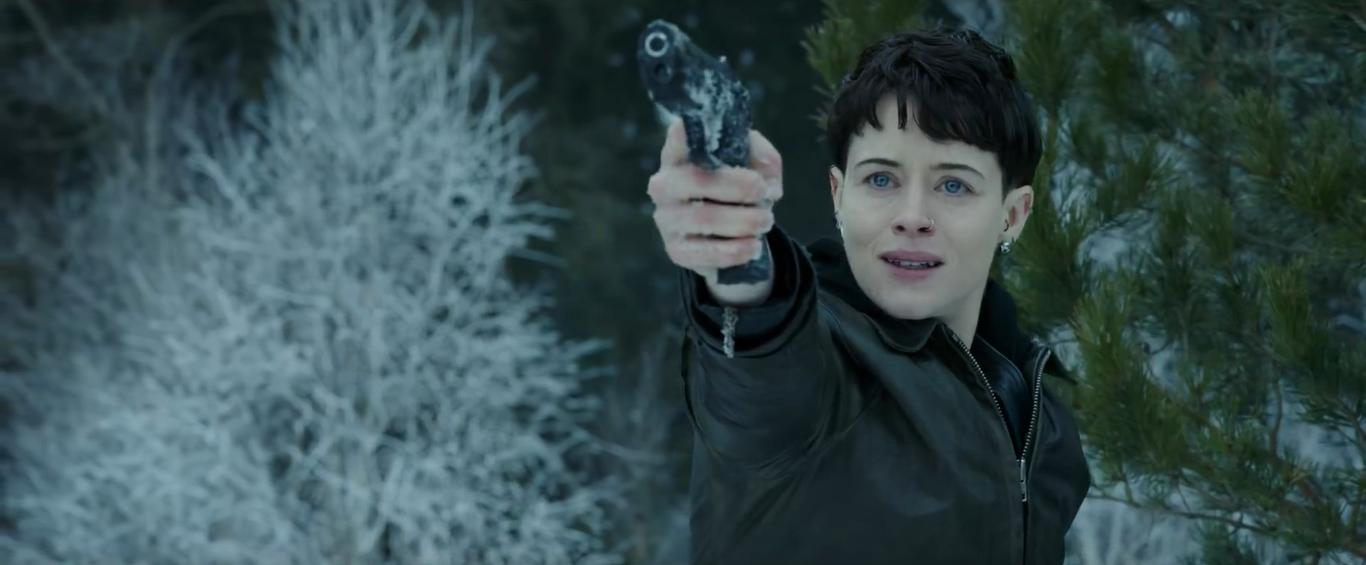
 As far as I can see it, Claire Foy carefully positions “her” Lisbeth Salander between Rapace and Mara. She is much better – in my personal opinion – than pale Mara, who always felt like a bland fake to me. But at the same time Foy comes across more human and vulnerable than Rapace. Noomi Rapace’s Lisbeth was an enigmatic poker-face with suggestions of great emotional depths underneath, not giving away anything of what happened inside of her. I liked that you had to interpret her behavior and I miss that quite a bit. She was a mystery in a mystery, and very ambivalent.
Foy is tougher than Mara ever could hope to be (though I have the feeling it was Fincher’s conscious decision to “soften” the character, to make her more typically “feminine” and appealing to American audiences) but more accessible and vulnerable than Rapace ever would have Lisbeth be. In certain key moments it also is made quite clear that Lisbeth – how steely and tough she may appear – actually cares for the people around her. But it’s very strange hearing Foy in interviews declaring that they took away sex scenes and nudity in the script “because we didn’t want her to be exploited”. For Noomi Rapace crossed borders as an actress to stress that Lisbeth was indeed sexually exploited and also had her own sexual life.
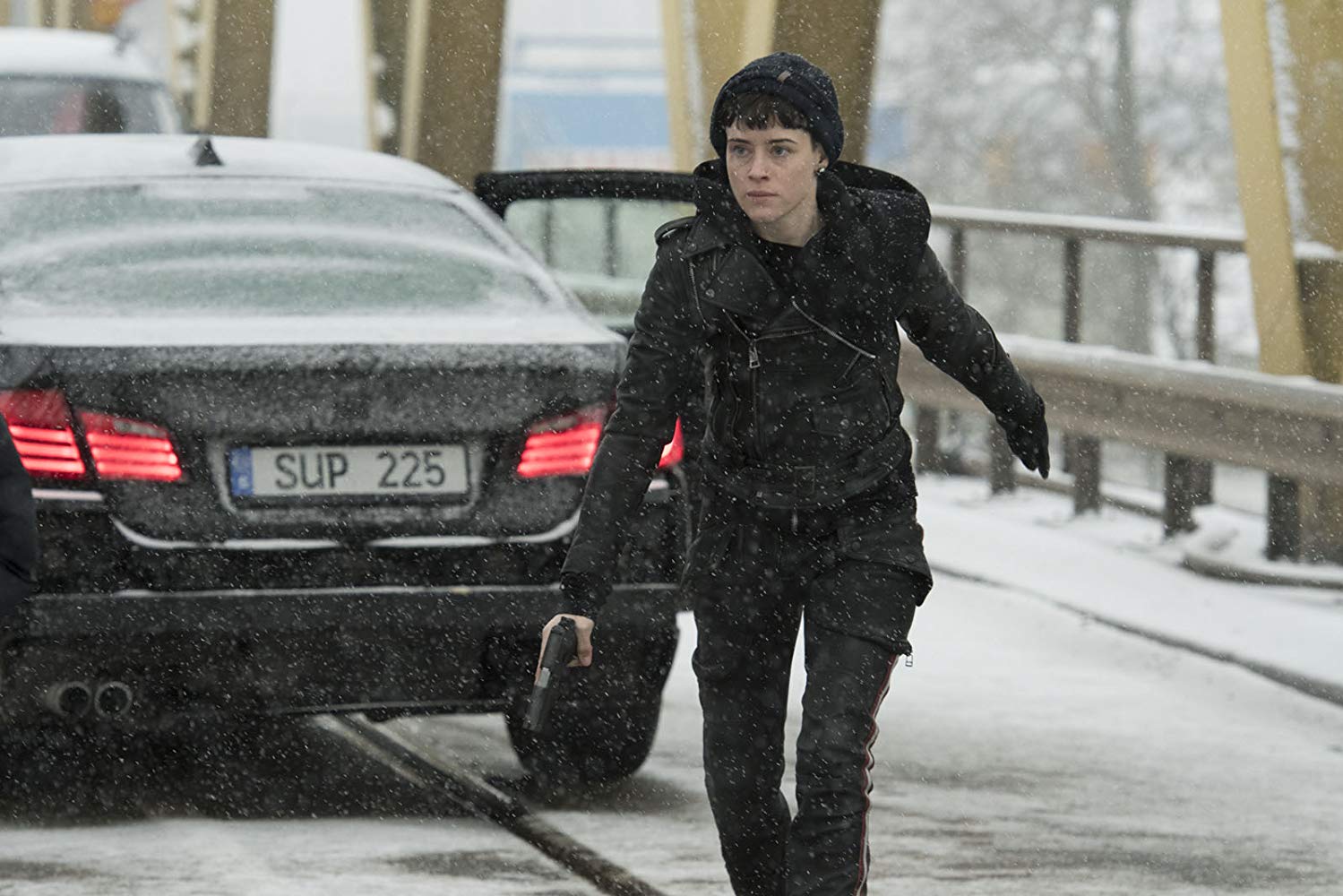
Something else has been changed. While “original-Lisbeth” got close to readers and audiences due to the fact that so many terrible things did happen to her, this movie at best hints at things. In the original stories we witnessed Lisbeth being taken advantage of, attacked, shot in the head and so on, this Lisbeth here never seems to be in that kind of serious danger. She seems very often at least a step ahead, and can hack anything; it’s virtually a superpower here, because there’s nothing she can’t hack, from airbags to airport doorknobs. She even survives an explosion at her home (that can be seen from miles away and looks as if somebody tried to nuke the place), by jumping in her bath. As does her pet lizard. Who is not in the bath. Fortunate for her that she still can use her laptop after everything has been burned…
Yeah, Lisbeth has unofficially entered James Bond-fantasy-land! Not that I really mind so much. It definitely is entertaining and when The Girl who Played with Fire (both book and film) came out there was already criticism of the direction in which Larsson was moving his heroine. But then you always had the feeling these incredible things happened to a very real person – one who, after being shot in the head, had to spend months in a hospital to recover. This kind of carefully balanced dance between over-the-top elements and realism can’t be found here, because Lisbeth has become less human and more a superhero character. But with that, she also becomes a bit boring, I fear.
This is definitely a more sanitized version of Lisbeth Salander – this had already been done with the Fincher movie – intended to be more acceptable for a larger mainstream audience than the original ever was. The team behind this movie definitely took away from the controversial aspects and ambivalence of the character, and are also careful not to step on anyone’s toes with Foy declaring in interviews that Lisbeth Salander is not meant to be a poster girl for the #metoo movement. I really got the impression that Sony is pulling all the strings to make this Lisbeth a big mainstream hit so they can finally get that big money-making franchise they wanted it to be in 2011.
Only they make different mistakes this time. Somehow the original Salander is just too difficult a character to sell to large audiences, so they keep changing her. Fincher made her a bland feminized character that could appear softer at Daniel Craig’s side. Now, Alvarez makes her some kind of cross between a superheroine, Bond and Sherlock Holmes. I really get the feeling that there’s some kind of cultural communication problem when portraying this character in an American movie.
What I personally find a bit regrettable is that the complex backstory of Salander doesn’t play a role in this movie here anymore, beyond some references. As a matter of fact this movie – again, I don’t know if it was already like that in the book – almost retcons her backstory. What I get from the original books and movies, she lived with her mother in a single flat, not with her father in a big building far from civilization. While her father was a terrible criminal and double-agent, physically abusing her mother, there was no indication he was a pedophile and abusing his young daughters sexually. Maybe Lagercrantz added that, thinking, “Why not? Every other evil man in these books is a rapist, so he might be one, too?” While Lisbeth hears from her sister, Camilla in the second book for the first time, here the movie makes you believe that they grew up together.
The attempt to cut the Blomkvist role, or at least make it as small as possible, may stem from the time when screenwriters tried to minimize Craig’s involvement in the next film. It shows here. While Sverrir Gudnason is not a bad actor, he, as well as the now also much younger appearing Erika Berger (played by Vickie Krieps), hardly play anything more than a supporting role in this movie. And forget about calling this a Millennium-movie as the magazine Blomkvist was writing for has been sold and he is not writing anymore. It’s suggested he had only two great stories, both due to Lisbeth – which is just wrong when you’ve read the books! For me, this feels like a grave faux-pas, as if Sherlock Holmes moved out of 221B Baker Street. The feeling I got was that Blomkvist and Berger were in the movie because the filmmakers knew they belonged to these stories but didn’t know anything of relevance to do with them.
But it also seems as if the entire genre has changed which is a bit perplexing. Someone put it better into words than I ever could: “It’s as if Goldfinger is the sequel to Psycho.” I find this a very fitting remark. While the original novels as well as films (Fincher’s included) had a decidedly eerie psycho-thriller feel, this comes across more like a James Bond or Jason Bourne movie. Sure, the originals also had a conspiracy of old secret service members (which reminded me a bit of The X-Files), the double-agent Zalatschenko, and with Niedermann an almost Bondian henchman. Still, the feeling was these were down-to-earth thrillers, fed by real-life scandals of Sweden’s past, and also dealing with an inhumane social system oppressing helpless individuals and a terrible treatment of women in society in general that Larsson depicted.
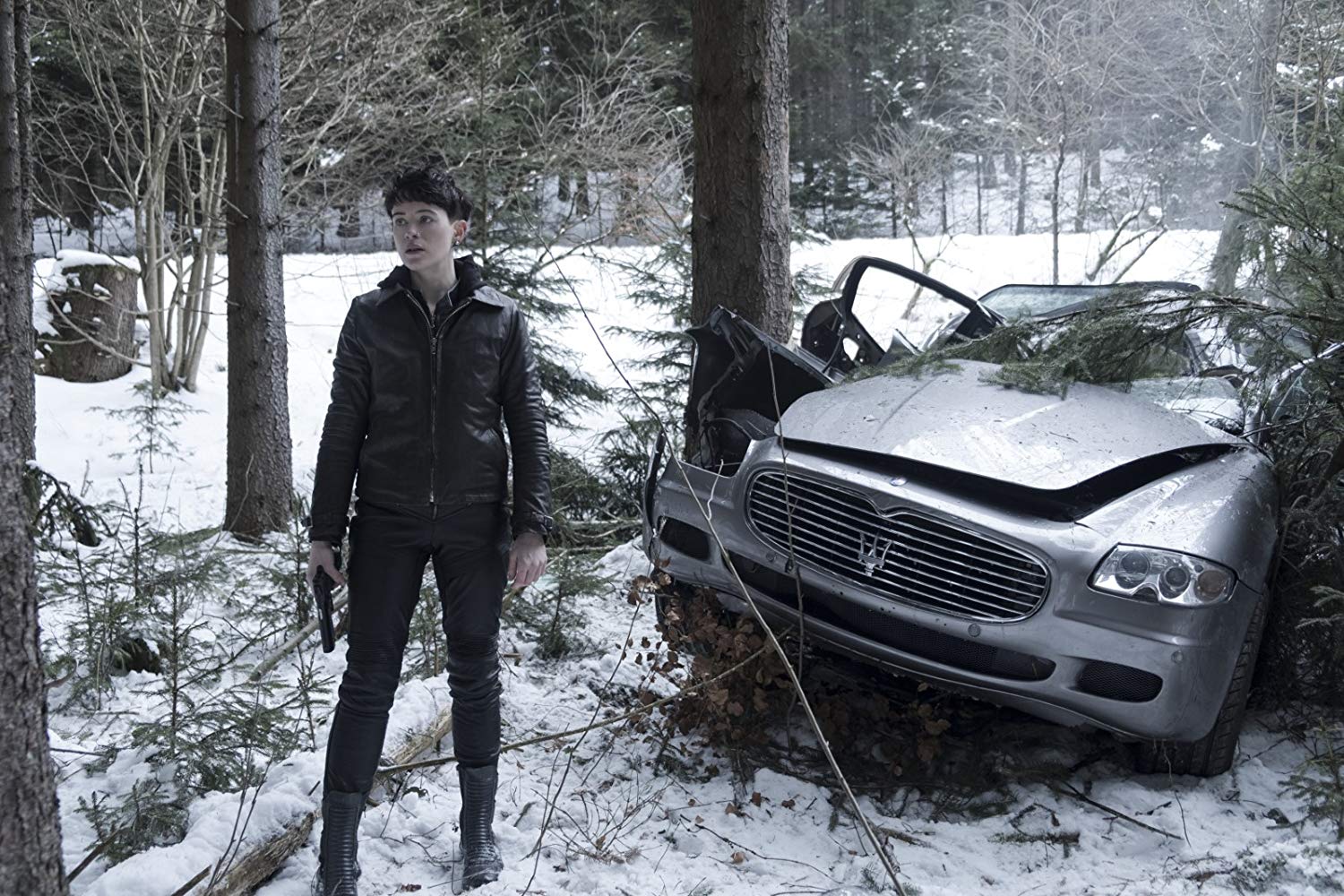 Don’t misunderstand me. I’ve never been a fan of Larsson’s (in my opinion) relatively one-sided left-wing agenda, his strange ideas of what he thought feminism was, his outspoken black-and-white portrayal of different parts of society (left-wing journalists and women vs. evil capitalists and social authorities responsible for any imaginable crime). But heck, that was what his fictional universe was about. I think if one continues the series of an author one should honor his work and themes. And if you’re not able to, stay away and leave it to someone else. It feels somehow like a cheat to discard all of that, create something VERY different and still call it Salander and Blomqvist. There’s a German word for this: “Etikettenschwindel”. This is when the writing on a can in the supermarket says “chocolate cake” and when you open it at home you find it contains noodles.
Sure, I don’t mind noodles! But heck, the backstory and the complicated character of Salander being hardly more than a side-note or even partly replaced by a new one; the world-view of the original creator more or less disregarded; social criticism not existent here anymore (okay, the last was a complaint one could have had with Fincher’s movie, too). This feels kind of not okay, if you are a fan of the original books! As mentioned, I’ve not read Lagercrantz’ book – and according to friends who did, I shouldn’t bother – so I don’t know how close this is to what he has written. But many online pointed out that the plot with the CIA and an autistic little boy reminded them of the old action-thriller Mercury Rising with Bruce Willis and Alec Baldwin. So, maybe Lagercrantz is just stealing from other sources than Larsson?
Personally, I felt reminded of Bond movies, or at least aspects from Bond movies. Lisbeth with a connection to her sister, is similar to Bond with his (now) stepbrother Blofeld in Spectre and another plot element reminded me quite a bit of Roger Moore’s Bond movie, Moonraker. As a movie, the story flows quickly from scene to scene. While all previous efforts were slow-burning Scandi noirs, very often building suspense and tension, also sometimes with scenes without any or much dialogue, even no music, this moves much faster, just like Lisbeth on her motorbike.
It also brings in a number of action scenes, an element that was there in the originals but at no time as prominent as here. And while the other movies were long movies, up to 2½ hours (which may also have cinemas one or two showings a day) this one has the very digestible length of 117 minutes. My feeling is that this is the streamlined, newly-wrapped and more digestible version of Lisbeth Salander. Everything has undergone a vital change, but the core of Stieg Larsson’s phantasmagorias has largely been discarded – or put so much to the side that it is almost irrelevant.
I very much understand Sony’s decisions, though will still judge them for it. They want their investment back, and want to get out of their property what they still can. After last year’s disappointing Hollywood Scandi noir The Snowman, with Michael Fassbender, it doesn’t seem such a very bad idea to reposition the potential franchise, to get away from personal, overcomplicated drama and recreate Ms Salander as the female James Bond media has been talking so much about in the last years. The thing is: They are cheating their – potential – audience of the original content of the series. The question is, if the audience is willing to eat up this deception or just ignore it? Because, you know: glossy photography, cool-looking action and strong female hero?
Side-note: Though Larsson himself said shortly before his death, that with the first three books he had done the heavy lifting to lay the groundwork, I personally felt all he had to say of importance has been said. Sure, he could have spun out his story, the way these new stories by Lagercrantz obviously do. But what could realistically still have come? My feeling is, though Larsson had planned a series of 10 books, these three books feel self-contained. I can’t imagine anything he still could have written would have been able to impress me more. If Salander and Blomkvist would just have investigated new cases on a regular basis, with us already knowing Lisbeth’s backstory, it wouldn’t have held the same kind of interest anymore.
In a way it made sense Larsson died after these three books. His work was done. And therefore it doesn’t make really any sense from a logical standpoint, that the series is continued – neither with new books nor a new movie.
How should we value such a movie? As already mentioned, it has to do with expectations. I can understand that American audiences (who maybe first saw the Fincher movie) and European audiences (who loved the Rapace trilogy) won’t be comfortable with that new movie. Neither will die-hard fans of the Larsson books. At the same time I could easily imagine that younger audiences, not accustomed to the books and the films, beyond having heard of the series, may actually be fine with this action-filled wanna-be James Bond-film and like it. Heck, new audiences also embraced Daniel Craig as Bond, and had no big problems with Sherlock Holmes becoming an action-hero as Robert Downey Jr!
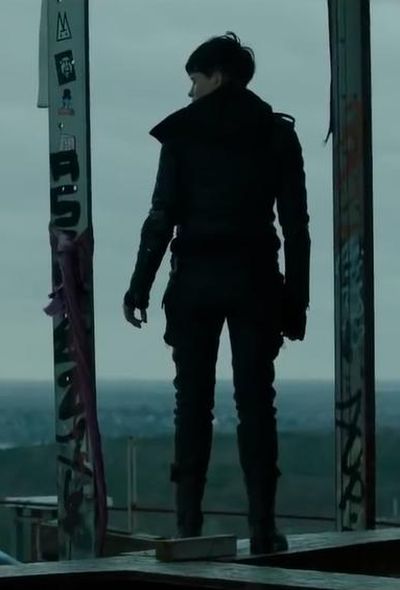 Revisiting the old movies before this film again, I realized why I liked them so tremendously in 2009. They were simply good detective stories, telling their stories in a calm and unexcited, but nevertheless suspenseful and effective way. The film I felt could best serve for comparison was the old Connery mystery The Name of the Rose. Now compare how overdone they became in Hollywood. It feels proof of the old saying: “Sometimes less is more.” These, now almost “classic”, movies felt honest and truthful maybe just because they were so naturalistic, without any hocus-pocus, or as overdone as your usual Hollywood movie, that comes with a much higher budget, glossy camera work, elaborate directing styles, artistic gadgetry and what have you.
There is the charm of a simpler style that Hollywood is somehow never really able to replicate because it requires a different mindset than a blockbuster factory can achieve. The only movie that really touched me emotionally was the original Dragon Tattoo: those characters seemed to be grounded in reality. When Henrik Vanger wept at the beginning or Lisbeth finally finds the courage to visit her mother and speak with her, it was touching because these are the reactions of normal people and we can identify with those. When I see the American films and especially this one with “Super-Salander” and these shallow new versions of the supporting characters… it leaves me totally cold, never mind how good Claire Foy is an actress or how cool the action-scenes are. It’s kind of strange; James Bond has been forced in the last few films to become a “normal” human being again, yet Lisbeth Salander seems to become less and less human with every new movie!
As an action-thriller, I think it’s nicely done and enjoyable, though unfortunately quite average; that’s reflected in the rating above. But as a continuation of that what Stieg Larsson and the original movies once started, I think I would have to deduct a star. Maybe give a half-star back, because the action scenes were nice to look at and I do like Claire Foy’s engagement. You really need to have quite some confidence to take on a role which two other actresses have already done. I like her as an action heroine, and would love to see her in another genre entry. As the third actress in the role she does quite well, positioning herself somewhere above Mara and below Rapace, due to never reaching the incredible intensity and ambivalence Rapace’s performance exuded.
If this movie was an exam in school the teacher would have written under it: “You have failed the subject!” But there are indeed reasons to watch this in cinemas: Because Claire Foy is really good in the role. Because you feel nostalgic for these kind of thrillers, which Hollywood used to make some 20 years ago and would like to see again. Because there are still not enough movies with female heroes out there. Maybe you just feel in the mood for a thriller. Or the best one of them all: Because it may actually be the last time that you will see Lisbeth on the big screen. Or at all.
Only time will tell if Lisbeth Salander and Mikael Blomkvist will actually become classic evergreen characters like Sherlock Holmes, Hercule Poirot, Philip Marlowe and James Bond, or if they will one day just being regarded as a passing short-lived trend-du-jour of the early 21st century’s crime literature. The new movie has not become the big blockbuster Sony probably hoped for, though the low budget costs should be covered – if not in cinemas, then through home distribution (I stopped counting of how often the Fincher movie has been shown on German TV over the last seven years!).
For the question is: where does she go from here? If the audience is not really that interested in a more streamlined Lisbeth Salander, there is hardly any reason to film the next few books written by Lagercrantz, right? If this movie is another underwhelming investment for Sony, and they still would like to continue, it seems to me the only other option they have is another reboot in a couple of years – with a new director and yet again another new cast, and maybe an even smaller budget – and finally adapt the second and third books in the series written by Larsson.
As a parallel, right now, a good 20 or so years after the dismal big-budget flop of The Saint with Val Kilmer, there are rumors that Chris Pratt may try on the role that once made Roger Moore famous. Hollywood would rather reboot well-known characters for the 20st time than invest in new, untested material or characters. But maybe Sony still can persuade the copyright-holders to allow an attempt as a serialized TV-show?
Dir: Fede Álvarez
Star: Claire Foy, Sverrir Gudnason, LaKeith Stanfield, Sylvia Hoeks



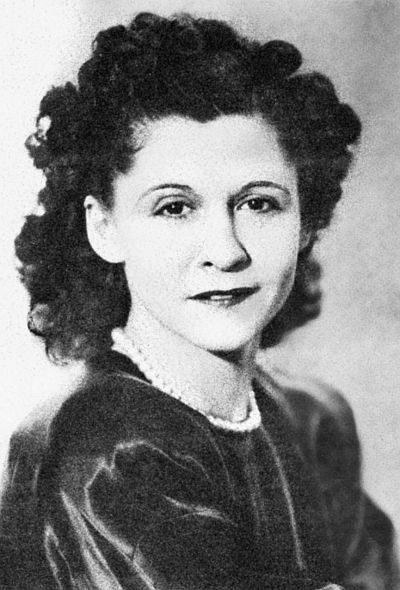 In September 1941, the author returns to Manila, the capital of the Philippines, starting work as a nightclub singer and falls in love with American GI, John Phillips. Which is unfortunate timing, because soon after, the Japanese bomb Pearl Harbor, kicking off the war in the Pacific. A hasty marriage to John follows on Christmas Eve, but Japan invades, and Claire’s husband becomes a prisoner of war. Left to fend for herself, after a period spent hiding out in the countryside, she returns to Manila, adopting the persona of Dorothy Fuentes, born in the Philippines of Italian parents. In order to help the resistance, she opens a venue, Club Tsubaki, aimed at officers of the occupying forces.
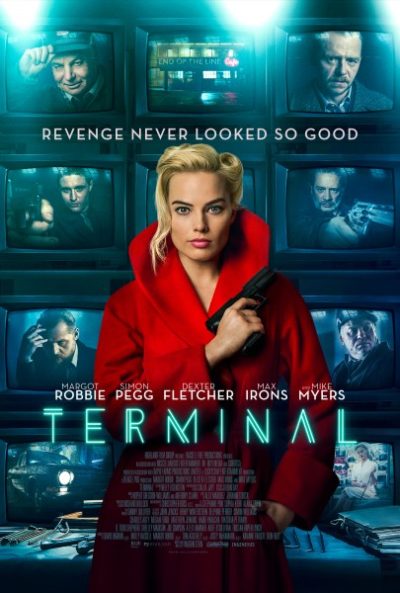 Oozing with a unique visual style that’s like a brutalist cross between Blade Runner and Alice in Wonderland, this focuses on a battle for business between assassins. Annie (Robbie) – or, maybe, she’s called Bonnie – wants to take over the murderous commissions of the mysterious Mr. Franklin. He agrees, only if she takes out the current incumbents, Vince (Fletcher) and his apprentice, Alfred (Irons). Simultaneously, while working as a waitress in an all-night diner at a railway station, she meets Bill (Pegg), a terminally-ill English teacher, who enters her establishment while waiting for a train in front of which to throw himself.
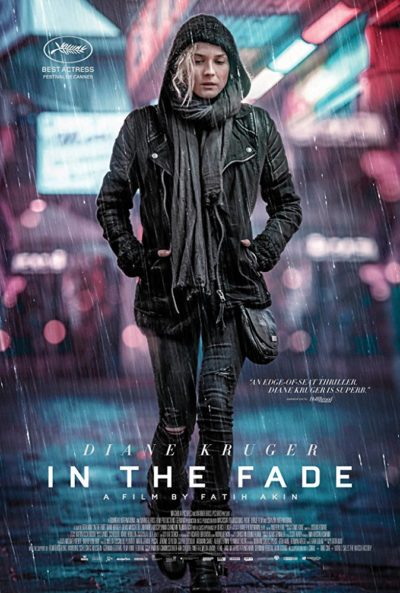 I spent most of the movie going back and forth as to whether or not this qualified for inclusion here. Was its lead, perhaps, just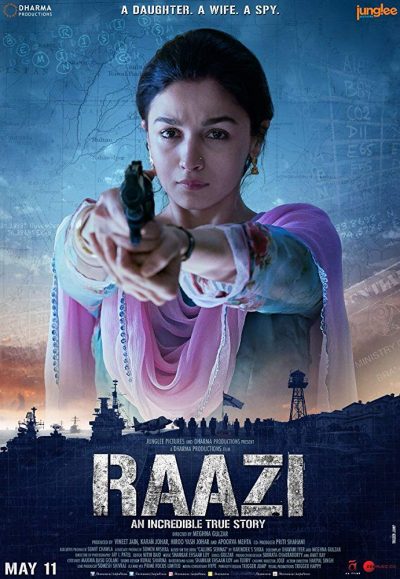
 This Indian spy thriller manages to be both remarkably restrained and human, avoiding a potentially jingoistic approach, and going for something considerably more measured. It takes place just before the war between India and Pakistan in 1971, when Indian agent Hidayat Khan is pretending to give information to Pakistan. In order to get close to their top brass, he convinces his daughter, Sehmat (Bhatt), to enter an arranged marriage to Iqbal Syed (Ahlawat), an officer whose father (Sharma) is a Brigadier in the Pakistani army. After being trained by senior intelligence officer Khalid Mir (Kaushal), she goes to join her new husband, and begins operations as a spy inside the Brigadier’s household.
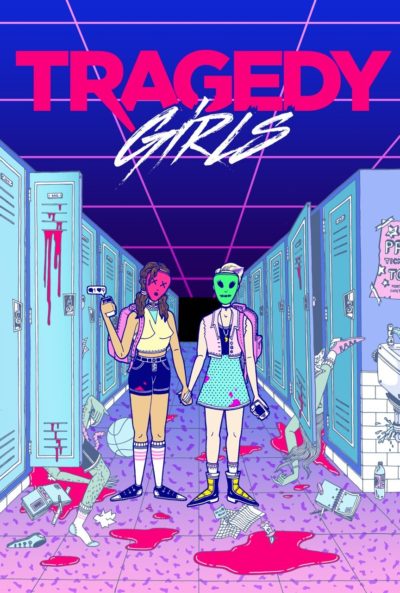 Playing like a more social media-conscious version of Heathers, the central characters are high school girls McKayla (Shipp) and Sadie (Hildebrand). They believe their town of Rosedale is the hunting territory of a serial killer, whom the police won’t acknowledge, and the girls have a (not very successful) blog, Tragedy Girls, about the case. The pair succeed in luring out and capturing the killer (Durand), and discover that if they continue operating in his name, they and their site experiences a rise in popularity.
 briskly functional rather than particularly memorable: by which I mean, I read the book in fairly short order… only to discover, when I finished it, that I didn’t remember very much about it. Not even the heroine’s name. Mallory? Mindy? Miley? Definitely an M word… Ah, yes: Melody Cale. She’s an agent for the Geirty Solutional Diversity Group, a murky government organization – also known as the Get Shit Done Group – who “do what the CIA couldn’t… without having politicians, or reporters, looking over their shoulders.”
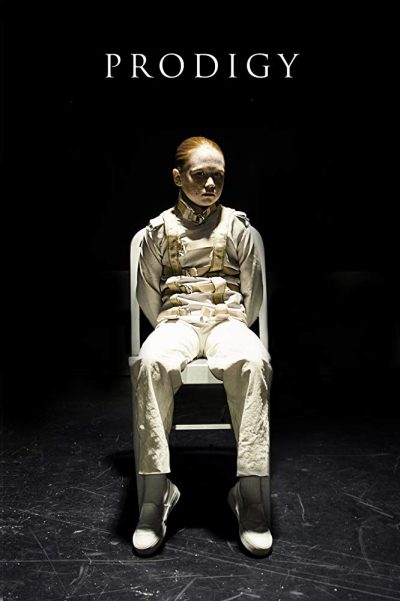 This small-scale production – a cast of little more than half a dozen, and one location, not counting the park scenes which bookend it – packs a wallop significantly above its weight. Psychiatrist Jimmy Fonda (Neil) is brought into a military facility by an old friend, Olivia (Andersen), to interview a young girl, Ellie (Liles), who is being held there. To avoid pre-judging her case, Fonda deliberately avoids reading the documentation about her with which he has been provided. But the stringent security precautions (“In the event the subject escapes the restraints, drop to the floor and cover your head”) under which she’s held, should give him a clue that this is far from a normal nine-year-old. If it didn’t, the conversation with her which follows certainly does.
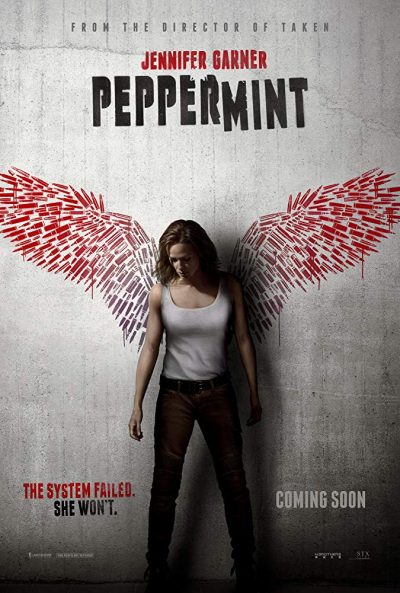 I’m tempted to award this an extra half-star, simply for pissing off liberal film critics, upset by the fact that most of the film is devoted to a white woman killing Latino drug dealers. Of course, they completely miss all the points, instead complaining – and these are direct quotes – there is “not a word about corporate complicity in the opioid crisis” and that the heroine’s “true enemy is a system of income inequality driven by hyper-capitalism.” Because, of course, if was hyper-capitalism which gunned down the husband and daughter of Riley North (Garner) in the parking lot of a fun-fair. Oh, my mistake: it was Latino drug dealers.
 A sold enough entry, this benefits from a well-written script, but gets marks taken off for having a heroine who is rather too passive. Yolanda Acosta (Paleta) is sent to a higher security facility when she is recaptured, following an escape from her previous prison. It’s a mixed-gender facility (common in Mexico), and she comes to the attention of Benedictino Suárez (Zurita), a.k.a. “Centaur”, a local crime boss who is also incarcerated. He falls hard for Yolanda – the title translates as “Centaur’s Woman” – and when his escape plan comes to fruition, offers to bring her along with him, to the ranch on which he’s hiding out. And that’s where the problems really start for Yolanda.