



★★
“So, is there, like, an anime convention in town or something?”
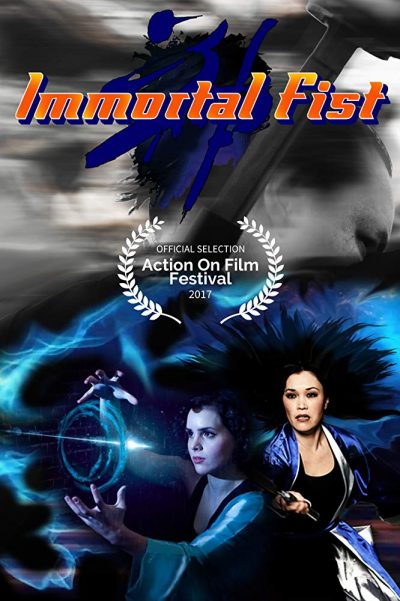 The above quote does suggest that the makers here appreciate how ridiculous the entire thing is. And that self-awareness may be the main thing which saves this from being largely cringeworthy. Just because you can make a fantasy kung-fu film with no budget, and largely filmed in a Californian park, doesn’t mean you should make a fantasy kung-fu film, etc. etc. Kaya (Caminiti) is your normal high-school girl. Except for being adopted, parents unknown. And the recurring dreams about martial arts battles. And the four mystical guardians who follow her around. And, it turns out, that she’s the great-granddaughter of the original Wing Chun (Bennett), and her last surviving descendant. Evil forces are intent on ending the bloodline; the guardians try to stop them, while attempting to convince Kaya to… er, get her arm cut off so she can claim her mystical birth-right and resulting mad skillz.
There are some interesting ideas here, such as the notion we live in some kind of Matrix-styled VR multiverse. But there are just too many mis-steps – and ones which would have been easily avoidable, and are unrelated to the lack of resources. For instance, why the guardians take the form of young, thoroughly non-Asian Americans, could have been explained away with a quick line or two about adopting the best shape to blend in to modern society. Nope. There are way too many loose ends that go nowhere as well, such as Kaya’s school pals. This is all the more irritating, because the film ends with absolutely nothing of significance having been resolved: it’s an attempt at delivering a cliffhanger, which is staggeringly unsatisfying. I hate that nonsense when books pull it, and it’s no better here. Especially as this runs only 73 minutes, even including all those superfluous loose ends. Tighten it up, and give us a proper, complete story. If we want a sequel, we’ll let you know: don’t tell us.
However, I actually quite liked the performances here: Caminiti is a winning heroine, with a dry reaction to the increasingly bizarre situation in which she finds herself. The guardians, led by Tai Fong (director Beyer), have an amusing mix of personalities, but it’s Bennett as Wing Chun who manages to steal the film, despite only having a few scenes – she’s taking proceedings far more seriously than they probably deserve, and elevates the whole thing as a result. Technically, it’s not bad, with some interesting use of filters and colour in the “other” realm. In the end, this is not much more than a glorified fan film, with aspirations clearly well in excess of its ability to deliver. As an apparent first feature, there’s something to build on, yet I suspect it might have been better released as a web series. This could have helped address some of the more obvious flaws, and perhaps found the cult following to which it seems to aspire.
Dir: Lon Beyer
Star: Silvana Caminiti, Lon Beyer, Josh Fesler, Elle Bennett
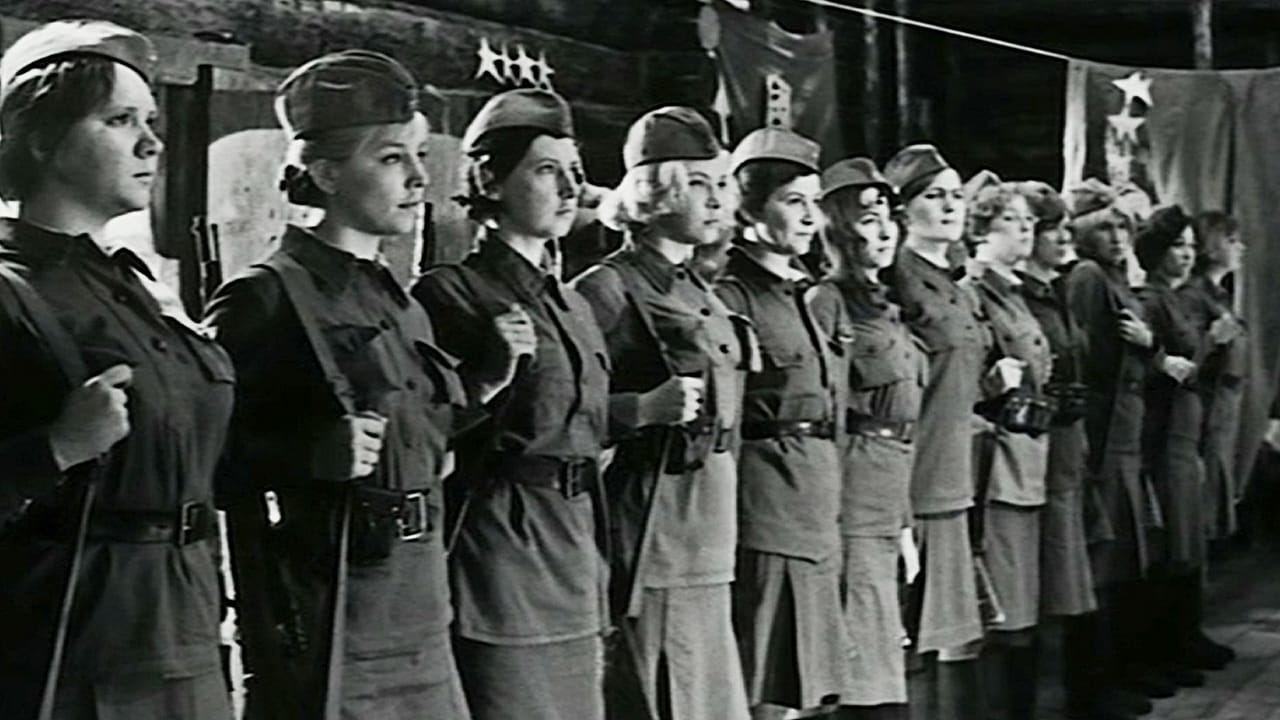 It’s the summer of 1942, and Soviet forces are facing the invading German Army. After Sergeant Major Vaskov (Martynov) requests soldiers for his anti-aircraft battalion who won’t get drunk and molest the local women, he gets what he wants. Except, the new arrivals are an all-female squad of soldiers, with whom Vaskov is initially singularly ill-equipped to deal. However, they prove their mettle, led by the efforts of Rita Osyanina (Shevchuk), and eventually win Vaskov’s respect. While returning to the barracks one night, Rita stumbles across two Nazi paratroopers; she, along with four colleagues and Vaskov, form a search party, and head deep into the surrounding forest to capture the Germans. However, they discover the real force is significantly bigger, and must begin a guerilla warfare campaign to disrupt the enemy’s mission, harrying them through the wooded and marshy terrain.
 ★★½
★★½
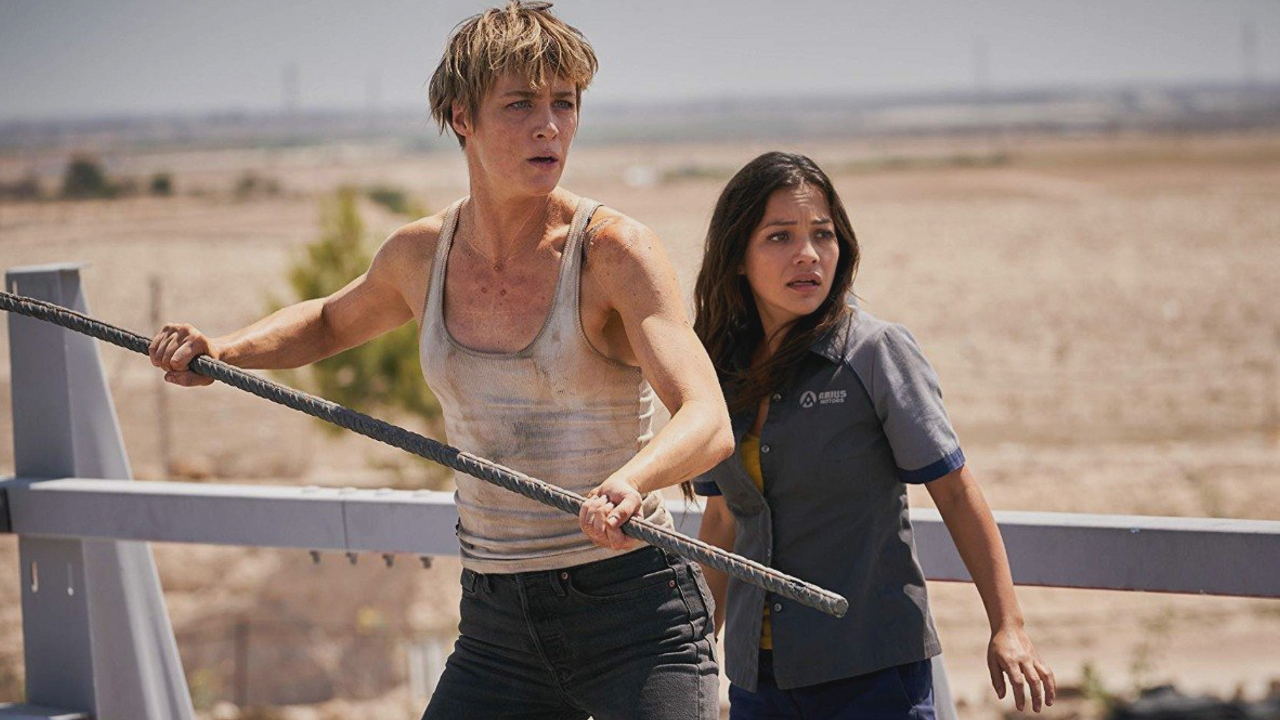
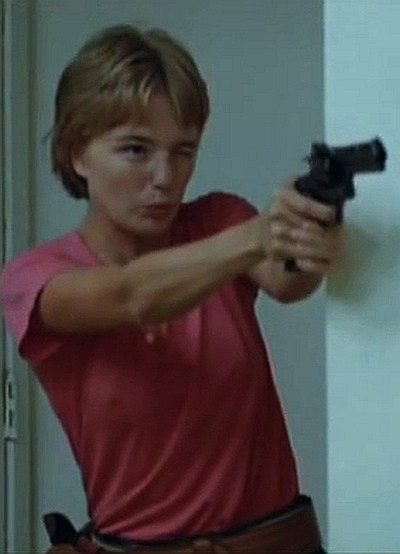 Either by intent or accidentally – and we’ll get to that in a moment – this manages to be both an indictment of and an advert for, American gun culture. That’s quite a spectacular achievement, and it’s perhaps no coincidence that the writer/director is British, so brings an outsider’s balanced eye to a topic that’s often acrimonious in the States. Kathleen Sullivan (Young) is a teacher who has just moved from Boston to a small Texas town. She falls for local attorney Larry Keeler (Day), though is only interested in friendship, not a significant relationship. The initially-charming Larry eventually won’t take no for an answer, and date-rapes Kathleen. However, the circumstances and her attacker’s local reputation mean she gets no satisfaction from the police. The meek and mild Kathleen decides to take matters into her own hands, buying a gun and taking up combat shooting – at the very same club Larry frequents – with the aim of meting out her own brand of justice.
 I was initially a bit concerned this was going to be a slightly-more horror oriented version of Harry Potter, based largely off the title. I needn’t have been worried. For at least the first two books, this is quite startlingly dark and on the razor’s edge. As for the third… well, we’ll get to it. The setting here is a world where Filipino shapeshifters called aswangs, which feed on the fear of their victims, are migrating across from their home country and through Alaska. Lined up to stop them, by any means necessary, are hunters; it’s a harsh and often brief occupation. To replace those lost in battle, the titular establishment exists on Kodiak Island, to train hunters – mostly members of families who have been in the bloody business for generations.
 Those opening two books keep the story going forward. In the first volume, Fear University, she learns to tap into the power her talent gives her; builds a relationship with the similarly-broken young hunter Luke, who is her mentor; discovers aswang saliva can make her feel pain; finds out who her father was; and has to go through a life-or-death test involving both her, and her best friend at FU, Sunny. The second, Killing Season, is a rather drastic change in approach, with Ollie, Luke and others sent north to Barrow for the winter break, when the aswang are most active. That was the location used for vampire action film 30 Days of Night, and serves the same kind of purpose here. However, it’s almost as much a whodunnit, with the large house which is the hunters’ base apparently home to a killer. Not helping matters: Max shows up in town.
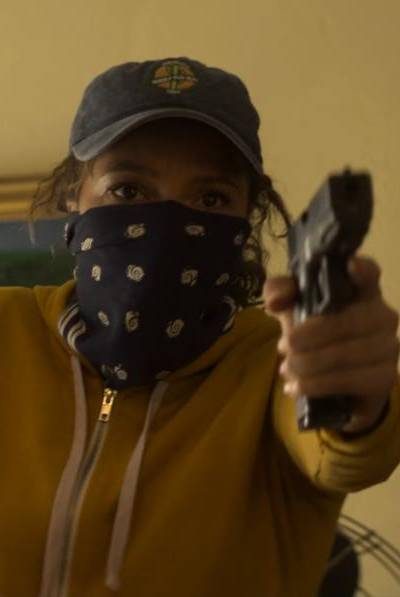 This occupies a rather odd middle-ground between a meditation on what it means to take a life, and a violent thriller. I’m not sure it manages to pull either off entirely successfully, yet some striking imagery helped sustain our interest. Katrina (Ejogo) is driving from Phoenix to Oklahoma City, with her young daughter, Clara (Pratt), to start a new life: it’s hinted that there may be an abusive partner in the rear-view mirror. The route takes her across the Texas Panhandle, and in an effort to avoid a traffic jam, she hits the back roads. This turns out to be mistake, as she first gets a flat, then Clara is bitten by a rattlesnake.
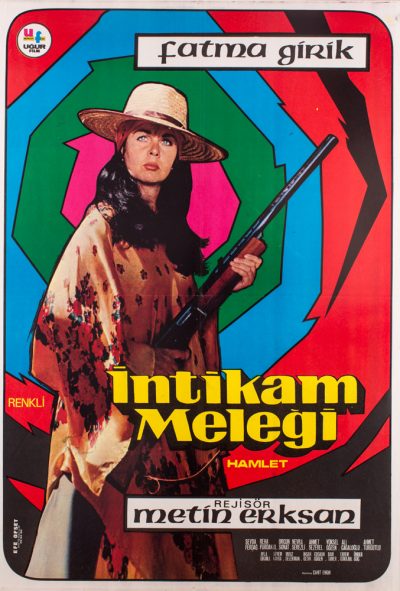 Okay, the above is shamelessly lifted from The Last Action Hero, in which there’s a spoof trailer for Arnold Schwarzenegger as Hamlet. But it applies just as much to this, which is remarkably progressive considering its origins; 1977 Turkey was not exactly in the forefront of women’s liberation. Yet here we are, with a modernized and severely truncated version of Shakespeare’s story. This runs 86 minutes, compared to 242 minutes for, say, Kenneth Branagh’s Hamlet. But it hits the main spots, even if only in passing: for instance, Hamlet’s soliloquy shows up, though “Alas, poor Yorick” gets short shrift.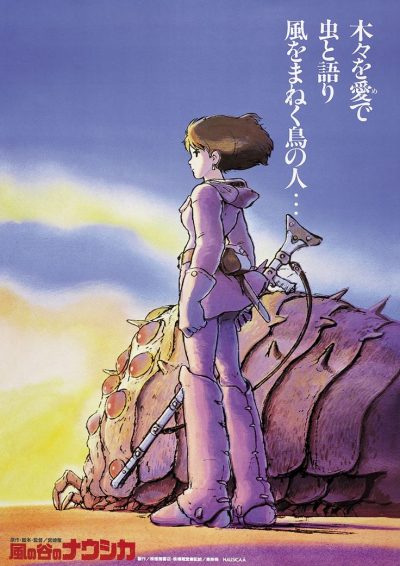
 After the enormous critical, if not commercial, success of Lupin III: Castle of Cagliostro, Miyazaki was commissioned to create a manga series for Animage magazine, with a potential film adaptation attached. Publication began in early 1982, but it would take a dozen years, albeit of intermittent publication, before that story was complete. When the series’s popularity among Animage readers was established, work began on the film adaptation, covering the early portion of the manga. Since this was before Miyazaki’s own Studio Ghibli was founded, an external company, Topcraft, were commissioned to create the animation. The budget was only $1 million, with a mere nine-month production schedule leading up to its release in March 1984.
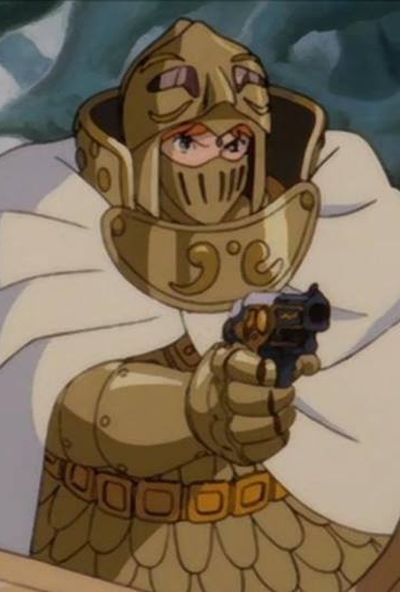 Miyazaki’s father ran an airplane parts company in World War II, and even his film company, Studio Ghibli, was named after an Italian plane. Almost every one of his movies
 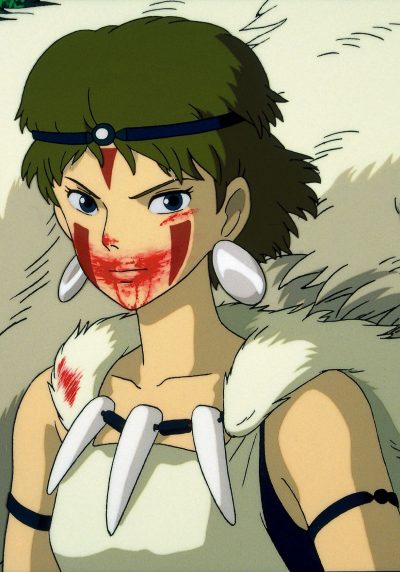 To some extent, this was the film which “broke” Miyazaki in the West, being his first feature to receive an unedited theatrical release in America. It wasn’t a huge commercial success, taking only about $2.4 million in North America. But it was very well-received, Roger Ebert listing it among his top ten films of 1999. It likely opened the door for the success of Spirited Away, which would win Miyazaki the Oscar for Best Animated Feature at the 75th Academy Awards. But if I’m being honest, I don’t like it as much as many of his movies. While there’s no denying the imagination and enormous technical skill here, it doesn’t resonate emotionally with me in the same way. I think it’s probably the central character, who is relatively bland and uninteresting, even compared to other characters in the movie.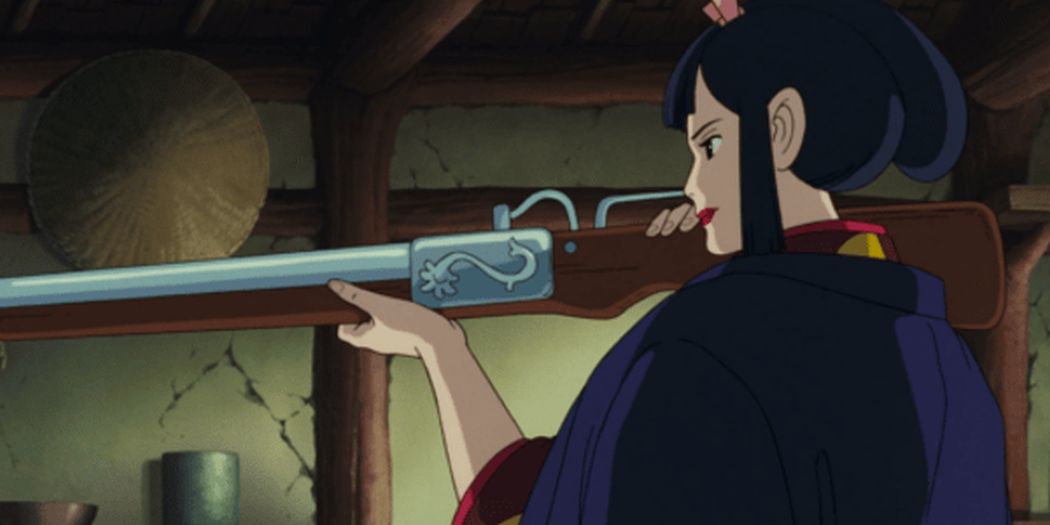
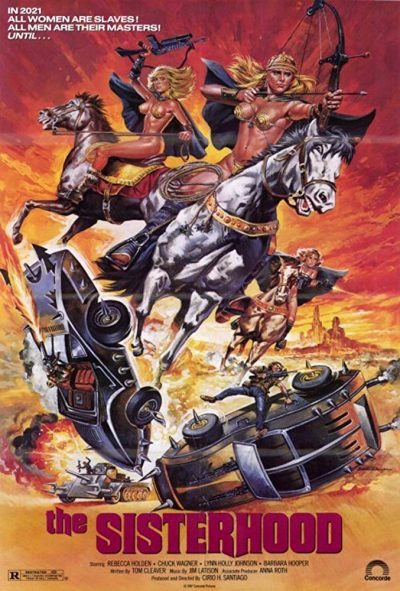 This one may be the origin of the meme, “After the apocalypse, food, water and gasoline are in short supply – but hair-spray will still be plentiful.” For there’s no denying the absolute silliness of this slab of post-apocalyptic nonsense. But it’s still imaginative and energetic enough that my interest was largely sustained. We’re apparently long enough after World War III for it all to have become the stuff of almost-forgotten legend. In the aftermath, the world is now occupied by roaming bands, mostly of men. However, certain women are gifted with special powers, and they have banded together into the titular group, under their reverend mother, and are feared by most as witches.