
“Zero as a limit”
 We’ve covered a couple of entries in the series previously, but I’ve decided to start work a rather more comprehensive set of reviews, systematically watching them in order, rather than the sporadic pieces previously published, as they fell across my retinas. Some of those pieces were also reprints from a previous publication, and were also shorter than the ones I’ve grown accustomed to writing. This was largely inspired by stumbling across the first movie, dating from the seventies, and realizing that I could now cover the entire set. I hate incompleteness. :) This will be an ongoing project, likely taking me through the winter and into next spring, so check back often (okay: fairly often!) for updates.
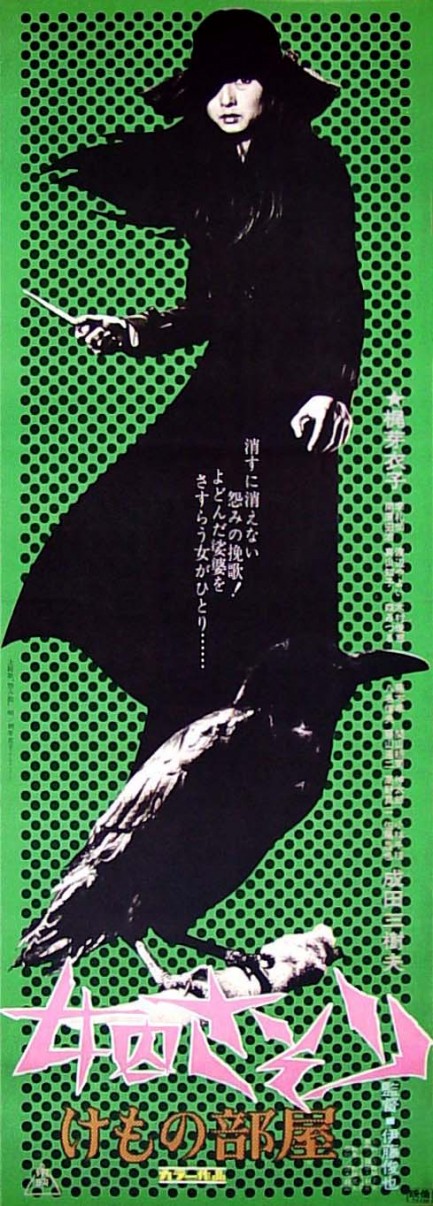
Like the Sasori: Female Prisoner Scorpion movies, its inspiration was a series of manga (left) by Toru Fujiwara, who seems to have a certain interest in the genre, to put it mildly. This generated one film in the seventies, but it doesn’t appear to have been much of a hit: unlike Scorpion, the series then went into hibernation. However, it has been suggested in more than one place that the film was an inspiration for, or at least an influence on, Luc Besson’s Nikita, which tells a similar story of a woman ‘brought back from the dead’ to serve her government, by carrying out missions that can’t be officially sanctioned. This, of course, then spawned its own (more or less) successful spin-offs, many of which we’ve already documented. But in a nice display of circularity, this likely fed into the revival of the series in the new millennium.
The new version, though straight-to-video rather than theatrical, and clearly made on smaller budgets, proved rather more successful, spawning a total of nine movies between the first, in 1995 and Zero Woman R in 2007. What’s kinda interesting is that, rather than having any degree of continuity, these films each starred different actresses as the titular operative. This may simply have been a budgetary concern rather than any conscious artistic decision, but certainly gives a nice sense of Zero Woman’s disposability, from the government’s point of view (as well as perhaps the viewers’, one AV starlet being as good as another for certain purposes, if you know what I mean, and I think you do).
So, what follows are all nine entries, in chronological order of Japanese release. This may cause some confusion, since the order of release in the West was not necessarily the same as in their home territory. For instance, the entry sub-titled Final Mission here, appears to have been the first “new” release, dating from January 1995. It’s not clear if the next film, released later that year and titled Zero Woman 2, is referring by that number to Final Mission or the original seventies incarnation, Red Handcuffs. tl;dr? Don’t worry your pretty little head about it. They’re pretty much interchangeable. And with that, on with the show!
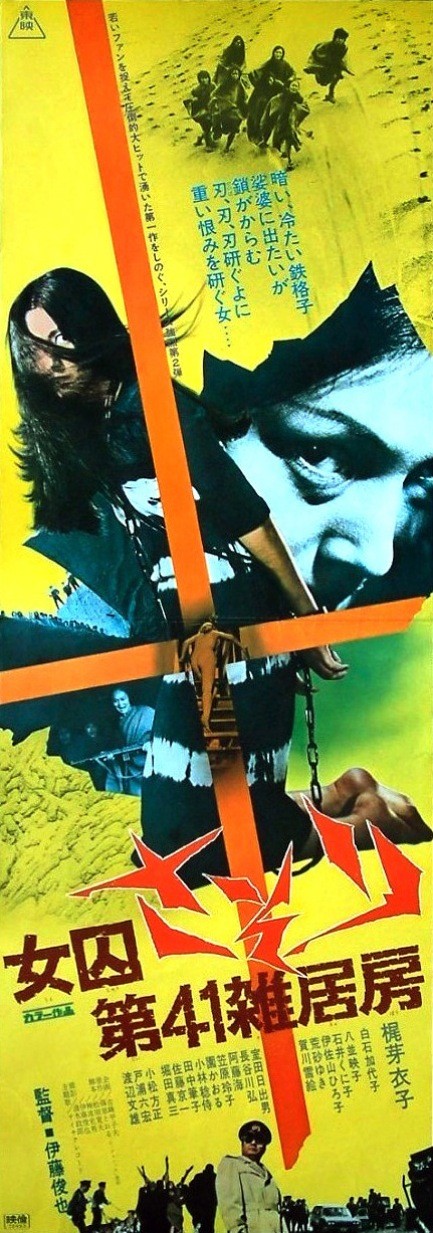
- Zero Woman: Red Handcuffs
★★½
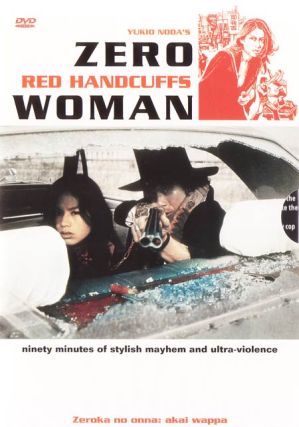 When the series started in 1974, it originally appeared to be trying to take on the Female Convict Scorpion series at its own game – both were inspired by Toru Shinohara manga series. However, going by the fact it took more than two decades for a second entry in the series, I can only presume the commercial returns weren’t anywhere near as strong. This starts off well, with policewoman Rei (Sugimoto) luring in, and then blowing away, the man responsible for torturing and killing another woman. Turns out the perpetrator was a diplomat and in the resulting scandal, Rie is sent to jail. Her chance at redemption comes when a gang of thugs stumble into the kidnapping of the daughter of a politician (Tamba): to avoid a scandal, Rie is offered a pardon if she infiltrates the kidnappers and kills them all. Initially, all goes to plan, with the first member taken out quickly, but it soon becomes clear the other members are rampaging psychos, and the situation rapidly spirals out of control, to the point where the politician yanks his support and orders the deaths of everyone, in the name of damage limitation – including both his daughter and Rie.
The promising beginning is a bit of a con, as the majority of the film has Rei not doing much more than sitting around, waiting for the gang to destroy itself. Occasionally, she will prod them in a certain direction, but generally, they don’t exactly need much encouragement and she’s mostly passive rather than the vengeful fury for which I hoped. Now, there’s certainly plenty of tbe “fury” bit, with some of the most enthusiastic arterial spray I’ve seen for its time, and some of the torture scenes are close to unwatchably brutal (the cops are every bit as bad as, and perhaps worse than, the criminals in this area). However, Rei just isn’t as interesting a character as Sasori, despite sharing the same terse approach; she does fit in pretty well, to a cast of characters who all seem to possess few human or sympathetic qualities.
Things escalate particularly nicely at the end, when the police discard the “softly, softly” approach [which in seventies Japan, appears to mean “not actually killing people yourself“] and go after the gang, who have moved on to take a bunch of other hostages. This leads to a chase and shootout at an abandoned US military base, which probably also meant something significant in 70’s Japan, going by the occasional hints of anti-American sentiment. Noda has a broad stylistic palette, throwing montages, hand-held camera and freeze-frames into the mix, the last-named perhaps trying to evoke the manga spirit. It doesn’t come off as particularly memorable however, and if the lack of its own artistic style is more than made up for in copious sleaze, you can certainly see why no-one dared (or bothered?) to follow in its footsteps for more than 20 years.
Dir: Yukio Noda
Star: Miki Sugimoto, Eiji Go, Tetsuro Tamba, Hideo Murota - Zero Woman: Final Mission
★★★½
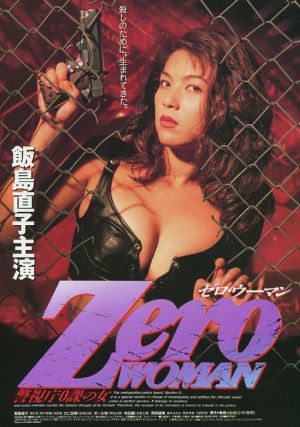 Probably the least accurate title of any film ever – at least Friday the 13th put out a few movies before using “final” – you definitely should begin here if you’re looking for much coherence. Rei (Iijima) is now partly employed as secretary to the head of Section Zero, but also takes out criminals for whom traditional channels of law enforcement aren’t enough, for one reason or another. She also pals around with Takako (Fukuoka), a detective from another section and a girl he helped bring out of delinquency, in what’s vaguely intimated as a love triangle. One night, they witness a hit and run, and discover the perpetrator (Suzuki) is the daughter of a powerful economic figure. Despite encountering official resistance, Rei and Takako persist with their investigation and, inevitably, this brings out more robust sanctions.
This does take some time to get going: it’s probably about 25 minutes before the car-micide in question, really kicks things off, and the film is more or less in a holding pattern until then. Still, Iijima certainly looks the part, and unlike some of the other occupants of the position, you don’t get the sense she got the role purely for her willingness to disrobe. Indeed, she manages even to take a shower and gun down an intruder without straying much beyond the boundaries of PG-13. Not that there’s exactly a shortage of nudity in this production, most of it coming from Suzuki, who is portrayed as being kinda depraved and heavily into S/M. Indeed, this seems the case for the director, as Rei spends a far too large chunk of the second half, tied up and being tormented by what can only be described as a cackling sex dwarf [literally half his lines must have been, “Bwahahahaha!”]. Quite what this says about Enokido’s predilections, is probably best glossed-over.
There’s a cool colour palette used here, mostly blues and grays, and a couple of scenes which will certainly stick in the mind. One is the previously mentioned shower-ambush, and the other is one where Rei is on the phone to Takako, when their conversation is rudely interrupted on his end: gradually, she realizes that something is very, very wrong. It’s expertly crafted, with good performances from both ends of the telephone line, and you can’t help wondering that more of this, rather than so much of the Laughing Gnome, would have elevated this to a classic. Instead, it’s merely hints at greatness, and settles for being solid and effective, starting the franchise in a way of which the original movie could only have dreamed.
Dir: Koji Enokido
Star: Naoko Iijima, Takako Fukuoka, Misayo Haruki, Miho Suzuki - Zero Woman 2
★★½
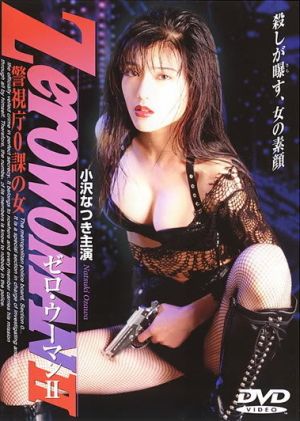 Confusingly titled in the West, without any indication it wasn’t the first of the rebooted franchise, this perhaps explains why there’s little or no explanation of… Well, anything, really. What is Section Zero? Who is Rei? Where did she come from? “Never mind about that,” seems to be the film’s attitude, “Here are Natsuki Ozawa’s breasts to distract you from such trifles.” That’s particularly the case early on, when it seems Rei is unable to go five minutes without showing them off, whether it’s through being molested, becoming inescapably randy or simply taking a soapy shower (to wash off the blood after a kill, so I guess it’s a shower necessary to the plot – it also replays the intruder shower scene from its predecessor, with a different ending).
Fortunately, their novelty apparently wears off for the director, and we get on with the actual plot, which involves a stolen suitcase of bearer bonds, belonging to a politician. Rei is sent to retrieve them, working her way up through the shady network of fences which handle such things. As help, she’s assigned a member of the regular police (Watari? – credit information is basically non-existent here), but he turns out to have his own plan, to recover the bearer bonds himself and make a nice profit by selling them back to their owner. However, said owner is also working his own way up the chain, and kidnaps the sister of one of the thieves, as leverage for the return of his property. That brings the perp (Kosugi, the son of Sho Kosugi, iconic star of a million ninja flicks) into an alliance with Rei, and they storm the warehouse where the hostage is held, for a bloody confrontation.
It’s more obvious that this is clearly shot on video – and not particularly HD video at that, though that may be a product of its era as much as anything. This generaly gets better as it goes along, unless you are interested in Ms. Ozawa’s breasts, in which case your mileage may vary. The plotting contains a decent number of twists and turns, and Kosugi helps deliver a competent amount of action. However, I’d be lying if I said I didn’t struggle through the earlier sections. In particular a scene where she is forced by a fence whose day job is a butcher, to sniff coke and then raped by him. While at least he gets his just deserts (let’s just say, there’s a meat-hook involved), it’s both entirely unnecessary and clearly intended to titillate the audience. Not cool, and it left a bad taste in my mouth, which even an impressively nihilistic conclusion was unable to remove entirely.
Dir: Daisuke Gotoh
Star: Natsuki Ozawa, Saori Iwama, Kane Kosugi, Hiroyuki Watari
a.k.a. Zero Woman - Zero Woman: Assassin Lovers
★★★★
“Grimly fiendish yet effective killers’ romance.”
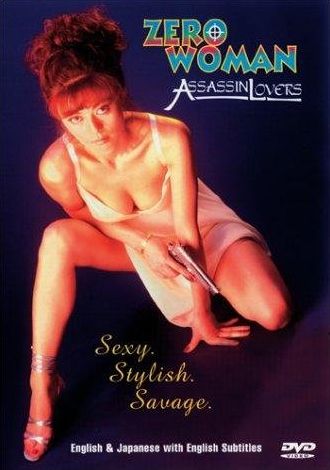 Mob boss Daidohji (Yutani) has the city almost within his grasp, thanks to a minion promising him material he can use to blackmail the mayor. But his success is short-lived, as the minion is taken our by Rei (Takeda), who is then ordered by her boss Takefuji (Nishioka) to finish the job, taking out Diadohji and the rest of his gang. Not that the mobster is sitting back and waiting: he hires his own assassin, Katsumura (Matsusa), to get to Rei before she can get to him. However, neither killer is exactly happy with their role as pawns in the bigger scheme of things, and when they meet, it’s time for a little R&R. As in “romance and rebellion.”
This is the best of the saga which I’ve seen to date, mainly because it does a better job of striking a balance among the various elements. The storyline and characterization are not lazily ignored in preference for more easily exploitable elements; not that there’s any shortage of either sex or violence, but they seem to flow naturally from the plot, rather than appearing to drive it. The relationship between Katsumura and Rei has some credibility to it, with each seeing a reflection of themselves in the other. But will that be able to over-ride Rei’s strong loyalties to Section Zero? The film does a good job of keeping that in doubt, right up to the very end, where Rei is given the ultimate in ultimatums by Takefuji, and it’s not clear what way she’s going to jump.
There’s also a nice, slick look to the film, which unfolds under an apparent endless array of neon lights, and on perpetually-moist streets, a visual style that helps conceal the low-budget nature of proceedings. While the story may rely to heavily on the clichés of the genre, those involved, on both sides of the camera, execute – pun not intended – their responsibilities with enough flair and energy to counter-balance its shortcomings, and the end result is certainly a significant improvement on the first two films in the revived series.
Dir: Masahide Kuwabara
Star: Kumiko Takeda, Keiji Matsuda, Charlie Yutani, Tokuma Nishioka - Zero Woman: The Accused
★½
“Putting the zero in Zero Woman”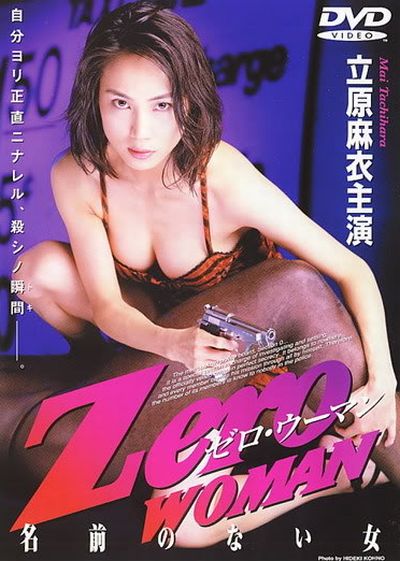 After the genuinely impressive bleakness of Assassin Lovers, the series comes crashing back to earth with a splat like a rotten tomato for this entry, which fizzles out early on, and then manages to lumber on for another 45 minutes. Rei (Tachihara) spends her time between missions hanging out at a gay bar, and rescues one of the rent boys, Mitsusu (Kitagawa), who ply their trade there after a vicious assault – accompanied, it has to be said, by the least appropriate music in the history of cinematic homosexual rape. He ends up moving in with her, to the latest in a series of unfurnished apartments provided by Section Zero, and the two damaged individuals start creating a life, of sorts, for themselves. However, there’s a serial killer, apparently with a deep hatred of men, operating in the area, and Rei is given the mission of tracking down and eliminating the psycho.
It’s hardly less than obvious who it’s going to be, but almost everything here is played at such a low-key, with no measurable intensity, so it’s even hard to be annoyed by this lack of subtlety. About the only moment with any energy is when Rei’s boss Mutoh (Yamashita) smacks her across the face for a bit of backtalk. However, my ennui was overcome by the scene where Mitsusu gives Rei a haircut. Considering this film is less than 80 minutes long, I think I could have very easily done without this – and, ideally, rather more action. After an opening which might impress upon you the importance of not getting stuck in an everyday routine, Gotô seems to lose interest in staging any set pieces, and the final few minutes certainly don’t make up for what has gone before.
Inexplicably described by Tom Mes as “the best” in the series, I found it severely uninteresting on just about any level, being badly hampered by poor performances, direction which struggled to reach workmanlike and, in particular, a script which is largely bereft of ideas. This and Assassin Lovers feel like the Jekyll and Hyde of the series; it’s as if all the good stuff somehow ended up in its predecessor, leaving this installment with just the inept film-making.
Dir: Daisuke Gotô
Star: Mai Tachihara, Yuujin Kitagawa, Shinji Yamashita, Daisuke Yamazaki - Zero Woman: The Hunted
★★½
“You just can’t get good henchmen these days.”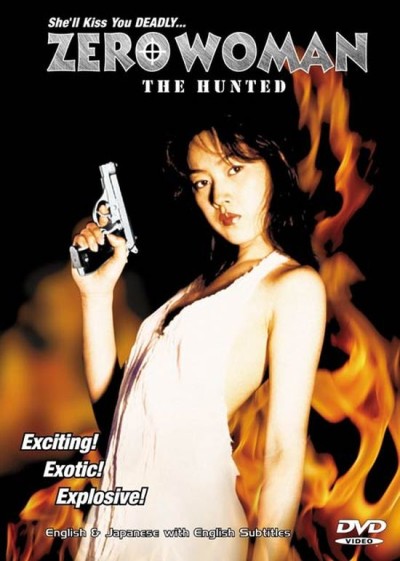 If ever I become an evil overlord, I will ensure my minions’ idea of security does not involve walking slowly in the open, towards an attacker, while firing wide of them from a range no greater than a slightly oversize dinner-table. That’s the first thing we take from this, which begins with a thoroughly implausible scene where Rei (Ono, who had been a part of 90’s J-pop group CoCo) manages to drown her target, a German industrialist, despite him being roughly twice her size, and without anyone in or around the swimming-pool noticing anything. She then climbs out, pulling a gun from who knows where, kills bodyguards who’d fail the Imperial Stormtrooper accuracy exam, and abseils down the side of the building to escape. That sets the tone for much of what follows, combining a reunion with someone from her past, a blossoming relationship with a chef, and her boss’s traditional surly reluctance to allow anything as banal as “personal happiness” to distract his #1 killer from her work.
It’s rather bitty, and there are too many scenes of Rei sitting around her apartment, staring wistfully into space or oiling her breasts. I should point out, however, this is actually oiling of the breasts that turns out to be necessary to the plot, which has to be worth an extra half-star in anyone’s book. As usual, it’s a different actress in the role, but Ono is a significant part of the problem here, as she just isn’t convincing as a hard-assed hitwoman, lacking the presence or even, apparently, the basic competence for the role. Fortunately for the film lasting more than five minutes, those she’s going up against are even worse, being unable to hit a barn if they were inside it. The film does redeem itself in the final 20 minutes or so, when all the threads tie together, and we realize that her boss was not kidding when he said, “There’s no place for you, except in Zero Section.” Things thereafter return to a grim and pessimistic worldview, and this shows the series at its most effective.
However, once you get past the initial mission to kill the German, there isn’t enough genuine action in this for it to be memorable. Maybe it’s a function of the low-budget, with your production being much cheaper, when you are filming your lead actress trying to look intense, instead of needing to expend money on blood squibs, blanks and other actors [I think it was renowned B-movie director Jim Wynorski who once described nudity as the cheapest special effect]. But it’s a method that is harder to pull off successfully, and in this particular instance, I can’t say the approach makes for more than marginally passing entertainment.
Dir: Norihisa Yoshimura
Star: Mikiyo Ono, Reina Tanaka, Kou Watanabe - Zero Woman: Dangerous Game
★★
“Game for just about anything, but mostly moping.” The main mission given to Rie (Shiratori this time) is a little bit different, from her usual, straight-forward assassinations. Instead, she’s given the job of protecting a witness. Nana (Matsuda), the disgruntled mistress of an organ-trafficking ring, who has had enough and agreed to co-operate with the police. Rie is part of the protection detail, but soon finds out that the gangsters, under ever-so strange boss Kaneda (Nogami) with his transvestite tendencies, are not going to sit back and wait for Nana to take the witness stand. Oddly, the cops let Nana stay in her own apartment, perhaps figuring that’s the last place her former lover would look. but when that is unsurprisingly stormed, Rie takes the target back to the operative’s flat, where they hang out, exchanging small talk – that’s mostly Nana, of course, since Rie is about as talkative as the enormous pet fish she has in a tank, and to which she feeds goldfish.
However, there are complications, because it turns out that a senior politician has an ill daughter, who is relying on the organ trafficking ring for a black-market transplant. The word comes down to Rie’s boss, Mutoh (Ryu) that the investigation has been squashed, and Nana is to be dumped out of witness protection, as no longer of interest. That would almost certainly be a death sentence, because her betrayal of the gang isn’t limited to her knowledge of their actions, she also swiped a large suitcase of their cash before turning police informant. But has she done enough to endear herself to Rie, that her bodyguard might be prepared to go off-book and continue with the original mission on her own initiative? Or, better yet, entirely take out Kaneda – whose weirdness has now graduated from transvestitism to cannibalism.
This is too chatty to succeed, especially when the conversation is so one-sided, as are the ones between Nana and Rie. They do form a somewhat interesting contrast in characters, and Shiratori certainly has the physical presence to carry off the part of a cold-blooded assassin, to a much greater degree than some of the previous actresses in the series. But to reach the bloody finale, you have to sit through a solid 70 minutes of her moping around her apartment, with our without Nana, and that’s more than an entire month’s quota of mope for me. The L they’re missing from the sleeve probably is “lugubrious”. Kids, look it up…
Dir: Hidekazu Takahara
Star: Chieko Shiratori, Ichiho Matsuda, Masayoshi Nogami, Daisuke Ryu
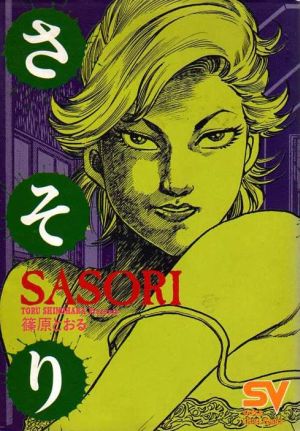 In the first half of the 1970’s, Meiko Kaji was to the slightly-disreputable end of Japanese cinema, much what Pam Grier was to the same end of Hollywood movies. Both made a career out of playing strong female characters, often operating on or beyond the boundaries of the law, and with no compunction about using violence to achieve their ends – which often involved taking revenge on those (almost alwayx men) who had wronged them. The Sasori [Japanese for “scorpion”] was not Kaji’s first foray into the genre, having cut her teeth on the Noraneko Rokku [Straycat or Alleycat Rock] films, a couple of years previously.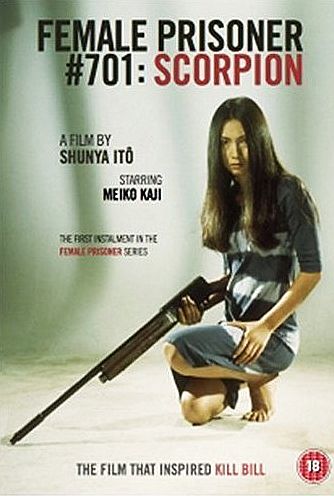
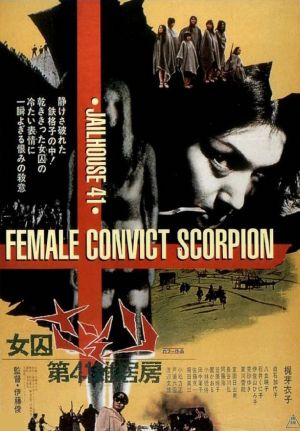 Right from the start, Nami (Kaji) established her utterly hardcore credentials, as she’s trying to dig her way out of the dungeon where she has been for the past year. With a spoon. Held in her teeth. She’s let out for the day because a bigwig is visiting, but takes the opportunity to attack warden Goda (Watanabe), almost depriving him of the sight of his other eye. As punishment for the resulting riot, Goda sends four guards to gang-rape Nami, and all the inmates are sent to a hard-labour camp. On the way back, they beat Nami as punishment, leaving her near-dead but it turns out that was just her ruse to get the guards to open the back of the van and escape. She leads the women across a blasted landscape, revenge once more on her mind, with Goda’s men in hot pursuit.
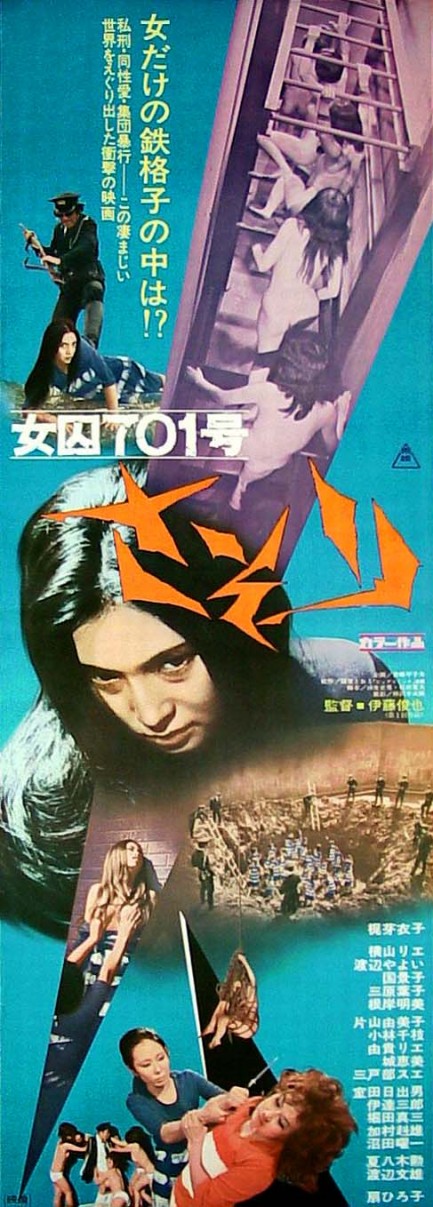
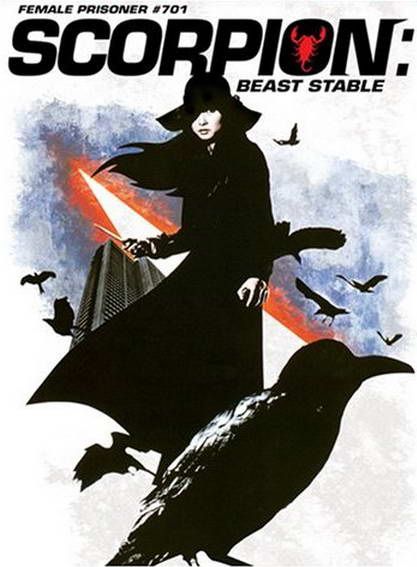 When this begins, Nami (Kaji) is on the run, and slices the arm off Detective Kondo (Narita) after he handcuffs himself to her. She befriends street hooker Yuki (Watanabe), who runs foul of the locak Yakuza gang by turning tricks on their turn, while trying to care for her brain-damaged brother, whom she also services sexually, to stop him from raping women(!). After Nami is involved in the death of a gang member who was blackmailing her, the gang’s madam Katsu (Lee), who knew the Scorpion from her own prison days, captures her, locking our heroine up in a literal big bird-cage. But after the true horror of the Yakuza’s treatment of their women is revealed (it starts with a golf-club going where no golf-club should ever go), Nami escapes and carves a bloody path of revenge on those responsible. When Katsu realizes what’s going on, she turns herself in to the police, figuring jail will be safe from Sasori’s wrath. Take a wild stab in the dark… Which, by coincidence is exactly what Katsu deserves.
 Nami (Kaji) is about to get married, but her wedding day is rudely interrupted by the arrival of the cops, who arrest her. On the way to prison (and, unsurprisingly, death row, given the body count left behind in the previous three movies), she takes out the driver, causing a crash. The injured Scorpion staggers away, and is rescued by Kudo (Tamura), a former political radical who was brutalized by the police for his actions, and so has a massive load of resentment against them. After being informed of Kudo’s harbouring of Nami by a worked at the sex-club where he works, the cops take him in: and use both physical and psychological torture to try and make him give up her location. Eventually arrested, Nami is sentenced to death, but the cops intend to make sure the time leading up to her execution is as unpleasant and possible, and the detective in charge, Hirose (Tsukata), is intent on making even Nami’s death as lonely an experience as possible.
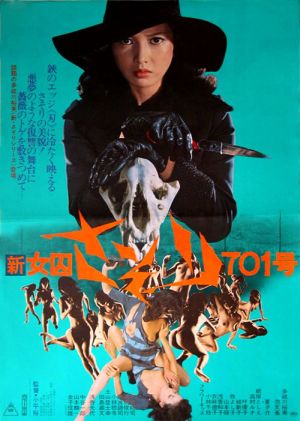 Just goes to show that the “cinematic reboot” is not a 21st-century invention, e.g. Batman or James Bond. For a mere three years after Meiko Kaji showed her sting as Nami, the studio reset the series, giving it a new director, new (and much more talkative) lead actress, and returning Nami Matsushima to a happy, criminal record-free young women, with a loving boyfriend. Except, of course, he turns out not to love her quite as much. Things start to collapse after her sister uncovers evidence of major government corruption, and passes it to Nami, shortly before being kidnapped. After Nami uncovers the truth – her sister is killed and she is framed for the murder, with the help of her boyfriend, and sentenced to 15 years in prison. Initially an easy mark for the tough girls in her cell, Nami soon develops her mean streak. And she’s going to need it, because the politician behind it all is looking to tidy up the loose end she represents, by killing her and making the death look like a suicide. Name turns the tables, in incendiary fashion, and it’s clear that she’s one loose end that won’t be quietly disposed of.
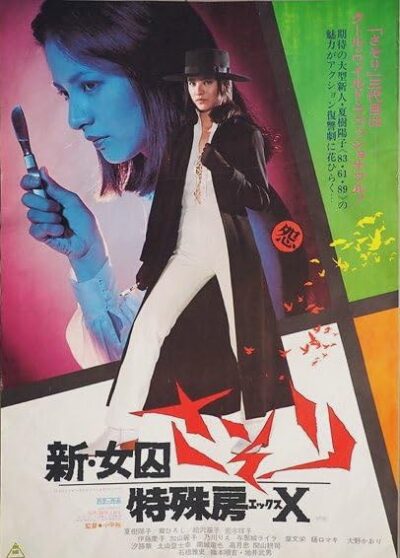 The comparisons of Takigawa to Lazenby above proved appropriate in another way, both being canned after one entry playing the iconic title character, which is probably just as symptomatic of something. The replacement here as Nami Matsushima is Natsuki, who seems to go back toward a more taciturn heroine, closer to the original. But it’s, effectively, another reboot, with not even a nod to the previous entry. In this case, the heroine is a nurse, framed for her involvement in the hospital murder of a politician who was threatening to expose corrupt practices.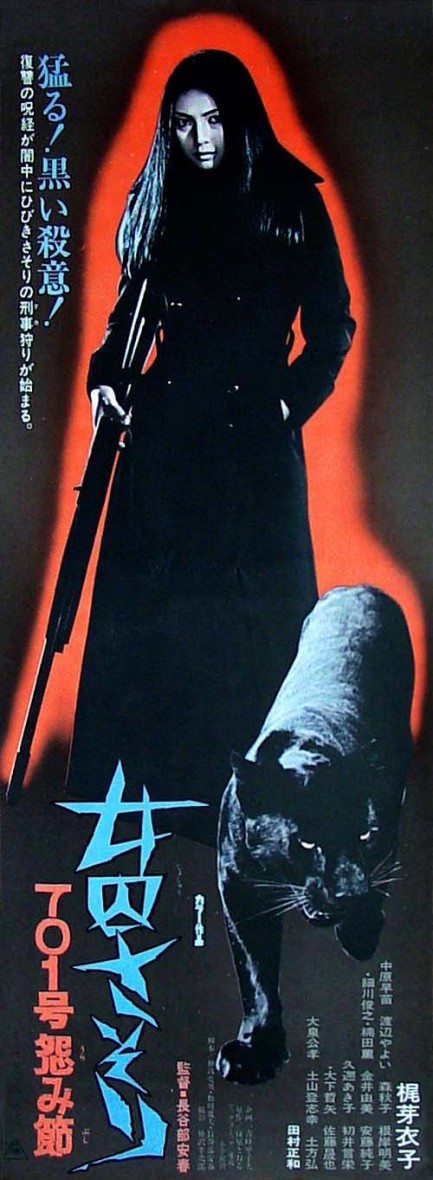
 “Z is for Zeiram”
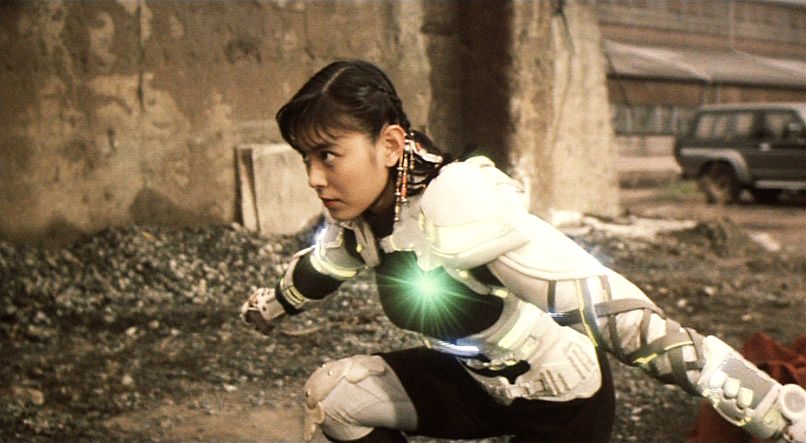
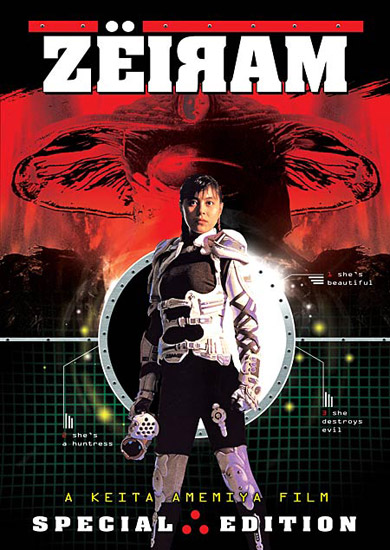 Zeiram and its sequel, Zeiram 2, both concern a creature which combines all the most unpleasant and lethal features of The Thing with The Terminator. It’s humanoid, at least in the number of functioning limbs, but its head appears almost mushroom shaped – though it’s hard to tell where Zeiram ends and its hat begins, for there’s a second face, embedded in the hat. This is capable of extending on a tentacle, to attack victims, taking in nourishment, and there’s evidence to suggest that it can absorb their DNA and use it to create monsters. Oh, and the rest of it is almost impossible to destroy.
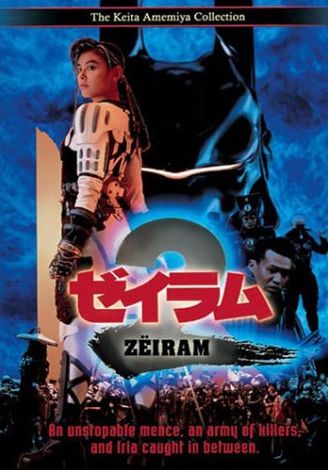 The sequel, which came out three years later, restores the “i” in the title, which was inexplicably removed from the original for it US release by Fox Lorber. This installment starts off as if it’s going to go in some radically different directions, even if all the main players are back. Iria is seeking an ancient artifact called the Carmarite, and additionally, has a new assistant, but he turns out to be untrustworthy. Meanwhile, a shadowy group has succeeded in regenerating Zeiram as a cyborg warrior (which makes a lot more sense if you’ve seen the anime, and know its origins), bending its will to their needs and turning it into a weapon. While initially successfully, this works about as well as most plans usually do, and it’s not longer before Zeiram is much more a menace than an ally.
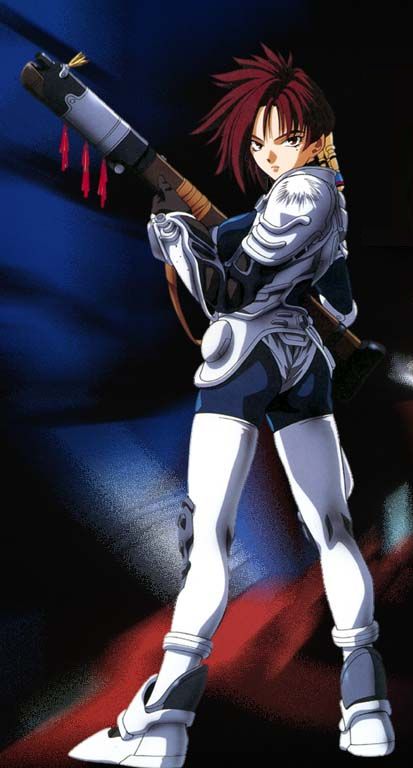 Though released several years later, this is a prequel to the two Zeiram movies, telling the story of the first encounter between Iria (Hisakawa, who was also Sailor Mercury) and Zeiram. At the time, she was an apprentice bounty-hunter, working alongside her brother Gren. They take a mission to rescue a VIP and recover the cargo from a stranded space-ship. However, once there, they discover the “cargo” is actually the alien Zeiram, which a corporation is interested in using as a weapon. The result leaves her brother apparently dead, and Iria now the target for the corporation, who want to hush up their thoroughly-dubious plan, by any means necessary. Fortunately, as well as her own skills, our heroine has the assistance of former rival bounty-hunter, Fujikuro (Chiva), endearing urchin Kei (Kanai), and Bob (Ikeda), a colleague whose consciousness has been turned into an AI.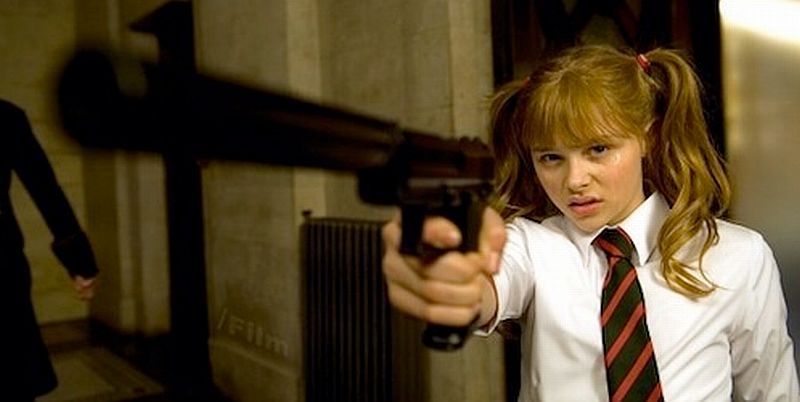
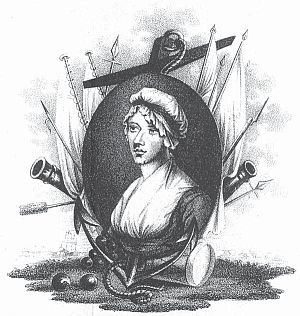 Joan of Arc
 Such tactics were necessary in Western society because of the increasing belief that women were not “fit” for combat. It was still possible as late as 1915, when Dorothy Lawrence (right) posed as a man to reach the Somme front-lines, where she laid mines, until illness forced her to reveal her identity. Her memoirs are available, free,
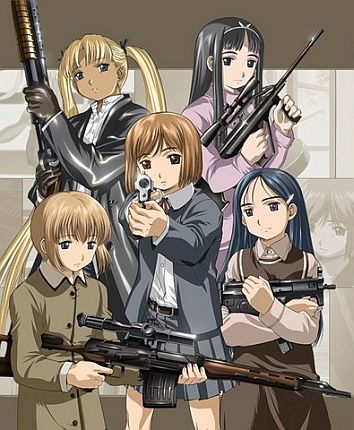 In a somewhat more light-hearted vein (for the most part), many anime and manga series have had teenage protagonists – as you’d expect, given they are often the core audience. The archetype goes back at least to the mid-1950’s, and Osama Tezuka’s Princess Knight, about a princess who must pretend to be male, so she can inherit the throne. There are too many of these even to list here, but some of the most well-known action-oriented examples in the West include Project A-ko, Sailor Moon, Blood: The Last Vampire, Cutie Honey, Gunslinger Girl (left), Noir and Dirty Pair – particularly Dirty Pair Flash, where both Kei and Yuri are seventeen-year olds.
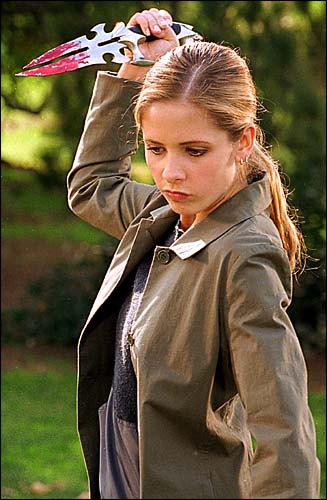 Quick: name a film where Saoirse Ronan plays a teenage assassin – besides Hanna. She seems to have developed a taste for the genre, as she also plays one in Violet & Daisy, directed by Geoffrey Fletcher (the screenwriter for Oscar-winner Precious). She is Daisy, along with Alexis Bledel as Violet: the two young killers for hire accept what they think will be a quick-and-easy job, until an unexpected target throws them off their plan.
 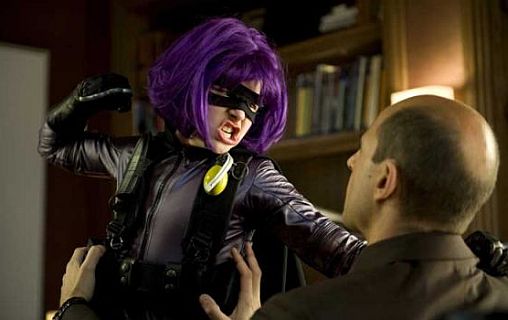 But his reading of the movie says a lot more about the writer than the film: as another critic
  We used to be fairly well into roller derby, and reports of these bouts have previously graced the pages of this site. Our involvement in the scene came to a sudden halt a couple of years back when a shift-change at work left me holding down the fort on Friday and Saturday evenings, which are basically the prime nights for bouts. While the shift has its advantages, it does mean the only bout we’ve seen in about the past five years was one at the Arizona State Fair which happened to coincide with a midweek night off. I still possess my AZRD shirt, which I wear it to work occasionally, and have followed (vaguely) the schisms and ructions as groups have split, flourished and folded locally. Phoenix alone, as well as AZRD, has the Arizona Derby Dames, Arizona Roller Girls, Harmonic Violence Rollergirls, Renegade Roller Girls and Desert Dolls Roller Derby (somewhat) active, more than any other city in the world. I’m unsure whether this splintering is a good thing.
 For the next entry, we leap forward to 2009, and Portland – a city which all we know about, we learned from Portlandia. And, on that basis, of course it’s a city which has roller derby, where it sprung, virtually fully-fledged to four-figure crowds. This is less of a landmark doc, in that it doesn’t cover the beginning, middle or end. It’s basically a year or so in the lives of the participants in the Rose City Rollers, which is the Portland league. It covers both their local season, and then, once that’s over, follows the travelling team, the Wheels of Justice, first as they head down to San Francisco to take on their hated rivals, then over to Denver for the regional championships.
 Not that there is any shortage of said personalities, such as the mother and daughter who both take part in the sport, or the three sisters who have been roller-skating virtually their entire life, and are feared across the entire Seattle league. There are, admittedly stories about romance and marriage included, but even these have a close connection to roller-derby, like the guy who proposes after his girlfriend became part of the championship-winning team [I can relate to this, having proposed to my wife immediately after the Arizona Diamondbacks won the 2001 World Series!]. I also enjoyed the insight into the different teams, like the Sockit Wenches (right) or the Derby Liberation Front, and the different ways in which they both perceive themselves and are perceived from the outside. Each has a different group personality, which of course, attracts other like-minded individuals, reinforcing that aspect of the team.
 Last month, we saw MMA star Gina Carano hit the big-screen in Haywire, but she’s not the first genuine female martial-artist to have started a movie career. Most obviously, Cynthia Rothtock was a five-time World Karate Champion in forms and weapons, and has a number of black belts in various disciplines. Similarly, Jeeja Yanin was a third-Dan black belt in Taekwondo, before hitting the silver screen in Chocolat. But here, we’ll be looking at the name that has recently emerged out of Japan, Rina Takeda, holder of a black belt in Ryukyu Shorin-ryu Karate.
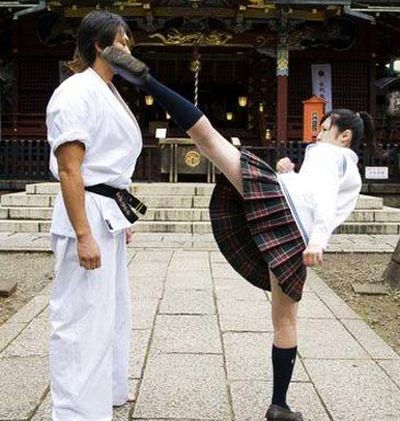 The entertainment value you get from this may depend on your expectations. It undoubtedly works best as a party-tape, show-casing the “no wires, CGI or stunt doubles” approach, but I have to beg to differ with some of the critical savaging it has received. Even
  The film manages to cram just about every cliché of martial-arts films into its 92 minutes, with a plot driven by four major threads:
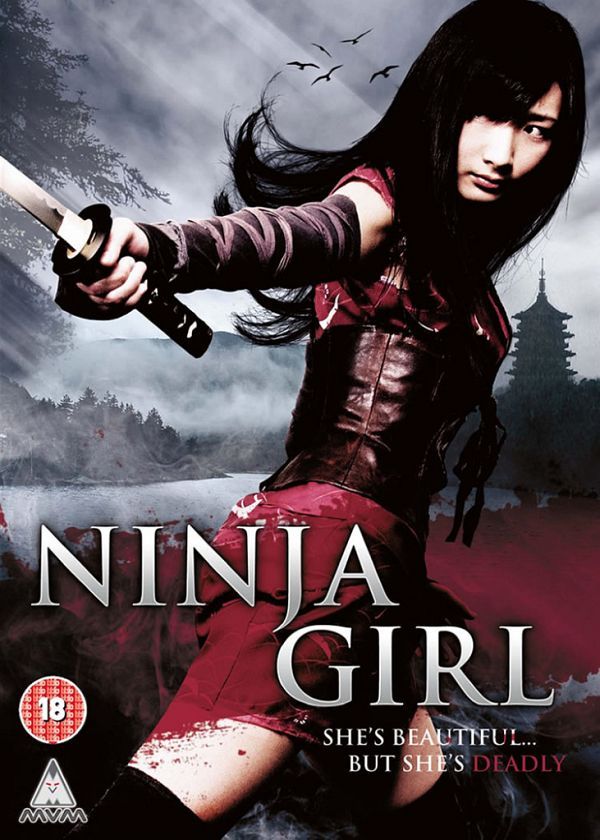 From the director of Alien vs. Ninja, the story here centres on a pair of ninjas, Shimotsuki and Hyotsuki, who are carrying on what appears to be a family tradition, kidnapping women from other clans’ villages, and taking them back to their own for nefarious purposes – let’s just say, the phrase “tools of pleasure” crops up on more than one occasion. They ar returning with their latest batch of four, including Kisaragi (Takeda), who is a ninja in her own right. With the help of a mysterious man (Sato), Kisuragi and her colleagues in imprisonment are released from their bondage – but that is only the first obstacle between them and their freedom. Of course, it turns out the heroine is not quite as innocent as she appears, and has an agenda of her own, because her mother was kidnapped by the same sleazy ninjas, when Kisuragi was just a baby.

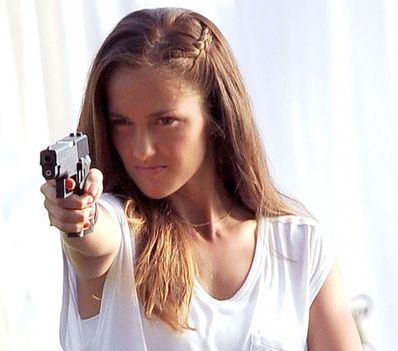 It could perhaps have withstood these barbs, if it hadn’t been for the poor ratings. 8.76 million viewers watched the Sept. 22 premiere, leaving it third in the timeslot, with less than half the audience for CBS and Fox’s offerings. That was disappointing enough, but it lost 19% of its audience the following episode, and by week three, it was down below six million. The death-knell was that, among the 18-49 year old demographic key to advertisers, Angels was on a mere
  Earlier
 1. In the late 19th century, a number of women were among the active leaders of the Russian nihilist organization Narodnaya Volya (People’s Will), best known for their assassination of Czar Alexander II in 1981. That was organized by a woman, Sophia Perovskaya, with another female member of the Executive Committee, Vera Figner (left) also participating. Four years previously, Vera Zasulich (right) shot and seriously wounded Colonel Theodore Trepov, the hated governor of St. Petersburg.
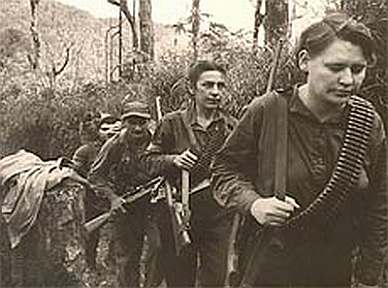 3. In Cuba, Celia Sánchez (right, with fellow revolutionary Haydée Santamaría) became one of the earliest members of the 26th of July Movement, joining the struggle after the coup against President Batista in 1952. After Fidel Castro was jailed, she became the rebel leader in the mountainous Sierra region of eastern Cuba, and was called by Castro, “the greatest guerrilla fighter and the most outstanding leader of the Cuban Revolution.” was one of the first women to assemble a combat squad during the revolution[. She was tasked with making all the necessary arrangements throughout the southwest coast region of Cuba, for the Granma landing, and was responsible for organising reinforcements once the revolutionaries landed.
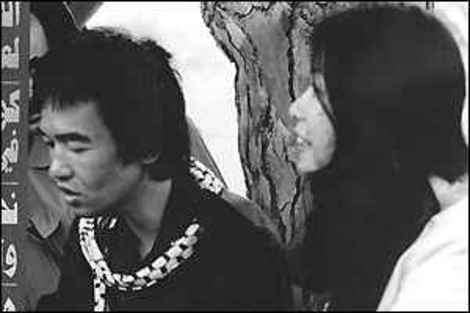 6. Fusako Shigenobu (left, with colleague Kozo Okamoto) was one of the founders and leaders of the Japanese Red Army. She is now serving 20 years for kidnapping embassy workers during a 1974 Japanese Red Army operation, she is also believed to have played key roles in other hijackings and bomb attacks. Reputedly ordered the murder, by burial alive, of a pregnant woman colleague for being “too bourgeois.” Another left-wing radical, Hiroko Nagata, while acting as vice-chairman of the United Red Army, directed the killing of 14 members of the group by beatings or hypothermia, during a 1972 purge. With friends like that, who needs enemies?
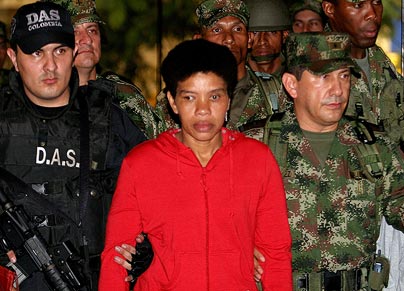 9. During their struggle for independence from Spain, Basque separatist group ETA had some infamous women members. These include Maria Dolores Gonzalez (“Yoyez”), who was later assassinated by the group as a reprisal for having left. Also high in their power structure was María Soledad Iparragirre, known as ‘Anboto’, whose exploits allegedly included the murder of a Spanish army Lieutenant and a car bomb explosion against a military bus, that killed seven.