
★★★
“Be cruel to your school.”
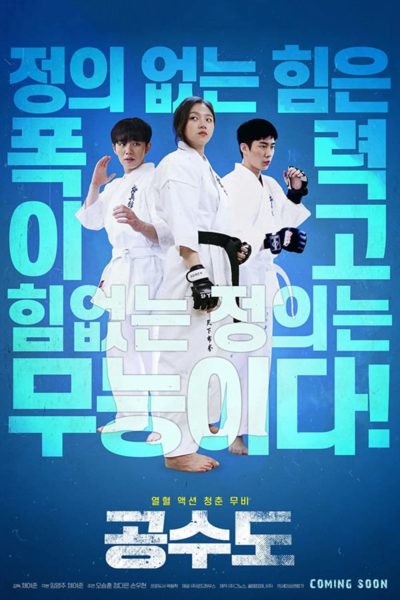 This is as much about the philosophical underpinnings of karate, and how it can be used for personal growth. The instigator in this case is Chae-yeong (Jung), a teenage girl who has just transferred to a new school after issues at her previous educational establishment. Her long-suffering father, a karate master has barely registered her there, when trouble finds Chae-yeong. She uses her skills to rescue a student, Jong-goo (Oh), who is refusing to help some bullies cheat in an upcoming exam. This turns out to get her an unwanted high profile, as the school is basically a gangsters’ paradise.
Protection rackets and other schemes are being run under the control of student president Jin-hyeok (Kim), who is eyeing a postgraduate career in the local mob, and needs to fund the necessary initiation fee. But his pal, Hae-seong (Son) has had enough of the bully lifestyle and is seeking a new direction for his life. He and Jong-goo convince Chae-yeong to let them sign on at her father’s dojo. There, they learn both the physical and mental skills that are part of karate, the latter embodied in pithy aphorisms such as “Justice without power is hollow. But power without justice is merely violence.” Hae-seong’s quest for independence, Jong-goo’s growing ability to fight back, and Chae-yeong’s refusal to bow down, put them all on an increasingly direct collision course with Jin-hyeok and his minions.
If stretched a little beyond the material at 112 mins, I was generally kept occupied. There’s less action than I would have wanted, but what there is, isn’t bad. Chae-yeong has a particularly terse and efficient approach, which fits her character’s lone-wolf attitude. The narrative is largely driven by the friendship between the three young leads. There were points I felt things were about to topple over into a romantic love triangle; fortunately, it largely avoided this. Instead, about the peak level of emotion is reached in a rather touching scene where Hae-seong explains how he ended up as the second in command to a gangster schoolmate. That criminal angle is a bit startling. I’ve seen many films and shows set in Japanese schools where education appears… a lower priority, shall we say, e.g. Sukeban Deka. This is the first Korean entry with such rampant lawlessness in a contemporary setting, and where adult guardians are notable by their absence, save for Chae-yeong’s father.
A tighter hand on the script would have been helpful, with a few threads that could have used more detail. There’s also an odd subplot where Chae-yeong’s Dad has stomach troubles. We never get any payoff for this, though I was kinda glad, dreading what the punchline could have ended up being. To be honest, I did have some difficulty telling certain male characters apart, largely due to them sporting Korean Haircut #3. However, the main story is an acceptably entertaining work, helped by decent performances from the trio of leads.
Dir: Johnny Chae
Star: Jung Da-Eun, Oh Seung-Hoon, Son Woo-Hyun, Kim Tae-yoon
 Sinclair O’Malley, known to everyone as Sin, is a bit of a wild card. She was initially an FBI agent, but was released by the agency, largely for her refusal to stay within the lines. In particular, she went off-book to end a human trafficking ring in Nicaragua. She is the kind of person whom we first meet interrupting a funeral, by rolling up to it late, on a Harley. But this is just the book’s first misstep. For rather than demonstrating her bad-ass credentials, it just made me feel she was a selfish and egocentric narcissist, shrieking “Look at meeeeeeee!” everywhere she went. Subsequent actions did little to disavow me of this belief.
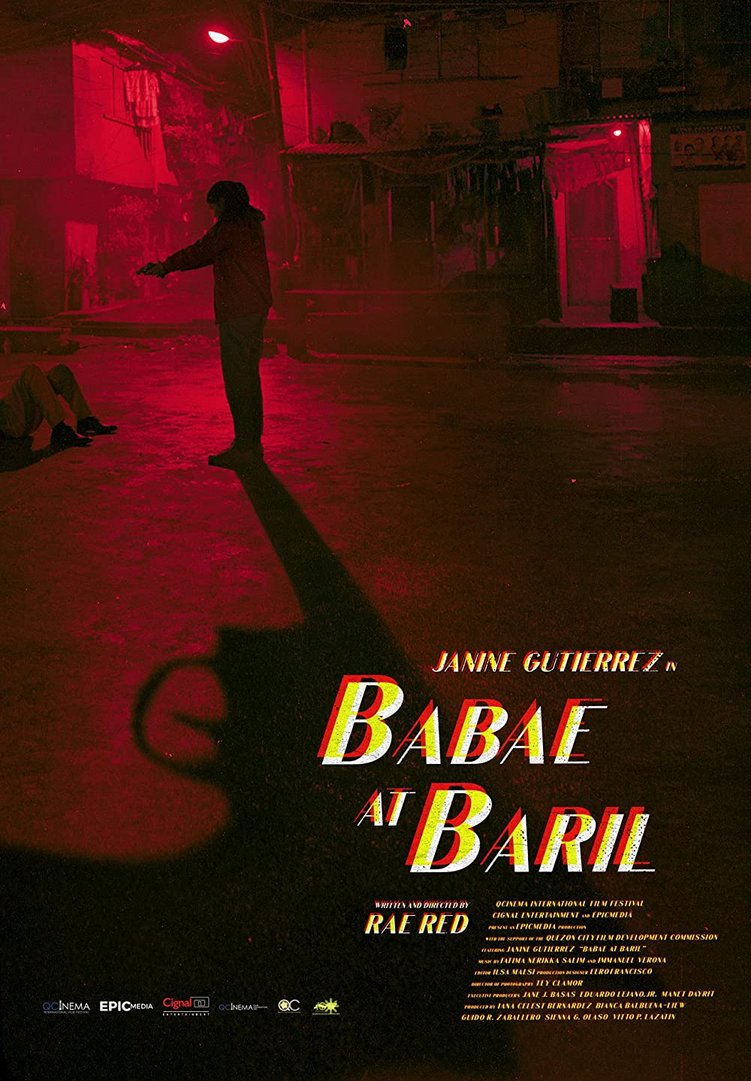
 As I write this, in December 2021, abortion is again a bit of a hot topic on the American political scene. I am, personally, fairly neutral on the topic. Or, at least, to the point that I’d need to spend the entire review outlining my position. Such nuance tends not to fly on the Internet, where you are either a baby-killer or want to turn America into The Handmaid’s Tale, and moderation is for pussies. On that basis, this film is a bit of a losing proposition, likely destined to satisfy no-one with its relative fair-handedness. These days, it feels like everyone just wants their echo chamber reinforced, rather than challenged, even in the mild way this offers.
 ★★★½
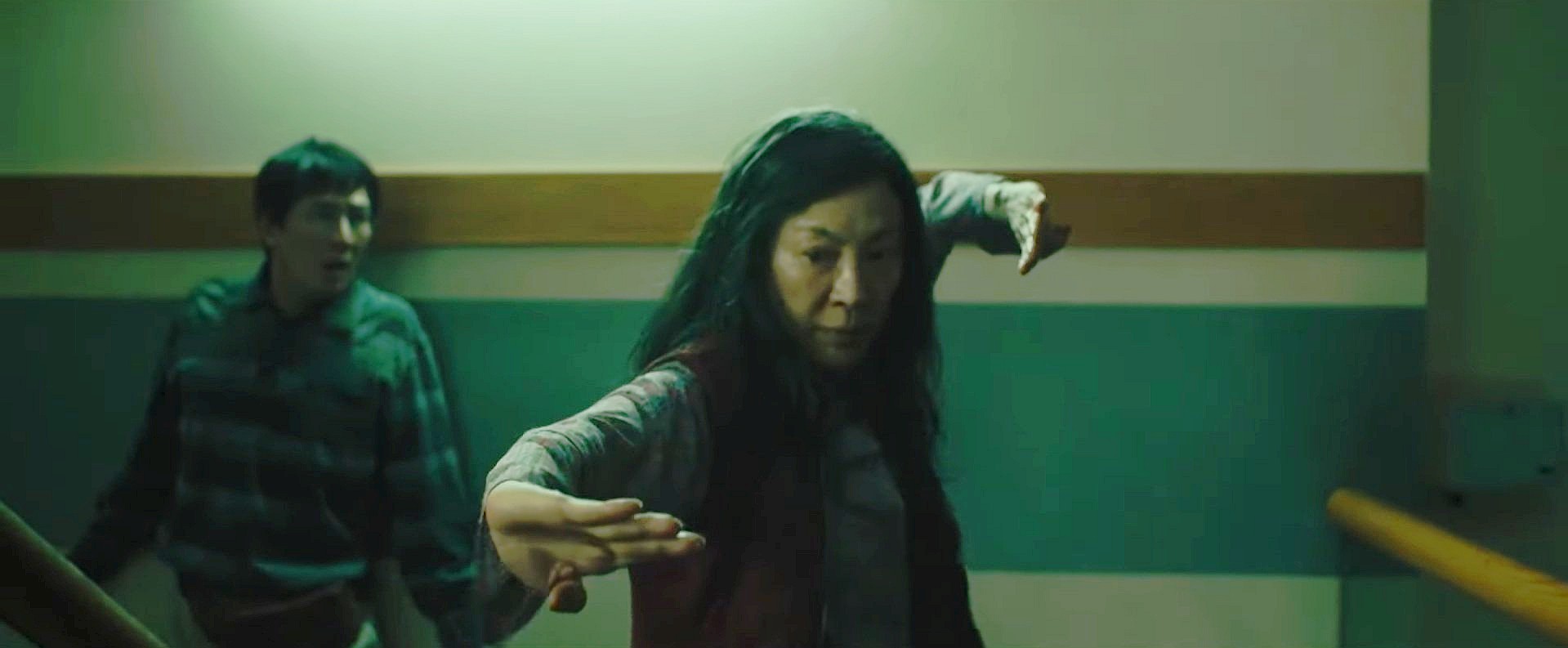
★★★½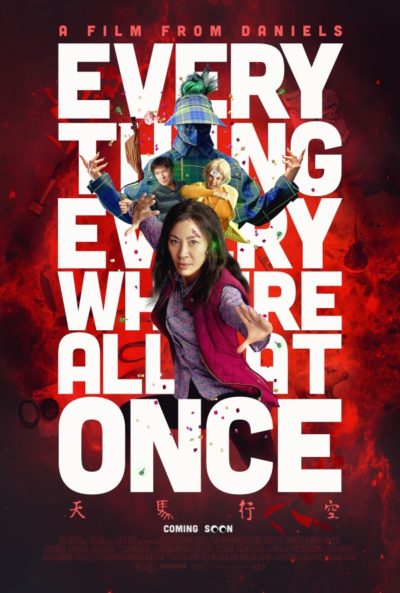 Like I said: almost infinite in scope. Apparently, co-writer/director Kwan was diagnosed with ADHD during the creative process: to be frank, it shows. While the imagination on view is admirable, the film bounces about between ideas at a ferocious rate, almost regardless of whether they deserve it. We spend an inordinate amount of time in a multiverse where everyone has long, floppy fingers. Yet there is also buttplug-fu, which is an example of the movie going places you’d never have expected could be so entertaining. Or a lengthy, surprisingly engrossing, scene in which two rocks in an otherwise lifeless multiverse have a conversation in captions. Because why not?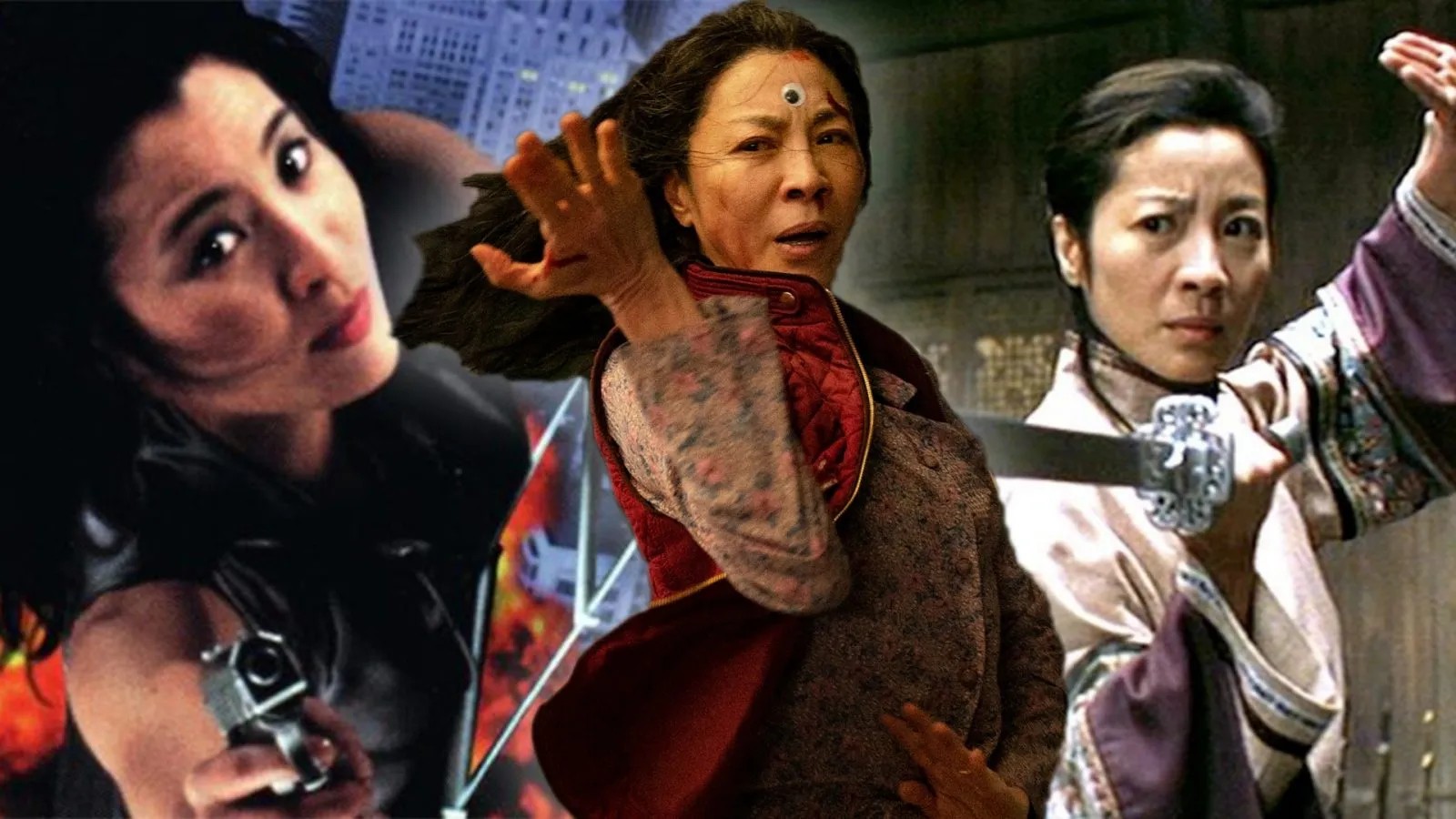
 The above odd combination is actually a fairly accurate assessment of what you have here. It’s a Yakuza action-thriller… but rather than being set in Tokyo or Osaka, is relocated to the Brazillian city of Sao Paolo. As an introductory credit helpfully informs us, this has the largest Japanese population of any city outside Japan. The story concerns two separate people’s quests for their pasts, which (to absolutely no-one’s surprise) turn out to be intertwined. One of these is Akemi (MASUMI), who as a young child was the sole survivor of a 1999 massacre of her Yakuza family back in Japan, was subsequently spirited away by allies and is now living in Brazil. The other is Shiro (Rhys-Meyers), an amnesiac who wakes up in hospital with no clue as to how he got there or his identity, except for a Japanese sword.
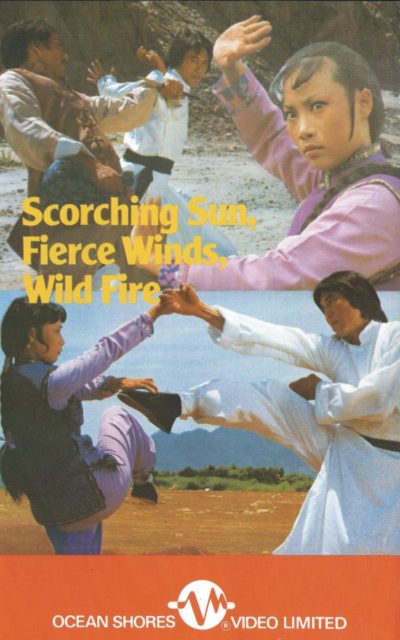 The first thing which will hit you about this 1979 Taiwanese co-production is the utterly shameless way it hijacks John Williams’s soundtrack to Star Wars. 93 minutes later, as the end credits roll, accompanied by more unauthorized liftage… That’s probably still going to be the main element of this you will remember. For the rest is largely a confusingly-plotted and not very well executed bit of chop socky. Despite Angela Mao’s presence, second on the list of participants, she is a long way behind the main character, in terms of both screen time and action.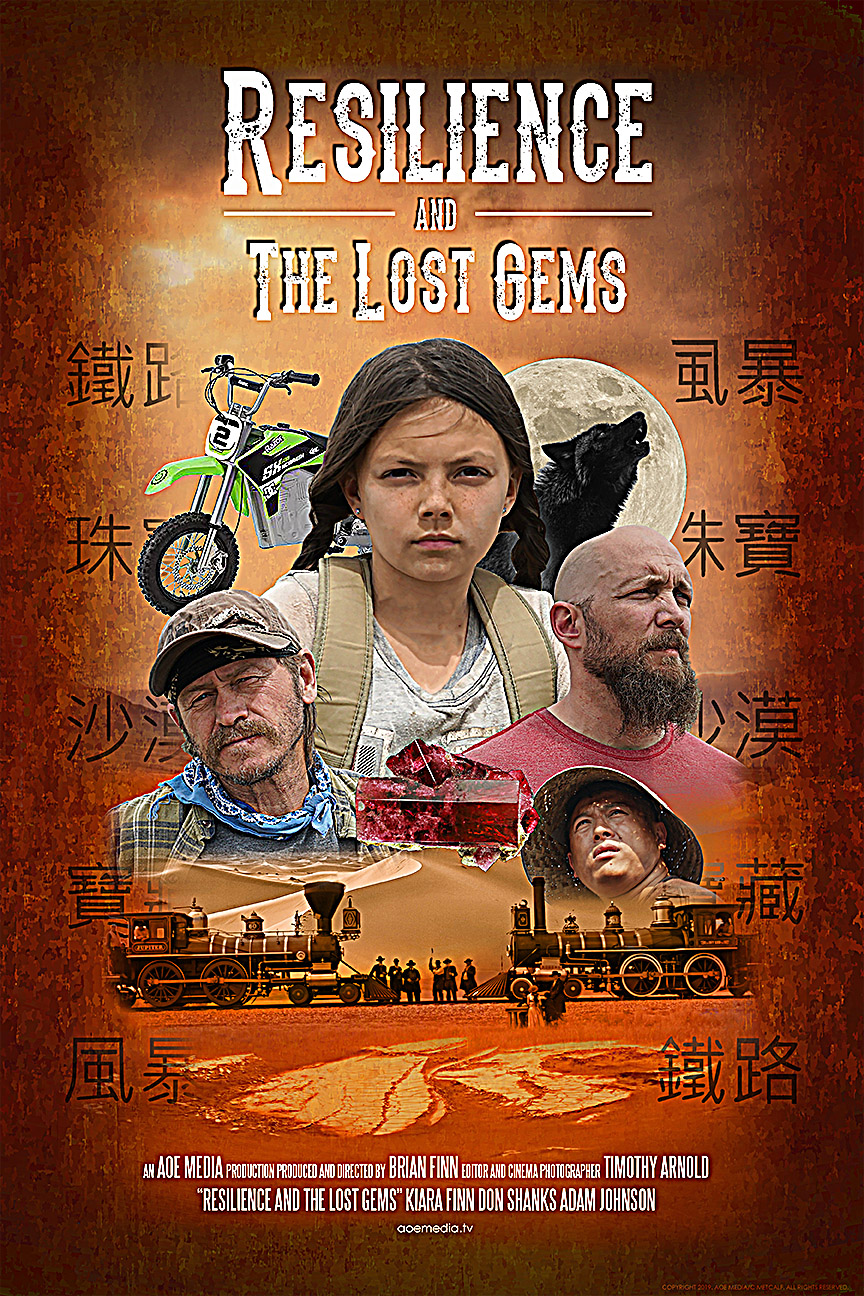
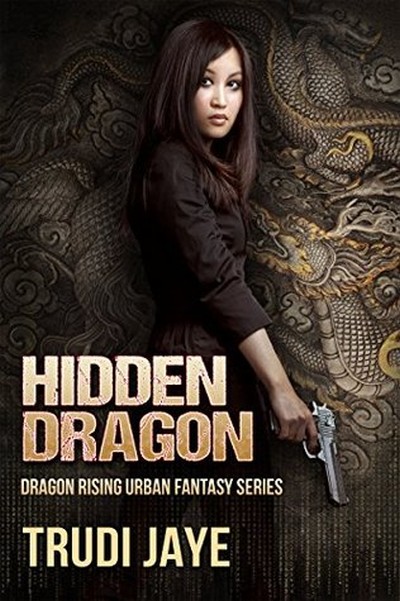 This version of the world is more or less identical to our own. Except, several hundred years ago, there was a catastrophe in which massive dragons rampaged around, with humans being collateral damage. A secret society called the Earthbound managed to end the thread, partly through the invention of the Spell Web – basically, an Internet for magic users. Now, the Earthbound and a secret government organization, the Supernatural Intelligence Group, operate to keep a largely oblivious population in the dark. Though everyone knows dragons are extinct… aren’t they?
 It probably didn’t help that I watched this the same day as I finished off the slick, well-animated and occasionally downright beautiful