




★★½
“Falls off sharply.”
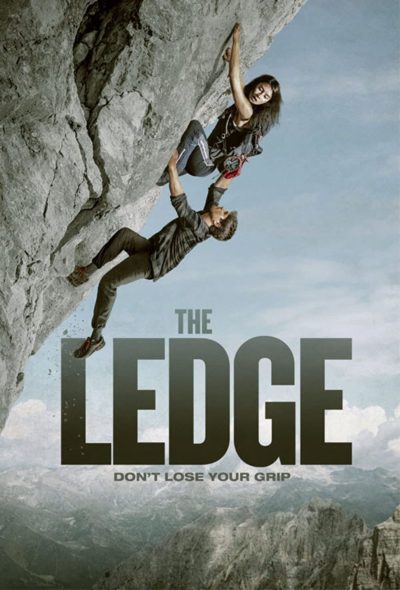 Despite the above, there are some strong positives to be found here. First off, the Serbian mountain landscapes are beautiful, and the cinematography does them justice. Free climbing, the focus here, is an innately tense pastime, with the risk of serious injury or death present at any second. Again, the photography gets this over well, with some of the shots capturing the heights involved, to the point of almost inducing vertigo in the viewer. Finally, Ashworth is entirely convincing in her portrayal of free climber Kelly. She has the right, well-defined physique, muscled particularly around the shoulders, and exudes a quiet confidence in her own abilities, which is what you would expect. That’s the good news.
Unfortunately, there’s the rest of the film, beginning with a plot that would be overachieving if it reached the level of dumb, and is little more than a series of eye-roll generating cliches strung together. Kelly and her gal pal are prepping for a weekend’s climbing on the anniversary of a tragic accident which claimed the life of Kelly’s fiancé, just as he was about to propose to her. Four jocks roll up at the next cabin, and before you can say “date rape”, the pal has fallen off a cliff, and is finished off by the group’s leader, Josh (Lamb). Becky happens to video that, and as they chase her, starts climbing the rock face to escape. The only way out is up, except Josh and crew take an alternate route up. It leaves Becky stuck on a narrow outcrop, with bad guys above, and a thousand-foot drop below.
Oh, and I didn’t even mention the snakes, which according to the movie, are a bigger threat to rock climbers, than plummeting to your doom. Or the conveniently abandoned tent on the ledge, just a few feet below a far better site. The whole thing is littered with this kind of contrivance. Worse still is Josh – by which I mean, both the character, and the ridiculously hammy performance by Lamb. It comes over as a douchebag version of Ryan Reynolds, and could not be more an Obvious Psycho, if he had been running a motel and talking about his mother a lot.
Some scenes are effective, mostly the simpler ones, pitting Becky against the implacable combination of the rock-face and gravity. If only the makers had realized what they have, does not need to be dressed up in painful and artificial ways to generate excitement. All you need is some initial device to get Becky onto the wall; everything thereafter is needless window-dressing. This includes the back-story of Becky’s boyfriend, and the convoluted saga of Josh’s love-life off the mountain, neither adding an iota to the entertainment value. Ford also directed Never Let Go, which used its exotic location and isolated heroine to slightly better effect. But if I never see Lamb’s irritating hamminess ever again, I will be entirely fine with that.
Dir: Howard J. Ford
Star: Brittany Ashworth, Ben Lamb, Nathan Welsh, Louis Boyer
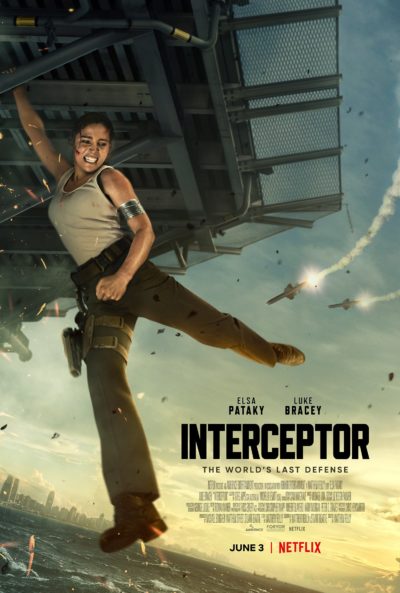 Two minutes in, Chris turned to me and said, “Is this an Asylum movie?” Oh, that she had been right, for the net results might have been more entertaining. This is truly the dumbest film I have seen in a very long time. It feels like a throwback in content to about thirty years ago, except with a script that makes your average Cannon product look like Citizen Kane. It’s set on a missile interceptor station in the middle of the Pacific, to which Captain J. J. Collins (Pataky) has just been assigned again. Barely has she dropped her bags off in her cabin, when word comes that their sister base in Alaska has gone dark, and terrorists have stolen 16 Russian ICBMs. Before you can say “shitty Die Hard knockoff”, trust-fund kid Alexander Kessel (Bracey) shows up, intent on removing America’s last line of defense. It’s up to J.J. and plucky SigInt guy Rahul Shah (Mehta) to prevent them – or the terrorists will have won, literally.
 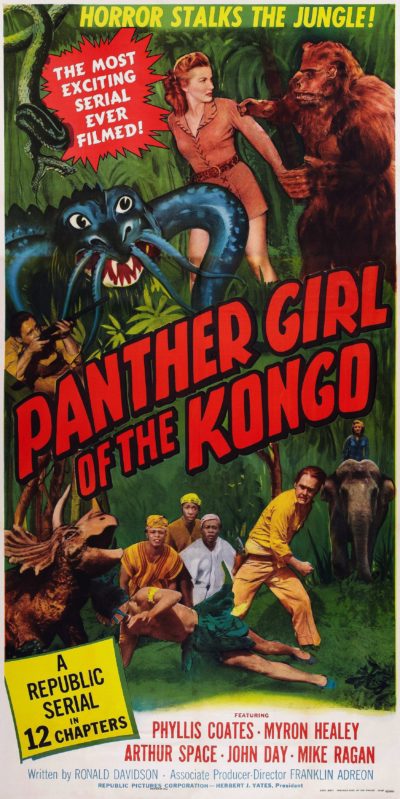 This was the second-to-last of Republic’s sixty-six serials and, to be honest, it shows. Having watched
  This is set around fifty years after “the Provocation”, a series of unsolved mass abductions which led to Capernica becoming a strictly-controlled hierarchical society of Uppers, Lowers and the Military. Orphan Jaclyn Holloway is a Lower, living in near poverty in the seaside town known as Settlement 56. The only way out for a Lower is to pass the stringent test which allows entry into the Military. On graduating from the local school,
 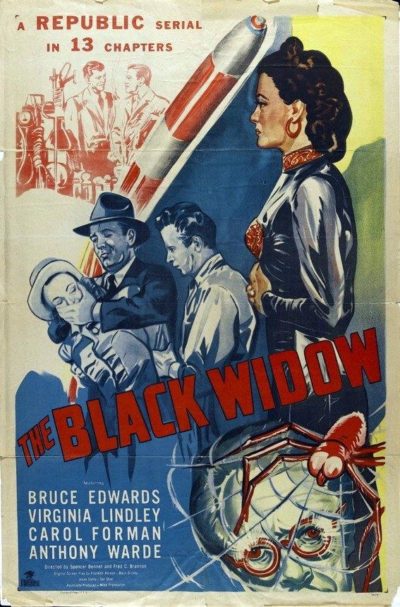 This is something of a fringe entry, and illustrates a few of the issues with Hollywood of the time. In particular, a severe reluctance to let female characters act with genuine independence. We see this on both side of the story here. The title character is Sombra (Forman), a vaguely Asiatic woman who is engaged in a plot to steal nuclear secrets from the United States. To this end, she has been trying to bribe acquaintances of a notable scientist, but the trail of spider-envenomed corpses resulting from their refusal to help has brought her to the attention of the Daily Clarion and its ace girl reporter, Joyce Winters (Lindley). Which would be fine, if the women were allowed to go head-to-head on their own terms, in the same way as
 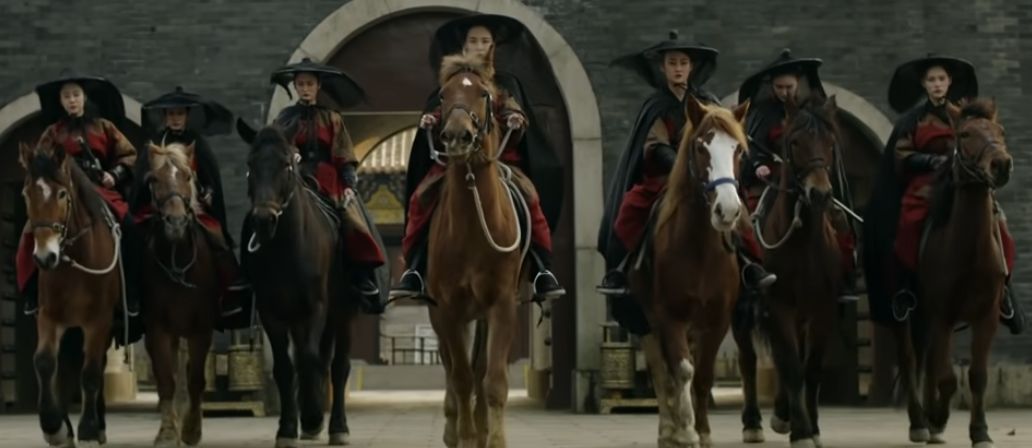 This takes place in early 15th century China, when Zhu Di (Zhang) had taken over the throne from his nephew, Wen Du (also played by Zhang), forcing the latter to go into hiding. Zhu is protected by his all-female Imperial Guard, under the leadership of Qing Lian (Xu). Actually, all seven of them have the surname Qing, which confused the heck out of me at first. But it actually makes sense, as they were taken in as babies, and brought up for the express purpose of protecting Zhu Di. Anyway, he gets word that Wen is to be found in a house of ill-repute, and send the Qings after him. Lian is injured in the raid, but her life is saved by Li Gexiao. When she returns to Zhu, however, he’s having none of it and orders her to kill Li, knowing he is actually the dethroned Emperor Wen. Lian opts not to carry out the emperor’s orders, and so the remaining Imperial Guard sisters are sent out by Zhu, to make her pay for her disloyalty.
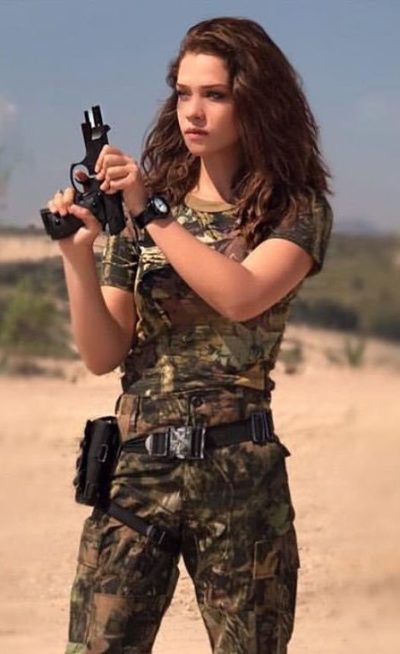 Halfway through the final installment, Chris came in. She paused, watching for a moment, then said, “They spend far too much time talking, and not enough time killing.” Just a shame she waited 93 episodes to express so succinctly one of the main problems with the series. For, even if the final arc had its share of bloodshed, if you average it out per show, it’s about the level of a mid-strength nosebleed. It certainly put the novela into narconovela. Though the problems began at the start – or, rather, the end of the second series where heroine Sara Aguilar was apparently gunned down. This being a show where escape from death was common, I spent the first 20 episodes waiting for her to return. Spoiler: she doesn’t.
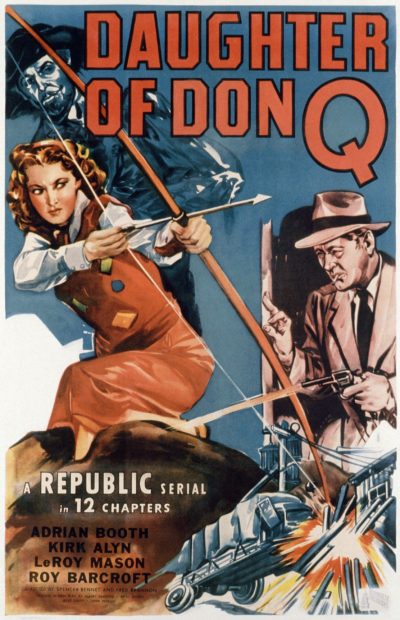 Lorna Gray, the lead here, had been the villainess in
 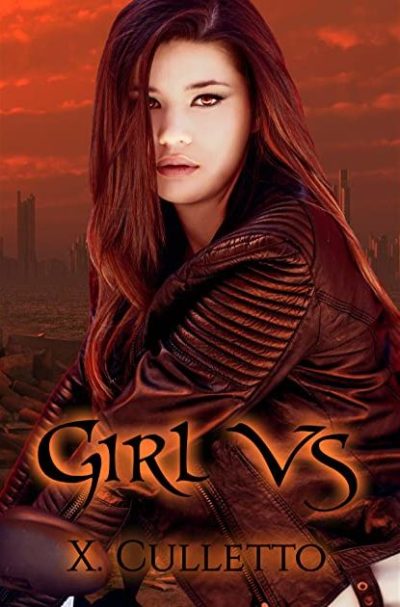 While a quick read, at 205 pages, after slogging through a couple of what can only be described as “chonkers”, I really didn’t mind. It’s briskly-paced, hits the ground running and largely doesn’t stop thereafter. I have some concerns about where things might go in subsequent volumes, so will probably stop here, just to be safe. However, I enjoyed what I read well enough.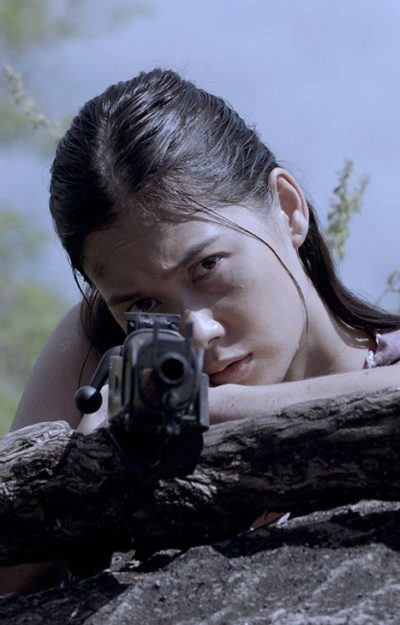
 The heroine here, Mariano (Salvador), has to count as the baddest bitch I’ve seen in quite a long time. In terms of being a sheer, unstoppable force, she’s right up there with Jen from