




★★
“Twenty-five minutes too long, despite some nice concepts.”
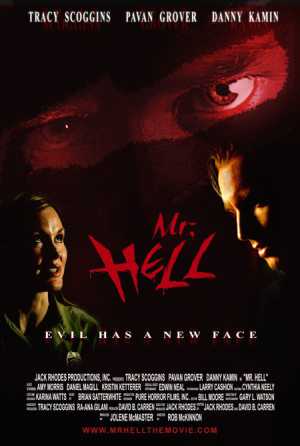 Sometimes, you just have to sit back and let the DVD sleeve do the talking. “The notorious serial killer, Harry Eugene Loveless AKA Mr. HELL roamed from town-to-town and job-to-job, brutally murdering his victims, with the demonic intention of removing the ‘windows to the soul’ – their eyes! Mr. HELL mutilated Dr. Karl Matthews at a government laboratory where biological weapons were secretly being developed. The daughter’s precocious daughter, Tyler, who discovered her father’s body with his eyes missing, was then pursued by Harry through the lab’s subterranean tunnels. During the chase, Harry was accidentally destroyed by toxic industrial acid, and his remains flowed into a storage container. Was this the end for Mr. HELL?
Fourteen years later, we find a grown-up Tyler, now a security guard at the lab soon scheduled for demolition. during the lab’s closing process, incompetent waste removal workers unwittingly release Harry’s toxic essence. Mr. HELL is back, and on the hunt! Complicating matters, a group of mercenaries led by Dominique Horney, invade the laboratory to steal a hidden vial of deadly bacterium to sell to terrorists. This small private army may be prepared for a few security guards, but not for Mr. HELL! As for Tyler, will she survive the band of professional killers and defeat, once again, the diabolical butcher, Mr. HELL?!”
Phew. Enough going on there for two films at least. And that’s the problem: they’d have been better off dealing with the entire first half in a five-minute flashback, but it drags on and on – Chris bailed for the Land of Nod before the mercenaries turned up. I stayed conscious…well, mostly, but it was a struggle, not least because of the horrible performance by the grown-up Tyler (Morris), who is thoroughly unconvincing. Scoggins is better, and there are a number of other, decently-strong female characters, for which the makers deserve credit – it’s nice to see the heroine in a horror film not needing to be rescued. However, just about every other aspect is inadequate, from the special effects through dialogue which is far too often trying to be clever, rather than genuinely smart to an atonal score that grates horribly for the vast majority of the time.
Most low-budget horror films do keep their running time as short as possible; cheaper that way. Mr. Hell run 102 minutes, which is positively epic for the genre. They should have let Mr. Hell – sorry: Mr. HELL – loose on the script to slice ‘n’ dice it, as it’s in serious need of tightening. The ‘deadly bacterium’, for example, is no more than a Macguffin, thrown away for the benefit of a poor ‘melt’ effect at the end. With better writing, and a better lead actress, this could have lived up to the potential of the synopsis. Unfortunately, it only does so very sporadically, and despite our love for the genre, I can’t recommend this overall.
Dir: Rob McKinnon
Star: Amy Morris, Jett Texas Elliott, Larry Cashion, Tracy Scoggins
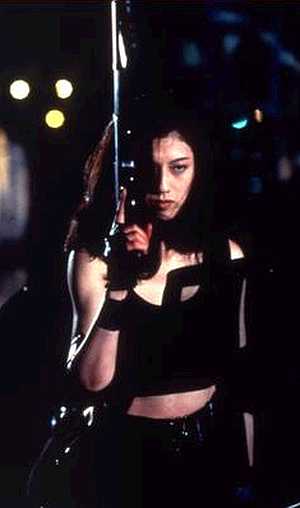 Debate raged over this one. Chris reckons lead actress Shimamura was, at some point, a man. I’m not quite so convinced, but the mere thought certainly gave the sex scenes here an added edge of creepiness. Given the lengthy such sequence which occurs about five minutes in, I feared this was going to be no more than an itty-bitty titty-fest. Fortunately, after getting that out of his system, director Ikeda (Evil Dead Trap) settles down and delivers a gritty bit of nastiness, occasionally teetering on the edge of sadistic.
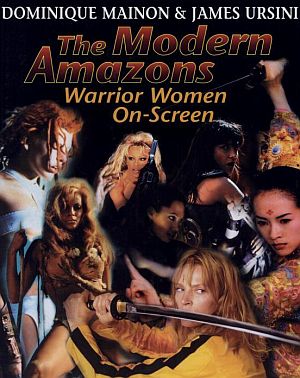 While it’s nice to see our favourite topic here getting some printed love, I can’t say I was impressed with this end result, which struggles to be all things to all women, and ends up not being very good at any of them. There’s no denying the breadth of coverage here, with everything from Sailor Moon to Ilsa getting covered – though they appear rather too willing to stretch the bounds of the term, “Amazons”. I mean: Pippi Longstocking? The coverage is grouped into various areas: monster killers, super-sleuths, fur bikinis, etc. along with additional essays on more specific themes, such as the representation of women as felines. It’s a somewhat lumpy distinction, which occasionally makes for strange bed-fellows, but occasionally comes up with some thought-provoking nuggets.
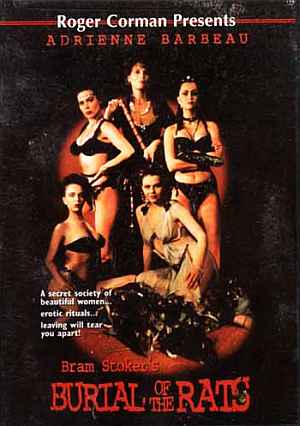 This can only be described as utterly mad. Bram Stoker is kidnapped by a group of bikini-clad female vigilantes, ruled over by “the Pied Piper’s twisted sister” (Barbeau), who can control rats with her flute (when not decapitating them in her rodent-sized guillotine, I kid you not). He is coerced into becoming one of them because the Queen decided his writing skills could aid their PR skills, striking fear into their targets with his eye-witness accounts of the raids where the extract vengeance on evil men. Of course, one of the clan (Ford) falls for him, but when she is captured by the authorities, her colleague must mount a raid to rescue her. Meanwhile, Stoker’s father is trying to find his son. Oh, and I did I mention the topless ballet which is apparently the women’s chief source of entertainment? No wonder Barbeau permanently wears a pained expression. [Though she now looks back and
 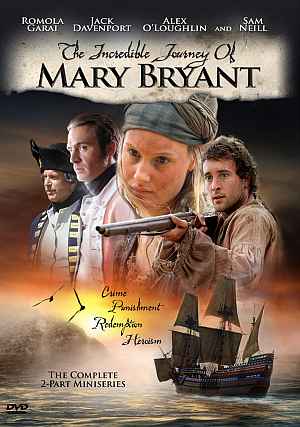 Most Aussies won’t thank you for mentioning it, but the colony was originally populated largely by the dregs of British society. Prisoners were shipped Down Under, thereby alleviating jail overcrowding and providing a cheap labour source for the new world. This mini-series recounts the story of one such unwilling emigrant, Mary Bryant, shipped off to Oz for a petty theft. She gives birth to one child en route, and has another there, but when starvation threatens her family, she plans a daring escape, and convinces her co-convicts to help, even though they’re 3,000 miles from the nearest safe haven.
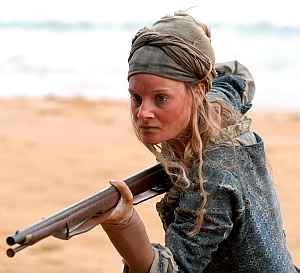 Here be historical spoilers I was surprised how close this was to the truth. Bryant was a Cornish convict, transported to Australia, who did take part in a break-out. Though captured in Timor and returned to Britain, there was indeed a public outcry, and those involved were pardoned. The main dramatic invention is Clarke’s relationship with Mary; he certainly didn’t kill her husband, who actually died of natural causes during the voyage back to Britain. The nod to James Boswell is legitimate too, as he was among those who campaigned for her release. Various books have been written about her; Google is your friend if you want to find out about these.
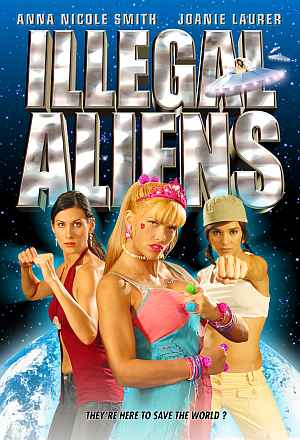 Okay, her swansong won’t be up there with James Dean’s or Bruce Lee’s, but this does at least sense its own idiocy, rendering the movie somewhat bullet-proof, critically speaking. It’s supposed to be dumb, wildly implausible and hideously over-acted. So condemning it for these flaws is complaining because your hotdog tastes of meat. A trio of shape-shifting aliens land on Earth to protect it from the scum of the universe. Thanks to their first encounter with our culture coming in the shape of a porno mag, they opt for the form of attractive women. Two end up getting jobs as FX/stunt people in Hollywood – a sadly underexplored angle – while the third is…Anna Nicole Smith. Then their nemesis (Laurer, the actress formerly known as Chyna) turns up, taking over the body of a mobster’s wife, and prepares to bring about the end of the world. Can she be stopped?
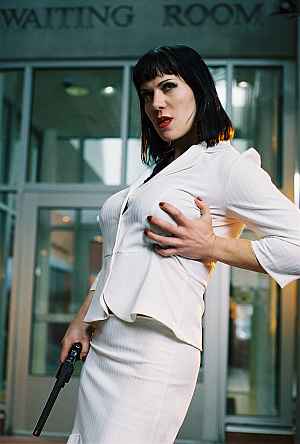 There’s no doubt this film is, if not cashing in on her death, certainly shrugging its shoulders and taking advantage of an unfortunate situation. I don’t really blame them for that, even if anyone looking for skin will be wasting their time here. In sharp contrast to her previous, ah, body of work, AN’s clothes remain on; as exploitation goes, this is tame and restrained. And that may be the main problem: a failure by the makers to decide which way to go. SF/action or all-out comedy? There’s enough of each to suggest, with greater commitment, either might have worked better. Instead, it comes off as somewhat lukewarm – can’t say we were ever bored, yet I can’t say I was ever more than mildly amused.
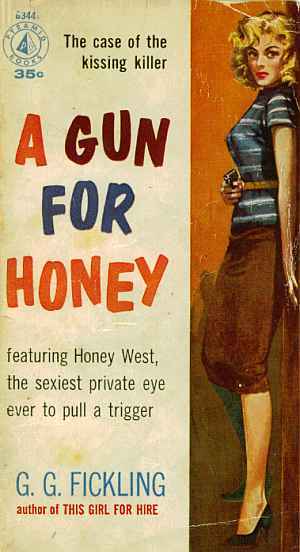 Honey West is best known as the heroine of a mid-60’s TV show created by Aaron Spelling, starring Anne Francis. But her origins actually date back almost a decade further, to a series of pulp detective novels written by Forest Fickling, under the vaguely-pseudonymic name of G.G.Fickling – his wife was Gloria, which may explain the choice. The heroine is a private eye, who follows her father into the profession, after he was killed on the job. These adventures, judging by A Gun for Honey, are rather more hard-boiled, and occasionally risque, than the TV show, though even in the book, the characters never actually seem to do “it”.
 Grindhouse harkens back to an earlier time, when the only way to see cult or obscure movies was at your local fleabag cinema or drive-in. There was an entire industry of low-budget studios, like AIP, set up to create product for these outlets: knowing they couldn’t hope to compete in the areas of stars or general quality, they resorted instead to the old stand-bys of sex and violence. They flourished, roughly from the sixties to the end of the seventies, but the steady rise of home-entertainment media spelt their death-knell – at least as far as theatrical releases went. However, their films were an influence on many film-makers, and some of them have teamed up to bring you this love-letter to the genre, of the sort probably not seen for a couple of decades.
 There’s a fine sense of escalation, from the relatively-subdued opening, through to the insane climax, in which Cherry – now fitted with an automatic weapon in place of a limb which was torn off her during an earlier attack – takes on an entire army of the undead. Ludicrous? Over-the-top? Nonsensical? Hell, yes. Wouldn’t have it any other way. About the only weakness is a tendency to go overboard with the trappings of grindhouse flicks, such as missing reels, scratched film, etc. far beyond the point at which it’s amusing. We get it. I said, we get it. Thank you. Fortunately, the DVD should have the “restored” i.e. un-screwed with version.
 This section has the usual problem of Tarantino movies: he’s in love with his own dialogue, especially during an immensely-talky first half. And making the problem worse, the words never seem like they’re coming out of the characters’ mouths, but it is all too easy to imagine Quentin Tarantino saying them. Self-indulgent, meaningless drivel, full of pop culture references, he believes will make you think, “How clever!” – unfortunately, the result is closer to “What a poser!” This gets old really quickly, and when things get going in the second half, it’s a blessed relief. If you need to use the bathroom, quite likely in a 195-minute event like this, early on in Death Proof is definitely the time. You won’t be missing anything at all, and I suspect it might have been better if the two directors here had swapped scripts.
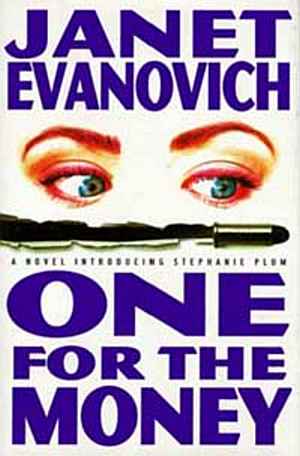 Former romance writer Evanovich switched genres and hit paydirt immediately with the first in the series, describing the adventures of former Newark lingerie buyer Stephanie Plum. She’s forced, through financial misadventure, to find a new job, and goes for a job filing paperwork for her bail bondsman cousin, but ends up hunting FTA’s (those who Failed To Appear for their court date) instead. She starts at the top, with suspended cop Joe Morelli, who has vanished after being accused of shooting an unarmed man. But as the witnesses to the incident start to die, Plum realises things may not be what they seem. The novice bounty huntress is well out of her depth, not least when she crosses psycho boxer Ramirez – until help comes from an unexpected source…
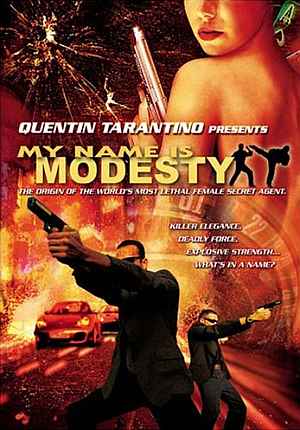 The word is, Miramax made this in order to keep their rights to the Modesty Blaise series active: I imagine a clause reverted them back to creator Peter O’Donnell, if unused within X years. Tarantino wanted to direct it, but couldn’t find the time, hence this stop-gap directed by journeyman Spiegel, who’s familiar with Quentin cast-offs, having also directed From Dusk Till Dawn 2. Shot in 18 Romanian days, the limitations of time and budget are clear [save admittedly copious flashbacks, the movie is almost all set in one location], but given them, it’s by no means a disaster. The main failing is the lack of action; we don’t see alleged jet-setting, goddess of kick-butt Blaise do much at all until the last few minutes. This may be because Staden looks as if she’d struggle to move forward in a stiff breeze; seeing her trading blows is unconvincing, and the fight choreographer should have focused on speed and/or agility instead. Though in terms of presence and steely gaze, she does fit the part well.
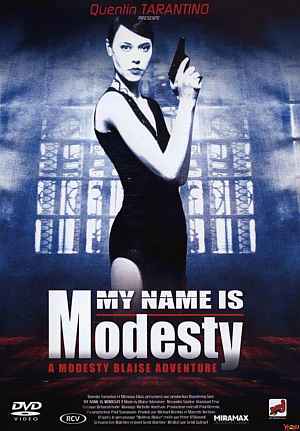 I remember the books from my youth, and the huge disappointment I felt when I saw the 1966 camp abortion starring Monica Vitti [there was also an 1982 TV pilot, with Ann Turkel, which I haven’t found]. This “origin” story is an improvement, at least taking the characters seriously. Blaise is trapped in a casino by a robber with a grudge against the owner (Waldau), and as they wait for the guy with the safe combination to arrive, she trades stories of her past for the freedom of the other hostages, Arabian Nights style, almost. I’d be somewhat curious to see the original cut, which apparently ran nearly two hours. Now, it’s barely 70 minutes between Bond-esque opening and closing credits, yet is still pretty talky, Blaise and her mentor (Pearson) meandering between the Balkans and Morocco.