




“More cheery in battle, than chatting to suitors or taking the bench at a bridal feast.”
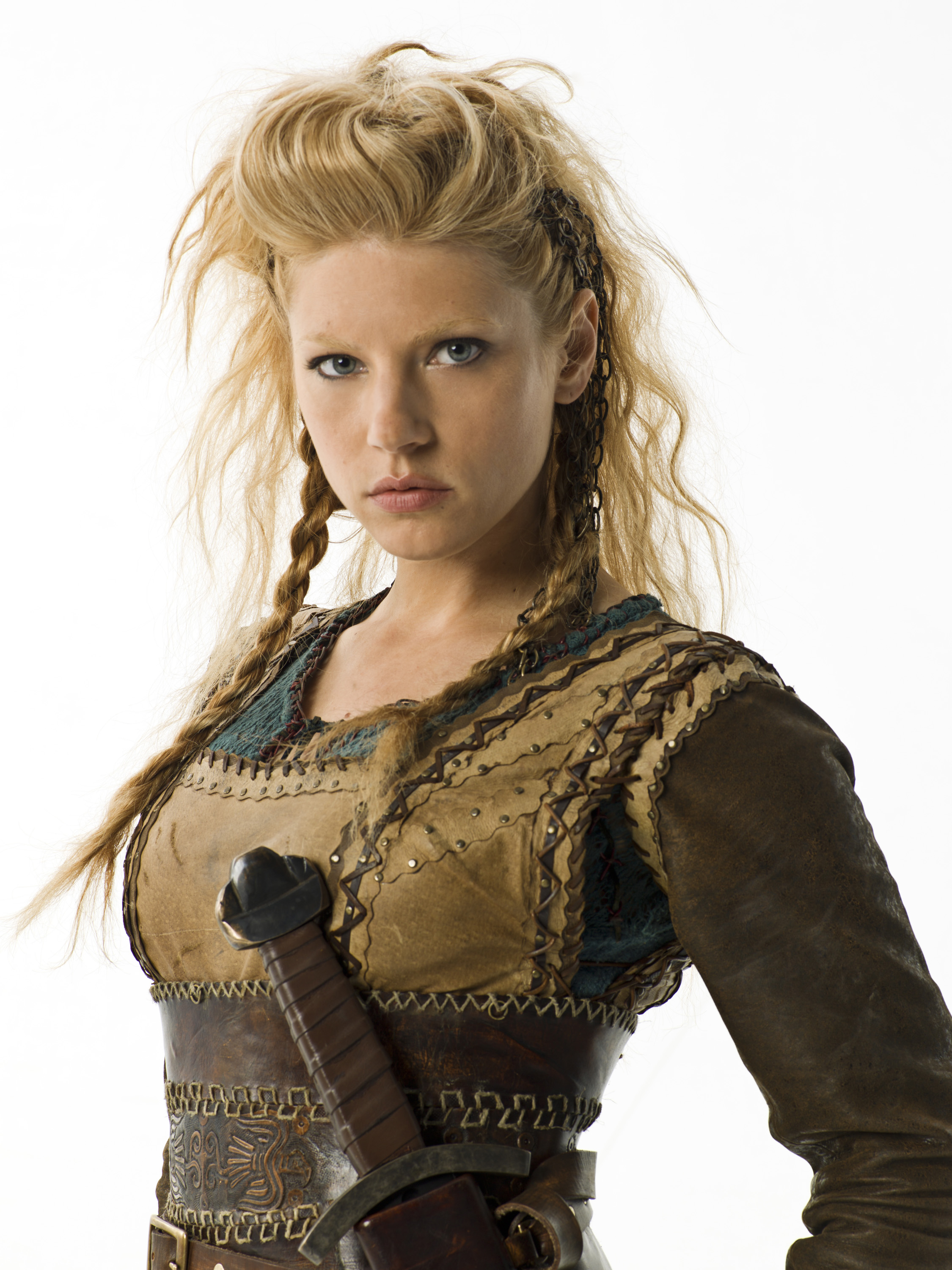
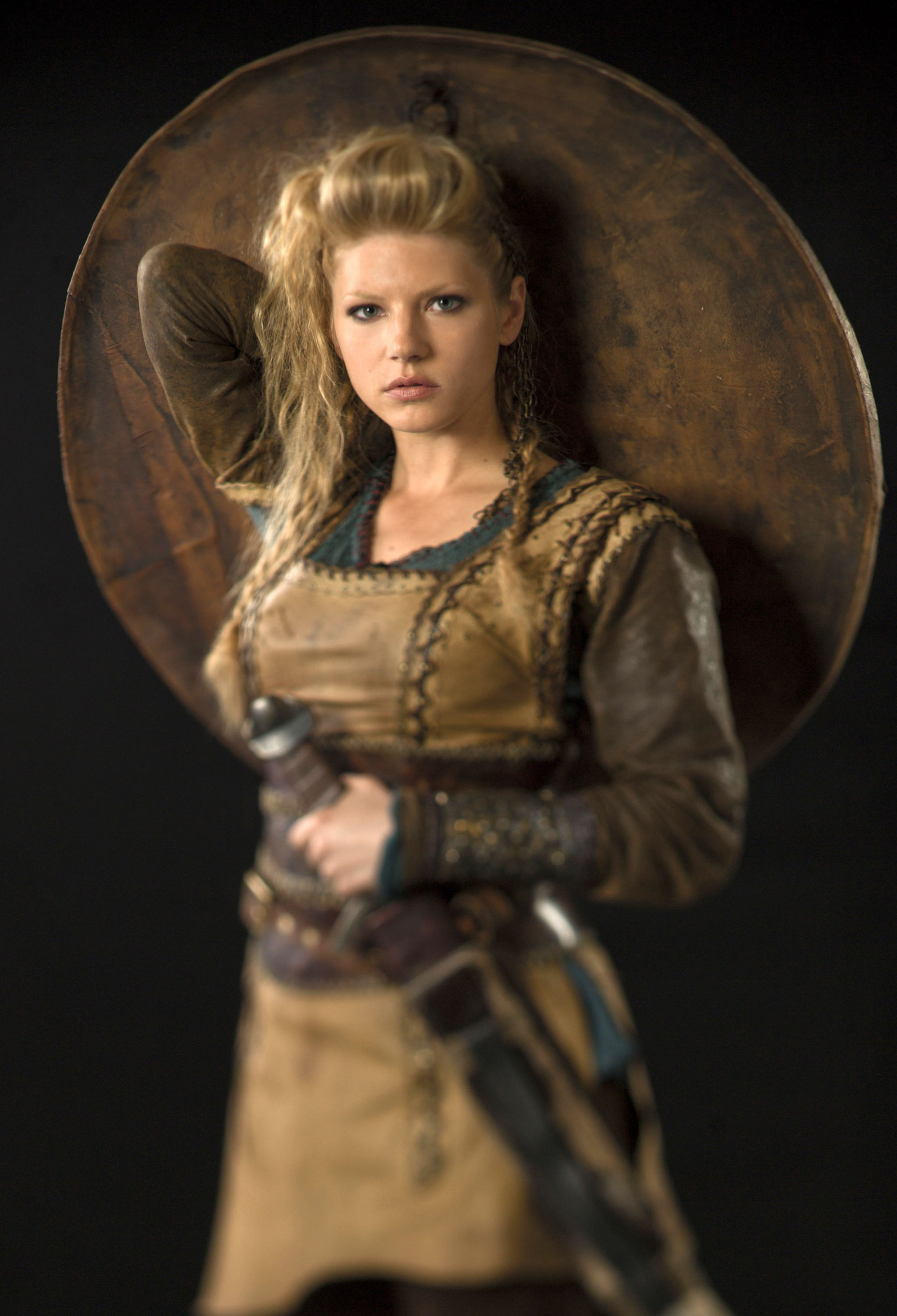
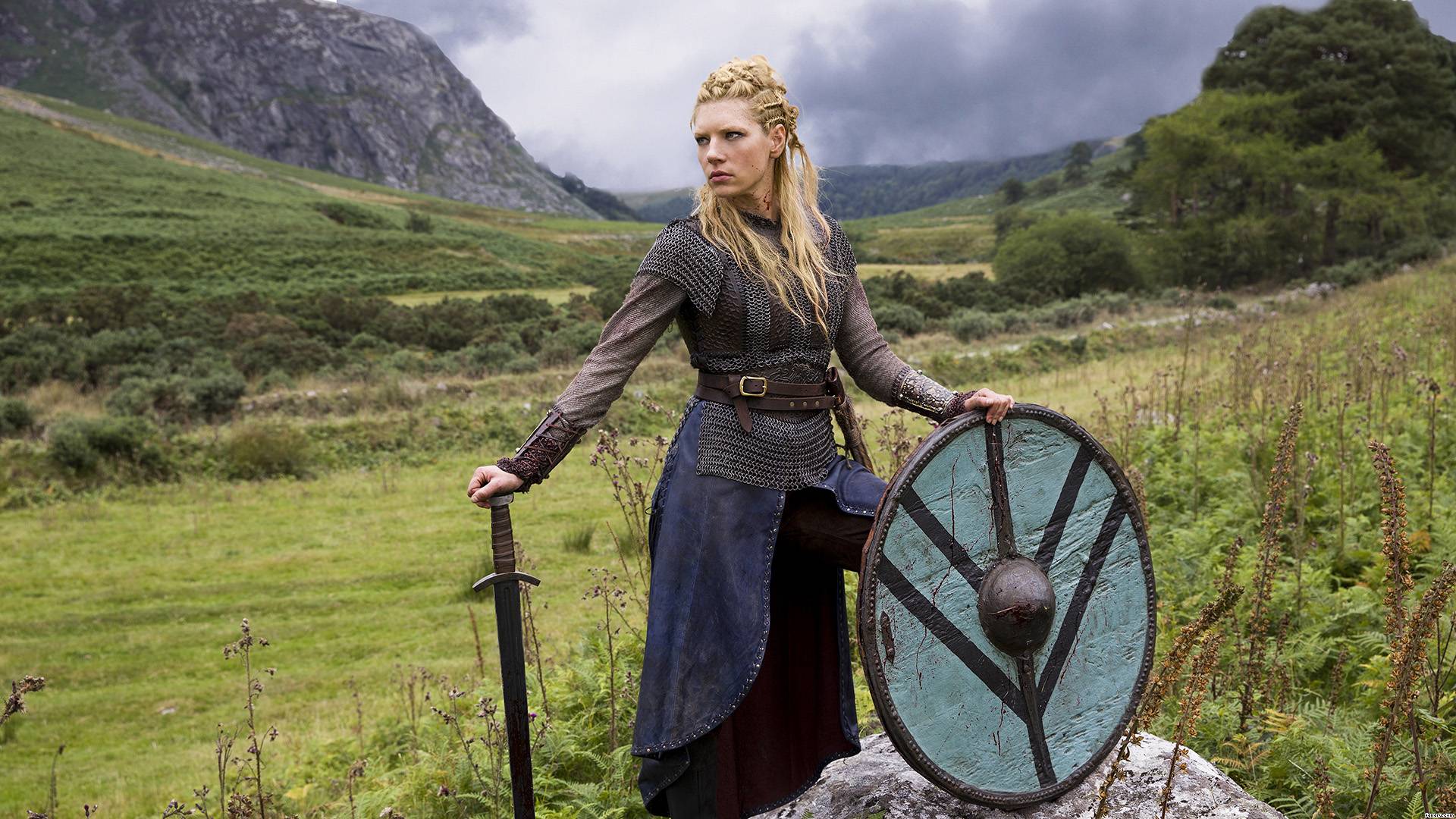
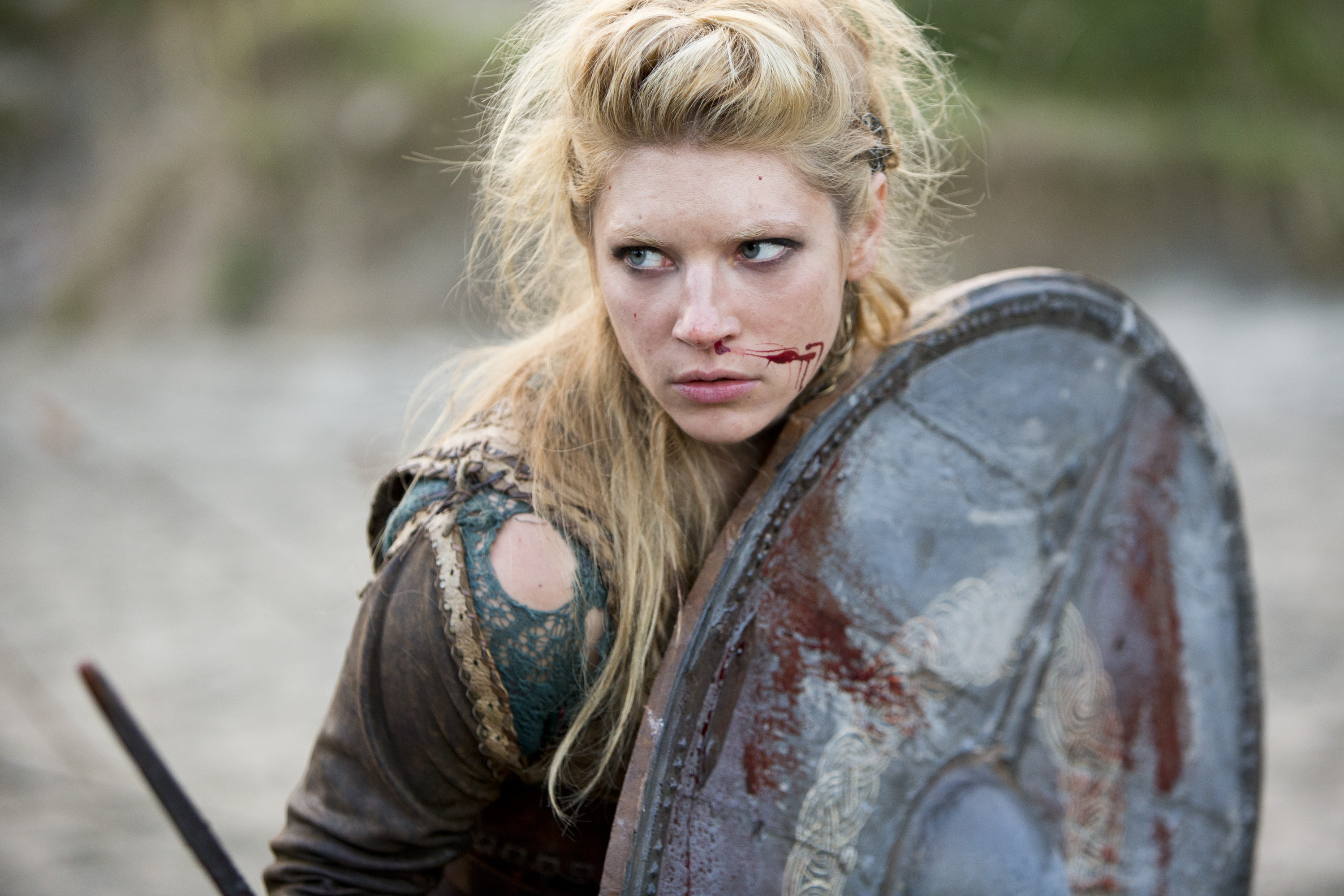
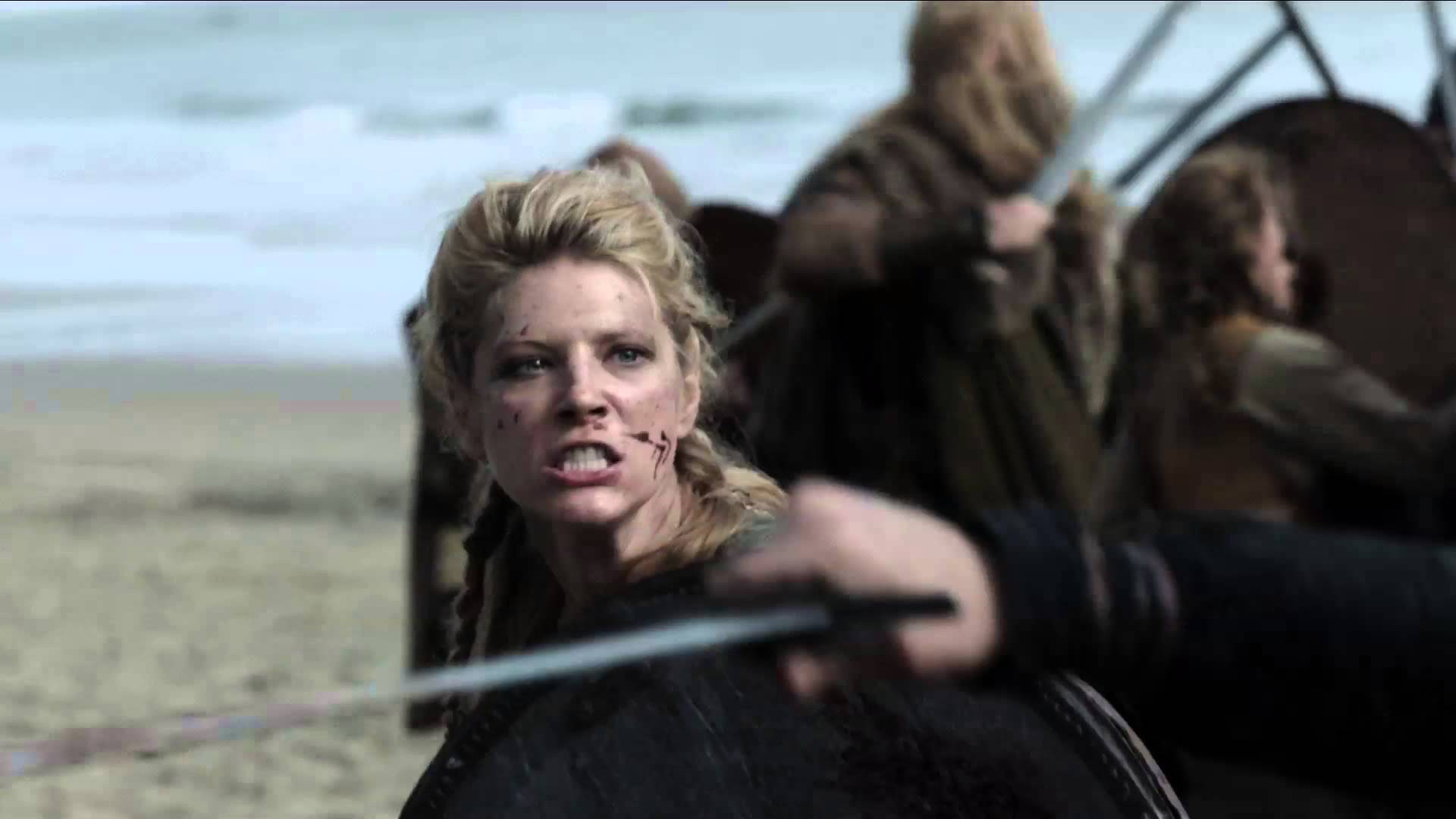
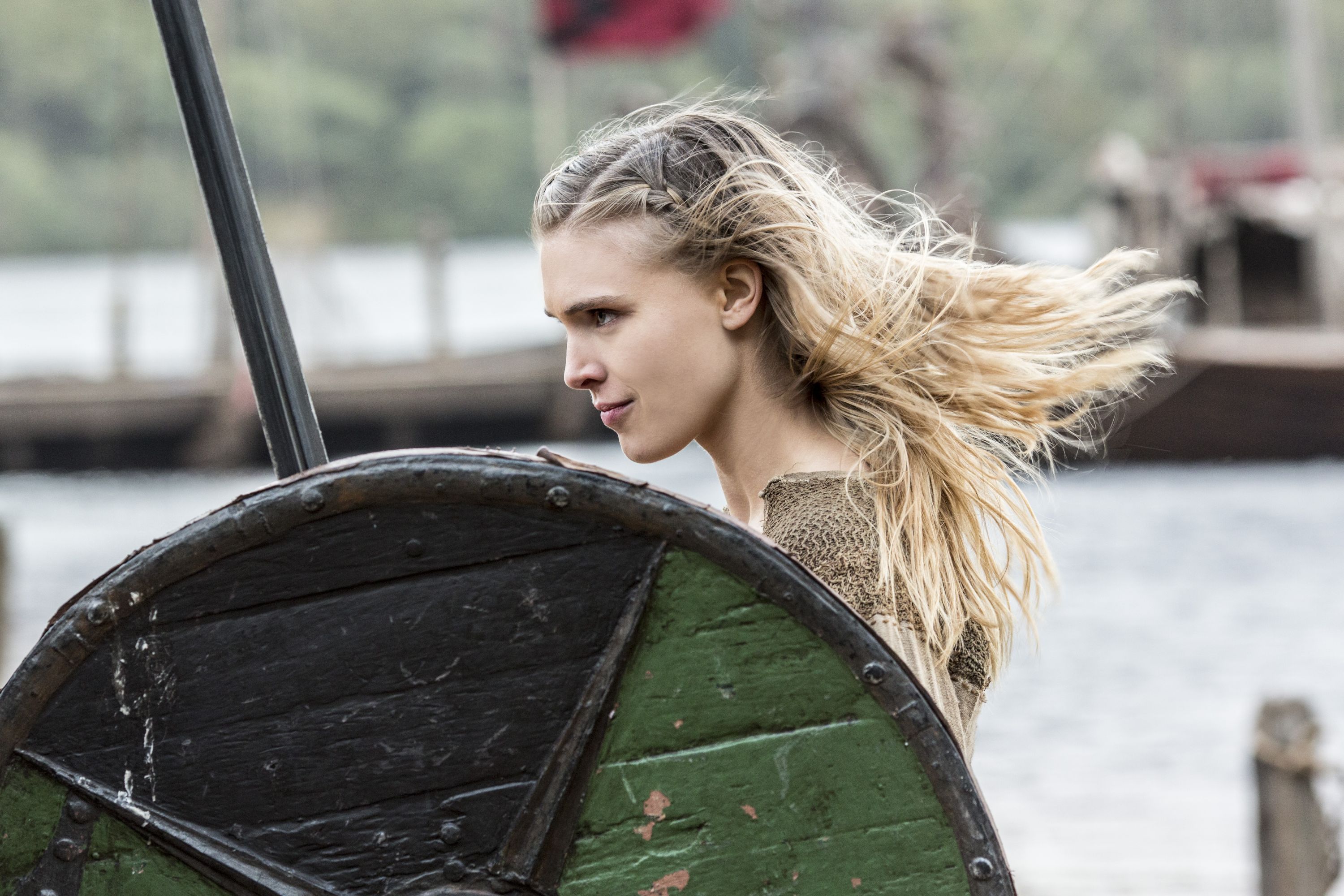
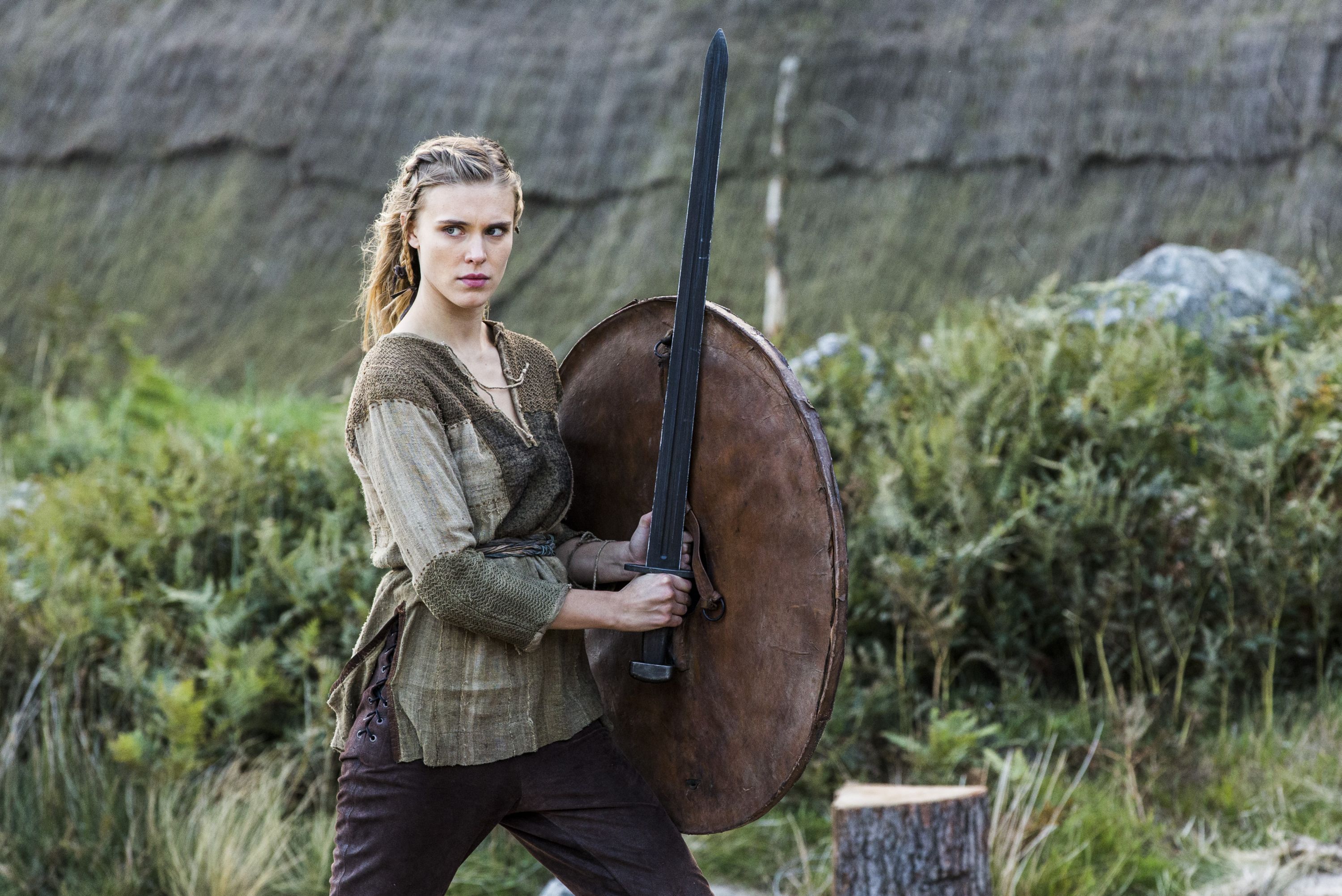
This isn’t “news”, in the sense that the research in question dates back about three years, but a link touting a “recent archaeological discovery” popped up from two separate, independent sources on my Facebook timeline recently. Part of me suspects some kind of publicity stunt for the History Channel’s Vikings series [season 3 in spring 2015!]. However, since that is actually a pretty good show, and we now have a shiny new platform to handle such things, let’s seize the chance to talk about some warrior women of the period, covering the era from the fall of the Roman empire to the Battle of Hastings – and, in particular, the most renowned of them all, Lagertha.
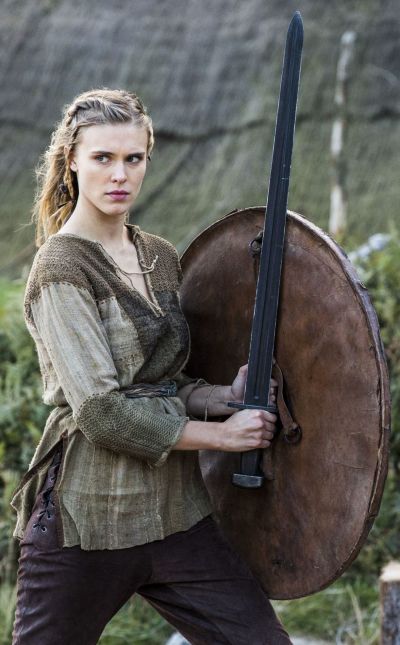 The key to the 2011 findings was the decision to determine the sex of buried Viking skeletons by analyzing the buried Viking skeletons. This may seem fairly basic to us laymen, but apparently, the previous technique involved deciding that if you were buried with a sword or shield. you were a man, and if you had a brooch, you were a woman. This led to the conclusion that Viking raiding parties were overwhelmingly male. However, a re-examination of 14 Norse burials, examining the bones rather than the contents alongside them, showed six were women, seven were men, and one was unable to be determined. This suggests, according to USA Today, that “Rather than the ravaging rovers of legend, the Vikings arrived as marriage-minded colonists.”
However, the article making the rounds leaps from the news that women were buried with weapons, to the more questionable conclusion, that “Half of the Warriors Were Female.” Even going beyond the fact that 14 corpses isn’t exactly a reliable sample size, being buried with weapons didn’t necessarily mean you were a warrior. Everything else, from their literature down, indicates the Vikings were an extremely patriarchal society, and there’s little or no supporting evidence to back the “50/50” claim in the clickbait title. This isn’t to say that strong, independent women didn’t exist in the time, just that they were very much the exception. We have previously written about Aethelflaed, but perhaps the most famous – with an assist by that Vikings series again! – was Lagertha, the first wife of legendary Norse ruler and hero Ragnar Lodbrok [Lothbrok in the show].
Lagertha
Most of what is known about Lagertha came from Scandinavian chronicler, Saxo Grammaticus, though he was writing in the 12th century, three centuries or so after the period where she apparently lived. While seen by modern Danes as their first national historian, as with some other “historical” writers, he was writing as much for entertainment value as the historical record, and seems to have had a bit of a reputation for embellishment. Still, I think I might have got on quite well with old Saxo, who seemed to be quite fond of warrior women. As well as Lagertha, in an earlier volume of his histories, he tells the story of Alfhild, a princess who “exchanged woman’s for man’s attire, and, no longer the most modest of maidens, began the life of a warlike rover.” That was Book VII, which also includes the following passage, a nice scene-setter for Lagertha’s saga.
There were once women among the Danes who dressed themselves to look like men, and devoted almost every instant of their lives to the pursuit of war, that they might not suffer their valour to be unstrung or dulled by the infection of luxury. For they abhorred all dainty living, and used to harden their minds and bodies with toil and endurance. They put away all the softness and light-mindedness of women, and inured their womanish spirit to masculine ruthlessness… These women, therefore (just as if they had forgotten their natural estate, and preferred sternness to soft words), offered war rather than kisses, and would rather taste blood than busses, and went about the business of arms more than that of amours. They devoted those hands to the lance which they should rather have applied to the loom. They assailed men with their spears whom they could have melted with their looks, they thought of death and not of dalliance.
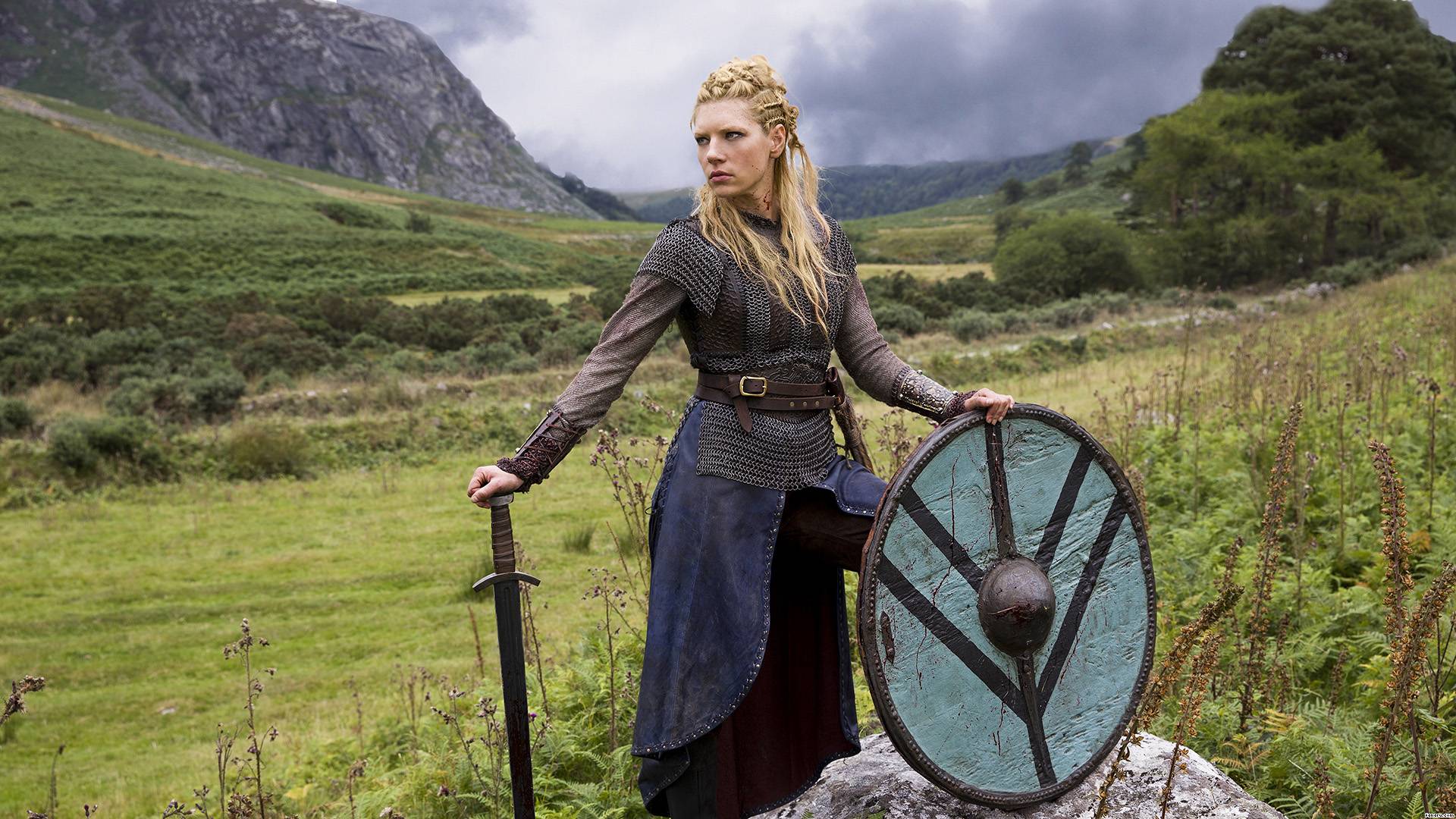
Lagertha, called Ladgerda by Saxo, appears in Book IX, after Ragnar goes to Sweden to avenge the death of his grandfather, Siward. The perpetrator had turned Siward’s female relations into prostitutes; when freed, some, including Lagertha, joined Ragnar’s forces, for personal revenge. Saxo calls Largertha, “a skilled amazon, who, though a maiden, had the courage of a man, and fought in front among the bravest with her hair loose over her shoulders. All marvelled at her matchless deeds, for her locks flying down her back betrayed that she was a woman.” Her exploits caused Ragnar to fall for her, and after some wooing i.e. stabbing her guard-bear – the pair were married. None of the above is mentioned in Vikings, but it covers their later divorce, and her steadfast loyalty, coming to Ragnar’s aid in his greatest need. Her “matchless spirit though a delicate frame” turned the course of a battle; the last we hear, she went home and killed her second husband, because Lagertha “thought it pleasanter to rule without her husband than to share the throne with him.”
The “island girl”
Another historian, Procopius, in his recounting of the Gothic war of the mid sixth century AD, tells of a girl from Britain – known only as the “island girl”, who was betrothed to Radigis, a prince of the Varni tribe from Northern Germany. However, for political reasons, Radigis ended up jilting the island girl and marrying his stepmother instead. His British fiancee was not impressed:
But when the betrothed of Radigis learned this, she could not bear the indignity of her position and undertook to secure revenge upon him for his insult to her… She took up the duties of a man and proceeded to deeds of war. She accordingly collected four hundred ships immediately and put on board them an army of not fewer than one hundred thousand fighting men, and she in person led forth this expedition against the Varni.
When Radigis was eventually captured, “He stood before her eyes trembling and expecting to die instantly by the most cruel death; she, however, contrary to his expectations, neither killed him nor inflicted any other harm upon him, but by way of reproaching him for his insult to her, enquired of the fellow why in the world he had made light of the agreement and allied himself to another woman.” The prince explained it was purely due to political expediency, and offered to fulfill his original commitment. The island girl accepted, and the pair apparently lived happily ever after – or, at least, I’d like to think so, since Procopius made no further mention of them.
Hervor
A character from the saga cycle telling of the magic sword Tyrfing, Hervor was perhaps the baddest of the Viking badasses – her father Angantyr was killed in a duel, which may explain her wild childhood. She is described as being “as strong as the boys” and it’s said that “as soon as she could do anything for herself, she trained more with shot and shield and sword than sewing or embroidery.” She certainly had a particularly venomous approach to teenage rebellion: “When these things were forbidden to her, she ran into the woods and killed men for their money.” In terms of badassdom, that certainly beats yelling “I hate you!” and running off to sulk in your bedroom, I suppose.
Brought up by the local Jarl (chief), her maternal grandfather, when she eventually discovered her true heritage, she headed out into the world, dressed as a man, to seek Angantyr’s treasure. She joined forces with some Vikings, and when their captain died, took over the ship. They went to seek treasure on the isle of Samsey, but none of crew would land due to the place’s reputation: “such evil things walk there night and day, that it’s worse in the daytime, than most places are at night.” Hervor went on her own, called out the spirit of Angantyr and more or less badgered him into handing over Tyrfing. But she had to make her own way back, as when she returned to the coast, the supernatural shenanigans had scared away all her Viking crew.
Acquiring the sword didn’t make Hervor any less touchy, however. While hanging out at the court of Godmund, a king in Jotunheim, someone picked up and drew Tyrfing, when Hervor was given the king some tactical advice during a game of chess. She killed him for it. Others at the court wanted to take revenge, but the king recommend they settle down, saying, “There won’t be as much vengeance in that one as you think, because you don’t know who it is. This woman will cost you dear before you take her life.” But, eventually, even Hervor grew tired of warfare and raiding, and went back home, developing a fondness for more traditional pursuits such as weaving and embroidery. She eventually married Godmund’s son, Hofund – but her father’s concerns about giving her Tyrfing proved well-founded, as one of their children, Heidrek, used it to slay another son in a fit of rage.
When he grew up, Heidrek named his daughter Hervor, and she wasn’t much less a bad-ass than her grandmother, becoming a shieldmaiden, and commanding a Gothic fort. She fell in battle against the Huns, and when the news (also describing Hervor with the sentence atop this article) was reported to her half-brother who had become king, he replied, “Óbróðurliga vartu leikin, in ágæta systir,” which translates as “Unbrotherly the bloody game they played with you, excellent sister.”
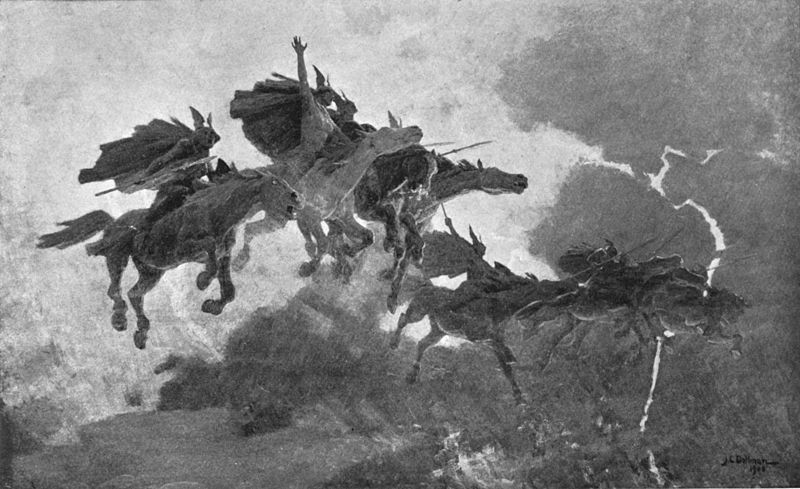 ‘Ride of the Valkyries’ by John Charles Dollman [Public domain], via Wikimedia Commons
Concerning Valkyries, and their rides
Finally, it would be remiss not to mention the Valkyries, simply due to their being entirely legendary, although they were less warriors directly than “choosers of the slain.” That’s what their collective name translates as, and the Valkyries picked about half of those killed in battle, to go to Valhalla for an all-you-can-drink buffet of mead with Odin, until the apocalyptic events from Norse lore, known as Ragnarök. [In case you’re wondering, those not chosen still get a consolation prize, instead hanging out with Freya in her eternal meadow, Fólkvangr. No word on mead availability there]
If not inclined to wield swords themselves, they didn’t mess around. Chapter 157 of the Icelandic saga, The Story of Burnt Njal, tells of a man called Daurrud, who spied on the Valkyries as they prepared for the Battle of Clontarf, fought outside what is now Dublin in 1014. They were weaving- but not any old weaving, to decide who would live and die in the upcoming fight.
This woof is y-woven
With entrails of men,
This warp is hardweighted
With heads of the slain,
Spears blood-besprinkled
For spindles we use,
Our loom ironbound,
And arrows our reels;
With swords for our shuttles
This war-woof we work;
So weave we, weird sisters,
Our warwinning woof.
Yep, that’s some pretty damn hardcore handicraft. Brunhilde (more properly, Brynhildr) is the best known individual Valkyrie, thanks mostly to Richard Wagner. [The phrase, “It ain’t over until the fat lady sings,” was largely inspired by her character in Götterdämmerung, whose final aria leads to the opera’s end – and, indeed, the end of the Norse gods.] However, there were a lot more of them – Wikipedia lists almost forty, with names that appears to be descriptive of temperament and/or ability. There’s Geirdriful (“spear-flinger”), Eir (“mercy”), Skalmöld (“sword-time”), etc.
However, for those who ever played Gauntlet – and many a Sunday afternoon was wasted by me down the student union in the mid-80’s doing just that! – their Valkyrie, Thyra, was not named after one, but the wife of the first recognized Danish king, Gorm. There are reports she led an army against the Germans, but I haven’t been able to locate specifics of that. However, our old pal Saxo Grammaticus tells us, Thyra “would not marry him till she had received Denmark as a dowry,” which is certainly playing hardball in negotiations.
Viking films
- Bae Wolf
- Escape (Flukt)
- Forest Child, by Heather Day Gilbert
- The Legend of Princess Olga
- Viking Destiny
- The Viking Queen
- The Viking Sisters
- The Viking Women and the Sea Serpent




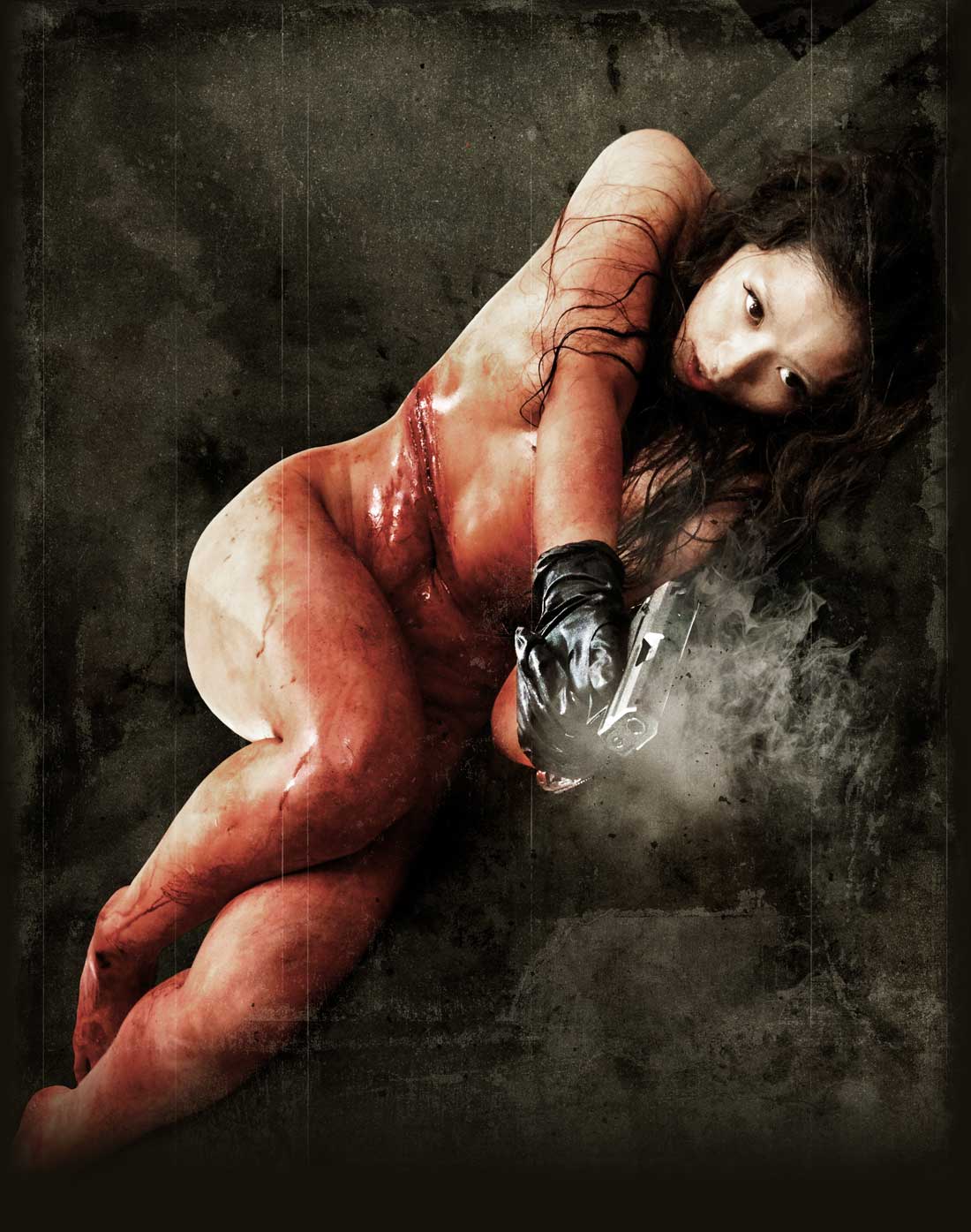

 The main mission given to Rie (Shiratori this time) is a little bit different, from her usual, straight-forward assassinations. Instead, she’s given the job of protecting a witness. Nana (Matsuda), the disgruntled mistress of an organ-trafficking ring, who has had enough and agreed to co-operate with the police. Rie is part of the protection detail, but soon finds out that the gangsters, under ever-so strange boss Kaneda (Nogami) with his transvestite tendencies, are not going to sit back and wait for Nana to take the witness stand. Oddly, the cops let Nana stay in her own apartment, perhaps figuring that’s the last place her former lover would look. but when that is unsurprisingly stormed, Rie takes the target back to the operative’s flat, where they hang out, exchanging small talk – that’s mostly Nana, of course, since Rie is about as talkative as the enormous pet fish she has in a tank, and to which she feeds goldfish.
 I first encountered this in a dreadful copy on Youtube: dubbed, cropped to 4:3 and apparently filmed off someone’s TV during a Force 10 storm at sea. However, what was left after that, was still impressive enough to make me track down a better copy. Well, somewhat better: it had subs, albeit burned in and incomplete, while the 16:9 ratio was at least a vague approximation to the original widescreen print. Still, you take what you get, and this is certainly enough fun to overcome the adversity of any flaws in the format.
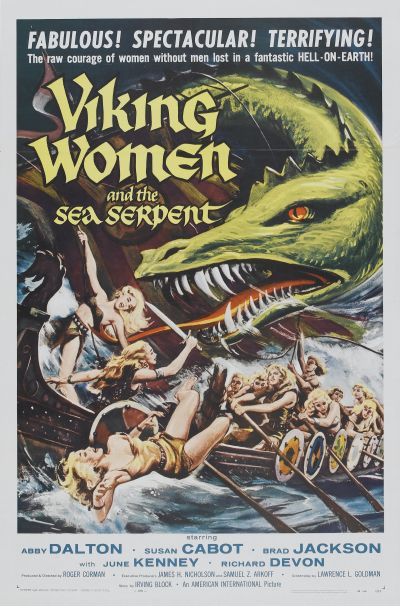 I can see why, purely for reason of brevity, the title above was preferred to the full one of The Saga of the Viking Women and Their Voyage to the Waters of the Great Sea Serpent, even though the latter is more accurate. For the Sea Serpent has a supporting role here, met once on their way in, and again on the way out – it’s much more about what happens in the middle. Three years after their men left, the women of the Stannjold clan leave their shores under the command of Desir (Dalton), trying to find out what happened to them. Encounter #1 with the monster leads them to be shipwrecked on the same shores of the Grimault tribe as their menfolk, whose king, Stark (Devon), has set them to work as slaves in his mines. After initially appearing to welcome the women, it becomes clear that Stark has plans for the new arrivals as well. Viking high-priestess Enger (Cabot) has her own agenda, however: having set her eyes both on Desir’s husband and, for more immediate and pragmatic reasons, Stark, she sabotages Desir’s first attempt to free the men.
 Star Jill Kelly is an adult actress. I mention this, because it seems highly likely that most of her 300+ other works – perhaps The Butt Sisters Do Philadelphia or Sodomania: Slop Shots 5 – are likely better scripted, filmed, edited and generally well-made than this dreadful piece of crap. I should have known, given Donald G. Jackson’s involvement – he’s probably the worst film-maker I’ve ever had the misfortune to encounter, and I speak as someone fully familiar with the works of Ed Wood, Andy Milligan, J.P. Simon and Uwe Boll. They are all pretenders beside Jackson, and even though this barely runs an hour, your patience will be sorely tried. And by “tried”, I mean at the level where gnawing a limb off to escape will seems credible.
 The character of Catwoman has had a mixed history over the years in other media than the printed page. TV has had the Julie Newmar & Eartha Kitt versions, a nod in Birds of Prey, and a teenage version of the character can be seen in the Gotham series which premiered last month. In film, we had Lee Meriwether in the sixties incarnation then, perhaps most famously of all, Michelle Pfeiffer in Batman Returns [albeit only after Annette Bening, Nicole Kidman and Demi Moore all were linked to the part]. Then, there was Halle Berry’s Catwoman, still talked about in hushed tones as perhaps the worst comic-book adaptation of all time, and which arguably did more damage to action heroines than any other big-budget movie in history. Despite the massive success of the Batman reboot, it took eight years before the character would appear in another film, Anne Hathaway playing Selina Kyle in The Dark Knight Rises.