



★★
“More illing than thrilling.”
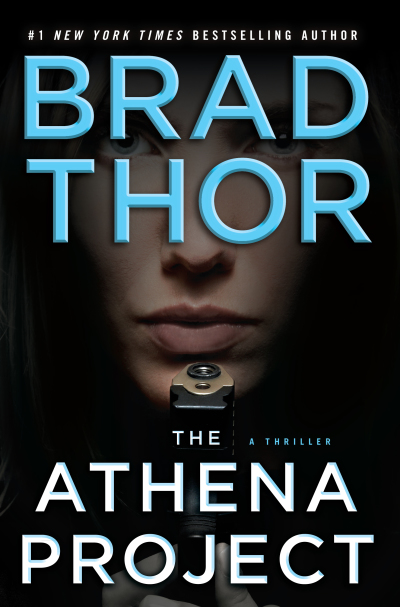 I first became aware of this novel through an article back in February about MMA champion Ronda Rousey and her move into movies, which said
Ms. Rousey’s supporting parts are a run-up to a planned starring role in “The Athena Project,” a movie about a team of female counterterrorism agents. The film is in the early stages of development with Time Warner Inc.’s Warner Bros. Producers cast her after one sit-down meeting and are working on the script now. That film “is what I would really like to make into my franchise,” Ms. Rousey said. “Like Stallone has his ‘Rambo’ and Schwarzenegger has his ‘Terminator’ and Bruce Willis has his ‘Die Hard.'”
Okay, that sounds intriguing enough, though whether it’ll come to pass is harder to say – the rights were bought back in November 2010, before the novel hit stores, so it clearly isn’t exactly rushing into production. I got a copy of the book and… was distinctly underwhelmed. I don’t generally “do” literature, so this review will probably consist of me flailing around, trying to explain why, but I do understand why this is easily the lowest-rated of all Thor’s books on Amazon. It gets an average of 3.2 stars, with the next lowest with any significant volume of reviews being a 3.9; frankly, the former figure seems generous.
The central plot isn’t bad. The Athena Project are a group of four Delta Force operatives, all women, who carry out missions requiring their special skills. In this case, they’re digging into an arms dealer responsible for provisioning a terrorist attack, but the further they dig, they murkier things get. Eventually, they uncover a scheme to leverage resurrected Nazi technology, and create a new generation of weapons, against which there can be no defense. There’s also an entirely separate side story, involving a cell of the villains honeypotting a guy into smuggling a component into the secret government facility buried under Denver Airport. That’s long been a belief among conspiracy theorists, so is kinda neat. But it’s woefully connected to the rest of the story, and there’s no payoff to this aspect. It feels almost like Thor had two half-novels written, and decided just to intersperse their chapters.
But the main problem are the female characters: Gretchen Casey, Julie Ericsson, Megan Rhodes, and Alex Cooper. I had to look those names up, because as heroines, they are completely forgettable and indistinguishable from each other. Maybe Thor would have been better off concentrating on a single character, as it seems he does in his other works [his main hero there, Scot Harvath, pops up briefly in this novel]. On the other hand, maybe that wouldn’t have helped, given literary gems such as “Considering what these women did for a living, they certainly wouldn’t have described themselves as being dressed to kill, but everyone else would have.” Or “I don’t know about Mr. Right, but he definitely looks like he could be Mr. Right Now.” Is there a world where women talk like that? Maybe, with the right actresses, lines like that might work on the screen; on the printed page, however, they come over as cheesier than a block of aged Cheddar.
What Thor does do well is action, and when he concentrates on that, the results are snappy and effective. Although the villains appear to come from the Imperial Stormtrooper school of accuracy, it’s easy to picture in your mind what’s going on, and it makes for exciting entertainment. That’s why I’m not immediately consigning the movie to the garbage can since, in the right hands, this could still be good. Thor seems convinced, stating after news of Rousey’s association with the picture broke: “We have never seen a chick kick ass like this. This is going to make Tomb Raider look like a Disney movie.” That’s tough talk – I’ll be hoping the film lives up to the concept’s potential, and isn’t such a disappointment, frankly, as large chunks of this poorly-written novel.
Author: Brad Thor
Publisher: Pocket Books, 432pp, $9.99
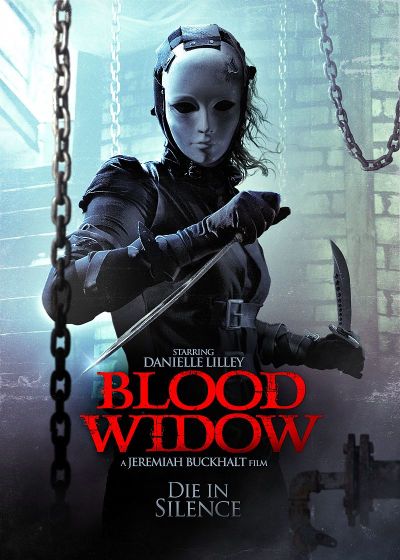 In the slasher genre of horror, the perpetrators seem almost exclusively male: Michael Myers, Jason Vorhees, Freddy Krueger, etc. Women can play an important role, and we’ve covered some of them here before – but it’s much more often as the “final girl”, than the one wielding the machete. However, it’s often forgotten that, in the original Friday the 13th movie, the killer was not Jason, but his mother, so there is some precedent for the female antagonist. See also Nurse 3D, American Horror Story: Coven or perhaps best of all,
 While twice as long as the first series, at 12 episodes rather than six, I can’t say it’s actually any better. Indeed, I think the dilution of the main element which was so much fun the first time round – the relationship between the two, disparate hitwomen, Roxie (Osment) and Veronica (Chriqui) – leaves this season less entertaining. Yes, it’s bigger and more exotic: but it feels spread thinner, to the detriment of the core aspects. The story takes up shortly after the events of the first series, with V+R in the Caribbean, waiting to get their share of the money from Eileen (Missi Pyle) and Mother (Gershon). But instead, an assassination squad is sent to get them, kicking off a reunion with Veronica’s “parents”, a deranged killer who thinks Roxie is his dead wife, a rogue CIA operative who sends Frank Barnes (Arquette) after Mother, and so on. It builds to a climax where Veronica, previously injected with a lethal nanobot virus that’s about to go off, takes part in an underground death match at a cockfighting arena, to prove her love for the deranged killer. I shit you not.











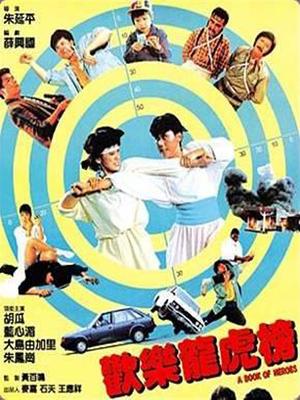 The ranking here would probably be at least half a star higher, if I had the slightest freakin’ clue what’s going on here. For this has truly the worst subtitling I’ve seen in a quarter century of watching Hong Kong action films, with text that is entirely illegible more often than not. You’re left trying to piece together the plot, based on fragments of sentences and on-screen action, which significantly subtracts from the entertainment value. Good thing we have the Internet, and can turn to that for a coherent synopsis of proceedings, that will shine some light on who was doing what to whom, and why.
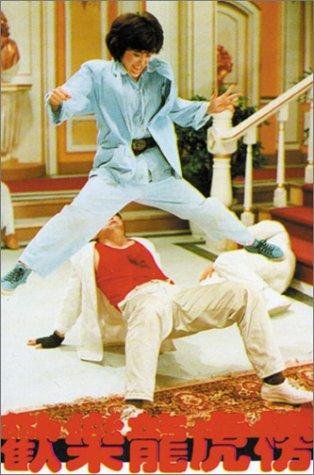 Well, crap. I was following that, right up to “batch of gold”.
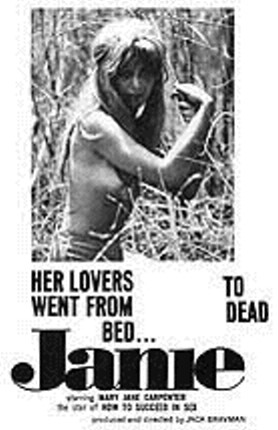 This grindhouse obscurity manages to rise above the limitations of its budget, and proves an effectively nasty piece of work. The titular teenage “heroine” (Carpenter) is on the way to see her older lover, but embarks as well on a killing spree that first includes a classmate and the guy who picks them up, then a householder (Michael Findlay) whose swimming pool Janie hijacks, before moving onto a predatory lesbian and finally her lover’s girlfriend (Roberta Findlay), whom she strangles with a belt. This is all told in flashback as she tells the story to her disbelieving bedmate – though the corpse he discovers in the bath-tub rapidly changes his mind. Oh, and did I forget to mention, for extra sleaze points, he is also Janie’s daddy? Damn. All of her exploits are accompanied by narration from what could be seen as an ancestor of Dexter’s “dark passenger”, exhorting Janie to further murderous acts, in a placid and matter-of-fact tone that is actually all the more chilling for its calmness.
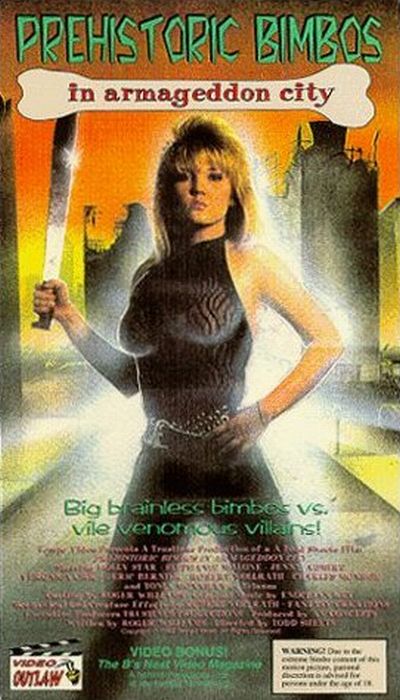 It’s hard to be critical of a film for being cheap, when the movie is not only aware of its own cheapness, but wears this on its sleeve like a badge of honour. “So what if I’m made entirely by amateurs with their pocket-money,” it seems to be saying. “We didn’t care, so why the hell should you?” I could list all the flaws here – crappy sound, low-quality video, acting your local amateur dramatic group would reject, awful use of stock classical music that would make Gustav Holst spin in his grave – but its response would simply be “…and your point is?” In the interests of space, let’s largely take those aspects as thoroughly read, and get on with the rest of our review. The setting is Chicago, and far from Armageddon having hit, it looks pretty much like the city we know – trains run in the background, for example. There is some introductory guff, which is hardly convincing, and nor is there anything particular “Prehistoric” about the leading ladies here, beyond a bit of fur trim.