



★★★★
“There’s so many crazy people out there…”
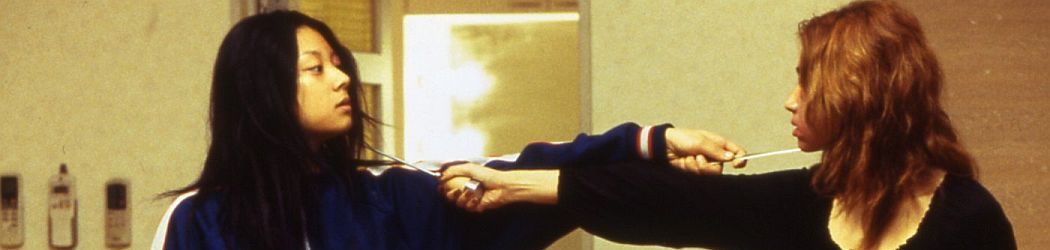
 I did not originally expect to be reviewing this here. I watched it because of the technical elements, which I’ll get to in a bit. However, by the end, it does qualify – though you certainly wouldn’t think so from how things begin. It gets underway with Lili (Puig) waiting for a date arranged over the Internet with Eduardo (Alcantara). He shows up late, very apologetic after having been mugged, and having had his phone taken, but is utterly charming, and the chemistry with Lili is immediate. They end up back at his place for dinner. But as he’s cooking on the kitchen, the tone of the evening changes, when she hears his supposedly stolen phone going off in his jacket…
That’s the beginning of a shift in content from warm romance into something considerably darker, and in which the dynamic changes several times before the final credits roll. As the above indicates, it initially seems that Eduardo is the problem. However, it’s considerably more complex, with Lili also having her own secrets. Quite how it’ll play out remains in doubt until the final scene, with the best-laid plans going astray along the route. I will say this though: if I ever engage in a kidnapping scheme, I won’t be answering the door to visitors. This does deliver some black comedy, when a drunk pal of Eduardo swings by, and wildly misinterprets the situation unfolding in front of his booze-filled eyes.
I mentioned the technical side. The hook here is the movie unfolds in a single, 100+ minute shot. Even more startling is what director Arrayales said: “We couldn’t afford another chance to shoot the movie again, so the movie is the only take we did. We really prepared hard, for three weeks with the actors, and a week with the DP just to plan the whole movie. That was about it: four or five weeks of rehearsals and one chance to make it.” Hard not to be impressed. While certainly not the first to use a single shot, most either fake it or, at least, get to use multiple takes. It’s a tribute to the makers that, after initially being the focus, you largely forget about the gimmick, with the story and characters taking over.
A good portion of the proceedings are more mental than physical. Eduardo pushes Lili for what he believes to be the truth, while she is resolute in stating he has got the situation very, very wrong. However, it eventually becomes more direct in its action, with a hunt unfolding around the two levels of Eduardo’s house (complete with make-up and effects artists sneaking around to apply their art out of shot!). You may well figure out the final direction before it happens, yet I’d be impressed if you accurately predict the specifics of the resolution. Though it’s not especially important if you do. Between the technical execution and the other elements, there’s more than sufficient elsewhere to justify the experience.
Dir: Pablo Olmos Arrayales
Star: Helena Puig, Antonio Alcantara
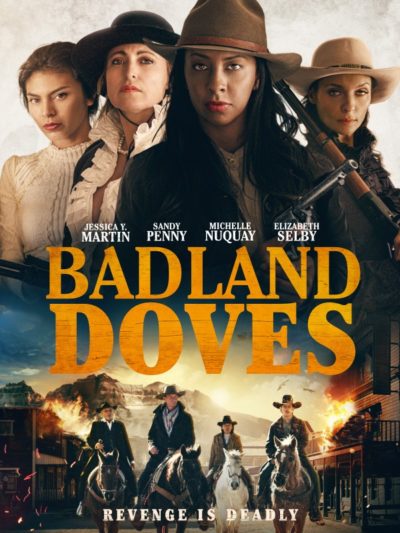 I am contractually obliged to appreciate at least somewhat, any film made here in Arizona. This certainly fits the bill, having been shot at places like the Pioneer Living History Museum, Sitgreaves National Forest and Winters Film Group Studio. However, it is a fairly basic tale of two-pronged revenge, with significant pacing issues. The proceedings only come to life in the last 20 minutes – and barely that. Initially, matters are more than a tad confusing, as we jump about in time and space without apparent notification. But the basic principal is eventually established.
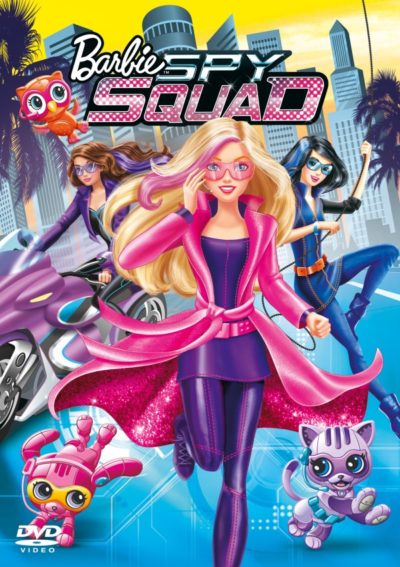 Ah, the things I watch for you people. Safe to say, this probably hit new heights of “I am not the target demographic”, but it’s hard to argue it is outside the remit of the site. To the film’s credit, this is not as bad as I feared it might be. If I had an eight-year-old daughter – such a shame this turned up about 25 years too late! – there would be far worse things to have inflicted on me. Not that I’ll exactly be chasing down any of the other
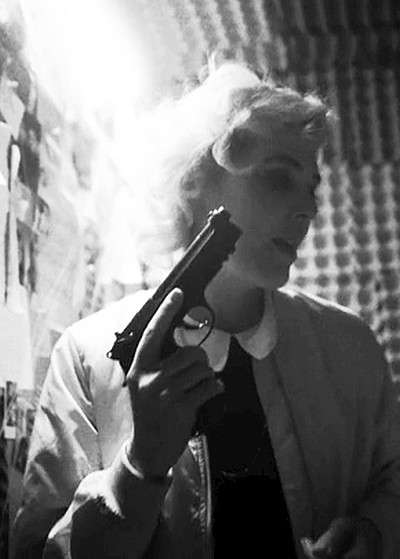
 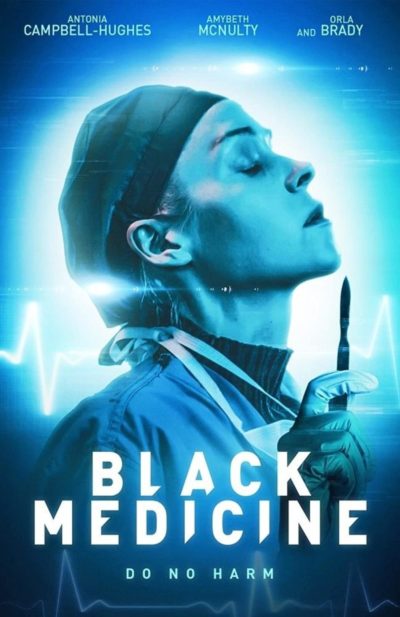 I guess, at its heart, this is the story of two mothers. There’s Jo (Campbell-Hughes), an anaesthetist who has been struck off the medical register, for reasons that are left murky. She’s now practicing her healing arts on the underground market, from patching up dubious stabbing victims, to carrying out unlicensed abortions. Jo lost her daughter to meningitis, and has split from her husband. Then there’s Bernadette (Brady), a wealthy but no less murky character. Her daughter is dying, and in desperate need of a transplant. To that end, Bernadette has kidnapped a young woman, Aine (McNulty), with the intention of using her as an unwilling organ donor, and needs Jo’s help for the operation. But when Aine – who would be about the age of Jo’s daughter had she lived – escapes and hides in the back of the physician’s car, Jo is left with a series of difficult decisions.
 I’ve previously talked about – OK, “ranted” may not be inappropriate – the perils of message movies. But I did wonder whether it was the specific content to which I objected. Would I dislike a film so much, if I was on board with its strident message? On the evidence here, I can confidently state: hell, yes. For this is painfully earnest and hard to watch, much though I agree with the environmental topic, that humanity’s use of plastics are threatening the oceans. An alternative needs to be found. By which I mean, I strongly suggest you find an alternative to watching this movie. The poster has clearly strayed in from a far more entertaining offering, and bears little resemblance to what this provides.
  Subtitled, The Female Hero in Popular Cinema, 1970-2006, this is non-fiction, being a feminist – I guess, more post-feminist – analysis of action heroines over the time in question. It made for an interesting read, being considerably more dense than my typical reading material: Schubert seems to be aiming at an audience that already know what she means, with a good number of terms left unexplained in the text. Yet it was equally frustrating: for every section that had me nodding in agreement, there was one where I was at least raising an eyebrow, if not snorting derisively.Parts are incisive and smart. Others exemplify the worst excesses of ivory-tower academia.
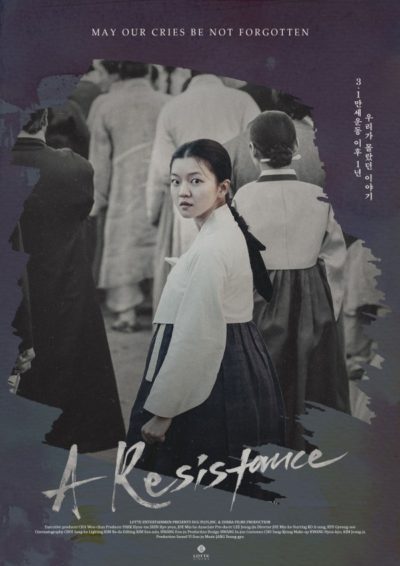 This takes place in 1919-20, when Korea was under occupation by the Japanese [there seems to be quite a lot of this about; I’ve seen a bunch of Chinese movies set when that country was occupied by Japan as well]. Even demonstrating against the Japanese, or in favour of Korean independence, was sternly forbidden, with those taking part likely to be arrested and thrown in prison for months. If they were lucky, that is: an opening caption tells us 7,500 were killed in the protests or died in jail subsequently. Even for those merely arrested, this was not a “nice” prison, to put it mildly, with horrendously over-crowded conditions (24 to a cell!), freezing temperatures and meagre rations.
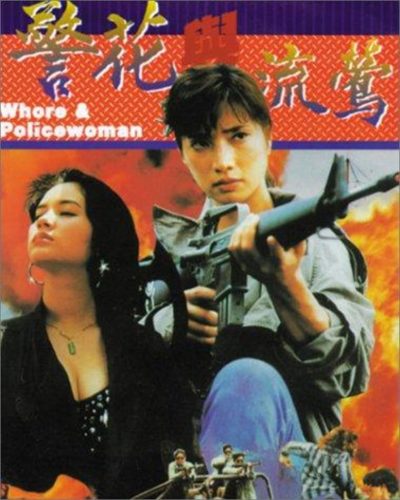 If the title is more than a bit blunt, it’s certainly accurate. May Lin (Cheng) is a brash hooker, who runs a sideline in blackmail videos with her flatmate, Nana. But one night she comes home to find Nana near death, the victim of a brutal client. She tells the police about the video, but before she can give it to them, the perpetrator – rich and influential politician, Kao Tien Chin (Cho) – sends an army of beige trenchcoat wearing killers to take care of both Nana and May. The former succumbs, but the latter escapes and goes on the run. With the police force apparently leaking like a sieve and the case being shut down from on high, prosecutor Yin Li Shan sends his niece, Nancy Cheng (Mishiwaki), to link up with May and bring her in. But they’ll have to get past the trenchcoat mafia, among other threats, for there to be any hope of justice.
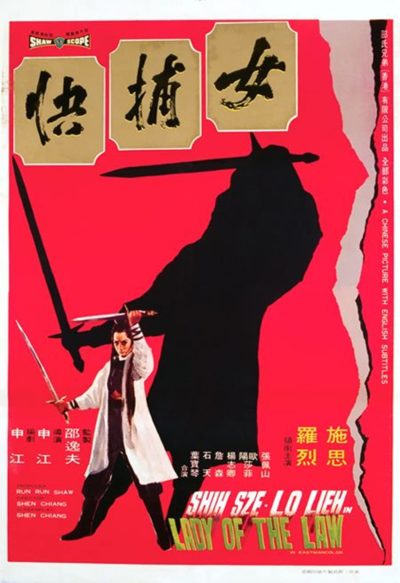 I kept moving between 2½ and 3 stars for this. It is pretty chatty, and the focus is not as much on the title character as I might have hoped. But there’s no denying that Leng (Shi) is a very solid character, and when she gets her chances to shine, does so in a memorable fashion. This is nowhere better illustrated than her final battle, where she takes on an enemy – who just tried to molest Leng, believing her drugged – while they both balance on a tight-rope. There’s no particular reason for the fight to take place in such an environment. The ground would have been perfectly fine. But it adds an extra dimension, and the way it’s filmed makes it feel surprisingly possible that they were wobbling about up there.
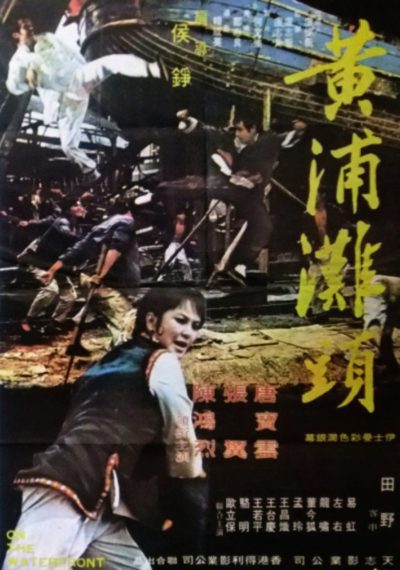 Yeah, I think if I’d seen this under the alternate title of On the Waterfront, I might well have passed it by. Though that is probably a slightly more accurate description of the contents here, even allowing for the complete absence of Marlon Brando. [At least we didn’t have to deal with the expectations set by the Italian title, which translates as “The merciless hand of Bruce Lee strikes again”!] It takes place around the Whampoa wharves in Shanghai, where various crime families are jostling for position and control, with varying degrees of morality e.g. whether or not they approve of drugs and/or sex trafficking as a means to make money. Particularly of note here are Red Rose (Tang) and Zhou (Chang), who eventually end up allies against their common enemy (Chen).