Misfit Lil Rides In: Literary rating: ★★★, Kick-butt quotient: ☆☆
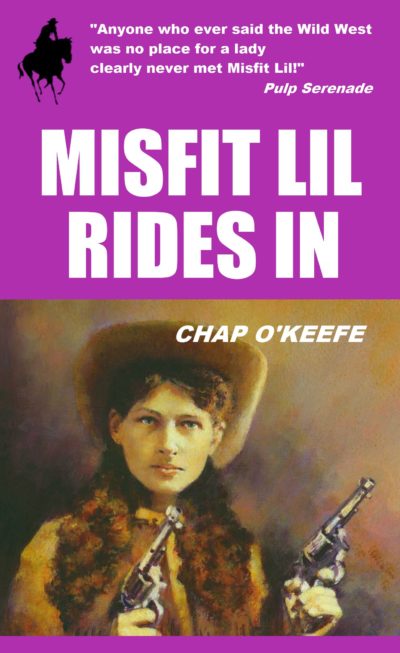
Misfit Lil Cheats the Hangrope: Literary rating: ★★★★, Kick-butt quotient: ☆☆½
 The Western is typically among the most macho of genres, and this applies to the world of pulp fiction as much as to movies. There are exceptions: Werner has covered quite a few in the past, such as The Complete Adventures of Senorita Scorpion, and I recently dipped my toe in the genre, with the first book of Chrissy Wissler’s Cowboy Cat series, Women’s Justice. While set in the past, that did have a contemporary feel to it: Cat felt like a 21st-century heroine in an antiquated world. That seems significantly less the case for Miss Lilian Goodnight, despite her nickname of “Misfit Lil”. These two stories feel like a throwback to the golden age of pulp. There is no obvious agenda beyond entertaining the reader, which is almost refreshing. They’re quick, uncomplex, and occasionally slightly disreputable reads. Nothing wrong with these elements, I should stress.
Lil is the daughter of cattle rancher Ben Goodnight, who has resisted all attempts by her father, a widower, to turn her into a proper young lady. In particular, he sent her to a Boston boarding school; rather than uplifting Lillian, she succeeded in corrupting the other pupils, and we sent home in disgrace, earning her nickname. Since then, she has been riding free, helping out on the ranch, with occasional stunts that bring her into conflict with the local authority, such as showing off her pistol marksmanship on the local Main Street. “Once she hammered five four-inch nails halfways into a boardwalk post, then drove each of ’em in with a bullet from twenty paces.” The local sheriff was unimpressed, locking her up overnight, until her long-suffering father bailed her out. But Lil gained another nickname: “Princess o’ Pistoleers”.
Beyond the heroine, the players do overlap, in particular, a co-lead in both books is Jackson Farraday, local scout and guide, who takes on commissions both for the army and for civilians seeking to cross the dangerous territory. She has a crush on him, though acknowledges its futility, with him being twice her age (doing the math based off this and other information, it makes Lil about twenty, and Jackson almost forty), and he similarly has no interest in her for romantic purposes. But he certainly respects her skills and bravery, and they have no hesitation in helping each other out when needed. Which is the case in both of these novels, with Farraday being falsely accused of murder in each.
The first, Misfit Lil Rides In, sees him framed for killing the wife of store owner Axel Boorman. While Axel was actually the killer, in a fit of jealous rage, with the help of the local law, Farraday is blamed, and a posse sent after him. With Lil’s aid, the posse is fended off, though she is arrested, and Jackson believed to have fallen to his doom. He is actually still alive, but ends up captured by the local Apaches, so both are in serious trouble. Even after Jackson escapes, he falls foul of an Army officer with a grudge against him, and ends up behind bars too. Lil needs to free herself, break her friend out, then find some way of proving the truth – not least about Boorman’s scheme to sell guns to the Indians – and convince the authorities to take action.
 I think my major surprise was how relatively even it felt like the book was split between Jackson and Lil. While Jackson isn’t a bad character, he is fairly generic as Western heroes go. I was considerably more interested in Lil, and every page that detailed her colleague’s adventures felt like it was wasted, especially as the whole book is under two hundred pages. I almost found myself speed-reading the Faraday heavy sections, to get back to what Lil was doing. Outside of the gun-battle against the posse, that was largely using her brain rather than her pistols. But of particular note here is an author’s afterword, Heroines of the Wilder West, in which O’Keefe discusses some of Lil’s predecessors and inspirations, such as Hurricane Nell and Denver Doll. I sense a rabbit-hole for future exploration, and may have to watch Along Came Jones as well, for its proto-heroine.
However, any issues are well addressed in Misfit Lil Cheats the Hangrope; it seems O’Keefe has grown more comfortable with his characters by this, the most recent entry. While Faraday plays a significant role here, Lil feels more the focus, and the story flows around her in a fluid way. It begins when Lil helps rescue a wagon train of settlers headed west, who make an ill-informed decision to try and cross the mountains as the weather comes down. She gets Jackson a job as co-guide on the train, but the previous sole guide, Luke Reiner, is far from happy about it. When the corpse of a young, female settler turns up drowned in a creek, suspicion falls on Farraday, because Lil isn’t the only woman to find him attractive. It’s up to her to find the necessary proof that will exonerate her friend, before Reiner succeeds in whipping up a lynch mob.
There’s a good sense of escalation here, and it’s a solid page-turner, with each incident providing a natural progression into the next. It works both as a Western and as a whodunnit mystery, with the killer’s identity shrouded in uncertainty. As for the cause of death… Well, that might be one of those “slightly disreputable” elements mentioned earlier, even if there are worse ways to go, it has to be said! Again though, Lil seems to be almost loathe to use her shooting skills. To me, the point of guns is that they are a great equalizer, allowing the weak (or “weaker sex,” to use a slightly pejorative term!) to stand up against the strong. But over both volumes, I’m not sure there was any real demonstration of the sure-shot abilities described early in the first book.
This is a relatively minor complaint, however. These may be stories, rather than Great Literature; yet there’s an absolute lack of apparent pretension to the approach, which I appreciated. If the intention of the author was, as discussed above, simply to provide a good yarn that entertains the reader, I’d say they accomplish that mission.
Author: Chap O’Keefe
Publisher: Amazon Digital Services, available through Amazon, both as a paperback and an e-book
Books 1 and 7 in the Misfit Lil series.
I was provided copies of both volumes, in exchange for an honest review.




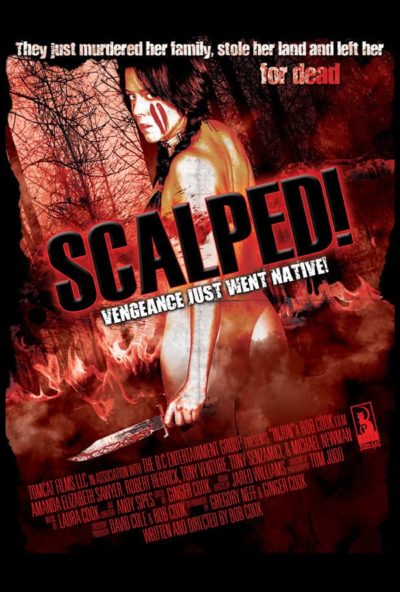 I never thought I’d find a film which would leave me yearning for the subtle and understated pleasures of the original I Spit on Your Grave, but here we are. 35 years on, and this cringeworthy copy was made, transplanting events to the old West. A further decade later: with a couple of re-titlings which jostle each other for inappropriateness, it’s out on a number of free movie streaming platforms. I’m here to tell you, not to bother. Even in the low-rent neighbourhood which is rape-revenge movies, you could close your eyes, pick a random entry, and be almost guaranteed to find something with a better script and general execution.
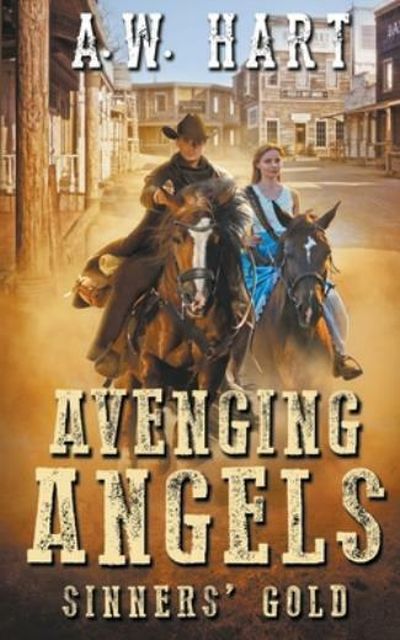 “A. W. Hart,” the nominal author of the Avenging Angels series, is actually a house pen name used by Wolfpack Publishing for the multiple authors of this and one or two of their other series. Where books are marketed or shelved by the author’s name, this device allows a series to be kept together. It also makes it possible for the same main character(s) to be featured in a number of adventures, without being limited to the imagination or time constraints of a single author.
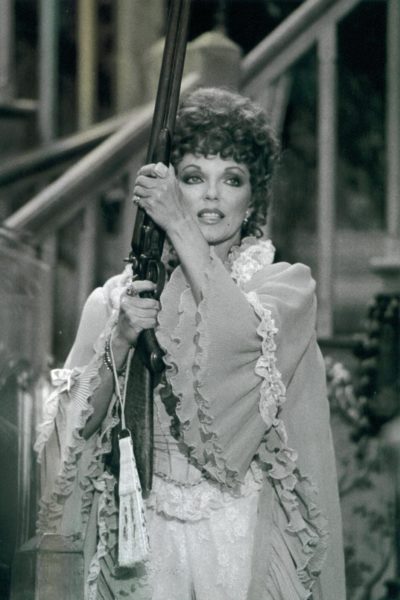 This sprightly TV movie from 1982 boasts a rather decent cast and, at least in the first half, manages to go in unexpected and interesting direction. It does end up descending into rather familiar territory thereafter, and the finale doesn’t manage to be as rousing as it should be. Yet it managed to keep my interest, and as this genre goes, that probably makes it better than average. It takes place in the last stages of the American Civil War, when the Southern women of Sweetwater have been left bereft of men, after the Confederate Army has recruited them all to their cause. Newly arrived in town is doctor Maggie McCulloch (Barnes), who has arrived to help her ailing aunt, Annie (Collins). She is shocked to discover Annie is less the mine owner touted in her letters, and more the owner of the town brothel.
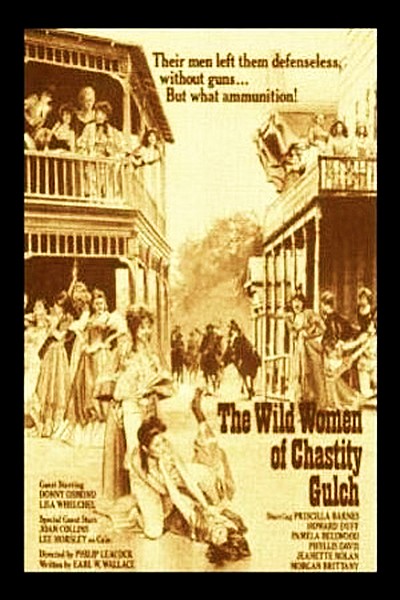 That aside, the plot unfolds largely as you’d expect. There’s the initial tension between whores and housewives, and the women struggle to come to terms with the everyday business of running the town. For example, there’s a fire drill, which ends up with half the ladies thrashing around in shallow water, and some other slapstick involving whitewash, that is somewhere between lightly amusing and embarrassing. However, Barnes – at the time a sitcom star in Three’s Company – does a very good job of keeping the film grounded, and the supporting cast help admirably in that aspect. Collins is particularly good, projecting an attitude which clearly proclaims she will take no shit from anyone.
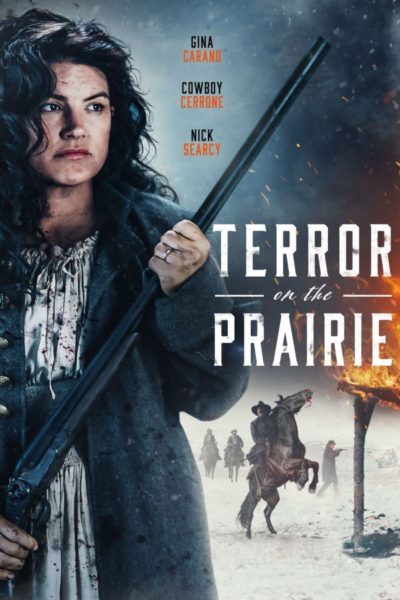 I keep hoping Carano will deliver an action film reaching the quality of her debut,
 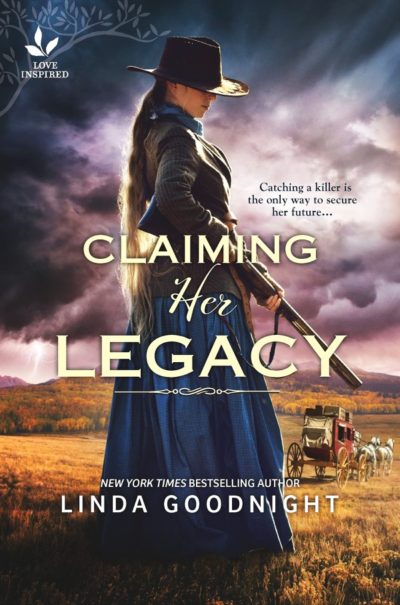 30 years old, Willa sees herself as an “old maid.” She’s the eldest of three half-sisters, daughters of peripatetic ne’er-do-well Finn Malone, who outlived two wives (and was deserted by a third) in the course of his wanderings, which in 1889 led him to a homestead in the small community of Sweet Clover. Like many of the townsfolk, he was heavily in debt to conniving banker Theodore Pierce, and used his land as collateral. But he’s now recently dead, murdered after he took off on his latest quest for gold. At the moment, the farm isn’t productive; without him, the sisters won’t be able to repay the loan, and they’ll lose their home within months.
His killer, though, has been identified as notorious outlaw Charlie Bangs, rumored to be hiding out in Indian Territory, and there’s a $1,000.00 price on his head. When Willa, early on, conceives the idea of tracking him down and claiming the bounty, nobody can talk her out of it. The idea’s not as hare-brained as some folks think. Tough and practical, “tomboy” Willa’s a good shot with a rifle whose hunting skills keep her family supplied with meat; she can ride, and she’s got guts. As even she recognizes, though, the enterprise she’s contemplating is a deadly dangerous one. At the very least, she’ll need the services of an experienced trail guide. Enter one Gideon Hartley.
Gideon’s about 35; he’s fairly new in town, but the reputation that precedes him confirms that he’s highly competent as a trail guide in rough terrain –when he’s sober. But his reputation also suggests (correctly) that he drinks a lot. In fact, his alcohol abuse problem is longstanding and deep-seated. He and Willa meet in Chapter 1. Surprisingly (or maybe not, depending on how familiar readers are with “romance” genre conventions; this was published under the “Love Inspired” imprint, though I approached it as a Western, and it works on those terms) there’s some chemistry between them; but neither is looking for that sort of thing, nor inclined to nurture it. More to the point, Willa’s not thrilled with the idea of a “drunk” for a guide; and Gideon (who hasn’t done any guiding for about a year) is pretty well convinced that he’s not up to the job and that Willa would be embarking on a suicide mission anyway. But before long, it becomes clear to her that he’s the only prospective guide she’s going to get, and to him that she’s going whether he goes with her or not.
Goodnight gives serious attention to developing her characters (including the secondary ones, along with our H/h) and bringing the community to life, and she takes the time needed to do that in depth. We don’t get started on our actual quest until a bit more than 200 pages in (and the book has 363 pages). Some readers, who expect the adventure of the trail to be the main warp and woof of the tale, won’t like this aspect. However, I fully appreciated the textured, in-depth approach. Both main characters (who alternate as viewpoint characters, though third-person narration is used throughout) are fully round and three-dimensional. Gideon in particular has a lot of psychological baggage, which is believable, and gradually disclosed.
Western-style action, once it kicks in, isn’t stinted; there are plenty of jeopardies on the trail, and the climactic confrontation will test our leading couple’s mettle on more than one level. (Willa doesn’t actually have to fire her rifle, but she displays her action heroine moxie by handling a very physically challenging situation near the end with flying colors; I doubt if I’d been brave enough to do the things she did!) The author writes very well; her plotting is excellent, and her re-creation of the time and place masterful. (It features a cameo appearance by real-life person Bass Reeves, the first African-American deputy U.S. marshall.)
In keeping with the standards of the ECPA, this book poses no content issues for bad language, sexual content (we do have reference to prostitution, and to the ugly trade of sex trafficking, which is a very contemporary reality, but which goes back a lot longer than that), or ultra-gory violence. Christian faith (which both main characters were raised with, though Gideon’s faith has been long neglected) plays a positive role here, though the book isn’t “preachy” and delivers its spiritual messages by example.
I’d recommend this to fans of Westerns, Western romance, and clean (especially Christian) romance in general, as well as to fans of strong heroines. The story arc here is complete, and the book isn’t said to be part of a series (though I suspect that both of Willa’s sisters might eventually get her own sequel). Although some characters, such as Belle Holbrook, obviously have very intriguing backstories, I couldn’t find any indication that they were in prior books by the author. (But if they were, or if they eventually get prequels, I’d be interested in reading those books!)
Author: Linda Goodnight
Publisher: Love Inspired; available
30 years old, Willa sees herself as an “old maid.” She’s the eldest of three half-sisters, daughters of peripatetic ne’er-do-well Finn Malone, who outlived two wives (and was deserted by a third) in the course of his wanderings, which in 1889 led him to a homestead in the small community of Sweet Clover. Like many of the townsfolk, he was heavily in debt to conniving banker Theodore Pierce, and used his land as collateral. But he’s now recently dead, murdered after he took off on his latest quest for gold. At the moment, the farm isn’t productive; without him, the sisters won’t be able to repay the loan, and they’ll lose their home within months.
His killer, though, has been identified as notorious outlaw Charlie Bangs, rumored to be hiding out in Indian Territory, and there’s a $1,000.00 price on his head. When Willa, early on, conceives the idea of tracking him down and claiming the bounty, nobody can talk her out of it. The idea’s not as hare-brained as some folks think. Tough and practical, “tomboy” Willa’s a good shot with a rifle whose hunting skills keep her family supplied with meat; she can ride, and she’s got guts. As even she recognizes, though, the enterprise she’s contemplating is a deadly dangerous one. At the very least, she’ll need the services of an experienced trail guide. Enter one Gideon Hartley.
Gideon’s about 35; he’s fairly new in town, but the reputation that precedes him confirms that he’s highly competent as a trail guide in rough terrain –when he’s sober. But his reputation also suggests (correctly) that he drinks a lot. In fact, his alcohol abuse problem is longstanding and deep-seated. He and Willa meet in Chapter 1. Surprisingly (or maybe not, depending on how familiar readers are with “romance” genre conventions; this was published under the “Love Inspired” imprint, though I approached it as a Western, and it works on those terms) there’s some chemistry between them; but neither is looking for that sort of thing, nor inclined to nurture it. More to the point, Willa’s not thrilled with the idea of a “drunk” for a guide; and Gideon (who hasn’t done any guiding for about a year) is pretty well convinced that he’s not up to the job and that Willa would be embarking on a suicide mission anyway. But before long, it becomes clear to her that he’s the only prospective guide she’s going to get, and to him that she’s going whether he goes with her or not.
Goodnight gives serious attention to developing her characters (including the secondary ones, along with our H/h) and bringing the community to life, and she takes the time needed to do that in depth. We don’t get started on our actual quest until a bit more than 200 pages in (and the book has 363 pages). Some readers, who expect the adventure of the trail to be the main warp and woof of the tale, won’t like this aspect. However, I fully appreciated the textured, in-depth approach. Both main characters (who alternate as viewpoint characters, though third-person narration is used throughout) are fully round and three-dimensional. Gideon in particular has a lot of psychological baggage, which is believable, and gradually disclosed.
Western-style action, once it kicks in, isn’t stinted; there are plenty of jeopardies on the trail, and the climactic confrontation will test our leading couple’s mettle on more than one level. (Willa doesn’t actually have to fire her rifle, but she displays her action heroine moxie by handling a very physically challenging situation near the end with flying colors; I doubt if I’d been brave enough to do the things she did!) The author writes very well; her plotting is excellent, and her re-creation of the time and place masterful. (It features a cameo appearance by real-life person Bass Reeves, the first African-American deputy U.S. marshall.)
In keeping with the standards of the ECPA, this book poses no content issues for bad language, sexual content (we do have reference to prostitution, and to the ugly trade of sex trafficking, which is a very contemporary reality, but which goes back a lot longer than that), or ultra-gory violence. Christian faith (which both main characters were raised with, though Gideon’s faith has been long neglected) plays a positive role here, though the book isn’t “preachy” and delivers its spiritual messages by example.
I’d recommend this to fans of Westerns, Western romance, and clean (especially Christian) romance in general, as well as to fans of strong heroines. The story arc here is complete, and the book isn’t said to be part of a series (though I suspect that both of Willa’s sisters might eventually get her own sequel). Although some characters, such as Belle Holbrook, obviously have very intriguing backstories, I couldn’t find any indication that they were in prior books by the author. (But if they were, or if they eventually get prequels, I’d be interested in reading those books!)
Author: Linda Goodnight
Publisher: Love Inspired; available 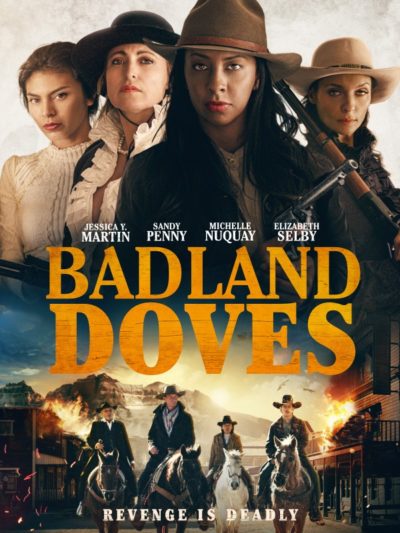 I am contractually obliged to appreciate at least somewhat, any film made here in Arizona. This certainly fits the bill, having been shot at places like the Pioneer Living History Museum, Sitgreaves National Forest and Winters Film Group Studio. However, it is a fairly basic tale of two-pronged revenge, with significant pacing issues. The proceedings only come to life in the last 20 minutes – and barely that. Initially, matters are more than a tad confusing, as we jump about in time and space without apparent notification. But the basic principal is eventually established.
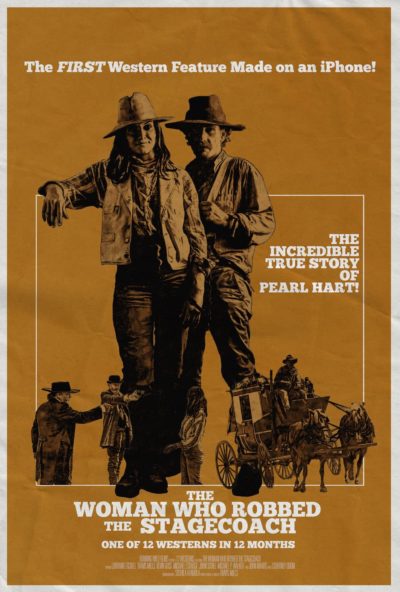 There are a couple of points to note going in. This was one of “12 Westerns in 12 months”, a project run by the director during 2020. It also proudly pronounces itself as the first ever Western feature to be shot entirely on an iPhone. Both of these do lead to limitations. The sheer speed involved obvious has an impact, and I can’t help wondering if a more measured approach would have been better for the end product. As for the iPhone… Well, on the plus side it looked perfectly watchable on my 49″ television, especially the outdoor scenes. However, the indoor sequences seemed almost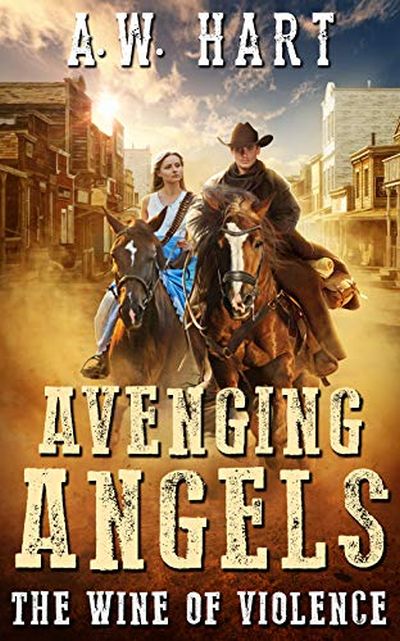
 Like “Franklin W. Dixon” and “Carolyn Keene,” “A. W. Hart” is the house pen name assigned by the publisher to all the various authors of individual books in the series of which this novel is the seventh installment. In this case, though, A. W. is actually my Goodreads friend Charles Gramlich (that’s no secret; he’s credited in the “About the Author” note at the book’s end). Although I’d read and liked a couple of his short e-stories previously, I’d never tried any of his long fiction. So, when I saw this novel mentioned in one of his blog posts last year, I was intrigued enough to buy a copy. (Barb and I read it together, since she’s an avid Western fan, and I knew this would be right up her alley.)