




★★★★
“And not a Rick Springfield in sight.”
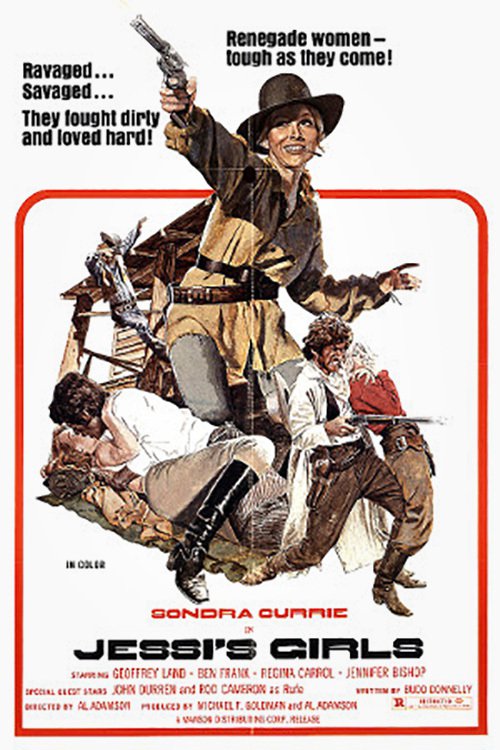
 It’s about the year 1880, and Jessica Hartwell (Currie) is heading out West in a wagon with her preacher husband. They encounter the gang of Frank Brock (Frank); they repeatedly rape Jessica, before shooting her husband fatally, and leaving her for dead. She survives, returning to health with the help of prospector Rufe, who sports an unfortunate, obviously fake beard, yet also teaches the young woman how to shoot. For Jessi has vengeance on her mind, and to assist her in this path, she liberates three other women from the custody of Sheriff Clay (Lund). There’s outlaw Rachel (Jennifer Bishop); saloon girl Claire (Regina Carrol); and Indian Kana (the not-exactly Indian Stern), who had been a part of Frank’s gang until he abandoned her.
While director Adamson was best known for his horror films, some of his work has been covered here before: The Female Bunch and I Spit on Your Corpse! This is his best entry yet, which is straightforward, short on pretension and all the better for it. It certainly doesn’t hang around; we’re barely a few minutes in before the reason for revenge is under way, and it’s not easy viewing. It sits particularly uncomfortably, since just a few minutes earlier, the audience was enjoying the sight of the lead actress (also seen in Mama’s Dirty Girls) skinny-dipping. For the film doesn’t forget the sex in exploitation. Jessi is surprisingly quick to forget her late husband and bed the Sheriff, with most of the other female cast similarly disrobing at some point.
On the other hand, there are occasionally surprising elements, such as Tana’s refusal to help a wounded Apache; often, films lump all native Americans together, forgetting that tribes were sometimes disparate groups, who hated each other. It’s a decision which causes conflict – of the muddy, cat-fight kind – between her and Claire, a diversion on the otherwise fairly straight arrow journey towards the expected and likely inevitable confrontation with Brock. This, along with other forms of more brutal attrition, do mean that by the time Jessica arrives at her target’s hideout, the film’s title is no longer accurate. Indeed, Jessi is back to ploughing an almost solitary furrow on her mission, made all the more hazardous by Frank knowing she’s on her way.
The supporting actresses are not exactly given more than simple sketches, yet manage to make them feel like actual people. The focus is firmly on Jessica, and I liked Currie in the role, with her managing to portray both a vulnerable side and a steely determination that will not be swayed from her intended path of retribution. Her coolest moment is probably at the end, lighting sticks of dynamite off her cheroot and tossing them to great effect. Admittedly, when it comes to the finale, Brock and his men tend to demonstrate all the shooting skills of Imperial Stormtroopers, and you wonder how they ever managed to rob anyone. A great ending though, with a twist I did not see coming, providing the icing on the cake of a unexpectedly pleasant surprise.
Dir: Al Adamson
Star: Sondra Currie, Ellyn Stern, Geoffrey Land, Ben Frank
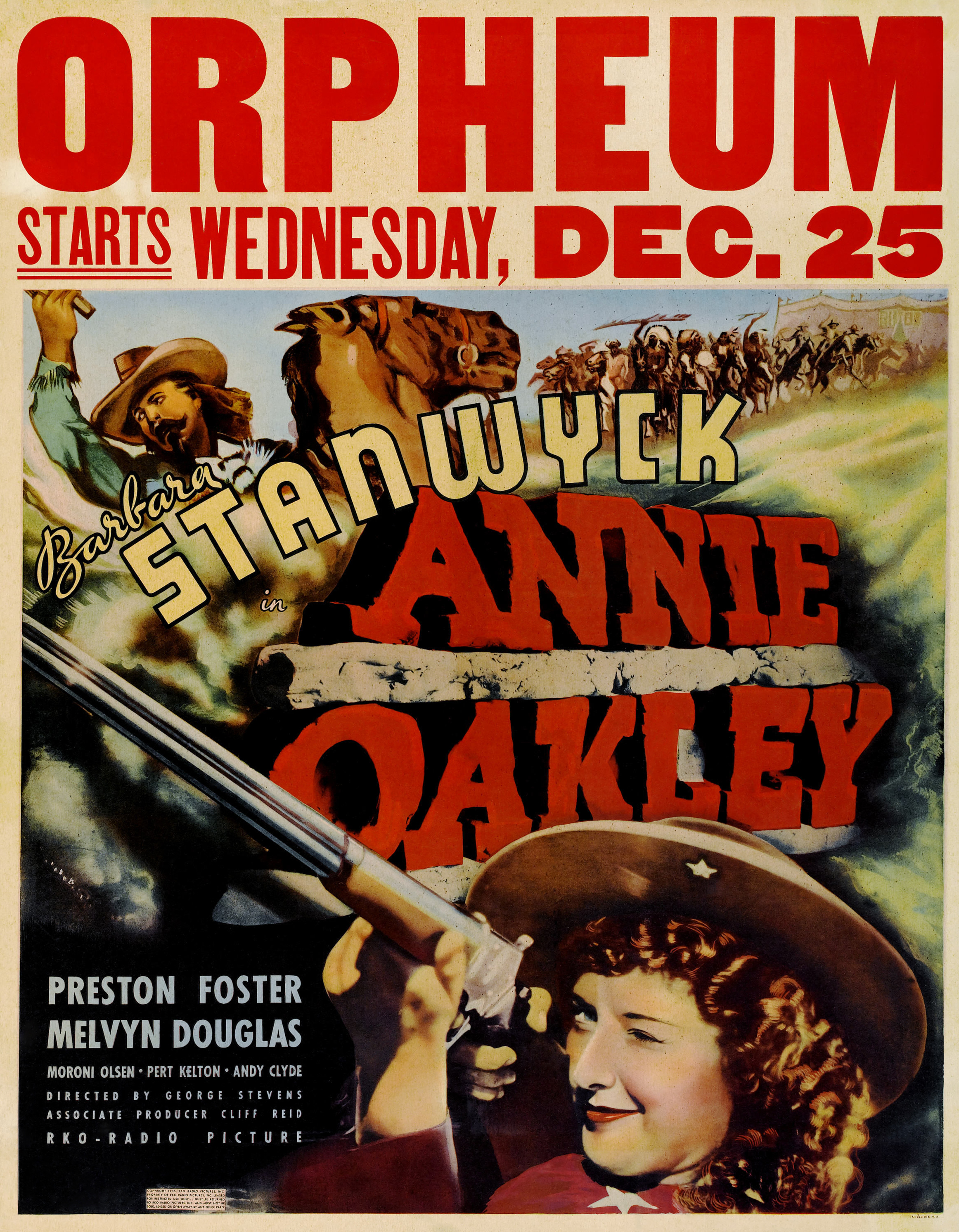
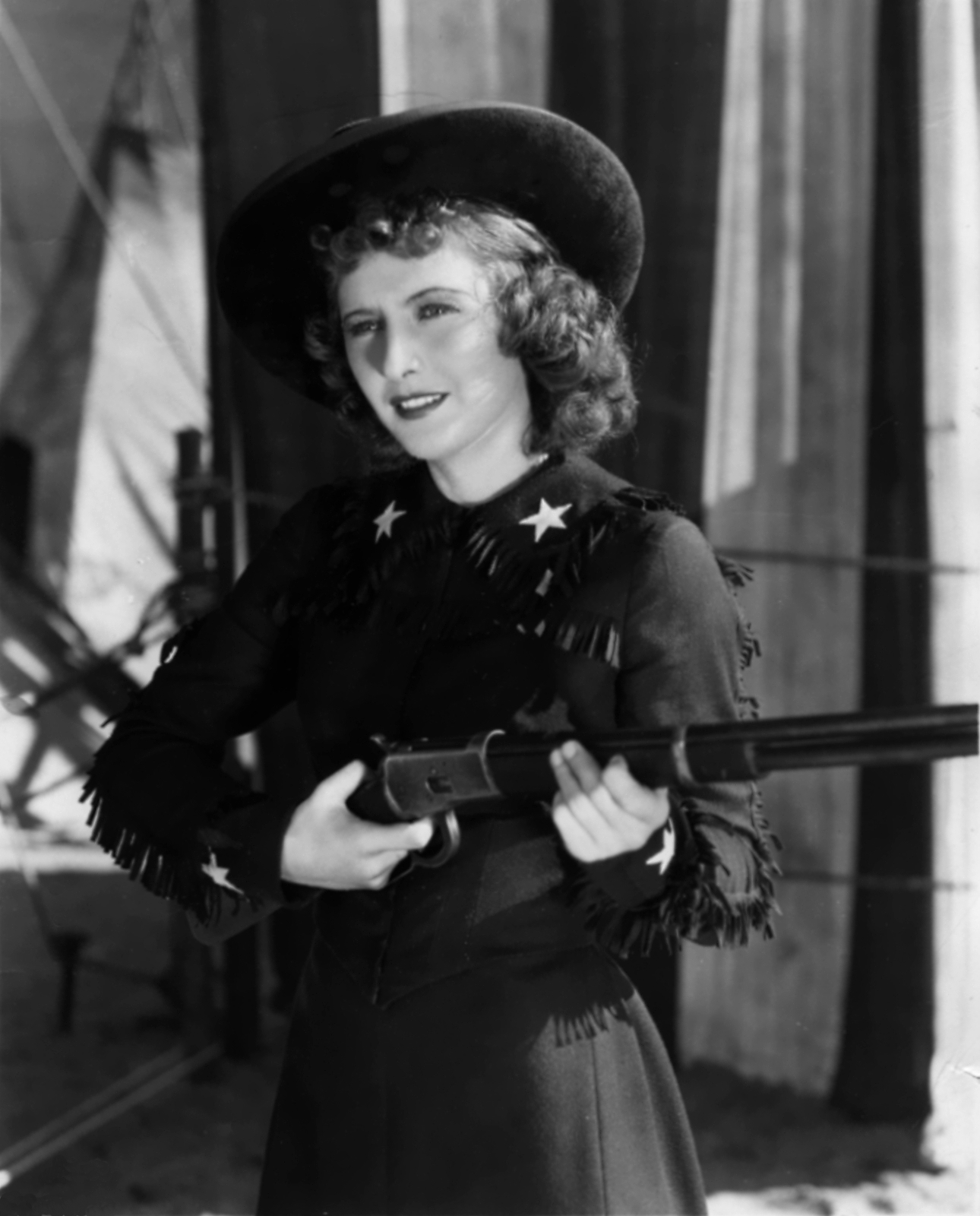
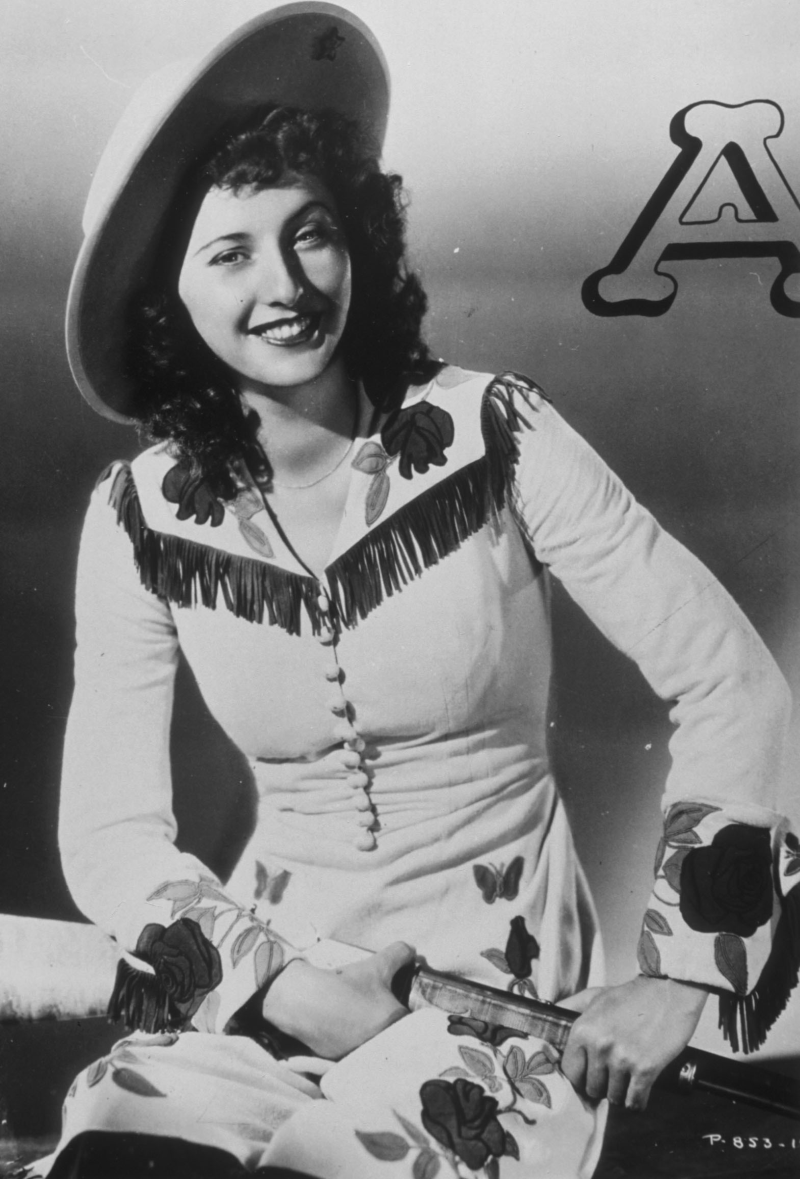
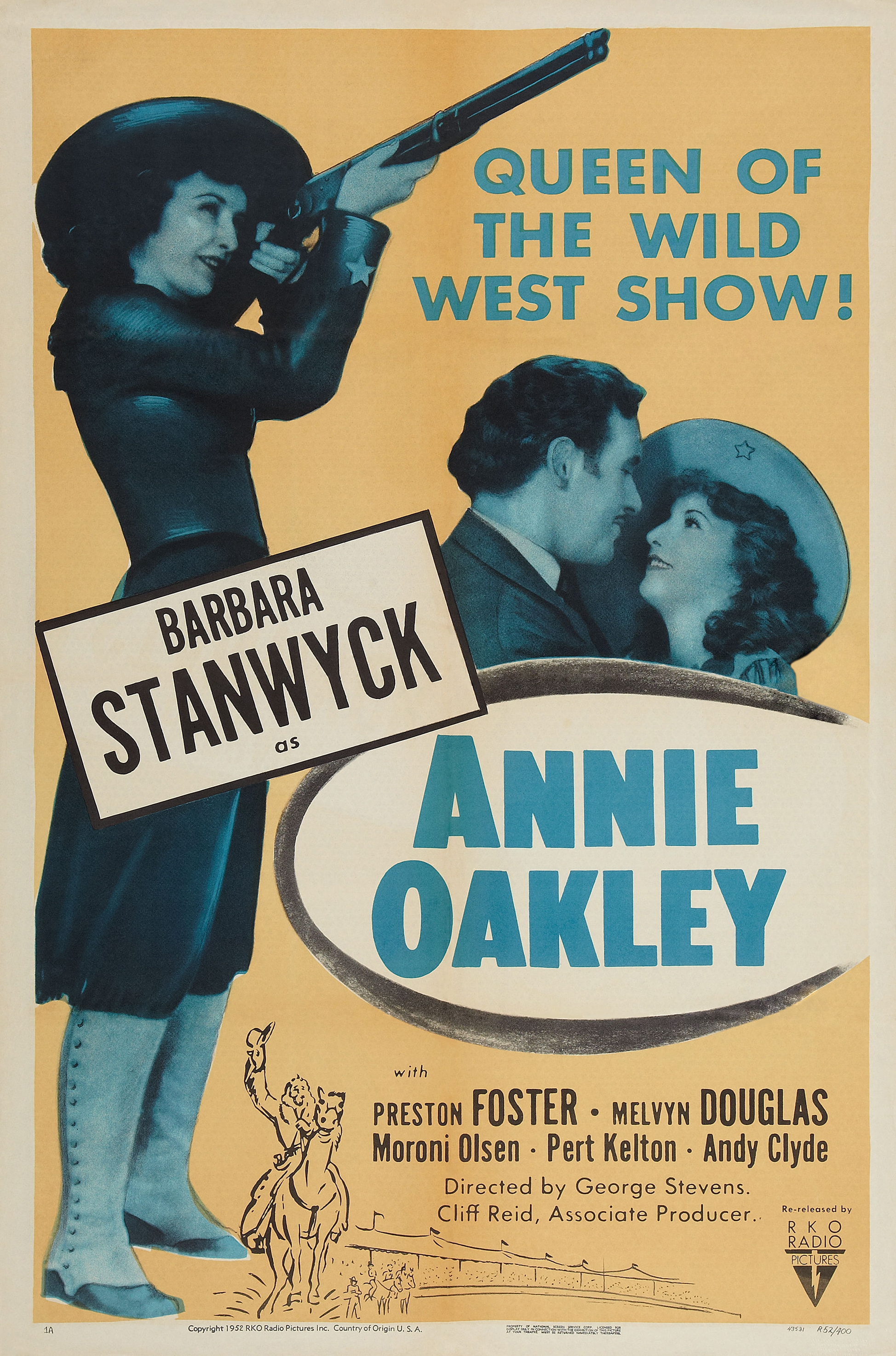
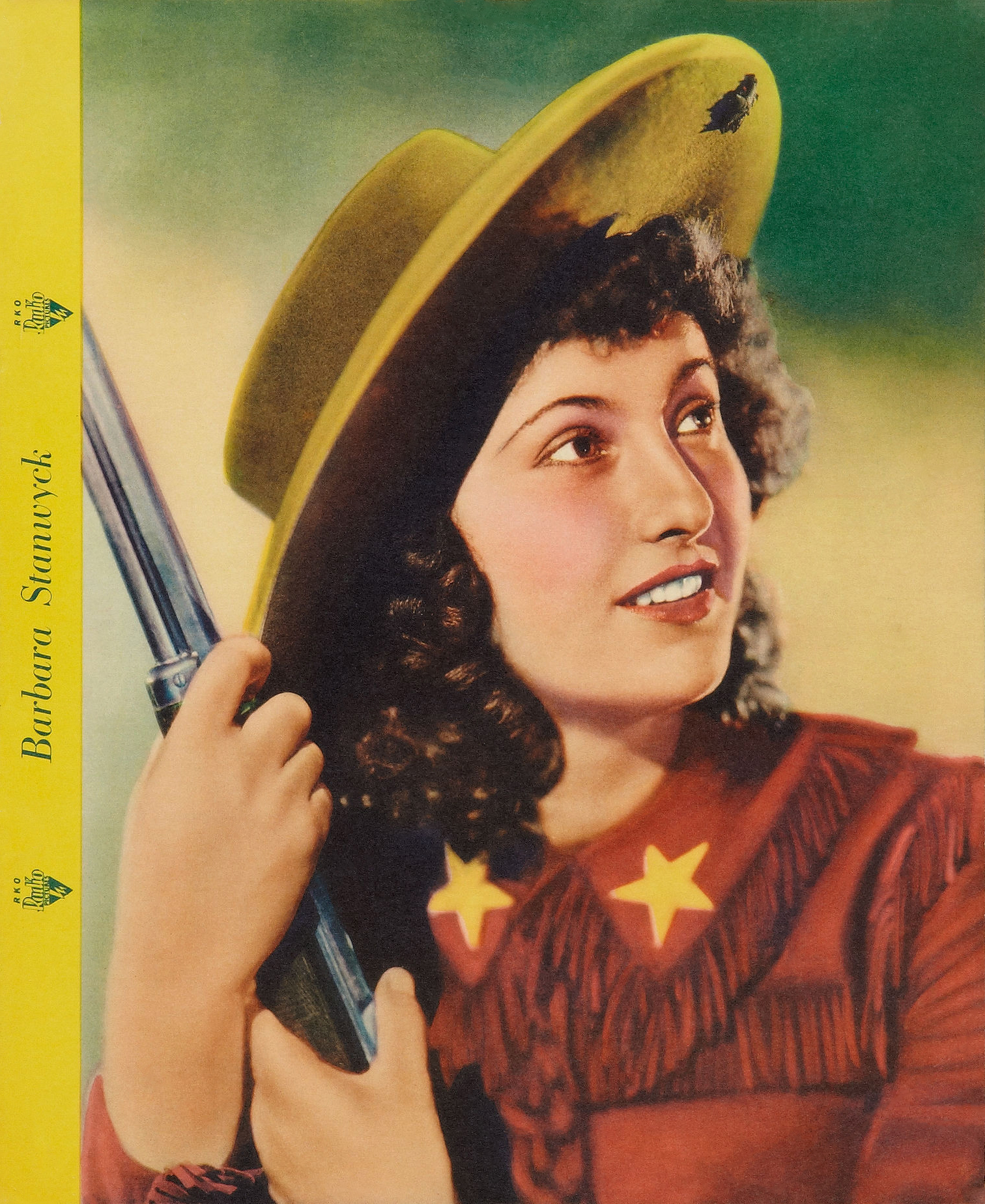
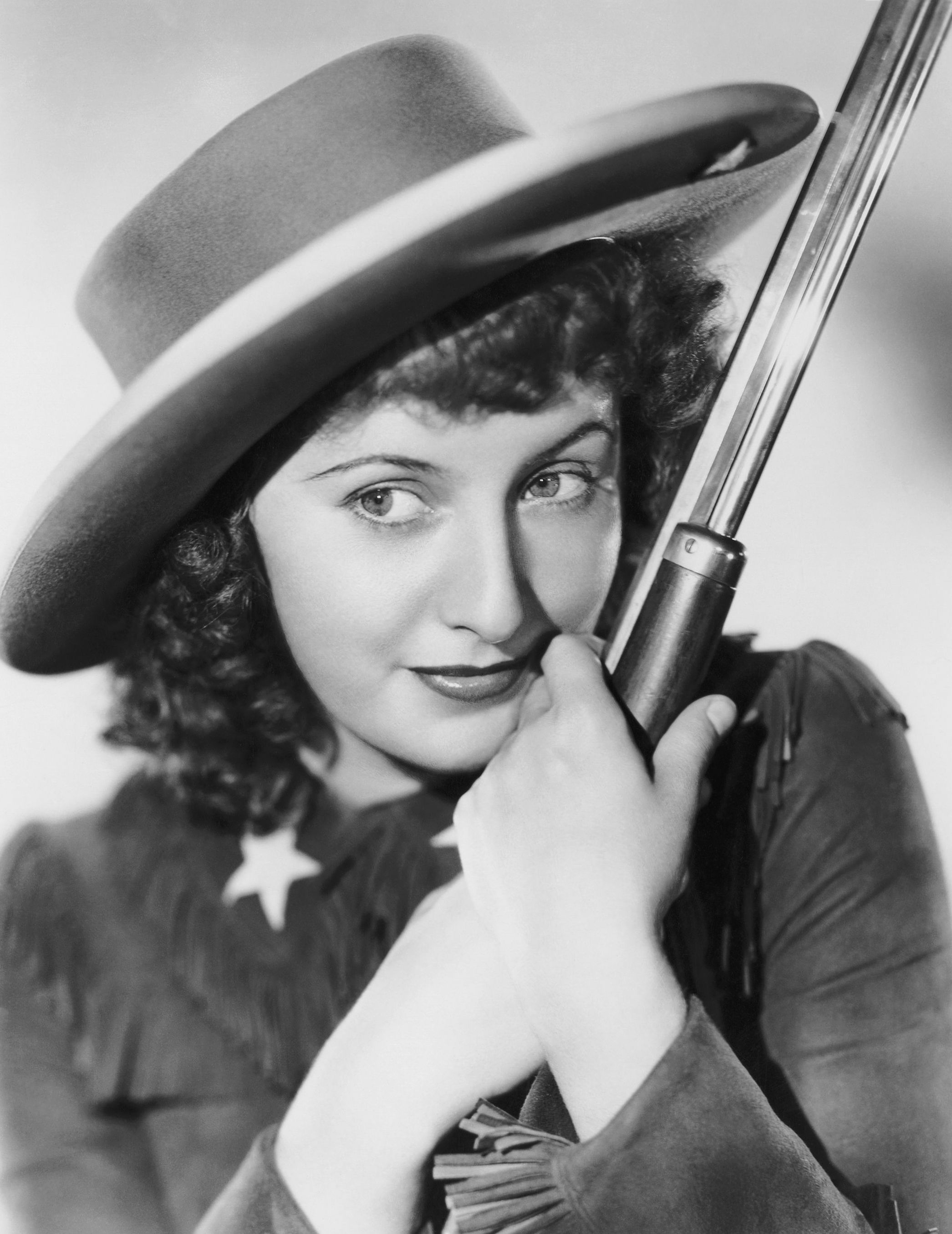
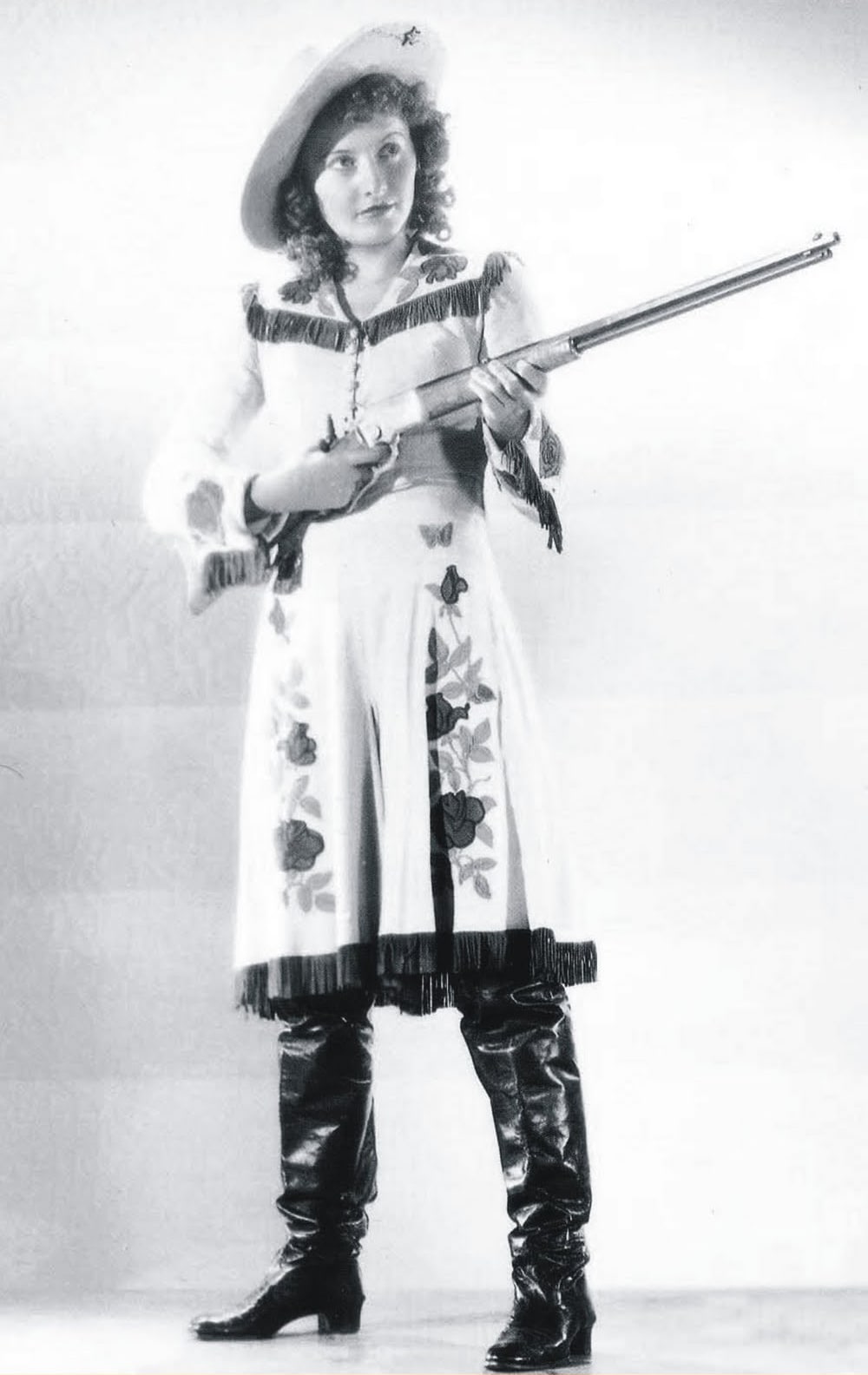
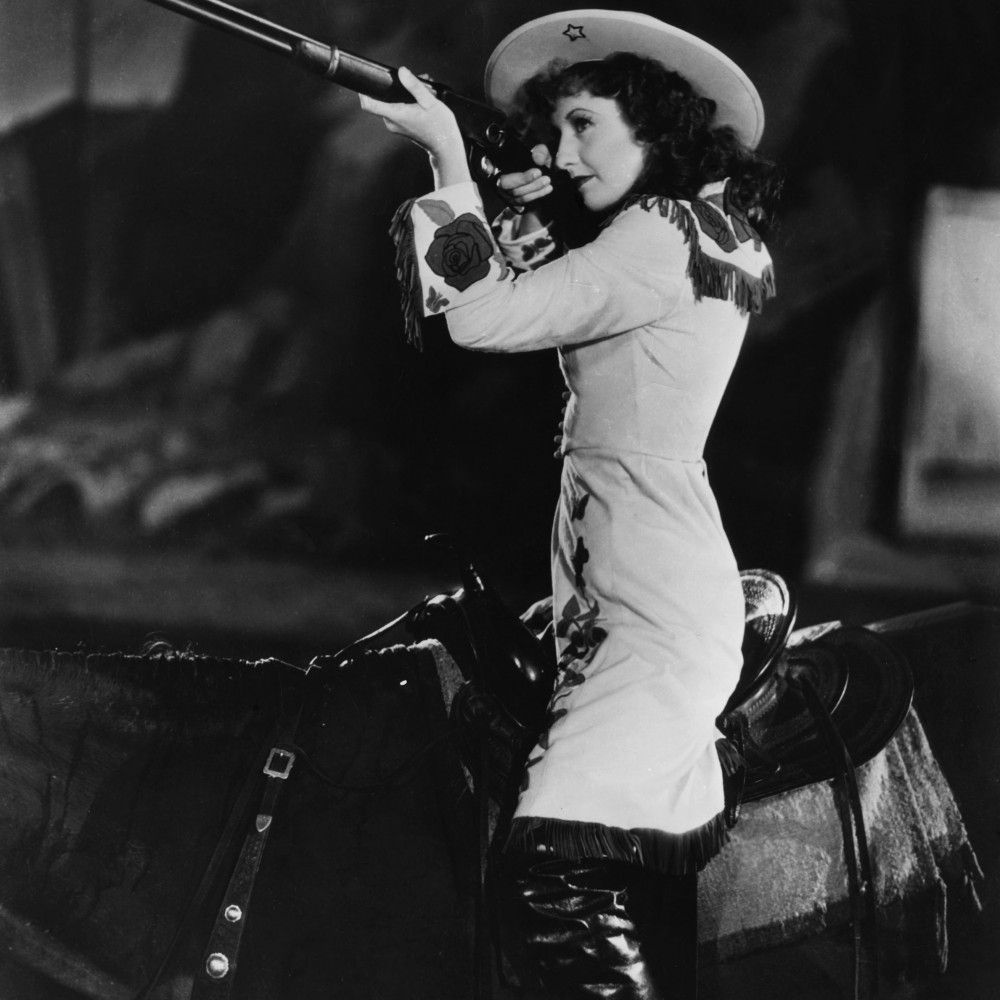
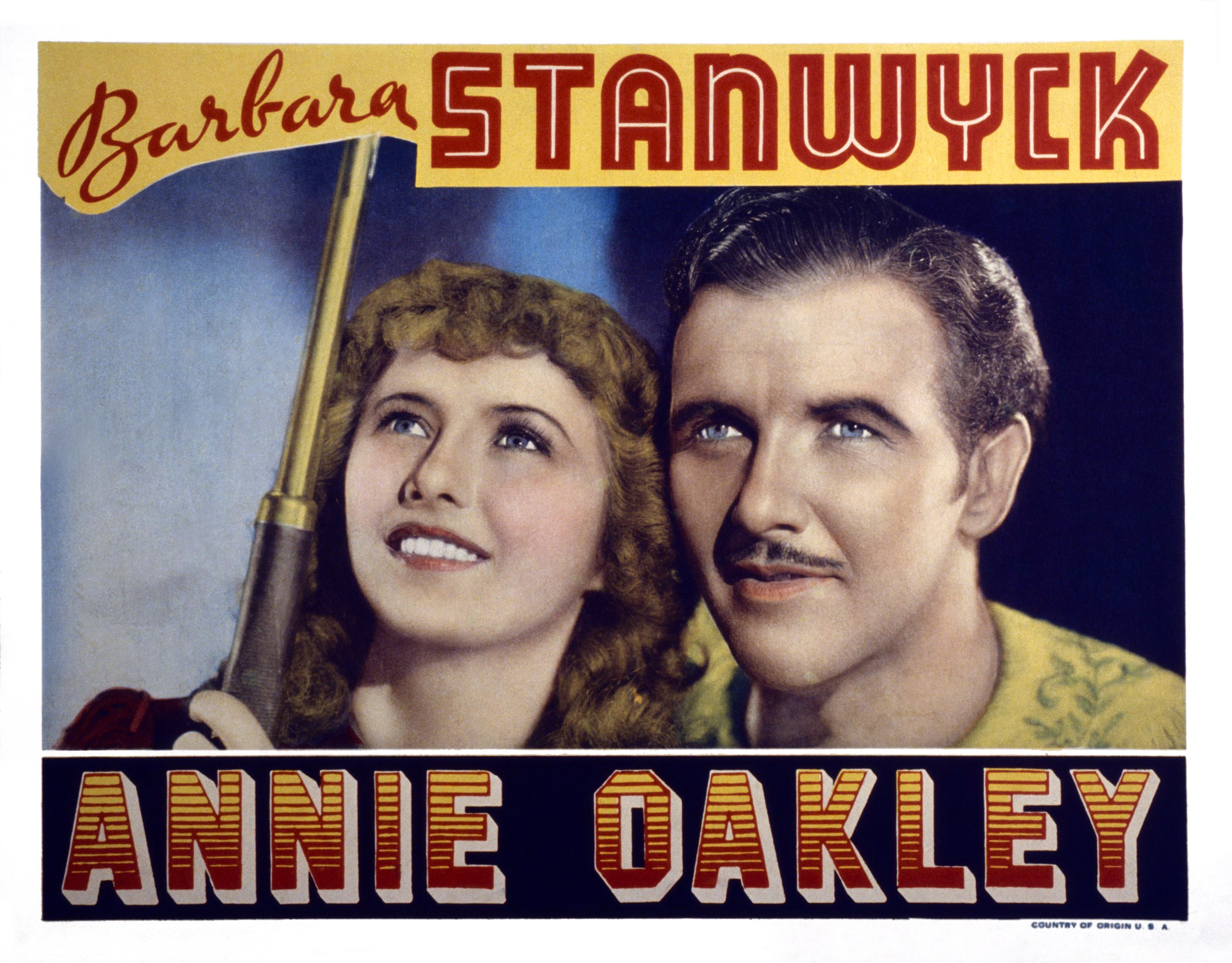
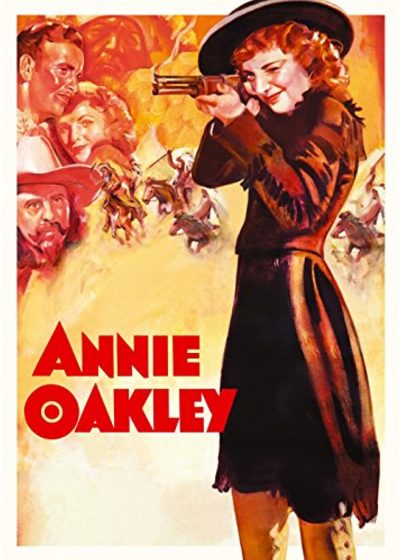 While not exactly an accurate retelling of the life of noted sure-shot Annie Oakley, this is breezily entertaining. Indeed, you can make a case for this being one of the earliest “girls with guns” films to come out in the talking pictures era. There’s no denying Oakley (Stanwyck) qualifies here. The first time we see her, she’d delivering a load of game birds – all shot through the head to avoid damaging the flesh – to her wholesaler. When barnstorming sharpshooter Toby Walker (Foster) blows into town, Annie ends up in a match with him, which she ends up throwing, due in part to her crush on him. She still gets a job alongside Walker, in the Wild West show run by the renowned ‘Buffalo Bill’ Cody (Olsen) and his partner, Jeff Hogarth (Douglas). But Annie and Toby’s relationship fractures after he accidentally shoots her in the hand, while concealing an injury affecting his sight.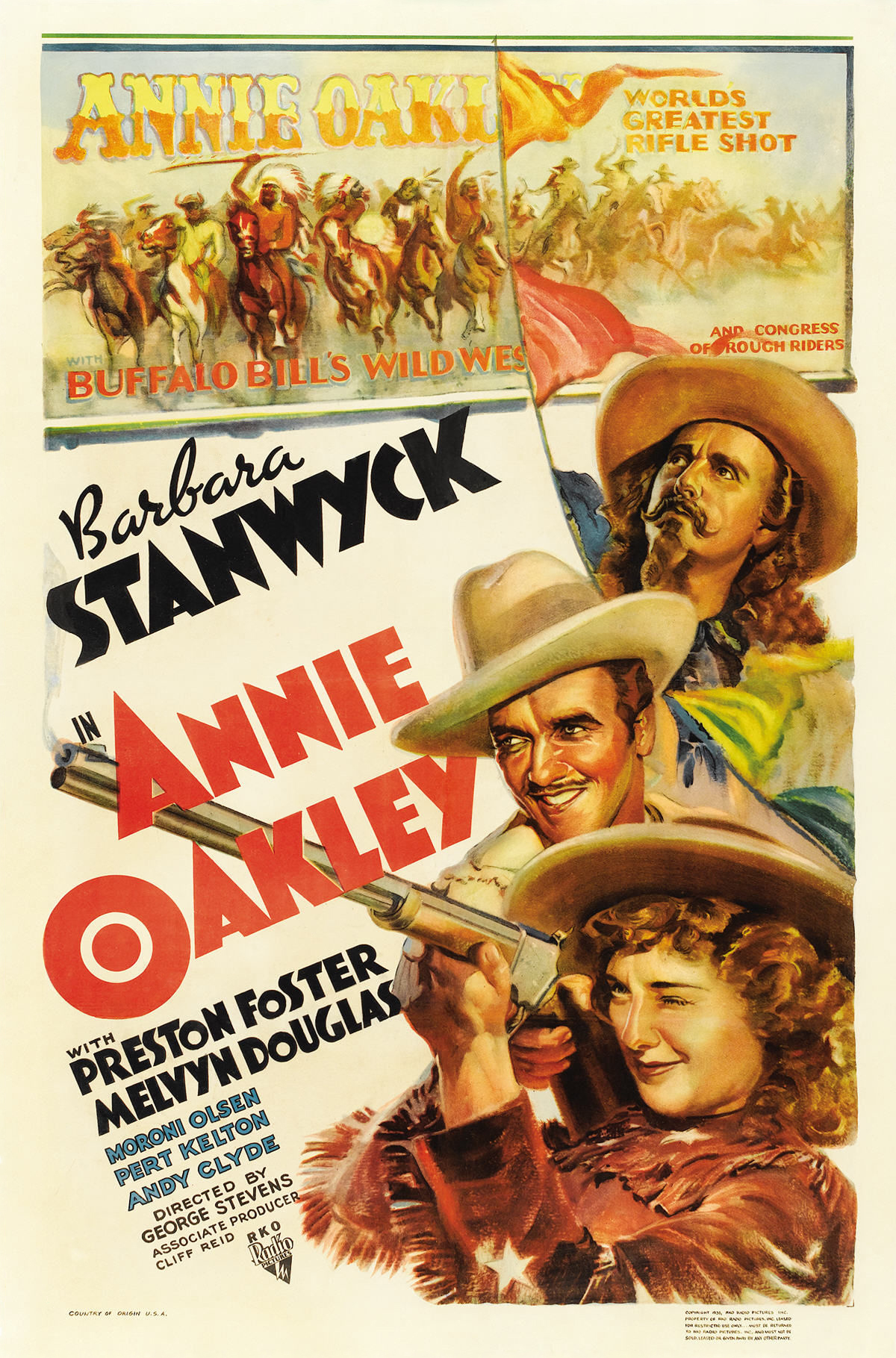
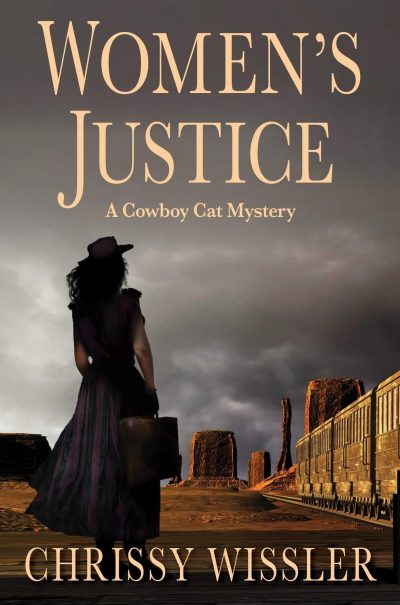 In the 1880’s, the town of Butte, Montana is a mining boom-town – instead of gold, it’s mostly copper which fuels its economy. The wealth comes at a cost, as the huge amounts of acrid smoke belched from the smelters and plants turns day into night, along with creating perpetually “noxious, disgusting air.” Off the train and into this smog steps Cat, a woman with no shortage of a past. A former prostitute, but also a ranch-hand, her preferred outfit of blue jeans and six-shooter is most atypical for a woman of the times. Almost immediately, she is drawn into the mysterious and suspicious death on the street of another “fallen woman,” Norma. The apparent cover-up goes right up to “Copper Kings” such as Marcus Daly (a real tycoon from that time and place), and it quickly becomes clear that whoever was behind Norma’s demise, is none to happy to find Cat looking into the matter. To find the truth, she’s going to have to navigate her way through both ends of Butte society.
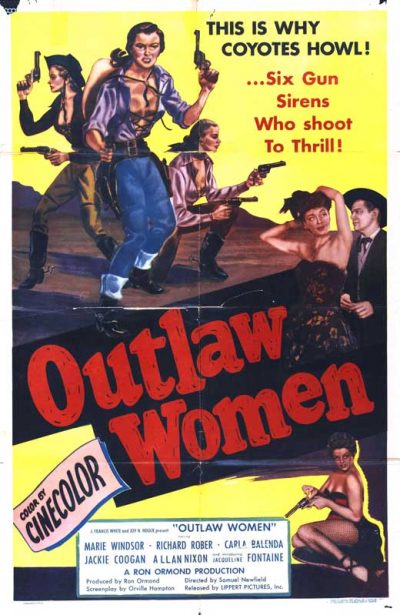 The city of Silver Creek is on the way out, and many of its inhabitants are leaving, including town doctor Bob Ridgeway (Nixon). Originally heading to Kansas City, he is convinced at gunpoint to take up a position instead in “Las Mujeres.” That’s Spanish for “The women,” and is an appropriate name since the place is a gynocratic society, where the ladies are in charge. Top of the heap is Iron Mae McLeod (Windsor), who runs the local saloon and ensures that the the other women in the town are kept safe from exploitation. She does, however, have to navigate the straits between aspirational gambler Woody Callaway (Rober) and outlaw Frank Slater. Ridgeway, meanwhile, because the target of affection for both Beth Larrabee (Balenda), one of Mae’s enforcers, and her big sister and star of the saloon’s show, Ellen. But when all of Mae’s money is about to be transferred out of Silver Creek, and becomes a target for Slater and his gang, romance has to take a back seat.
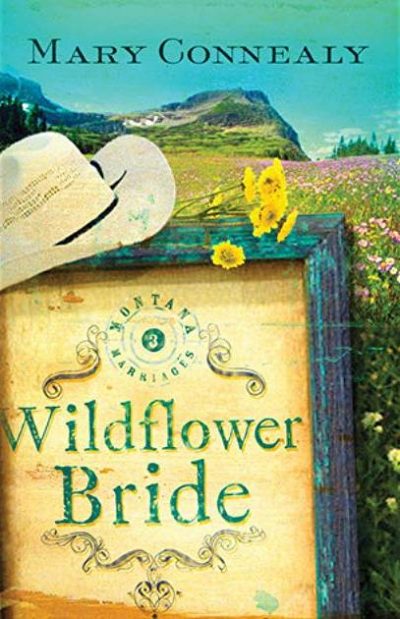 Barb and I discovered evangelical Christian author Mary Connealy through her Sophie’s Daughters trilogy, partially set in Montana in the years from 1878 to 1884. Several characters who figure in her earlier Montana Marriages trilogy, of which this novel is the third, also play important roles in the later one. So we were interested in their back stories; and when I found this book in a thrift store, it was a natural purchase! (We’ve also just started reading the second installment; long story!) This means we’re reading the trilogy in reverse order; so we started with much more knowledge of the characters’ future than the original readers would have (the read was more like a visit with old friends). However, I’ll avoid spoilers in this review. (Obviously, though, it might contain “spoilers” for the earlier Montana Marriages novels.)
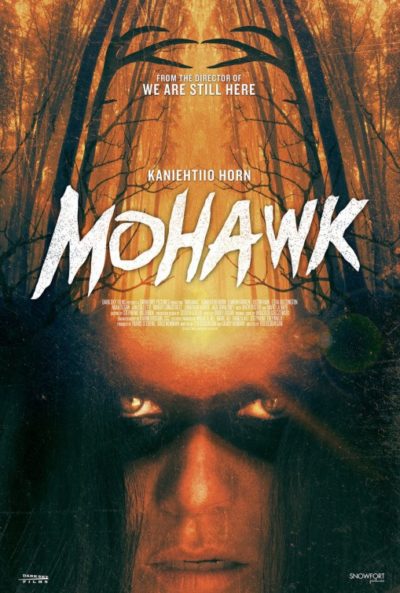 This takes place in upstate New York during the 1812 war between Britain and America, when combatants are courting the Mohawk tribe to join forces with them. The natives are suspicious of both, and won’t commit to either. Working for the British is Joshua (Farren), who is in a slightly odd, three-way relationship with Mohawk warrioress Oak (Horn) and fellow native Calvin (Rain). On the other side is Hezekiah Holt (Buzzington), and his small band of Americans, who are out for redcoat blood. When they blame the Mohawk for murdering some of their number, their violence quickly extends to encompass Oak and Calvin, as well as Joshua. After Oak is left all alone, she goes on the war-path to take revenge on Holt and his men.
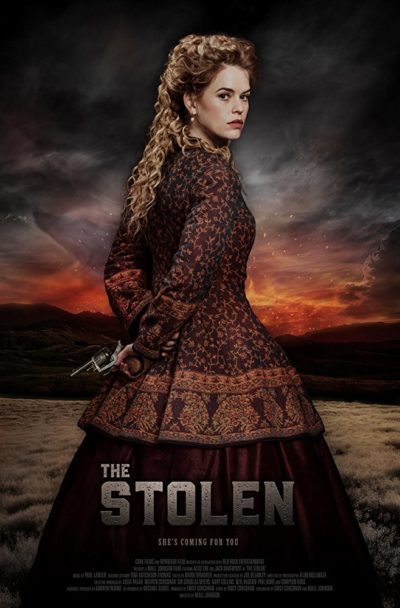 Rarely has such promise been so spectacularly and vigorously squandered. For this starts well enough. In 19th century New Zealand, English ex-pat Charlotte (Eve) is settling into a new life with her husband and newborn child. This is upturned when a midnight raid leaves her husband dead and the baby kidnapped. Months later, after everyone else has moved on, she gets a ransom demand in the mail, and she tracks its source to Goldtown. This remote outpost is truly an Antipodean version of the Wild West, a rough-edged mining town run by Joshua McCullen (Davenport). Braving all manner of threats – not least, that the only other women there are prostitutes – Charlotte makes the perilous journey to the frontier settlement in search of her son.
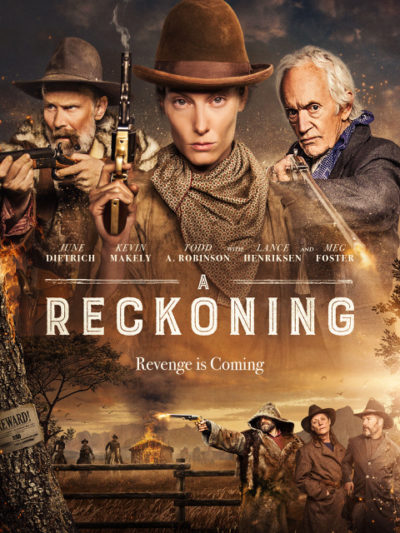 Considering how little actually happens here, I enjoyed this considerably more than expected. It kicks off with 19th-century settler Mary O’Malley (Dietrich) being informed her husband has been brutally slain. Despite the warnings of fellow settler Henry Breck (a small role for Lance Henriksen), Mary heads out on the trail through Oregon for revenge, looking for the serial killer responsible. He’s known as “Marrow” (Makely), for reasons which eventually become clear. She encounters Jebediah (Robinson), a bounty-hunter after Marrow who doesn’t appreciate the competition, and Barley (Crow), a trader who offers and receives temporary companionship.
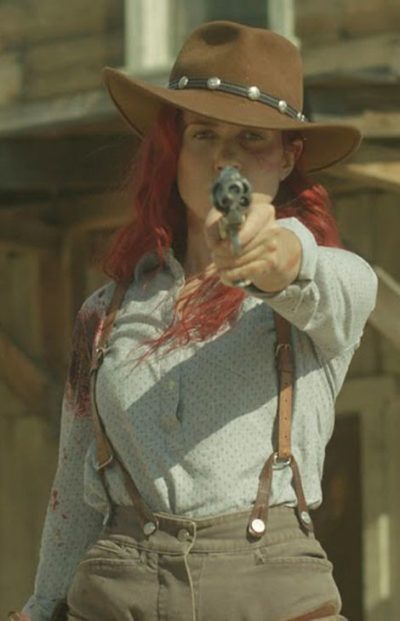 Josephine “Joe” Cassidy (Eiland) is promised in marriage to Tom (Jenkins), the son of the area’s richest rancher, but her heart actually belongs to Jakob (Grasl), the Indian who is Tom’s adopted brother. The two lovers consummate their relationship when Tom is away, but the spurned fiancee hatches a long-term plan to get revenge. Years later, after becoming the local sheriff, he uses these connections to frame and execute Jakob for murder. Word of this reaches Joe, who conveniently for the plot is handy with a firearm, because her father (Cramer) was a renowned bounty-hunter, and passed on the necessary skills to her. Dying her hair red – hence the title – she sets out to take revenge on Tom, only for him to reveal that Jakob is not dead… Not
  This Western was released in 1953, and feels decades ahead of its time. It’s set toward the end of the Civil War, in the town of Border City, which sits exactly on the dividing line between North and South. A settlement built on mining, it has remained a neutral zone under strictly enforced rules laid down by Mayor Delilah Courtney, selling lead to both sides for their bullets. As well as Yankee and Confederate soldiers in the area, the picture is complicated by Quantrill’s Raiders, a group of independent (yet generally pro-South) soldiers under Charles Quantrill (Donlevy). [They really existed, and as the film reveals, had some well-known names in their ranks]