
★★
“Not so great…”
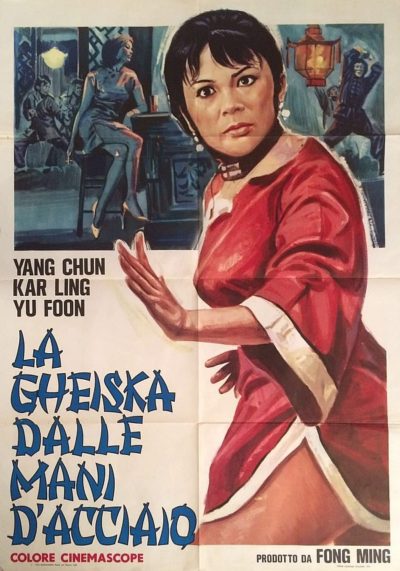 I’m just going to begin by quoting the opening credit titles. Spelling, grammar and punctuation as received. “At the early stage of Republic of China, Yuan Hsi Hai wanted to rebel the democratic government & be the king. But there were 300,000 soldiers at Yuan Wan under the command of General Tsai obstructed his desire, so he cheated General Tsai to Peking & confined his movements. So Yuan who lived in Chu Jen Hall could fulfil his ambition but…” I reproduce this because, to a large extent, that’s everything I’ve got in terms of the over-arching plot here. It’s all about Tsai (Kwan) getting out of the city, in order to lead his troops and, presumably, frustrate Yuan’s dictatorial ambitions.
Key to this is Peking Opera star Hsiao Yu (Lee), who is hired by Yuan’s men to keep an eye on the General. However, she’s not as loyal as her employer would hope, and she gradually becomes attached to and involved with Tsai. This eventually results in her helping him to escape the house arrest under which he has been placed. I believe this to be true with… let’s say 90% confidence. There does appear to be other stuff going on: none of it is able to make it through the terrible presentation, and out the other side, to provide details which I prepared to commit to the keyboard. It’s kinda clear why Lee’s Queen Boxer made it out in the West, and this didn’t, even though both were made around the same time.
This did rather well at Taiwan’s 1973 Golden Horse awards, winning Best Film, Leading Actor, Screenplay and a special award for “Outstanding Performance” going to Lee (she lost Best Leading Actress to Hsiao-Lao Lin in A Heroic Fight). All I can say is, it must have been a very slow year in cinema, for this largely plodding and uninteresting history-political drama to have triumphed. Though, again, the presentation does it no justice. For example, there’s one scene where Tsai is repeatedly writing something in large letters on paper. It’s clearly very important to him. Unfortunately, the subtitles – as ever, intended for a Chinese audience, not a Western one – don’t bother to translate it. So its significance is entirely lost.
Lee is about the only reason to watch this, and the film definitely goes up a gear whenever she’s on screen. Her background actually was in the Peking Opera, making this right in her wheel-house. The director – and some sources also credit both Kwan and Florence Yu Fung-Chi – wisely lets her talent shine through, and it’s a no-nonsense approach that works. Witness, for example, the casual way, she shoves a victim out of the way with her feet, after crushing his larynx. But one of the problems is, I honestly couldn’t tell you who’s she’s fighting at the end, or why, since the General has already escaped. It’s just another element lost in translation here, like so many others, and leaves this an underwhelming entity, in the only form available.
Dir: Min-Hsiung Wu
Star: Judy Lee, Peter Yang Kwan, Lee Hung, Cheung Kwong-Chiu
 This is a fairly classic “rise from nowhere” story, yet is well-executed and done in a world which is interesting for its differences. The heroine is – surprise! – Marilia, whom we first meet on the battlefield, about to face an opponent of superior numbers. We then flash back to her childhood, growing up in a Tyracian brothel. Her mother was one of the “painted ladies,” but after she dies, Marilia and her brother Annuweth are on increasingly thin ice. Their effort to run away is unsuccessful, yet does bring them a chance at a new life. While it’s here that Marilia discovers her tactical savvy through board games, it’s not without its downside, the siblings being split up after Marilia enters an arranged marriage in another territory.
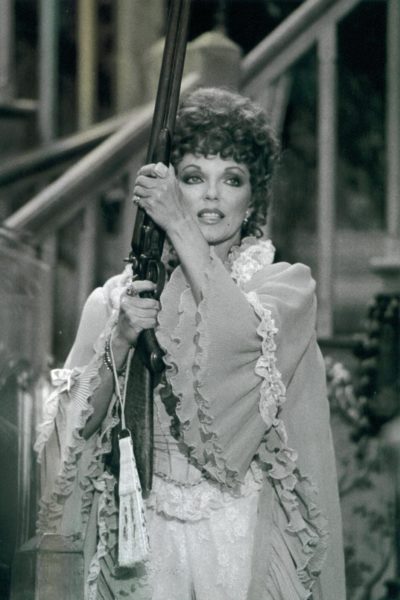 This sprightly TV movie from 1982 boasts a rather decent cast and, at least in the first half, manages to go in unexpected and interesting direction. It does end up descending into rather familiar territory thereafter, and the finale doesn’t manage to be as rousing as it should be. Yet it managed to keep my interest, and as this genre goes, that probably makes it better than average. It takes place in the last stages of the American Civil War, when the Southern women of Sweetwater have been left bereft of men, after the Confederate Army has recruited them all to their cause. Newly arrived in town is doctor Maggie McCulloch (Barnes), who has arrived to help her ailing aunt, Annie (Collins). She is shocked to discover Annie is less the mine owner touted in her letters, and more the owner of the town brothel.
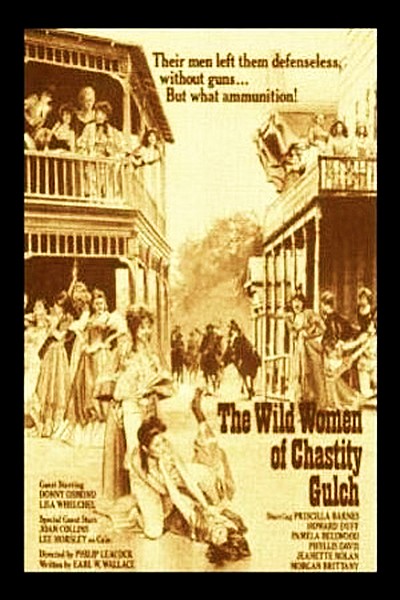 That aside, the plot unfolds largely as you’d expect. There’s the initial tension between whores and housewives, and the women struggle to come to terms with the everyday business of running the town. For example, there’s a fire drill, which ends up with half the ladies thrashing around in shallow water, and some other slapstick involving whitewash, that is somewhere between lightly amusing and embarrassing. However, Barnes – at the time a sitcom star in Three’s Company – does a very good job of keeping the film grounded, and the supporting cast help admirably in that aspect. Collins is particularly good, projecting an attitude which clearly proclaims she will take no shit from anyone.
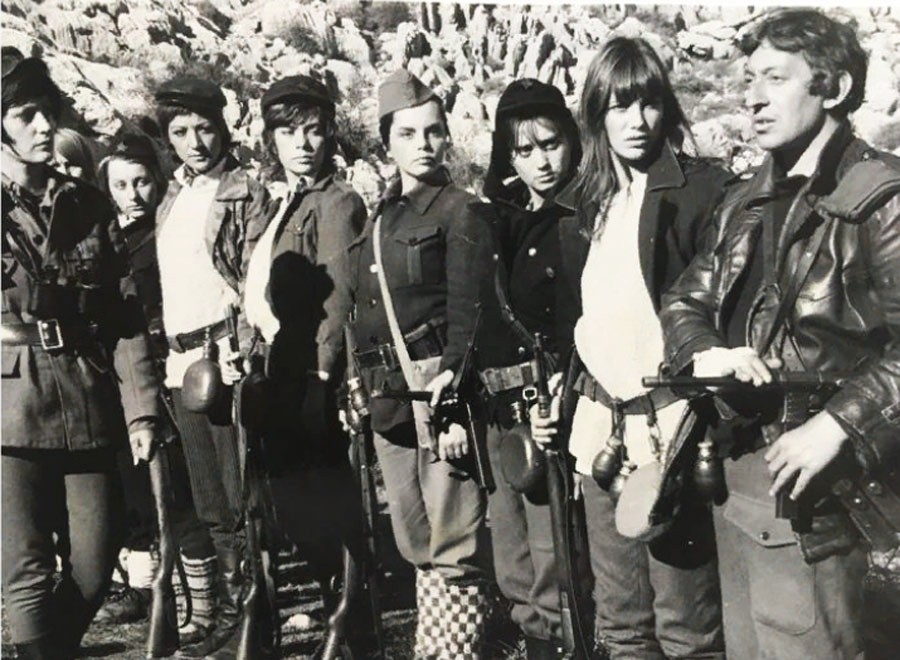 ★★
★★ There seem to have been quite a few movies out of Europe over the past couple of years, about the female soldiers fighting in Kurdistan for independence with the PKK and related groups. French films
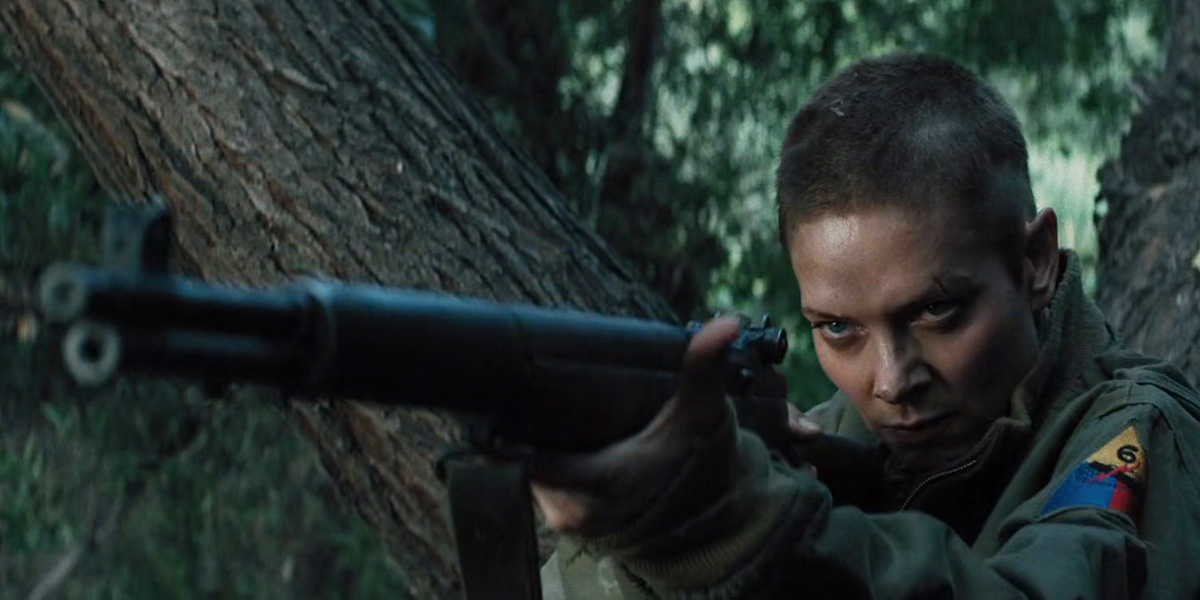
  I have always been intrigued by alternate histories. These are bits of speculative fiction, which are based on a “What if…?” premise. For example, what if Napoleon had won the Battle of Waterloo? Or what if John F. Kennedy’s assassination had failed? Creators speculate on the way the world might have changed, in ways big and small. I find such creations endlessly fascinating, giving me a strong suspicion that, at certain points, history teeters on a razor’s edge, where a seemingly insignificant event can have an impact far beyond its scale. Here, it’s a single person who changes the course of history. For what might have happened, had Joan of Arc turned up, not in medieval France, but in Russia, during the aftermath of the 1917 revolution?
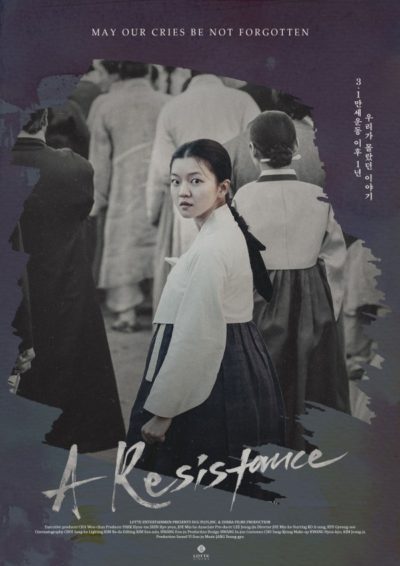 This takes place in 1919-20, when Korea was under occupation by the Japanese [there seems to be quite a lot of this about; I’ve seen a bunch of Chinese movies set when that country was occupied by Japan as well]. Even demonstrating against the Japanese, or in favour of Korean independence, was sternly forbidden, with those taking part likely to be arrested and thrown in prison for months. If they were lucky, that is: an opening caption tells us 7,500 were killed in the protests or died in jail subsequently. Even for those merely arrested, this was not a “nice” prison, to put it mildly, with horrendously over-crowded conditions (24 to a cell!), freezing temperatures and meagre rations.
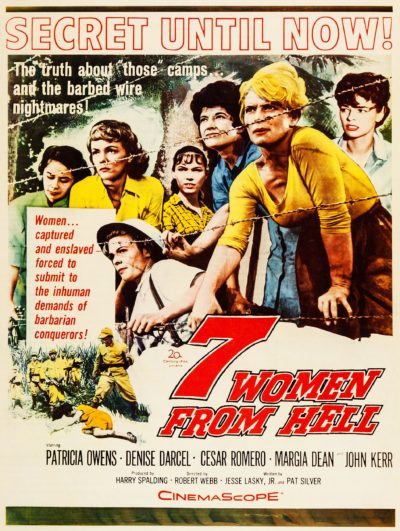 About the only review online I found for this, said it “may be the worst movie released in 1961.” I can only presume the writer of that statement has never seen The Beast of Yucca Flats. Even if I admit its weaknesses, Seven is nowhere near the same league of badness. Indeed, it starts off well, depicting the sudden invasion of Papua New Guinea by Japanese forces in 1942, with “enemy” civilians being herded into interment camps. The ones on the women’s side are a multi-national bunch, including Australian Grace Ingram (Owens), several Americans including Janet Cook (Craig), a German widow Ann Van Laer (Sylvia Daneel), Frenchwoman Claire Oudry (Darcel), and mixed-race nurse Mai-Lu Ferguson (Pilar Seurat).
  ★★★½
★★★½