★★★
“Girl with a ray-gun”
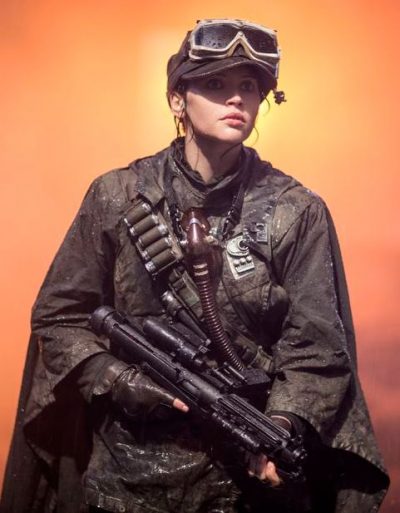 When this came out, all the way back in 2016 [so much has happened in the Star Wars universe since then and the way we regard LucasFilms…], it was met with a split reaction. Admittedly, the film never resulted in the kind of angry war that resulted from The Last Jedi the following year. While some praised Rogue One to the skies for being so different, dark and down-to-earth (some even went so far as to rank the film as the best movie of the series since A New Hope and The Empire Strikes Back, others – including myself – were more like: “…meh!”
This rather mixed reaction came after the entertaining roller-coaster ride The Force Awakens had provided. The more serious, less “fun” approach of RO made the new movie a much less-liked, some may even say “ignored”, entry in the new cycle of Disney-produced Star Wars movies. As usual, the truth lies somewhere in the middle. Personally, I was left cold by the movie, after having really enjoyed TFA. But, while RO has some real flaws in my humble opinion, and a problem in its basic conception, it is not a bad or mediocre movie. Just a flawed,”okayish” movie, and I’ll explain why I think so in more detail.
The story begins a couple of decades before the events of A New Hope. Scientist Galen Erso (Mads Mikkelsen) is recruited by the Empire through Director Orson Krennic (Ben Mendelsohn) to work on a new super weapon in development – which we all know today as the “Death Star”. Galen can’t refuse: he is abducted, his wife is killed during the kidnapping, and only his young daughter, Jyn, escapes.
Fast-forward to meet the now twenty-something Jyn Erso (Jones) again, as she is freed from prison by the Resistance. Together with spy Cassian Andor (Luna) and a couple of other misfits they meet along the way, they’re tasked to find out about that new deadly weapon in whose construction Jyn’s father was instrumental. That involves either freeing him from the Empire or, it’s implied, killing him so he cannot serve his masters any more. This could potentially pit Jyn against Cassian, though nothing is ever made of that interesting premise. As usual in Star Wars, it all ends in a big battle, this time, on and over the tropical island planet of Scarif. And [spoiler warning] this sees the surprising death of all the main characters, save those who will become main characters in its sequel, ANH, such as Leia, Darth Vader and Grand Moff Tarkin.
It doesn’t sound uninteresting but despite all the good points, there are also some serious flaws. For much of the time, the film is dragged down by expository scenes, flying from place A to B to accomplish this or that, getting another new character onto the ship and so on. It also suffers from the common bane of all prequels: telling a story nobody ever asked for, where we all already know the ending! What saves the film mainly, is the finale. Unlike the duo of Phil Lord and Christopher Miller on Solo, director Gareth Edwards wasn’t fired; his name is still attached to the movie. Yet there were reports about massive reshoots of the ending, by Tony Gilroy who also was responsible (together with Chris Weitz) for the screenplay. Certainly, the surprise introduction of Darth Vader into the plot and many snippets of scenes which were only in the trailers, seem to indicate the movie may have originally had a different direction.
This leads me to the subject of expectations. I recently saw a clip where some celebrity remembered an experience he had years before: “I saw Pulp Fiction in the cinema and in front of me were two teenagers who where definitely displeased by the movie, which I thought was great and original. On the way out, I overheard one of them say: “That must have been the worst Bruce Willis movie, I’ve ever seen!” That shows me, cinema has a lot to do with your expectations and your anticipation!”
That hits the nail right on the head, and I feel the same here. For some people RO was satisfying enough (or even great) because they got their “dark, gritty Star Wars-film”. Every fandom seems to have people who can accept something only if it is “dark and gritty”, which has led to some very unpleasant DC and James Bond movies in the past decade. However, I was disappointed, because I expected not only something very different, but also imagined a movie much better than the one I was served.
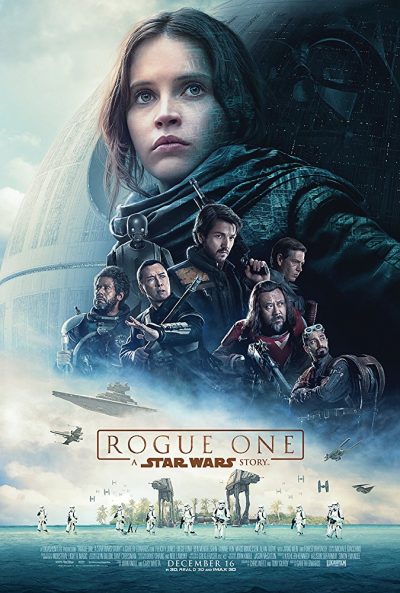 It all started with the trailer, that introduced us to Felicity Jones’ Jyn Erso like a hardened criminal in handcuffs with SW-regular Mon Mothma (Genevieve O’Reilly) listing off what seems to be Jyn’s juvenile record. Honestly, I wouldn’t have minded that at all, and would love to see a character like that in a SW movie. But they should have gone full throttle, and made her like Revy from Black Lagoon. Heck, make her the Snake Plissken of SW! But unfortunately, they didn’t do that.
Even her lines in the trailer: “This is a rebellion, isn’t it? So I rebel!” are just pretense: a hardness that is never proven, only claimed. But this line is also never said in the final movie. “Trailer-Jyn” seems to be a tough one, rejecting authority, while “Movie-Jyn” seems toned-down, and therefore quite a bit more bland. This had the potential to be highly interesting, and unfortunate that they never followed it up in the movie. For example, at the beginning we meet Cassian Andor: he shoots another spy who delivers vital information to him, fearing the comrade could endanger him by getting captured by Stormtroopers. You can think of many scenarios how Jyn and Cassian could work together, what kind of uneasy relationship they would establish. Cassian might be ready to kill her father – and potentially also Jyn when she causes trouble.
I do remember how my head-cinema went into overdrive when I heard Forest Whitaker’s voice in the trailer proclaiming: “What will you do when they break you? What… will you become…?” That really got my mind going, in combination with Jyn appearing in the trailer in a civil Imperial uniform. What could that mean? Would she go undercover, maybe for years to spy within the Empire? Leave her comrades and everyone she did know for good? Maybe figure as an elder version of herself in a future “Rey”-movie, or even turning out to be Rey’s mother? Remember, at this point I didn’t know anything at all about the upcoming movie. Would she have “Force powers” like Rey? Fall to the “dark side”? Perhaps, having been kicked around her whole life, she would decide that the “rebel scum” had no chance of winning at all, and join the Empire? After all, Telly Savalas was instrumental to the downfall of The Dirty Dozen, and this plot claimed to be cut from the same cloth.
Another ideaarose on hearing that Mads Mikkelsen would be cast as her father. Jyn having to decide between accomplishing her mission, which would mean killing him if he tried to stop her, or joining him because she wanted to be reunited with her father. [In today’s SJW-storytelling environment that kind of plot wouldn’t be very far-fetched anymore…] And when I heard Darth Vader was in the movie it became even more fascinating. Would she maybe fight him, with Force powers? Would Vader threaten to behead her father in front of her, if she didn’t give up? “What… will you become?” indeed!
Or, hearing about martial arts actor Donnie Yen playing Chirrut (whom I thought of as a blind Jedi master at that point), my head-cinema saw the first Kung Fu-based “Force fight” between Darth Vader and Yen (with Yen obviously losing, since we all know Vader is alive in ANH). See how many colourful and fascinating ideas a few trailers, pictures and cast announcements can generate in someone’s mind? And you can also understand how terribly disappointing the movie we were served, proved to be for someone like me.
Understand, that I’m always looking at things from a dramatic standpoint. I want great drama that has an impact on me as an ordinary cinemagoer. I find it deplorable when I see good story material, not living up to its potential. I somehow can’t help feel that in all the original shot material that was indicated in the trailers, a much better, more interesting and dramatic film is hiding. It’s one we are never going to see because it either was never assembled or that edit vanished in Disney’s cupboard. But maybe I’m just as delusional as those DC fans who still call for the “Snyder-cut” of Justice League…
My personal feeling is that, maybe the first version of the movie was too hard and uncompromising for Disney and Kathleen Kennedy. Or higher-ups above her decided they didn’t want to reject the dollars of the 12-year olds, resulting in a much more toned-down version that, frankly, appears tame and comparatively harmless. Remember, this was supposed to be the “war” movie of the SW-franchise. But if you want a “hard, dark and gritty war movie” than for heaven’s sake do it, don’t make something that’s only half-baked!
Even if I don’t look at Rogue One from the perspective of what it could or should have been, just from what could have been objectively expected, the film sits well below the bar. For example: you hire the original “Ghost Dog” as stepdad for Jyn, then don’t have him fight with a laser-sword in the big battle? You only give him a small supporting role, playing “exposition dwarf” for Jyn? Really? Same with Donnie Yen, whom I imagined doing so much more. Why even bother hiring a famous and well-beloved martial artist, then not using his abilities. That hardly makes sense.
But you have to wonder why somebody thought it would be a great idea to make a Star Wars film without the Force in the first place. Isn’t it the kind of wish-fulfillment that makes these movies partly so great? Instead, the approach of this movie makes as much sense for me as a James Bond movie without any gadgets (sorry, Mr. Craig!) or the second Wolverine movie, with the hero robbed of his quick-healing abilities.
I do understand that certain people love to make stories which are more “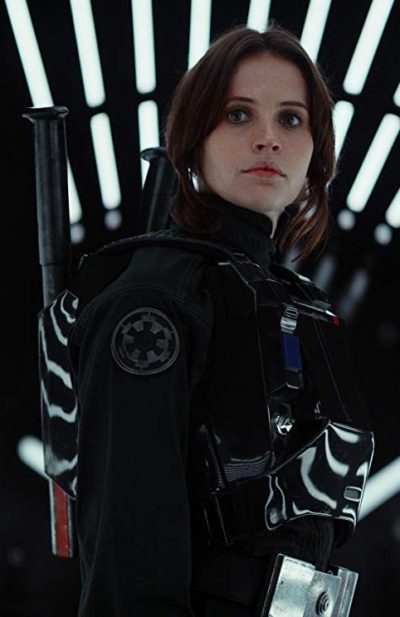 realistic”. Yet why are these people (screenwriters, directors, whatever) hired at all to make movies that are MEANT to be escapist fantasies? That just doesn’t gel with me. While acknowledging how successful the Nolan Batman movies were, I really think it’s time to return to the FANTASY in big fantastic movies. Embrace those aspects wholeheartedly, instead of always putting a tight leash on the stories, and showing the audience what a “grown-up” storyteller you are.
Then there is Darth Vader. He might be the most “beloved” villain in the SW-universe. But instead of showing what he may have been doing between Episodes 3 and 4, he is terribly underused in all the Kennedy productions. I do understand the character was brought into this at the last minute, and as fan-service goes, he does miracles – as shown by the reactions of SW fans when his involvement was announced. His role here is still too small, merely an after-thought to save a probably not too satisfying movie. If I had been a decision-maker on this movie, believe me, he would have been much more central to the storyline and made a much bigger impact on the heroine. There would definitely have been a face-to-…helmet battle against Whitaker / Yen / Jones in my version.
Then there are conceptual flaws. Another appearance by Peter Cushing might have looked like a great idea on paper. The actual CGI-translation looks quite awkward to me; not directly cringe-worthy, yet definitely “off”. Even more than 20 years after the death of this iconic character actor, his subtle facial expressions are still so deeply ingrained in our memories, that CGI-Tarkin appears almost a cartoon character. The impression is that the artists were so enthusiastic about what they could do, within a short period of time all possible expressions run over the character’s face. Less would have definitely been more here.
Another justified complaint is that the whole movie undermines the importance of Princess Leia (here, also played by CGI) in ANH. While we never did know exactly how Leia got the plans of the Death Star, the feeling was always that she put herself on the line and retrieved the important data despite much personal danger. RO kind of retcons this: Leia’s contribution to the whole operation is being handed over the disc, safely on her ship after it felt like hundreds of people had died to get it. That’s suboptimal, as a friend of mine would say.
That all sounds probably very negative. And yes, it is. But the above focuses only on what I thought were the shortcomings and flaws of the movie. It also has moments one can appreciate. I like Mads Mikkelsen who gave a surprisingly emotional performance. I find it always surprising how good some actors can be when cast against their usual image e.g. Christoph Waltz in Alita. Mikkelsen comes across as both a loving, caring father and a scientist with principles. It would have been so easy to make him the stereotypical villain of the piece, and the decision not to do that pays off greatly, especially compared to his terribly uninspired and bland performance in Doctor Strange.
Also, Ben Mendelsohn as Director Orson Krennic is a great casting choice. Looking like a younger Ian McKellen, Mendelsohn plays Krennic as an over-ambitious employee who is instrumental to the Empire’s power. But he never gets what he wants: neither Darth Vader nor Grand Moff Tarkin (changed here characterwise to accommodate the story), both higher in command, ever respect him or feel the need to grant his wishes. That makes the character actually more human. Sometimes even Empire officials have bad days.
I didn’t think much of Felicity Jones or her “brothers-in-arms”. While Jones is probably not a bad actress, there’s little to chew on acting-wise: a couple of moments here and there, such as when she meets her father again, and I like the way she moves. But Jyn Erso is under-served by the script; we needed to see more of her past in order to connect with her on an emotional level. As this didn’t happen, neither her death – as surprising it was to see in a Disney movie – nor those of the other combatants, had the emotional impact they should have.
Thinking back to other movies that dealt with a group of diverse misfits in an extreme situation, despite being over 130 minutes long, the big problem here is time. If you watch The Dirty Dozen, you see plenty of the protagonists preparing and bonding for their great mission, establishing a sense of who they are. A classic like The Magnificent Seven constantly gives you little snippets of how these characters react, telling enough to the audience about the characters that you care for them. Heck, even epic war movies of the past like The Longest Day or The Great Escape did better, despite it seeming half of all the actors in the world appeared in them. You could still make them out as characters, and care about their success or death.
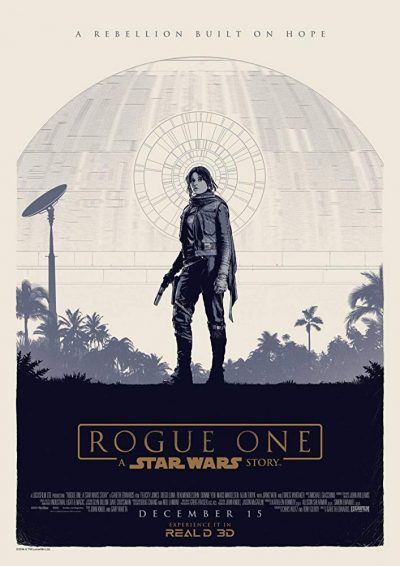 In Rogue One… not much, unfortunately. The characters stay ciphers, almost interchangeable. What do we know much about Chirrut or Baze or Bodhi Rook? Nothing really. I’ve heard there’s a “Cassian Andor” TV series in the making; so that may change for him in the future. That’s too late, and should have happened in the movie. But while the movie underwhelms in so many respects, I say again: It’s not a bad movie, just one that for numerous reasons didn’t live up to its potential. Here are some of the moments I liked:
- Forest Whitaker in his small role
- comic relief robot K-2SO who is so much different from someone like C-3P0
- the scene with Jyn and her father
- Krennic facing Vader
- the scene where Jyn and Cassian have to retrieve the disc “manually”
- the fight above Scarif with the protection shield that makes it other spaceships impossible to gain entry
- the last confrontation with Krennic
- Darth Vader slicing and dicing his way through a tube full of unfortunate rebel soldiers
- and of course the consequential ending, saving the film from a far worse fate.
I like it shows that sometimes, protagonists just die and don’t “get better” like Superman in his tomb. or their death is not real like “Agent Coulson” of the Marvel movies. Sometimes the price for success is to give your all; that can mean death and sacrifice. May I refer you to the much darker TV-pilot of the Battlestar Galactica reboot from 2004? And it is almost Solomonic that they all die, the Rogue One crew as well as Krennic, leaving the future fights to all the other characters. somewhere in the stars. That’s a fine storytelling attitude, though my Shakespeare-approved sensibilities are used to more impactful, dramatic storytelling than this could provide. Which may say more about me than the movie!
What is my final verdict? Despite definite flaws the movie has its qualities. It may be a “low-key” entry in the series but that’s fine. It doesn’t have to be “the big story” every time. Yes, thinking what it could potentially have been, makes me a bit sad. But all said and done, it’s watchable. Maybe you should see it separately, rather than together with all the other movies of the series. Ranking-wise it is less enjoyable than The Force Awakens but much much better than that terrible mess of The Last Jedi. You can easily watch Rogue One when you feel like watching a big SF movie. And it doesn’t even have to be on a rainy Saturday afternoon!
Dir: Gareth Edwards
Star: Felicity Jones, Diego Luna, Ben Mendelsohn, Donnie Yen



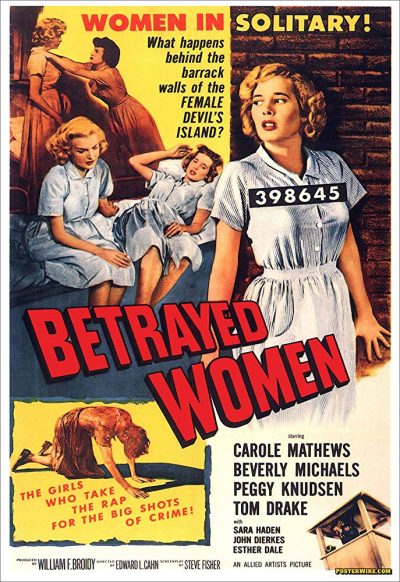 First, let me just say: that poster is a true work of art. Seriously, how can anyone look at that and
 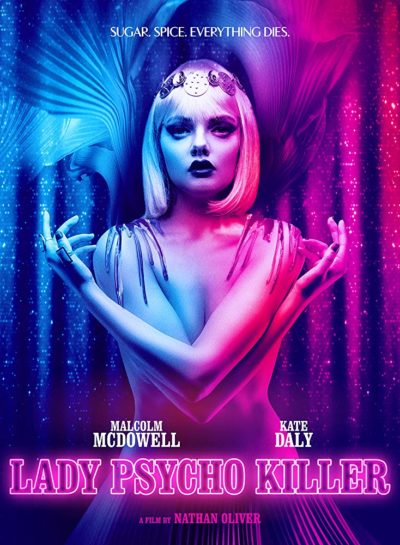 Ella (Daly) is a shy college student, whose psychology lecturer gives the class an unusual project: break a sexual norm. Unfortunately, Ella is rather confused about the intersection between sex and violence, in part because of genetics, for her father was a serial killer, before abandoning her pregnant mother (Heinrich). As a result, Ella’s attempt to carry out the assignment by auditioning at a strip-club, ends with her slitting the throat of the owner (Ron Jeremy, being appropriately grubby). This awakens the serial killer dormant inside her, and she starts taking out the sleazy men around her. The problem is nice guy Daniel (Andres), whose unwillingness to match her stereotypical opinions of masculinity, triggers further conflicting feelings in Ella, as her acts of murder become increasingly more blatant.
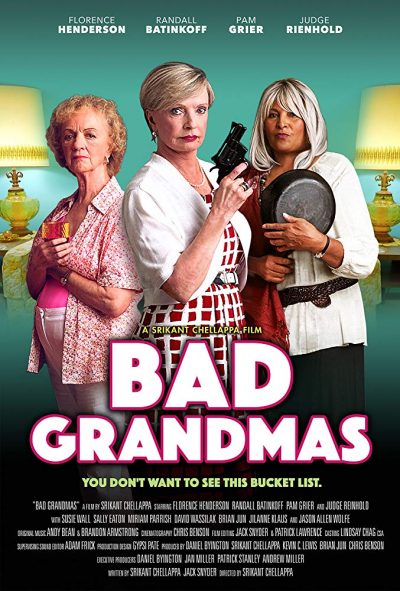 There is entertainment value to be found even in bad movies. Bad action, horror and SF are sometimes just as amusing as the good stuff. But bad comedy is almost irredeemable: that’s why Mystery Science Theater 3000 rarely go there. Bad comedy just… sits there, dull and unamusing, almost worthless. And that’s what we have here. It’s a somewhat interesting idea, with some potential. Unfortunately, the execution – mostly in the script and direction – are so woefully inept that even the brave efforts of Florence Henderson, in her final film, aren’t enough to salvage it. And wasting the talents of Pam Grier needs to be some kind of cinematic capital offense.
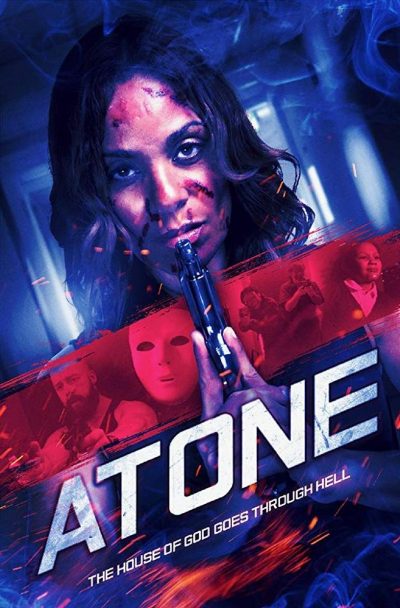 I mention the above for two reasons. Firstly, because Chris wondered why the film was called “At One”. Secondly, because when it finished, I turned to her and said those four little words which mean so much: “I can only apologize…” Yes, to use it in a sentence, I’ll be atoning for picking to watch this low-rent “Die Hard in a church” offering, for some time to come. [Though the following night, I had to sit through her choice of Justice League: paid back in full, I’d say…] There were a couple of aspects here that weren’t terrible; unfortunately, the overall execution was painfully close to… well, god awful seems the appropriate term here.
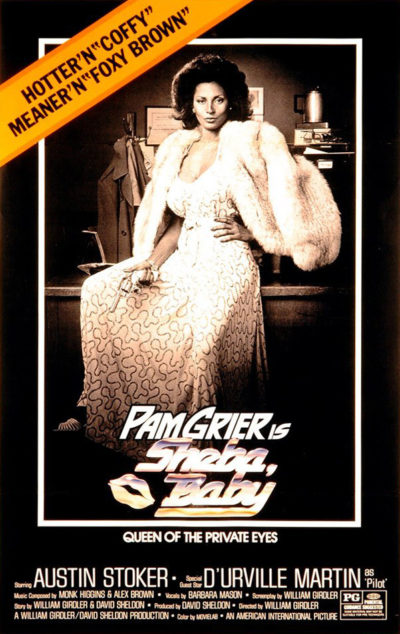 After the success of
  This 1986 TV movie was the first film made about an FBI agent while they were still active. Gibson was the fifth black female agent in the bureau’s history: she broke new ground by being the first such assigned to the Fugitive Matters department in the Miami branch, and was also the first to reach a supervisory level within the FBI. That would, however, be well after the story told in this film. It covers how she came to join the FBI, and her first major undercover operation, taking down a gun-running ring operated by ex-NFL star, Adam Prentice (Lawson). However, Gibson starts to find the lines between real-life and undercover work blurring, and begins feeling genuine affection for her target. This doesn’t sit well with her partner, TC (Rollins). If it sounds all very by the numbers… It is.
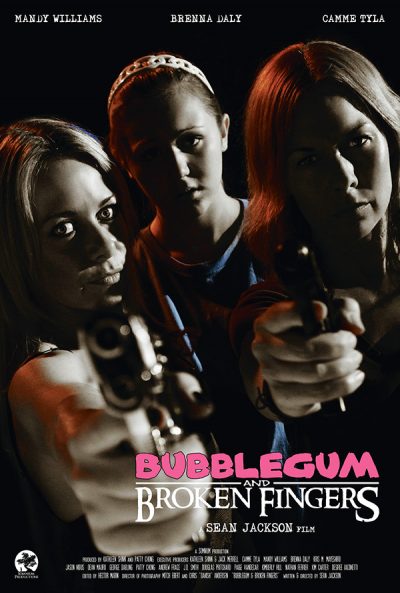 Outside of Kill Bill, I’ve never been a fan of Quentin Tarantino. But this film did give me some appreciation for him. Because it’s only when you see Tarantino done badly, that you realize the aspects he does well. It undeniably takes some skills to keep a story-line involving multiple sets of characters in the air, especially when centered on a Macguffin like a suitcase whose contents are never revealed. Jackson tries to do exactly the same thing here, and the result is, frankly, a mess, where you’re left caring little or nothing about any of the participants.
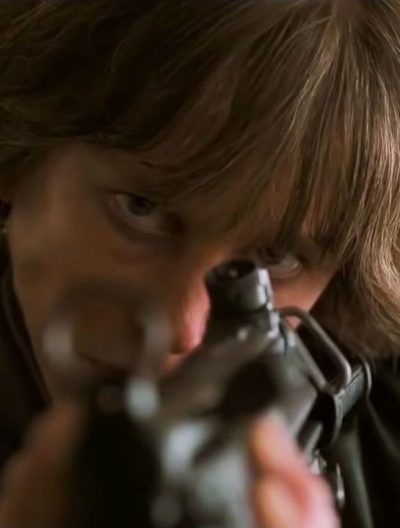 A fine, almost unrecognizable performance by Kidman succeeds in maintaining interest, despite a script which appears to regard time less like an arrow, and more like a big ball of wibbly-wobbly, timey-wimey stuff. Deeply troubled cop Erin Bell (Kidman) wakes up in her car, apparently badly hungover, looking like ten pounds of crap in a five-pound bag. Not far away, her colleagues are poring over a newly-discovered murder scene: a body with a dye-stained hundred-dollar bill on the corpse. And that’s about the last time when I was quite certain of the timeline.