




★★½
“Fake it till you make it.”
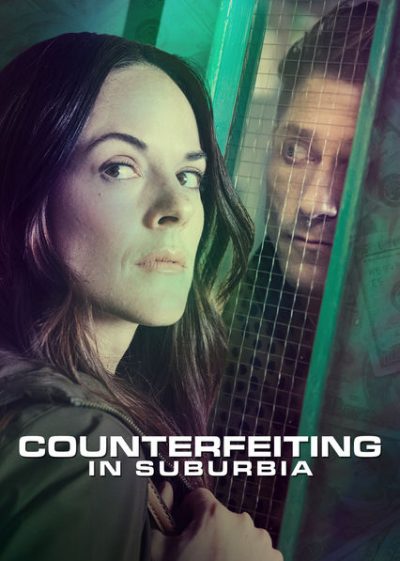 High-schoolers Reilly (Albuquerque) and Erica (Wallace) have discovered a way to literally print money, forging hundred-dollar bills. They then use these to buy high-end fashion, and sell these ill-gotten gains on to their schoolmates for genuine cash. The more cautious Reilly wants to stop, but realizes she can do good by helping Karen (Butler), her aunt and guardian, who is in financial trouble. So when Erica is insistent they expand, Reilly goes along with it, and they use the school’s art-class resources to up their game, laundering the fake money through foreign exchange stores. However, this criminal empire comes under threat, after art teacher Tim Sylvester (MacCaull) discovers what they’re up to. Because by chance, he owes a large sum of money to some nasty people, and starts a relationship with Erica, to make sure she’ll keep working for his benefit. Worse still, the Secret Service have been alerted to the flood of funny money, so are also investigating.
I have… questions. What made R+E get into counterfeiting to begin with? For when the film starts, they’re already printing out the Benjamins on their home printer. And where do you get the special paper? While there have been cases of people using inkjet printers for this purpose, it seems these involved wiping $5 bills, then reprinting them with higher denominations. [Googling to find this out has probably got me on a watch-list…] And while the film makes the point, especially in high-end stores, that most purchases using credit-cards means assistants are less familiar with spotting fake bills, this surely doesn’t apply to currency exchanges? As a credible piece of scripting, this ends up skipping most of the necessary check-boxes, and I doubt it’s based as much on a true story as claimed.
It’s not entirely without merit though. The underlying idea – teenagers gradually getting out of their depth, and not realizing it until they are too far in – is a decent one. The contrast between the two leads is effective as well: Erica is perpetually touting them as being like Thelma and Louise, and is unfazed when Reilly points out how that ends. There’s also a contrast in motives between the girls – though you wonder a bit why they’re friends, given their divergent natures. Reilly is entirely selfless, and is using her illicit income for what she perceives as “good” [though never quite considers the negative implications of her acts]. Erica, on the other hand, is apparently doing it for the thrill or the LOLs, and you’re never sure quite what this loose cannon might do.
By coincidence, this was watched the same weekend as Body of Sin, and the two films are similar. Both focus on two young women of disparate characters, whose decision to team up and go over the border of legality has severe consequences. Both also have severe problems in the script department. Body was perhaps better technically, but this gets the edge – simply for the sheer uselessness of the only sympathetic male character, which may arguably be more feminist than anything the women do. While some way short of great, it just about passes muster, if you’re in an undemanding Netflix mood.
Dir: Jason Bourque
Star: Larissa Albuquerque, Kayla Wallace, Sarah Butler, Matthew MacCaull
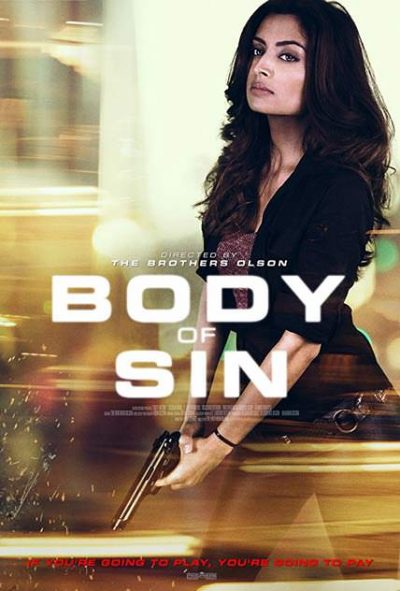 Erica (Kriis) is an attractive con-artist, who seduces married men in hotels, then drugs and robs them, knowing they’ll never be able to report the crime. She has just brought on an apprentice, Lauren (Patrikios), to learn the dubious trade, watch her back, etc. Their next score turns out to be the jackpot. as they discover the target was carrying a stash of diamonds with a seven-figure value. Absconding with their ill-gotten gains, the pair decide to lay low for a while, and head to Erica’s hideout on the holiday destination of Isabelle Island. They’re disturbed to read news reports that the target turned up dead in the room, and it quickly appears that the owner of the diamonds is closing in on them. But who is the threat? Local policeman, Mike (McCullough), for whom Lauren has a thing? Visiting boat-owner and part-time magician Tom (Berdini), with whom Erica has a fling? Or the creepy bald guy who arrives on the island and appears to be stalking Erica?
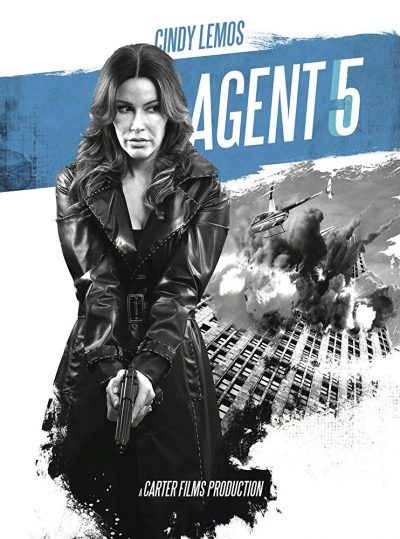 Coincidentally, this one-man production was watched immediately after another, also put together toward the north-west corner, around the USA/Canadian border. But Carter Johnson is relatively restrained compared to
  Around the turn of the millennium, Parvana (Chaudry) is an 11-year-old girl living in Kabul, Afghanistan – then under the strict religious rule of the Taliban, in the aftermath of the Russian retreat. Her father is arrested and taken off to prison, leaving his wife and children without a male guardian. Which is kinda important, because under Taliban law, women are not allowed out in public unaccompanied. With no other option, Parvana cuts her hair and dresses as a boy in order to be able to get supplies for her family. Teaming up with another boy-who-isn’t, Shauzia (Bhatia), they find work. Parvana starts saving for the bribes necessary to see, and hopefully win the release of, her father; Shauzia is saving up for her long-held dream of seeing the ocean. Of course, it’s never that easy, especially post-9/11, when the country is invaded by America and its allies.
 We know very well that, on low-budget films, people have to wear many hats. Hell, my IMDb entry began when a film I was supposed to be helping my wife produce, had an actor drop out. You can only respect those who can turn their hands to multiple jobs. And, yet… There’s a point at which it become self-defeating, because nobody can be
  My first viewing of this was on a day off from work, when I was down with some sinusy thing, and dosed up on DayQuil. So I chalked my losing interest and drifting off to the meds, and once I felt better, decided this deserved the chance of a re-view. However, the result was still the same: even as a bright-eyed and bushy-tailed viewer, I found attention lapsing. For this animated version of a mature comic, might as well be a He-Man and the Masters of the Universe episode. Which is a shame. I wanted to like it, since the creator of Lady Death, Brian Pulido, is something of a local comics legend here in my adopted home state of Arizona. This should have been better.
 Is it possible for a homage to be too accurate? This could be the problem here. It’s clear that Bickert has a deep affection for the “women in prison” genre – yet, again, possibly too much so. For this is less a parody or a pastiche than a loving re-creation, and doesn’t understand that a lot of these movies… well, to be honest, they suck. Badly acted, poorly plotted, thinly-disguised excuses for porn. And that’s the
  Helen (Fonseca) is struggling to come to terms with the sudden, unexpected death of her scientist husband, who was engaged on a top-secret project with his partner, Tomas (Morshower). Then things get truly weird: she experiences the mother of all blackouts, missing an entire week, and shortly afterward, Helen receives a phone-call warning her to get out of her house… from herself. It turns out, husband and Tomas had come up with a limited form of time-travel. As a result of this and subsequent events, there are now
 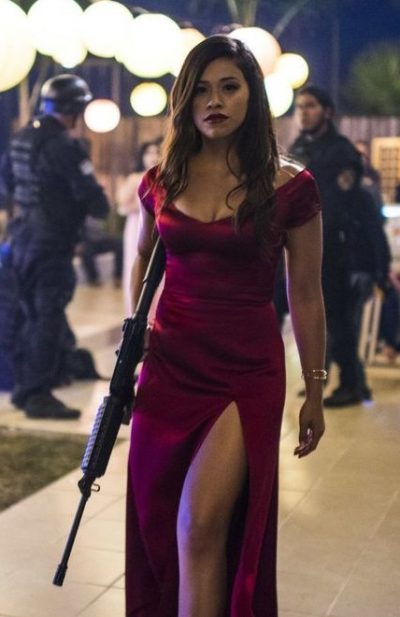 As the lazy joke goes, I preferred this film the first time I saw it, when it was called… Well, actually, it was called
  Joan Butler (Bernadette) is an enforcer for mob boss Frank (Foster), with a zero-tolerance policy for those who disrespect her – whether they are on her side or not. When this eventually causes some of her gang to turn on Joan, she’s brutally beaten to a pulp, and apparently killed. However, she rises from the dead, now a figure who lives in the darkness, and one who has acquired the power to manipulate shadows. She sets about her mission of revenge against Frank and those who killed her. This is much to the distress of her on/off boyfriend Anthony (Celigo), a social worker. But her feelings for him and desire to protect the unfortunates with whom he works, puts them all at risk, when Frank realizes they represent her weak spot.