

★★½
“Spies Unlike Us”
Cassie: What a day, huh? Parachuting into a cemetery because the perimeter was guarded and it was our only way in, and exposing a deadly double agent who was trying to elude capture by faking his own death and being buried with an oxygen tank, only to be dug up later.
D.D.: We knew all that, you know.
Cassie: I know. I’m just saying it for anyone who might’ve been wondering why we’re going through all that trouble.
Shane: Who’d be wondering?
Cassie: I don’t know, anyone. Look, I’ve never told you guys this, it’s kind of embarrassing. Sometimes I get the weirdest feeling like people are watching us, like they’re listening in on every single thing we do or say.
Shane: Yeah, I get that feeling, too.
This series came out in the wake of the Charlie’s Angels movie which rebooted the franchise in 2000, and shares much the same combination of action escapades and tongue-in-cheek, self-referential (and often self-deprecating) humour. However, sustaining this for 90 minutes is a much easier proposition than doing so over 20 episodes, each three-quarters of an hour or so without commercials. What seemed like a deliciously frothy concoction in the opening episode, juggling the elements with some skill, eventually ground down to tedious repetition. Chris, in particular, hated the show with a passion, which is a little odd, since she’s a big fan of the similar Chuck. Mind you, since I can’t stand Chuck, I’m not really able to argue, especially since my arguments in defense of She Spies became more like token gestures by episode 20.
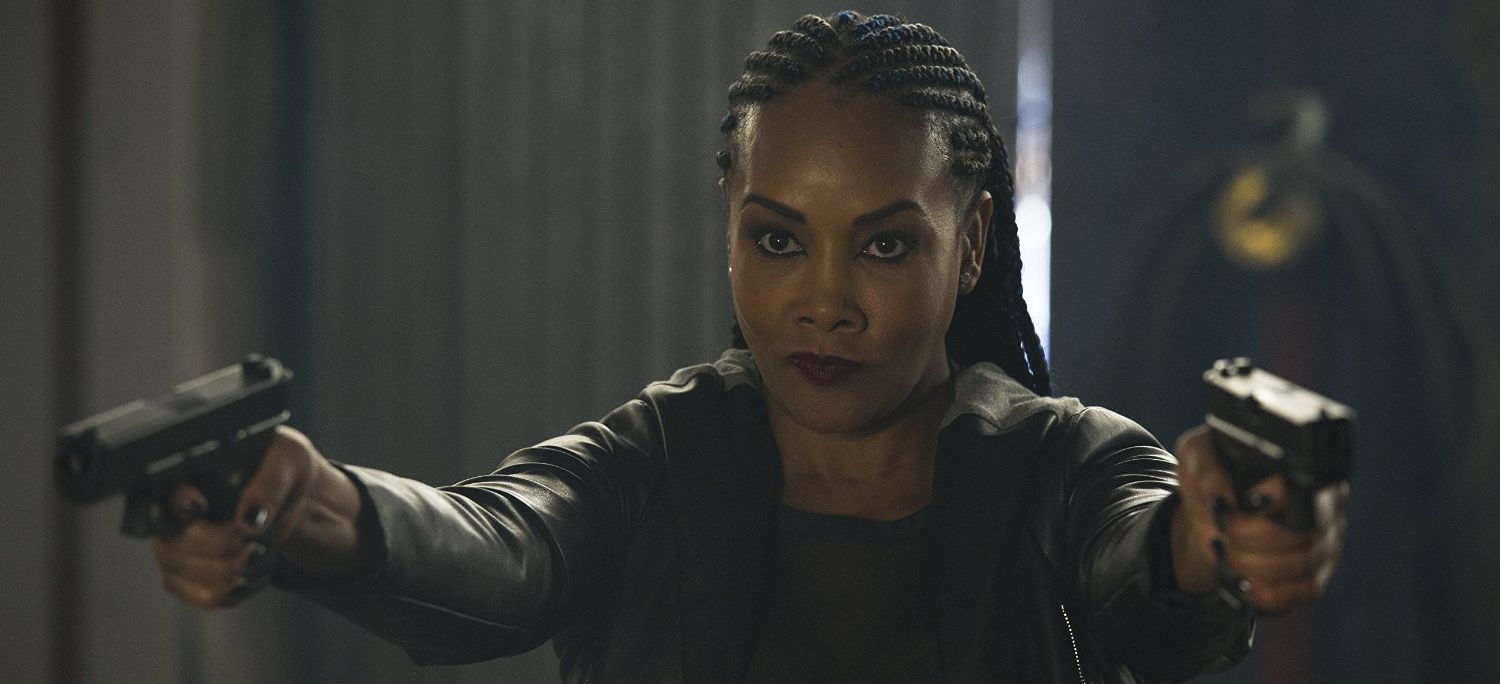
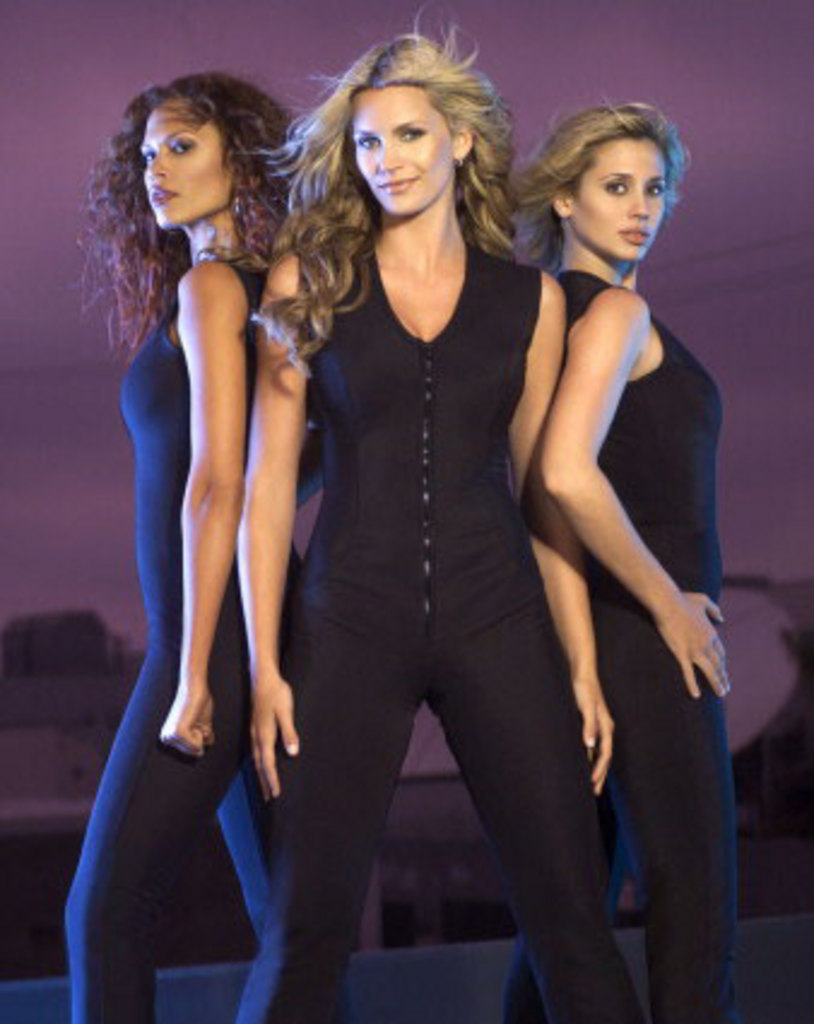 Just like Charlie’s Angels, this focuses on a trio of butt-kicking babes: in this case, liberated from prison by Jack Wilde (Jacott), who puts them to work in a quasi-governmental organization that hunts down bad guys while exchanging witticisms. They also share a house, which makes things very convenient for any of said bad guys, who want to take them out. The trio all bring their disparate, somewhat dubious skills to bear on the situations that result: there’s con-artist Cassie McBaine (Henstridge), computer hacker Deedra “D.D.” Cummings (Miller) and master thief Shane Phillips (Williams). The first episode is a fairly accurate summary of the basic idea: they’re assigned to protect a former politician turned talk-show host from an assassination plot, and have to go undercover at the studio to reveal the culprit [and given the target’s former and current occupations, there’s no shortage of suspects].
What the first episode does brilliantly – and what the rest of the series never consistently recaptures – is not so much breaking the fourth wall, as riding a wrecking-ball into it, repeatedly. For instance, the three ladies are introduced by Jack on a literal game-show, with him as a host. Does this make any sense? Of course not. But it doesn’t matter, since we are already on a show about, to quote the introductory voice-over, “three career criminals with one shot at freedom. Now they are working for the feds who put them away. These are the women of She Spies, bad girls gone good!” Take the suspension of disbelief that requires, added to the cast and crew clearly being in on the joke, and you can potentially manipulate proceedings in any direction you want, the more ingeniously whimsical the better. The universe is your plaything.
Too often, however, the opportunities this offers are squandered rather than exploited, and the plots became tedious rather than springboards for the imagination. Though there were still occasional moments of surreal genius, such as the trio pretending to be Swedish – which worked rather better for blondes Henstridge and Miller (“I like toast!”) than African-American Williams. Most of the time, the episodes largely have to skate by on the personalities of the leading ladies: that’s not a bad thing as such, since they all do credibly, with Miller likely faring best. There are also some very entertaining guest stars, beginning with Barry Bostwick as the talk-show host mentioned above; also in the first season are Claudia Christian, as the original She Spy, and Jeffrey Combs. However, there’s only so much emptily witty banter I can take, and the script-writers’ well ran painfully dry, the deeper into the series I went, for instance with the increasingly obvious use of money-saving flashback sequences.
The last edition of season one was particularly bizarre. Shane bumps into a former boyfriend who is planning to have himself cryogenically frozen so that he can be with his dead fiancee, and uncovering a plot by the facility to harvest body parts from their subscribers, in order to keep a billionaire away. I’d like to have been at the planning meeting where that idea got green-lit, simply due to the copious quantities of drugs which much have been ingested there. It possesses a darker tone, which is jarringly at odds with the ironic approach of the series as a whole, and supports the impression, generally escalating as the series went on, that those involved in creating the show had more or less given up and were phoning it in. I do exempt the four leads from this criticism, since they bravely struggle against the snowballing tedium of the scripts until the very end.
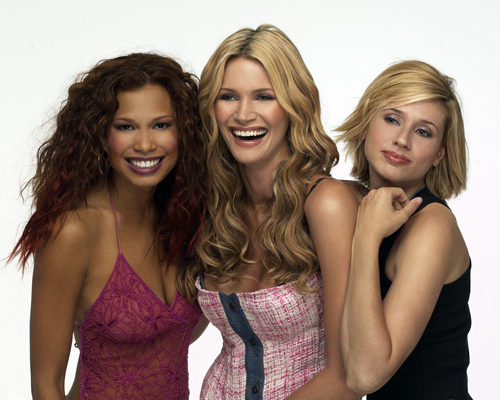 Even the action becomes relatively muted, and to be honest, it was never very good to begin with. And that is comparing the show to its contemporaries on television – say, Buffy the Vampire Slayer – rather than the Charlie’s Angels movie, which had the SLIGHT advantage of action choreographed by Yuen Wo-Ping. This is the area where Miller is probably the weakest of the three, since she looks less like a brick-house, and closer to one built of straw, vulnerable to anyone on-set sneezing in her direction. While Henstridge and Williams fare better here, it’s still generally clear they are more effective in the scenes requiring flexibility and grace, than at portraying strength and power. All three sometimes suffer also from painfully obvious stunt doubling, though since this is the bane of TV action generally, it’s par for the course.
In the end, it’s a difficult path to tread, because the show [at least the first season watched for the purposes of this article] could never appear to decide whether or not it quite wanted to be taken seriously. Zap2It.com describes She Spies as “Alias meets Austin Powers” and, while that certainly isn’t inaccurate, those are almost contradictory and mutually exclusive genre entries. It’s very hard to be taken seriously, when you are constantly undercutting yourself with cool, ironic asides or acknowledging the silliness of the scenarios being depicted, and you probably shouldn’t even try. In reviewing the Angels movie, the conclusion I reached was “It works beautifully, despite its flaws, but it wouldn’t bear frequent repetition.” Twenty episodes of She Spies largely proves the truth of this.
The first four episodes in September 2002 were planned to screen on NBC, before the series was then bumped from network to syndication [while this was always the plan, it is snarkily referenced in a later discussion about She Spies action figures: “You wind them up and they dare you to find their time slot”]. but it only lasted three before being yanked. At the end of the first series, Jacott left proceedings, and the second run of episodes also abandoned much of the self-referential approach, playing things straighter. However, the new approach failed to catch on any better, and the show was not renewed beyond its sophomore season. Below, you’ll find the first episode in its entirety – all forty have been up on YouTube for more than three years, so seem to have at least tacit approval. But it’s largely downhill from this first show, folks.
Star: Natasha Henstridge, Kristen Miller, Natashia Williams, Carlos Jacott
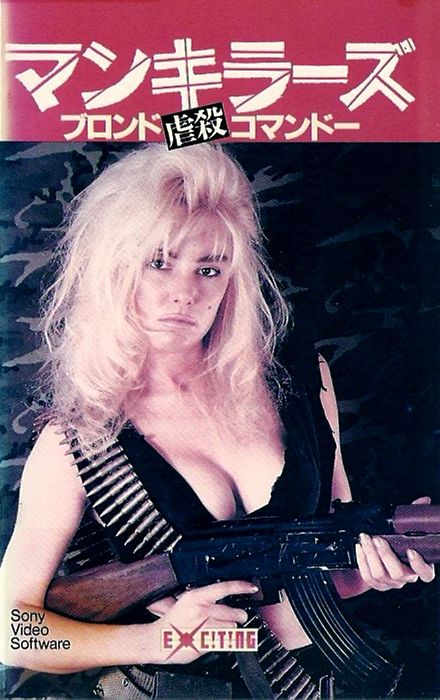
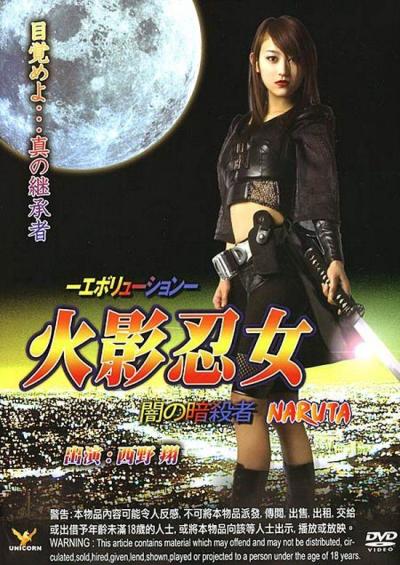 Call me picky or pedantic, but to me, a movie titled Ninja Girl: Assassin of Darkness,

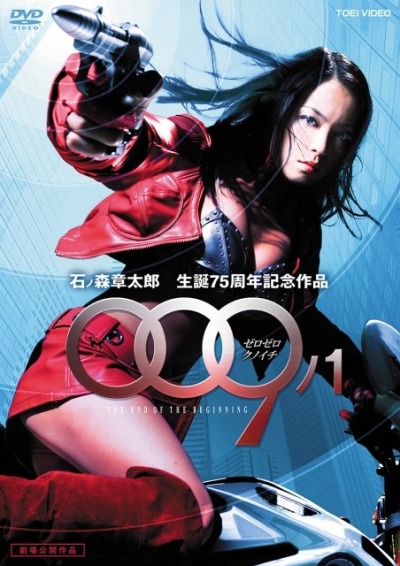 Partly to celebrate the 75th birthday of its late creator, Shotaro Ishinomori, the first live-action feature adaptation of his spy series 009-1 was made – it had previously been made into a TV show, during the late sixties, and a 12-episode anime series in 2006. This version was helmed by Sakamoto, best known for his work on the action in Kamen Rider and Power Rangers, but we’ve been a fan since his involvement in 1997’s Drive, with Mark Dacascos, whose fights still hold up very well today. And this is almost as much fun, combining bone-crunching action with more philosophical insights, into what it means to be human.
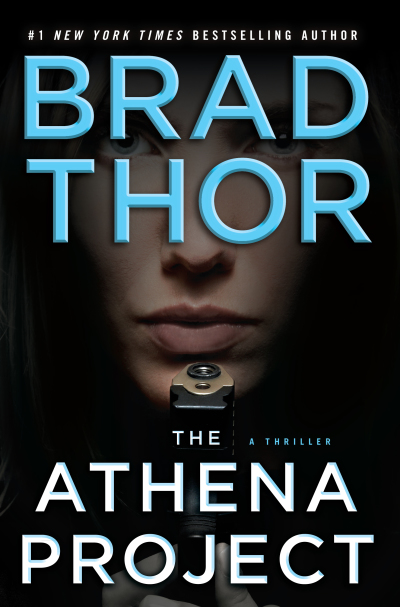 I first became aware of this novel through an article back in February about MMA champion Ronda Rousey and

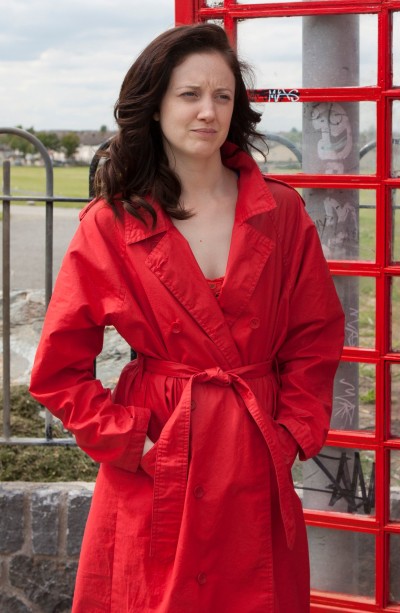 It’s 1993, and the peace process in Northern Ireland is cautiously inching forward – though there are some who prefer a more robust method of rebellion, shall we say. Among them is Collette McVeigh (Riseborough) whose little brother was killed by the British Army when she was 12. Along with her brothers Gerry (Gillen, whom you’ll know as Littlefinger from Game of Thrones) and Connor, she is part of the armed struggle, until a mission to plant a bomb in London leads to her capture. MI5 officer Mac (Owen) gives her a stark choice: face a long stretch in prison, separated from her children, or become an informer on her own family. Collette chooses the later, perhaps influenced by Mac showing her it was an IRA sniper who killed her brother. But it soon becomes clear more is at play, with Mac’s boss (Anderson) apparently intent on sacrificing Collette, in order to protect another, more valuable asset.