




★★★★
“Nikita meets Alias, while on vacation in South Korea”

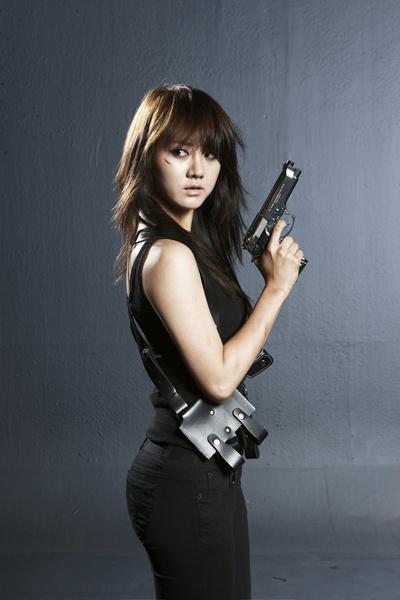 Let’s be clear, right out of the gate. There is really not much original about this Korean mini-series, which takes huge chunks, almost wholesale from Nikita and Alias, to the extent, for example, that we perpetually referred to one character as “Amanda”, since she reminded us so much of Melinda Clarke’s character from Nikita, right down to her fashion choices. However, as long as you’re not looking for anything startling in the way of originality, this is slick yet gritty, with characters that are interesting to spend time with, and a handle on the action that’s easily the match for its equivalent in the West. Let’s start with some significant plot exposition, because there’s quite a lot of characters and story crammed into the three one-hour (or slightly more) episodes.
Spoilers Episode 1. Cha Yeon-Jim (Groo) is having a bad day – she just got expelled from school – and it’s about to get an awful lot worse. Hanging out by the docks, she and her friends get into a confrontation with some workers, only for things to be interrupted by a scripture-quoting hitman, Jang Se Wook, who shows up and starts shooting everyone, on both sides. Cha escapes, but when her friend is killed, as he tries to report what he saw to the police, she realizes she’s in deep trouble. Policeman Choi Tae Young (Baek), who was also at the scene, tries to track her down, but Jang is also after Cha. He wants her to return a flask of green liquid she took in the confusion, and kidnaps her mother to force Cha into compliance. At the handover, Mom is impaled by Jang’s sword and Cha is gunned down and left for dead.
Episode 2. Chief Min Ji Young (Park) comes on the scene, and saves Cha, faking her death. Min works for the same company as Jang, the Mirae Corp, a medical company run by Kwon Do Hwan. They are engaged in some shady experiments involving stem-cell research, and in particular the creation of artificial humans for organ harvesting, with the protection of high-up government ministers. To protect their company secrets, their division SS1 operates ruthlessly: Min recruits Cha as a new killer, not telling her Jang is simply another arm, but training her as an assassin, with the lure of eventually tracking down and taking revenge on the man who killed her mother. Cha’s initial targets are those who pose a threat to her employers, but Min has her own agenda, and when Jang has eventually proven to have outlived his usefulness, she has no compunction about turning her two killers on each other.
Episode 3. Choi accidentally bumped into Cha in part two, under her new identity, and now teams up with Yoo Sung Ho (Kim), who used to be part of SS1, but bailed with his lover, Cha’s mother, and went into hiding – he was replaced by Chief Min. They are seeking evidence that will let them bring down Mirae and expose their human experiments. Cha wants to leave the organization, having fallen for Go Young Min, a boy at school. Min initially requests “one last hit” – so you know that’s going to work out just fine… In the process, Go sees Cha standing over the corpse of her target, holding the murder weapon, and as a result has to be terminated by Chief Min. That, and the discovery that her schoolmates have been used as guinea-pigs turns Cha against Mirae, and she links up with Choi, as Kwon prepares to reveal his latest plan. End spoilers
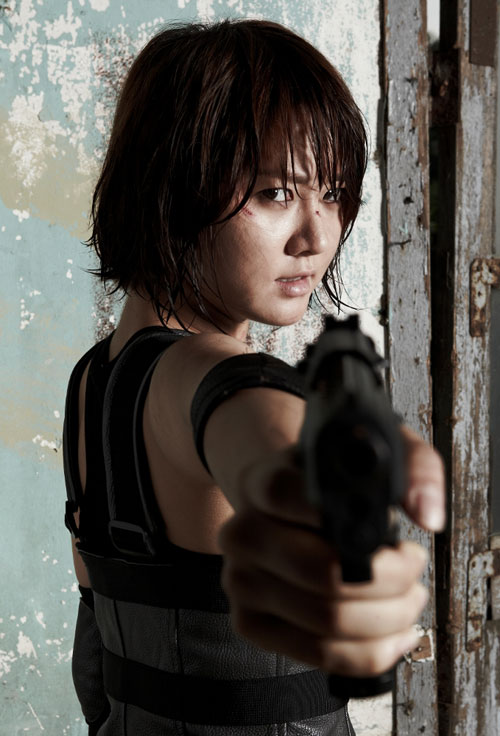 Phew. Plenty going on there, with enough for a full 13- or 22-episode order of most series, between all the twists, turns and revelations e.g. turns out Cha’s relationship to Chairman Kwon is rather more personal than she is aware. Given how much gets crammed in, the opening installment is a bit of a slow start. The entire first episode is more or given over to setting up the scenario, with Cha showing very little of the skills she has developed later on. She’s semi-competent in basic martial arts, which is perfectly fine when it comes to beating up fellow pupils. But we soon find out that this level of skill is far from enough, when she comes up against Jang and the other professional killers of SS1. Early on, it’s Choi who is most entertaining, portraying a dutiful and dogged cop whose superiors refuse to give him more than a gas pistol which is, similarly, pretty useless in the clutch.
It’s the second part where things really take off, as events jump two years forward; the show takes Cha’s training largely as read, save for a quick montage. Instead, her new cold-bloodedness is amply demonstrated in the opening sequence, where we see her sniping out her target at a wedding, despite the presence of children which makes Chief Min call off the hit. It’s clear that this is a new, focused girl, with skills to match. Of course, as is standard for the genre, she still has to deal with everyday issues, since she has been sent back to school [which, conveniently, also offers a suitable tower from which to carry out missions, as can be seen above]. From there, through to her final confrontation with Cha and his minions, it’s an excellent bit of TV, one of the most intense action-heroine episodes I’ve seen in any genre, with the heroine taking obvious damage, both mentally and physically, as things proceed.
Let’s pause for breath before we hit the finale. One thing we noted was that Korean rules regarding what can be broadcast on TV are apparently a good deal laxer than in the US. This was, apparently, a late-night series, and it’s not clear if this was “over the air” or cable; there’s apparently advert breaks, but that could still make it something like FX or AMC. [Edit: CGV channel is “a movie cable channel”, so SHOtime or HBO would be closer parallels] The violence is generally crunchy and squibby, but it’s the female nudity that’s an unexpected pleas… er, particularly striking. :) There does also appear to be some confusion over the title of the show, which I’ve seen called several different variations of the letter K, as noted above. Here, I’ve gone with what appears on the intro screen in English for each episode.
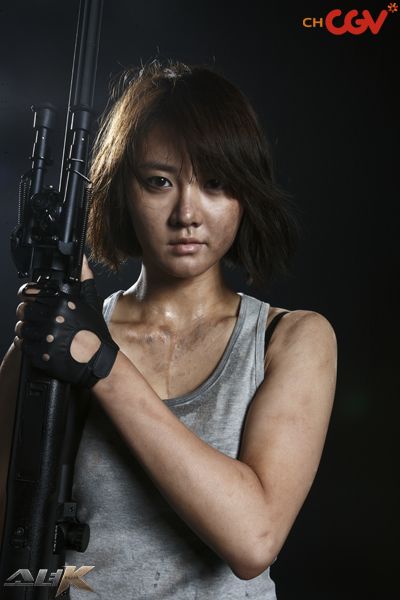 We were kinda wondering where things might go in the last episode, with Cha having apparently sorted things out. Never mind: a whole new catalog of problems raise their heads, as the removal of her justification for assassination leaves her seeking a return to the normal life, one Chief Min is none too keen to offer. With its emphasis on discovering the truth about SS1 and the organization behind it, this episode reminded me of Alias after Sidney Bristow discovered. Meanwhile, dealing with boy issues was a throwback to early Buffy. However, the human experimentation thread was a fresh ingredient, and the episode didn’t pull from the darkness, with a subplot involving a Mirae whistleblower and SS1’s efforts to hush it up. Even if Cha and Min suddenly can’t hit the side of a barn in their final confrontation, the threads are satisfactorily tied up down the stretch, with an ending pilfered shamelessly from My Wife is Gangster 2, that hopefully hints at more to come down the line.
As noted, most of the content is material with which most genre aficionados will already be extremely familar, but there seems always to be room for another “faked death assassin” – Nikita alone has already led to three movies and a pair of television series. It’s the execution(s) that matter here, and this is easily the match of Western action heroine productions of late. I wouldn’t be surprised if this ends up heading over to the West in some form or other, most likely a remake, as has been the case for some many Korean, Japanese and HK movies in recent years. If so, they’ll have to do sterling work to match up with this original.
[Thanks to Hyomil for most of the pics. Killer K can be enjoyed in a subbed version online, through sites such as viki.com, albeit with a somewhat irritating sous-title commentary, which makes watching the show like sitting in the theater with a bunch of chatty teenagers. Still, better than nothing!]
Dir: Kim Jong Hyun
Star: Han Groo, Park Hyo Joo, Baek Do Bin, Kim Jung Tae
a.k.a. Girl K, Little Girl K, Killer Girl K
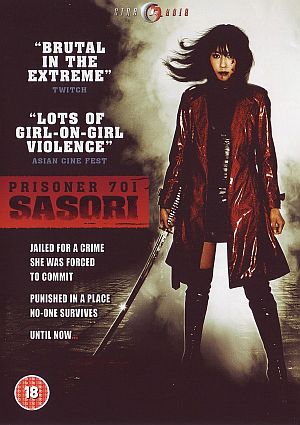 While sharing the heroine’s name with the renowned Female Convict Scorpion series, it’s not clear how much of an official remake this is: it’s supposedly based on a manga series, which I don’t quite recall being the case with its predecessors (it was a while ago I saw the original, though – must get round to re-viewing it for the site at some point soon). The concept is not dissimilar, however: Sasori (Mizuno) is sent to prison, where she is brutalized, but eventually escapes, and seeks vengeance on those who were responsible for putting her inside to begin with. However, it’s really poor at providing motive or explanation: for example, after Sasori is left for dead, her body is dumped outside the prison, where a corpse-collector (HK veteran, Simon Yam) rescues and revives her, before training her in the ways of top-end martial arts and sending Sasori on her way. Why? Who knows. Similarly, the reason why our heroine is in prison at all, raises more questions than it answers.
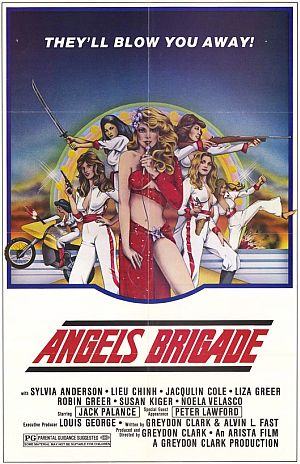 After her brother is severely beaten by a drug dealer, Las Vegas lounge singer (!) Michelle Wilson (Kiger, Miss January 1977) is visited by his teacher (Cole), who knows the location of the cartel’s drug warehouse. Wilson puts together a team of women who have reason to want to take the dealers down, including a stuntwoman (Anderson) and an undercover cop (Grant). There’s also a martial-arts instructress, a model and, tagging along, one of the teacher’s pupils. They build a heavily-armed van, train in the ways of war, and rip off a bunch of militia types for weaponry, before staging a successful raid that destroys the warehouse. However, the mob (led by veteran actors Peter Lawford and Jack Palance) are not prepared to let them get away with it.
 When Chino (Rodil) beats up his woman, Lucia (Sparagna) decides it has happened for the last time, and accompanied by her two friends, Celia (Mortel) and Miriam (Cho), she gives him a dose of his own medicine, with a baseball bat. This turns out to be a clear case of thinking without acting, because it turns out he’s a big kahuna in one of the local gangs, and is now out for revenge on the trio. After a drive-by cripples their vehicle (a ghettomobile with the amusing personalized plate, ‘ICUHATN’), they are stuck deep in enemy territory, with a lot of unfriendly people looking for them. And even if they make it out alive, what then?
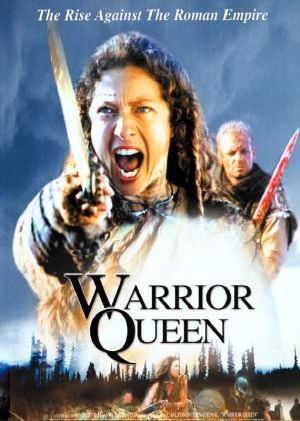 Probably best to approach this with few expectations of this being a factual representation of the time; more than once, it felt clearly like the writer was using the Roman occupation of Britain, and Boudica’s rebellion, as a metaphor for American’s involvement in Iraq. There are certainly enough anachronisms, particularly in the dialogue (the Roman Emperor chatting informally away with the leader of a British tribe, and references to “terrorists”), that it seems deliberate. The basic story is the one well-known of legend: after her husband’s death, and the raping of her daughters by the invading Romans, Boudica (Kingston) led her tribe in an initially successful revolt, only to be stopped when the full force of the Empire was turned on them.
 In 1866, the young child Hannah Beaumont (Canning, best known for her role in The Vampire Diaries) watches as the rest of her family is slaughtered by outlaw Frank McMurphy (Pyper-Ferguson). Twelve years later, Hannah is now getting her long-awaited revenge. Having been trained to shoot, ride and collect the bounty on wanted men by Isom Dart (Danny Glover in a small role), she is now reeling in the members of McMurphy’s gang, one by one. When McMurphy hears about this, he gathers up his entire posse and rides to Hannah’s base in Dodge City to finish off what he started, a decade before. Can Hannah – with the aid of the town’s deputy marshal, Wyatt Earp (Holt) and her other friends, come out on top?
 Cherry (Julin – yep, that appears to be her surname) is a stripper, whose life takes a turn for the worse when she is assaulted by five customers in a private room at the club where she works. The cops aren’t able to do anything, so she takes the law into her own hands, with the help of her brother (Rodriguez), who accidentally kills one of the perpetrators when he goes to demand help with Cherry’s medical bills – no prizes for guessing how that request goes. As the others realize someone is out to get them, and who that someone ins, they hire Bull (Hackley), a gigantic hitman, to stop Cherry before she gets to them.
 I have no problem with rape/revenge movies, providing the balance is skewed more towards the revenge than the rape. Ms. 45, for example, has about five minutes of rape and 60 of revenge. This is fine by me. I am all about the revenge, which should be nasty and brutal, exactly what sexual predators deserve. Actually, so should the rape be, because portraying it any other way is very, very questionable. But that’s something which hardly needs depicting: I’m quite happy taking it as read, thank you very much. Here, the depicted brutalization of four young women goes on far longer than necessary to serve any
  If you’ve seen Bollywood films, you might expect the same here – a light, breezy romp, interspersed with gratuitous musical numbers. Wrong, on every conceivable level. It’s an almost unrelentingly grim portrayal of the life of Phoolan Devi (Biswas), sold off by her family at the age of 11, abused by her husband (Shrivastava) as well others in the higher-ranked Thakur caste, and basically treated worse than an animal. She’s eventually abducted by a gang of bandits, whose lieutenant Vikram (Pandey) is sympathetic to her: when the leader tries to rape her, Vikram shoots him in the head, and takes over, making Phoolan his co-chief. However, after the group’s true leader is released from prison, he’s none too happy, and sets out to teach Phoolan a lesson than will make her earlier misfortunes seem like paradise.
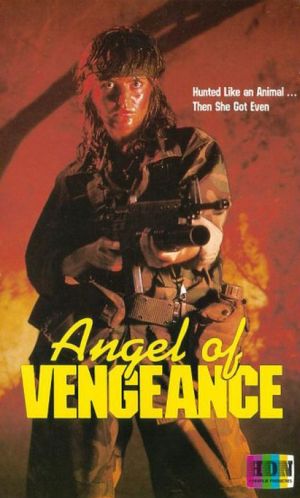 There aren’t many times I agree with censorship, but the British Board of Film Classification rejected this movie entirely when it was submitted in 1987. I’d like to thank them for saving the public from this appalling piece of dreck for 25 years, even if I think they were probably confusing it with Abel Ferrara’s Ms. 45, which was also known as Angel of Vengeance in the UK. I can’t believe they actually