




★★½
“Because Lady Moderate Breeze wouldn’t sell as many copies.”
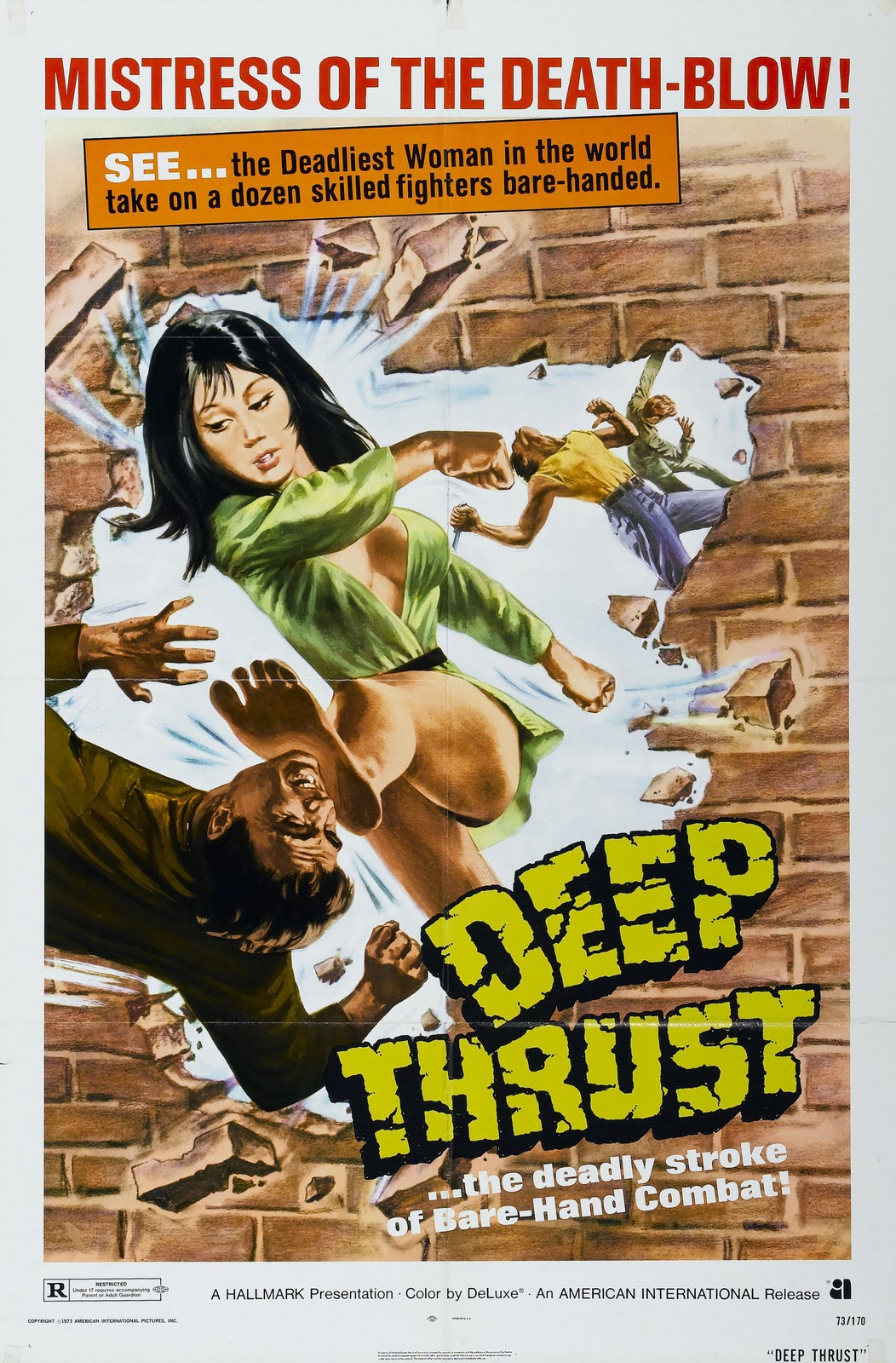 I’m not saying this is a bad film. But when I watch one called Lady Whirlwind (though here is as good a place as any to acknowledge the wonderfully tacky alternate title featured on the poster at the right), I expect a good deal more lady whirlwinding. The focus is instead on Ling Shi-Hao (Chang), beaten and left for dead after trying to leave a gang. Wisely, he decides to continue with his death, hiding out in the country for three years with girlfriend Hsuang Hsuang (We). This anonymity is shattered by the arrival of Tien Li-Chun (Mao), who wants a word with Ling, along with ripping the beating heart out of his chest. For it turns out, he was a bit of a bastard who jilted Tien’s sister, leading to her suicide. Hence, when he thanks Tien for saving him, she replies, “I just didn’t want somebody else to kill you.”
Ling admits he deserves his fate, but asks for a stay of execution, so he can first take revenge on his former colleagues (who include Sammo Hung in an early role). Tien is clearly pretty laid-back about the whole vengeance thing, since she’s nowhere to be seen during the lengthy training montage that follows, after Ling helps a Korean herbalist, bitten by a snake, and is taught the deadly Tai Chi Palm style. Will that help him beat the bad guys? And will Tien then stop lurking off-screen and goddamn do something?
There’s certainly no shortage of action, though in comparison to some other Mao films I’ve seen recently, the fight scenes doesn’t seem as smoothly choreographed and frankly, get a bit boring – it also suffers too much from the “we’ll attack you one at a time, while everyone else circles about aimlessly” trope, common to many movies of the time. Indeed, I must admit, there was one of Ling’s battles in the middle where I actually fell asleep: never a good sign where a martial-arts films is concerned. The frequent use of musical cues definitely not composed for the film is also rather distracting: one, in particular, will be particularly familiar if you’ve watched James Bond movies, but other sources say the pillaging also includes the works of Ennio Morricone and Bernard Herrmann. Hey, if you’re going to steal, do it from the best, I suppose.
Mao does have some good fight scenes, particularly going one-on-many with a copious line of henchmen. But you wonder why she’s so apparently disinterested in her revenge, particularly at the end, which is entirely ludicrous, and all but negates everything that happened over the previous 80 minutes. Not one of her best, with not enough going on beyond her usual graceful performance, to merit your attention.
Dir: Huang Feng
Star: Chang Yi, Angela Mao, Pai Ying, June Wu
a.k.a. Deep Thrust
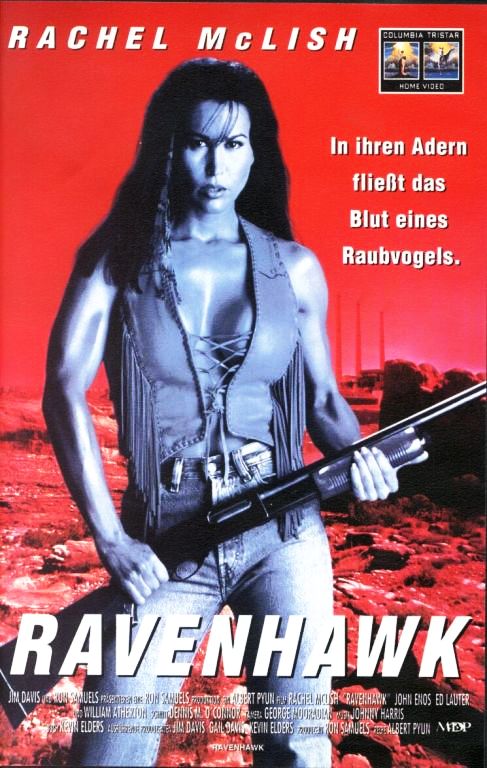
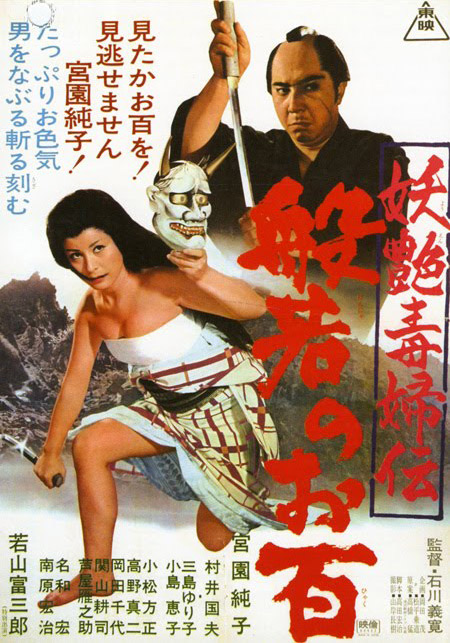




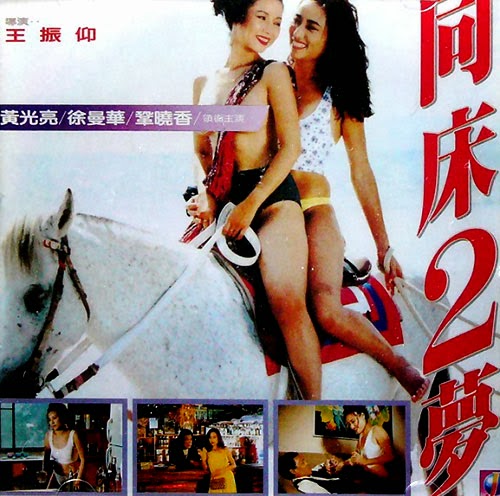 This obscurist Hong Kong revenge flick is a little different, mainly because the couple at the heart of the film are lesbians. Admittedly, this is largely for crass, exploitative purposes: the dialogue quoted above, pretty much confirms the makers want to tut-tut disapprovingly at the love that dare not speak its name, while simultaneously depicting it in salacious detail. Such is the nature of Cat III in the mid-90’s, this seems to want to be something like Naked Killer, released two years earlier to this in 1992, but just doesn’t have the desire to go for the full delirious insanity, necessary to pull the concept off. Particularly in the middle section, it drags horribly, with the story diverting off into the usual triad drug-smuggling, betrayal and cop investigations that we’ve seen a million times before.
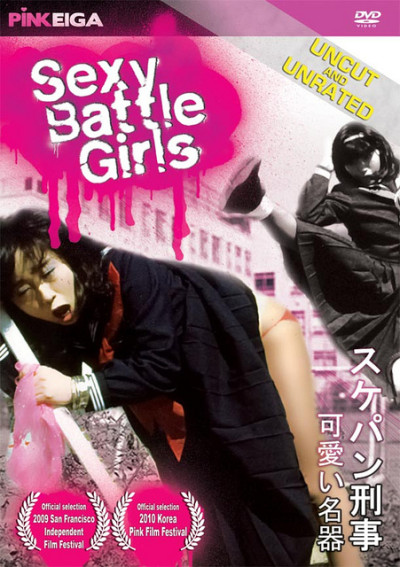 It takes real effort for a film that’s barely an hour long, significantly to overstay its welcome, but SBG manages to do exactly that, thanks to its woeful combination of shoddy action and tedious sex scenes. The heroine is teenager Mirai Asamiya (Hashimoto, about as much an actual teenager as I am), who has been transferred to a new school at the behest of her father. Little does she know, at least initially, that she is simply a tool for his revenge, headmaster Bush (Hotaru) having seduced Mirai’s mother away from her husband, and run off with her. To this end, Mirai has been brought up with what we should call, a very particular set of skills: we’ll spare you the details of exactly what the “Venus Crush” involves, but it does lead to the classic line, “He doesn’t know how dangerous your vagina is!” Before she can reach her target, she has to get close by dethroning and replacing his current enforcer of discipline, Susan (Taguchi), and also get past Bush’s lesbian daughter (Kiyokawa).
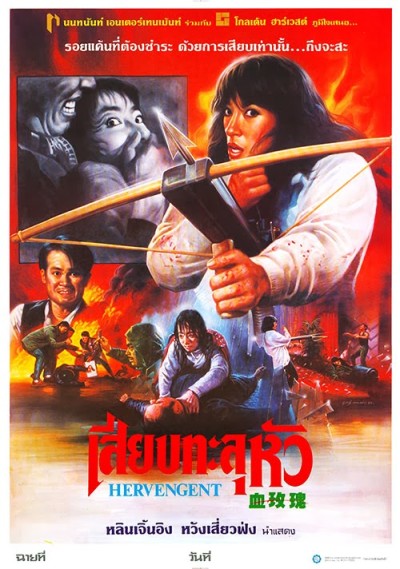 Director Lam is responsible for insane cult classic, The Story of Ricky, and if this is more restrained, it’s only by comparison. Casino manager Chieh Ying (Wong) is gang-raped by five sleazebags – and, wouldn’t you know it, they’re the same guys who killed her father. Worse is to come, as a trip to the doctor reveals a rather nasty case of venereal disease, and after some melancholic wandering around which occupies the rest of the first half (and, to be frank, is rather boring), our heroine gets tore into the villains, extracting the titular payback. Though you know the old saying, “She who seeks vengeance, must first dig two graves”? That’s a severe understatement here, because this roaring rampage will end needing an entire cemetery, costing Chieh Ying almost everybody she cares about, from her uncle, a wheelchair bound kung-fu wizard (Lam, best known for the Mr. Vampire series), to her wannabe boyfriend (Wong).