




Literary rating: ★★★★★
Kick-butt quotient: ☆
This e-story (at 73 pages, it’s at the longish end of the “short” story continuum) by my Goodreads friend, new independent author Theodore B. Ayn, is one of several recently-published works to his credit, and so far the only one of them that I’ve read. (I’m hoping eventually to read the rest.) While I didn’t officially receive it as a review copy, I treated it as one (the author kindly extended a general offer of a free e-copy long enough to allow me to take advantage of it when I’d otherwise have missed out). When I started it, I’d intended to read only a short bit, and to return to it later; but I wound up finishing it in a single sitting. As that indicates, it was (at least for me) a page-turner, and a propulsively quick read.
Ayn has an obvious admiration and respect for women who are both strong and muscular physically and who have a matching moral and emotional strength (an attitude that I share); and based on the cover art and descriptions, this is exhibited in all of his works, not just this one. (Arguably, the description of this one provides information that would be better picked up by the readers as the narrative goes along, though it isn’t a “spoiler” as such.) Basically, this particular story, set in a small Midwestern town that’s never identified in any more detail than that, pits brawny waitress Jeannie against even brawnier ex-biker gang member Clyde (no last names given for either) in a physical confrontation brought on by his sexism, arrogance, and hot temper. That description, however, is deceptively simple. This is a character-driven story which isn’t simple at an emotional level, and also isn’t predictable. (It should also be stated at the outset that it’s not an “enemies to lovers” romance; there’s no romantic element in the tale at all, let alone between the two adversaries.) Both main characters are complex, and developed in surprising depth. The prose style here is straightforward and direct. Overall, Ayn prefers straight narration over dialogue, though he provides realistic dialogue where it’s needed to reveal character and move the plot. Technically, it could be claimed that, especially in developing his two lead characters’ back stories, he uses a fair amount of telling rather than showing. But within the constraints of the short format and of the centralizing of the fight itself as the outward core of the story (though inward developments are taking place at the same time), there’s no real alternative to that technique, and it’s actually well-suited to the kind of effect the author successfully creates. This is descriptive fiction, with no speculative element. I’ve characterized it as general fiction, rather than as crime fiction or action-adventure, because the characters are ordinary civilians, neither career criminals nor law enforcement professionals; no guns are involved, the setting is mundane, and the situation is one that could easily occur in everyday life. We’re in a very different atmosphere and milieu than that of, say, a typical Modesty Blaise adventure.
A word is in order about the art work here. While this isn’t a graphic novel as such, it’s greatly enhanced by, altogether, no less than 30 illustrations (some full-page) of particular scenes, in the same style as the cover art. These serve the same purpose that traditional book illustration always has, that of enabling the reader to more vividly visualize the characters and events of the story (and serve it very effectively!), but as the author confirmed to me in a personal message, they’re AI-generated. Personally, I would argue that such a use of AI to supplement the author’s creative vision is legitimate; it brings to life scenes he wants to depict in the way he wants them depicted, but with a draftsmanship he wouldn’t actually be able to create by hand. (Though the ability to use AI to create it also requires an expertise of its own.)
Unless a reader is scandalized by the sight of bare female arms or legs, there’s nothing salacious about the art here, and nothing suggestive or sexual about the story’s content. Bad language is limited to a couple of d-words. While this isn’t “Christian fiction,” it is fiction written by an author who’s a Christian; but it’s not “preachy” in any sense. (The lead characters are secular, and their spiritual state is only referenced in a single sentence.) It is, though, fiction that focuses on a rough, no-rules street fight between a man and a woman, with an antagonist whose moral code doesn’t include any scruples about hitting a woman, and a female protagonist who doesn’t see her gender as disqualifying her from slugging or kicking a man if it’s necessary. The author also has the kind of moral vision which can view a physical fight as an instrument, rather than an antithesis, of moral order. This story wouldn’t be recommended for readers who would be repelled or triggered by that type of imagery, content, or messaging. However, I’m not numbered in that group; and for me the story proved to be ultimately wholesome, emotionally enriching, and rewarding.
Author: Theodore B. Ayn
Publisher: Self-published, available through Amazon, currently only for Kindle.
A version of this review previously appeared on Goodreads.
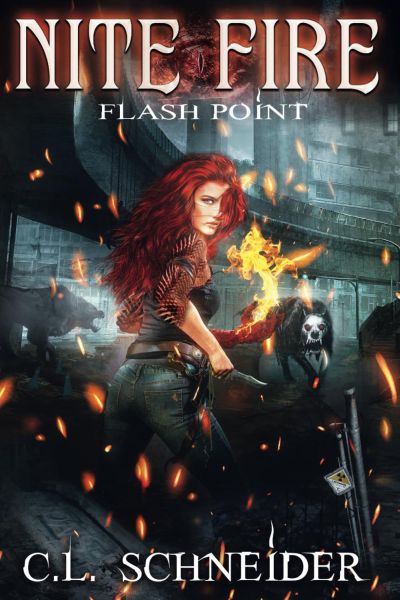 Dallas Nite is a dragon. Well, some of the time. For dragons are actually shape-shifters, capable of changing form, and that’s how she is able to pass for a human here. On her home planet, she had been an assassin for Queen Naalish, until she balked at carrying out one hit. Condemned to death, she fled through one of the interplanetary portals, ending up on Earth. Effectively immortal, Dallas has been in exile here for ninety-seven years since, making sure no other unauthorized creatures come through the portals – part of an uneasy truce between her and the aristocracy. Part of her job also involves ensuring any trace of dragon activity is covered up, these being explained instead as “spontaneous human combustion.” But after a whole family is slaughtered in fiery fashion in their home, it becomes increasingly difficult for her to keep a lid on things, and her past comes back with a vengeance too.
 “What I need is stories where men get kicked in the chest. Stories where guns only run out of ammo for dramatic effect. I need pulp. I need exploitation. I need fun.” I used to read a lot of comics, before moving to America. As in, most weekends involved a trip to Forbidden Planet, Gosh!, or Mega City Comics, coming home with a carrier bag of new issues. Then there were the trips to Paris… But I just kinda stopped – no particular reason – when I emigrated. There is still a large cardboard box, unopened from the move 25 years ago, in our boxroom. Some are probably worth a bit, e.g. the first issue of Hellblazer. But reading the first issue of Gehenna makes me want to restart. Well, if space, time, money and aging eyesight weren’t issues, anyway.
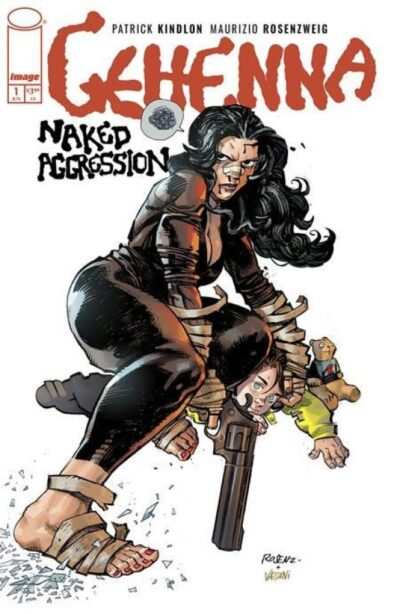 “This book is equally for the diehard comic reader and someone who hasn’t read sequential art since Garfield,”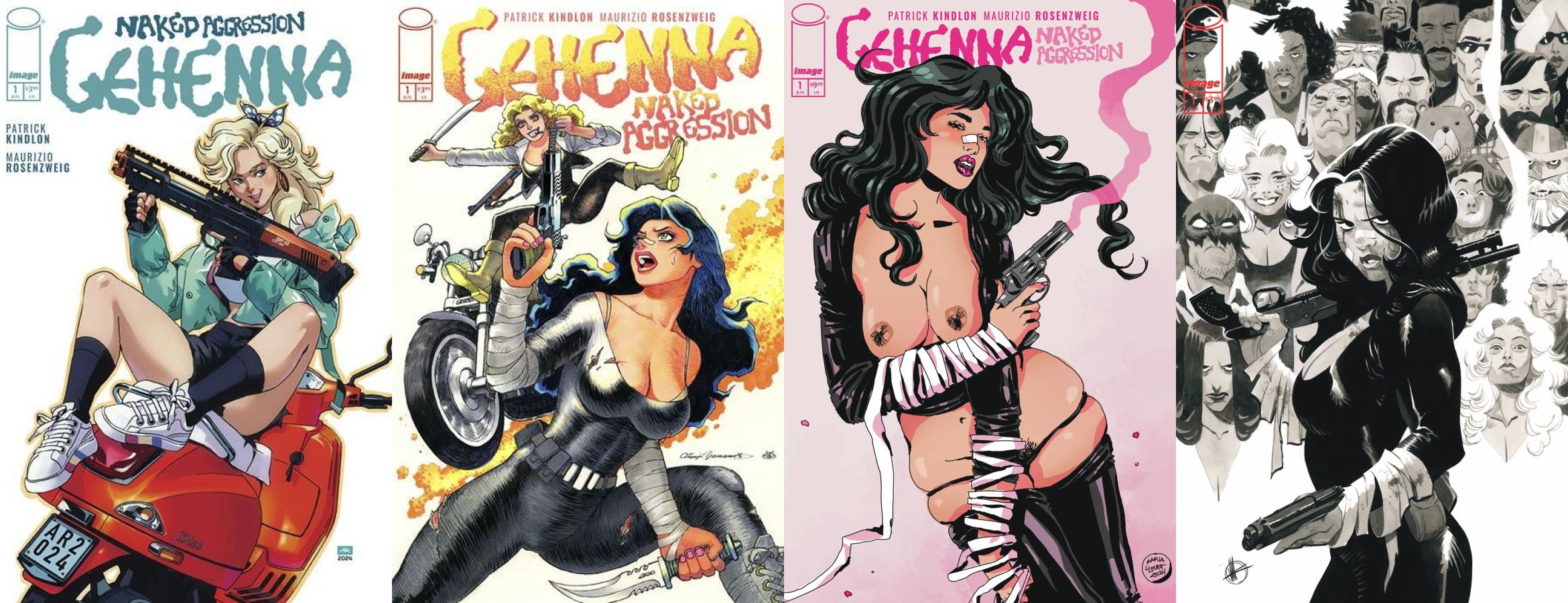
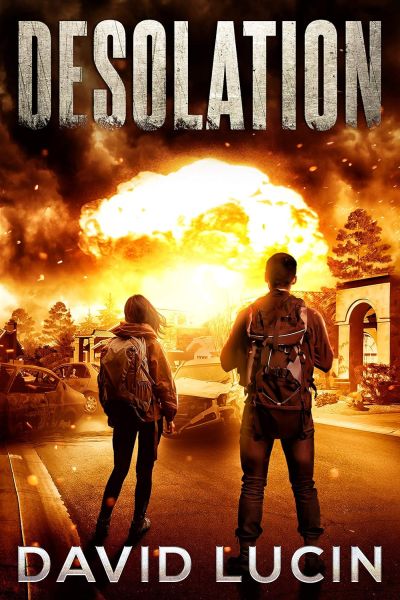 When the apocalypse comes, if popular fiction is any guide, it’s going to be undead and craving brains. But not far behind in terms of literary popularity, appears to be an EMP. This is a high altitude nuclear detonation, which would unleash an electromagnetic pulse – hence the name – capable of frying anything with a circuit board, continent-wide. It is generally not good for civilization. I think this is the first such book I’ve covered, and I was particularly intrigued, because it’s set here in Arizona. Which is a little weird, because the author appears to be based out of Vancouver, British Columbia. I presume some connection to the state.
 The first volume is free on Amazon at time of writing, but all four are available for 99 cents, so you certainly can’t complain about value. It’s an interesting concept, too. Axira is a “spacer”, a member of an alien race feared to such an extent that they are almost legends. For centuries, she has been mentally chained up by a member of the Kore sects known only as “Master”, and compelled to do his bidding. Which usually involves copious amounts of violence, directed toward his enemies. Finally, Axira is able to break free and regain her independence, and vows to take revenge on Master.
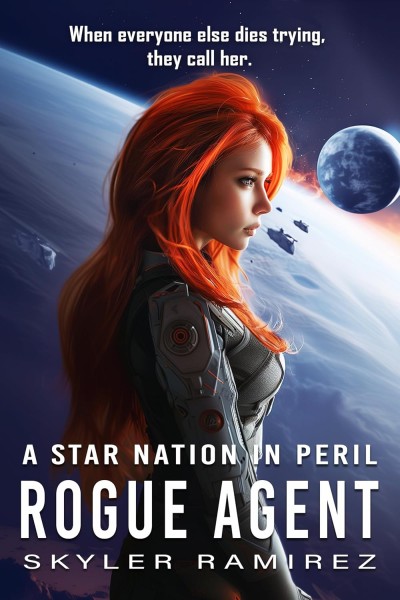 This is a solid, no-nonsense combination of spy and science-fiction. Though, to be honest, it is skewed towards the former genre, with the latter mostly window-dressing. It wouldn’t take much to change the setting from a solar system whose ownership is disputed by a couple of galactic empires, to a city whose ownership is disputed by a couple of countries. The planet is Hudson, claimed both by the Star Kingdom of Prometheus and the Koratan Confederacy. Heather Kilgore is among the best agents of the Promethean King’s Order, and is dispatched to Hudson after the suspicious death of a man who had betrayed the Kingdom, former commander Connor Monroe
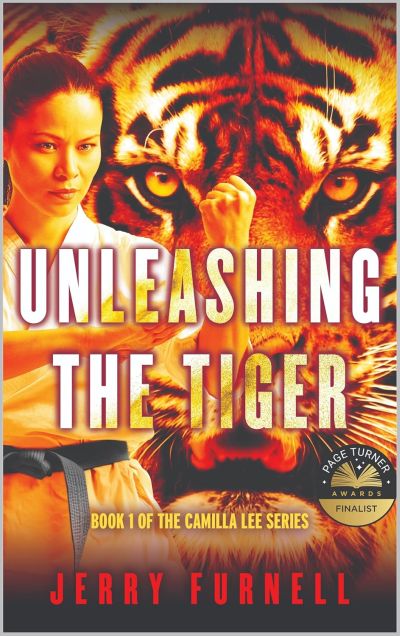 I don’t subscribe to the belief that authors need to be the same sex, race, religion or whatever as their characters. A good author can put you inside the head of their heroine, even if they’re a different species, an extra-terrestrial, or whatever. But there needs to be an authenticity of voice for it to work. This is where, for example, Quentin Tarantino fails for me: his characters almost always end up sounding like Quentin Tarantino. And I wrote that before noticing the blurb on Amazon actually says, “Jerry Furnell exudes a Quentin Tarantino vibe in his narrative.” That’s meant as an incentive; I’d have taken it as a warning.
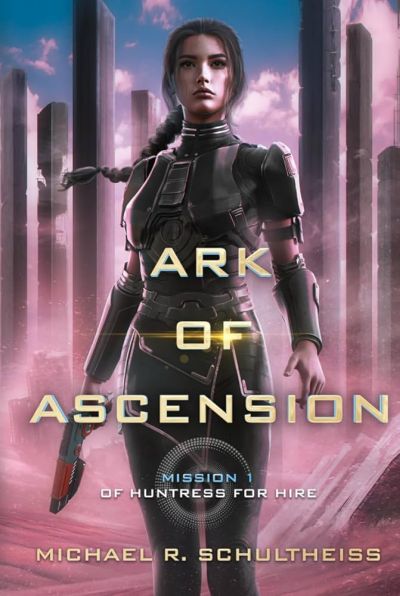 I don’t necessarily expect to understand a literary universe from the first page. These things take time: I get that. But I do expect that, as I go through the chapters, things will become clear. If I reach the end, and am still vague on a number of significant plot points, then something has gone wrong. Sadly, it’s the case here, and that largely hampered the effectiveness of the narrative. In this case, it had a cascading effect. Because I didn’t understand one situation, that rendered a character’s purpose uncertain, and this then meant the heroine’s motivation wasn’t clear.
 This is written by a husband and wife duo, which is a nice idea. I wonder how Chris would react if I suggested writing a novel to her? Unfortunately, the results are a little disappointing. It feels like the execution is better than the idea – usually it’s the other way around. For example, this is a post-apocalyptic scenario, except the book never details in more than the vaguest terms, what happened. It’s disposed of in about one page: a war, involving both bio- and nuclear weapons. Some humans went underground; those who didn’t, became “grotesquely distorted” mutants and calling themselves Urthmen. We’re now 200 years later, and they are still seeking to wipe out the dwindling number of “real” humans who abandoned their bunkers for some reasons. Those include Avery, in her late teens, and her sister, eight-year-old June, orphaned by the death of both parents: Mom killed by Urthmen, Dad… just kinda died, I guess.
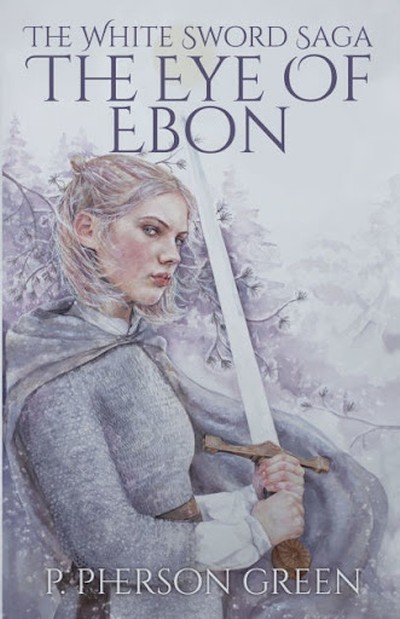 For all that, Green is his own person with his own literary vision and style; The Eye of Ebon is not a direct LOTR knock-off, in the way that Terry Brooks’ The Sword of Shanarra is. A major difference, of course, is the distaff perspective. While Tolkien’s Eowyn is an action-capable female, she’s not the heroine of the saga; his major characters, and most of the characters who display any real agency, or play a direct role in defeating evil, are male. Here, the two viewpoint characters, protagonist Samiare (whom you see depicted on the book’s cover) and essentially co-protagonist Rugette are both female, and formidable fighting females who carry the brunt of the book’s down-and-dirty struggle against evil, and who make the key, crucial gut wrenching and difficult moral decisions at the climactic points. (I was already inclined to rate the book at five stars, but those were the moments that clinched it, and for me moved this tale into the ranks of great, rather than merely good, literature!)