Full disclosure at the outset: the author kindly donated me a paperback copy of this book in return for an honest review.
In the climactic novel of the author’s Elioud Legacy trilogy, The Draka and the Giant, former U.S. Army Ranger Ryan Helsing, a decorated and physically formidable veteran of the fighting in Iraq and Afghanistan, was introduced as a relatively minor character (I didn’t remember him until I read this book; it’s been a couple of years since I finished reading the trilogy). And as I recall from the prequel series, Unsanctioned Guardians, it was mentioned in the first book there, The Covert Guardian, that title character (and major figure in both series) Olivia Markham had a younger sister. These two people serve as co-protagonists of this new novel, intended as the opening volume of The Dragon’s Paladins, a projected spin-off series from the original trilogy.
 As reader’s of the latter know, Zane’s premise is that, from antediluvian times on down to the present, there have been some sub rosa matings between angels (mostly fallen ones, but occasionally celestial ones as well) and humans, and that the children of these unions walk among us, sometimes aware of their heritage, sometimes not. These Elioud have (latent, or more developed) super-human abilities from their angelic genes; and in the ongoing cosmic strife between God and Satan, they may be knowingly enlisted on one side or the other, or just imagine that they can ignore spiritual realities and be neutral. (This premise is taken for granted in the present novel, which should definitely be read after at least the original trilogy, if not necessarily the prequel; the reader needs that to fully understand the situation and to really know some of the important characters.)
Our main setting is the Balkans, in the very near future, about six months after the final events of the Draka and the Giant. Dianne Markham is now a 29-year-old “social media marketing consultant” (and yes, that’s an actual job). Secular-minded and not very close to her sister, in the past she’s been something of a playgirl type, and cultivated a loose lifestyle along that line; but more recently, she’s been aware of her biological clock ticking, and been feeling (and even acting on) some impulses towards a more serious and mature outlook and more responsible behavior. She has no clue about her family’s bloodlines, or that Olivia and her husband, Mihail Kastrioti, are two of the Archangel Michael’s top warriors and commanders.
But they are; and Olivia, warned of danger by her “spidey sense” (which we’ve come to recognize as Divine prompting) is taking measures to gather her birth family into the relatively greater safety of the Kastrioti fortress compound in the Albanian mountains. When we first meet Dianne, she’s on an Adriatic cruise, now winding down, with a bevy of her shallow “friends” (though Germaine Grimes is one she reckons as an actual friend). However, Olivia has sent our title character to secretly watch over her sister on the voyage, and to bring her to Olivia as soon as they dock in the Croatian port city of Split. That may be a long and dangerous trip (especially after the registering of the largest EMP phenomenon in history), and their interpersonal dynamics may get interesting….
In its stylistic and other qualities, this book has a lot of the same trademark characteristics the author displays in her six preceding books. Narration is in third-person, past tense; the H/h alternate as viewpoint characters, with occasional scenes from other viewpoints as needed. While this is definitely in the supernatural fiction genre, centering on combat between demons and demi-angels and their human pawns or allies, much of it also reads like descriptive fiction action-adventure or an espionage thriller (and Zane’s prequel trilogy actually is in the latter genre). This entails a lot of physical action and use of high-tech weaponry and communications. The development of nanotechnology here, and its tie-ins with “harmonics,” the energy frequencies underlying all reality and all living things, including people, which angels and their descendants can perceive but ordinary humans usually can’t, is in the realm of the science-fictional (and probably already was in at least the last two books of the first trilogy, though my knowledge of nanotechnology isn’t great enough that I could tell that on my first reading).
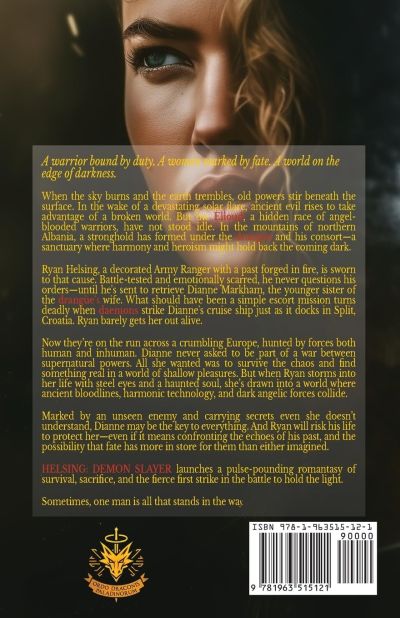
Zane sets a very brisk narrative pace, with a gripping intensity that makes this a real page-turner (I read it in less than two weeks, despite the 353-page length, which is fairly quick for me; and I always hated to put it down when I had to.) As in all of her work, she displays a detailed grasp of the settings and real-life locations, derived partly from Internet research and partly from her own travels. Given the cover art, it’s no surprise that Ryan Helsing is a highly capable action-hero; Dianne (who’s depicted on the back cover, but just with her face) doesn’t start out combat-trained, but she’s got guts and determination, and grows naturally into an action-heroine role. Both characters are developed well, in three-dimensional fashion. Their romance (that’s not a spoiler –Zane’s imprint is Zephon Romance, after all!) develops very quickly, but being thrown together closely and continuously under mortally dangerous and stressful conditions that demand constructive responses will bring out people’s mettle very quickly, and make it both easy and natural to assess and appreciate personal worth in a comrade-in-arms. Romance enhances the story and is a big part of it, but doesn’t swallow it whole.
Demonic possession of humans is taken seriously in the New Testament as an actual reality (borne out in other nonfiction literature on the subject), but the biblical writers don’t present us with a detailed theology of it. It’s a major plot element here; but here (as in some of the other books), how it works is a bit murky, and that’s probably my major quibble here. It’s sometimes suggested, plausibly, that the possessed are usually willing vessels of evil, or that all those outside the actual protection of Christ through faith are under some risk for it (and there are New Testament texts that could indicate that). But we also have a case of apparent possession of a human who doesn’t fall in those categories; and just as the St. Michael medals worn by some good characters here and in the other books have protective qualities, the demonically-cursed physical talismans here worn by some characters exert a malevolent spiritual influence.
 Related to this, although like all of the author’s books, this one has a strong good vs. evil orientation which is explicitly understood in Christian terms of God vs. Satan, there’s not a strong note of necessary personal decision to repent of self-will and turn to Christ in salvation. (Granted, Christian conversion is typically a gradual process of internal changes in response to moral and spiritual influence; but there does come a distinct tipping point in which personal loyalty flips Christ’s way. We don’t get a real sense of that here; Dianne starts out as essentially a heathen, albeit one who’s having a bit of a moral awakening; but insofar as she changes spiritually, the change appears to be more about her relationship to Ryan than to Christ.)
Some of this is probably influenced by the author’s Roman Catholic faith, though none of her books harp on denominational distinctives; Catholic (and Orthodox) sacramental theology attributes real spiritual influence to physical objects or actions, where other Christian believers wouldn’t go that far, and the former traditions place less stress on an actual, real-time decision for Christian conversion. (Many Christians, myself included, also wouldn’t consider the whole idea of modern-day demi-angels fighting physical battles against demons as really plausible; but it has to be recognized that the author isn’t necessarily claiming that it is. We should just regard the premise here as a fictional literary conceit that serves metaphorical functions, or allows the author to spin an imaginative story, not as a serious theological treatise.) It could also be argued that the climactic resolution of the conflict is too easy, though I didn’t consider that a serious flaw.
Even though both Ryan and Dianne use a certain amount of bad language (realistically, given their backgrounds) there’s no profane abuse of divine names nor actual f-word use here, and there’s also no explicit nor implied sex. (There’s no doubt that our H and h are strongly attracted to each other physically, but there’s also a sense that the attraction is also, and more importantly, to each other’s qualities of character.) Like the original trilogy, this can be recommended to readers who like clean romance (if they don’t mind what movie reviewers –and this would make a great movie!– would call “some sensuality”) and those who like action adventure, both male and female. It can also appeal to supernatural fiction readers who like the angels vs. demons theme, but the appeal wouldn’t be confined to Catholic (or general Christian) readers; I think many secular readers could enjoy it as well.
Author: Liane Zane
Publisher: Zephon Romance, available from Amazon, both for Kindle and as a printed book.
A version of this review previously appeared on Goodreads.




 It’s rare that I can pin-point so exactly, the moment at which a book jumped the shark. But in this case, I can. I came across a paragraph which was so striking in its badness, I actually put the book down, to ponder what the heck I just read. It did not improve on several repeat attempts, and thereafter, I was simply unable to enjoy the book. Oh, it hadn’t been any great shakes to that point, but it became a genuine chore, and if I did not want to write this warning review, would certainly have become a DNF. Here we go:
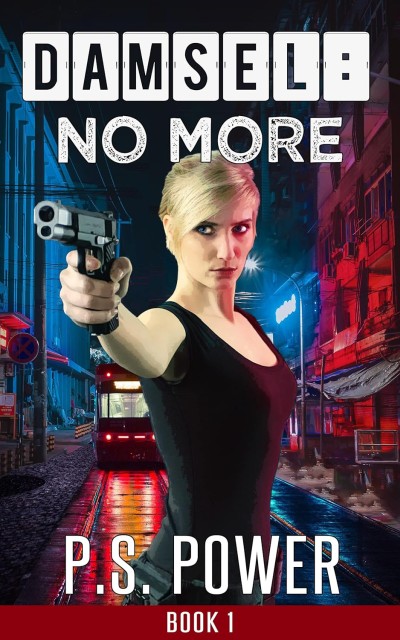
 Despite the fact that all of the books of this series are written by different authors, they exhibit a lot of similarity in style, and also in literary quality. Since the quality tends to be wanting, that’s not a good thing. (My wife Barb really likes these books, which is why we read them together; and even I find the premise novel and intriguing. But it suffers from mediocre and even amateurish execution.) However, Williford has a bit smoother, less pronoun-averse and a trifle more textured prose style than her colleagues, and also a more realistic and less “vegetarian” approach to the realities of lethal force in law enforcement than the first two books displayed. There are situations that can arise where killing a determined aggressor is the only way to protect innocent lives; and she recognizes both the fact that a decent person doesn’t want to do that and may be severely torn up by the pain of doing it, and that neither the reluctance nor the pain change the moral necessity of doing it at times. In fairness to the author of the first book, Teresa Ives Lilly, her heroine realized this as well, but was able to make a decision to disable rather than kill in the particular case she had to confront. But circumstances may not always provide that option…
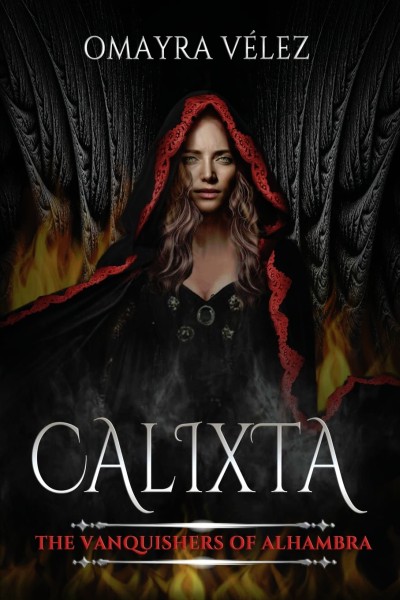 Subtitled “A grimdark fantasy,” if you are expecting this to be packed full of sex and violence, as a result… Well, you might be a little disappointed. While the lead character, Calixta Harlow Carlyle, is an “Exotic” – a highly-trained prostitute – she doesn’t seem to do all that much… um, prostiuting. We’re about half-way through before she goes to bed with anyone. The violence isn’t particularly brutal or copious either. It is, I guess, somewhat dark, and certainly not a young adult book. But anyone who watched (or read) Game of Thrones will not exactly require the services of a fainting couch to get through this.
 Sloane Tarnish is not exactly your typical bounty-hunter. Indeed, she’s training for a medical degree when her shady uncle, Vin, talks her into helping out with a little job. Craving excitement, she agrees, and finds herself posing as the wife of a Fleet officer, seeking to intercept a data key with potentially very explosive information on it. A year later, Vin’s ship turns up without him on it, and she finds herself the new captain, leading the crew as they try to figure out where Vin has gone, and why he vanished. To fund this search, Sloane takes up the bounty-hunting mantle.
 My rating for the first book was two and ½ stars. Several aspects of this second one, though, don’t work as well for me in terms of realism, and I wasn’t able to give it more than two stars. First, while (for at least some Native American peoples) tribal law may have allowed the fathers of young women to sell or gamble them away as slaves, by the late 1870s U.S. law didn’t countenance that. So the community’s project of buying Morning Glory’s freedom was unnecessary. Given the long warfare between Texans and the Comanches, and the ill-feeling of many whites in that era towards Indians, as well as Texas’ secession in the previous decade with defense of slavery as one of its officially-avowed reasons, the community’s unanimous sympathy with Morning Glory also seems a bit of a stretch. Though it’s true that slavery was much less entrenched in arid west Texas than in the east Texas cotton country; and Jo’s mother was apparently Northern-born, since her two brothers died fighting for the Union.
Second, it’s a standard romance-genre trope that at least one party to the romance has hang-ups to overcome, but Tom’s here seem sort of contrived. Yes, his previous fiancee broke their engagement because she didn’t want to live in a place like Waterhole; but it’s patently obvious that Jo doesn’t have that problem, and by now the community is becoming more female-friendly than it was then. His fear for her safety in a potentially violent job is more credible (if she has a problem shooting a deer, might she not also have a fatal hesitancy in shooting a human, even with her life on the line?), but the denouement here doesn’t actually discredit that fear. That brings me to some issues with the denouement.
In the first book, I had no trouble believing that a sober woman with quick reflexes, who’s trained and experienced with a pistol, could outdraw a partly-drunk male, even if he and a bunch of cowed townsfolk thought he was pretty hot stuff with his gun. It was said in the Old West that, “God created men and women, but Col. Colt made them equal.” But here, I did have trouble believing that a woman could tackle and physically overpower a presumably bigger and stronger armed male; and not much respect for her intelligence in trying it, when she could easily have covered him with her own gun from behind and demanded his surrender. Her two armed sisters didn’t display much smarts there, either.
If I were Tom, that incident would have exacerbated my concern for her, not laid it to rest. The outcome of the tale here also depends on believing (which I’m not certain that I do) that it can automatically be assumed that every cave in west Texas is inhabited by a swarm of bats which will emerge at sunset; and we’re also asked to believe that Jo’s love for animals makes her the only Hardin sister who would know this, when all of them are wilderness-wise. I also had a problem with our heroines letting an arrested petty thief just walk out of jail, even on the condition that he leave the area, in exchange for a tip leading to the arrest of bigger prey. Finally, although I give Cox credit for treating inter-racial romance positively, the secondary romance here came across to me as implausible and unconvincing.
All of this said, I did finish the book (my wife and I read it together – and she liked it much better than I did, her taste in Westerns not being nearly as critical), and it held my interest. Cox’s characterizations aren’t deep, but most of the characters are likable. Like the author, the main characters are evangelical Christians, and there’s a positive portrayal of the role of faith in their lives. We also see the effects of Christian conversion in a couple of cases, though we’re not privy to the scenes/conversations where those conversions take place (so there’s no lengthy evangelistic exposition). The series can appeal to fans of Westerns, Western romance and “Christian fiction” who don’t expect much depth and just want some harmless, time-passing entertainment.
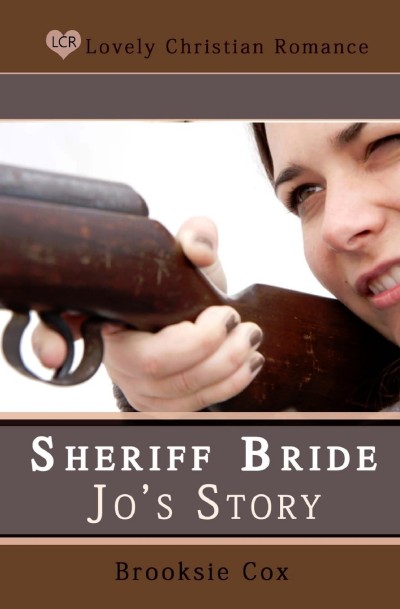
A brief word about the cover art is in order. It’s a nice bit of action-heroine iconography, and does depict an actual scene from the book (a rifle-shooting contest). But while the young lady here has lovely brown eyes, we’re told in the books that Jo and all of her sisters are green-eyed; and the kind of colored nail polish this markswoman is wearing didn’t come into vogue until the 1920s. So, no awards for accuracy here!
Author: Brooksie Cox
Publisher: Lovely Christian Romance Press, available
My rating for the first book was two and ½ stars. Several aspects of this second one, though, don’t work as well for me in terms of realism, and I wasn’t able to give it more than two stars. First, while (for at least some Native American peoples) tribal law may have allowed the fathers of young women to sell or gamble them away as slaves, by the late 1870s U.S. law didn’t countenance that. So the community’s project of buying Morning Glory’s freedom was unnecessary. Given the long warfare between Texans and the Comanches, and the ill-feeling of many whites in that era towards Indians, as well as Texas’ secession in the previous decade with defense of slavery as one of its officially-avowed reasons, the community’s unanimous sympathy with Morning Glory also seems a bit of a stretch. Though it’s true that slavery was much less entrenched in arid west Texas than in the east Texas cotton country; and Jo’s mother was apparently Northern-born, since her two brothers died fighting for the Union.
Second, it’s a standard romance-genre trope that at least one party to the romance has hang-ups to overcome, but Tom’s here seem sort of contrived. Yes, his previous fiancee broke their engagement because she didn’t want to live in a place like Waterhole; but it’s patently obvious that Jo doesn’t have that problem, and by now the community is becoming more female-friendly than it was then. His fear for her safety in a potentially violent job is more credible (if she has a problem shooting a deer, might she not also have a fatal hesitancy in shooting a human, even with her life on the line?), but the denouement here doesn’t actually discredit that fear. That brings me to some issues with the denouement.
In the first book, I had no trouble believing that a sober woman with quick reflexes, who’s trained and experienced with a pistol, could outdraw a partly-drunk male, even if he and a bunch of cowed townsfolk thought he was pretty hot stuff with his gun. It was said in the Old West that, “God created men and women, but Col. Colt made them equal.” But here, I did have trouble believing that a woman could tackle and physically overpower a presumably bigger and stronger armed male; and not much respect for her intelligence in trying it, when she could easily have covered him with her own gun from behind and demanded his surrender. Her two armed sisters didn’t display much smarts there, either.
If I were Tom, that incident would have exacerbated my concern for her, not laid it to rest. The outcome of the tale here also depends on believing (which I’m not certain that I do) that it can automatically be assumed that every cave in west Texas is inhabited by a swarm of bats which will emerge at sunset; and we’re also asked to believe that Jo’s love for animals makes her the only Hardin sister who would know this, when all of them are wilderness-wise. I also had a problem with our heroines letting an arrested petty thief just walk out of jail, even on the condition that he leave the area, in exchange for a tip leading to the arrest of bigger prey. Finally, although I give Cox credit for treating inter-racial romance positively, the secondary romance here came across to me as implausible and unconvincing.
All of this said, I did finish the book (my wife and I read it together – and she liked it much better than I did, her taste in Westerns not being nearly as critical), and it held my interest. Cox’s characterizations aren’t deep, but most of the characters are likable. Like the author, the main characters are evangelical Christians, and there’s a positive portrayal of the role of faith in their lives. We also see the effects of Christian conversion in a couple of cases, though we’re not privy to the scenes/conversations where those conversions take place (so there’s no lengthy evangelistic exposition). The series can appeal to fans of Westerns, Western romance and “Christian fiction” who don’t expect much depth and just want some harmless, time-passing entertainment.
A brief word about the cover art is in order. It’s a nice bit of action-heroine iconography, and does depict an actual scene from the book (a rifle-shooting contest). But while the young lady here has lovely brown eyes, we’re told in the books that Jo and all of her sisters are green-eyed; and the kind of colored nail polish this markswoman is wearing didn’t come into vogue until the 1920s. So, no awards for accuracy here!
Author: Brooksie Cox
Publisher: Lovely Christian Romance Press, available  From what I can tell, Arisen is a massive zombie apocalypse saga, with a heavy military focus, by Fuchs and Glyn James. There are fourteen books in the main series, but Fuchs has also spun off related sets to tell other stores set in the same universe, such as Arisen: Raiders. The Operators series appears to be another. It looks to be intended as a trilogy: at the time of writing (March), part one is out, with part two next month and the finale in 2026. It feels like subsequent installments might be more team-oriented, but part one? Hoo-boy.
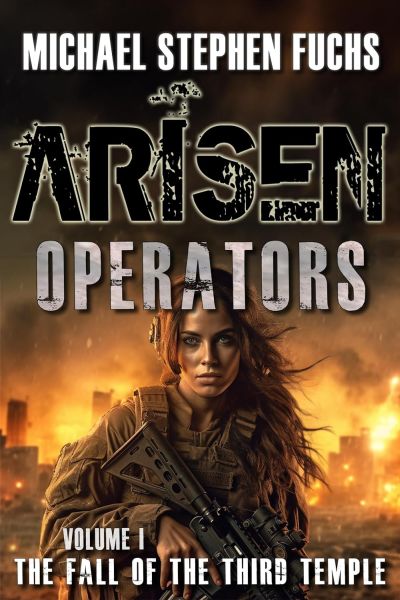 Yeah, this is the first book to ever get a five-star action rating from me. It just doesn’t stop. There’s a sub-genre called “hard SF,” which according to Wikipedia, is “characterized by concern for scientific accuracy and logic.” I suggest this could be labelled as hard action, with a great deal of information about hardware, like guns and vehicles. Here’s a sample paragraph: “The boat itself is a low-observable, reconfigurable, multi-mission surface tactical mobility craft with a primary role to insert and extract SOF in high-threat environments, but can also be used for fire support, maritime interdiction, and VBSS missions, as well as CT and FID ops.” I’m not sure what much of that means. Though I suddenly have a strong urge for a glass of whisky and a cigar.
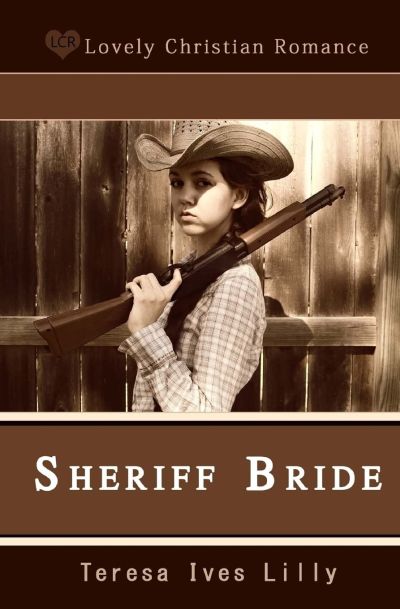 While this is an excellent and very original premise for a novella series, though, the execution of it here has to be called somewhat lackluster. Lilly’s prose style tends to be repetitive, both in language (and in using character’s names over again where a pronoun would serve her better) and in ideas, with points often being restated or reemphasized in the same paragraph when it’s not needed; she also has a tendency to tell when there would be more effective ways of showing. Some attempt was made at editing, but the proofreading was poor (there are only a few typos as such, but I finally deduced that the three or four bracketed repetitions of a sentence in different words were vestiges of textual corrections that weren’t edited out in the final draft!).
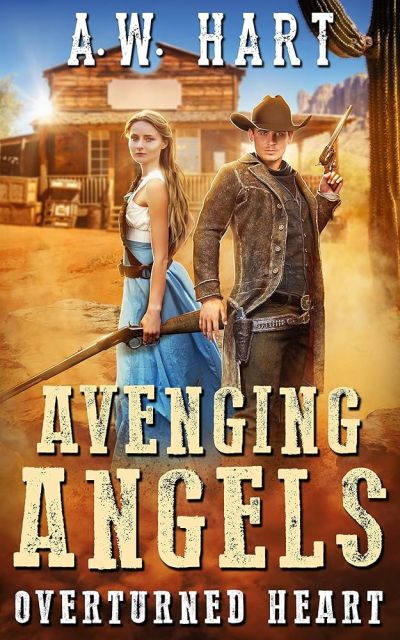 No exact dates are given here; but since the first book began in 1865 (the next book would have to have been set in 1866) and judging from the number of intervening adventures, I’d guess the main storyline here to be set no earlier than 1870, making co-protagonists George Washington (“Reno”) and Sara Bass in their early 20s at least. But the book opens with three short Prologue vignettes, the first dated “twelve months ago,” from the viewpoint of an unnamed female pushed off of a bridge to a 40-foot drop into a raging river, followed by two more dated, respectively, three and two “months ago.” None of these give us much information; but we are told that she survived, that her brother Robert Stirling-Hamer was a wealthy Arizona copper-mining magnate who has been murdered, and that his accused killer “Don” was in turn killed by bounty hunters (guess who?), but that Don’s brother in New York has now gotten an anonymous letter claiming that his brother was innocent.
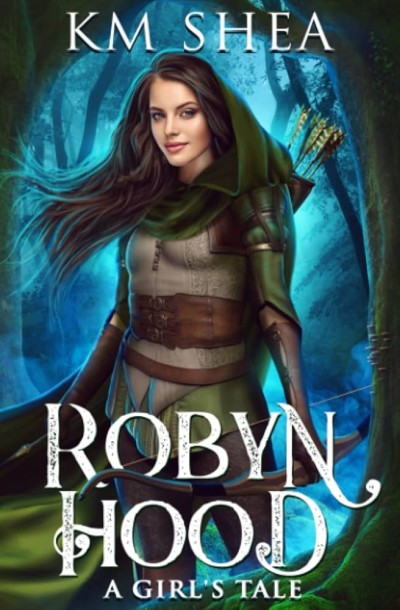 Despite being a short 158 pages, this definitely managed to out-stay its welcome. There’s books aimed at the young, and then there are books which leave you feeling like you have actively lost IQ points reading them. Guess what category this falls into? It’s not a terrible idea, taking Robin Hood and making her a woman. Could have been worse: she could have been a black, bisexual rapper too [I