




Literary rating: ★★★
Kick-butt quotient: ☆☆☆
 I was initially a bit concerned this was going to be a slightly-more horror oriented version of Harry Potter, based largely off the title. I needn’t have been worried. For at least the first two books, this is quite startlingly dark and on the razor’s edge. As for the third… well, we’ll get to it. The setting here is a world where Filipino shapeshifters called aswangs, which feed on the fear of their victims, are migrating across from their home country and through Alaska. Lined up to stop them, by any means necessary, are hunters; it’s a harsh and often brief occupation. To replace those lost in battle, the titular establishment exists on Kodiak Island, to train hunters – mostly members of families who have been in the bloody business for generations.
Into this comes Ollie Andrews, a waitress who kills an aswang, and is recruited (well, abducted is probably closer) into Fear University. Her survival is largely down to an unusual illness/talent: her inability to feel pain. No pain = no fear, and so nothing an aswang can use against her. However, this ability has caused her issues in the past – not least, her abduction by a father/son pair of psychopaths. Though Ollie escaped, killing the father in the process, she has been pursued by the survivor, Max. This has forced Ollie to change her identity and keep on the move to avoid him tracking her down. FU [I’m not sure if the author chose the name for that acronym!] might offer her somewhere to belong, replacing the family she never had.
Keyword: might. For she has to overcome the prejudices of the other students, due to Ollie not being from one of those historic families. And that’s just the start, as she begins to discover the university’s quest to win the war under its head, Dean Bogrov and his shady scientific experiments. It also turns out there is a third group, operating between the aswangs and the humans, and Ollie’s past comes back into play; she was an orphan who never knew her father, and whose mother abandoned her in a closet. That’s an awful lot to unpack, and for the first two books, Collett does an admirable job. It’s a gritty approach, with Ollie a severely-damaged heroine, who has enough issues for an entire conference.
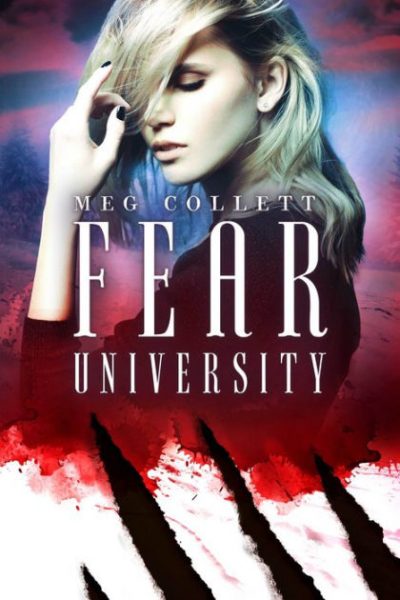 Those opening two books keep the story going forward. In the first volume, Fear University, she learns to tap into the power her talent gives her; builds a relationship with the similarly-broken young hunter Luke, who is her mentor; discovers aswang saliva can make her feel pain; finds out who her father was; and has to go through a life-or-death test involving both her, and her best friend at FU, Sunny. The second, Killing Season, is a rather drastic change in approach, with Ollie, Luke and others sent north to Barrow for the winter break, when the aswang are most active. That was the location used for vampire action film 30 Days of Night, and serves the same kind of purpose here. However, it’s almost as much a whodunnit, with the large house which is the hunters’ base apparently home to a killer. Not helping matters: Max shows up in town.
Then there’s the third… I should probably have detected the change in approach, based entirely on the title: Monster Mine. For sadly, the series loses its edge entirely. Rather than turning into Harry Potter, it instead becomes something which combines the whiny angst of the Twilight series, with the Daddy issues from Star Wars. That’s about as appetizing as it sounds, and by the end, this was a chore to slog through. To the point, indeed, that the free novella included in this omnibus edition, was left entirely unread. Collett does, at least, tie things up reasonably well, giving the reader some closure. It’s a pity that the groundwork laid for a memorable anti-heroine over the first two volumes, evaporates so drastically in the third.
Author: Meg Collett
Publisher: Amazon Digital Services, available through Amazon, both as a paperback and an e-book
Books 1-3 of 5 in the Fear University series.
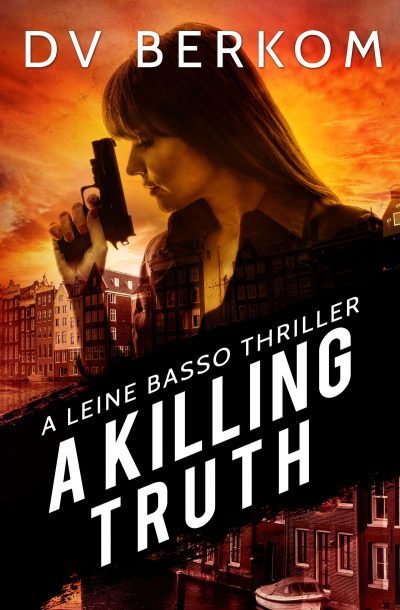 Leine (short for Madeleine) Basso quit her job as a somewhat-sanctioned government assassin, after realizing her boss was using her to carry out off-book, non-sanctioned ops for his personal gain. Oh, and he also tricked her into killing her lover, and b Initially working in private security, she is hired on a reality show, following the murder of a contestant (Book 1: Serial Date) by a serial killer out to make a point. Leine’s daughter is abducted, and it turns out the perpetrator is a shadow from her past, with a grudge.
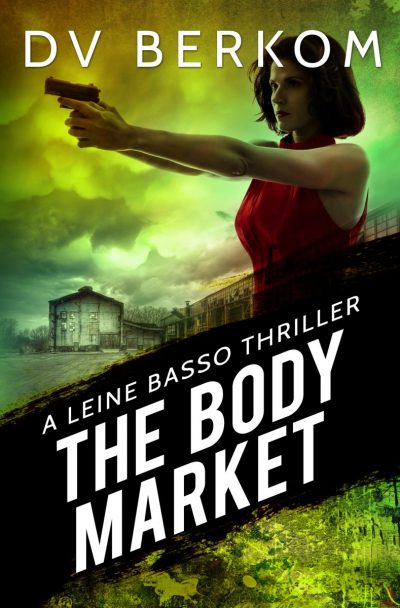 That’s a technical issue, not particularly relevant to this review, however. To be honest, when I got the first book, I was expecting more globetrotting assassinations, and less stuff more befitting a PI or homicide detective, which is really what the first two books are more like. Things perk up considerably in #3, with Leine having to handle life south of the border; you’ll probably be crossing Mexico off your list of potential destinations by the time you’re done there. They do seem – consciously or not – to become more exotic and international, as they go on. #4 and #5 take place almost exclusively abroad, to the point that I felt a bit sorry for Leine’s boyfriend, who must barely see her!
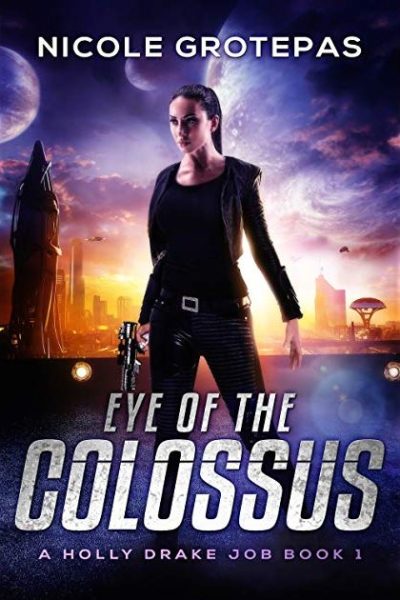 This probably picked up half a star in the final couple of chapters, because up until the end, the plot seemed to have some huge deficiencies. While most of these were certainly addressed by the final resolution, it still left a rather questionable taste in my literary mouth [if you see what I mean!]. The heroine is Holly Drake, who has been unjustly sent to prison after killing her abusive husband. Unfortunately, he was a police officer, and some of his dubious colleagues helped ensure Holly went to jail for it. On release, her previous career as a teacher is no longer an option, and she’s largely thrown on to the charity of her sister, Meg, also a cop.
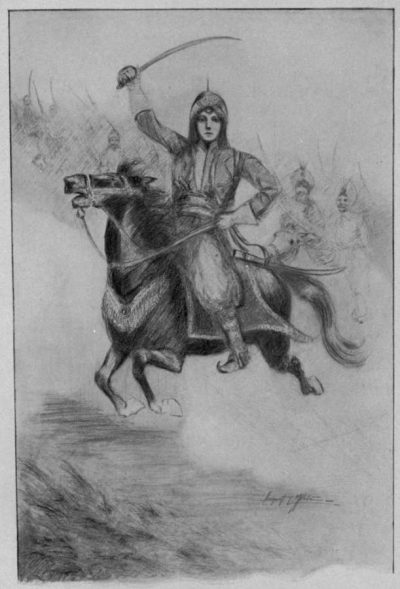
 Alexis Carew is a third-generation settler on the planet Dalthus, and the ward of her grandfather, her parents having been killed in an accident. But her future is murky, for Dalthusian law prohibits women from inheriting property, such as her family’s estates. With the alternative being a marriage Alexis really doesn’t want, the 15-year-old girl instead signs up to become a midshipman in Her Majesty’s Navy (or, at least, the space version thereof), on the interstellar sloop Merlin. However, this is largely just exchanging one set of problems for another, whether winning the respect of her colleagues, fending off the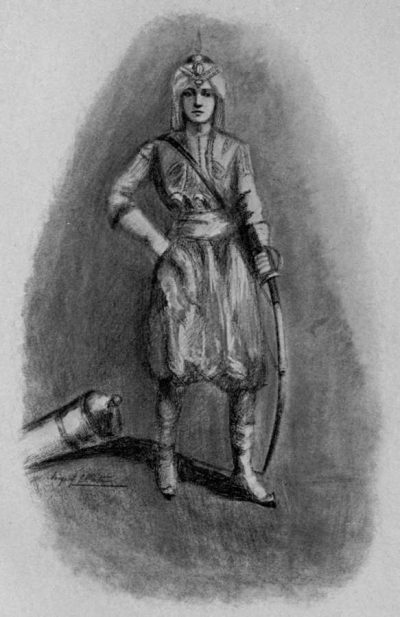
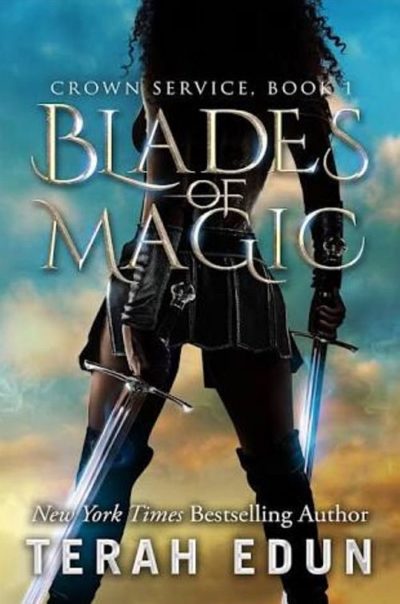 Seventeen-year-old Sarah Fairchild and her family have become persona non grata after her father’s execution by the Algardis Empire. He was a renowned fighter and commander, so his alleged desertion makes no sense to Sarah. Regardless, his wife and daughter are now pariahs to the local community. Even with Sarah’s unparalleled fighting skills, both natural and magical, her employment opportunities are limited, to say the least.
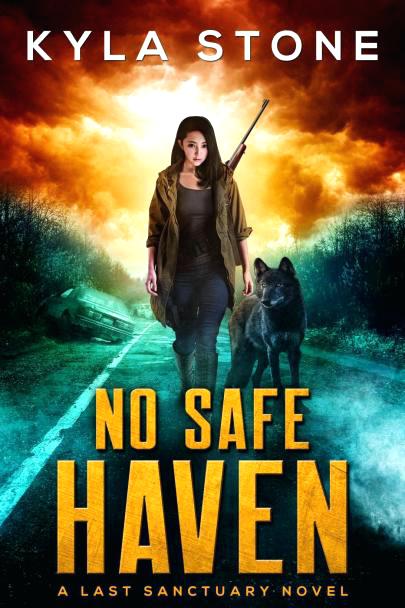 I’ve read enough action heroine novels now to be more than familiar with the tropes of the genre. For example, I can do without ever reading another novel which puts fantasy creatures like elves and magic into a modern-day setting. The zombie apocalypse is another scenario which has been done to death. I mean, we even abandoned The Walking Dead, and watching that was pretty much muscle memory. However, this novel proves there’s still life in the genre, offering some interesting twists on it.
 Zemlya is a gigantic closed city, in the middle of the Arctic tundra, its ten million inhabitants entirely cut off from the outside world. Indeed, there may not be an outside world: no-one knows, for the authorities hunt down and terminate anyone who tries to leave. One of their hunters is Kate
 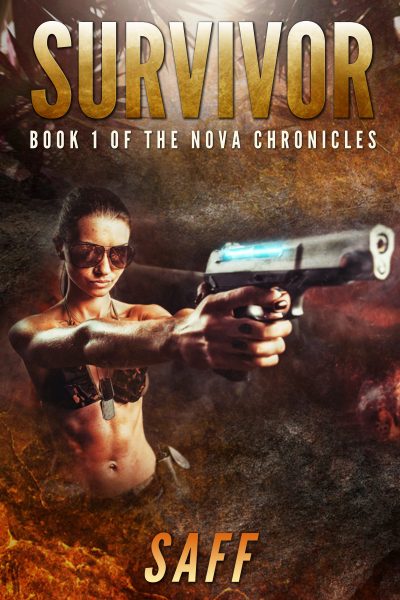 Nova is a bounty hunter, smuggler and generally survivor of life in the grey areas of legality. In need of a quick buck to fix her space-ship, she takes on the hunt for a couple of escaped fugitives. She locates them working in an archaeological dig being run by the Confederacy – which is odd, since the planet in question was supposedly never inhabited. An unfortunate translation error ends up helping unleash a long-buried race of reptiloid extra-terrestrials, the Ancients – a species with both the inclination and the ability to wage genocidal war on the rest of the galaxy. And Nova is the only one left who can stop them.
 When you think of drugs, terrorism and South America, Colombia probably comes first to mind, thanks to Pablo Escobar and his cartel pals. However, it’s far from the only country in the region with a troubled history. Peru has had its fair share of strife: it produces virtually as much cocaine, and the Marxist guerillas of the Shining Path movement fought a long, bloody war against the government through the eighties. It’s during this time that the novel begins. Young girl Nina has her father killed by soldiers hunting the guerillas in her rural village, and her brother Miguel vanishes to join the Shining Path.