
★★½
“a.k.a. We’ve Got a Drone And We’re Gonna Use It”
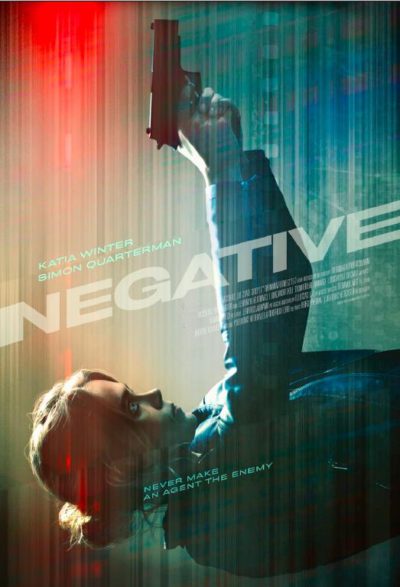 This is a very cunning title. For when you Google “Negative film review”, all you get are a lot of articles about Bright. Hohoho. [In five years time, people will probably have to Google “Bright” to understand this reference] Actually, it refers to a photographic negative, casually taken by Rodney (Roché) in the park. What he doesn’t realize at the time, is that he has accidentally captured the face of Natalie (Winter), a former MI-5 agent who is on the run. She turns up on his doorstep, demanding he turn over the photo to her, but before she can leave, the two Colombian assassins after her, also show up, and she has no choice but to take (the thoroughly confused and largely unwilling) Rodney with her. Together, they head for Phoenix and a safe house owned by Natalie’s former associate, Hollis (Quaterman), with the Colombians in pursuit.
First things first. I was startled to learn some people apparently still take pictures on film requiring an actual darkroom to develop it: personally, this left the movie already feeling like a throwback to the eighties, about as out of time as Phone Booth is now. [References to The Honeymooners and I Love Lucy don’t exactly help there] Moving past that, it all feels rather too understated. Apart from some blood-spatter, we don’t get any real evidence of Natalie’s qualifications as a bad-ass until an hour into the movie – she’s more about evasion than confrontation, save for a drunk guy at a motel. This may have been a function of a relatively small budget – only $100K, and to the credit of Caldwell and its crew, the overall look generally doesn’t show it. [There are some interesting interviews with the director online, explaining how this was possible. They’re worth a read, since he seems a smart guy]
Resources may also explain why it’s pretty dialogue-heavy: two people in a car is about as cheap as it gets. Though the dialogue isn’t terrible, it just isn’t good enough to carry the film, which it needs to do. As the tag-line above suggests, you could play a drinking game based on the number of drone shots: it got the the point where, on more than one occasion, we accurately predicted the next such showing up. And the “Phoenix” the film depicts… Well, let’s just say, there were rather too many palm trees, and not enough cacti for that aspect to ring true. It offers little or no sense of place, with generic suburbia and desert, which feel like they could be anywhere West of the Rockies.
Everything progresses much as you’d expect, if you’ve seen this kind of film before, eventually reaching the expected gun-battle against the Colombians. This unfolds at night, and it’s tough to figure out what exactly is going on. There’s likely a bigger problem though: by the time you reach it, I still hadn’t quite been given a real reason to care. While I’d like to see more from Winter (the story of how her character got to this point, might potentially have been more interesting than the one actually told), the film likely works better as a technical exercise than an emotional experience.
Dir: Joshua Caldwell
Star: Katia Winter, Sebastian Roché, Simon Quarterman

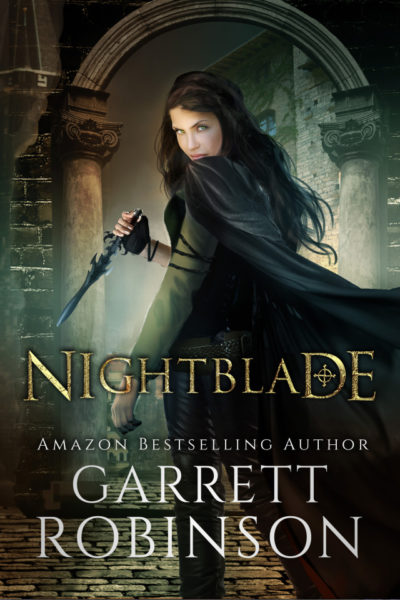 One of the common problems I’ve found with fantasy novels is establishing the universe. It’s clearly going to be very different from the reader’s, and the author needs to get them up to speed on how things work in the book’s setting. If this isn’t done quickly and effectively, the reader can be left floundering in a world they know nothing about. Robinson uses a neat trick to get around this. His heroine, Loren, basically knows nothing about it either, because she has been brought up in a remote rural area. Virtually all she knows about life outside the woods comes from tales told to her by an itinerant tinker, and her dreams of becoming a heroic thief seem no more than fantasies.
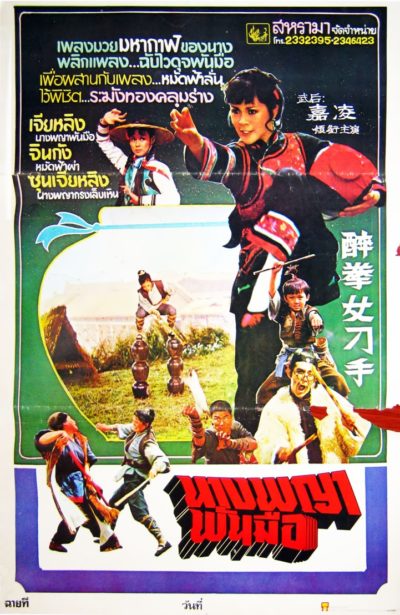 In this late era Judy Lee film, she stars as the confusingly-named Brother Blind, a name which scores only 50% for accuracy. She is indeed, largely unable to see, the result of a confrontation with the motley group of bandits who killed her father (Sit). Though even here, there is some confusion as to whether there are 13 of them, as an alternate title suggest, or 14 as the English dub mentions on several occasions. They’re certainly a random bunch, some of who are missing limbs or fingers, as well as two “giants” who aren’t very tall, and a “poison dwarf” who wields a blow-gun, responsible for Brother Blind losing her sight.
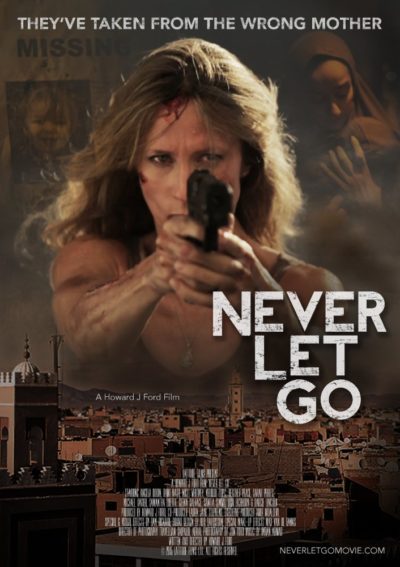 Based on the title and synopsis, I was expecting something like a Lifetime TV Movie. A mother frantically searching for her abducted child in a foreign location, before they can be sold off to some rich Arab, would seem right up their alley. [Though of course, this kind of thing has long been a popular subject for exploitation, to the point where the Hays Code of the thirties had explicitly to ban movies about “white slavery”] It’s a good deal grittier and harder hitting than that, though could have done with much better explanation of why this momma bear is so ferocious – among a number of other aspects.
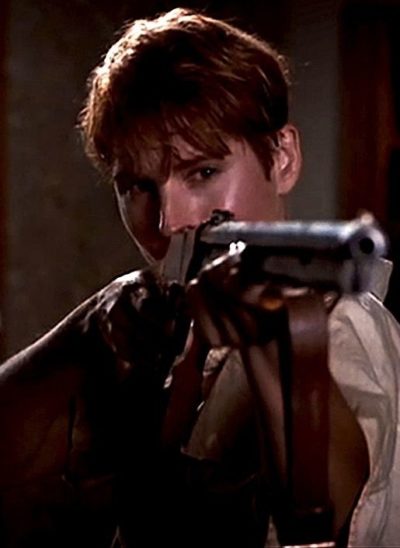 Important to note the year here, because the original Night of the Living Dead, for all its massive influence (without it, there’d be no The Walking Dead or World War Z) was very, very far from an action heroine film. Though it started off focusing on its female lead, Barbara, after she reaches sanctuary in the farmhouse, she spends virtually the rest of the movie in a near-catatonic state, and the film switches focus to Ben, who becomes the film’s hero. The change for this remake is one of a number of alterations, which are likely both necessary and helpful: when you are redoing a film widely regarded as a classic, you’d better bring something new to the party. That’s something largely forgotten by many horror remakes.
 This is the first “true” modern Bollywood action heroine film I’ve seen, and has to be appreciated as such. While we’ve covered a couple of Indian films before, these have either been from outside the mainstream e.g. Bandit Queen, or have carefully corralled the action into socially-acceptable avenues, such as sport in Mary Kom. Neither is the case here, though the ending certainly has its share of hypocrisy, with the heroine being more or less sidelined, “for the greater good”.
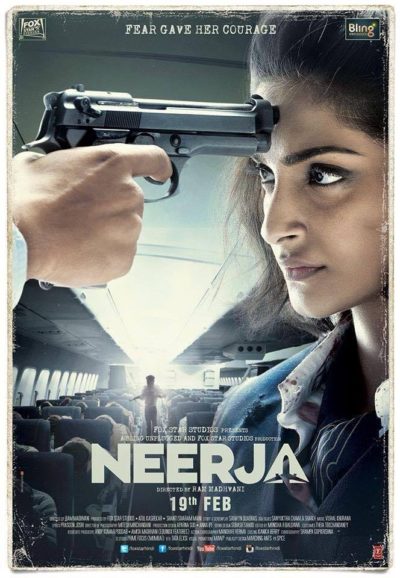 Time to set up GirlsWithoutGuns.org, perhaps. For this film brings home that among the most courageous of heroines are the unarmed ones – especially when facing people who are not. Such is the case with Neerja Bhanot, the 22-year-old head purser on Pan Am Flight 73 from Mumbai to New York in 1986. Just before takeoff after a stop in Karachi, the plane was taken over by hijackers from the Palestinian Abu Nidal Organization, who intended to divert it to Cyprus. Bhanot alerted the pilots, allowing them to escape and thwarting that plan. She then discarded the passports of American passengers, stopping the terrorists from targeting them. When they believed Pakistani forces were about to storm the plane, she opened the emergency exits, help shepherd passengers out, and sheltered children from the terrorists’ bullets.
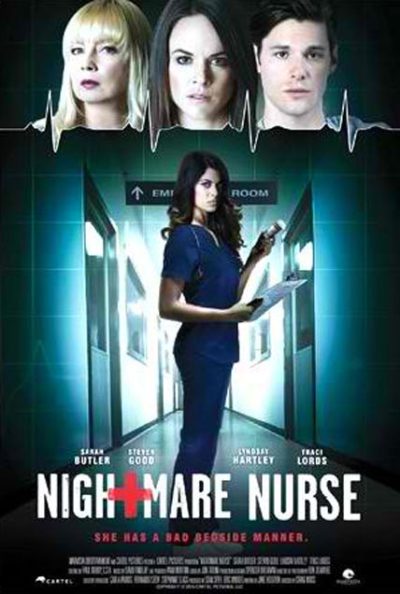 This Lifetime TV movie is the story of Brooke (Butler) and Lance (Good). The happy young couple get into an accident returning from celebrating her promotion at the restaurant where she works. The pedestrian they hit is killed, while Lance breaks his leg, and is confined to bed while he recuperates. To assist with that task, since Brooke has to work, they hire Chloe (Hartley). She initially appears perfect for the job, helping out with the household chores as well as her nursing work. However, it’s not long before strange little incidents suggest that not all is well in Chloeland. We see her life with an abusive boyfriend, and she develops an attachment for Lance well beyond the normal bounds of professional concern. Might this, possibly, be something to do with the accident?