




★½
“Non-ninja, not noteworthy.”
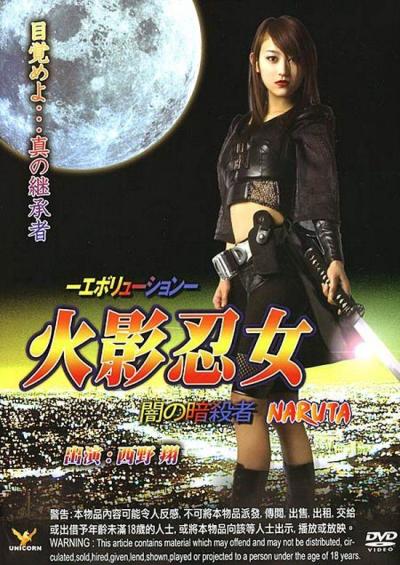 Call me picky or pedantic, but to me, a movie titled Ninja Girl: Assassin of Darkness, should contain a reasonable amount of girl ninjaing, along with, one would hope, some assassinations. Running through a dark room once with a sword doesn’t cut it. Unfortunately, the makers of this appear to take a different view, feeling that their story, about a ninja girl sitting around feeling sorry for herself and bumping uglies with her Manchurian Candidate boyfriend, is more interesting. They’re wrong.
The setting here is modern Tokyo, apparently now a hotbed of espionage. The Japanese government defends against these by using ninjas, whose skills are passed on, not through years of training, but by heredity. After their father – one such ninja – is killed, sisters Naomi (Shou) and Sayaka are left to fend for themselves, unsure which, if either, of them has received the ninja gene, because it will only be discovered when the recipient is “awoken.” Naomi is by far the less stable of the two. After being dumped, she spends all the time sitting around her apartment, blacking out and occasionally attempting self-harm: seriously, that’s it, she says, “I know my sister and my room.” But her life is changed when she bumps into Mitsuyoshi, who opens a window into her sorry, sad life. Except, every so often, he gets phone-calls which cause him to drop everything – including, amusingly, a naked Naomi – and go out on missions.
Eventually – and I’m talking about 70 minutes into an 80-minute film – things do eventually lead to some activities which at least border on the ninja-esque. However, Shou’s talents in this area are about as feeble as you’d expect from a porn-star whose works, Google informs me, include titles such as Openly-Displayed Squirting Orgasm. Though I suppose you could argue that’s a bit of a ninja skill, in and of itself. There is little or no information about this one, which doesn’t seem to have an IMDb entry: it was made in 2006, according to the copyright, and apparently on a budget consisting of the spare change left over after purchasing a bowl of ramen noodles. The actress who plays Sayaka is not bad, with one scene where she and her sister are talking, that does actually manage to put over some emotion. I also get the sense the next part, now Naomi is “awakened”, might not be so bad. But as is, the bulk of this opener is uninteresting talk, with occasional interruptions for bad action.
Dir: No clue
Star: Nishino Shou
 Star Jill Kelly is an adult actress. I mention this, because it seems highly likely that most of her 300+ other works – perhaps The Butt Sisters Do Philadelphia or Sodomania: Slop Shots 5 – are likely better scripted, filmed, edited and generally well-made than this dreadful piece of crap. I should have known, given Donald G. Jackson’s involvement – he’s probably the worst film-maker I’ve ever had the misfortune to encounter, and I speak as someone fully familiar with the works of Ed Wood, Andy Milligan, J.P. Simon and Uwe Boll. They are all pretenders beside Jackson, and even though this barely runs an hour, your patience will be sorely tried. And by “tried”, I mean at the level where gnawing a limb off to escape will seems credible.

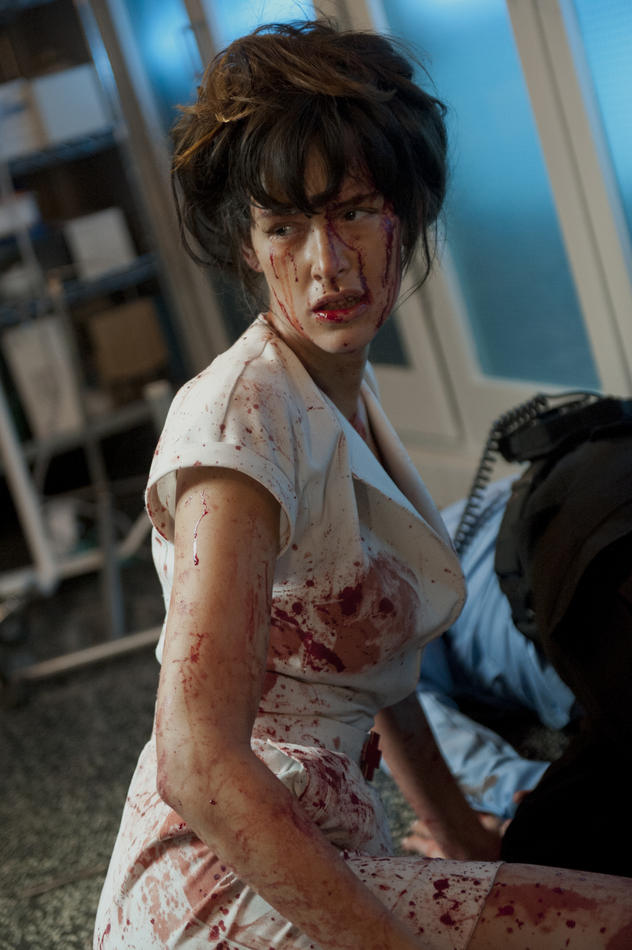


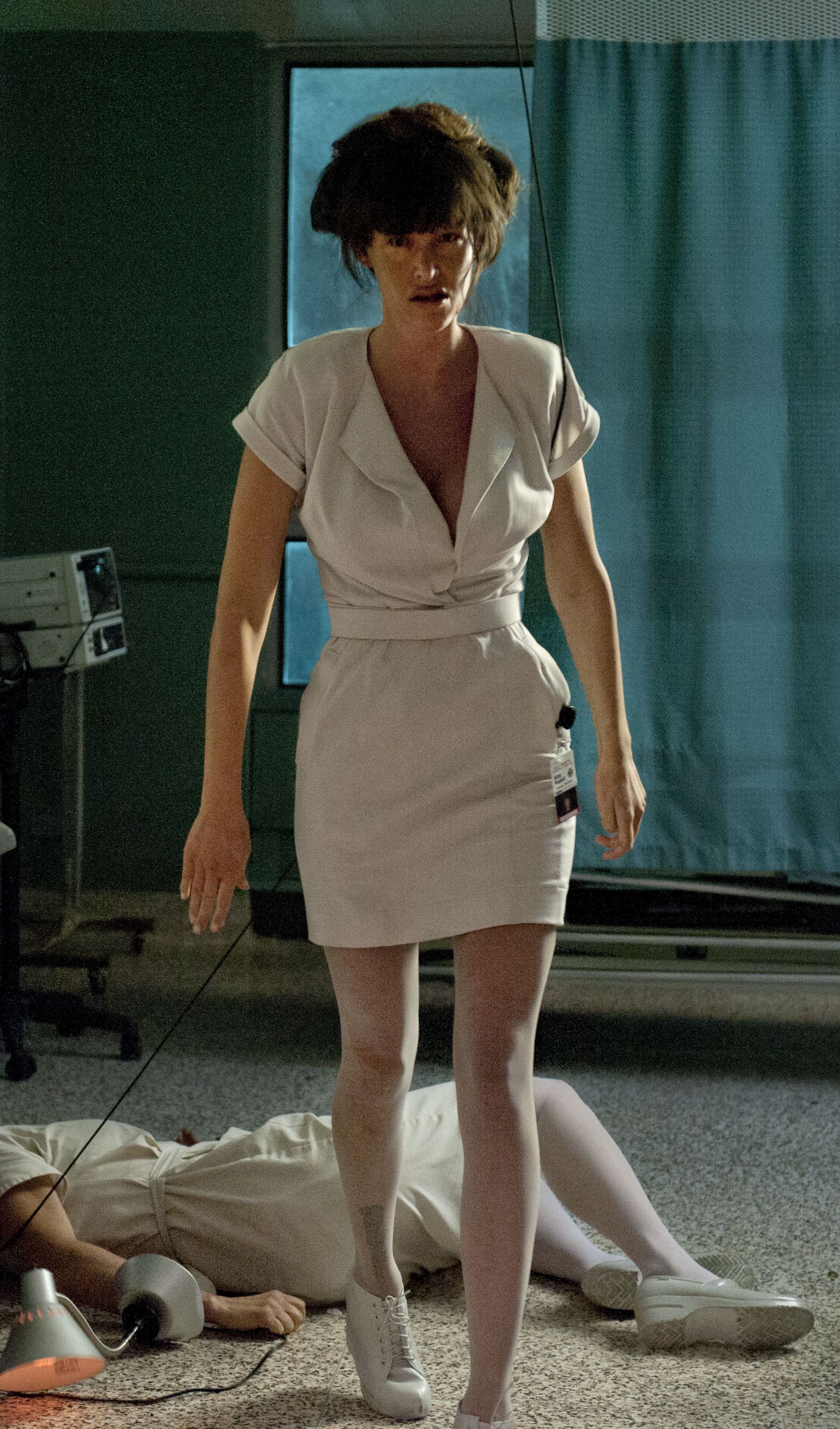







 Surely one of the great B-movie exploitation titles of all-time, this inevitably can’t live up to the expectations that generates, though in the early going, it makes a half-decent effort. Certainly, it’s more entertaining than Guzman’s previous Run! Bitch Run!, though it does suffer from some of the same mean-spirited unpleasantness. The heroine is Sister Sarah (Ortega), who has been a long-term victim of the Catholic Church, which is portrayed here as the embodiment of just about every evil imaginable, being neck-deep in drugs, prositution and other equally-dubious activities, with their partners, the Los Muertos biker gang. Finally, Sarah has a vision from God, telling her it’s time to clean house: she starts at the bottom, and works her way up to Chavo (Castro) and Father Carlittos (D’Marco). Along the way, yes, there is no shortage of nude nuns – or other women – though, to be honest, the guns aren’t actually all
  The concept of “hunting humans” has been popular cinematic fodder for over 80 years, since The Most Dangerous Game came out in 1932. This isn’t the first specifically to target women – the Roger Corman produced The Woman Hunt did so in the seventies – but the prey in that needed male help to accomplish much, which isn’t the case here. The heroine is Diana Kelper (DeLuca), whose new dance job turns out not to be quite as expected – she’s more or less coerced into working as a stripper, unable to leave until she pays off the debts to the man who brought her in. The only way to do that is to turn tricks on the side, but her first client is Colin Mandel (Garfield), who is interested in a longer-term relationship. Specifically, one where he can take his female victims into the remote wilderness, where they wake up, unclothed and eventually on the wrong end of a crossbow bolt or bullet. However, with Kelper, he may have bitten off more than he can chew.
 The comparisons of Takigawa to Lazenby above proved appropriate in another way, both being canned after one entry playing the iconic title character, which is probably just as symptomatic of something. The replacement here as Nami Matsushima is Natsuki, who seems to go back toward a more taciturn heroine, closer to the original. But it’s, effectively, another reboot, with not even a nod to the previous entry. In this case, the heroine is a nurse, framed for her involvement in the hospital murder of a politician who was threatening to expose corrupt practices.
 Just goes to show that the “cinematic reboot” is not a 21st-century invention, e.g. Batman or James Bond. For a mere three years after Meiko Kaji showed her sting as Nami, the studio reset the series, giving it a new director, new (and much more talkative) lead actress, and returning Nami Matsushima to a happy, criminal record-free young women, with a loving boyfriend. Except, of course, he turns out not to love her quite as much. Things start to collapse after her sister uncovers evidence of major government corruption, and passes it to Nami, shortly before being kidnapped. After Nami uncovers the truth – her sister is killed and she is framed for the murder, with the help of her boyfriend, and sentenced to 15 years in prison. Initially an easy mark for the tough girls in her cell, Nami soon develops her mean streak. And she’s going to need it, because the politician behind it all is looking to tidy up the loose end she represents, by killing her and making the death look like a suicide. Name turns the tables, in incendiary fashion, and it’s clear that she’s one loose end that won’t be quietly disposed of.