
 ★★★½
★★★½
“The end of an era”
We live in a strange world in which Wonder Woman ’84 gets delayed again while The New Mutants is suddenly getting its release. Over the years, the story surrounding this movie has become more interesting than the one it tells. Originally, the film was scheduled for 2018 but didn’t find much luck. Director Josh Boone (The Fate in Our Stars) had the interesting idea of doing a Breakfast Club-type movie set in the Horror genre. After initial enthusiasm from the studio, execs pulled back, wanting to make the film more accessible, less horrific. Than the studio head at 20th Century Fox left, which led to changes at the script.
Originally, the film was supposed to play in the 80s (after X-Men: Apocalypse) and would have included Professor X and Storm. The script at hand seemed to depict the caretakers of the New Mutants in a very negative way. This is apparent when you see the character of Dr. Reyes (Alice Braga), the replacement for Storm. As the original X-men characters were always the heroes of the franchise, their appearances were skipped. But the success of the first part of Stephen King adaptation It (2017), led to a rethink, that the film should not abandon its scarier elements. The next thing to happen was the acquisition of 20th Century Fox studio by Disney (is there anything the House of Mouse doesn’t already own?) which meant that Dark Phoenix as well as The New Mutants were now Disney’s to deal with.
And obviously Disney didn’t care too much for Fox’s leftovers. Dark Phoenix went into cinemas last year with little fanfare, remaking a storyline that had already been told (and according to many, much better) in X-Men: The Last Stand (2006). The remake was a box-office failure – and this time the often overly negative criticism of fans, which I usually explain as Marvel fans who can’t stand that there is any competition for their beloved Disney films, might have been justified. I don’t know, because even I didn’t bother to watch the movie – and the X-Men movies were my entry into the Marvel universe. Why pay again to watch a story I saw 13 years ago, and own on DVD?
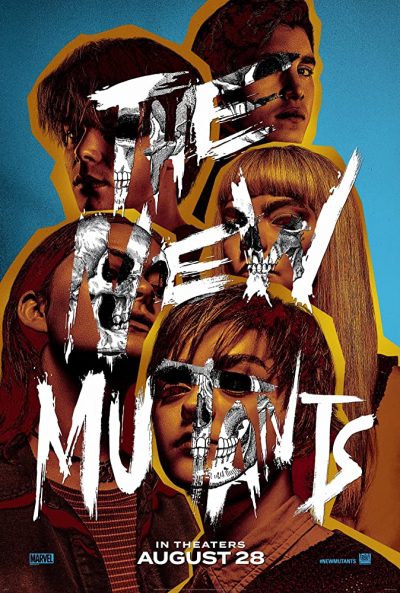 It seems to me that cinemagoers are tired of always seeing movies following the same old formula they have been watching, repeated again and again. That you can be successful by being different is proven by movies like Deadpool or Venom. The New Mutants tries to do something similar, but unfortunately, the caravan has moved on. After It and Netflix’s Stranger Things, the concept of the movie is nowhere near as original as it might have been a few years ago.
Based on Chris Claremont’s comic series from the 80s – at that time Marvel’s successful attempt to create a successful competing series to DC’s Teen Titans – New Mutants is about five misfits with the usual unusual abilities you know from the X-Men universe. Dani Moonstar (Blu Hunt) survives a catastrophe that killed her entire tribe, and wakes up in a hospital (which actually looks more like a nunnery!).
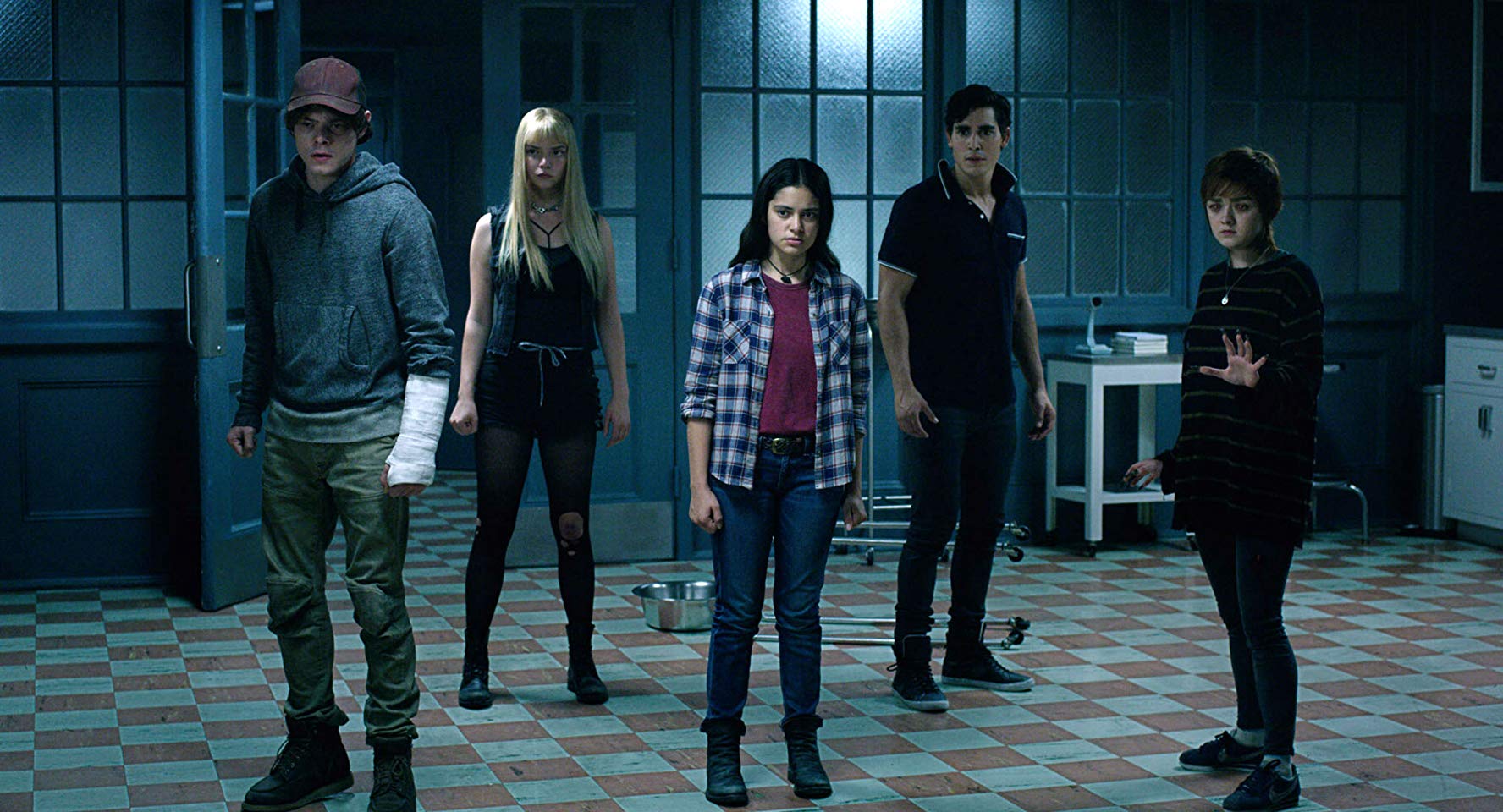
There, Dr. Reyes is trying therapy on four other mutants: Rahne Sinclair (Maisie Williams) who can turn into a were-wolf; Illyana Rasputin (Anya Taylor-Joy), Colossus’s little sister, who is able to jump in and out of the alternate dimension Limbo and can manifest a soulsword; Sam Guthrie (Charlie Heaton), who can move extremely quickly in the air and creating so extreme energy while being invulnerable in this situation; and Roberto da Costa (Henry Zaga), who can create when being excited solar energy, so he becomes actually burning hot. In the comics these characters are also known with their usual other names which are Wolfsbane, Magik, Cannonball and Sunspot but the movie never mentions these names.
Dr. Reyes intentions are to teach these young disturbed teens how to deal with their abilities and not hurt other people. It’s suggested by Reyes, they might then go to a school for gifted youngsters (hint, hint). Unfortunately, not all is as it seems and very soon the teenagers have to face their own anxieties and traumas. The evil power that killed off Dani’s people arrives at the facility and they are forced to work together to save Dani as well as defend their own lives and freedom.
Basically, this movie tries to go for a smaller scale, after a succession of X-Men movies that seemed to increase constantly in size. It’s a nice idea, and one I respect. This was even seen as the potential start of a new trilogy – although, which film nowadays isn’t? And I have to give the filmmakers this: at least they tried to do something different. That’s worth a lot in my book, considering we live in a time when Disney’s Marvel movies seem to be written and directed almost on autopilot (exception: The Avengers). Once a film series gets too big, the next logical step is to scale down. It can be a successful move: look at the James Bond movies, which seem to do so at regular intervals. However, it needs an audience that still cares. Unfortunately, I think that boat has sailed long ago for the X-Men. For most people, Logan (2017), Hugh Jackman’s final appearance in the role of Wolverine, was the last hurrah and end of the series.
There are a lot of good elements here. A darker, more sombre and psychological variation on the X-Men theme, it feels like Chris Carter’s TV series Millennium compared to his warmer, more sympathetic X-Files. This comparison is particularly appropriate, since The New Mutants was filmed in Vancouver, Canada, where the first few seasons of The X-Files were produced and here, too, the composer is Mark Snow.
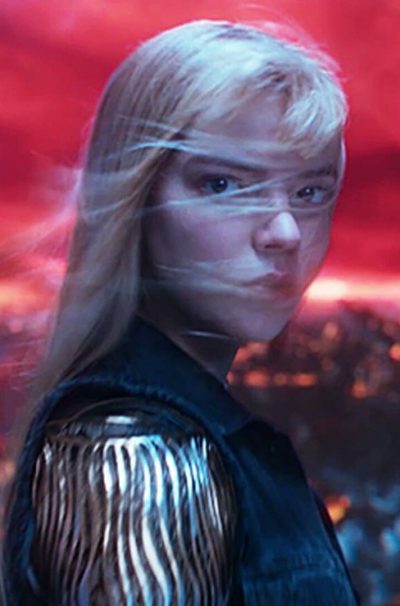 The first half of the (fortunately not-too-long) movie – I really, really hate the lengthy running time of blockbuster movies today – focuses on the five misfits, their pasts and their relationship building. The second is when the action and the CGI comes into play, though is more restrained than you may be used to in these movies. The New Mutants really feels like the intimate stage-play of X-Men films. The main inspirations, apart from those already mentioned, seem to be the psychological drama Girl, Interrupted (1999) with Winona Ryder and Angelina Jolie, as well as Buffy the Vampire Slayer – the latter is watched by the mutants a couple of times, and seems to correspond with things we see later. But, while I said that the new movie is more psychological, don’t think it’s deep, beyond “Well, I’ve got these superpowers, didn’t know how to control them, killed some people and now I’m kind of a wreck.”
But still… I kind of liked that this went a different route than the usual overblown extravaganzas. Anya Taylor-Joy as Illyana Rasputin, a.k.a. “Magik”, leaves a particular impression. Though I have to wonder why those in power found it necessary to change the backstories: Rahne (Williams) and Dani seem to be moving towards a lesbian relationship while the film subtly indicates that Illyana might have created the “limbus” (her magical world) due to sexual abuse as a child. Neither of this has any basis in the comics, it’s just Josh Boone overwriting existing lore, perhaps to make the characters more “realistic”. I don’t know why people do that. Is being kidnapped by a devil-like demon and being transported in some kind of hellish dimension not terrifying enough anymore? On the other side, the story of “Magik” has hardly been touched, so the possibility of a solo film that could dive deeper into the lore of the character still exists. Though I guess, we’ll never see this at all.
I stayed until the end titles were over. For, while the movie was not the best of the series (though far from the worst), I felt a little sad realizing this was finally, officially and really the end of 20th Century Fox’s X-Men films. The first X-Men, in 2000, ushered in a new era of comic book movies and introduced me to Marvel superheroes. And while we have seen all sorts of similar films since, I always had a liking for this franchise. They tried out new things, and wanted to be different from that what Disney/Marvel did. Sometimes they succeeded, sometimes they failed – sometimes they succeeded and the result was still not that great. It’s always easy to do the safe, secure thing and laugh all the way to the bank. It’s less easy to constantly try to reinvent oneself.
Regardless of what their respective qualities or flaws were, I guess I’ll miss them.
Dir: Josh Boone
Star: Maisie Williams, Anya Taylor-Joy, Charlie Heaton, Alice Braga
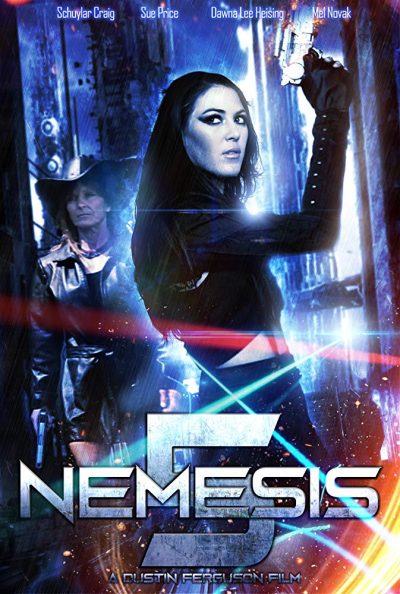 It has been twenty years since
 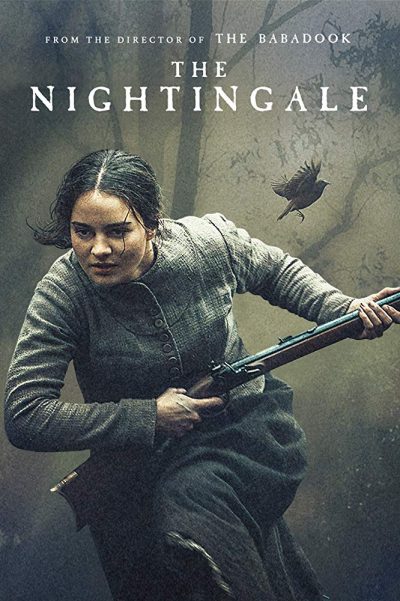 History is largely filled with people being unpleasant to each other, usually for belonging to a different race, religion, nationality or even species [if you want to go back to the Cro-Magnons pushing out the Neanderthals about 40,000 years ago]. It’s sad and unfortunate, but it’s not something for which I feel personal responsibility – not least because it tends to work in both directions. My ancestors may have been part of the British Empire who, for example, invented the concentration camp in the Boer War. But my ancestors were also subject to the ethnic cleansing of the Highland Clearances, forced out to make way for sheep. Attempts to make me feel guilty for the sins of my forefathers are thus largely doomed to fail.
 Ninjas were famed for their mystical powers, but Tsubame (Asami), the heroine here, has… well, let’s just say, a rather different talent. And I quote her brother, Hayabusa: “The ability to store a man’s seed inside your womb for seven days after intercourse.” This raises a number of questions, not least: how did this get discovered, considering Tsubame is a virgin at this point? Anyway, this skill is needed because of… Ah, to heck with it. Hayabusa explains it as well as I could:
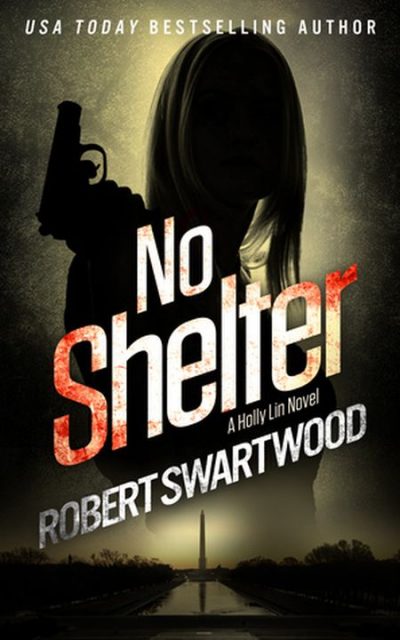 “Meet Holly Lin. Nanny by day, assassin by night.” That was the tagline here, and you’ll understand why it jumped off the Amazon page and onto my Kindle. I was expecting something like Mary Poppins crossed with Atomic Blonde [“A spoonful of C-4 helps the terrorists go down…”], which is a great concept. However, I guess I’m going to have to write that book myself, because this isn’t it. I suppose, technically it is, though may be closer to like “vaguely nannies some times, assassin at others”. It certainly helps in terms of workplace schedule flexibility, that she nannies for her government boss. So it’s apparently fine when she has to abandon her charges and jet off from Washington to Las Vegas to assassinate someone selling a flash drive, on which is… Well, we’ll get back to that.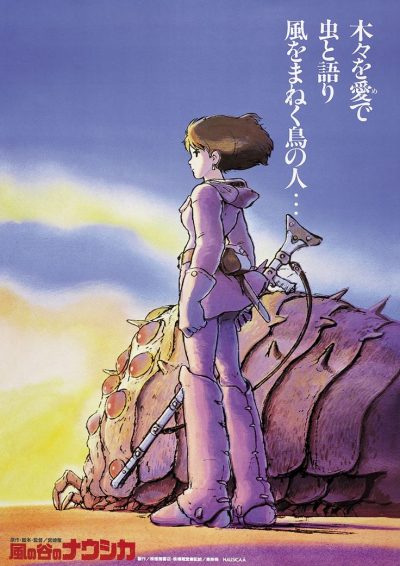
 After the enormous critical, if not commercial, success of Lupin III: Castle of Cagliostro, Miyazaki was commissioned to create a manga series for Animage magazine, with a potential film adaptation attached. Publication began in early 1982, but it would take a dozen years, albeit of intermittent publication, before that story was complete. When the series’s popularity among Animage readers was established, work began on the film adaptation, covering the early portion of the manga. Since this was before Miyazaki’s own Studio Ghibli was founded, an external company, Topcraft, were commissioned to create the animation. The budget was only $1 million, with a mere nine-month production schedule leading up to its release in March 1984.
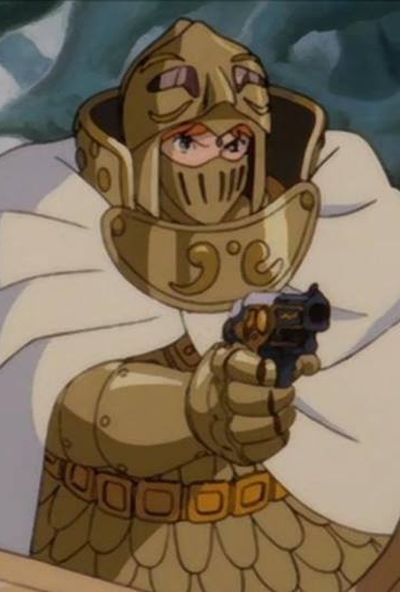 Miyazaki’s father ran an airplane parts company in World War II, and even his film company, Studio Ghibli, was named after an Italian plane. Almost every one of his movies
 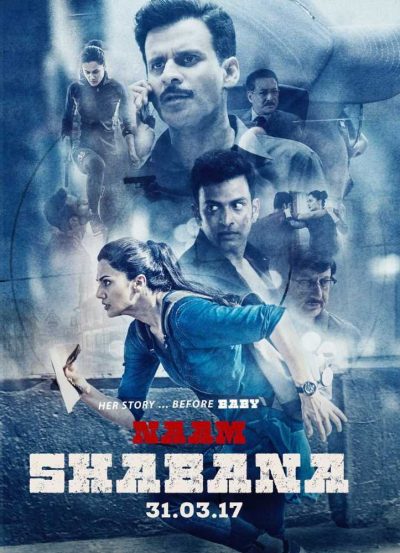 If you took four different films, by four different directors, and edited them together into a single entity, you might end up something similar to this. Oh, make no mistake: I still enjoyed most of this. It just doesn’t feel like a coherent whole, perhaps because it is a spin-off involving some of the same characters from an earlier film, Baby. For at least three-quarters of it, however, not having seen its predecessor shouldn’t be too much of a problem.
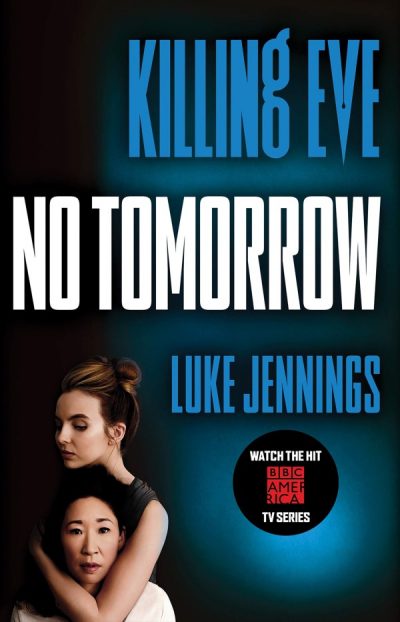 As we
As we 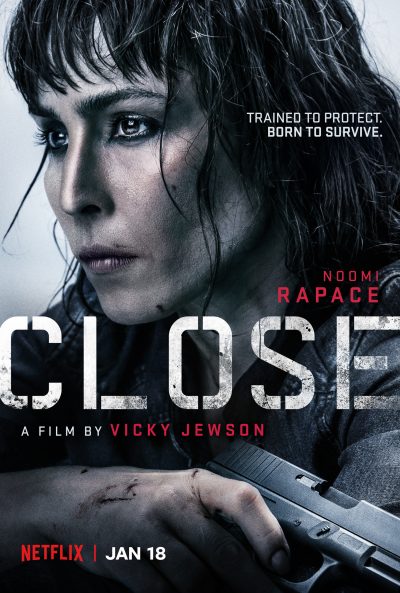 Rapace appears to be aiming for a niche in the straight-to-video (or, at least, straight to Netflix) action market, this coming on the heels of