
★★★★
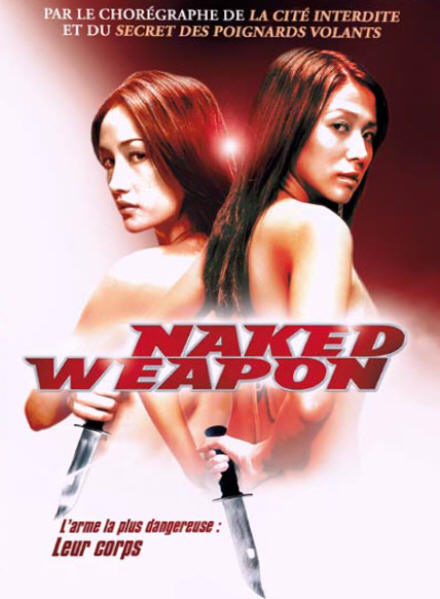
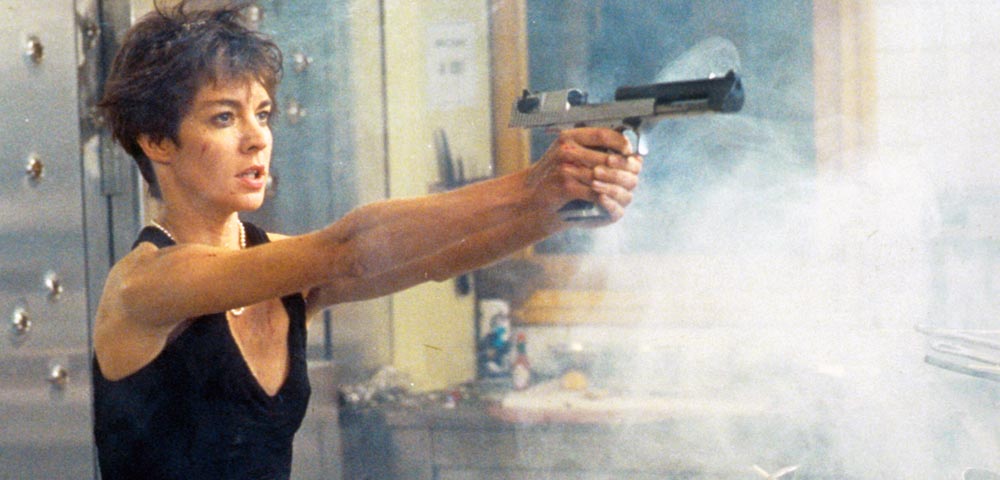
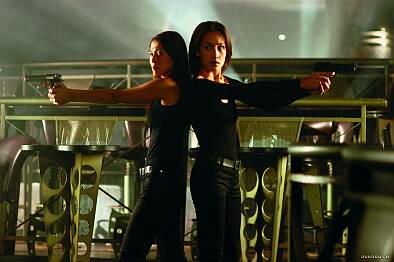
 After a decade of “sequels” that weren’t worth the video-tape they were apparently filmed on, Wong Jing finally went back to the well in 2002 for what is, in truth, a surprisingly-tame movie. Given the names of the lead actresses (“Maggie Q”, “Anya”) sounded more like porn starlets than anything, I was expecting loadsa sleazy fun, but they’re model names, and this is probably closer to Heroic Trio – also directed by Ching – than the original.
In fact, the nipple-count here barely reaches two, mostly right at the start when Madam M’s (Wong) assassinettes go on the job, only to be killed by a rocket-propelled grenade. Her boss clearly takes the long-term view, kidnapping forty thirteen-year olds girls, and whisking them off to a remote island for a six-year version of Survivor. At the end, they are down to three in number: Charlene (Q), Katt (Anya) and Jill (Jewel Lee, who is a genuine Wu Shu expert, and also doubled for the other stars when necessary). However, dogged CIA agent Jack (Wu) is still on the trail of Madam M, falls in love with Charlene during an encounter in the back of an ice-cream truck – which must have been fun, given Wu was Q’s ex-boyfriend – and vows to save her from a life of meaningless murder.
The action sequences are great: director Ching is noted for his wire-work in films like A Chinese Ghost Story and Hero – it’s used to great effect here, just don’t expect “realistic” fighting skills. The editing is weird in that it’s not coherent, but still works – it’s almost like highlights, in that consecutive shots clearly don’t connect, but still are effective, and give a good sense of how the fight is progressing. The editors on shows like Alias could learn a lot from this. Speaking of which, the film has much the same feel as a feature-length version of the series, back when it was still good fun, and before the whining and angst took over. Exotic locations, high-fashion, plenty of ass-kicking – on that level, this film certainly delivers. It’s also a nice bonus to see Cheng Pei-Pei (Jade Fox from Crouching Tiger) as Charlene’s mother, though I kept expecting her to bust out a few moves on the bad guys.
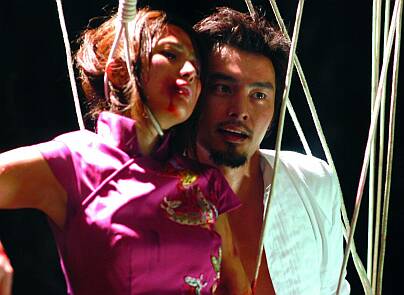
 Instead, there’s a laughable scene after an assassination attempt on her by Jill, at the behest of Madam M, who realises she could lose Charlene back to her mother. Jack ends up carrying the wounded parent to the hospital, but keeps stopping to converse with Charlene, which had us screaming, “The hospital! It’s over there! She’s bleeding profusely!” at the TV set. And in general, I’m unconvinced by the story, which suddenly shifts angles in the third act. Up until then, it’s been angling towards a confrontation between the girls and Madam M; that’s suddenly discarded, in favour of a villain we’d not seen before.
Despite possessing more holes than a golf resort, Wong Jing’s script is pretty restrained; even the lesbian aspects are more implied than shown, and mercifully, the dumb comedy beloved by Wong is almost entirely absent. However, there is a rather nasty rape scene to end the training; while I can see the point, it does go on past what’s necessary and doesn’t fit with the generally slick tone. For even when the film is gunning down pre-pubescent girls for attempting to leave Madam M’s fantasy island, it does so in a…well, “tasteful manner” isn’t perhaps the phrase, but you know what I mean.
For in general, this is fast-paced, mindless entertainment, not to be taken the least bit seriously. At least, that’s my view: reading others, it’s clear opinions differ sharply on this one: “In a year of relatively disappointing Asian films, it’s one of the worst around,” says filmsasia.net, but hkfilm.net calls it, “The best movie of 2002.” Weirder still, one person described this as “boredom-inducing”, which had me checking to see whether they were discussing the same film. If you’re bored here, you probably need to lay off the caffeinated beverages for a few days: those of us with normal metabolisms should be more than entertained by this fluff.
 Is it better than Naked Killer? A difficult call, and one that likely depends on your state of mind – as well as whether the word “good” could ever be applied to Killer, a lurid blast that really could come from Hong Kong, and probably only from before the Chinese takeaway of the colony. Weapon is certainly better-crafted and has more crossover appeal: our son was going to pick it up in Blockbuster, till we informed him it was already part of our unwatched pile. On the whole, I think Weapon is the one more likely to be watched again in future – if only because Killer would require the room to be carefully swept for lurking minors and maiden aunts first.
[The sidenote of importance here for the DVD is: watch your language. As usual with Hong Kong movies, we opted to see it in Chinese with English subtitles. It wasn’t until the making-of documentary that we realised it had been shot mostly in English (Wu + Q do, others, such as Cheng, don’t), and we’d actually been watching a dubbed version. Oops. ;-) However, upon further viewing (hey, it’s a dirty job, but someone’s gotta do it!), it doesn’t really make that much difference. The main benefit of the English track is, at least on the DVD we were watching, it’s available in DTS, which definitely enhances things.]
Dir: Ching Siu-Tung
Stars: Maggie Q, Anya, David Wu, Almen Wong
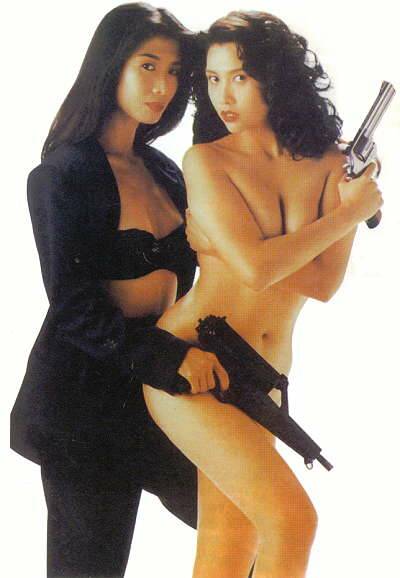
 Ng, in particular, nails her part with a relish that’s just fabulous, but Kelly Yao also does surprisingly well – her role is perhaps the most pivotal in the plot, and she’s required to do more than look pretty, which she does with a maturity and confident poise that borders on the balletic. Yau is about the closest to a sympathetic character the film has, being largely the victim of unfortunate circumstances, while Yam has pretty much made a career out of playing the troubled cop, and could do this kind of job with his eyes shut. Indeed, given the vomiting required, he largely does.
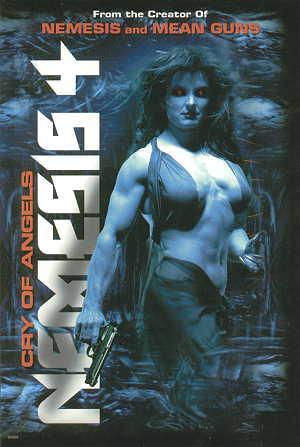 Though the lead actress, body-builder Sue Price, looks nothing like the cover pic (right), credit is due for choosing someone who defies conventional standards of female beauty. However, take all the points away, and then some, for pretending she does; having her spend half the film naked is something both Chris and I could very easily have lived without. She is, frankly, scary. That’s a shame, as while the budget here was obviously tiny, it’s put (mostly) to good use, with an interesting script.