
The Sleeping Partner, by Madeleine E.Robins

Literary rating: ★★★★
Kick-butt quotient: ☆
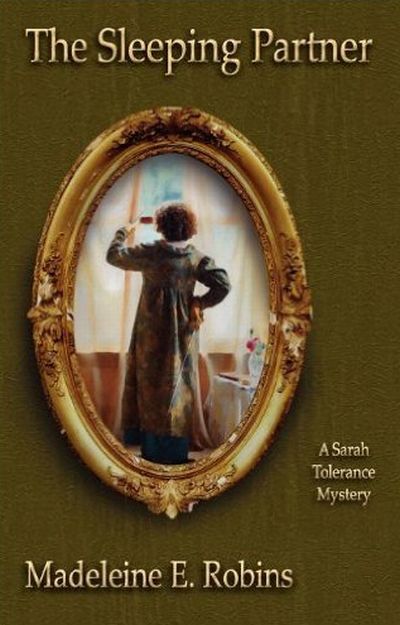
sleepAt the age of 16, the intelligent and spirited daughter of a country baronet, Sarah Brereton –the girl who would become the Sarah Tolerance that series fans know and admire– fell deeply in love with her brother’s fencing instructor, and he with her. (For modern readers, it’s important to recognize that in that day, teens were expected to mature and become responsible early; 16-year-old girls might well be married. So this wasn’t some sort of sick, pedophilic situation; Sarah was a young woman with the passion and impetuousness of youth, but in her society she was a woman, not a child, and Charles Connell was a normal, decent male.) Because of the class difference and paternal opposition, though, this relationship didn’t lead to a happy engagement and marriage, but to a hasty flight to the Continent, with Sarah disgraced, disowned by her family, and consigned to permanent Fallen Woman status. (Fallen men in her culture didn’t suffer any similar opprobrium.)

Like many people in that pre-antibiotic era, Connell died young, leaving her in effect a widow without ever having technically been a wife. Now, some 12 years later (we’re up to April, 1811 in this volume), she’s living in London under an assumed name, to spare her family from embarrassment. To support herself without resorting to the usual expedient of prostitution (friendless and helpless women in that environment being, pretty much invariably, sexually exploited women), she’s created the profession of “agent of inquiry” –a private investigator, in our parlance– for herself, putting her unique abilities to use. She’s smart, inquisitive, brave, able to move in a range of social circles and to pass for a man when she needs to, well trained by Connell in the use of a sword, and not afraid to pack and use a pistol. (In this volume, the level of violence in her physical altercations is again dialed down to the one-star level; but her weapons do come out, and she can definitely defend herself with aplomb.)

Her latest client is a young married woman, who desperately wants Sarah to find and rescue the lady’s 16-year-old younger sister (daughter of a peer), who’s disappeared, leaving behind a note indicating that she’s eloped with an unnamed lover. Obviously, this case stirs some very deep-seated feelings for Sarah. It will get more personal and wrenching, rather than less, as she investigates. And series fans won’t be surprised that there’s more to the mystery than at first meets the eye.

Many of my general comments on the preceding two books of the series apply to this one as well. Robins’ prose style and characterizations are as fine as ever; not just Sarah, but all of the characters (good and bad) are thoroughly real people whom we like, pity or detest. (Some are old friends from the earlier books, some are newly met.) The period flavor is as rich and rewarding as ever. (As usual, a concluding “Note on History, Faux and Real” explains the historical background, and where the author’s slightly alternate world diverges from ours in a few details.) Considering the kind of case our heroine is investigating, and the fact that she lives in a cottage behind her (also Fallen –“the black ewe of her generation”) aunt’s high-class brothel and has a prostitute for a close friend, sexual content here is relatively minimal. We also get a glimpse here of Sarah in church, which helps to deepen her character. Like many people of that day –including Jane Austen herself, a writer whose influence Robins readily admits– she doesn’t wear her faith on her sleeve, but it’s there, to a lot greater extent than some of the more ostentatiously pious might give her credit for. (Then and now, many of the latter tend to forget that a Christian society has to be, first and foremost, a community of forgiveness.) And the volume isn’t simply treading water in terms of the development of the series; there’s significant growth and change in relationships here.

Why, then, only four stars, when the two previous books got five? For only one reason. Here, in the resolution/explanation of the skullduggery at the heart of events, there’s one major logical contradiction (which is impossible to explain without a spoiler). Robins papers it over without any real explanation (and it’s possible she actually didn’t recognize it herself!), but because it’s central to the resolution of the book, I had to reluctantly deduct a star for it. But it’s still a great read!

A couple of notes are relevant on the way words were used differently in 1811 than today. First, a clergyman here is said to be “Unitarian.” Today’s “Unitarians” are somewhat similar to the “Deists” of Sarah’s day (except that most today would be even more skeptical, and less willing to accept a label of Christian, or even of theistic). “Unitarians” in Sarah’s world, however (like the slightly later March family in Little Women) were what are sometimes called “Biblical Unitarians,” holding orthodox views on the atonement and the authority of Scripture, and definitely not Deists –in other words, much more conservative than the term suggests today. Second, the word “whore” is used in these books simply as the normal word for what we would today call a prostitute. Obviously, it was an inherently insulting term to apply to a woman who was NOT in that trade, but for those who were, it didn’t have any particularly insulting connotation; the girls themselves used it as a normal self-designation. No speaker today would use it, even to a woman who is a sex worker, without a deliberate intention to hurt and demean; but in 1811, there generally is no such intention (and usually no such effect).

This is the latest Sarah Tolerance book to date –published in 2011, seven years after the previous one. It isn’t clear whether Robins intends to continue the series past this point. If not, there are features to this volume that could make it a satisfactory conclusion to what will then be a trilogy. But if the author does ever intend, in the future, to visit Sarah’s London again, I and I’m sure a goodly number of other fans will eagerly come along for the ride!

Author: Madeleine E. Robins
Publisher: Plus One Press, available through Amazon, both for Kindle and as a printed book.

A version of this review previously appeared on Goodreads.
Strange Empire

★★★★
“Strangely appealing.”

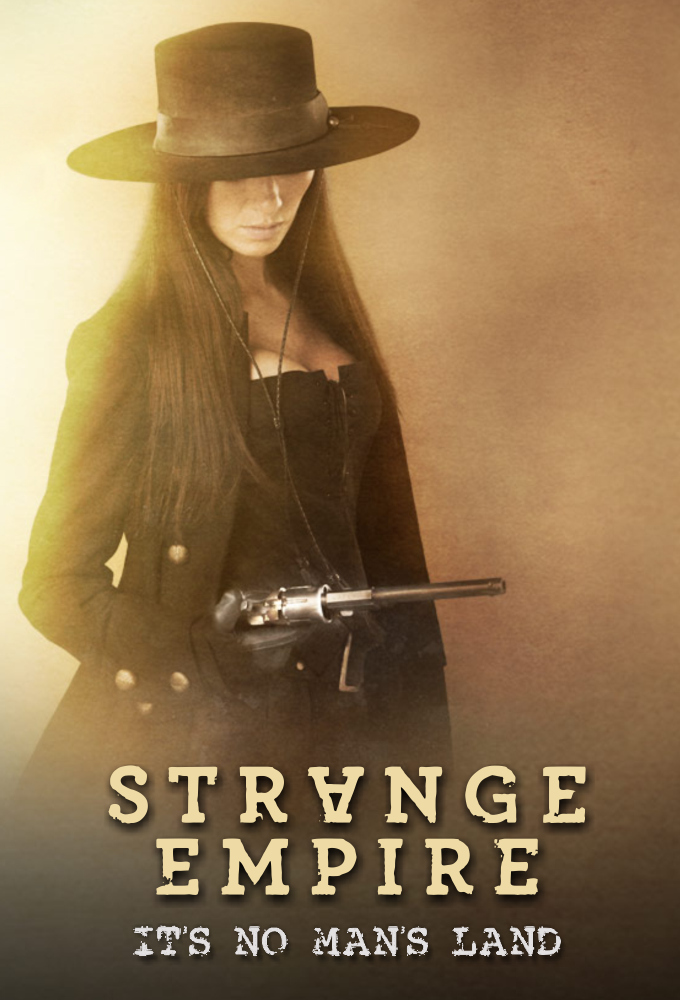
strangemepireThis Canadian TV series ran for 13 episodes, but was not renewed at the end of the first series, leaving the double shock which occurred at the end of the final episode, with no hope of resolution. That’s a shame, since there was a lot to like about its grubby portrayal of 1869 life, just north of the border between Canada and Montana. It begins when a wagon train of settlers, passing near the mining settlement of Janestown, is attacked and almost all the men are killed or driven away, leaving the women to fend for themselves. In particular, there is Kat Loving (Gee), a half-Indian sharpshooter who seeks the truth about her husband’s fate, and Rebecca Blithely (Farman), a female medical researcher, something almost unheard of at the time. But they are up against John Slotter (Poole), who runs Janestown as his own personal fiefdom, and whose wife Isabelle (Jones) is a match for the new arrivals in terms of her wits, and likely surpasses them when it comes to crafting of intrigues.
It’s the characters – the three women, and let’s not forget John, who eventually becomes the glue that binds them together in common cause – which drive this. Kat is certainly the most conventionally “heroic,” becoming the town’s sheriff, a position which brings her into direct conflict with Slotter; yet, she also has a murky past, being a wanted woman for the murder of a surveyor. Rebecca is the most difficult to get a handle on; while possessing a brilliant mind, she has a near-total lack of “people skills”, to the point of near-sociopathy. Finally, Isabelle possesses no scruples and is prepared to do absolutely whatever may be necessary to achieve her goals and escape her low-born upbringing – including seducing her husband’s father, when access to his money becomes necessary. They make a fascinating trio, well-drawn and well-portrayed by the actresses concerned.

The past year has seen a number of new takes on the Western genre, from Bone Tomahawk and The Hateful Eight to The RevenantEmpire does, perhaps, try somewhat too hard to be subversively revisionist, not least in the gratuitously transgender “cowboy”, who seems to have been added to the story for no reason than to appeal to trendy modern sensibilities. It’s much better when not attempting to pander to those, sticking with the Slotters’ efforts to keep their teetering mine business afloat, along with its probably more profitable brothel sideline, by any means necessary. This is balanced with Kat’s refusal to let John act like some kind of medieval baron, and insistence that he face the consequences of his murderous actions, which are becoming increasingly more frequent – if she can’t get justice for the massacre of the male settlers, perhaps there are other crimes that can be pinned on him.

While there are a number of side-threads (the strong role of Chinese businessman Ling is also very interesting), it’s this which drives the plot forward, and I was kept watching in the fervent hope of seeing Slotter get what he deserves. It’s to the show’s credit, with its unwillingness to collapse into a simple “black hat/white hat” mentality, that the outcome remained in doubt until almost the last few minutes of the final episode.

Created by: Laurie Finstad-Knizhnik
Star: Cara Gee, Melissa Farman, Tattiawna Jones, Aaron Poole

The Bletchley Circle

bletchley★★★★

“A kinder, gentler time? Hardly.”

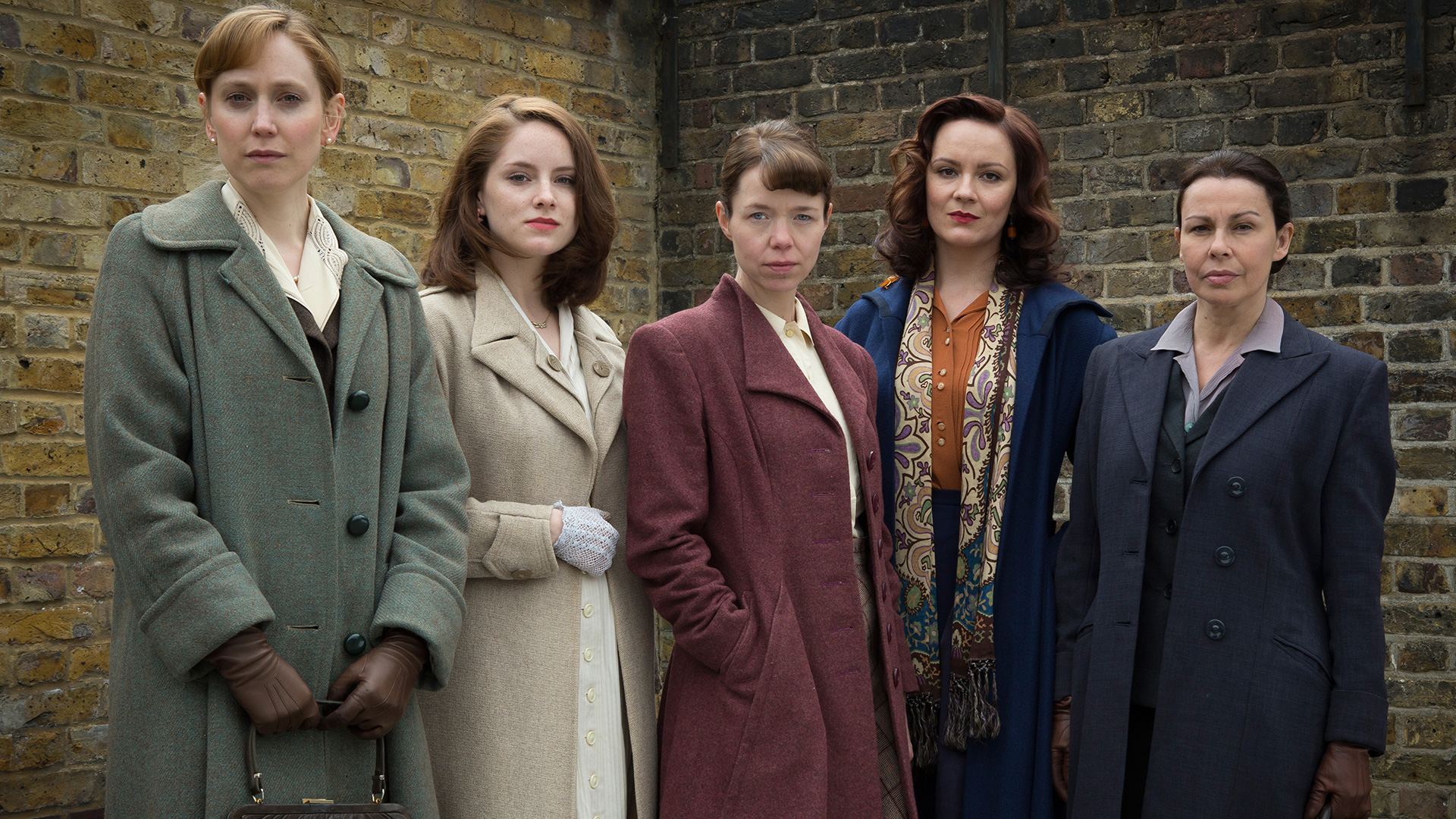
Set in the early 1950’s, this was a brief – seven episodes over two seasons – but very effective TV series, with heroines who used brains, rather than brawn, to solve crimes which the authorities are either unable or unwilling to address. The origins of the group were during World War II, when their analytical skills were put to vital use, cracking German communications, out of the then-secret Bletchley Park base. But after the war, the women returned to normal lives; Susan Gray (Martin) is now married, a mother of two, and uses her talents for nothing more taxing than crosswords. But she is intrigued by a series of serial murders, and detects an apparent pattern in them. When her attempts to through official channels are met with little more than a pat on the head and a suggestion to return to the kitchen, she contacts her colleagues from Bletchley, who begin gathering and analyzing information on their own. This makes use of the skills each has:  for instance, Jean (Graham) works as a librarian, while Lucy (Rundle) has a photographic memory, and asks as the group’s computer database.

There are basically three feature-length stories here. The first takes place over three 45-minute episodes, the others being covered in a pair. After the serial killer case, the group then move on to a case of murder involving another Bletchley Park girl, who is accused – with apparently damning evidence and no denial – of the murder of a scientist. The third story was, for me, the most interesting: one of the circle is involved in slightly-shady black market trades, which brings her into the circle of a vicious organized crime gang, perhaps surprisingly, also led by a woman, Maltese immigrant Marta Magro (Brana Bajic). It becomes apparent they are trading in a good deal more than French perfume and illicit booze – and also have friends in high places, who have no interest in having the highly profitable apple-cart upset by four inquisitive women.

This is a well-constructed look back at a time when women were expected to be seen and not heard, despite significant contributions to the war effort less than a decade previously. If occasionally a bit hand-wavey on the details, it’s also nice to see a series that values pure intelligence; while the physical aspects are limited, that works to the show’s advantage, since you know the heroines have to rely on their wits. There is a certain amount of over-correction in the other direction, with none of the male characters being particularly likable, and certainly nowhere near as smart as the female ones, and in a longer show that could become wearingly one-sided. However, the women are depicted as not without their flaws either. It’s not dissimilar in tone or era to another British show, Call the Midwife, though is much less sentimental and nostalgic; this was a time when food rationing was still in effect, and the nation was still struggling to rebuild itself.

It’s certainly a shame the show was so relatively short-lived, even by the brief standards of UK TV shows. There’s a quality of production here – not just in the period atmosphere, also in the performances – that is all too rare, and its an idea that had almost unlimited potential for future expansion. Refreshingly free of any need for romantic diversions or unresolved sexual tensions (I’m looking at you, Agent Carter), this may be relatively placid compared to some of the entries we cover here, yet is no less worthy for putting mind before muscle.

Creator: Guy Burt
Star: Anna Maxwell Martin. Rachael Stirling, Sophie Rundle, Julie Graham

Agent Carter: Season two

★★★
“A movie based on a comic book? Sounds like a dreadful idea.”

The obviously self-referential parody of Peggy Carter’s line above indicates one of the main issues with this show: an uncertainty over whether or not it should be taking itself seriously. It wasn’t even clear if the network was doing so: sure, they gave it an extended run, the sophomore series running 10 episodes, two more than its original one. But somehow, they then ended up having to run most of those in double helpings, to fit them all in between a start that was two weeks later, and Agents of SHIELD‘s return. Probably no wonder it struggled for an audience, the premiere scoring less than half the ratings obtained by season one, then dropping a further 25% from there. Between that and its star signing on for another ABC series, legal drama Conviction, it would not surprise me if this is Carter’s swansong, despite an ending which hints at more. [Though recent rumors suggest it may survive to fight another season]

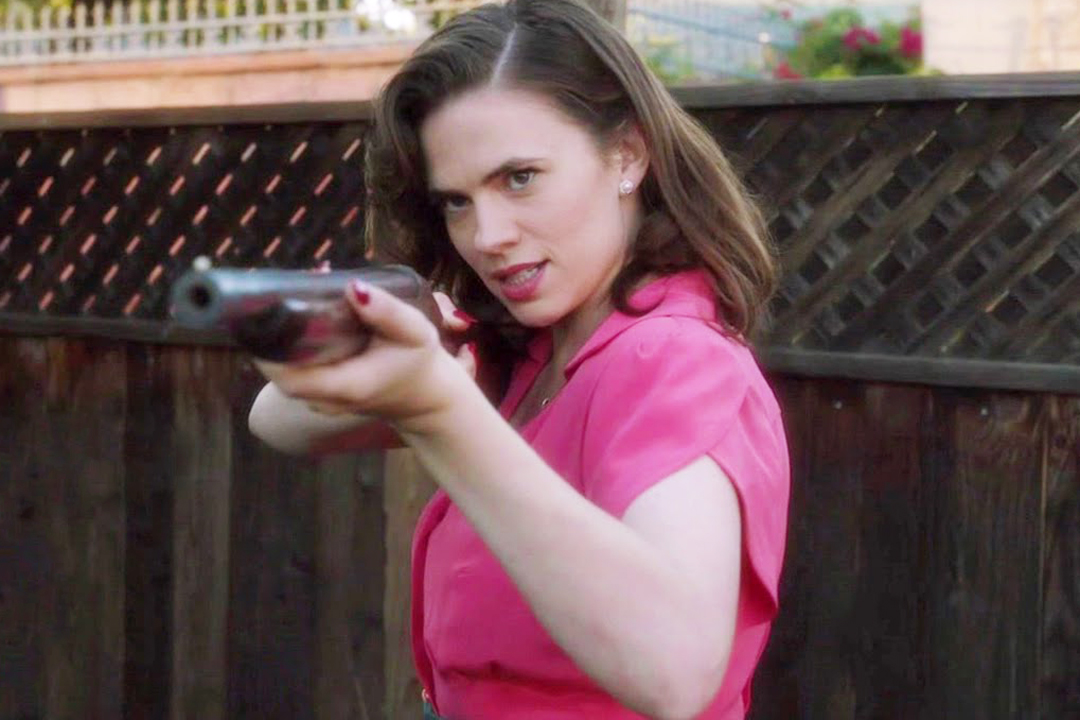
That’s a bit of a shame, as I felt the show was better this time round, not least because they dropped the tedious “Carter has to prove herself” subplot, which was flogged to death in the first season. Praise be, she is now regarded as competent enough to be trusted by those around her. It relocates Peggy Carter (Atwell) from New York to Los Angeles, where she helps Daniel Souza, the chief of the new SSR office there, investigate the mysterious case of a woman’s body found in a frozen lake. The trail leads to Isodyne Energy and their research into “zero matter”, an extra-dimensional energy potentially more powerful than an atom bomb. When the owner’s wife, actress Whitney Frost (Everett) is exposed to the matter, she develops abilities, but also a very bad attitude, and it’s up to Peggy and her SSR colleagues to stop her from cracking open our dimension.

agentcarter2

At its best, this is smart and a great deal of fun – it’s good to see Marvel providing not just a heroine, but a villainess, and, indeed, at one point Carter is forced to turn to her season one enemy, Dottie Underwood for help, completing a trifecta of female awesomeness. Much less interesting are the ongoing dismal efforts to shoehorn romance into the proceedings, even if last season’s focus of unresolved sexual tension, Howard Stark’s butler Edwin Jarvis (D’Arcy), suddenly turns out to have a wife. Instead, Carter’s affections are divided between Sousa and Isodyne scientist Dr. Jason Wilkes – though since the latter spends most of the season only tangentially connected to our dimension, this makes for more puppy-eye gazing than anything. All this is no less annoying than the first time round, and Marvel still seem unable to grasp that a heroine does not “need” a man, any more than their heroes “need” women. Nor did we really need a musical dream sequence, which I find the last refuge of the desperate show-runner, even if it did give us a quick cameo from Lyndsy Fonseca.

On the other hand, Atwell remains as good a figure as ever, and I did enjoy the dry stabs at wit, with the characters playing nicely off each other, in between romantic interludes. It also helped that there was a single, over-arching storyline, while its predecessor seemed to spend most of its time thrashing about, trying to find a direction. If the series is renewed, it’s those positive aspects I hope are emphasized in its third season: while there remains a lot of room for improvement, there is also significant potential, and it would be interesting to see how the show bridged the gap between its era and the rest of the Marvel Cinematic Universe.

Star: Hayley Atwell, James D’Arcy, Wynn Everett, Reggie Austin

Hard Bounty

★★★
“Nobody dressed like that in those days.”

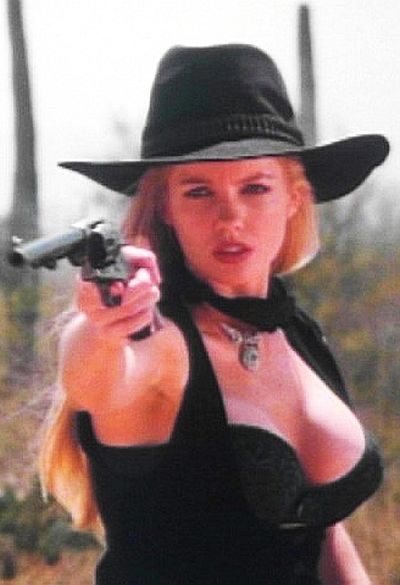
hardbountyI can’t believe an IMDb reviewer wrote the above, with an apparently straight face, because it’s severely missing the point of this nudie-cutie Western. The women are certainly packing, but the large-caliber weapons on display are not restricted to six-shooters, if you know what I mean, and I think you do…  That said, I reviewed this as a girls with guns flick a long time ago, back when this site was not even a gleam in my eye. But watching it again, I was beginning to wonder if I’d seen a different movie, as the first half is entirely action-heroine free.
It focuses more on bounty hunter Kanning (McCoy), whose life is disturbed when his former partner shows up, the murderous Carver (Terlesky, whom we’ll always remember fondly for his role in another Wynorski film, the brilliantly tongue-in-cheek Deathstalker II). The tension of unresolved issues runs high between them, in and out of the saloon/brother where Kanning’s girlfriend, Donna (LeBrock sporting a British accent for some ill-explained reason) is the head girl. There’s no shortage of nudity, certainly, but that’s the only action in which the ladies take part. Then, Carver – again, for ill-explained reasons – strangles one of the saloon ladies, and high-tails it off back to the land baron who employs him. Donna and her colleagues decide to head after him and take revenge for their fallen comrade, and Kanning, fearing the worst, tails along to help them out as they go in with guns a-blazing. Ah, so that’s why I reviewed this.

It certainly isn’t saying much, but this is far better than Gang of Roses II, and arguably more entertaining than the similarly-themed Bad Girls [which I probably should review here at some point, though that would mean having to watch it again]. The players are easy on the eye, though who knew breast implants were so prevalent in the Old West, and the dialogue could certainly have used an additional polish. For example, just before heading off on her mission, Donna is told by Kanning, “You can’t do this!”, to which she replies with the immortal (for all the wrong reasons) line: “There’s only two things I can’t do. One is make love to a woman, the other one is piss up a wall. And right now, there’s only one of those I regret not being able to do.” Er… what?

The action is about what you’d expect from a modest genre entry, with a moderate amount of blood-free gun-fighting. The ease with which the whores become stone-cold killers is quite surprising, given the complete lack of any fondness for guns shown previously. However, I was just happy to see it at all, having started to question my memories from two decades previously. You need to be able to handle that this almost feels like two different films joined in the middle, with the first being a lightly-amusing excuse for lingerie and less, and the second a revenge-driven thriller. Still, I can’t say I minded either too much, and as long as you manage your expectations, you probably won’t either.

Dir: Jim Wynorski
Star: Matt McCoy, Kelly LeBrock, John Terlesky, Rochelle Swanson

Pride + Prejudice + Zombies

★★★½
“Not the zombie apocalypse I expected.”

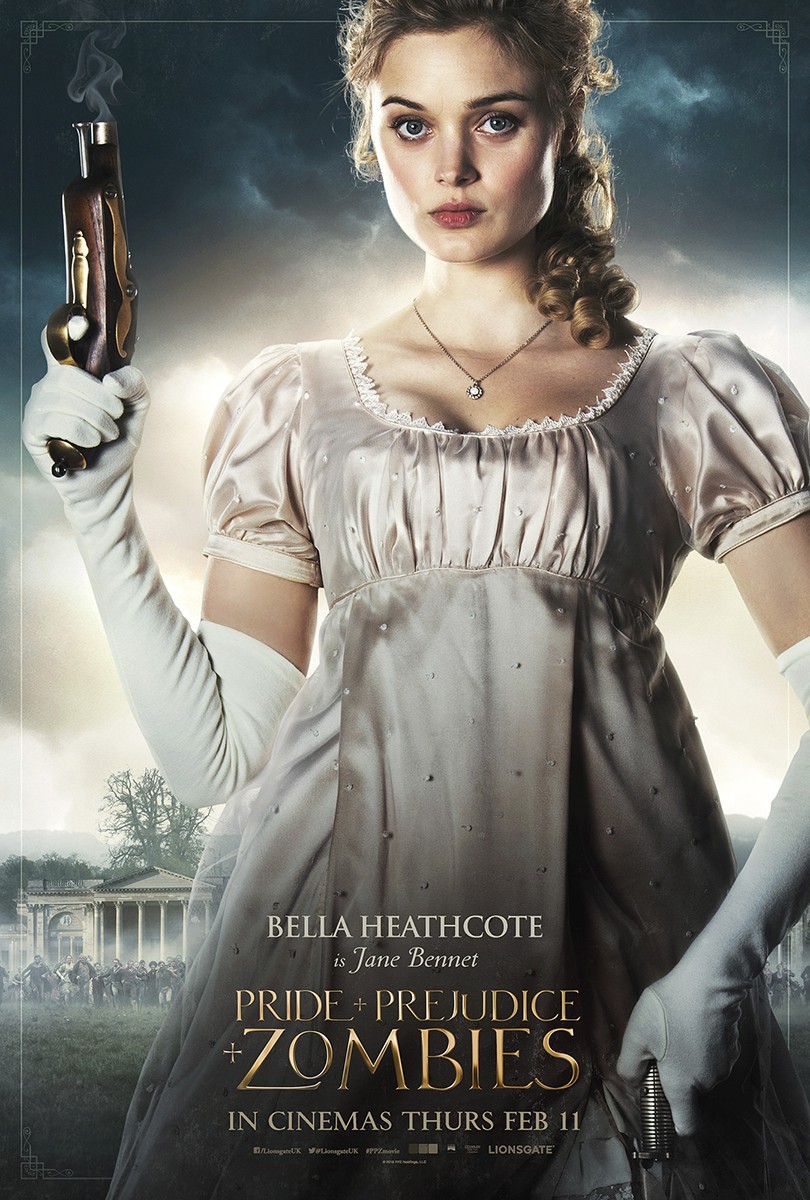
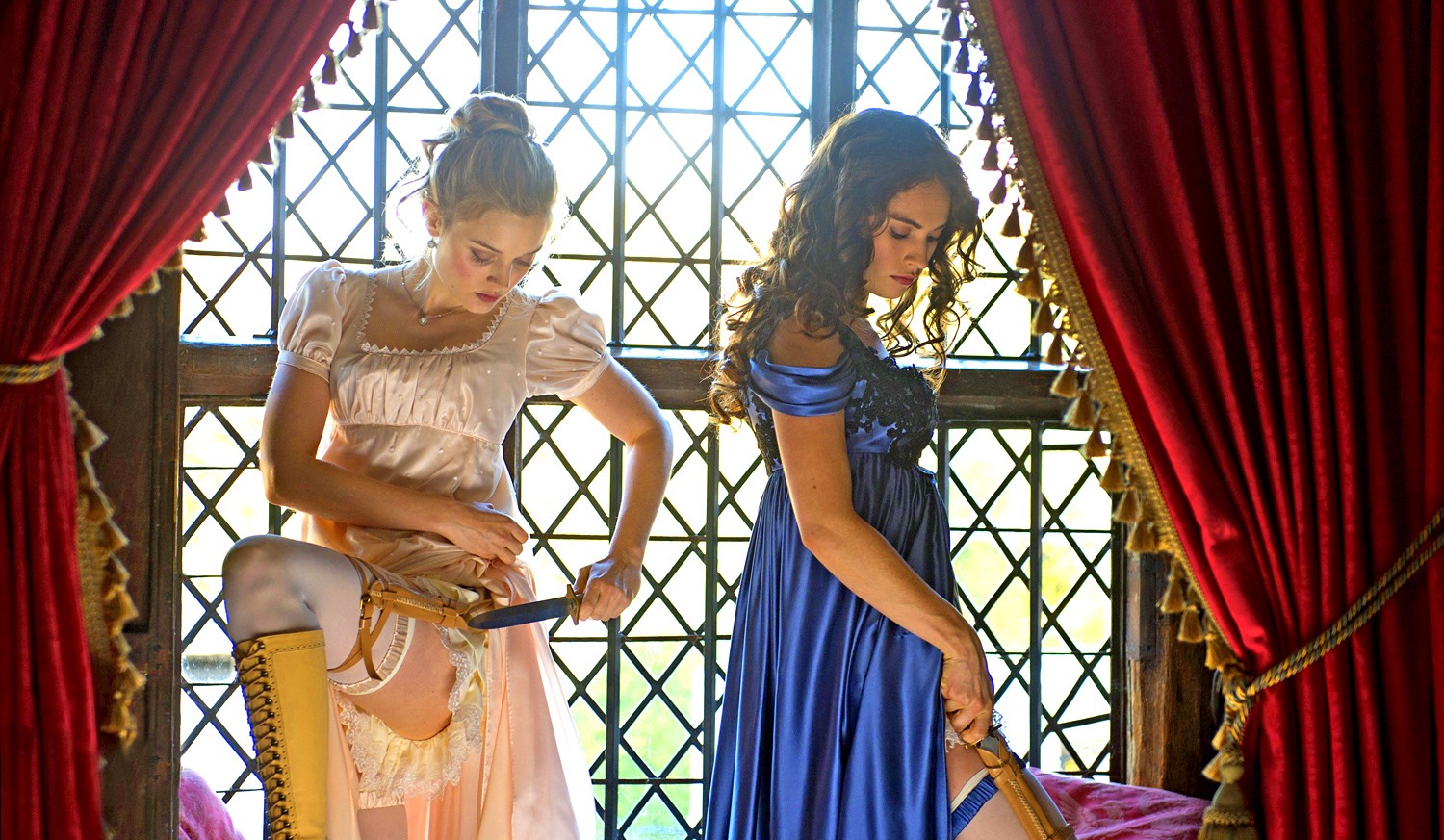
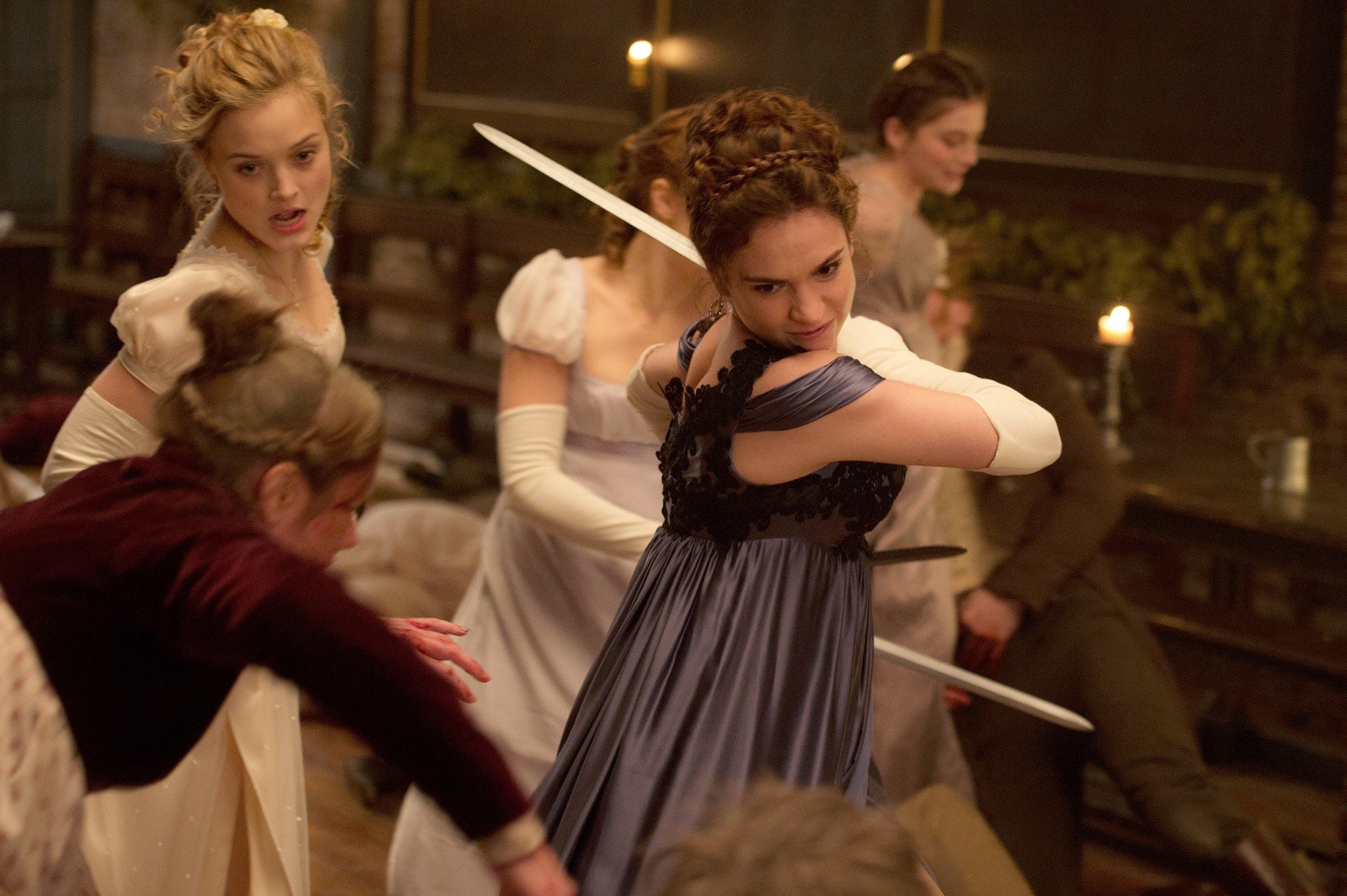
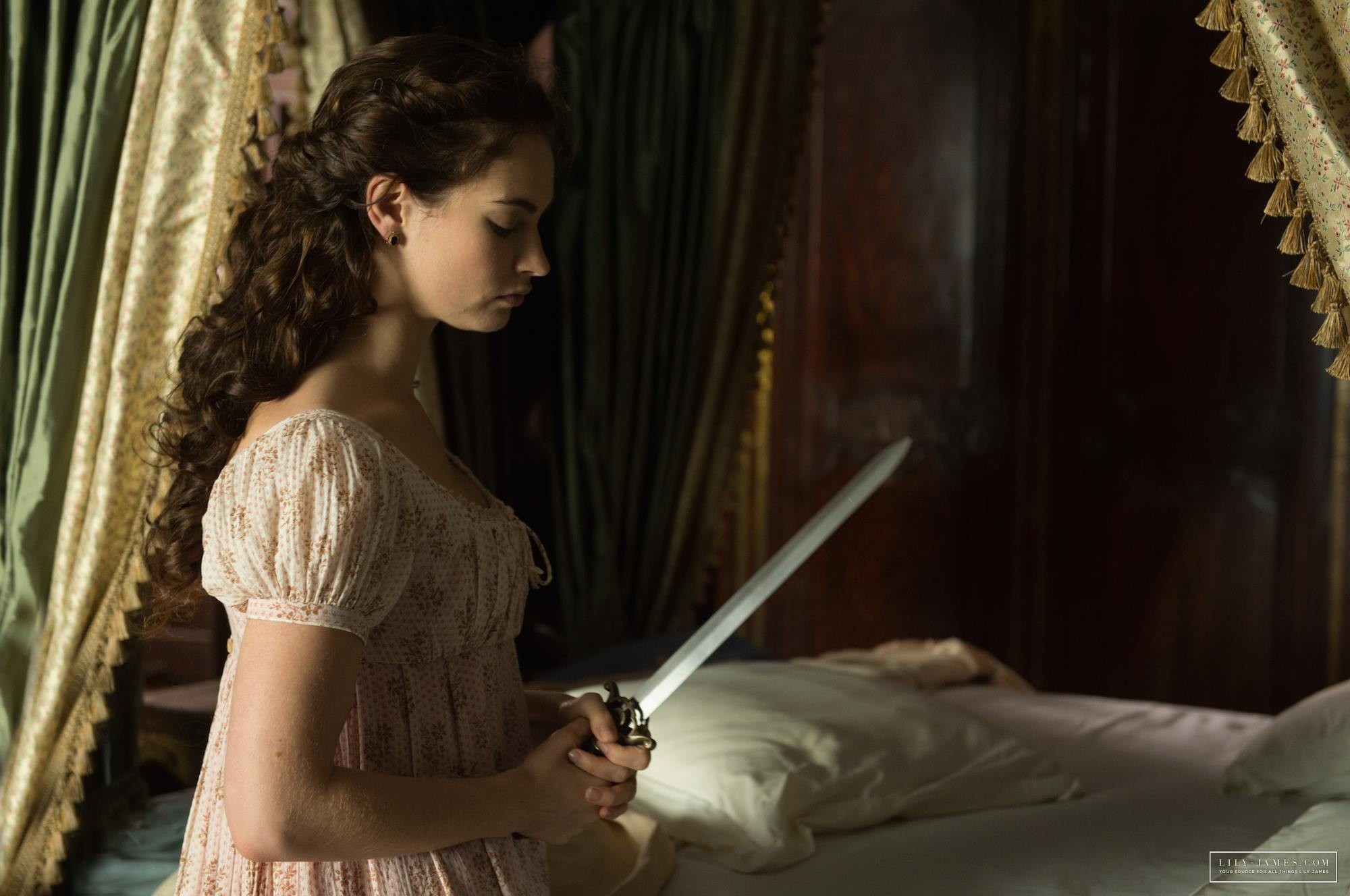
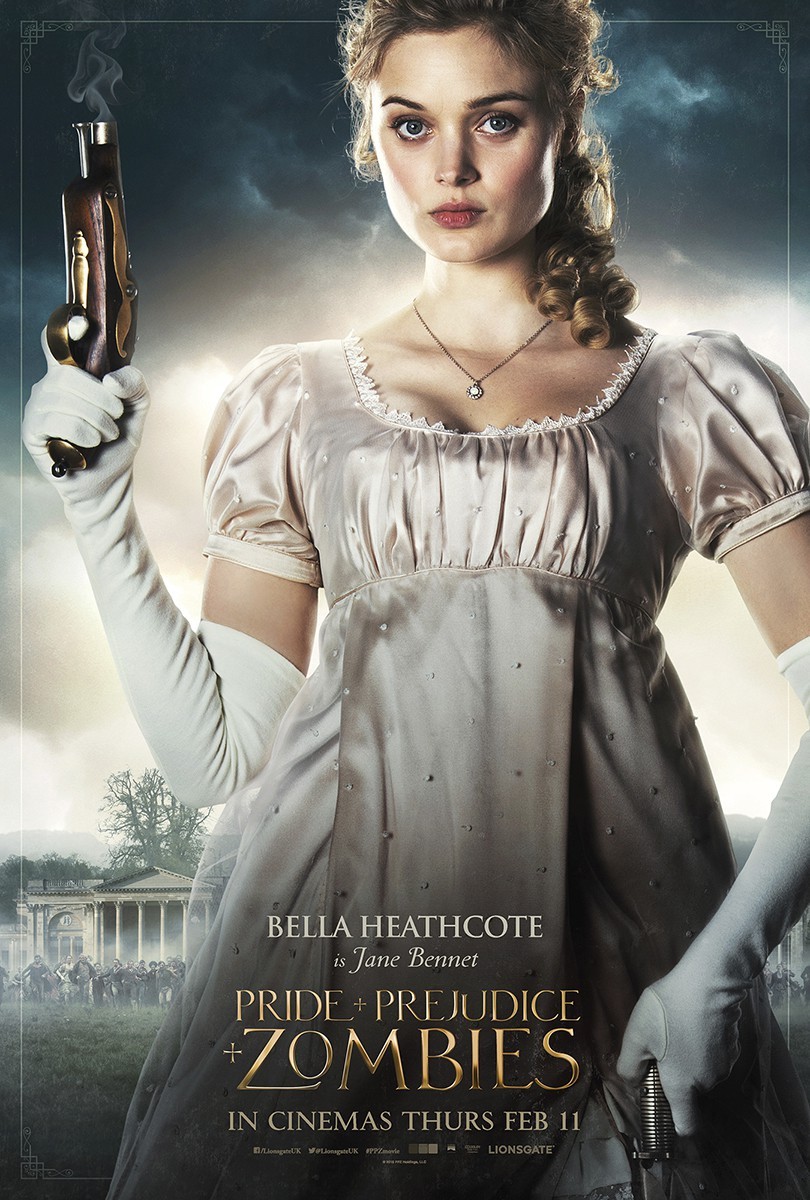
ppz09I’d imagine the market who would most appreciate this – those who like early 19th-century literature, but feel it would be improved by the addition of the walking dead – is rather small, which may explain its lackluster performance at the box-office. Personally, I’m more a fan of Victorian and later work, and have never actually read Pride and Prejudice, so suspect all those aspects here, flew entirely over my head. I have, however, seen more than my fair share of zombie flicks, so that’s the angle from which I will be reviewing this. Several angles surprised me. Firstly, it’s not a comedy. While we laughed, the film takes its theme seriously. Secondly, there’s surprising invention here. It’s not just dropping zombies into a costume drama; there’s thought gone into details of the setting, and also ideas such as the undead initially retaining their humanity.

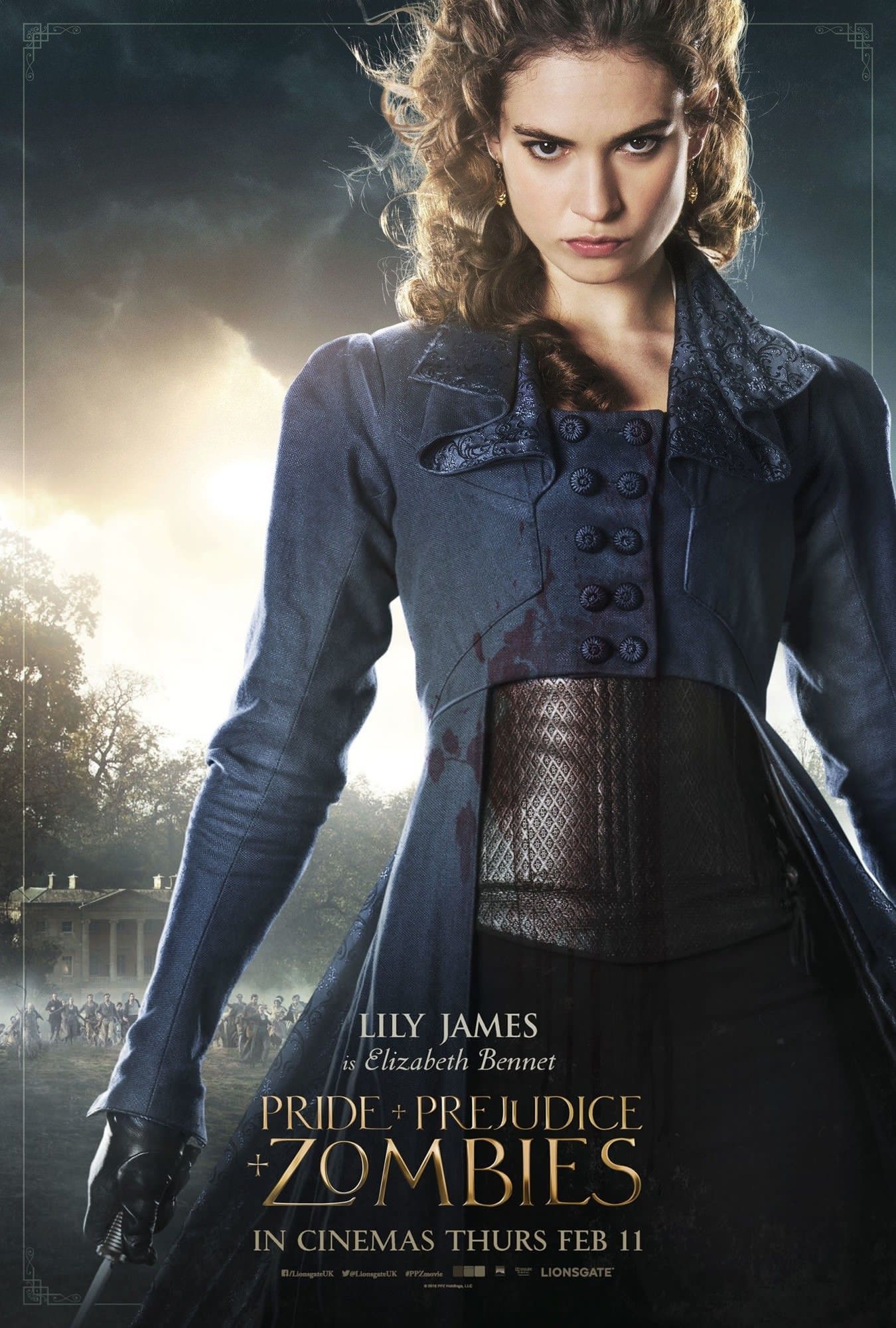
On the other hand, it’s not the action extravaganza I expected from the trailer, and never achieves the all-out heights of excess I was hoping to see. There are some decent sequences, but a number of missed opportunities, for example, in eye-patch wearing aristocrat, Lady Catherine de Bourgh (Lena Headey), who is described as the ultimate bad-ass, yet barely lifts a finger. I expected a massive battle at the end, and didn’t get one; instead, the film almost rubs our face in this, inserting a mid-credits epilogue that’s the biggest tease since the end of My Wife is Gangster 2. Not that you’ll mistake this for anything other than a zombie film, of course, even if it is closer to Pride and Prejudice (and Zombies) – which would make sense since I believe the book was about 85% Austen’s original text. There are still plenty of positives, led by James, as Elizabeth, the feistiest of the five Bennet sisters, whose father (Charles Dance) has brought them up as zombie-killers, much to the concern of their mother (Sally Phillips), who’d rather they married rich.

The story revolves around a love-triangle between Elizabeth, Mr. Darcy (Riley) and Lieutenant Wickham (Huston), unfolding against an the backdrop of an escalating zombie threat, which lurks in almost every hedgerow, whist party and back bedroom. Previously, the walking dead have largely been confined to London, but appear to be developing organization, and given their increasing numbers, this could be disastrous for humanity. Meanwhile, Elizabeth also has to fend off the perhaps even more threatening predations of Parson Collins (Matt Smith), who has been brought in to marry one of the sisters, providing a male heir that will secure the family’s future, since the daughters are unable to inherit property. Her skills are unquestioned, and nicely understated; when Darcy suspects one of Elizabeth’s sisters of being bitten, and releases carrion flies to see if he’s right, she plucks them out of the air, one at a time, and hands them back to him.

Their relationship is another well-handled aspect. This Darcy is not exactly swoonworthy, and hardly the life of the party (no-one who totes carrion flies everywhere they go, ever will be), yet he’s prepared to let Elizabeth be the person she wants to be – a sharp contrast to Collins. It’s her free-spirited nature and stubborn refusal to be ground down by the conventions of society – even the severely-skewed ones of this scenario – which make her an engaging heroine. Other pleasures are the work of Smith and Phillips, adding a great deal of background charm, largely due to their total indifference to the zombie apocalypse – achieving marital bliss is clearly far more important. It probably works better as satire on class, rigid social norms and the British stiff upper-lip, than as real horror; its PG-13 rating obviously limits the latter aspect. As long as you are not going in expecting a Georgian-era version of World War Z, this should be well-made and enjoyable enough.

Dir: Burr Steers
Star: Lily James, Sam Riley, Jack Huston, Bella Heathcote

ppz01

Suffragette

★★★
“Worthy, rather than worthwhile”

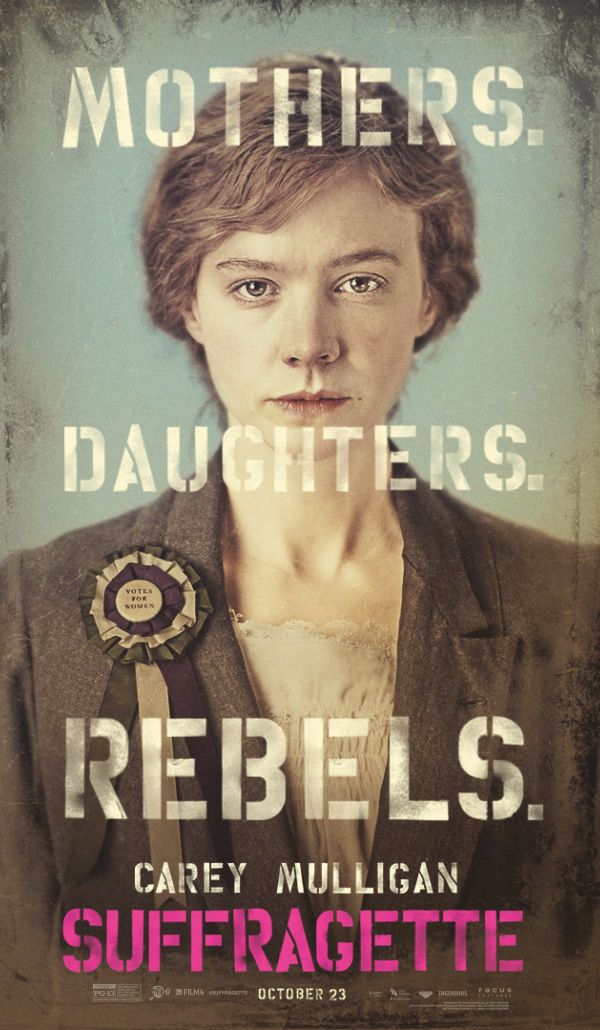
suffragetteI generally find that films based on historical events, which also feel the need to make up entirely fictional characters, occupy a bit of an awkward middle-ground, as if they want both to be documentary and drama. Such is the case here, with a somewhat clumsy combination of  people who actually existed, such as suffragette leader Emmeline Pankhurst and Emily Davison, who was fatally injured in a protest at the 1913 Derby, with an entirely made-up heroine, Maud Watts (Mulligan). She works in an East End laundry, but become part of the burgeoning movement to win women the vote, after her trip to the House of Parliament, in support of a colleague testifying there, turns into Maud having to speak on behalf of her friend. As Maud’s commitment to the cause grows, she is jailed, her marriage breaks down and she loses custody of her son, but remains unwavering in her support. Indeed, she becomes more militant, alongside chemist Edith Ellyn (Bonham-Carter), with the group moving into more hardcore methods of protest.

I can’t argue with the performances here, which are, almost without exception, upper-tier stuff: Mulligan’s transition from laundry lady into crypto-terrorist is particularly well-handled, bringing the audience on the journey of enlightenment with her. The problems are more elsewhere. That this is based on history – and well-known history at that – means there is precisely zero tension here. We know they’re going to end up getting the vote – though it didn’t happen, on even the most limited terms, until after the Great War, years after the events depicted here. So scenes like the protest at Parliament, where David Lloyd-George announces there will be no change in the law, and Maud is arrested for the first time, have little or no impact. The script also borders on the misanthropic: between abusive husbands, an abusive boss and a police officer (Gleeson) devoted to bringing the movement down, there is literally not a sympathetic male character to be found here, except perhaps Edith’s husband, who is so bland and uninteresting, you’ll forget him entirely.

The film climaxes with the events of that Derby Day, and again, the impact is diluted since we know it’s going to end in Davison’s death (the question of how intentional or accidental it was remains unanswered; naturally, the film frames it as an act of heroic martyrdom). The movie ends in newsreel footage of the subsequent funeral, without giving Maud any particular closure, and she just happens to be nearby at the time, a fortunate observer to a pivotal moment in history. A few captions fill in the blanks, and everyone heads off for a nice cup of tea. For it’s all terribly British, mostly replacing righteous anger with polite indignation, and despite Mulligan and her crew acting their crinolines off, is only somewhat successful at capturing the passionate beliefs that I sense these women actually held.

Dir: Sarah Gavron
Star: Carey Mulligan, Helena Bonham Carter, Brendan Gleeson, Anne-Marie Duff

Assassination

★★★½
“Burning Japanese.”

assassinationNot, in any way, to be confused with The Assassin, despite both being distributed in the United States by Well Go, this is substantially more entertaining, being a nicely put-together period actioner that, in some ways, reminded me of Inglourious Bastards. In 1933, Korea was occupied by Japanese forces, against which a slew of liberation movements fought. As part of the rebellion, plans are afoot to assassinate Kawaguchi Mamoru, the local Japanese governor and Kang In-gook (Lee G-y), a Korean tycoon who has collaborated with the occupiers. Tasked with leading a small group to carry out the mission is Ahn Ok-yun (Jun), a lethal sniper; she’s bailed out of military prison where she has been sent for “accidentally” shooting her superior. Yeom Seok-Jin (Lee J-j) is overseeing the operation, but is actually working for the Japanese, and hires an independent hit-man (Ha), known as “Hawaiian Pistol” to sabotage it. Making things infinitely more complex, it turns out that Kang’s daughter is actually the twin sister of Ahn, the women having been separated and brought up, oblivious of each other’s existence.

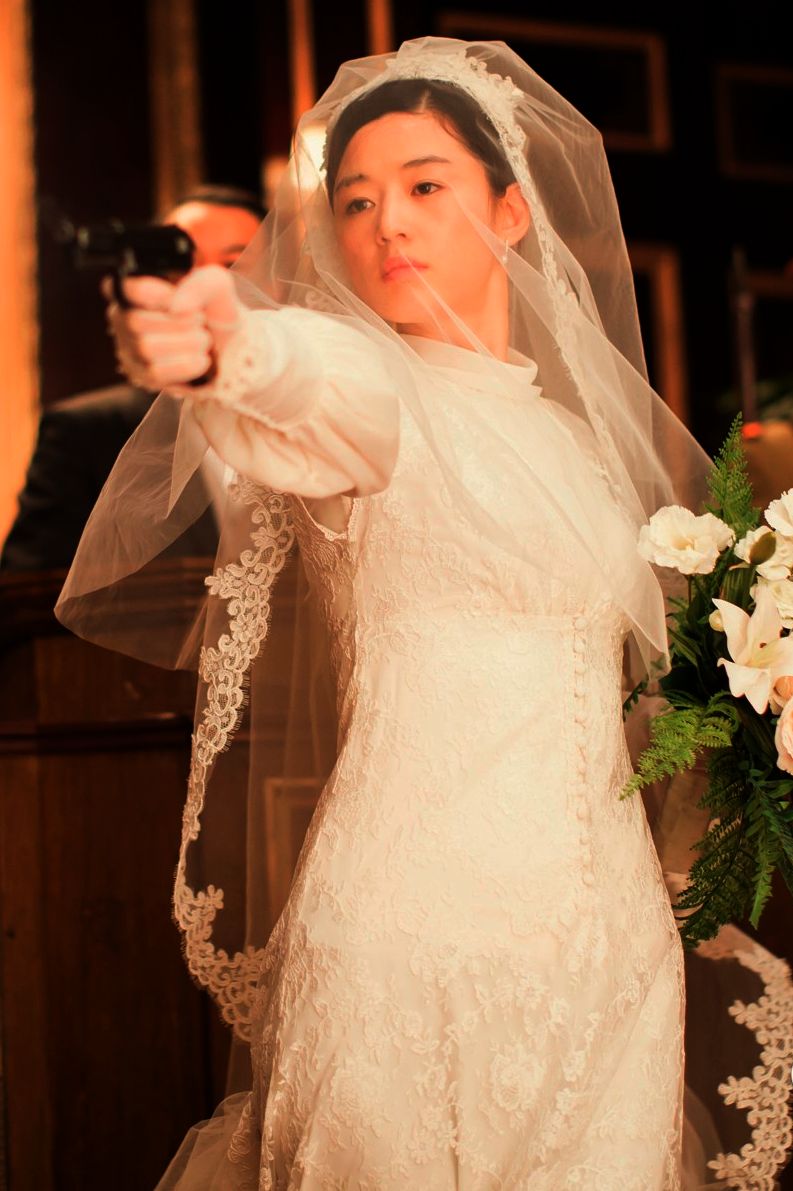
There’s a very good sense of time here, with a lot of money having clearly been spent on sets, costumes, motor vehicles and everything else necessary to create Korea of the time. The action sequences are slickly put-together, without ever devolving into excess; to be honest, they’re probably a bit more plausible than the plot, where the “twin” aspect leads, in the final reel, to some developments that pass beyond incredible to uncredible. It is also more than somewhat relentless in its anti-Japanese message, bordering on the xenophobic, albeit perhaps for understandable reasons, and at 140 minutes, feels a good 20 too long. That said, there’s still an awful lot to enjoy here, in the performances and complex plot, which ends up spanning nearly 40 years from prologue to epilogue, as well as the glorious set-piece battles. The pick of these is probably the group’s first attempt as assassinating their targets, diverting them to a gas station and into a killing zone on their way out of the city, but equally as impressive is a gun-battle when a wedding devolves into a siege situation [which explains the image, above right!]

I was trying to figure out why Jun was familiar, and eventually realized she had starred in the live-action adaptation of Blood: The Last Vampire. While that was largely forgettable, she has become a huge star in her native Korea, both in film and on television. This is certainly more impressive than Blood, and she is certainly the emotional heart of the film, as well as providing some of its most memorable moments, such as when she pauses on the way to begin her mission, to take out a pair of Japanese machine-gun nests, with a grand total of four bullets. This kind of swift characterization demonstrates her character’s competence early, and the film even avoids the obvious desire for a romantic subplot. Despite the obvious issues noted above, the positives are good enough to outweigh them, and overall, this provides an enjoyable couple of hours of wartime derring-do.

Dir: Dong-hoon Choi
Star: Jun Ji-hyun, Lee Jung-jae, Ha Jung-woo, Lee Geung-young

Battle of the Amazons

★★★
“This world was made for hate, not love.”

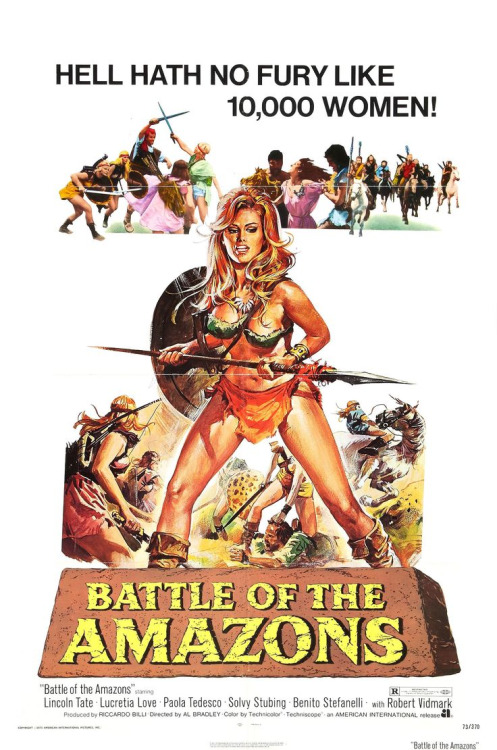
amazonsIt’s startling to think that when this came out, this merited not only a theatrical release in the United States, but a review from perhaps the most respected critic of our time, the late Roger Ebert. Needless to say, it didn’t end well for the film, but Ebert tearing apart a film is still fun to read. I particularly liked the line, “There are spears and bows and arrows and swords, which suggests early times, but then again all of the women on both sides are fresh from the hair dryer. They also exhibit impressive technical advances in the art of brassiere-design.” Yeah, welcome to The Magnificent Seven – only set in a vaguely Greco-Roman era, with a tribe of rather vicious Amazons the antagonists.

They live by raiding and plundering local villages, under Queen Eraglia (Love), but after they kill her father, local lass Valeria (Tedesco) has had enough, and rents the service of conveniently-passing bandit Zeno (Tate), to teach the village farmers how to defend themselves. However, the sexual chemstry that flies between Valeria and Zeno fail to impress her betrothed, who convinces a group of village men, that their best chance of survival is to switch sides, reveal details of the defense plans to Eraglia, and hope she sees fit to give them mercy. It turns out though, that he may not be the only snitch present in the town camp, as things proceed towards the entirely expected finale, a lengthy battle pitting the raiding women against the defending agriculturalists.

It’s actually a little darker and possibly somewhat more well-thought out than I expected: the final line of dialogue being the one atop this review, which sprinkles a nice sense of doom and futility over things, and the multiple levels of betrayal are effectively handled. I started watching this on a plane flight to New York, but I think the second topless torture scene was about where I opted to save it for another day, though there really isn’t much else here worse than PG-13 rated. Tedesco makes a good impression as the feisty heroine, and it’s a nice touch to have women effectively leading both sides, though when it comes to the actual fighting, Valeria obviously steps aside for Zeno. Sadly, the Amazons also step aside when the action kicks off, largely being unconvincingly replaced by male stunt doubles in masks and wigs. Valeria acquits herself best there as well, indeed coming to the rescue of her employee in the final face-off. I can’t honestly say I minded the dubbing as much as Roger, and the time passed briskly enough on its way to an appropriately grandiose finale. Though I’m certainly agree with him on one point: I’m not quite sure why the local men made such a fuss about getting kidnapped…

Dir: Alfonso Brescia
Star: Lincoln Tate, Paola Tedesco, Lucretia Love, Mirta Miller

Petty Treason, by Madeleine E. Robins

Literary rating: ★★★★★
Kick-butt quotient: ☆☆

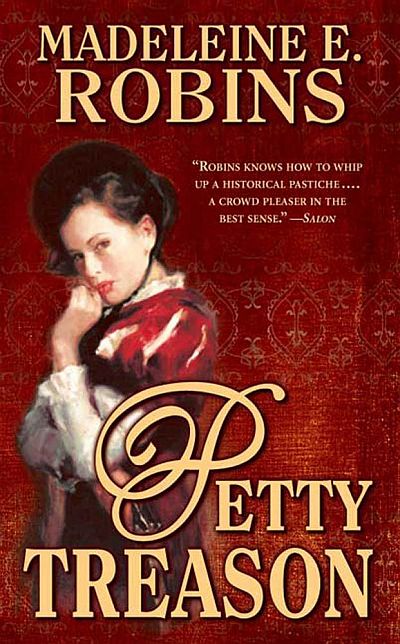
pettytreasonThis second volume of Robins’ high-quality Sarah Tolerance series has much in common with the first book, (Point of Honour, which I’ve already reviewed here) in style and literary strong points; and of course it shares a protagonist and other continuing characters (and an ethos) with its predecessor, and builds on the premise and events laid out there. While it could be read first and still be enjoyed, IMO the series should be read in order to fully understand the characters and relationships (and Sarah’s unique situation), and appreciate their development here.

Six months have passed since the events of Point of Honor; we’re now in November, 1810. In the background, the Napoleonic Wars still drag on, with widespread dissatisfaction on the home front with the sacrifices the government demands to support and provision the troops abroad; and Queen Charlotte’s poor health fuels the poisonous infighting of Whig and Tory factions as they jockey for the possible appointment of a new regent. The book’s cover copy gives a basically accurate explanation of the case confronting Sarah here –except that this is actually NOT a locked room mystery, classic or otherwise; whoever wrote the description didn’t read the book carefully. It’s not her usual type of investigation, and she undertakes it reluctantly; she’s accustomed to inquire after lost articles, errant spouses, social skeletons in the closet, etc –not to track down murderers. But the events of the previous book have demonstrated that she can do the latter; and since the investigating authorities are inclined to pin this crime on the widow, her brother believes that hiring Sarah might be his desperate last chance to find the real culprit and clear his sister.

Robins has crafted a challenging mystery that will satisfy genre fans, and keep them guessing down to the wire; the deceased had secrets that don’t immediately meet the eye, and he wasn’t the only one with things to hide. The pace of the storytelling and investigating is slow, in keeping with transportation by foot or by horse and communication by written messages; we see investigation conducted as it actually would be in this cultural context and with this kind of technology (or lack of technology). We’re also immersed very much in the daily life of a young woman in the Regency world; the way the author brings the milieu to life is a great strength of the series.

That said, the action component here is significantly greater than it was in the first book, reflected in the kick-butt quotient above, which here goes up a star. There’s also much less in the way of actual sexual situations, though Sarah still lives out back of her aunt’s high-society brothel and is close friends with a prostitute, and though her inquiries here will expose her to the ugly world of sexual sadism, where some brothels called “birching houses” cater to the tastes of males who get sexual satisfaction from beating and brutalizing women. As in the first book, there’s not much bad language here; low-life characters use the f-word three times, but in a context where it’s actually the Anglo-Saxon verb these people would use (rather than as an all-purpose expletive, as we hear it nowadays).

Sound historical research underlies the story here, as Robins makes clear in her appended “History and Appreciation.” The details of English criminal law of that day, as given in the book, are accurate; and the attempt to kill one of the king’s sons, the Duke of Cumberland, by his valet Sallis (who committed suicide when it failed) really did take place in May 1810. (In her alternate world here, Robins took the liberty of moving it to August.) And Cumberland actually was, as here, a scandal-ridden High Tory who wasn’t much loved by the populace. An equalitarian feminist subtext set against the backdrop of a very chauvinistic society (and ours really isn’t much less so, though we’re more hypocritical about it) is another strong point here.

Sarah’s a great heroine, who readily earns this reader’s respect and admiration. The snobbier members of Regency High Society don’t consider her a “lady” (and she doesn’t claim to be), and think an unwise choice made in the passion of teenage love should forever brand her as a moral pariah. But most readers will recognize her as a lady, and a classy one, with a very solid moral compass and integrity. And as the best literature always does, this novel focuses on very real moral choices, that will further temper the precious metal of her integrity in a crucible.

There’s no second-in-the-series slump here; if anything, I actually liked this novel even better than the first one! Next year, I’m hoping to read the third installment of the series, The Sleeping Partner.

Author: Madeleine E. Robins
Publisher: Tor, available through Amazon, both for Kindle and as a printed book.

A version of this review previously appeared on Goodreads.