 ★★
★★
“Entertainment: Impossible”
The Great 2023 Void of Action Heroines continues on. The closest thing we’ve seen to one as a mainstream hit in the cinemas is… um, Barbie. Yeah. Not going there. I was looking at the box-office chart for the year, and excluding movies which were actually released in 2022 e.g. Everything Everywhere All at Once, there is only one single film in the top two hundred we have covered here. Polite Society sits outside the top hundred, at $1,.5m [We will get round to The Wrath of Becky in a bit. It’s #181, with a gross of $168,109.] Last year, we had Everything and The Woman King in the top thirty. 2021 gave us Black Widow; 2020, Birds of Prey and Wonder Woman 1984. The complete lack of tentpole heroines this year is disconcerting.
There has been no shortage of female supporting characters who have kicked butt. We already wrote about the The Women of Mission: Impossible, while John Wick 4 also delivered in this category, among quite a few other successful movies. But if you want to see a GWG take centre-stage, you will not find it in the movies. In some ways, it’s more convenient, to be able to sit at home, in your own comfy chair, with a choice of reasonably-priced snacks, and simply push a button on your remote control. But, it has to be said: quality wise, there’s often a good reason most of these films have gone straight to a streaming service. We’ve already covered a number here. The Mother. Furies. Mercy Falls. True Spirit. Some were decent. Yet none have achieved a seal of approval.
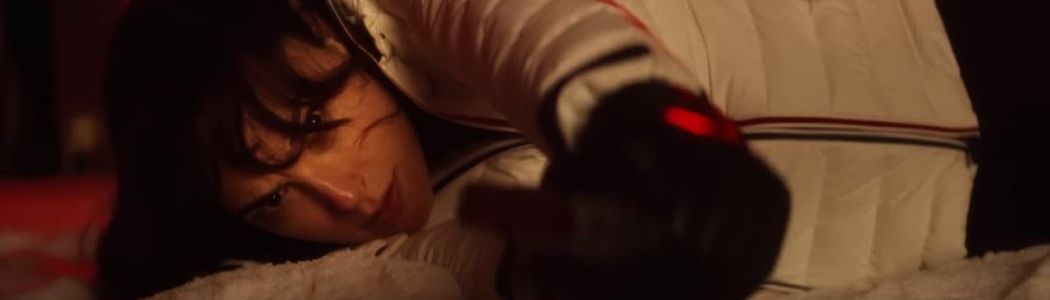
 This one certainly won’t, barely reaching the level of acceptable entertainment, and sadly, continuing Gal Gadot’s streak of swings and misses. She blazed onto the scene in Wonder Woman back in 2017, and seemed set to take over the mantle as one of the top action actresses in Hollywood. But she has singularly failed to build on that foundation. She lost a lot of public goodwill for her tone-deaf Imagine video in the pandemic. WW84 was a flop, Red Notice was a quickly-forgotten Netflix Original, and her turn in Death on the Nile was widely-panned, becoming a meme. This, however, was a chance to correct course, putting her front and centre in a movie which, it was clearly hoped, would kick-start a franchise and become the female version of Mission: Impossible.
Ain’t gonna happen.
Two minutes in, Chris turned to me and said, “Is this a movie or a TV series?” and I can see her point. Having watched this just a couple of weeks after the undeniably cinematic Mission: Impossible – Dead Reckoning Part One, the difference is obvious. Harper directed The Aeronauts, which was decent enough, but it seems he is incapable of scaling things up from a balloon basket, to the much larger scope needed here. Part of the problem with the action sequences in particular, is the VR enhancement gimmick the heroine wears, allowing her to get real-time updates from her handler. This too often leaves everything looking like it’s a video-game, and it rubs off on other sequences, such as her parachute jump, which feels thoroughly unconvincing.
The plot is perhaps an even greater weakness, a confusing and unengaging mess. Rachel Stone (Gadot) works for a group called Charter, who use hi-tech surveillance for good (yeah… about that…). She’s embedded as an agent in MI-5, for reasons that are never made clear. Wouldn’t you know it, one of the people on her team, Parker (Dornan), turns out to be plotting to steal The Heart, the super-computer on which Charter relies for their surveillance – and use it, presumably, not for good. He has teamed up with talented young hacker Keya Dhawan (Bhatt) to this end, and only Stone can stop them, recover The Heart, and save her colleagues at Charter, including Stone’s boss Nomad (Okenedo).
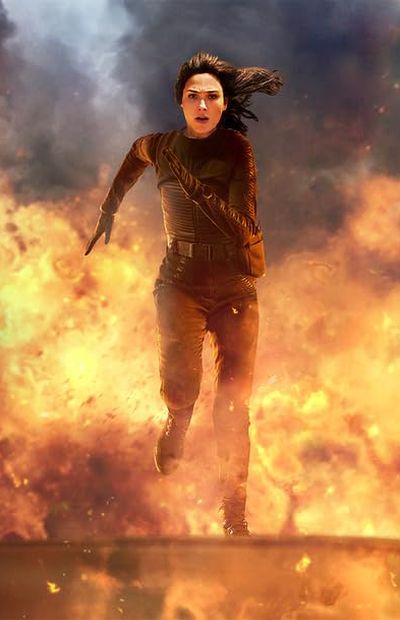 Dear god, I almost lost consciousness merely typing the previous paragraph. Reviewing the previous work of writers Greg Rucka and Allison Schroeder, what stands out is an almost complete lack of action movies. Rucka has worked mostly in comics (including the one which became The Old Guard), while Schroeder did, um, Christopher Robin and Hidden Figures. The lack of experience shows. Never mind not having written an action movie, it feels as if neither of them had seen an action movie. If so, they might have realized Stone’s handler flicking VR screen around by gesture, was done twenty years ago in Minority Report. The good ideas here are all like that, things you’ve seen elsewhere, and done better, while the ones the movie can call its own are uninspired in concept and/or execution.
It doesn’t help that the supporting cast are mostly bland. If Gadot does still have reasonable charisma, Dornan is completely forgettable. Bhatt is a thoroughly unconvincing hacker – I might trust her to reset my account password, and apologize for the inconvenience. That’s about it. The most irritating character though, is probably her handler. I get what they were going for, but almost every time he’s involved, it leaves the heroine feeling not much more than a meat-puppet, removing a significant degree of agency from her. I will say, some of the action set-pieces aren’t too bad. There’s a good car-chase through Lisbon, for example. But any secret organization which fills its airship with hydrogen, is certainly not going to remain secret for very long. That’s the level of idiocy we are dealing with in the writing here.
Long before the end, I had mentally checked out, as the film globe-trotted manically from [checks notes] the Alps to London to Portugal to Senegal to Iceland. There’s no denying there was a significant amount of resources expended on this production, though Netflix is notoriously tight-lipped on specific budgets. However, the film doesn’t so much jump the shark, as use it for a 3000-metre steeplechase, when the MI-5 spies have a dance break. Read the sentence again. Roll it around your brain. That it’s to a Lizzo song – unfortunate timing, that – makes it considerably worse. Everything thereafter feels like a waste of those resources, as well as the variable talents of those involved.
Dir: Tom Harper
Star: Gal Gadot, Jamie Dornan, Alia Bhatt, Sophie Okonedo




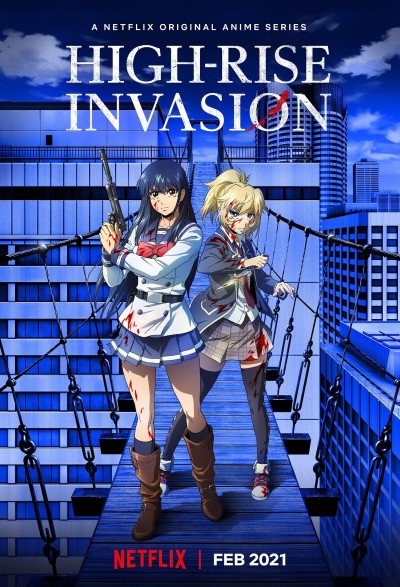 This animated series bears a certain resemblance to another Japanese show on Netflix, the live-action Alice in Borderland. Both are adaptations of Japanese manga series (Alice started three years earlier), which see a number of young people suddenly transported to a lethal and sparsely populated version of their city. There, they have to figure out how to survive, and what the heck is going on, in the face of enemies human and… well, not-so human. Both shows also manage to reach the end of their first series without achieving even the slightest degree of significant resolution, though the journey to reach that point is still reasonably entertaining, and certainly does not stint on the old ultra-violence.
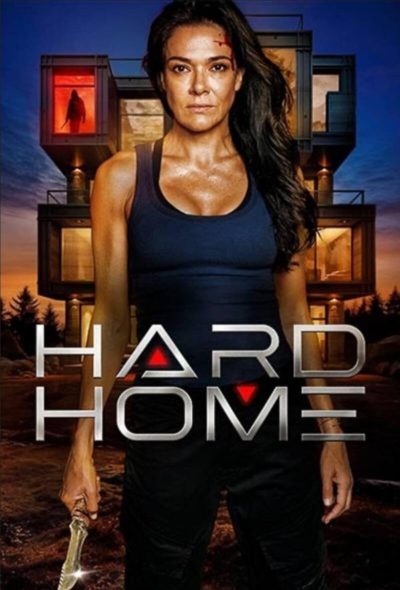 Mary (Kessell) has a grudge, and probably with good reason, I’d say. Because the serial killer known as Diablo killed her daughter, Kelly, in a particularly brutal manner – finishing his victim off by burning her alive. With the help of information provided by FBI Agent Selena Wall (Adedeji), Mary puts the pieces of the case together, and eventually lures Diablo (Howard) into attacking her, then brings him back to her house. This has been turned into a hi-tech, maze-like warren designed to force Diablo to confront all his crimes, and in particular his murder of Kelly. Naturally, things don’t quite go as intended. Expecting rational, predictable behaviour from a serial killer was probably a mistake by Mary, despite her technological advantages.
 I was intrigued by this, mostly due to the presence of Penn, an Australian champion in karate who appeared (albeit, in minor roles) in a number of Hong Kong action movies of the nineties. Her blonde hair made her stand out, as one of the few gwailo women to be seen in the genre. This TV movie, intended as a pilot for a series appears to have been her swing at stardom in the West. After it fell agonizingly short, she seems to have given up on acting entirely. She now appears to be the CEO of Signal 8 Security, a private security company back in Hong Kong – the celebrity clients listed on the company’s website appear to include Jackie Chan, ironically enough.
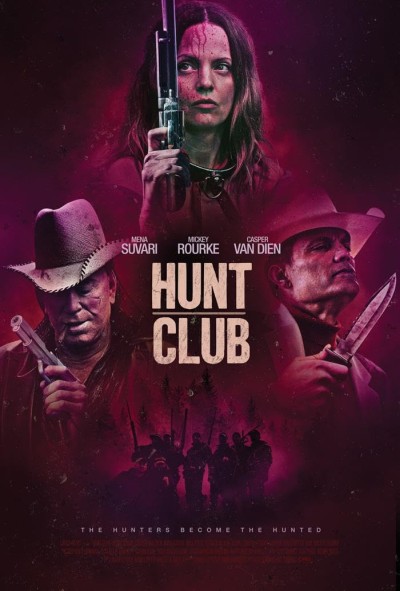 Oh, dear. I appreciate that actors have to work, like everyone else. Van Dien, in particular, has a reputation in our house as someone whose name is not typically a badge of quality. But it’s sad to see Suvari is now apparently in the same career boat. I can only presume the offers aren’t exactly flooding in, if this is the work she has to take on. It’s another variant on the old Most Dangerous Game story-line. Here, it sees redneck entrepreneur Carter (Van Dien) luring in women with the promise of $100,000, while remaining vague on the details. Turns out the victims then are pursued through the forest and have to survive for 24 hours. Spoiler: they don’t.
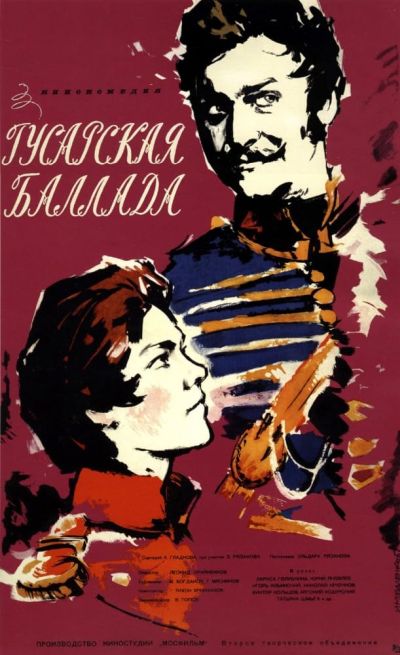 This is an adaptation of a Russian play A Long Time Ago by Alexander Gladkov, but was inspired by the real-life exploits of Nadezhda Durova. She was a woman who basically pulled a Mulan, concealing her gender in order to defend her homeland in the Napoleonic and other wars of the early 19th century. Durova joined the army on her 23rd birthday and served honourably for a decade, even after her true gender was discovered. Tsar Alexander I was impressed when he heard about Durova, giving her a promotion after summoning the soldier to his palace in St. Petersburg. Wounded by a cannonball at the Battle of Borodino, she eventually retired in 1816, with the rank equivalent to captain-lieutenant.
 This is the second novel in the author’s Unsanctioned Guardians trilogy, a prequel to her earlier Elioud Legacy series. The new trilogy presents the background of how the three heroines of the first one (all of whom were intelligence agents, though of different nationalities) met and formed their sub rosa partnership as off-the-books rescuers of female victims of sexual abuse and trafficking. In the first book,
 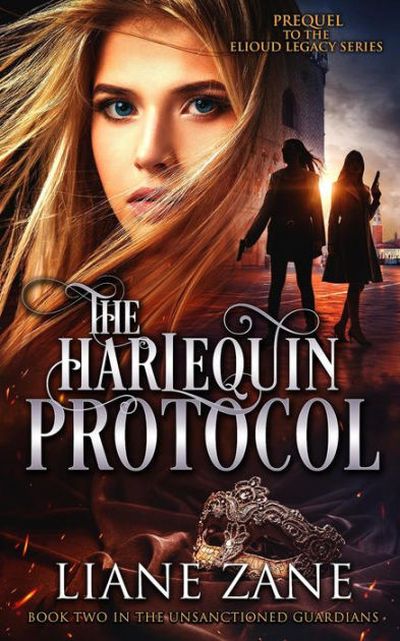 Because the author and I are Goodreads friends, she graciously gifted me with a review copy of the paperback edition of this book, as she has with all of her books, as soon as it was published; though she knew I’d really liked the previous book, she didn’t pressure me for a favorable review, but trusted that the book would stand on its merits. It definitely did; I actually liked this one even better! What earned the added appreciation (and the fifth star) was what I felt was the heightened dimension of moral challenge and choice here, which for me often makes the difference between great and merely good fiction, and which isn’t as strongly present in the first book. Discerning what the right thing is here requires thinking for oneself, not just obeying orders; and deciding to do it comes with a real risk, not just of harm to life and limb, but of disapproval from the powerful, of serious repercussions to one’s career, and maybe of legal punishment. The strong, distinct characterizations of the three heroines, who are each very different individuals though sharing a basic gut instinct for justice and decency, is also a positive feature that makes the book stand out from the pack.
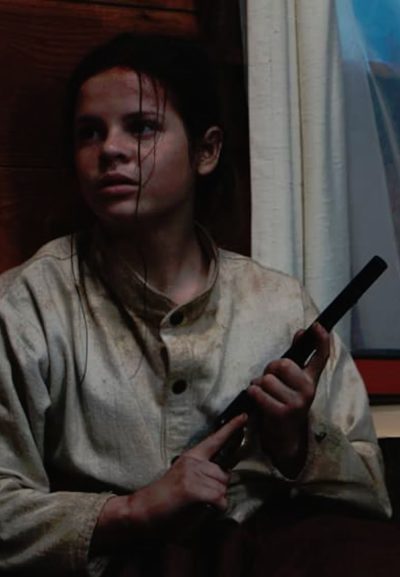 This one does take a while to reach the necessary threshold: probably only truly qualifies for the final twenty minutes or so, though it does talk a good game until that point. Also, it’s a decent enough combination of Western and home-invasion genres to that point, to pass muster. Nothing special, mind you. It just knows its limitations and is careful enough to work within them. It takes place in the Old West. whee Beth (Bernadette) and her twin children, Brian and Irene (Betsy) now live with her new husband, Robert (Krause). The trio appear to have escaped an abusive relationship, and it’s not long after a railroad surveyor pays a visit, before Irene is cheerfully telling him, she’s going to go back and kill her father some day.
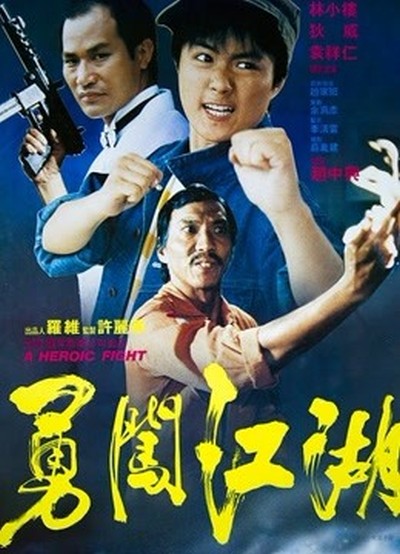 Well, this is certainly… a film. Indeed, of all the movies I’ve seen, it is unquestionably… one of them. Is it good? Bad? I’m still not sure. There are so many shifts in tone here, you’ll get whiplash. It’s clearly intended to be a parody of eighties Hong Kong cinema (even though it was made in Taiwan), yet is equally guilty of committing many of the same sins. I can’t deny the imagination here. A gangster, the unfortunately named Mr. Duh (Chao) is embroiled in a struggle for control of his empire with a lieutenant (Wei) who wants to start dealing drugs. To this end, the boss’s grand-daughter is kidnapped, only to be rescued by conveniently passing martial arts actor Hsiao-Long (Lin). He – and I’ll get back to that – is part of a film studio under his father (Yuen), who specializes in action and special effects. They end up hired by Duh, putting their skills to use to protect the grand-daughter and, at one point, fake the boss’s death.
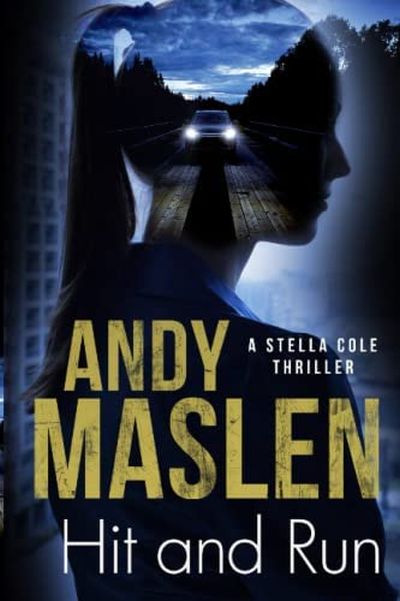 Detective Inspector Stella Cole has her life turned upside down when her lawyer husband is killed in a hit-and-run accident, leaving her to bring up daughter Lola on her own, and struggling with an addiction to both booze and painkillers – anything to numb the pain of everyday existence. Though the driver in question is arrested, he receives a paltry sentence of only three years, and Stella begins to plot taking her own revenge. This is brought up short when the perpetrator is killed in prison, and evidence begins to accumulate that her husband’s death may not have been accidental.