Full disclosure at the outset: the author kindly donated me a paperback copy of this book in return for an honest review.
In the climactic novel of the author’s Elioud Legacy trilogy, The Draka and the Giant, former U.S. Army Ranger Ryan Helsing, a decorated and physically formidable veteran of the fighting in Iraq and Afghanistan, was introduced as a relatively minor character (I didn’t remember him until I read this book; it’s been a couple of years since I finished reading the trilogy). And as I recall from the prequel series, Unsanctioned Guardians, it was mentioned in the first book there, The Covert Guardian, that title character (and major figure in both series) Olivia Markham had a younger sister. These two people serve as co-protagonists of this new novel, intended as the opening volume of The Dragon’s Paladins, a projected spin-off series from the original trilogy.
 As reader’s of the latter know, Zane’s premise is that, from antediluvian times on down to the present, there have been some sub rosa matings between angels (mostly fallen ones, but occasionally celestial ones as well) and humans, and that the children of these unions walk among us, sometimes aware of their heritage, sometimes not. These Elioud have (latent, or more developed) super-human abilities from their angelic genes; and in the ongoing cosmic strife between God and Satan, they may be knowingly enlisted on one side or the other, or just imagine that they can ignore spiritual realities and be neutral. (This premise is taken for granted in the present novel, which should definitely be read after at least the original trilogy, if not necessarily the prequel; the reader needs that to fully understand the situation and to really know some of the important characters.)
Our main setting is the Balkans, in the very near future, about six months after the final events of the Draka and the Giant. Dianne Markham is now a 29-year-old “social media marketing consultant” (and yes, that’s an actual job). Secular-minded and not very close to her sister, in the past she’s been something of a playgirl type, and cultivated a loose lifestyle along that line; but more recently, she’s been aware of her biological clock ticking, and been feeling (and even acting on) some impulses towards a more serious and mature outlook and more responsible behavior. She has no clue about her family’s bloodlines, or that Olivia and her husband, Mihail Kastrioti, are two of the Archangel Michael’s top warriors and commanders.
But they are; and Olivia, warned of danger by her “spidey sense” (which we’ve come to recognize as Divine prompting) is taking measures to gather her birth family into the relatively greater safety of the Kastrioti fortress compound in the Albanian mountains. When we first meet Dianne, she’s on an Adriatic cruise, now winding down, with a bevy of her shallow “friends” (though Germaine Grimes is one she reckons as an actual friend). However, Olivia has sent our title character to secretly watch over her sister on the voyage, and to bring her to Olivia as soon as they dock in the Croatian port city of Split. That may be a long and dangerous trip (especially after the registering of the largest EMP phenomenon in history), and their interpersonal dynamics may get interesting….
In its stylistic and other qualities, this book has a lot of the same trademark characteristics the author displays in her six preceding books. Narration is in third-person, past tense; the H/h alternate as viewpoint characters, with occasional scenes from other viewpoints as needed. While this is definitely in the supernatural fiction genre, centering on combat between demons and demi-angels and their human pawns or allies, much of it also reads like descriptive fiction action-adventure or an espionage thriller (and Zane’s prequel trilogy actually is in the latter genre). This entails a lot of physical action and use of high-tech weaponry and communications. The development of nanotechnology here, and its tie-ins with “harmonics,” the energy frequencies underlying all reality and all living things, including people, which angels and their descendants can perceive but ordinary humans usually can’t, is in the realm of the science-fictional (and probably already was in at least the last two books of the first trilogy, though my knowledge of nanotechnology isn’t great enough that I could tell that on my first reading).
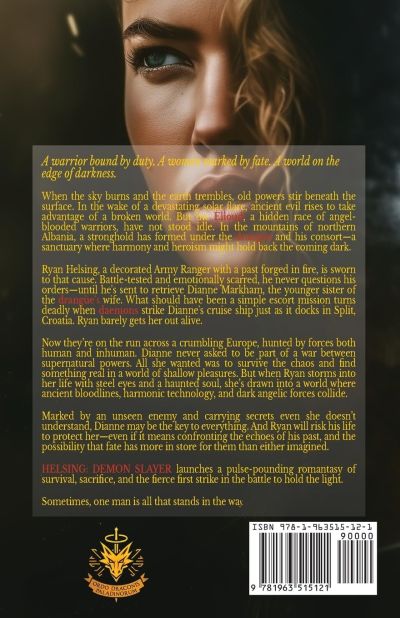
Zane sets a very brisk narrative pace, with a gripping intensity that makes this a real page-turner (I read it in less than two weeks, despite the 353-page length, which is fairly quick for me; and I always hated to put it down when I had to.) As in all of her work, she displays a detailed grasp of the settings and real-life locations, derived partly from Internet research and partly from her own travels. Given the cover art, it’s no surprise that Ryan Helsing is a highly capable action-hero; Dianne (who’s depicted on the back cover, but just with her face) doesn’t start out combat-trained, but she’s got guts and determination, and grows naturally into an action-heroine role. Both characters are developed well, in three-dimensional fashion. Their romance (that’s not a spoiler –Zane’s imprint is Zephon Romance, after all!) develops very quickly, but being thrown together closely and continuously under mortally dangerous and stressful conditions that demand constructive responses will bring out people’s mettle very quickly, and make it both easy and natural to assess and appreciate personal worth in a comrade-in-arms. Romance enhances the story and is a big part of it, but doesn’t swallow it whole.
Demonic possession of humans is taken seriously in the New Testament as an actual reality (borne out in other nonfiction literature on the subject), but the biblical writers don’t present us with a detailed theology of it. It’s a major plot element here; but here (as in some of the other books), how it works is a bit murky, and that’s probably my major quibble here. It’s sometimes suggested, plausibly, that the possessed are usually willing vessels of evil, or that all those outside the actual protection of Christ through faith are under some risk for it (and there are New Testament texts that could indicate that). But we also have a case of apparent possession of a human who doesn’t fall in those categories; and just as the St. Michael medals worn by some good characters here and in the other books have protective qualities, the demonically-cursed physical talismans here worn by some characters exert a malevolent spiritual influence.
 Related to this, although like all of the author’s books, this one has a strong good vs. evil orientation which is explicitly understood in Christian terms of God vs. Satan, there’s not a strong note of necessary personal decision to repent of self-will and turn to Christ in salvation. (Granted, Christian conversion is typically a gradual process of internal changes in response to moral and spiritual influence; but there does come a distinct tipping point in which personal loyalty flips Christ’s way. We don’t get a real sense of that here; Dianne starts out as essentially a heathen, albeit one who’s having a bit of a moral awakening; but insofar as she changes spiritually, the change appears to be more about her relationship to Ryan than to Christ.)
Some of this is probably influenced by the author’s Roman Catholic faith, though none of her books harp on denominational distinctives; Catholic (and Orthodox) sacramental theology attributes real spiritual influence to physical objects or actions, where other Christian believers wouldn’t go that far, and the former traditions place less stress on an actual, real-time decision for Christian conversion. (Many Christians, myself included, also wouldn’t consider the whole idea of modern-day demi-angels fighting physical battles against demons as really plausible; but it has to be recognized that the author isn’t necessarily claiming that it is. We should just regard the premise here as a fictional literary conceit that serves metaphorical functions, or allows the author to spin an imaginative story, not as a serious theological treatise.) It could also be argued that the climactic resolution of the conflict is too easy, though I didn’t consider that a serious flaw.
Even though both Ryan and Dianne use a certain amount of bad language (realistically, given their backgrounds) there’s no profane abuse of divine names nor actual f-word use here, and there’s also no explicit nor implied sex. (There’s no doubt that our H and h are strongly attracted to each other physically, but there’s also a sense that the attraction is also, and more importantly, to each other’s qualities of character.) Like the original trilogy, this can be recommended to readers who like clean romance (if they don’t mind what movie reviewers –and this would make a great movie!– would call “some sensuality”) and those who like action adventure, both male and female. It can also appeal to supernatural fiction readers who like the angels vs. demons theme, but the appeal wouldn’t be confined to Catholic (or general Christian) readers; I think many secular readers could enjoy it as well.
Author: Liane Zane
Publisher: Zephon Romance, available from Amazon, both for Kindle and as a printed book.
A version of this review previously appeared on Goodreads.




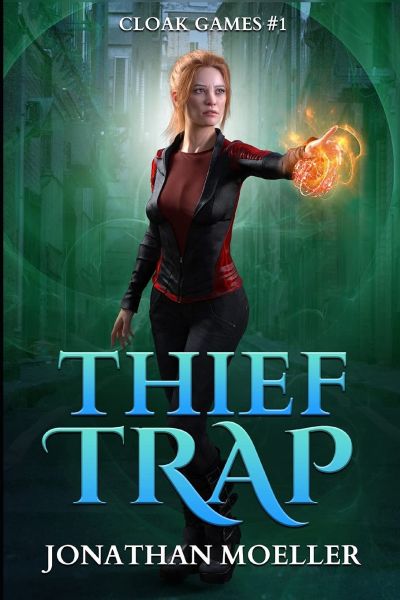 I previously reviewed Moeller’s Ghost in the Cowl, which comes from a different series, and enjoyed this every bit as much. Indeed, I think the premise here is better, rather than the fairly generic (if well-executed) fantasy of Cowl. However, in terms of action, the heroine here is second banana, and just as with Cowl, this consequently falls fractionally short of Seal of Approval. In this case, Earth has been conquered by a race of elves, whose High Queen has taken over and now rules with an iron fist. They had been booted off their home world, and traveled the Shadowlands, the path between the worlds, before breaking the seal to Earth.
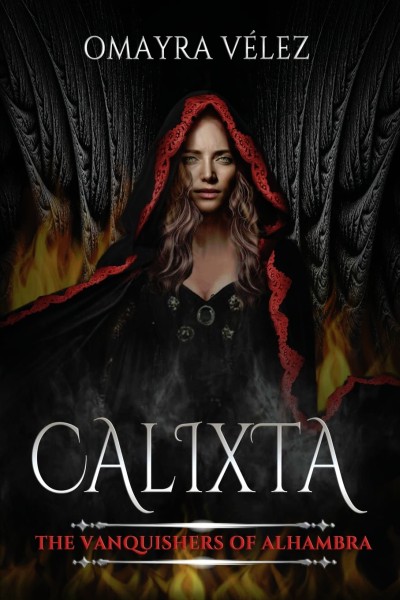 Subtitled “A grimdark fantasy,” if you are expecting this to be packed full of sex and violence, as a result… Well, you might be a little disappointed. While the lead character, Calixta Harlow Carlyle, is an “Exotic” – a highly-trained prostitute – she doesn’t seem to do all that much… um, prostiuting. We’re about half-way through before she goes to bed with anyone. The violence isn’t particularly brutal or copious either. It is, I guess, somewhat dark, and certainly not a young adult book. But anyone who watched (or read) Game of Thrones will not exactly require the services of a fainting couch to get through this.
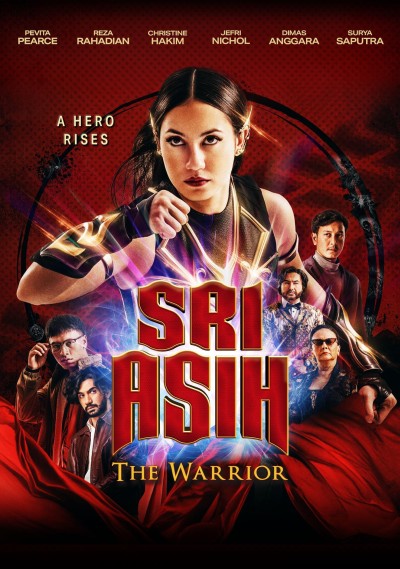 Turns out that Marvel and DC are not the only ones creating “cinematic universes” based on comic book. Another example can be found, perhaps surprisingly, in Indonesia. This film is part of the Bumilangit Cinematic Universe, and is a follow-up to 2019’s Gundala. I haven’t seen that, but I’m 99% sure that the scene in the end-credits is a direct cross-over to that, featuring its hero, given the apparent prediction late on of a team up to come between him and Sri Asih. Otherwise, though, this stands on its own, and you don’t need to have seen Gundala, or be familiar with the comic-book series about Sri Asih, created by R.A. Kosasih, and first published all the way back in 1954.
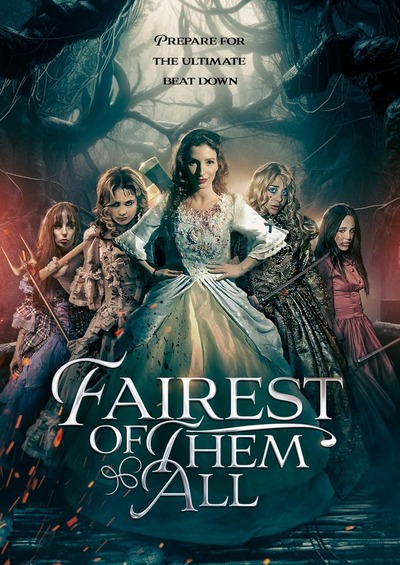 There’s a recent trend for horror films based on public domain characters. The most infamous is likely Winnie-the-Pooh: Blood and Honey, but traditional fairy tales have also been exploited to the same end. This is a sequel of sorts to the same studio’s Cinderella’s Curse (which I have not seen), but basically hurls every princess of legend into the mix. The excuse is Lewis Carroll’s Mad Hatter (Santer), who in this incarnation is a Joker-like psycho, who has kidnapped Alice (Desmond) and made her his slave, courtesy of his magic. He now wants a bride, and to this end abducts a selection of princesses and others e.g. Tinker Bell, as potential candidates. They will fight to the death. Last one alive becomes Mrs. Hatter.
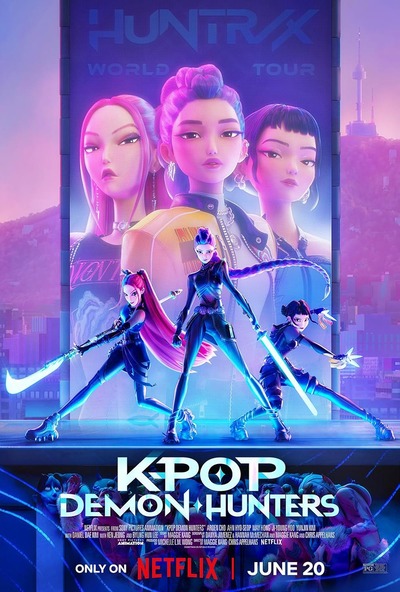 The appeal of K-Pop in the West baffles me. I mean, I have a fairly low tolerance for pop in general. So the appeal of a foreign version, born from a culture to which you have no connection… Yeah. Fortunately, you need no knowledge to be entertained by this Netflix animated movie. It’s also tongue in cheek enough to work for non-fans, poking self-deprecating fun at the obsessive nature of K-Pop fandom. The title alone is so direct as to indicate the attitude. It’s accurate though. Pop trio Huntr/x are also demon hunters. They are the latest generation, tasked with keeping the forces of darkness and their ruler Gwi-Ma, out of our world through a barrier called the Honmoon.
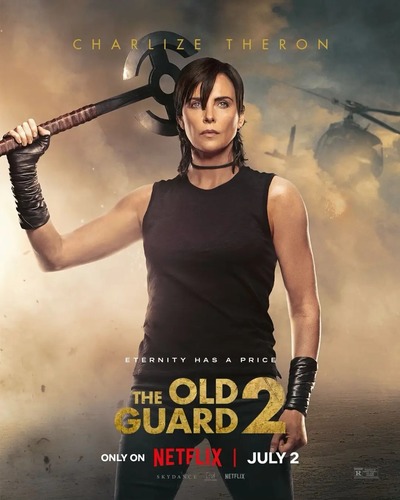 I was considerably less impressed with
 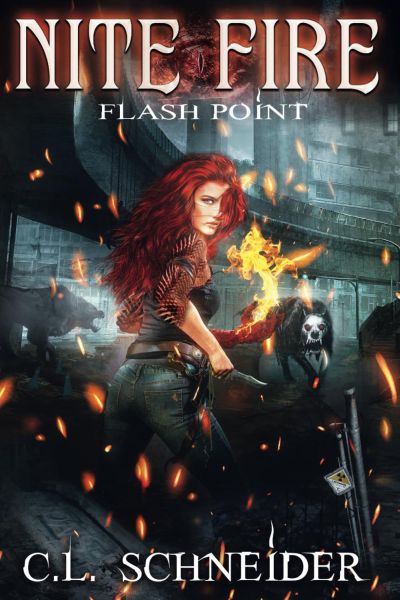 Dallas Nite is a dragon. Well, some of the time. For dragons are actually shape-shifters, capable of changing form, and that’s how she is able to pass for a human here. On her home planet, she had been an assassin for Queen Naalish, until she balked at carrying out one hit. Condemned to death, she fled through one of the interplanetary portals, ending up on Earth. Effectively immortal, Dallas has been in exile here for ninety-seven years since, making sure no other unauthorized creatures come through the portals – part of an uneasy truce between her and the aristocracy. Part of her job also involves ensuring any trace of dragon activity is covered up, these being explained instead as “spontaneous human combustion.” But after a whole family is slaughtered in fiery fashion in their home, it becomes increasingly difficult for her to keep a lid on things, and her past comes back with a vengeance too.
 Independent Goodreads author (and one of my Goodreads friends) P. Pherson Green has been writing since the late 90s, and has previously had short stories published in various venues. However, this novel, the opener for his projected White Sword Saga series, is his long-fiction debut. He graciously gifted me with a hardcover review copy; no guarantee of a favorable review was requested, or given. My wife and I read the book together, during the intermittent and usually short times we were both traveling together in the car; so the nearly two months it took to read is misleading. It would have been a much quicker read if I’d read it by myself, devoting all of my individual reading time to it.
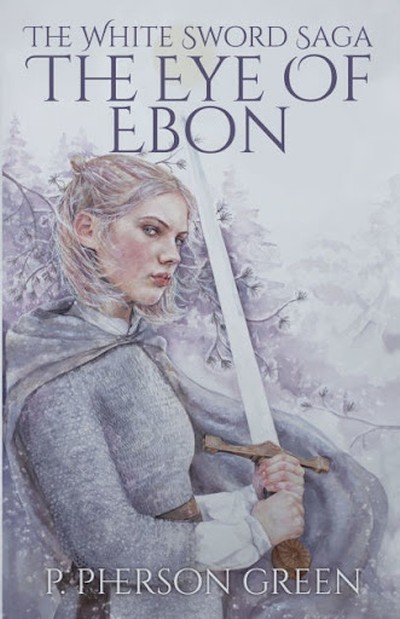 For all that, Green is his own person with his own literary vision and style; The Eye of Ebon is not a direct LOTR knock-off, in the way that Terry Brooks’ The Sword of Shanarra is. A major difference, of course, is the distaff perspective. While Tolkien’s Eowyn is an action-capable female, she’s not the heroine of the saga; his major characters, and most of the characters who display any real agency, or play a direct role in defeating evil, are male. Here, the two viewpoint characters, protagonist Samiare (whom you see depicted on the book’s cover) and essentially co-protagonist Rugette are both female, and formidable fighting females who carry the brunt of the book’s down-and-dirty struggle against evil, and who make the key, crucial gut wrenching and difficult moral decisions at the climactic points. (I was already inclined to rate the book at five stars, but those were the moments that clinched it, and for me moved this tale into the ranks of great, rather than merely good, literature!)
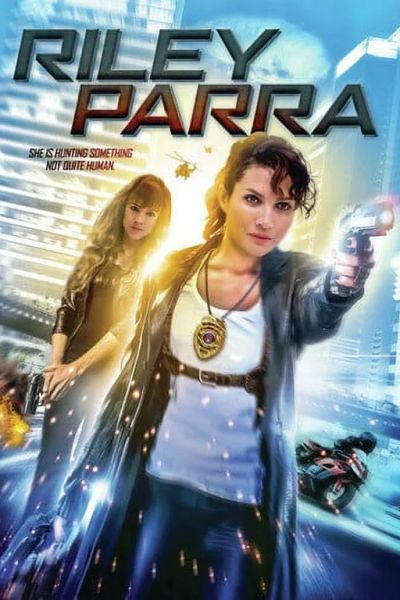 The idea here is considerably stronger than the execution. Police detective Riley Parra (Hassler) works the scummiest part of town, which is ruled by mysterious and possibly legendary figure Marchosias (Landler). However, while working a murder case, Riley discovers the area is, in fact, Ground Zero for an ongoing war between demons and angels. More startlingly yet, she’s directly involved, because she is the “champion” on the side of the angels. This revelation has the potential to destroy the shaky truce which has been in place between the two sides. Riley also has to deal with pesky journalist, Gail Finney (Sirtis, sporting an Australian accent for some reason), and attraction to new medical examiner Dr. Gillian Hunt (Vassey).