



Literary rating: ★★★
Kick-butt quotient: ☆
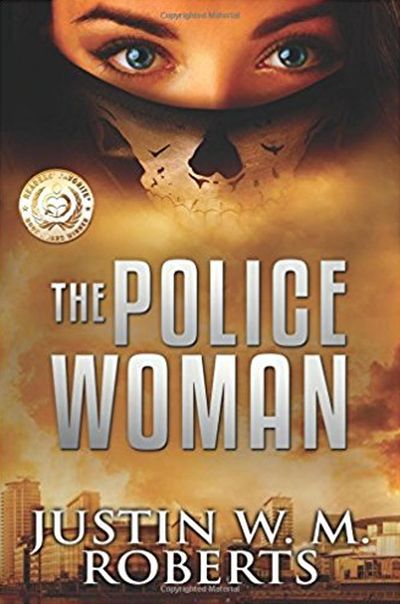
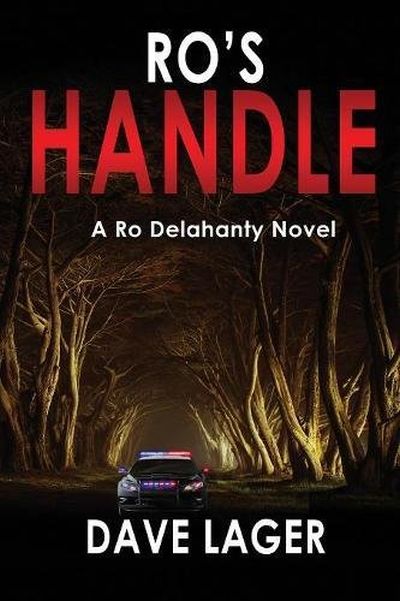 Although I didn’t set out to, in roughly the past year, I’ve read no less than three novels, and one short e-story, that feature female cops as protagonists: this one, “The Academy” (the short e-story that’s the teaser for Robert Dugoni’s Tracy Crosswhite series), Tami Hoag’s A Thin Dark Line, and Justin W. M. Roberts’ The Policewoman. It occurred to me that an instructive way to open this review might be to compare and contrast the four works.
Like Tracy Crosswhite, Lager’s Rowan (everybody calls her “Ro”) Delahanty is a state champion in pistol shooting, who goes into law enforcement as a career. (Ro also has a black belt in judo.) And like Hoag’s Annie Broussard, she becomes a sheriff’s deputy. (Her milieu is a county dominated by a mid-sized city, sort of a median between Tracy’s Seattle and Annie’s backwoods south Louisiana parish.) The principal difference here is that both Tracy and Annie started their careers with ambitions to become detectives, and they’re protagonists of mystery series. This book has no mystery elements as such, and Ro’s vocational interest is strictly being a uniformed beat cop. She’s also younger than Tracy, and had already decided to become a cop as a fifth grade kid (whereas Tracy switched careers after teaching high school chemistry for several years), and she doesn’t carry the emotional baggage of a sibling who was murdered and a parent who committed suicide. (Instead, the Delahanty family is impeccably wholesome and normal.) So Ro’s definitely her own person, not a Tracey Crosswhite clone. And where “The Academy” focuses on the theme of sexism and sexual harassment as a challenge female cops have to face, those elements are very limited in this book, only show up near the end, and manifest themselves only in comments that aren’t made to Ro’s face.
Both Roberts’ Sarah and Ro are basically gun wizards (who, of course, have to put in a lot of training and practice to get and keep that level of skill, in addition to their natural talent!) formidable in combat, and drawn in such a way that some readers will view them each as something of a “Mary Sue” –that is, a heroine who’s too perfect to be realistic– though I didn’t see them that way. But although I classified both this novel and The Policewoman as action-adventure, the action elements in the latter are a LOT more prominent than they are here. This one has only one action scene, and that starts only in Chapter 22 of a 29-chapter book. Some readers (though I wasn’t in that number) of Robert’s book took issue with the first four chapters of character introduction/development and stage setting as being supposedly too slow-moving and boring. Those readers would really have an issue with the first 21 chapters here. And the shooting itself is actually over very quickly, as it would be in real life. Fans who have to have unremitting slam-bang action and a high body count will find this aspect limited and tame here. (Again, I’m not in that number myself, and I actually found that aspect of the book very well done.)
All three of the novels compared here provide the heroine with a “love interest” and have some “romantic” elements, including some unmarried sex. But (though I won’t include any spoilers) the overall handling of the “romantic” aspect here was, for me, highly unsatisfactory and off-putting, and would not, IMO, generally appeal to “romance” fans either. It should also be noted that the relationship escalates to sexual intercourse on the first date (which is the third time the couple have seen each other!), so has very marked insta-love issues. And Ro’s lover here is a divorced dad 13 years her senior, who has a 15-year-old daughter (Ro’s only 21).
You might ask, if this isn’t a mystery, a full-blown action novel, or a real romance, what IS its appeal? What sort of novel is it? I’d describe it as very much an intensive character study of Ro, and a very realistic “slice of contemporary life” novel describing the world of a rookie female cop. Lager obviously has a practically exhaustive knowledge of police equipment, organization and procedure, which gives the work a great deal of authority. Ro is a round, three-dimensional protagonist with a lot of depth to her development, and does exhibit some admirable, heroic qualities. (Frank is developed well too.) As his fascinating blog entries indicate, Lager has a mental picture of Ro’s entire life history from childhood on and a comprehensive understanding of all her characteristics as a person. He doesn’t feed us ALL that information here (the novel only covers the time beginning with her winning the Iowa state shooting championship in April 2003, shortly before joining the sheriff’s department, to September 2003, when she earns her “handle,” or nickname for radio identification purposes, and sort of becomes one of the guys -she’s currently the only female deputy). But we get a lot of it, including a thorough introduction to her family, a few glimpses of her childhood, her orientation week, her habits, life and dislikes, stuffed toy panda, etc. By the time this is over, we know her like a real person (and probably like her –I did, and do!)
This is not, of course, the stuff of high drama. Some readers will feel that the plotting and development of the story is way too slow-moving. The heavy accumulation of detail and description, including things like the menus for people’s breakfasts, description of Ro’s underwear, the specifics of what she and other characters are wearing, etc., contributes to that impression. Related to this, there tends to be a lack of meaningful conflict in the story-line until towards the end. (For instance, both Ro and Tracy Crosswhite are champion competitive shooters, and we see them both in competitive settings. But where Tracy is being scored on her pistol shooting in “The Academy,” it’s at the climactic moment of the tale, and the outcome is in doubt until the end, making for genuine suspense and tension. In Ro’s championship competition, on the other hand, I never really felt any element of suspense or tension, and her win is almost anti-climactic.) Only near the end is there a situation where Ro is in real danger and engaged in actual combat; only near the end is there any real sense of possible conflicts in her relationships with other deputies, and only near the end is there any real question about the nature of her relationship with Frank. Most of the story is pretty much a matter of day-to-day life (with the exception of starting a dating relationship). As might be expected from a college speech teacher, Lager’s technical mastery of prose style is quite professional; there are just a very few places where minor editing would have helped.
For me, this book was difficult to rate, because there are aspects I really like and aspects that I really dislike. I didn’t mind the slow-paced build-up quite as much as some readers probably will, because I was interested in learning about Ro and what makes her tick, and about the workings of a modern sheriff’s department (I learned much that I didn’t previously know, and I think most readers would). IMO, the action scene was good, the handling of the psychological aspects of the aftermath struck me as true to life, and the ending worked very well for me. The Ro-Frank aspect of the plot ultimately proved to be a major liability in my estimation, which dragged down the rating. If the book were written with no “romantic” element at all, just as a straight police-life and action story, I’d probably have given it five stars. As it was, the romantic-erotic parts earned one star. Overall, I decided to split the difference and give the book three, since I liked much of it. (And yes, I will read the sequel!)
I was gifted by the author with a review copy of this book, but no guarantees that I’d like it were offered or expected. Nor did World Castle Publishing (which also publishes my novel) put any pressure on me to write a favorable review (and I would have canceled my contract with them if they had!).
Note: This novel has only one explicit sex scene, but it occupies a very prominent position in the strictly-linear story arc, and it’s extremely, graphically detailed, with a “you are THERE!” immediacy. There is a certain amount of bad language, including f-words, religious profanity, the c-word to describe part of the female anatomy, etc. (Some, though not all, of this reflects real-life cop culture.)
Author: Dave Lager
Publisher: World Castle Publishing, available through Amazon, both for Kindle and as a printed book.
A version of this review previously appeared on Goodreads.
 Debut author Justin W. M. Roberts and I became acquainted recently in the Action Heroine Fans group that I help moderate on Goodreads. I noticed his mentions of this novel there, and was interested enough to accept his generous offer of a hardcover review copy; but no guarantee of a good review (or a review at all) was asked or expected. This book had no trouble earning its stars on its merits! For much of the time while I was reading it, I expected to give it four and a half stars, but after the impact of the ending, there’s no way I could give it any less than five.
 He also appears to have a background in police and/or military counter-terrorist services. His knowledge of S.W.A.T. (special weapons and tactics) terms and procedures, firearms specs, and both British and Indonesian police and military organization and organizational culture and traditions is extensive, to put it mildly, and he puts this to use in spades throughout the book. It’s noted at the beginning of the book that almost all of these tactics are “intentionally disguised” to protect police and military officers (so that baddies can’t use the book as a text to learn what to expect!), but it still has a very realistic feel. We’re in the hands of a writer who knows his stuff here; readers who need and want technical accuracy won’t be disappointed. For other readers like me, who don’t know one brand of firearm from another and have little technical knowledge of covert operations, much of this information will go over our heads, but it will still give a feeling of verisimilitude, and maybe impart some knowledge that will stick! (Seven and a half pages of glossaries of organizational “alphabet soup” and British, Indonesian and Irish military/police slang and terms and Gaelic –here spelled “Gaeilge”– phrases are provided; and if you’re anything like me, you’ll refer to them frequently.)
 Manchester Detective Sergeant Jan Pearce is part of an investigation into local crime lord, Connelly, whose family has managed to evade the reach of the law for decades. Indeed, this is the second recent investigation, the previous effort having collapsed, apparently due to procedural blunders. But the boss isn’t taking it lying down, beginning a campaign of intimidation against those investigating him. This hits DS Pearce, with the disappearance of her teenage son, Aiden: she’s convinced this is retribution from Connelly. But neither her colleagues on the force, nor her ex-husband, Sal, agree – they think Aiden simply ran off.
 If you ever wanted to see Denise Richards brawl with MMA star Chuck Liddell, or even the daughter of Frasier, this film delivers. For Richards plays FBI hostage negotiator, Gretchen Blair, who is being ignominiously sent back to Washington after willfully disobeying orders during a siege. She ends up sitting next to the increasingly-nervous Terry (Barker), who offers her $50 million if she helps him get off the plane alive. For he knows it’s about to be hijacked by Matthew Sharpe (Lundgren) and his cronies, who will stop at nothing to retrieve the item which Terry took from them. It’s up to Gretchen, with the dubious help of an air marshal on his third solo flight, to stop their plan.
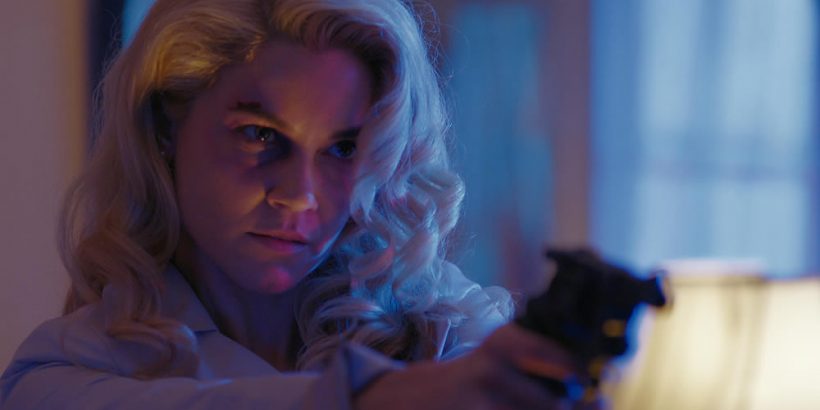 The film never tries to hide the fact that Jessica is nutty as a fruitcake. As a result, its plotting is instead very much concerned just with getting the story from Point A to B, offering few surprises. I’m not exactly convinced by the “Based on a true story” claim here. And let’s not even start with the police procedures depictede: let’s just say, Stillwater PD could use some re-training, and move on. Yet the pleasures outweighed the deficiencies; in particular, as mentioned, watching the mousy Faith and psychotic glam-girl Jessica face off. The latter gets most of the cinematic highlights, vamping it up to great effect. Witness, for example, her hyper-ventilating in order to place a convincingly panicked phone call to her lover. Guess all Jessica’s acting classes finally paid off!
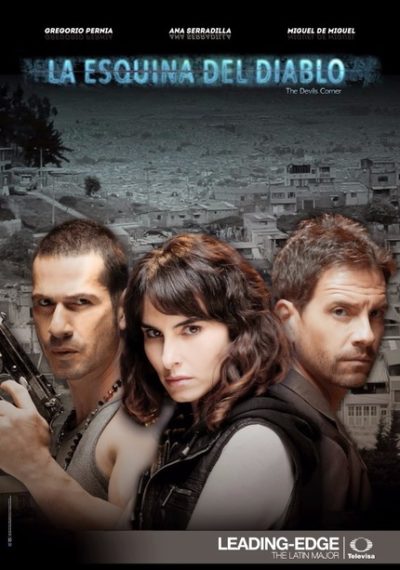 You’re in deep in Devil’s Corner
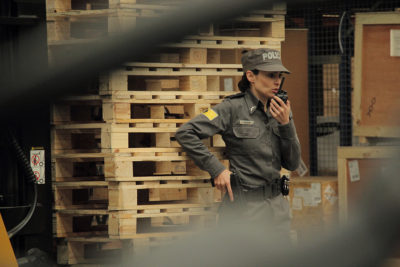 Phew. This cornucopia of plot-lines likely both the series’s biggest strength and its greatest weakness. There’s no doubt it’s actually very well-handled by the writers and cast: even the relatively minor characters are given an impressive amount of depth, and the script never gets jumbled or confused. This is a sharp contrast to Camelia la Texana, the show I’m currently watching: you don’t so much follow the plot, as desperately cling to it, as various groups of sideburn-wearing people scheme against each other. It’s also a contrast, in another way, to Viuda Negra, which was unashamedly about Griselda Blanco. In this case, the breadth of focus inevitably leads to a dilution of why we’re here, with poor Ana often sidelined.
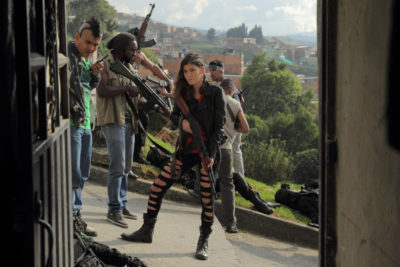 There are a lot of interesting supporting characters: not so much Eder and Yago, who are fairly cookie-cutter in terms of being opposing romantic heroes, with dark, troubled (and somewhat shared) pasts. It’s mostly on the fringes of Velasco’s gang that all the fun is to be found. Cachalote (Julián Caicedo) is a burly thug with a surprisingly soft heart – he has an unrequited crush on the mayor’s daughter, formed during her kidnapping. Meteoro (Erick Leonardo Cuellar) is the gang’s drug chemist, though he looks and acts like a methed-up version of Giorgio Tsoukalos, from the Ancient Aliens show. Most notable of all is Michelle (Estefania Piñeres, right), a hard-nosed barrio brat who is more than capable of holding her own in the tough environment, and is ferociously loyal to her boss. She would have enough stories to tell for her own, lengthy series, I’ve no doubt about that.
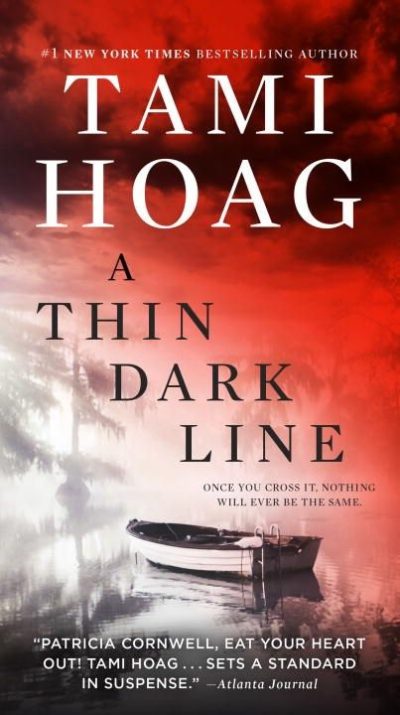 This is officially characterized (though not in the cover copy) as the fourth book of the author’s Doucet series. However, that nominal “series” is apparently very loosely connected, only by having main or other characters from the fictional Doucet clan; and a Doucet appears in this novel, though not as the protagonist. Our protagonists are sheriff’s deputies Nick Fourcade, a detective, and Annie Broussard, a uniformed deputy who’d like to be a detective. (The book is also counted as the opener of the Broussard and Fourcade series, which is apparently more connected; but it has a resolution to the mysteries involved in this volume, while leaving things open for new ones.)
 There seems to have been a sudden surge of gynocentric takes on Taken (as it were), with first
 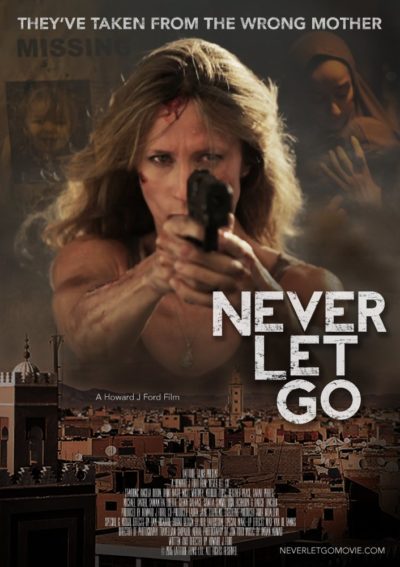 Based on the title and synopsis, I was expecting something like a Lifetime TV Movie. A mother frantically searching for her abducted child in a foreign location, before they can be sold off to some rich Arab, would seem right up their alley. [Though of course, this kind of thing has long been a popular subject for exploitation, to the point where the Hays Code of the thirties had explicitly to ban movies about “white slavery”] It’s a good deal grittier and harder hitting than that, though could have done with much better explanation of why this momma bear is so ferocious – among a number of other aspects.
 This production had a long, convoluted and quite interesting path to the screen. While Lazenby was always on board, the original plan was for him to be a Western bad guy, going up against Bruce Lee and Sonny Chiba. But Lee’s death – oddly, he was supposed to have had dinner with Lazenby that night – resulted in Chiba quitting, and Warner Bros then also backed out of their worldwide distribution deal. It was reworked as a much smaller film, at less than one-tenth the original budget (although at around $850,000, was still very expensive for the time, location and genre), with Lazenby now teaming up with Angela Mao.