 ★★★★½
★★★★½
“Truly a nuclear option.”
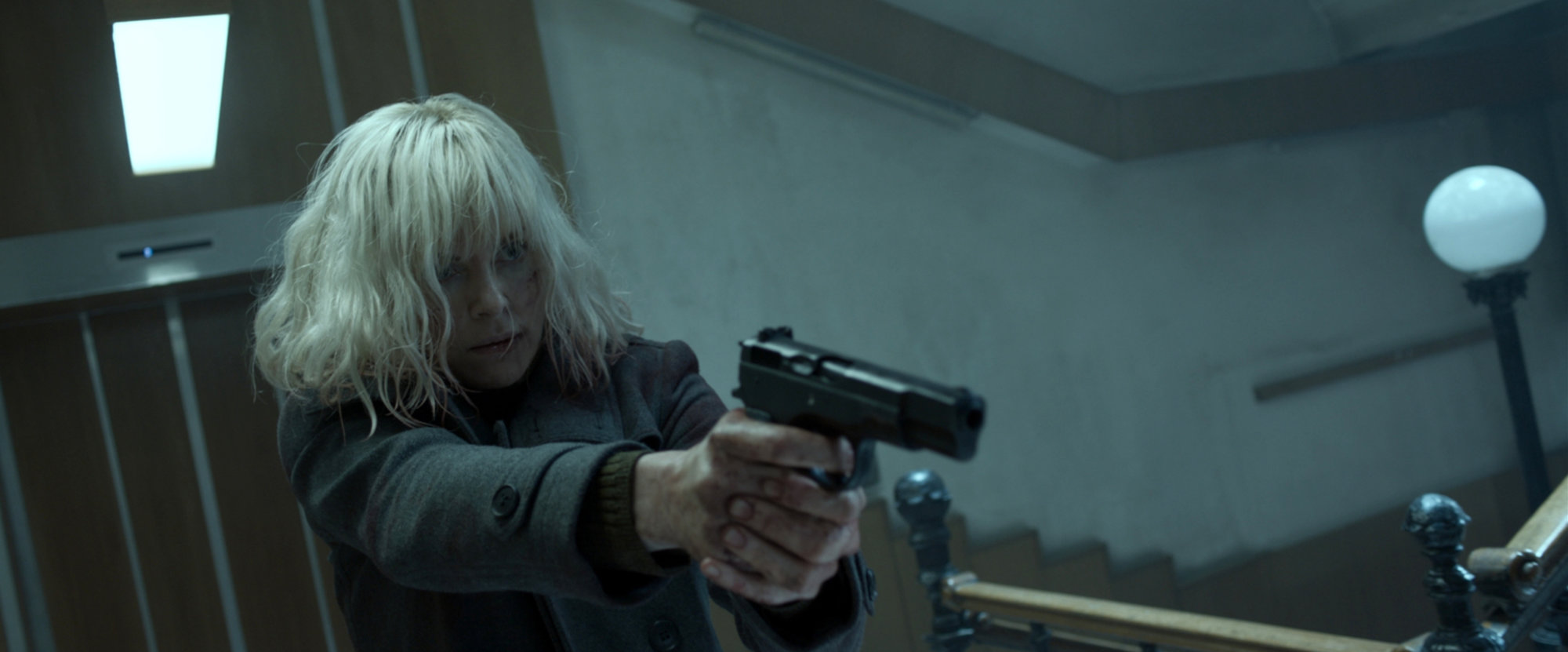
 Ladies and gentlemen, we have a new action queen in town. With Angelina Jolie apparently abdicating that title after Salt, the throne was vacant. Theron had already made a very solid case in Mad Max: Fury Road, then solidified it in The Huntsman: Winter’s War. But there were still doubts: could she hold the true focus of a genuinely action-driven film? There are doubts no more, for Atomic Blonde gives us Theron in the role of Lorraine Broughton, the baddest-ass heroine since The Bride in the first Kill Bill.
She’s an agent of British intelligence, sent to Berlin in the very last days of the Communist regime. Her mission is to retrieve a list which details the identities of every Soviet agent in the field, provided by a Russian defector. Before she has even met her contact there, David Percival (McAvoy), chief at the Berlin station, Broughton has been made by the Russians. Turns out, they have a mole, codenamed “Satchel”, who will stop at nothing to prevent the list from making it into Western hands, thereby revealing their identity. The exhortation of one of her bosses on her way out the door in London, “Trust no-one,” proves to be entirely accurate, as she makes her way across a landscape formed largely of moral rubble from the imminently collapsing Berlin Wall.
The story unfolds in flashback, during a debriefing in London, in which a severely battered Broughton recounts the events that unfolded as she tried to track down the list – and when that proves impossible, the defector, since he claims to have memorized its contents. It’s a perpetually shifting quicksand of allegiances, not least Percival, who has been in the city so long as to have “gone native”. There’s also Delphine Lasalle (Boutella), a French agent for whom Broughton falls, though it’s never clear whether their resulting spot of canoodling is for the purposes of her mission. It’s certainly not difficult on the eye [Boutella may be an action heroine to watch in future, having impressed both as the spring-loaded Gazelle in Kingsman: The Secret Service and one of the better things about recent Tom Cruise vehicle, The Mummy].
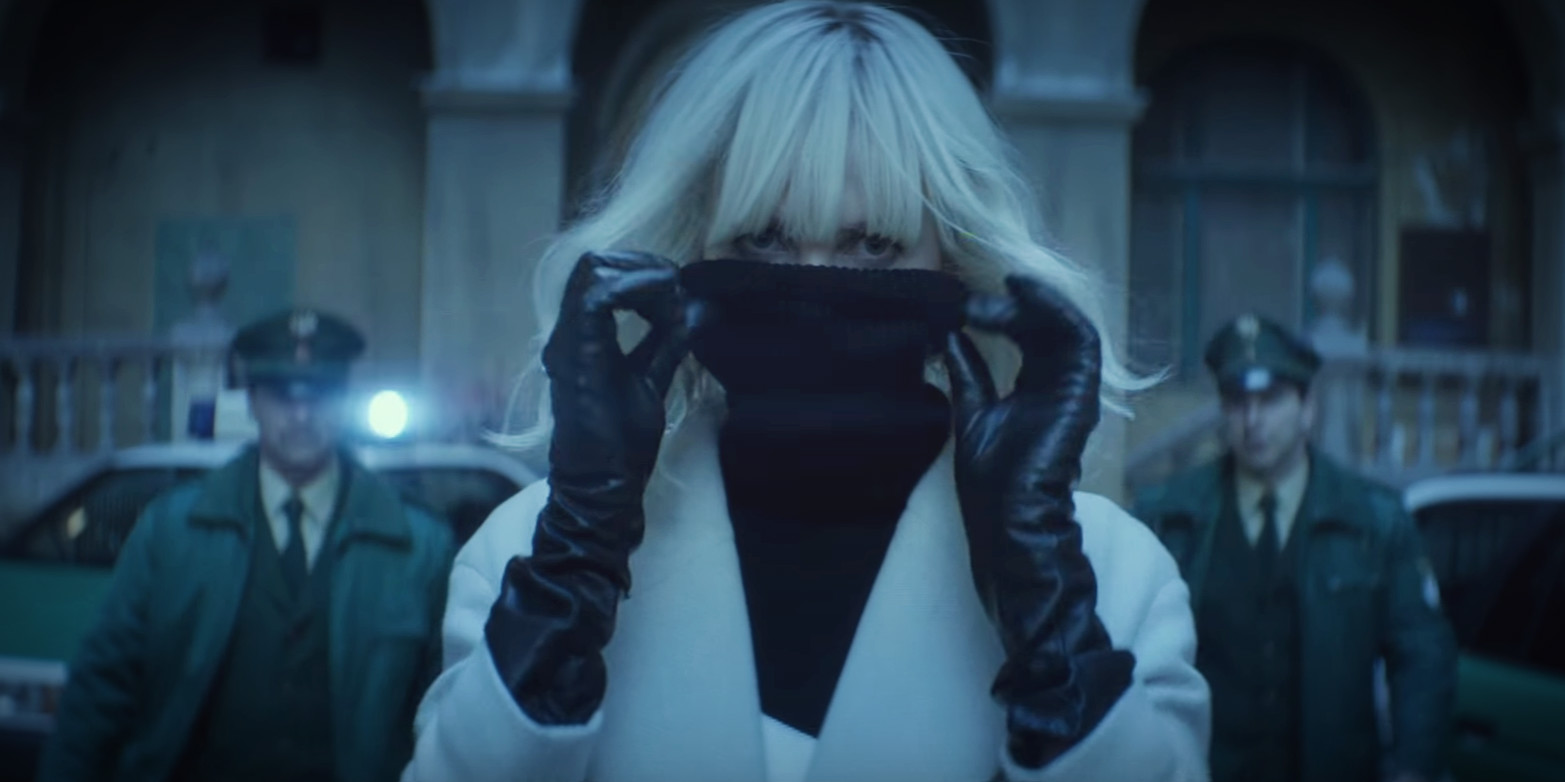
If you’ve seen the trailer, you’ll know why this was my most anticipated film of the year, and the action is every bit as slickly brutal as you’d expect from the co-director of John Wick – Leitch wasn’t credited there because the Directors’ Guild of America don’t like dual credits. This is ferociously hard-hitting stuff, clear from the opening scene, and escalating steadily thereafter. Broughton’s credentials are equally apparent immediately, as she escapes a kidnap attempt on the way from Berlin Airport, brawling her way viciously out of a car’s back seat. Yet this is merely an appetizer for what is to come, and one sequence in particular.
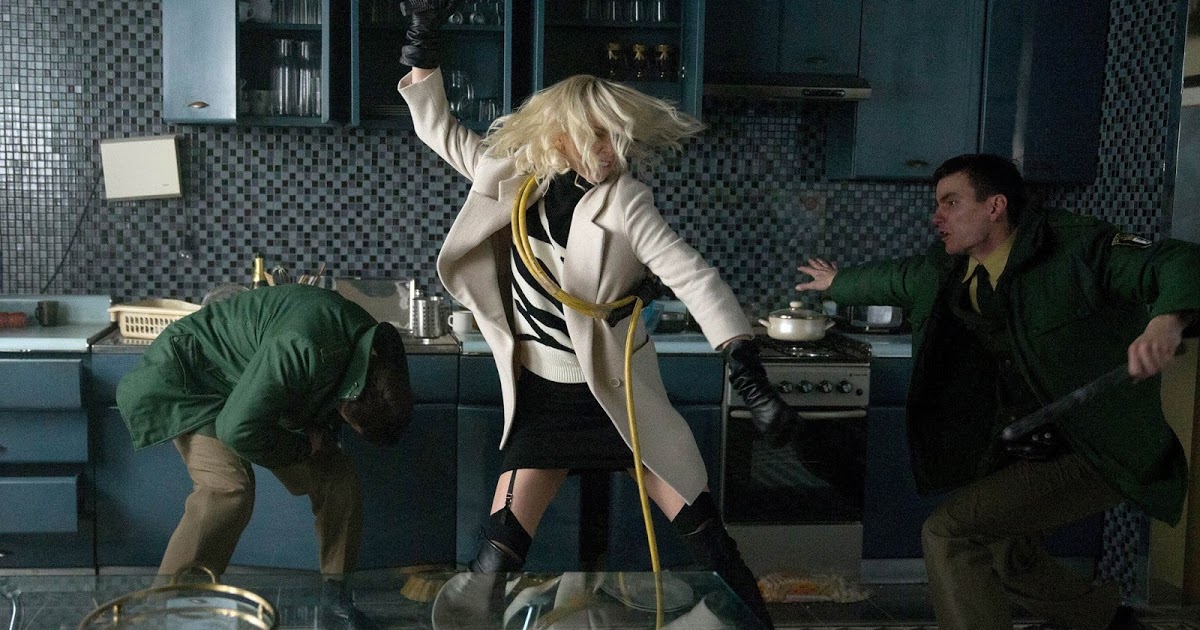
The scene in question sees Broughton escorting the defector, who has already been wounded. They take refuge in an apartment building only to be followed there by a bevy of Russian agents, whom she has to fend off with bullets, fists and even a convenient corkscrew. It’s nine minutes long, and appears to be shot in a single, unbroken take. Key word “appears” – if you look closely, you will likely be able to spot the moments where they cleverly blend the shots (about 20 or so, according to Leitch) together while the camera pans, tracks and zooms through the building. It’s still likely the most intense and hardcore battle in action heroine history, with the participants selling every blow impeccably. This is awesome, ground breaking stuff, and I haven’t enjoyed a scene so much since – again – Kill Bill, Volume 1.
For I’ve seen hard-hitting and inventively choreographed fights before. I’ve seen well-shot and technically impressive fights before. It’s the combination here which is almost unparalleled. Maybe the duel between Michelle Yeoh and Zhang Zi Yi in Crouching Tiger is the only one that comes close, though it had a very different kind of artistry, one that was based on grace and fluidity. [Outside our genre, I was additionally reminded of the car chase in Children of Men, which was apparently an inspiration] This is Lorraine Broughton, doing absolutely whatever she needs to survive, from second to second and moment to moment. It’s raw, animalistic and moves the bar for future action heroines to an entirely new level.
This is actually a problem, because it there’s still a good chunk of the film to go, and nothing the rest of the way comes close. As a result, there’s a sense of letdown from the adrenaline high, even if the final attempt of the Russians to kill Broughton is by no means bad. I’m hard pushed to find anything else of much significance to criticize here. We’ve got an Oscar-winning actress going full-on into the old ultraviolence? What’s not to love? Admittedly, the actual spy plot is a good deal less inventive and original than just about every other aspect here. But it’s merely a backdrop, the canvas on which Leitch and Theron paint their bloody masterpiece. Oh, and if you can’t get permission to use Ministry’s version of Stigmata, find something else. Do not use Marilyn Manson to cover it. He is not Al Jourgensen.
Otherwise, though, I should devote a full paragraph to the soundtrack, since it kicked ass, almost as much as Charlize. I’m a child of the eighties. It was the soundtrack to my teenage and college years, and I even spent some time in Berlin, on both side of the wall, in the middle of the decade. While that would be a couple of years before the events depicted here, it still brought back a heck of a lot of memories. Part of this might be the music, which plays like they rifled my CD collection. It starts with New Order’s Blue Monday, then segues into the opening credits which play out over David Bowie’s theme from Cat People, as Broughton stalks through the London streets. If not the first time that has been purloined for another movie – Quentin Tarantino used it, inexplicably, for World War 2 movie Inglourious Basterds – it works a lot better here. Consider me sold.
This is an action heroine in its most literal of terms. Broughton has often been compared to James Bond, yet she’s even more cool, detached and almost emotionless in some ways. It absolutely deserves a franchise, with its central character chewing her way through post-Cold War history like a shark in human form, always moving forward – and if you get in the way, it will end up the worse for you. Every step is absolutely purposeful and deliberate, a means to an end, and that end is her mission. Broughton does not fuck around, and neither does this film. Such single-minded determination can only be applauded.
Dir: David Leitch
Star: Charlize Theron, James McAvoy, Sofia Boutella, Toby Jones




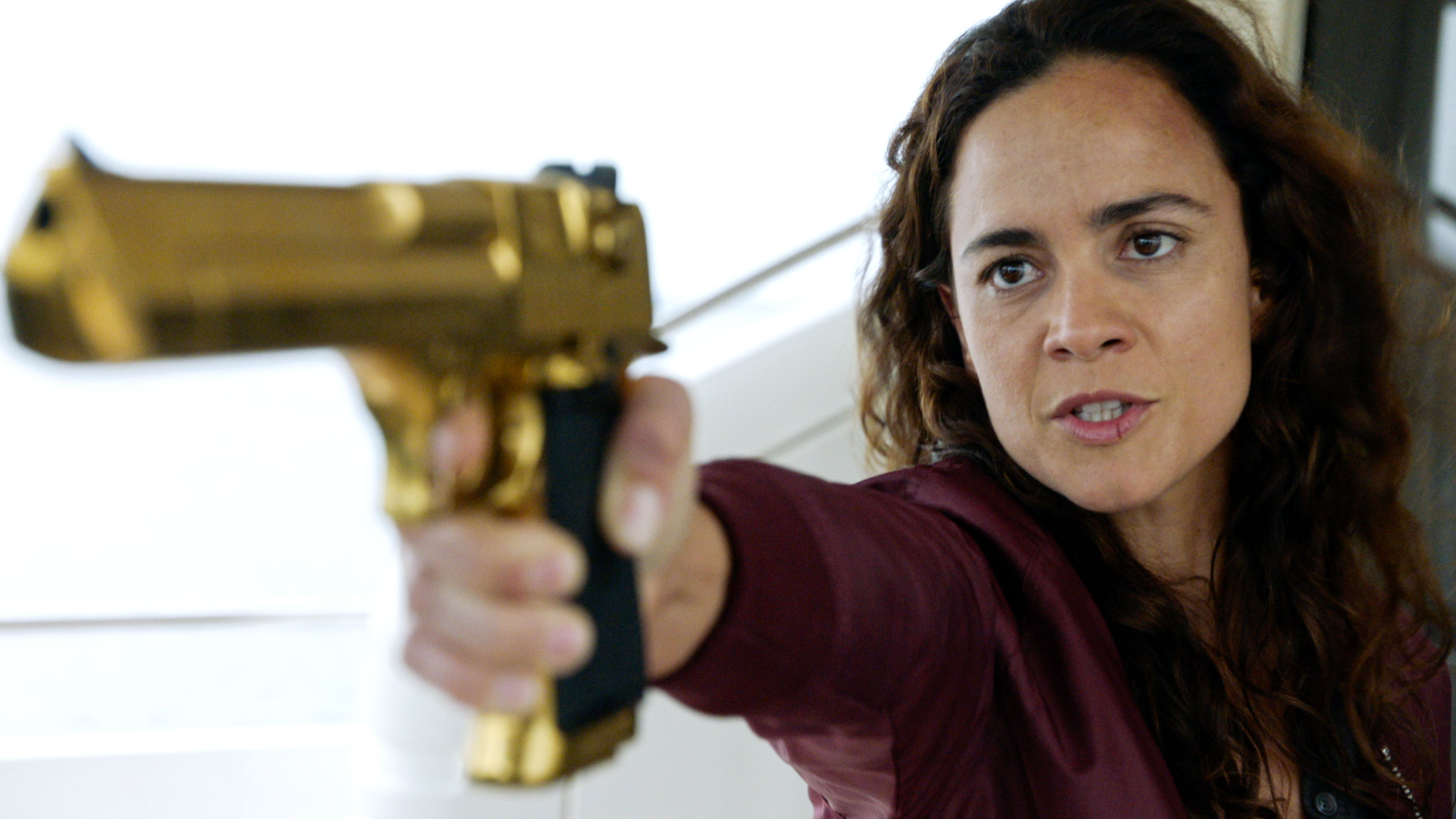
 There seems to have been a sudden surge of gynocentric takes on Taken (as it were), with first Never Let Go, and now this. Both concern single mothers with a very particular set of skills, venturing into treacherous foreign territory after their daughters are abducted. In this case, the setting is Belize, where Nina Johnson (Calis) has gone to spend the summer with her boyfriend, volunteering at a local orphanage. When the promised daily contacts stop, single mom and Miami detective Kate (Holden) gets not much in the way of immediate help from the local authorities, and makes a bee-line to Belize so she can investigate on the ground. She’s helped, after some initial doubts, by friendly embassy employee Francisco Orizaga (Degruttola), who has particular skills of his own, being ex-special forces.
 ★★★½
★★★½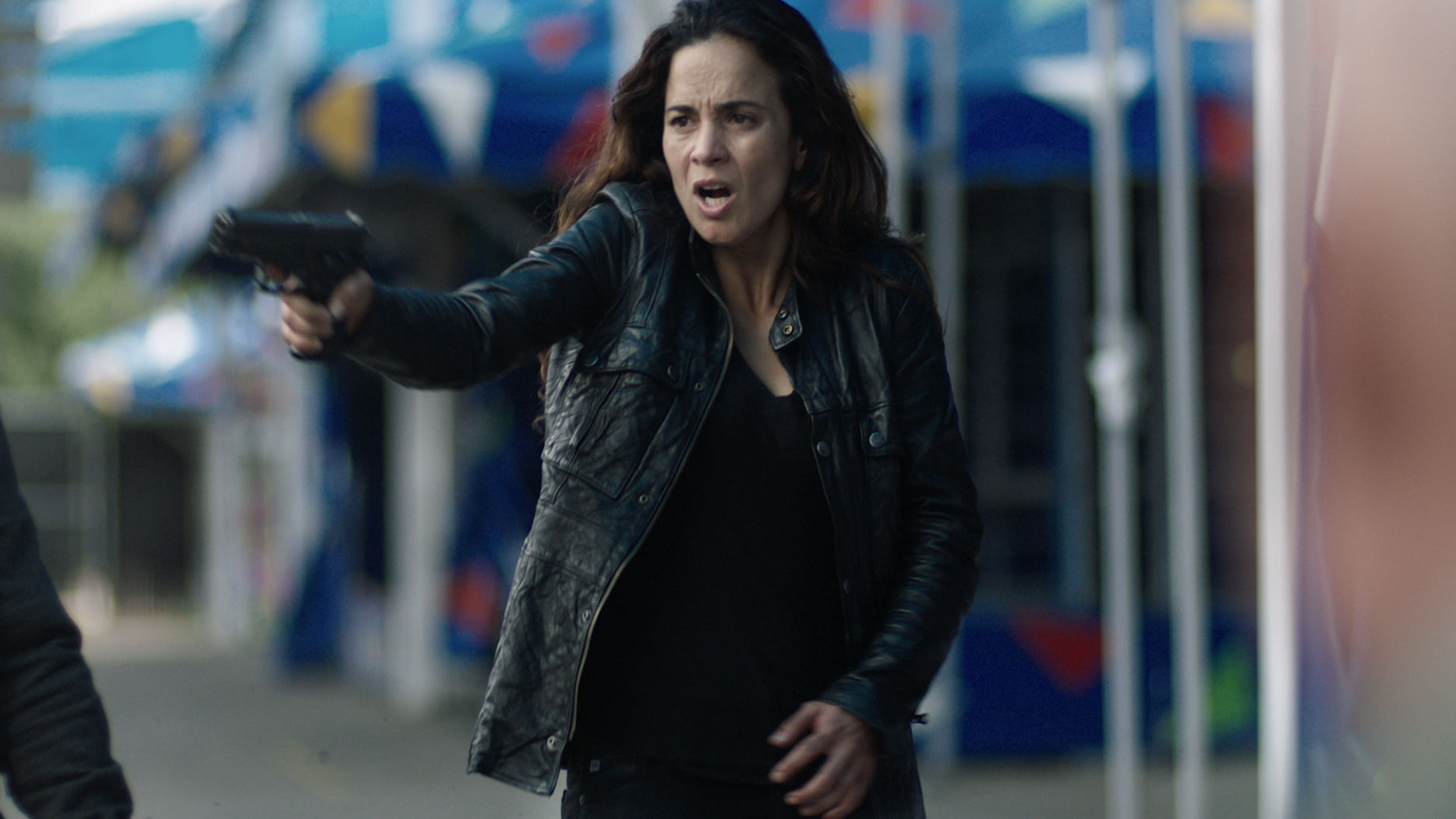
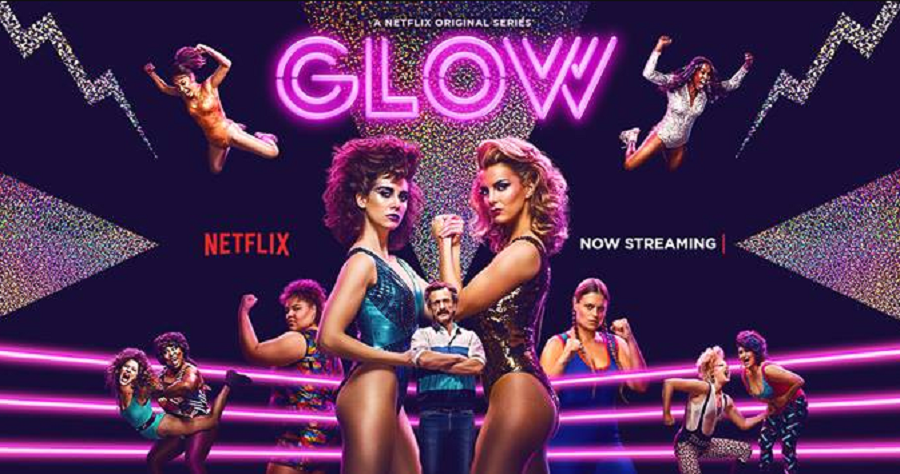 ★★★★
★★★★ This is a great deal of fun, striking a very impressive balance between the drama, comedy and – to my surprise – the wrestling elements. For the show does a particularly good job of explaining both the appeal of the sports entertainment in question, and the work that goes in to making it look good. Here, it probably helps that real wrestlers were involved: Chavo Guerrero was the main consultant, and his uncle, Mando Guerrero, helped train the original GLOW ladies in the eighties. Fans will also spot John Morrison/Johnny Mundo, Brodus Clay, Carlito and Joey Ryan in various roles. It’s not at all a parody of the sport; to a significant degree, the original GLOW felt like that. But it also does extremely well at linking the wrestlers and the characters they play, and showing how the latter evolve and develop out of the former.
 Stealing from both Open Water and
  ★★★★
★★★★










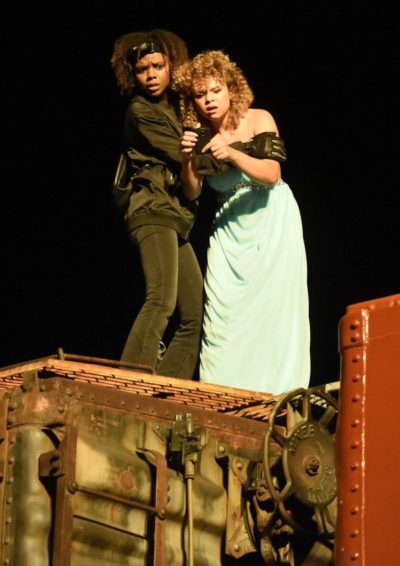 After their mother has a meltdown at her job and ends up in jail: teenage sisters Deidra (Murray) and Laney (Crow, somewhat infamous for her post-elimination meltdown on The X Factor) are left to fend for themselves. With household bills piling up – never mind trying to fund Mom’s bail, or even Deidra’s long dreamed-of college tuition – and Child Protective Services looming, things look bleak. But a visit to deadbeat Dad Chet (Sullivan, channeling David Spade), who works for a railway company, gives Deidra an idea. Hop aboard the freight trains that run by the back of their house, pop open a container to take some goods, and fence them on for cash. Things go surprisingly well, until a disgruntled railroad cop, Truman (Nelson), starts to close in on the pair, intent on rebuilding his reputation after an incident in Arizona.
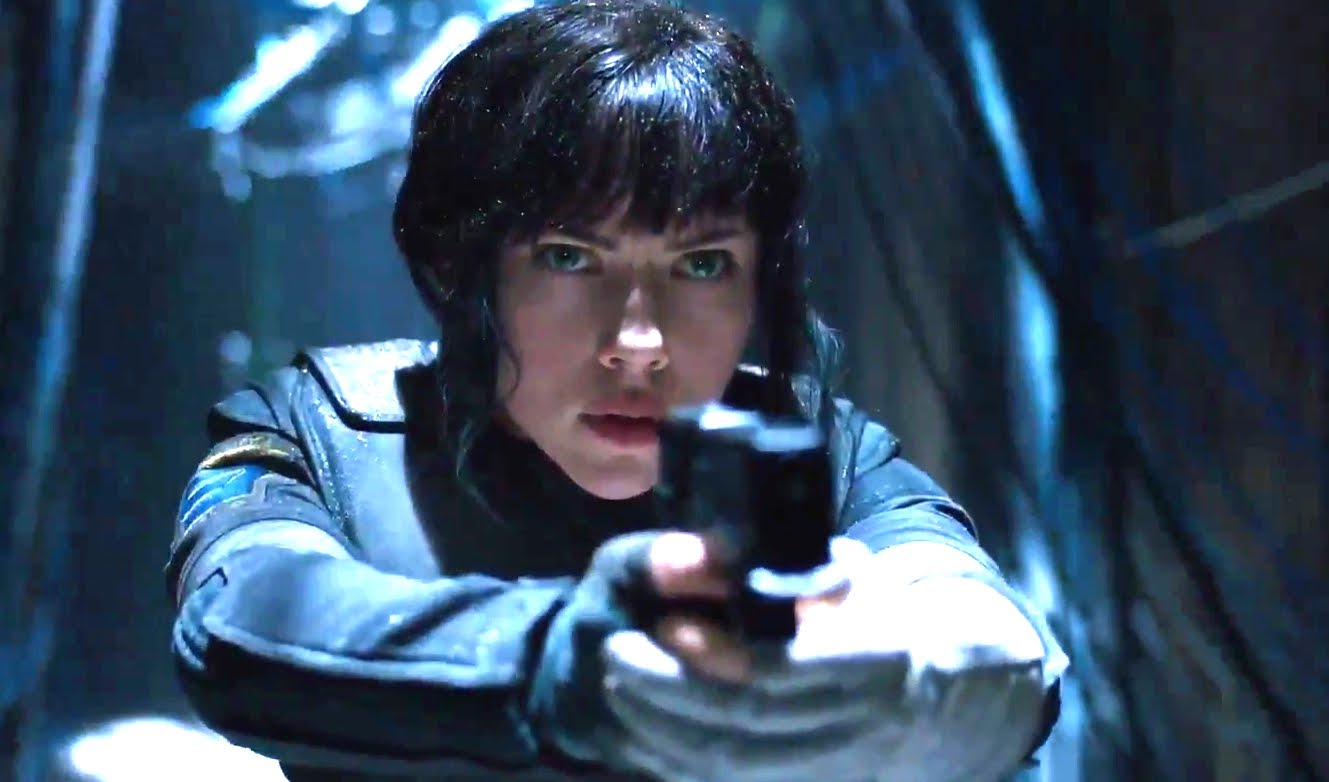 ★★★
★★★ The story has a very clever approach to the whole “whitewashing” controversy: at least initially, rather than Motoko Kusanagi, she has been reinvented by Hanka Robotics as Mira Killian, who give her a whole new set of memories, which may or may not be accurate. It’s this quest for her real identity which drives the plot, containing more than a few echoes of Robocop. And that’s an illustration of the main problem here: it feels less like anything cutting edge, than a conglomeration of elements taken from films which has gone before. That half of these stole from the animated Ghost, doesn’t help the live-action version much.