★★★★
“They Came From Japan…”
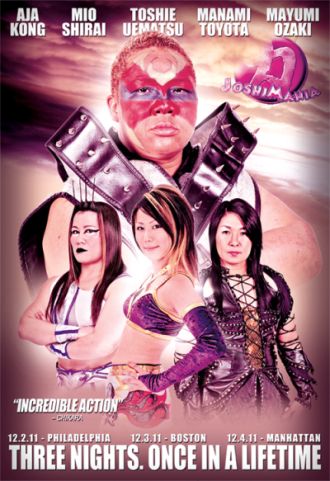
 If I’d heard about this event in advance – rather than the first I saw of it being a review of the opening night – a road-trip to the East coast might have been in order. For this would have been a chance to see some of the giants of Japanese women’s wrestling – known as “joshi” – on a rare trip to the United States for three shows on successive nights. That includes Toyota who, in her mid-90s heyday, was perhaps the best female wrestler ever, and was among the very best, of either gender, at the time: from 1992-95, she wrestled in no less than ten bouts rated as five-star by the Wrestling Observer Newsletter, two of which were named the world-wide Match of the Year. Fifteen years later, I was curious to see if she and other icons like Kong could still bring it, and also to check out Sara Del Rey. A few years ago, Del Rey had been a regular part of IZW, the local promotion we helped at, and her reputation now had her among the best indie workers in the US.
Some general thoughts before we get into each event. If you’re used to the WWE and their “divas”, these events would be a startling change, on a whole variety of levels. Most obviously: the matches aren’t three minute bathroom breaks. For instance, on the debut show, all the women’s matches ran for at least ten minutes, with Toyota vs. Toshie Uematsu running just short of twenty. And, just as important, the skills on view are undeniable, both technically and from the ‘in-ring story telling’ point of view – which is basically an ignored aspect in WWE, where it’s get in, string a few spots together, pin-fall and get out. Here, there’s a palpable sense of effort going in to building a character as heel or face, especially necessary in a one-off set of shows like this, where there’s no back story on which the crowd or wrestling can rely to create atmosphere.
As with just about all wrestling shows, not all matches are equally good, or equally relevant. and I’ll generally be concentrating on the the main bouts more than the undercards – though there were still some moments worth mentioning from the latter. The three nights of Joshimania also included some men’s bouts: Chikara is mostly a male promotion, with even Del Rey fighting against men. I acknowledge the existence of these matches here, and will not cover these again, though they were generally entertaining.
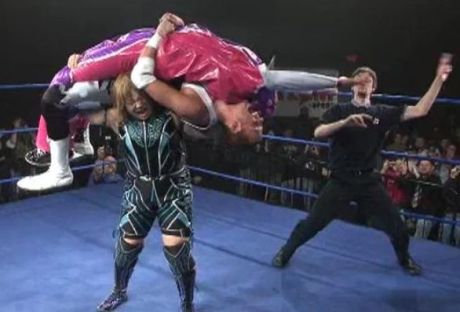
Night 1: December 2, ECW Arena, Philadelphia. A good example of those “mentionable moment” came in the opening contest, an inter-gender match where the joshi trio of Kaori Yoneyama, Tsubasa Kuragaki & Hanako Nakamori beat the Chikara heel team of Archibald Peck and Los Ice Creams. This ended with the submission move shown below on the left, in which Kuragaki lifted two opponents across her shoulders. It was the move of the night, amazing especially if you consider that most divas – with the honorable exceptions of Beth Phoenix and Kharma (who was a tag partner of Aja Kong in Japan in the mid-2000’s) – would crack in a stiff breeze. That was the highlight of the undercard, with the GAMI vs. Sawako Shimono bout rather slow and uninteresting, coming across as too obviously staged.
 Things perked up with Cherry & Ayako Hamada vs. Mayumi Ozaki & Mio Shirai, the latter playing the cheating heels to impeccable effect, and this really showcased the character aspect of pro wrestling. In particular, the veteran Ozaki had a grudge against the “rookie” Cherry, and concentrated on bullying her every chance she could get, legally or otherwise. It’s the first time I’d seen Shirai, and she made a great impression too, in what was probably the most entertaining bout of the opening evening. Manami Toyota is now into her forties, and has probably lost a step or two from her peak, but is still an unrivalled combination of high-flier and technical expertise – her misile drop-kicks remain a thing of wonder. Her opponent was Toshie Uematsu, another veteran, albeit one three years younger than Toyota. This was a solid enough match, between a pair of veterans who are more than familiar with each other, but the lack of an obvious heel/face may have robbed this of some drama.
No such problem with the final bout: it was clear who was who, from the moment Kong spurned Del Rey’s offer of a handshake pre-bout, leading the US wrestler to yell “Too good to shake my hand, Aja?” at her opponent. Del Rey threw everything she at at Kong right from the start, but Kong wouldn’t go down – for instance, after being hit by Del Rey’s headbutts, she went over and started headbutting the corner turnbuckle. What this did was set up the later parts, when Del Rey’s offense did have an impact, such as the massive suplex dropping Kong on her back. Del Rey took her share of punishment, including a metal can to the head after the a ref bump took the official out. The finish came after Kong missed her finisher, the uraken or spinning back fist; Del Rey took advantage to roll Kong up for the pin, ending the first night’s events.
Night 2: December 4, Everett Rec Center, Boston. Okay, a little outside Boston, technically, but let’s not split suburbs. Many of the same competitors from last night were seen again, with the matches swapped around to provide a different set of contests. The crowd looked a bit smaller than Night 1, but were probably a little bit more into things – it’s amusing to be reminded of how wrestling fans anywhere (be it Massachusetts or Arizona), tend to react the same way. More than once, I thought, “Is that Chikara’s equivalent of ?” Wherever you go, there you are. Which has probably just made this the only review of Joshimania to quote Confucius. Or Buckaroo Banzai, if you prefer.
 Quickly to go through the undercard, GAMI still continues to underwhelm; watching her and her opponents dawdle their way across the ring at leisurely paces, was like watching furniture being rearranged. However, Kaori Yoneyama did prove impressive in her match against Hanako Nakamori. That was especially so, given her small stature – she’s only 4’11” – but that did not reduce her impact in the match one bit. It was mentioned several times that Yoneyama was going to retire shortly, but it seems this tour helped lead to a change of heart, with Yoneyama announcing, literally during her retirement ceremony, that she’d be carrying on. Glad to hear that, since I enjoyed her matches: the promoters of that final event were none too happy, and had to offer refunds to those who’d attended!
Things literally kicked into high-gear with Mayumi Ozaki vs. Mio Shirai – they’d been losing tag partners last night, and based on this one, each blamed the other, because this was phenomenally stiff. Shirai’s kicks and Ozaki’s punches were the stuff of nightmares: the latter won out in the end, and even Chris nodded approvingly, saying “This is real women’s wrestling.” Hard to argue with that. Sara Del Rey took on Tsubasa Kuragaki in the next match, which for my money just took Bout of the Night honours, though it was hard to separate the singles matches in terms of quality. This was a blitzkrieg of perpetual near-falls, and you had the sense the match could end at any time, in either direction, which made for engrossing viewing. An amazing strength move by Del Rey, suplexing her opponent, out of the Royal Butterfly submission hold [with both her opponent’s feet already off the floor], proved decisive.
Manami Toyota was in action next, but as part of an 8-man tag match – or, rather, a 6-man 2-woman match. Listing the participants would use up all my space, so I’ll just say it was as packed with action as you’d expect from such a crowded ring, though I’d rather have seen a ring goddess like Toyota as more than 1/4 of one side, even if she was certainly involved more than one-quarter of the time. I was a little surprised, given their lengthy track record, we didn’t see the “obvious” match of Toyota vs. Kong, one-on-one, in this series. Instead, the main event here was Kong vs. Ayako Hamada, with Hamada giving away about 80 lbs or so. Can’t say I felt the outcome here was ever in doubt, but credit Hamada for withstanding much punishment, e.g. Kong stomping on her body, before catching an uraken. Goodnight, Vienna: though even Kong – ever the monster heel – acknowledged Hamada’s effort after the bout, a nice touch.
Night 3: December 5, Highline Ballroom, Manhattan One of the problems with one-off shows like this is there’s no possible story arc; a key aspect of pro wrestling is threads that run over multiple consecutive events, typically building to a big finish in some way. With a fresh audience each night, that’s not possible here, but what is lacking there is largely made up for in personality and ongoing character. By the time I got to the third show, I knew that Mayumi Ozaki would cheat like a three-card hustler, Aja Kong would no-sell just about every bit of offense thrown at her, and Sara Del Rey would stand her ground against the best joshi could throw at her. This predictability might seem a deficiency, but it’s what we want. This is soap opera with violence, and is designed to give viewers what they want, not confound expectations. This night’s showed delivered impeccably.
On the undercard, I should mention Saturyne, who was one half of an impromptu tag-team taking on Los Ice Creams, and was more or less an unknown. She made a good impression, taking a good deal of punishment but also showcasing some spectacular high-flying moves. One to watch. This was followed by GAMI vs. Portia Perez, and while I was unimpressed with the former in the other two nights, this was her best match of the weekend, with some great strength moves, including holding a vertical suplex for a full 20 seconds. The final match of the half saw Toshie Uematsu fit in nicely with the demonic Batari trio, and take on Cherry and the Colony (all three Ant fighters) in an eight-person bout that was no less frantic than the one the previous night.
It was certainly warmly appreciated by the audience, and I they were the “extra man” which helped make this night’s show the best one. They seemed really into almost every bout, and their reaction to the moves certainly enhanced their impact. It was a “cosy” venue, with the fans almost on the edge of the ring, and this made for a great atmosphere, despite the early 4pm start. After intermission, they really started to get into things with the Ozaki vs. Yoneyama match – as noted above, this delivered exactly what you’d expect, with the OZ twisting all the rules and Yoneyama [coming to the ring in s head-dress, for some reason…] taking all the punishment and bouncing back like a Duracell bunny made of latex. I think it was this bout which included a Human Centipede reference from the commentator. Not something you get on WWE.
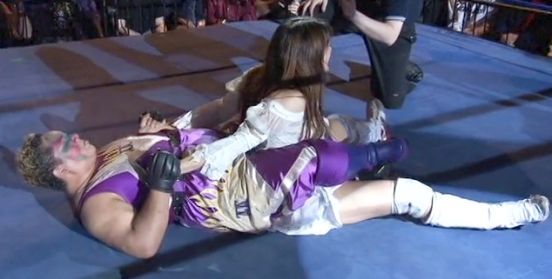 Manami Toyota, Sawako Shimono & Hanako Nakamori vs. Aja Kong, Tsubasa Kuragaki & Mio Shirai. Frak me, this was good. If you buy only one DVD, Show #3 would be it, and if you watch only one match on one DVD, it’s this one. It ran for twenty-eight minutes, fifty-seven second. Let me repeat that. No, better yet, merely appreciate it was about ten times as long as your average Divas contest, and that’d include the WWE introductions. And you know another thing? There wasn’t a dull moment. Little wonder the crowd were chanting “This is awesome!” while the bout was still in progress. I was expecting this mostly to focus on Kong and Toyota, but it was a real barn-burner, with all six women both taking and delivering an impeccable showcase for women’s wrestling. While most of the matches in these three night were good, this one was outstandingly well-paced and entertaining.
The last bout had Sara Del Rey go for the triple-crown, having gone 2-0 against Kong and Kuragaki so far. Ayako Hamada stood in her way, and this one started cautiously, with both women trying to find an opening that would give them an advantage. Eventually, however, all such pretense at subtlety was replaced by them kicking each other in the head. Repeatedly. With feeling. Del Rey eventually prevailed after fifteen or so minutes, courtesy of a spike piledriver, to complete her undefeated run. While a solid main event, it definitely came up a step or two short of the fabulous bout which immediately preceded it. However, given the amazing pedigree of those involved, Del Rey shouldn’t be embarrassed in any significant way.
Conclusion. This was a heck of an event, and kudos are due to Quackenbush and the entire Chikara organization for the undeniably huge effort that went into putting these three shows on. It’s probably not much of a stretch to describe them as the finest series of women’s wrestling shows ever put on in the United States, and for any fan of the genre, the DVDs – available from Smart Mark Video for $15 each, and the digital downloads are less than ten bucks – are almost essential. As noted, if you can only get one, the third night is likely the one to have, containing the standout bout of the trilogy, as well as a number of extremely solid other matches. And even if all you’ve ever done is yawn your way through a two-minute Divas match on Monday Night RAW, this is the equivalent of a triple-shot expresso, injected directly into a vein.
Date: December 2-4, 2011: Philadelphia, Boston, New York.
Star: Manami Toyota, Sara Del Ray, Aja Kong, Mayumi Ozaki
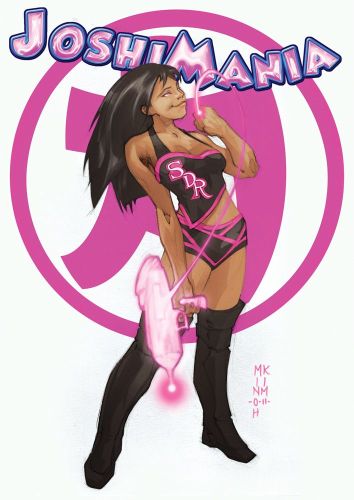
[Tip of the GWG hat to Minoh Kim for the Sara Del Rey illo, and Makeway Graphix for the event poster.]



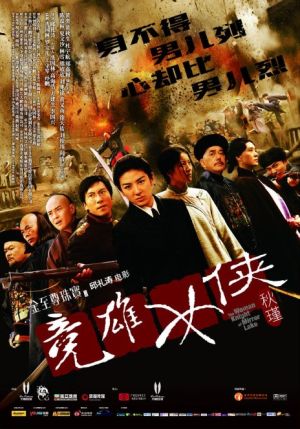 I find the line between “terrorist” and “freedom fighter” an interesting one, drawn not so much by any objective measure, but by the viewer’s perspective and historical hindsight. Qiu Jin is a good example: she fought against the perceived oppression – particularly of women – by the Qing dynasty in the early 20th century, and ended up getting publicly beheaded for her support of revolutionary factions, by the government of the time. Now? A heroine and a martyr, who has an official museum ‘n’ stuff. Funny how things work out.
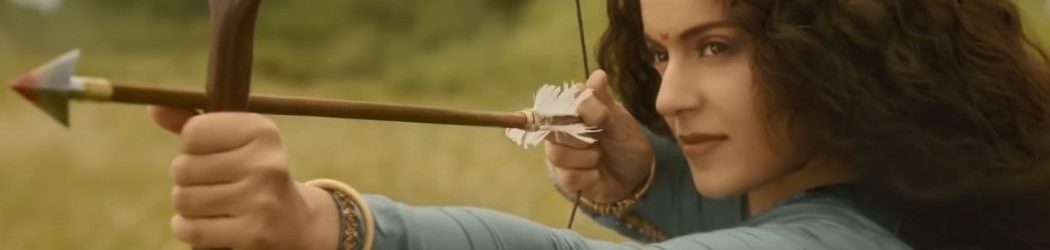
 To be honest, I have very little clue about what was going on here. Oh, the basics are clear enough. After losing their patriarch General Yang Zongbao (Ren) in battle, a noble family opts to send everyone out to the West to defend the realm from the usual invaders. They’re almost entirely female, but all possess significant ass-kicking ability, with their own particular weapon of choice. These are listed, in rapid order, near the start of the movie, and I’d suggest taking copious notes, because you won’t be able to recognize them otherwise: one armour-clad woman looks very much like another when they’re in battle. It’d probably have helped if they’d had a number on the back of their helmets or something. Hey, it’s not like this is a model of historical accuracy to begin with.
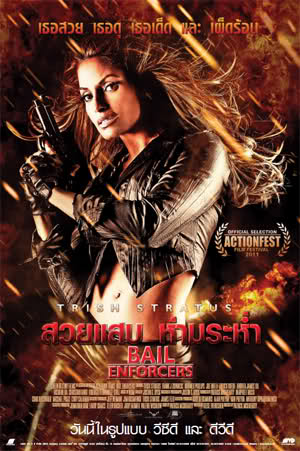 The films put out starring WWE wrestlers are a bit of a mixed bag: some are mindlessly entertaining, while others are near unwatchable. And much the same goes for their Diva’s division: some are actually good wrestlers, others are clearly chosen for their looks. Stratus does probably fall into the former category, but this doesn’t do her adequate justice, and top-billing is probably a bit of a stretch – she’s held hostage more than she kicks ass. She plays Jules, one of three bounty-hunters, who pick up a guy that suggests a deal: let him go, and he’ll point them to a wanted man with a $100,000 reward. They accept, but when taking the guy in, get a call from mob boss Hal Lambino (Rafla) who offers them one million dollars if they deliver the bail-jumper to him instead. Needless to say, the transaction doesn’t go smoothly.
 ★★★★½
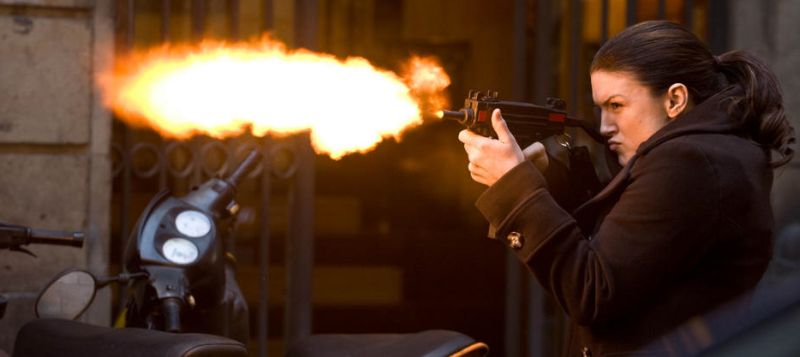
★★★★½ Soderbergh has never shied away from using unconventional cast members in his movies. Bubble was made entirely with non-professional actors, and when he wanted someone to play a high-class call-girl for The Girlfriend Experience, he went with renowned adult actress, Sasha Grey. Continuing this trend, Haywire revolves around MMA star Carano, which I guess means Soderbergh’s recent leading ladies could, in real life, kick your ass or lick your ass. Ok, I’ll stop. Here, Carano plays Mallory Kane – I keep wanting to type Mallory Knox – an employee of a shady private contracting firm with links to the government, who do the dirty jobs for which the feds want plausible deniability.
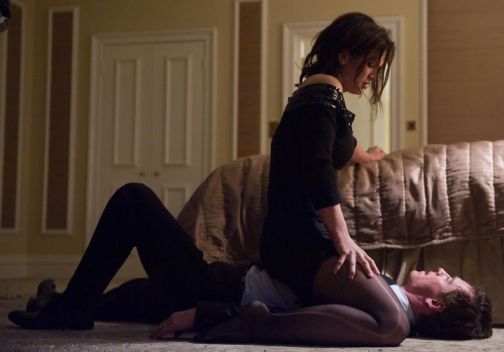 We first meet her in a diner, where Aaron (Tatum) meets her. It’s clear there’s some tension, with Aaron having been ordered to bring her in. After a brief, brutal brawl, she knocks him out and escapes, in a car belonging to startled patron Scott (Angarano). There she reveals what led up to that day: an operation in Barcelona, supposedly to rescue a hostage, followed by another in Dublin, which turned out to be an attempt to tidy up the loose ends from Barcelona, The plan is to frame Kane for multiple murders and portray her as a rogue operative. Kane needs to get to her boss, Kenneth (McGregor), and expose the truth before she’s gunned down.
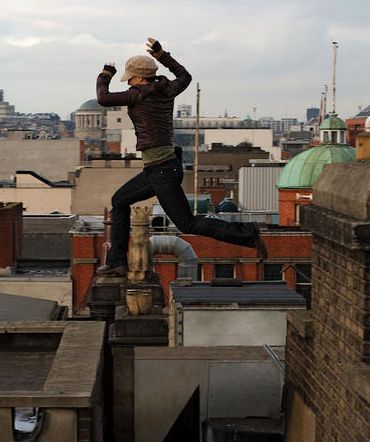 And then there’s the ass-kicking, of various kinds. It’s good, Carano demonstrating a no-nonsense style that’s highly-effective. Perhaps
  After the abomination that was Part 2, I’d filed the third entry under ‘watch whenever I have time’, until a spirited debate on its merits (or otherwise) broke out on over oun our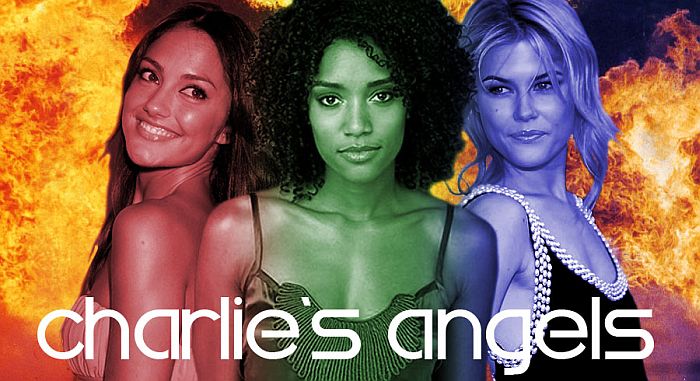
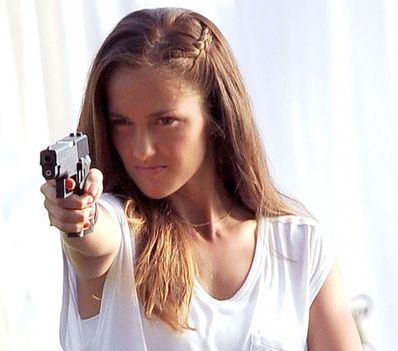 It could perhaps have withstood these barbs, if it hadn’t been for the poor ratings. 8.76 million viewers watched the Sept. 22 premiere, leaving it third in the timeslot, with less than half the audience for CBS and Fox’s offerings. That was disappointing enough, but it lost 19% of its audience the following episode, and by week three, it was down below six million. The death-knell was that, among the 18-49 year old demographic key to advertisers, Angels was on a mere
 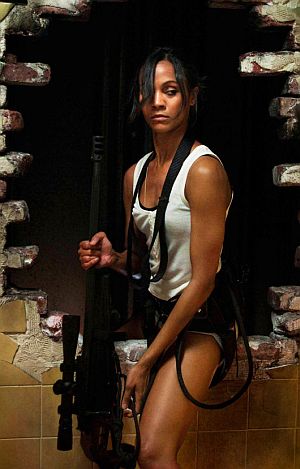 There are moments where this seems to have the potential to break out beyond its story, but once you get past the strong central core, the script has very little to offer. Cataleya (Saldana) narrowly escapes death when her parents are killed on the orders of their gangster employer, Don Luis. She flees from Colombia to Chicago and is raised by a family friend, but never forgets where she came from, and has revenge on her mind. Grown-up, she becomes a hit-woman, but has a side-project of payback. She has an occasional boyfriend (Vartan) who knows little about her, and a dogged FBI agent (James), intent on tracking down the mysterious, elusive killer. Y’know: all the usual baggage that goes along with being an assassin.
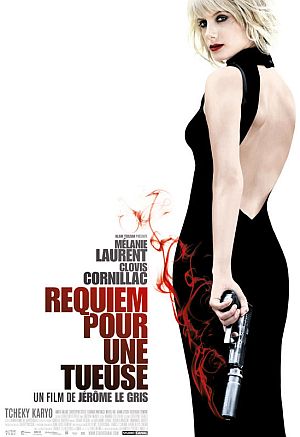 The French have a decent pedigree of action heroines, going back to Joan of Arc. Cinematically, the likes of Bloody Mallory, Adele Blanc-Sec, and one of the most influential of them all, Nikita, have kept the tricouleur flying. This is closest to the last-named, with Lucrece (Laurent) fed up of the assassin game, but talked into that old standby of the genre, one final mission, by her agent (Karyo, who of course was also in Nikita). This involves posing as a classical singer and taking part in a performance of Handel’s Messiah. For the target is the bass singer (Stills), whose Scottish distillery occupies land an oil company wants for their pipeline. Lucrece is pretty disenchanted with the whole thing, and this may explain why her early attempts mis-fire. Fortunately, the special agent (Cornillac) sent to track her down, is equally as unenthusiastic. But is Lucrece the only killer in play?
 “What did your mother die of?”