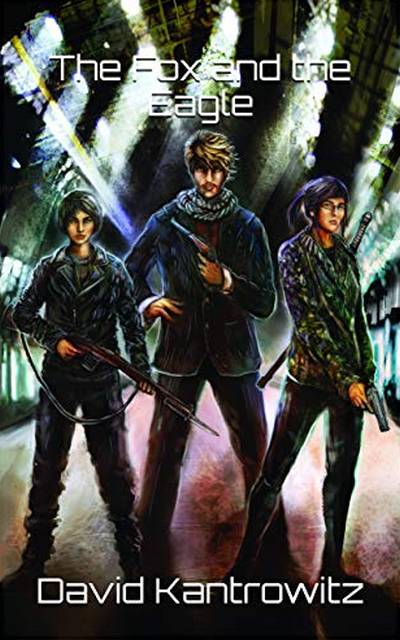

Aesop by Michele Packard

Literary rating: ★½
Kick-butt quotient: ☆☆½

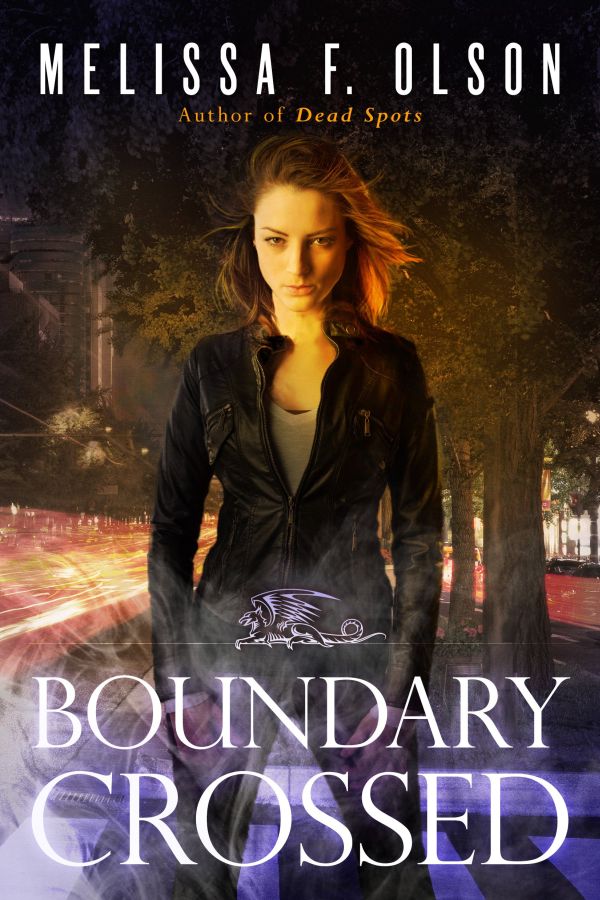
Matti Baker has always been… unusual. She was adopted as a child, and subsequently discovered her mother was an FBI special agent who died while giving birth to Matti on a mission. She breezed through high school, and after graduation, began training to become a contractor for a private agency, carrying out “special” tasks, under the (rather vague, and entirely deniable) auspices of the US government. On successful completion of the four-year course, Matti begins missions, such as neutralizing terrorists. She also meets Tom, who becomes her husband and they have three kids – triplets born on September 11, 2001. But, in 2015, the tables are turned, and Matti becomes the target for some highly-motivated and thoroughly unpleasant enemies, who are seeking vials in her possession, and won’t take “No” for an answer.

This is definitely a slog. The vials, for example, are mentioned early on, as having been passed down to Matti by her mother. Yet they are then entirely forgotten for a good twenty-five years. Then, two-thirds of the way into the book, she’s captured and immediately interrogated about their whereabouts. I had, literally, completely forgotten about them by that point, since they were barely mentioned. “We can get to the vials in a sec,” it says on page six. Doesn’t happen. We never do discover what they’re supposed to contain, what their importance is, or why an FBI special agent thought it would be a good idea to bequeath them to her ten-year-old daughter. Given their position at the heart of much of the plot, this seems unforgivable.

The style is equally clunky. It relies heavily on a long series of pop-culture references to music, movies and TV shows. In the course of less than half a page, we get all of the following:

  • I swear I felt like he was thinking about that Nine Inch Nails Closer song as he stared at me.
  • I felt like Olivia Pope in Scandal.
  • Just like in The Italian Job, we had orchestrated every little detail.

These get shoehorned in there, because… Actually, I’m not sure why: we’re not talking obscurist entities that will prove the author’s street-cred. I speak here, as someone who likes Nine Inch Nails. Other sections obsess over interior decor in a way that feels more like house porn. Then again, everything in Matti’s life, for her husband and children through to her pair of impeccably-trained attack dogs, are utterly perfect in every aspect. Why should her living quarters be any different?

The characterizations here, in particular the heroine, all really come over as little more than wish-fulfillment, with a leading lady who appears to possess no weaknesses, flaws or faults – in other words, anything which might make her interesting. The term “Mary Sue” gets bandied about quite a lot with regard to action heroines; probably a little too frequently. However, this may be one of the cases where it deserves to be applied.

Author: Michele Packard
Publisher: Independently published, available through Amazon, both as a paperback and an e-book
1 of 3 in the Aesop series.

Akame ga kill

★★★
Game of Thrones meets Japanese anime humour”

“Akame ga kill” can be translated as “Akame kills by slashing” and yes, she and her comrades do that and much more! Though, strangely enough Akame is not really the main character of the series, but young teen boy Tatsumi. Honestly, I wonder why the title character is not at the center of a show. But who cares as long as the show is good? And there is certainly no shortage of action heroines to be found therein.

Let’s start with the plot of this fantasy anime series from 2014. Young Tatsumi (Saitô) comes into the capital of the Empire. Hoping to work his way up the  ranks in the army, and send earnings back to his poor village, he’s quickly disillusioned when he’s tricked out of his money. A wealthy girl and her family offers him shelter, but in the night the infamous rebel group “Night Raid” attacks and kills all of the inhabitants of the house. They give Tatsumi a choice: join them, or die! Tatsumi is hesitant, until they show him that the two friends with whom he started out from his village, were tortured and slain by rich perverts for pleasure.

The truth of the country is then revealed. The young king is manipulated by an evil advisor, and the government is corrupt and consists of a rich elite who exploit the poor by taxes or by torturing them. Night Raid is a group of people, mostly unknown to the authorities, who want to overthrow the government. The advantage the group have is possession of so-called “Imperial Arms”, magical weapons that can do wonders. Each has its own special ability, and can typically be used only by a carrier to whom it responds emotionally. Unfortunately, their opponents also have these kind of weaponry. They are a newly formed group of the Empire called the “Jaegers” (“Jäger” is the German word for “hunter(s)”), under the leadership of the gruesome General Esdeath.

Let battle commence! For Akame ga kill is essentially a Battle Royale-esque anime version of Game of Thrones – though with every one of the main characters carrying Imperial Arms, all parties have an equal chance. And in common with Thrones, there are a lot of strong female characters on both sides, to the extent that they largely overshadow the male characters.

On the side of the rebels, you’ll find the thief Leone (Asakawa) who can turn into a feline beast with incredible regeneration abilities; the pink-haired Mine who wields a very big gun, triggered by the power of her own emotions; the socially awkward Sheele who uses giant scissors (it’s not as ridiculous as it sounds); and a restrained assassin, the title-giving Akame (Amamiya), as well as two male characters. All of them guided by Najenda, a former general of the empire, with a mechanical arm and an eye patch. Later on, they are joined by Chelsea, a saucy girl who is able to turn into anyone from a little cat to a two-metre man thanks to her magical make-up. Don’t ask, just go with it…

The other side responds, among the male characters, with fanatic guard Seryu Ubiquitous, who plays judge and hang(wo)man in one, and is probably the least likable character of the show. She owns a little magical dog that can become a giant beast, eat opponents and turn her body members into weapons. Then there’s Kurome, the little sister of Akame, who can command up to six dead people to do her bidding. And all of them are led by the sadistic General Esdeath. Imagine Elsa from Frozen having grown up to become a Nazi with very big… ahem… eyes… In the last quarter, also introduced are the so-called Rakshasa demons who have no magical weapons, but are specially trained assassins, although they don’t get any backstory.

There are a lot of fights between the characters on these two sides. The series follows the GoT model of killing off main characters one by one, be they good or bad; you start wondering if any one will still be alive for the final fights. But rest assured, there will be some, Surprisingly – attention: spoiler – Tatsumi is not the big winner in the end, despite being the center of the story. Obviously the writers of the show eventually remembered that the show’s title had Akame in it, so the big final duel is fought between Akame and General Esdeath.

Though… young Tatsumi is really favoured by the ladies, it has to be said: While feline Leone hardly made any effort to conceal that she had the hots for him, also Mine fell in love with him, clumsy Sheele connected with him, Akame seems to be touched by him, Najenda liked him and even the otherwise cold-hearted General Esdeath decided, after just having a glimpse, that she was in love with him. Cut to her half-naked with him in her bedroom!

The big problem I have with this series is that it is morally very dubious. Both sides kill with a similar lack of mercy, and don’t really care if you are just a normal guy without their powers. If you are on the wrong side, you basically deserve to die. It reminds me of something my chemistry teacher once jokingly said: “I cannot see any difference between right- and left-wing radicals because they don’t show any difference in the way they react!” [Jim: Ah, GirlsWithGuns.org. Come for the girls with guns, stay for the chemistry jokes!]

In my judgement, “Night Raid” don’t come off as better than the “Jaegers”. Everyone seems just too eager to kill the other side. Even sisters Akame and Kurome think it’s necessary to kill the other despite their family love. General Esdeath commands their squad, if they should come across Tatsume, to capture him alive – as long as it is possible, because the mission comes first. Their motivations – justice (or what Seryu thinks justice is), revenge, loyalty to the empire – may differ but their methods do not. And I have to say, I couldn’t avoid the impression that the series enjoyed showing the graphic violence happening to all the characters, a little bit too much.

Honestly, I do have a big problem identifying with any of the dramatis personae. Their morality is up for grabs; even Tatsumi is too ready to kill those he doesn’t know to “free the people”. Actually, I don’t see the average Joe or Jane suffering very much from the “evil” regime. The normal people in the cities or at the market seem mainly to go about their business; I don’t hear them complaining about supression or the excessive taxes.

In the end, I was left with the impression we witnessed a feud between two powerful groups. who just fight for power. Equally distracting, the “evil guys” are depicted with some sympathy; in Wave, the Jaegers have a character that’s essentially their Tatsumi. Good or bad, the survivors always mourn the friends and comrades they lose in battle, and some on the “wrong” side even survive to build a better world. I guess my issue is, none of the characters ever question what they are doing. Yes, they may regret losing people and admit that they are killers. But they always seem to think that the purpose justifies the means – an attitude with which I have a basic philosophical problem.

Also, the combination of Game of Thrones grimdark and goriness with awkward Japanese anime humour does not really go well together IMHO. It’s really up to you if you can live with quirky character behaviour, in the midst of a dark and serious fantasy setting. The ending must rank among the most down-beat endings of any anime series. The reason may be due to another parallel with Game of Thrones: the studio ran out of the manga to turn into anime episodes, and had to invent its own ending.

So, a fan of the story can decide between two different ones.  Spoilers. The manga eventually had Tatsumi marrying Mine with whom he was – to quote Shakespeare – in “a merry war” and had two babies with her. The anime ends with him dying in battle, in the arms of Akame. She fights Esdeath, who then encloses herself, to die with her beloved Tatsumi in an ice block that she shatters. The choice is yours. But after the final end title, is a little postscript to shows Akame will continue her assassin work among the lawless, quite probably the last survivor of “Night Raid” and this story.

Dir: Tomoki Kobayashi
Star (voice): Sora Amamiya. Sôma Saitô, Yu Asakawa, Risa Mizuno

Eye for an Eye (2019)

★★
“The little engine that couldn’t.”

Stacey Anderson (Sturman) is an agent for the CIA. When an operation in Tunis goes bad, she is blamed, and the intelligence which was supposed to have been collected – a complete list of Russian assets – goes missing. Stacey is disavowed by the organization, and dumped out, with a new identity. Five years later, she’s a saleswoman for a PR company, and her boyfriend, Ken (Haymes) has just proposed, when Stacey’s old life comes back to haunt her. An assault on her workplace shows that someone clearly believes she knows more about the list than she admitted. She is forced on the run, with Ken, while she tries to figure out whether it’s the Russians, or a rogue faction within her former employers. Fortunately, this wasn’t entirely a surprise, and Stacey is quite well-prepared. Less expected: having to take her new fiance along with her.

The script here is actually quite good, with a number of twists and turns I did not see coming, particularly at the end. However, this is one of the cases where a film has aspirations which are massively beyond what it is capable of delivering. This is clear from the get-go, when the drone strike which almost kills our heroine in Tunis, is depicted with really bad digital effects. Unfortunately, that sets the tone for what is to follow, with the production unable to deliver a convincing version of the explosions, gun-battles or blood squibs necessary to the plot. Even some of the rooms appear to have been done with green-screen work which fails to convince. The non-digital stuff is nothing to write home about either, and the makers perhaps should have gone with a stunt woman for the lead. Sturman gives it her all, bless her heart, but considering the frequent need for physicality in the role, it’s a character which really needs somebody like Amy Johnson or Zara Phythian.

The pacing also seems to lag badly in the middle. The opening set-up is, for all its flaws, put together quite effectively (though do the CIA really have formal “disavowal” speeches?”), and as mentioned, the ending delivered some sharp twists in regard to Stacey, not the least being her background. In between those though, it didn’t seem to know what to do with itself. This is the kind of movie that I really wanted to like, since it seemed a project made with some passion, rather than a by-the-numbers studio product. However, there is only so far that passion and heart can take you. The technical aspects – such as audio in some sequences which sounds like it was recorded underwater – are a very significant distraction from its entertainment value. It may have worked better if they had cut their cloth to fit their resources; sitting on the shelf next to far more polished productions, the comparisons are obvious and not to this movie’s benefit.

Dir: Stephen Lambert
Star: Alex Sturman, Clayton Haymes, David Chattam, Shirley Dalmas
a.k.a. Patriot: A Nation at War 

Spare Parts

★★½
“Somewhat more than pure junk.”

All-girl punk band “Ms. 45” – and I’m awarding half a star purely for that name – are on tour, though things threaten to fall apart due to the bitching between members Emma (Alatalo) and Amy (Argyris), despite them being sisters. Driving away from their latest show (which turned into a bit of a bar-room brawl), they are run off the road by stalker fan Sam (Rouse). The local cops are kind enough to arrange for a tow to a nearby scrapyard. Except, there, the four woman are drugged, and wake up to find themselves each missing an arm, and forced to fight in gladiatorial combats for the pleasure of the Emperor (Richings), Sam’s father and his devotees. But Sam has taken a shine to Emma, and has an eye on using her to replace his Dad, while Emma and her friends only want to escape.

It’s not a bad idea, though the contemporary American setting is poorly considered. Make it a Central American shithole, post-apocalyptic wilderness or something similar; as is, it’s ludicrously implausible, and outside the first five minutes the musical angle is completely irrelevant too, bar a couple of axe jokes. It’s more than similar to Kiss Kiss, which had four women, kidnapped and made to fight in a rural American setting. Admittedly, their count of functioning limbs passed three, though here, it’s never less than obvious that the makers just slapped a weaponized glove on top. There’s no Imperator Furiosa level effects here, and you wonder why they bothered, rather than just handing the women their tools. Though the arm-flamethrower was appealing. It’s not as if I use my right arm for much…

If you liked Gladiator, but felt that it needed more punk rock, this is perhaps for you. I was moderately amused, even though there are only about three actual fights over the ninety minutes, and while those are decent, much of what goes on between them isn’t particularly exciting. You’ve got Sam’s plotting against his father, and there’s a trainer type who seems to be quite an interesting character. Otherwise, it’s kinda meh, especially since the members of Ms. 45 got off on the wrong foot with me, by being cringeworthy stereotypes. I cared little or nothing for their fates thereafter.

In concept, this feels like something out of Japan, perhaps by the creators of The Machine Girl. It just doesn’t have the necessary sense of gonzo, go for broke-ness, save for a couple of nice uses of an arm-chainsaw. Richings seems to be the only one who is truly buying into it, giving the Emperor a sense of insane omnipotence that’s a lot of fun to watch. The other performances need to be equally larger than life, in order to sell what is, let’s be honest, a difficult concept – and in most cases, they weren’t enough to hold my interest. Never a good sign, when the ending seems to point to a better movie than the one you just watched.

Dir: Andrew Thomas Hunt
Star: Emily Alatalo, Michelle Argyris, Jason Rouse, Julian Richings

Coven

★★★
“The Craft meets Heathers.”

The town of Calvert has had a long association with the dark arts, going back to the founding families in the early 19th century, many of whom were involved in a coven. Now, four of their descendants, led by Ronnie (Cipolla), are seeking to unleash the power of the “goddess witch” Ashura, which has been bound for centuries. They need a fifth to complete the necessary rituals, and their first potential recruit doesn’t quite work out, shall we say, after things get a bit… stabby. However, a quick seeking spell points them in the direction of history student Sophie (Gordon, who also wrote the script).

She has been working with local bookstore owner Emily (Skya, whom you may recognize as the heroine of Assassin’s Run), with the aim of achieving contact with her late mother, and the power Ashura will grant her devotees is a tempting lure. Of course, it’s not as simple as that. Indeed, it’s so obvious that it doesn’t even count as a real spoiler for me to tell you that Ronnie has no intention of sharing the power with anyone else, and the other four girls are just a means to that end. Emily needs to find the means to put the goddess witch-shaped genie back into the bottle, before she becomes just another piece of occult roadkill on the highway to hell.

I have to say, for a film both written and directed by women, it doesn’t paint a very positive picture of female relationships. Ronnie is an uber-bitch, perpetually demeaning and tearing down everyone else, and that seems to rub off on most of her coven-mates. The costumes also seem to have been chosen to pander to the male gaze. Which is a polite way of saying, most of them seem to come from the sluttier aisles of Hot Topic. Special credit to Jessica Louise Lamb for her contributions in this area, even if the nudity she provides seems, again, at odds with the usual teen-girl audience for this sort of thing. Though as the possessor of the aforementioned gaze, I’m never going to complain about eye-candy.

There are almost no surprises to be found here, with the story-line proceeding in the expected way to the flood of digital effects that is the finale, e.g. the history professor (played by someone who looks like a low-rent version of Chrissy Teigen) who just happens to have a copy of a founding witch’s diary, key to proceedings. This is also a premise which is hardly novel. However, I low-key enjoyed these bitchy witches being bitchy, and it was all rather less po-faced than I expected. In some ways, it feels like a significantly higher-rent entry in the Witchcraft series. While that is certainly not necessarily a good thing, the franchise had its moments, at least as far as entertainment was concerned. This is much the same: if its quality is arguable, for me, it has enough moments to keep me entertained.

Dir: Margaret Malandruccolo
Star: Lizze Gordon, Jenny Cipolla, Margot Major, Sofya Skya

To Your Last Death

★★★
“Death does a do-over”

Miriam DeKalb (Lennon) and the rest of her siblings are estranged from their arms dealer father, Cyrus (Wise), after their exposure of his dysfunctional nature ended his political career. Which is why it’s a surprise when they are all invited to his company’s headquarters. It doesn’t end well, with most of them murdered. and Miriam – found at the scene with an ax – tagged as their killer. However, she gets a second chance when visited in hospital by a mysterious figure called the Gamesmaster (Baccarin), who makes Miriam an offer. She’ll get to go back in time 24 hours, knowing what she does now. Will she be able to do better? For the GM runs an event on the astral plane (or somewhere), in which entities bet on the outcome of humans given a second chance at a pivotal moment, and Miriam is her latest subject. So can she change the outcome?

This is an interesting, if obviously entirely contrived scenario – not least for the Gamesmaster reserving the right to come in and tweak things, should she deem things not being sufficiently interesting for her players. For example, she arbitrarily decides that Miriam is not allowed to leave the building and contact the authorities. Effectively, it reduces the heroine to a piece on a board, whose actions and the resulting outcomes are constrained: there is no true “free will” to be found in this case. I also found the animation style somewhat off-putting: it looks very much the same approach as Archer. Particularly when people were talking, I found the mouth movements incredibly distracting, and it made me realize why most animation tends to keep it simple.

However, there is also a lot here that I enjoyed, not least the (literally) full-blooded approach taken. This is unashamedly gory and hard-R rated stuff, including Cyrus’s devices to dispose of his treacherous offspring, which appear to have strayed in from the Saw franchise. For instance, to handle a daughter with a fondness for cutting herself, she is strapped into device with a scale. This requires her to shed a certain amount of blood every minute, or her head will go snicker-snack. Chainsaws and axes are also put to enthusiastic and energetic use, by the heroine and others.

The story, too, ends up going in ways that I didn’t expect. Rather than being able to save her siblings in the do-over, they end up being perhaps the biggest threat to Miriam’s survival the second time. It’s from guaranteed that her go-around will end in a better situation than the first. Certainly, the pacifist scruples she espouses going into the evening – which largely caused her to reject her father and his business – prove to be utterly unsustainable, which is always nice. The message appears to be: sometimes violence is not just the solution, it’s the only solution, a philosophy which is certainly different. However, I can’t help wishing this had been a live-action gorefest; it’s one case where being animated definitely dilutes the impact.

Dir: Jason Axinn
Star (voice): Dani Lennon, Ray Wise, Morena Baccarin, Bill Moseley

Wheels Up, by Jeanine Kitchel

Literary rating: ★★
Kick-butt quotient: ☆☆☆

The blurb I read, which got my attention, compared this to Queen of the South, and the debt is rather too obvious, with the novel falling short of the TV series. Layla Navarro has grown up as part of the Culiacan cartel in Mexico, and when its leader, her uncle “El Patrón” is captured by authorities, she has to step into the breach. However, there are a number of factions within the cartel who are unimpressed at the thought of being led by a woman, and have their own plans. When she discovers that one of the leading members, Don Guillermo Muñoz, is trafficking in young girls, she vows not to let it stand. But before she can take action, the plane she’s on is forced to land in the Mexican jungle. Along with Clay, her loyal Canadian pot-dealer ally, Layla has to avoid those seeking to finish the job, and strike back at Guillermo.

This isn’t the book’s fault, but I am unable to take anyone called “Guillermo” seriously, after watching What We Do in the Shadows. But even outside of that, I didn’t find this particularly effective. In contrast to Queen of the South, where Teresa had to claw her way up the entire ladder after losing her protection, Layla is already on the second-from-top rung. On that basis, her lack of resources seems pretty questionable, and the behaviour by the top tier of cartel members doesn’t seem to make much logical sense. For example, Layla seems way too hands-on, for someone supposedly in charge of operations. I doubt you’d see Pablo Escobar flying about with two tons of cocaine. Does no-one in the cartel delegate? Other issues included the clunky switching from Spanish to English, sometimes in the middle of sentences, and an ending which comes much too soon after Layla’s final confrontation with Guillermo, leaving an excess of loose ends. 

There are some positives. Kitchel does a good job of creating a sense of location; it appears she lives in the Yucatan peninsula where much of the activity takes place, and that aspect is nailed well enough. The problem is, I’m not sure she has ever come closer to a genuine cartel member than watching Queen of the South [Clay, in particular, seems suspiciously close to King George in the show]. Admittedly, neither have I. Well, my lawyer advises me to say so, anyway: I have… stories. However, I can still tell when a fictional character is acting as it feels they organically ought to, rather than in ways necessary for the plot, and there’s too much of the latter here. The resulting contrivance reaches its peak, when Layla turns out to be a top-notch mariachi singer, conveniently allow her to infiltrate the fiesta being attended by Guillermo. You will understand how hard I rolled my eyes at that revelation, effectively killing my interest in the series where it stood.

Author: Jeanine Kitchel
Publisher: Self-published, available through Amazon, both as a paperback and an e-book
1 of 2 in the Wheels Up Yucatan series.

SAS: Red Notice

★★★
“Train of thought derailed”

“Less than one percent of the population is psychopathic. Psychopaths often inherit the trait, and are incapable of love. They manage their relationships with clinical precision, succeeding in all walks of life. Psychopaths that can learn to love are even more rare. As rare as a black swan.” That voice-over opens this British action flick, whose main twist is the presence of female villain, Grace Lewis (Rose). She’s part of a family business, a mercenary group that gets its hands very dirty; we first see them clearing the way for a pipeline in Eastern Europe, with automatic weapons and flamethrowers. When footage of their exploits are leaked, an Interpol “Red Notice” is issued – basically a worldwide “wanted” notice. Their employer is none too happy, and that employer just happens to be the British government. So they send a snatch squad, led by special forces operative Tom Buckingham (Heughan), to capture the family.

Grace escapes, and plans savage revenge for the perceived betrayal. She takes hostage a train from London when it’s in the Channel Tunnel, and threatens to blow the tunnel (and various bits of other infrastructure) up, unless she gets 500 million pounds and safe passage. Fortunately – and what are the odds? – Tom is also on the train, taking doctor girlfriend Sophie Hart (John-Kamen) to Paris to propose.  Grace is always one step ahead of the authorities under George Clements (Serkis), thanks to a mole deep in the establishment. Tom thus becomes the world’s only chance of stopping an incident which appears increasingly likely to result in the loss of several hundred lives, as the psychopathic Grace’s plans become clear.

This brought home just how rare a true female villain is in our genre. By which I mean, one who is: the main antagonist; possesses few if any redeeming features; and who doesn’t end up becoming the heroine (I’m looking at you, later series of Killing Eve). Outside of fringe entries like Basic Instinct or Fatal Attraction, in terms of Western films reviewed here, there’s perhaps The Huntsman: Winter’s War, with Charlize Theron, Demi Moore in Charlie’s Angels: Full Throttle… and I’m kinda stuck [Other countries have perhaps done better, with films like AngelÀ l’interieur (Inside) or Temptress of a Thousand Faces] Rose, recently seen here in The Doorman and who was Batwoman for one season, is an excellent choice, and you genuinely believe she’s capable of the most heinous of acts.

The problems largely lie elsewhere, most obviously the script which has little to offer beyond being Die Hard on a train. The attempts to make it seem that Grace and Sam are fellow psychopaths don’t work, with Heughan having nothing like the necessary edge. It’s better when it’s not exercising pretensions to depth, and concentrates on bringing the mayhem. Though even here, the underground setting does occasionally leave the viewer literally in the dark. Still, as a way to spend two hours on a Sunday afternoon, this was solid enough, and certainly succeeded in holding our attention, especially when its villainess was on-screen.

Dir: Magnus Martens
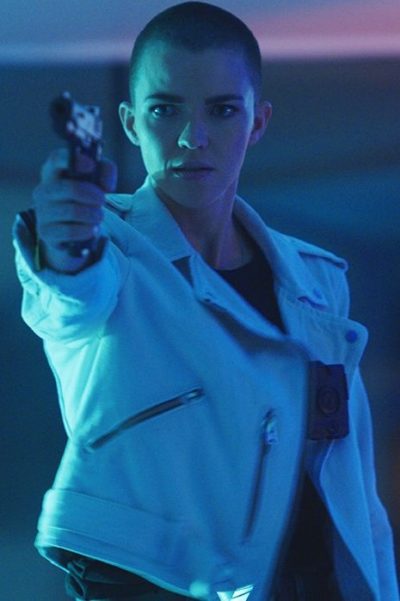
Star: Sam Heughan, Ruby Rose, Hannah John-Kamen, Andy Serkis

The Russian Bride

★★★
“Gothic Grand Guignol”

For the first, perhaps, three-quarters, this feels almost more like a Lifetime Original Movie. Then, at the end… Hoo-boy. But let’s not get ahead of ourselves, shall we? It begins with Nina (Orlan), seeking to escape a fraught life in Russia, for her and her young daughter, Dasha (Pimenova). Through an online dating service, she meets Karl Frederick (Bernsen), and they eventually move to America to be with him. While he’s an older gentleman, initially they seem to have struck it lucky, for he’s a rich, retired surgeon, who owns a massive estate in the country. In fact, you could say it seems almost too good to be true…

Which, of course, it is, despite the rapid marriage which follows. Even if you’re not aware of Bernsen’s long, distinguished career of playing psychos of various flavours (going back at least to The Dentist in 1996), the warning signs quickly pile up. The antagonistic housekeeper. Karl’s coke habit. The forbidden wing of the house. Apparently spooky occurrences. The random attack dog. A precarious, highly-pointy chandelier hanging in the hallway. The previous wife and child Karl “forgot” to mention. Though these all pale in comparison to the sight of Bernsen’s buttocks, and are before we get to his attempt outright to dispose of Nina in a riding accident. It’s clear he is rather more interested in Dasha than her mother. The only questions remaining are, to what purpose, and what is Nina going to do about it, to protect her daughter and herself.

The latter question is of particular relevance here, and is best answered by the picture on the right, depicting Nina in a blood-drenched wedding gown. To call the final act of this berserk would be an understatement. Shotgun blasts to the head and hands. Multiple hammers to the head. And, of course, the much anticipated attack of the highly-pointy chandelier. It’s as if the Lifetime channel production was hijacked by Rob Zombie and Eli Roth for the final week. And possible the maddest element of all? It’s triggered after the heroine falls face-first into Karl’s stash of Colombian marching powder, in echoes of the peyote-driven rampage we enjoyed in Revenge.

Ojeda is no stranger to this site, having previously given us Savaged. If you’ve seen it, then the latter part of the film makes considerably more sense – if anything, it’s the earlier going which is more out of character to that. However, it’s also the biggest weakness; as detailed above, the script is seriously guilty of overloading the film with Ominous Goings-On [capitals used deliberately], to the point any half-responsible mother would be “Peace, out”, and taking her child on the first plane back to Russia. There are times when less is more, and the first three-quarters of the film demonstrate this. However, there are also times when more is more. And, boy, the last quarter are an example of that, just as much.

Dir: Michael S. Ojeda
Star: Oksana Orlan, Corbin Bernsen, Kristina Pimenova, Lisa Goodman

Sentinelle

★★★★
“Jane Wick, but it’s complicated.”

Klara (Kurylenko) is a French soldier who returns home after a tour of duty in the Middle East. But the homeland security mission to which she’s assigned – basically, patrolling sea-fronts and shopping malls – hardly seems like a credible use of her talents. However, she’s also suffering from PTSD, and it’s easy to see why the authorities decided she was better off kept away from the front lines. Then Klara’s sister, Tania (Lima), is found on the beach in a coma after having been raped. The evidence points to Yvan, the son of prominent Russian businessman, Leonod Kadnikov (Nabokoff). But the cops can do nothing, as the Kadnikov’s have diplomatic passports. Klara, needless to say, operates under no such restrictions and vows that if the justice system won’t make the perpetrator pay, then she will.

On the one hand, this is a straightforward revenge flick, though it’s revenge by proxy, with Klara not directly the victim. However, what I liked is that, while she obviously has the skill-set to pull off her mission, she’s far from invincible, even if the Kadnikov’s need to fire their security advisor. Indeed, there are points at which Karla’s straight-line approach to the problem, causes more problems than it solves. For instance, contrast the nightclub fight in John Wick with the one here. John breezed through the scenario virtually unscathed, dispatching victims with ease, in a plethora of headshots. Klara spends what seems like an eternity brawling against two opponents, and never even gets out of the bathroom. That said, the violence here packs a genuine wallop, with some startling moments which left me feeling certain someone was going home with a concussion that day. It’s definitely quality over quantity.

Former Bond girl Kurylenko has graced these pages before, in The Courier and The Assassin Next Door, but this is probably her best effort yet. She is in almost every scene, and does a solid job of holding the audience’s attention, with a sympathetic portrayal of a damaged, yet still extremely dangerous, heroine. She also demonstrates her flair for language, switching effortlessly between French, Russian and Arabic. In real life, she speaks English and Spanish too, as well as bits of others. In 2013 on Twitter, she said, “I want to speak ALL the languages.” [She also knows how to say “I love squirrels” in many of them…]

Coming in at a brisk 80 minutes, it does still take a little while to reach the meat of its topic, The assault at the core of the film (which, incidentally, we don’t see – and nor do we need to) takes place not far short of half-way in, though the pace never feels as if it’s dragging. I also have some questions about the ending, which out of nowhere seems to suggest a Nikita-like program of black ops assassins, created by the government out of captured murderers. Though to be honest, I’d not mind seeing such a sequel, and definitely would not want to be the one on whom Klara was unleashed.

Dir: Julien Leclercq
Star: Olga Kurylenko, Marilyn Lima, Michel Nabokoff, Carole Weyers