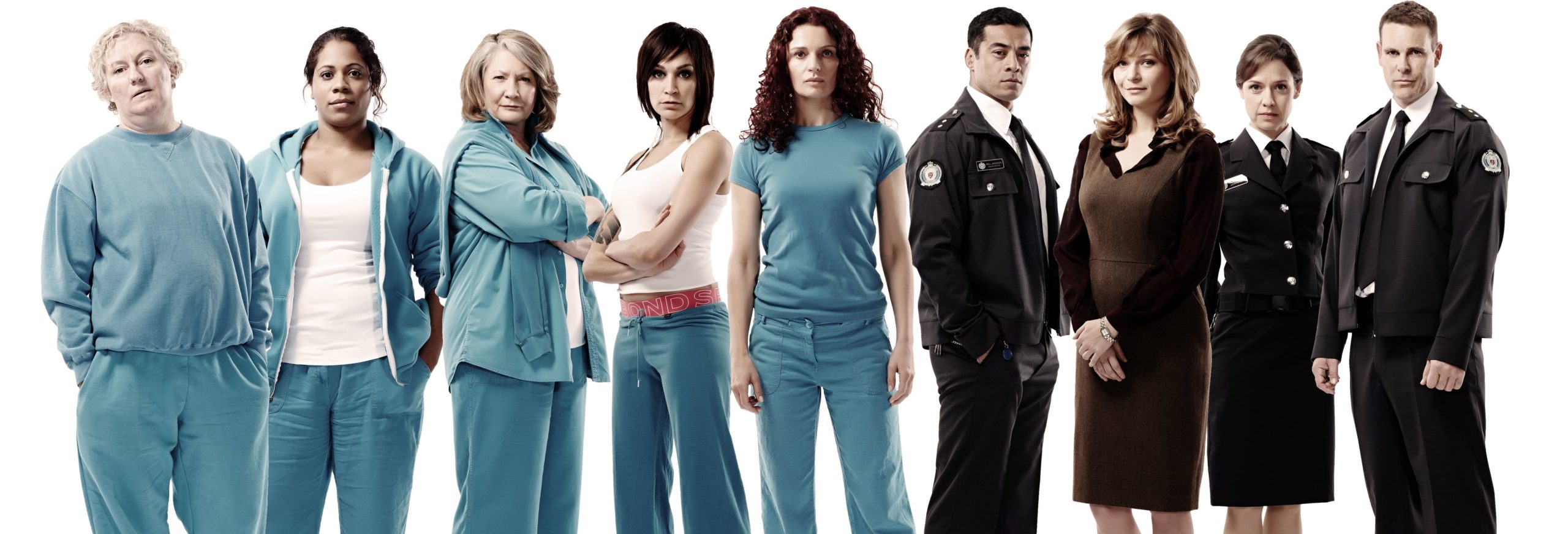
 ★★★★
★★★★
“Sheilas behind bars.”
 Back in the eighties, there was an Australian women-in-prison soap opera called Prisoner Cell Block H. [It was called Prisoner on its home turf, but was renamed in the UK and US, to avoid confusion with The Prisoner] It ran for eight seasons, totalling 692 (!) episodes, and achieved a fair bit of cult status, mostly through late-night screenings on TV. Much of its reputation was based on “so bad it’s good” elements, such as the wobbly sets; a review calls it, “one of the most bizarre, violent, lesbian-fetishy-heart-warming dramas ever created.” The show concluded its run in 1986, but was never forgotten.
More than 25 years later, the concept was rebooted in 2013 as Wentworth, and enjoyed a renaissance. While also running for eight seasons, rather than trash (not that there’s anything wrong with that, mind you!), this version proved to be remarkably well made. It likely helped that the remake’s production schedule here was rather less frantic, ending at exactly 100 episodes last October. The show is currently ranked by the IMDb in the top 250 TV series of all time, and was sold to over 90 countries, achieving a worldwide audience, thanks in part to its distribution on streaming services like Netflix and Amazon Prime.
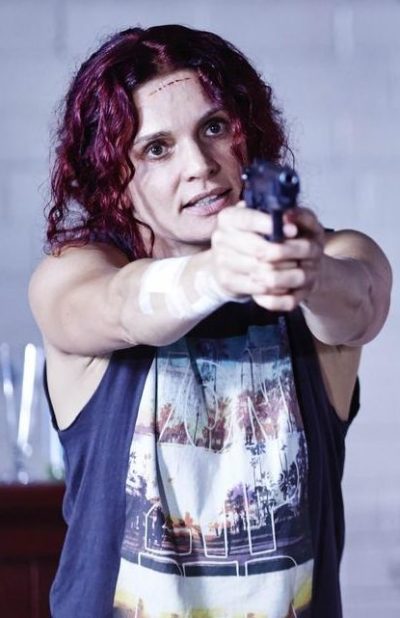 It spawned local remakes in a number of countries. The Dutch was the most successful, running for four seasons, but Belgium, Germany and Turkey also took the show and recreated it. [Here is as good a place as any to mention that back in 1982, there was a male spin-off of the original show called Punishment. Though it lasted only one season, the cast included some guy called Mel Gibson…] Indeed, the Turkish one, known on Netflix as The Yard, was reviewed here in August 2020. That review began, “I really must get round to reviewing Wentworth.” And eighteen months later, here we are…
It’s a show I’ve thought about covering on a number of occasions over its run, but now that it’s finished, I feel I can finally do it justice. I definitely can’t argue with the acclaim it has received. For Wentworth features a slew of extremely strong female characters, including one of the most memorable villainesses in TV history, and maintained a high degree of dramatic quality from beginning to end. That’s rare for a series; even classics like Buffy dropped off after a certain point, with commercial motivations typically surpassing artistic ones. Not so here, with the eighth series virtually as strong as the first.
One element, which it does share with its predecessor, is that the setting is the “star”, rather than any performer. I think this certainly helped contribute to its longevity, and sustained the show’s freshness. If one of the actresses began to feel jaded, and wanted out, their character could be replaced by another. The prison scenario meant there were always new arrivals potentially coming in, and scope for departures too, without excessively disrupting the overall structure. If you look at many of the ultra-long running shows, e.g. Dr Who or the many incarnations of Law and Order, they have a similar ability to rotate their cast seamlessly.
Not to say there weren’t main characters – many of them with the names and/or backgrounds as their “ancestors” in Cell Block H. But they tended to have arcs across three or four years; few lasted the full eight, mostly on the guard side. This timeframes was long enough to allow for fulfilling development, without getting stale. The first such was Bea Smith (Cormack), who arrives at Wentworth after attempting to murder her husband, following years of abuse. She becomes involved in the struggle for “Top Dog” status – the role of the most powerful prisoner – between two existing inmates, only to end up becoming Top Dog herself. However, it’s a lonely position, where you always have to watch your back, and allies can suddenly become enemies.
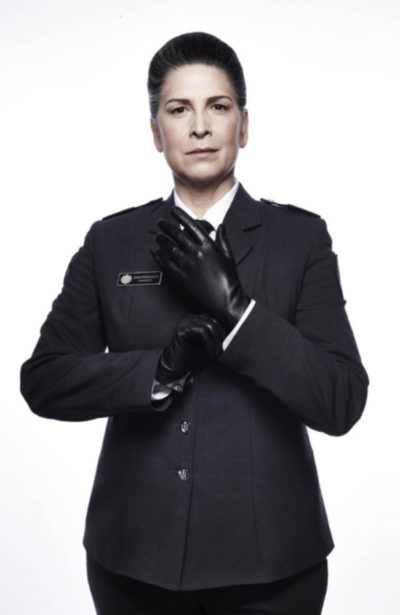 One such was the character mentioned above: Joan Ferguson (Rabe), known as ‘The Freak’ (left). She joined the show as the new governor of Wentworth in season 2, and was, to be blunt, a clinical psychopath, devoid of empathy and incredibly manipulative. She was also very smart, a lethal combination. However, it’s not enough to save her from ending up a prisoner in the jail herself. The first episode of season 5, where Ferguson is released into the general population was, for me, peak Wentworth, and one of the best 45 minutes of television I’ve seen, in any genre.
Remarkably, she didn’t just survive this reversal of fortune, but thrived. She took over as Top Dog. until an escape plan misfired, ending in her being buried alive by long-serving prison officer Will Jackson (Robbie Magasiva)). But you can’t keep a good villainess down, though it appeared the trauma led to amnesia, with Ferguson subsequently using a different name and with a completely different personality. Was this genuine, or another of her ruses? I couldn’t possibly reveal that. What I will do though, is laud a glorious performance by Rabe, who at six feet tall, has a remarkable physical presence, backed up by ferocious intensity. She’s Cersei Lannister on steroids. And without the incest.
In general, it’s perhaps less exploitative than you might expect, with nudity only when genuinely necessary to the plot, rather than for titillation purposes. On the other hand, the show does not soft-pedal the brutality of prison life, with violence and death a common occurrence. Inmates tend to handle their own infractions internally, the Top Dog having the ability to impose punishments for theft, deceit or, perhaps the worst offense of all, “lagging” i.e. talking to prison authorities. It would definitely be rated a hard R, purely for its authentically no-holds barred language. Boy, do the Aussies love themselves a good c-bomb – even more than us Scots!
There were, admittedly, times where the story-lines seemed to get away from the creators. A few threads did appear to be ended, rather than properly resolved. But considering the 70+ hours of television the show represented, such misfires proved remarkably few. The writers definitely had a talent for juggling multiple plot threads and keeping them all moving forward simultaneously. In the end though, it was the actresses (and actors) who made this show what it was, and which kept us coming back for the best part of a decade. If not our favourite show ever on Netflix, it’s definitely up there with the very best.
Creators: Lara Radulovich and David Hannam
Star: Danielle Cormack, Pamela Rabe, Kate Atkinson, Katrina Milosevic


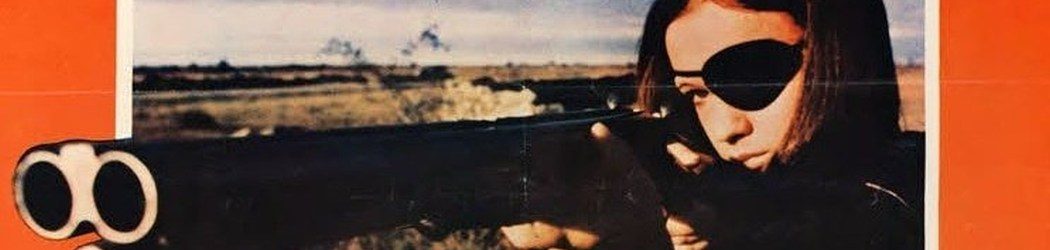

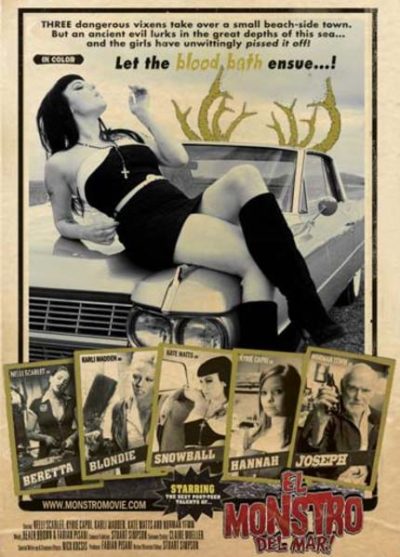 I could have sworn I’ve seen this before, but a search of the reviews suggest otherwise! This is an Australian pastiche of a couple of different things. Perhaps the most obvious influence is Faster, Pussycat! Kill! Kill!, in that it’s the road misadventures of a trio of delinquent women – two brunettes and a blonde. The leader, Beretta (Scarlet) looks something like a cross between Tura Satana and Bettie Page. We’re less than ten minutes in before their psychopathic nature is revealed, in the brutal killing of two men who stop to offer them roadside assistance – I did like the way the film, shot in black-and-white to that point, explodes into full colour when the violence starts.
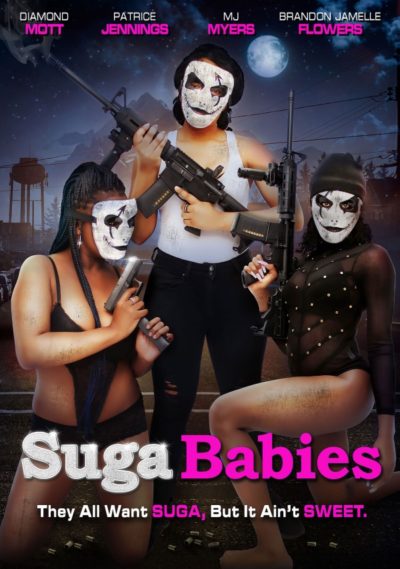 As usual, I begin with the normal disclaimer, that I’m about as far from the target audience as you could imagine. For this is an inner-city story about a drug war between three rival gangs in South Carolina: the Guardians, the Dynasty and the GeeChees. That said, however, there have been other films, with not dissimilar themes, which I have enjoyed. Most obviously, I am not the target audience for Pam Grier’s seventies output either. But those still kick ass. Even among the modern entries, there have been ones like
 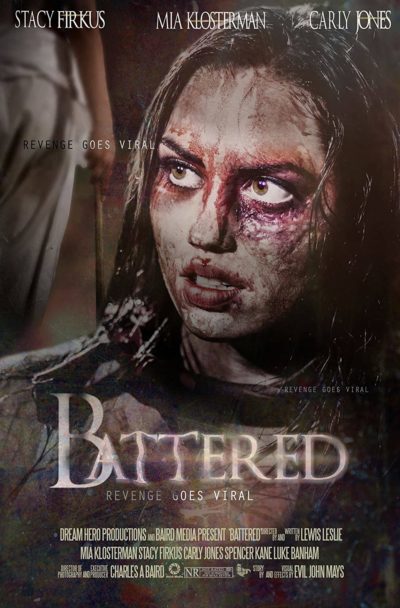 My first surprise here was that this clocks in at a crisp 44 minutes. That’s an awkward length for any film: too short to be a feature, but most festivals that accept short films will balk at a submission of that length, when the time could instead be used to accept three x 15-minute entries [as someone who runs a festival, this is definitely a consideration]. Quite how this got distribution, I’m therefore not sure; but there it was, sitting on Amazon Prime. However, less than two minutes into the viewing experience, I found myself thanking my stars the running time was so brief. Because this is hamstrung by the worst audio I’ve seen on any film in several years. When even an envelope being opened sounds like a burst of automatic gunfire, you’ve got a problem, and there’s hardly a scene here where this aspect is not bad enough, as to be an unbearable distraction.
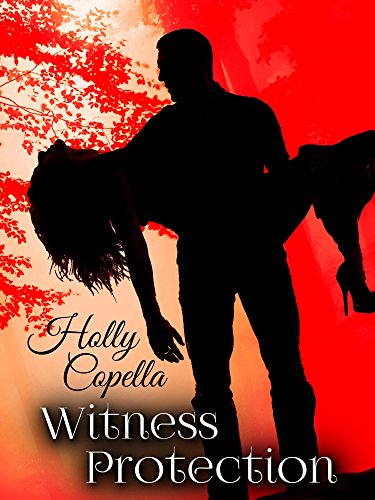 This is one of those books where the cover (right) feels at odds with the synopsis: “After witnessing an execution, a resourceful young woman attempts to disappear while being pursued by a hitman and a handsome federal agent.” Having read the book, the reality sits somewhat uncomfortably in the middle. It might have been better if the author had committed to writing either an action novel or a romance; the combination of them here is awkward and clunky. Naturally, my preference was for the former. But it seems that every time the book got into a rhythm there, the heroine would start lusting after one (frankly, close to all) of the male characters, and the energy would be derailed.
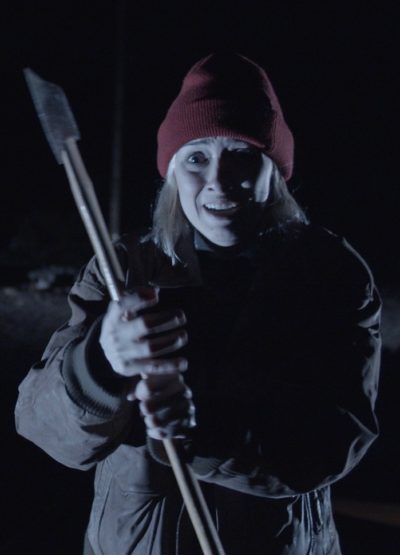 Yeah, the scale here is a bit smaller than the Spielberg classic, to put it mildly. As in… there’s precisely one (1) velociraptor. For reasons that are a bit unclear, this is roaming a deserted Wild West attraction on the road to Los Angeles. Heading to LA are wannabe stand-up comic Julia (Walker) and her flamingly gay best friend, Kyle (Rennie). An accident forces them off the road, and with – what a surprise! – no cell signal, they are forced to seek help at the previously mentioned attraction, where Ray (Mede) is the only inhabitant, and is acting a bit odd. Turns out, there’s good reason for this, with a large, carnivorous prehistoric reptile roaming the facility, the work of a mad scientist (Mertz). Will Julia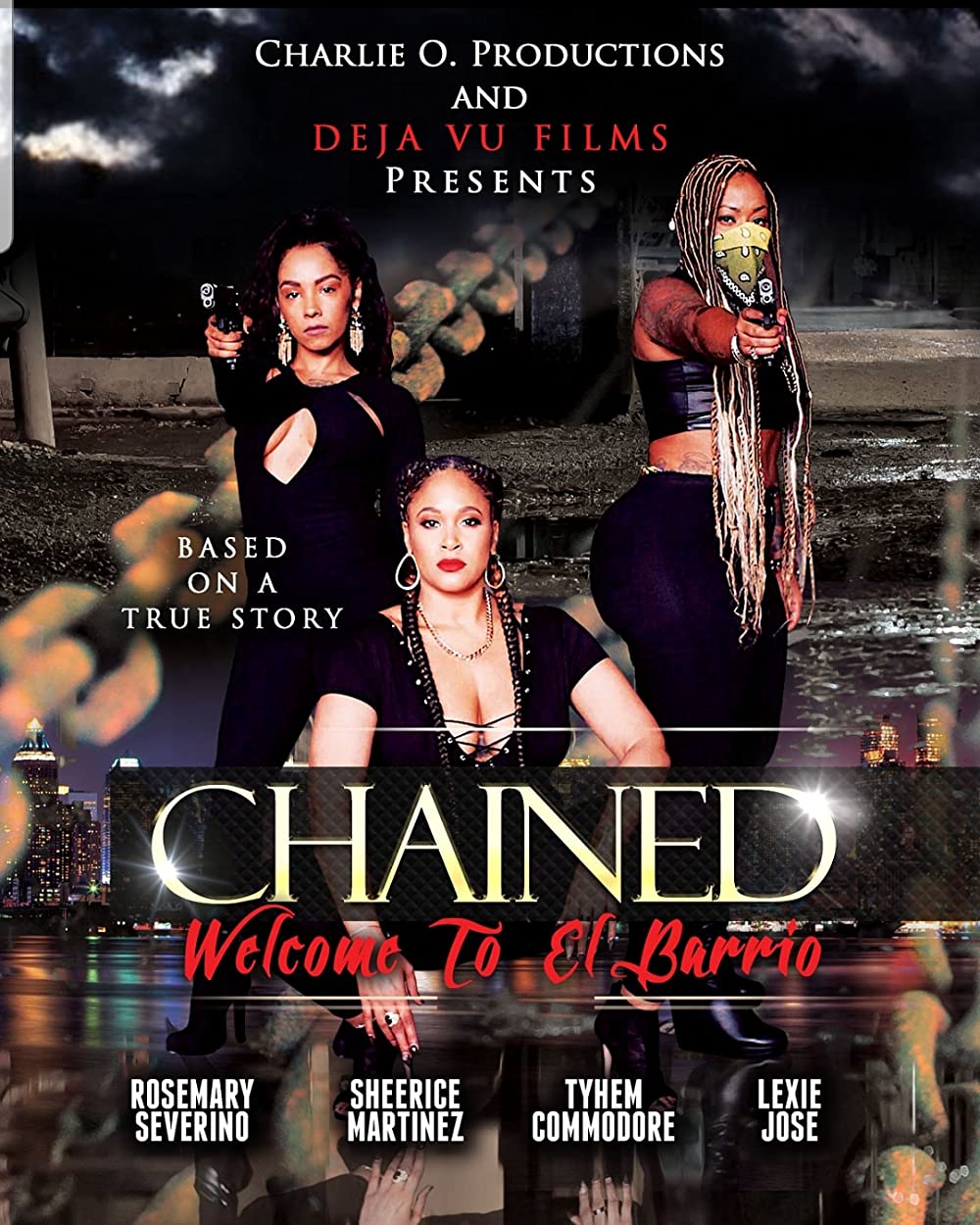

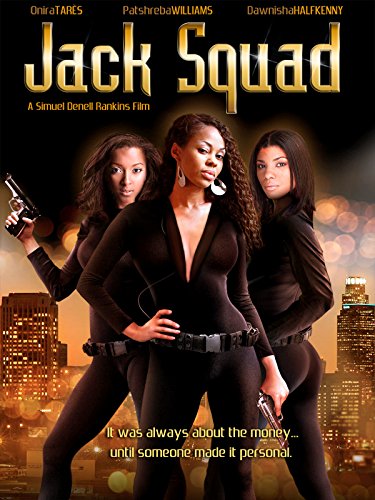 At 85 minutes, this might have been fine. For it’s a fairly simple tale, of three women who decide to escape their financial woes by drugging and robbing married men, banking on their victims not being willing to involve the authorities. While this initially works as planned, inevitably, they end up targeting the wrong guy, a minion of feared drug dealer Grey (Anderson). How evil is he? Grey appears to have an employee whose full-time job is to fan him. That’s some Evil Overlord style, right there. Grey doesn’t just want his stolen money back, he wants the trio to continue their activities – for his benefit. And that isn’t the only problem which the trio face, with Tony, the estranged other half of Dawn (Tares), unhappy at her having escaped their abusive relationship.