★★★
“The fire-devil is back!”
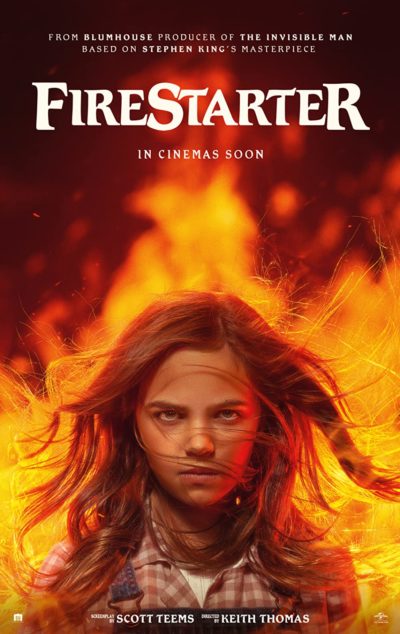 I must admit: While I always found the premise for Stephen King’s 1980 novel Firestarter interesting, I never read the book. 500 small-printed pages are just too much for me. The story itself shares some of its DNA with Carrie, with the difference that this here is about a younger child, not an adolescent, and instead of telekinesis the girl knows pyrokinesis, meaning she can create fire from nowhere and control it. It could be argued that King was just kind of re-using ideas from Carrie, making less of an effort to create something original as he did with other material. Opinions on the story seem to be split. Some think it’s a great novel, of the usual King quality; others think it’s a typical work from the time when King was writing as if he were on the run, and striking while the iron was hot (honestly, I don’t really see he has slowed down so much over the years).
Anyway, the novel became a 1984 movie, with all the qualities and flaws a Stephen King adaptation had in the 80s, featuring then-child star Drew Barrymore (gosh, I just realize while I’m typing that she is as old as I am!) a considerable ensemble of actors, a soundtrack by Tangerine Dream and – for its time – impressive pyro special effects. The film’s reception was lukewarm but it went on to become a success on VHS. In Germany, the title translates as “The Firedevil”, which in German means somebody who likes to play with fire. A sequel, albeit unrelated in story and without any King input, came out as as a TV miniseries in 2002 to similarly questionable results as far as fan opinions go. The main character was still Charlie, but now all grown-up. Strangely, the villain of the original piece was still alive there which made zero sense if you witnessed his demise at the end of the movie.
So here is the 2022 version, produced by Blumhouse, a studio with a very good reputation for first-class horror movies today, and also gave us great non-genre movies like Whiplash. Martha de Laurentiis, co-producing wife of the late Dino de Laurentiis (involved in a number of King adaptations in the 80s) has a producer’s credit, although she died last year at cancer. Akiva Goldsman who was chosen to direct the movie before being replaced, also got a producing credit, which doesn’t necessarily mean much nowadays.
The new Firestarter does its best not to just repeat the story beats of the 1984 movie, though by doing so is less close to the original King novel. The beginning of the movie shows young girl Charlie (Armstrong) in school being bullied by one of those ugly red-haired boys we all know from 1970s movies (nasty then, nasty now – talk about discrimination against red-haired children!). It reminded me quite a bit of Carrie, though it’s just a few scenes and serves little more purpose than to illustrate Charlie’s problems in general.
Her parents (Efron – suddenly grown up; wasn’t he just a boy yesterday? – and Lemmon) have been on the run for a long time: After being involved in an experiment that gave them paranormal powers,the secret government organisation that conducted these experiments, “The Shop”, want their child. Therefore – and a bonus point to the screenwriter for taking modern communication and tracking opportunities into account – they have been staying away from the Internet and mobile phones. I was therefore surprised when Charlie in a key scene of the movie suddenly came up with one.
These forces are on the track of the family again, after an outbreak of fire in school and Charlie burns the arms of her mother in a fit of rage. It’s funny to compare the latter scene in old and new movies. Nothing much worth mentioning happened to the mother in the original, but a great fuss was made about it. Here, she has what feel like at least second-degree burns, and the parents behave as if it were nothing in front of Charlie. Let’s go have some ice-cream! What kind of message is being sent to young parents, folks?
The Shop is now under the management of Captain Hollister (Gloria Reuben), who send apparently disgraced operative John Rainbird (Greyeyes) to get Charlie back. She is seen by Hollister as having great potential, though original leader of the experiment, Doctor Wanless (Kurtwood Smith in a cameo), fears an unmeasurable threat from the girl’s potential when she comes into full control of her power. Charlie’s mom resists Rainbird and dies in the confrontation, causing father and daughter to go on the run, where Dad’s ability to influence people telepathically comes in handy.
They find sanctuary with recluse Manders (John Beasley), only to be discovered by the police and Rainbird shortly after. While Charlie gets away, her father is caught and is brought back to the lab. After training to control her powers in the woods, a scene that feels two minutes long, Charlie comes to free her Dad. Although “The Shop” does its best to get her under control, the girl prevails, burning all those who threaten her.
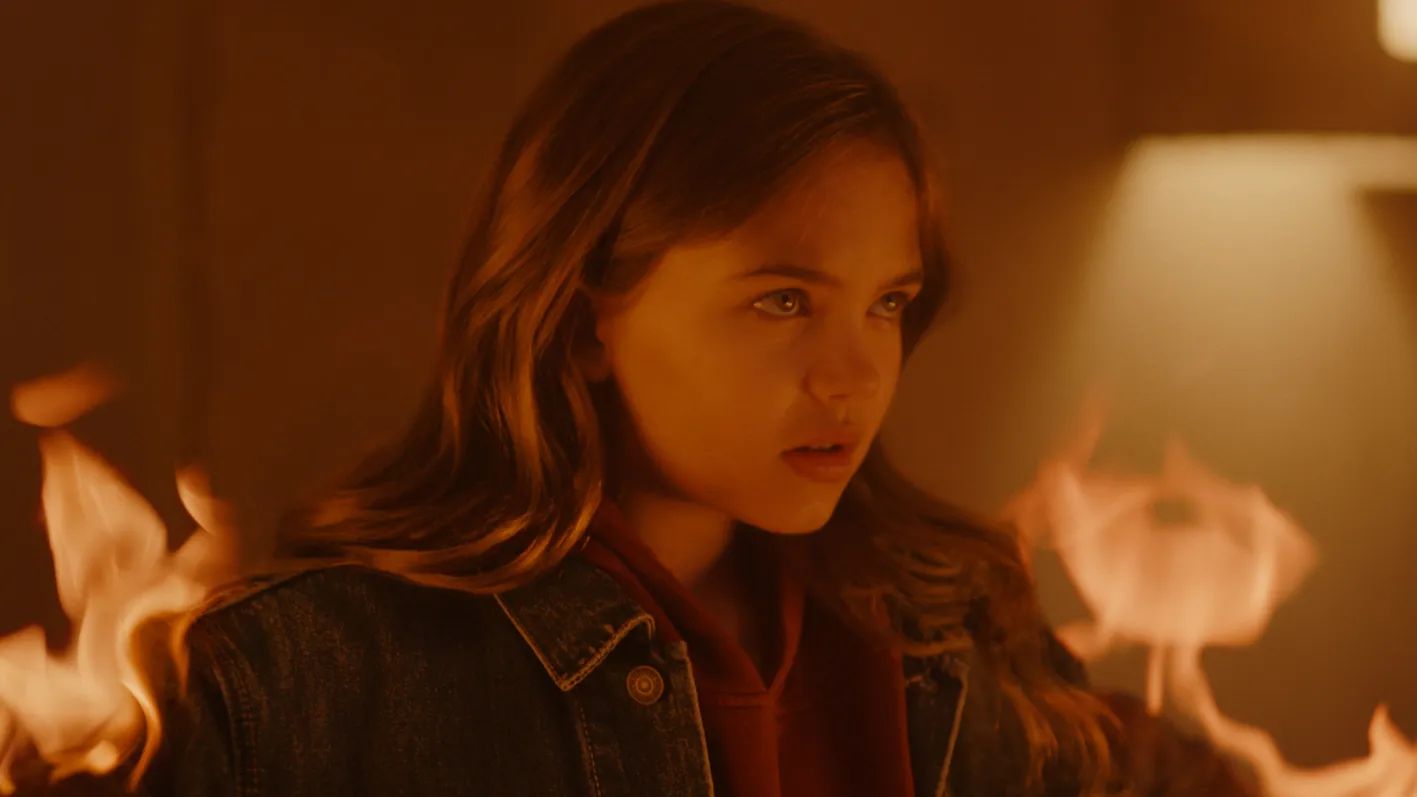 Firestarter is a strange beast with a difficult task: Retaining the core of the original story but not being to close too the orignal movie. Paying tribute to current political correctness, yet not changing the original material too much. For most of the time, they do fine, I’d say. Some changes did catch my eye: the conflict between the parents wasn’t there, as far as I remember, in the original movie. The mother wants Charlene to train so she can control her powers, the father would rather she suppress them, for who knows what may come out of them being released? In contrast, the original spent more time with Dad and daughter in the lab, the evil Rainbird slowly gaining Charlie’s confidence in order to kill her when appropriate. It went more for slow menacing tension – also the approach of King’s novel – while this plays more as a “fugitives-on-the-run” scenario.
But the biggest change is the John Rainbird. In the original, he was played by elderly over-weight “evil uncle” George C. Scott. In no circumstance would he ever have been considered a Native American. Here, he is played by Canadian and Cree actor Michael Greyeyes, though Rainbird in the books was Cherokee. Perhaps because Hollywood thinks it can’t allow villains to be an ethnic minority, the character is slightly changed: Rainbird works for the organisation, because it is suggested they are too powerful. He himself was betrayed by them, and seems to have been part of the experiment, gaining certain supernatural powers. Here, Rainbird helps Charlie, ready to accept his death. Strangely, she spares his life and while the building behind her burns, takes his hand and they walk away. Make out of that ending what you want: it’s definitely not King’s.
It seems a lot of critics disliked the new movie. As a whole I can’t condemn taking a different approach to the story. I’m not even sure if I would call the new movie “woke”, though it definitely has woke moments. Director Keith Thomas, does fine, I think. The movie is atmospheric, has more focus on the parents and their differences over how to raise their daughter, and there is some genuine tension, e. g. when Rainbird confronts Charlie’s mother. What really astonished me is the musci by John Carpenter and his son Cody. Yes, that Carpenter. I don’t know how they got him to do the music: he directed the King adaptation Christine in the 80s and was the original choice for that Firestarter, so that may have something to do with it.
What’s my judgement? The new movie isn’t bad. Acting-wise I’d even say it’s better; I especially prefer Michael Greyeyes’s performance to the ham-fisted approach of Scott. But if I had to chose… I’d stick with the original. That had the “oh, she is so cute” Barrymore factor and a really, really impressive cast, which this movie only can dream of. The pyro FX party at the end is much more impressive than the toned-down finale here. There is also the “zeitgeist factor” to consider. In 1984 you could still accept and be fascinated by the idea of a girl who can create and control fire. In 2022, with Pyro, Dark Phoenix or Sunspot doing similar or more impressive things, Charlie’s powers just aren’t as fascinating as they used to be.
Dir: Keith Thomas
Star: Zac Efron, Ryan Kiera Armstrong, Sydney Lemmon, Michael Greyeyes
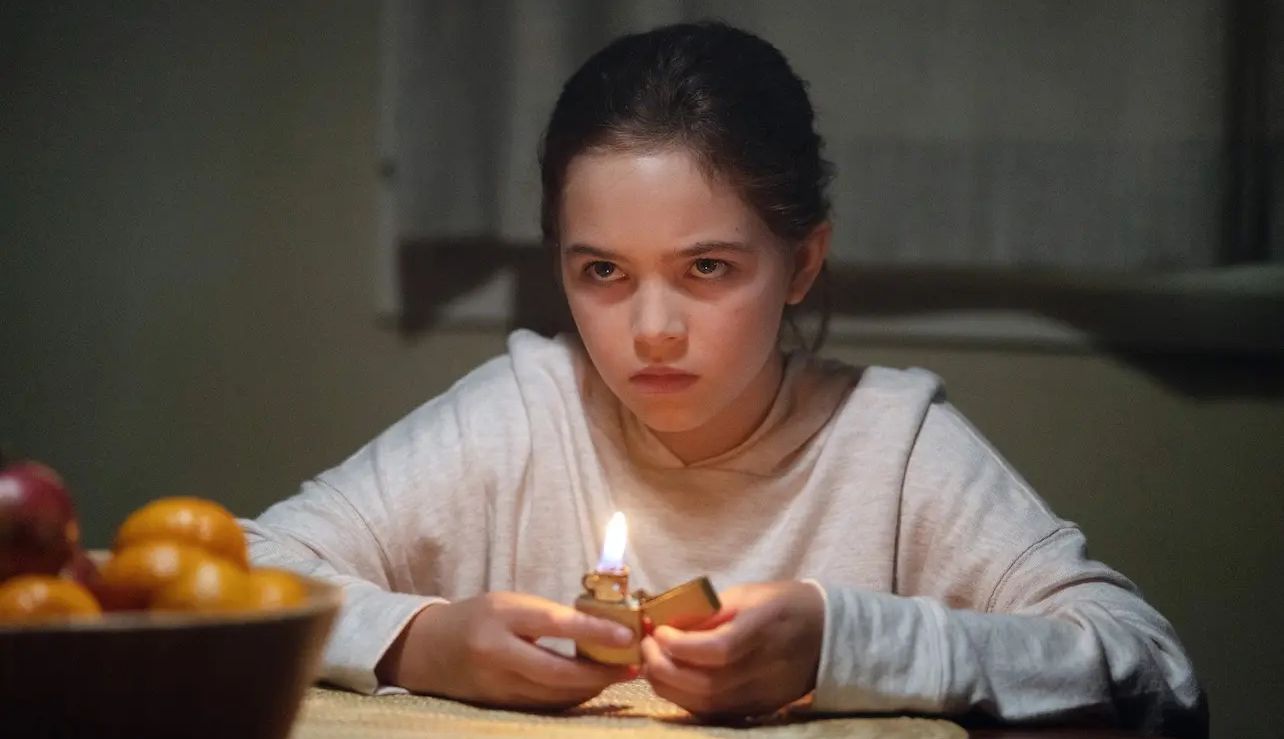




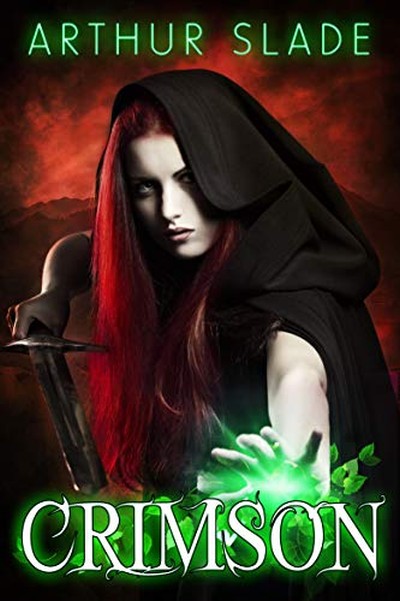 The world of Illium has enjoyed a millennium of peace under its powerful queen Servilia. Though “enjoyed” might be the wrong word, since it has come at the cost of freedom, and harsh justice. A victim of the latter is 15-year old Fen, who four years previously, had her hand lopped off for stealing a trinket from a merchant’s stall. Worse follows, as she wakes up to find her hair has turned red, the sign of a “wildmage” – someone who has magical powers, an ability Servilia seeks to extinguish before it can pose a threat to her rule.
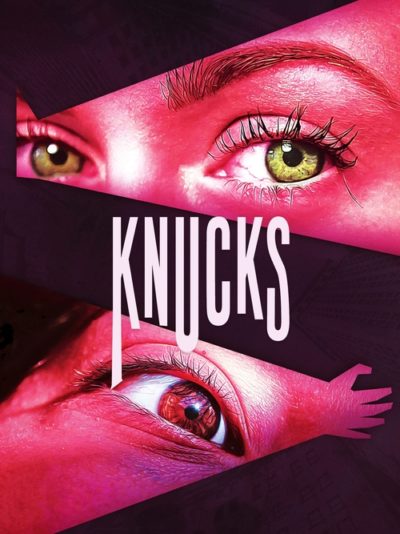 I’m tempted to leave my review at that. But there’s a famous quote by critic Roger Ebert, going off on Bruce Willis flop, North: “I hated this movie. Hated hated hated hated hated this movie. Hated it. Hated every simpering stupid vacant audience-insulting moment of it. Hated the sensibility that thought anyone would like it. Hated the implied insult to the audience by its belief that anyone would be entertained by it.” I was always impressed, and hoped one day to find a film capable of producing a similar reaction. This is… close. It is, let’s be clear, utterly terrible, with almost no redeeming qualities. Yet it’s either not bad enough, or more likely, too bad to generate such a reaction. That would be giving it more power and credit than this deserves.
 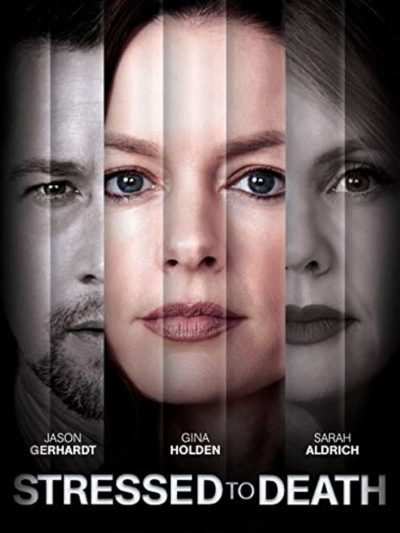 The concept here is intriguing. It’s just the execution – and the script in particular – which is bad. A robbery at a convenience store ends in the death of David, the husband to Victoria Garrett (Aldrich). She blames the paramedic on the scene, former soldier Maggie Hart (Holden), for the loss of her spouse, though the incident hits Maggie equally hard. She quits her job, raising daughter Jane (Blackwell) with her husband, commercial real-estate agent, Jason (Gerhardt). But Victoria hasn’t moved on – in probably the film’s most memorably loopy elements, she feeds her husband’s ashes to a pot-plant she calls David, to which she chats. She’s also clearly a believer in that saying about revenge being served cold.
 This is not your normal action heroine film. Nor is it your normal zombie apocalypse film. While it certainly nods in both directions, it seems entirely committed to going in its own direction. My mental jury is still out on whether or not this was a good thing or not. I think if I’d perhaps been prewarned what to expect, I might have been better equipped to handle this. It takes place after the outbreak of a plague, with the dwindling number of survivors now holed up in two cities: Weimar, where infection is an immediate death sentence, and Jena, reported to be trying to research a cure.
 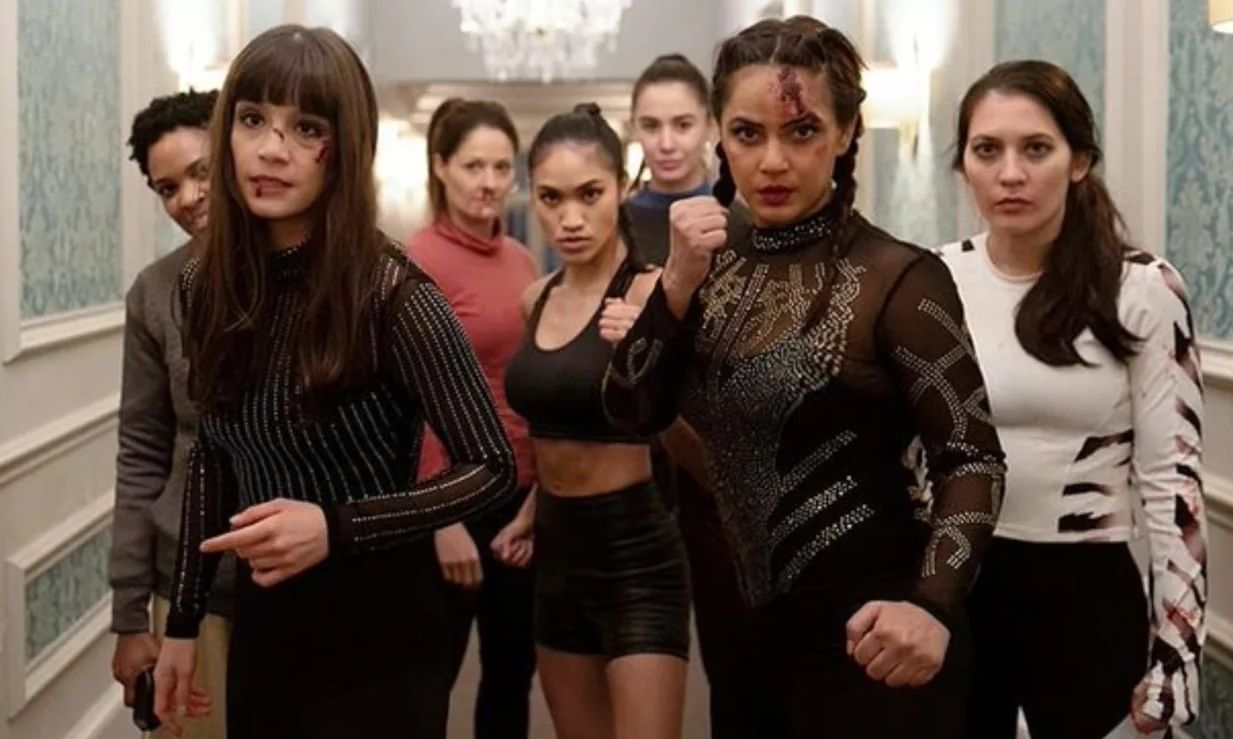 Madison isn’t without an action pedigree, having directed rather good short,
  ★★★★
★★★★ Well, this was a surprise. I was not expecting too much, this being a movie released straight to Hulu or Disney+ (depending on your territory), and starring someone best known for rom-com franchise, The Kissing Booth. Actually, scratch the “too” from that sentence. I went in on the basis that I was contractually obliged to watch it, as the guy running this site. I say this, so you’ll understand how unexpected it is to be writing this: it’s the best action-heroine film of the year so far. This is just thoroughly entertaining, and as the tag-line above suggests, is as close as I’ve ever seen to a genuine, female version of the greatest action movie of all-time.
 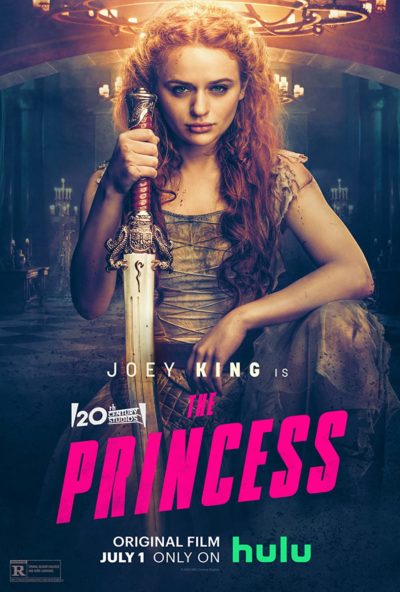 This reaches its height in a glorious, extended sequence, with the Princess battling her way down the tower’s staircase. It feels as if it’s 20 minutes long, such is the energy contained in it. There’s even a beautiful moment of tension releasing humour, part of a running gag involving one of Julian’s minions who is too fat for all the stairs he’s ordered to climb. Nothing thereafter, including the inevitable fight against her wannabe husband, quite reaches the same heights. Glover is good value as Julian, staying just this side of a pantomime villain. As Die Hard shows, having a memorable antagonist is an important element. He’s not quite Alan Rickman – though who is? And I do have to question some of Julian’s decisions.
 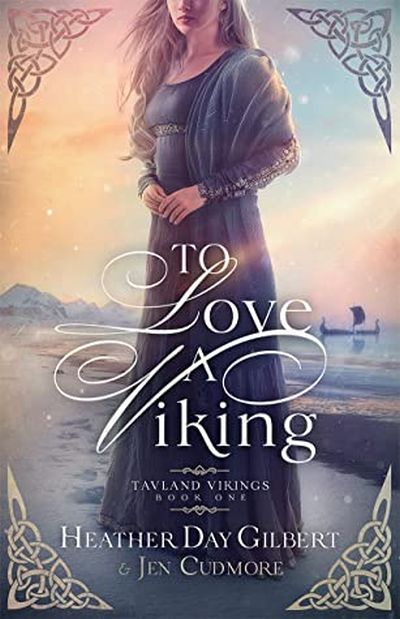 As you’ve no doubt already surmised, yes, this novel does have a romantic component –and, indeed, two romances for the price of one. :-) But it offers more than that, as serious writers know that fiction must if it depicts romantic love as a realistic (and good!) part of the totality of human life; and our two authors here are definitely serious writers. We’re looking here at family life, social relationships, implicit questions of social justice and the relationship of Christian faith to conduct; and we’re also getting a crash course (which sadly is as relevant in 2022 as it was in 998!) in the grim realities of spousal abuse and what is or isn’t a helpful way of dealing with it. (The “Word from the Authors” at the end is constructive in that regard.) Questions of gender roles, and the relationship of career goals vs. family life, are also front-and-center here, and again very relevant.
 This is another one of an apparently infinite series of kung-fu films, set during the Japanese occupation of China that took place just before World War II. The heroine is Little Flower (Lee), who gets given a death-bed mission by her martial arts master father: return to Shanghai, and lead his students at the Ching Wu Men school against the occupying Japanese forces. Except, on arriving, Flower finds the school disbanded by force, and its disciples scattered to the winds. She begins to hunt the top students, Rock (Yang) and Mercury – the latter has gone particularly deep into hiding after having killed twenty Japanese soldiers in one night. But Flower’s own activities, protecting the poor, bring her to the attention of the Japanese authorities, because they think she’s part of the rebels, as well as a local Chinese cop (Heung).
 I’ve enjoyed most of the recent Norwegian entries in the “disaster porn” genre. Films with titles like The Wave and The Quake, have delivered all the mayhem you could want, while doing a better job of characterization than their Hollywood equivalents. This is the first with a heroine, and provides a similarly slick mix of spectacle and emotion. The central character is Sofia (Thorp), an engineer for an undersea robotics company. When working on a sunken oil rig in the North Sea, she finds evidence indicating a massive geological slip is about to occur. Eventually convincing the authorities to take it seriously, they evacuate the area. Before that can be completed, the disaster occurs, and her husband, Stian (Bjelland) is trapped on a sinking platform.