



 ★½
★½
“Send help.”
Yes, this is one of those cases where the title is the review, because I suspect many viewers will be signalling enthusiastically for help before reaching the end. I would start off by saying something snarky, like “That’s an hour and a half of my life that I’ll never get back.” But this would imply the film actually held my attention for an hour and a half, which would.. not be entirely correct. I was in the same room where it was playing. My eyes were open. I am not prepared to commit to much more than that. I also note that at the North American box-office, it took a grand total of $4,382, including a whopping $209 over its second week of release. I trust everyone involved in the production learned a valuable lesson from this.
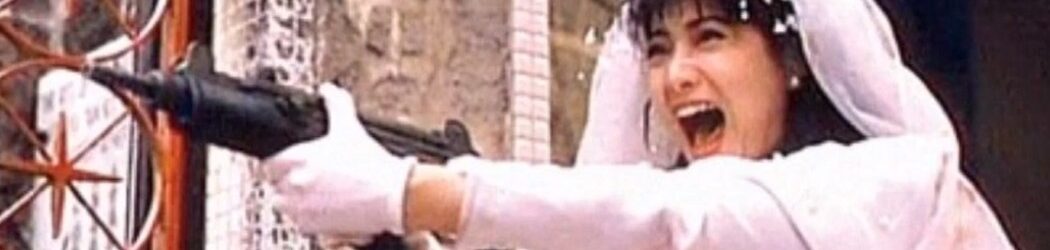
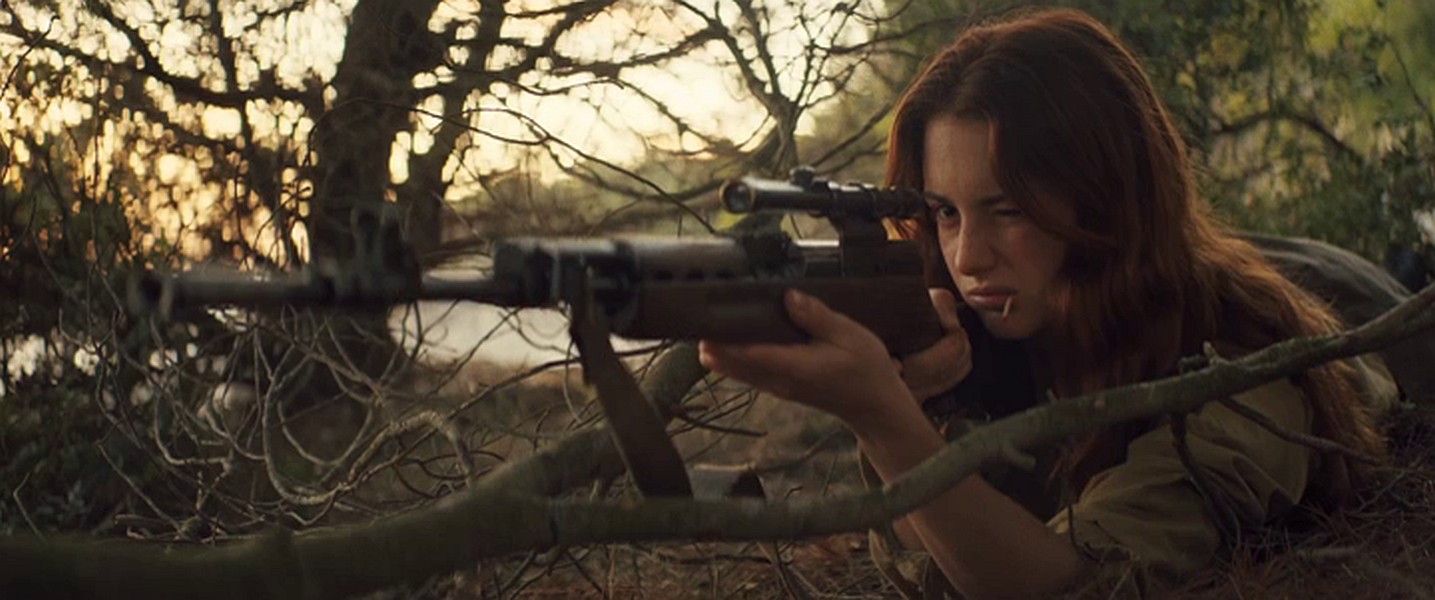
This is a “war of the sexes” picture thinly disguised as fantasy, which throws elements from Alice in Wonderland, Peter Pan and Lord of the Flies into a blender, in the belief that doing so makes for some kind of feminist statement. It doesn’t. Not even when you burden the cast with lines like, “You’ve been in a war your whole life, you just didn’t know it,” or “You need to stop hurting yourself and start hurting others.” It begins with downtrodden waitress Ana (Grace Van Patten) crawling through an oven in the hotel where she works, and emerging onto a vaguely WW2-era shoreline. There, she bonds with a group led by Marsha (Goth), who lure male soldiers to the beach using fake Mayday signals, sniping dead any who make it past the turbulent conditions. Because all men are predators who deserve to die, right?
It plays like an “Is caffeine-free Pepsi alright?” version of Sucker Punch, with Ana crawling into her own headspace, trying to escape the traumas of everyday life, in a world with repurposed characters. For example, Marsha is the same, reluctant bride Ana comforted in the bathroom shortly before her break from/with reality. The only element of interest was Ana’s refusal to go down the same murderous path of intent as her colleagues. though this does lead to a feeling the movie doesn’t quite know what message it’s trying to send. At least Paradise Hills, which occupied similar territory, had a gorgeous visual sense to paper over the weaker plot elements. Here, there’s no such distraction.
This is not quite the worst “young women trapped in a surreal landscape” movie I’ve ever seen. That would be the near irredeemable awfulness of non-GWG film, Ladyworld. However, that I found myself consciously comparing this to it, is not a parallel to any movie’s credit. If there’s a lesson to be learned from Ana’s eventual fate, it’s that the cure for what mentally ails you, apparently involves a psychotic break, along with some quality girl time spend living on the beach alongside a crew of Aileen Wuornos wannabes. I guess it probably works out as cheaper than therapy.
Dir: Karen Cinorre
Star: Grace Van Patten, Mia Goth, Soko, Havana Rose Liu
 I never considered myself to be afraid of heights. I respect them, sure. But I am capable of going up the ladder to change that annoying smoke alarm battery without a safety net. This film though, literally gave me sweaty palms. It’s about climber Becky Connor (Currey) who lost her husband Dan (Gooding) in a rockface accident a year before, and has spiralled down into alcoholism and depression since. Her father (Morgan) gets her best friend Shiloh Hunter (Gardner) to intervene, and she convinces Becky the best thing is to get back on horse, with a climb of a two thousand feet tall, abandoned TV mast.
 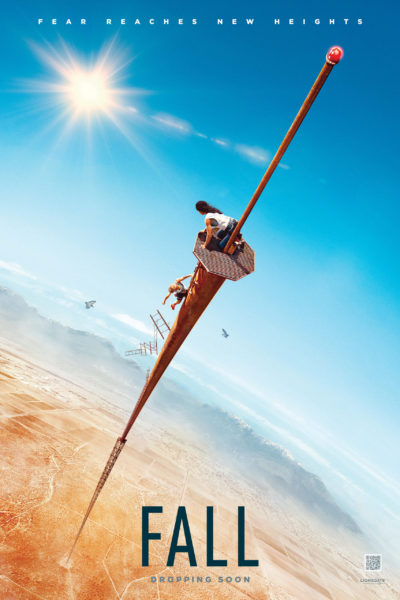 The journey up is where the moist hands started. I don’t care how nice the views might be, I’m afraid it’s going to be a no from me, dawg. Adding to the fraught tension, is the focus by Mann on the decaying structure: rust, missing bolts and general creakiness. It’s like Final Destination: you know something is inevitably going to go terribly wrong, it’s just a question of when, and the specifics. It duly does, leaving the pair stranded near the top, on a platform about the size of our dining table, with no route down or way to call for help. The rest of the film is the struggle of Becky and Hunter (she uses her last name, or her social media identity of “Danger Deb”) to find a way to do one or the other.
  ★★★
★★★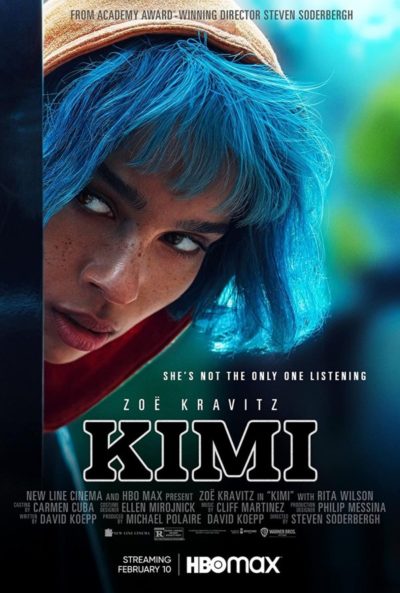 Kimi indirectly discusses this attitude, but also seems to make a clear point that there is a need to leave your own four walls sometimes, because not everything can be handled from your laptop. That said, it’s quite disturbing how much
 I did not originally expect to be reviewing this here. I watched it because of the technical elements, which I’ll get to in a bit. However, by the end, it does qualify – though you certainly wouldn’t think so from how things begin. It gets underway with Lili (Puig) waiting for a date arranged over the Internet with Eduardo (Alcantara). He shows up late, very apologetic after having been mugged, and having had his phone taken, but is utterly charming, and the chemistry with Lili is immediate. They end up back at his place for dinner. But as he’s cooking on the kitchen, the tone of the evening changes, when she hears his supposedly stolen phone going off in his jacket…
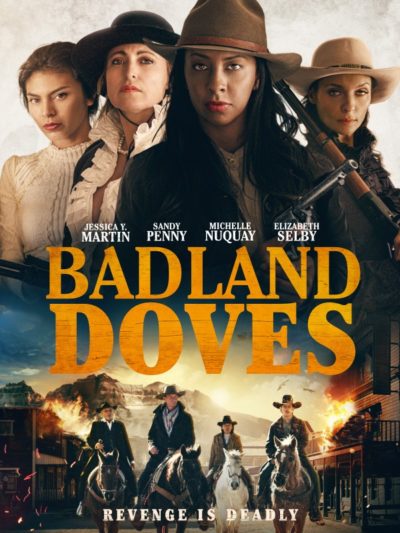 I am contractually obliged to appreciate at least somewhat, any film made here in Arizona. This certainly fits the bill, having been shot at places like the Pioneer Living History Museum, Sitgreaves National Forest and Winters Film Group Studio. However, it is a fairly basic tale of two-pronged revenge, with significant pacing issues. The proceedings only come to life in the last 20 minutes – and barely that. Initially, matters are more than a tad confusing, as we jump about in time and space without apparent notification. But the basic principal is eventually established.
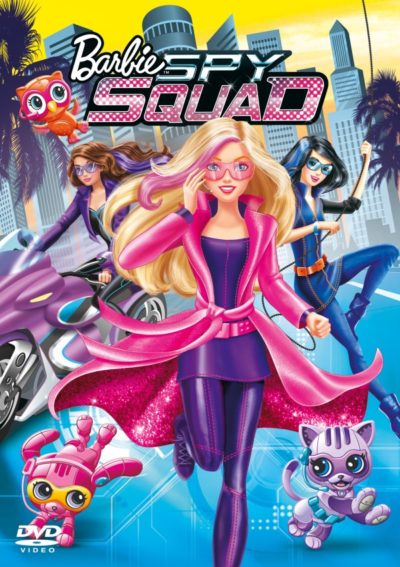 Ah, the things I watch for you people. Safe to say, this probably hit new heights of “I am not the target demographic”, but it’s hard to argue it is outside the remit of the site. To the film’s credit, this is not as bad as I feared it might be. If I had an eight-year-old daughter – such a shame this turned up about 25 years too late! – there would be far worse things to have inflicted on me. Not that I’ll exactly be chasing down any of the other
 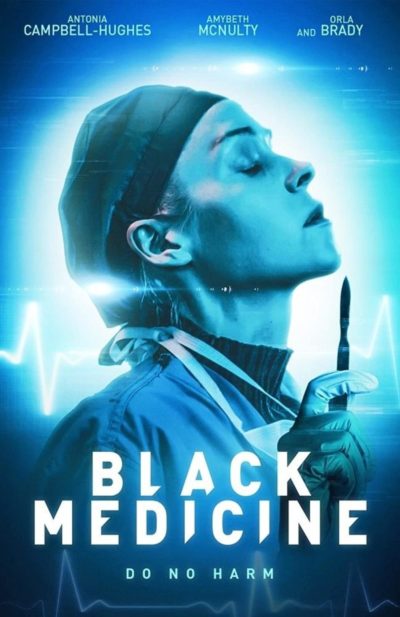 I guess, at its heart, this is the story of two mothers. There’s Jo (Campbell-Hughes), an anaesthetist who has been struck off the medical register, for reasons that are left murky. She’s now practicing her healing arts on the underground market, from patching up dubious stabbing victims, to carrying out unlicensed abortions. Jo lost her daughter to meningitis, and has split from her husband. Then there’s Bernadette (Brady), a wealthy but no less murky character. Her daughter is dying, and in desperate need of a transplant. To that end, Bernadette has kidnapped a young woman, Aine (McNulty), with the intention of using her as an unwilling organ donor, and needs Jo’s help for the operation. But when Aine – who would be about the age of Jo’s daughter had she lived – escapes and hides in the back of the physician’s car, Jo is left with a series of difficult decisions.
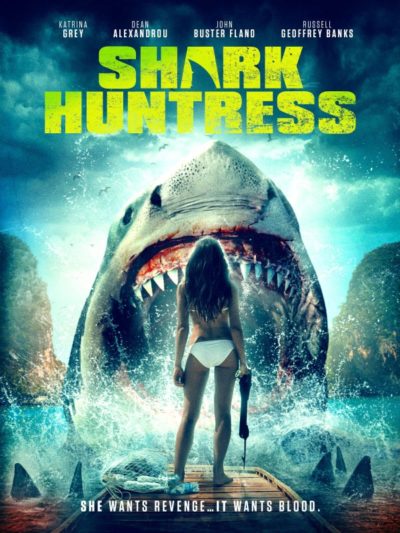 I’ve previously talked about – OK, “ranted” may not be inappropriate – the perils of message movies. But I did wonder whether it was the specific content to which I objected. Would I dislike a film so much, if I was on board with its strident message? On the evidence here, I can confidently state: hell, yes. For this is painfully earnest and hard to watch, much though I agree with the environmental topic, that humanity’s use of plastics are threatening the oceans. An alternative needs to be found. By which I mean, I strongly suggest you find an alternative to watching this movie. The poster has clearly strayed in from a far more entertaining offering, and bears little resemblance to what this provides.
  Subtitled, The Female Hero in Popular Cinema, 1970-2006, this is non-fiction, being a feminist – I guess, more post-feminist – analysis of action heroines over the time in question. It made for an interesting read, being considerably more dense than my typical reading material: Schubert seems to be aiming at an audience that already know what she means, with a good number of terms left unexplained in the text. Yet it was equally frustrating: for every section that had me nodding in agreement, there was one where I was at least raising an eyebrow, if not snorting derisively.Parts are incisive and smart. Others exemplify the worst excesses of ivory-tower academia.
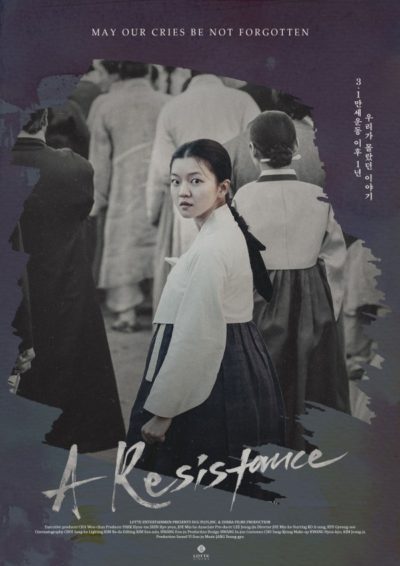 This takes place in 1919-20, when Korea was under occupation by the Japanese [there seems to be quite a lot of this about; I’ve seen a bunch of Chinese movies set when that country was occupied by Japan as well]. Even demonstrating against the Japanese, or in favour of Korean independence, was sternly forbidden, with those taking part likely to be arrested and thrown in prison for months. If they were lucky, that is: an opening caption tells us 7,500 were killed in the protests or died in jail subsequently. Even for those merely arrested, this was not a “nice” prison, to put it mildly, with horrendously over-crowded conditions (24 to a cell!), freezing temperatures and meagre rations.