This book is the official novelization of the 2005 movie of the same name, starring Angelina Jolie and Brad Pitt. I don’t share the idea that movie novelizations are by definition trash, devoid of any possible literary quality. Like movies based on books, they take a work in one art form and endeavor to translate it (hopefully faithfully!) into a different one. Whichever direction the translation goes in, it requires genuine artistry to do well; IMO, either way, it has the potential of creating something worth watching or reading, and even something that’s seriously good artistically. Each attempt ought to be judged individually, on its own merits.
That said, in this case, neither the original movie nor its novelization are ever likely to be viewed by many people as stellar achievements in either of their respective forms. I thought that the film had significant gaps in logic, which I hoped the novelization might address. In fact, it doesn’t; the plot holes, logical problems and murky areas in the original are as glaring, illogical and murky here. That’s the primary reason that my rating for this book isn’t higher.
As most readers will know going in (and the cover copy will tell you that much, if you don’t!), our title characters here are both professional assassins. Neither of them knows that fact about the other. As it happens, they work for unnamed organizations, both seemingly U.S.-based (the main setting appears to be New York City), which are hostile to each other for totally unexplained reasons (did I mention “murky?”). They’ve been married 5-6 years (a running gag is that they can’t agree on which), having met in Bogota, where they’d both been sent to carry out hits on various local malefactors. At the time, they were strongly drawn to each other, quickly forming a deep emotional connection, and married after a whirlwind courtship. Since then, however, their marriage has deteriorated to the point that they’re hardly communicating at all, and are just going through the motions, nursing various unexpressed grudges and frustrations. Not far into the book, they’re both assigned by their respective organizations to dispatch the same mark. The resulting confrontation will set the stage for the ensuing developments.
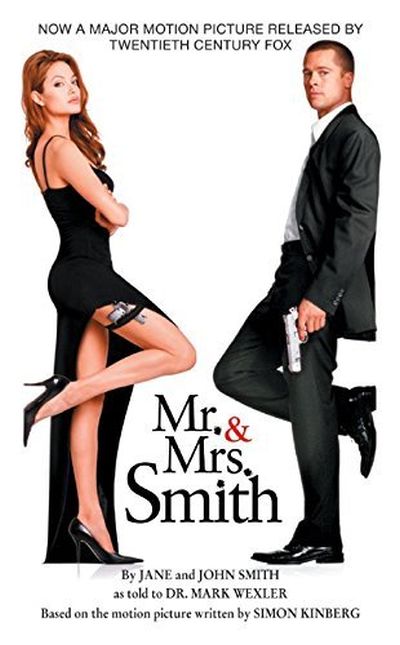
Cathy East Dubowski is a professional writer, who apparently specializes in both YA and grown-up movie novelizations. This is apparently her best-known one (and my only exposure to her work). To her credit, she attempted a fresher approach here than simply re-telling the screenplay in third person. The movie used the frame device of the couple’s visits to a marriage counselor. Here, the author begins the book with the counselor’s notes and transcripts from his initial sessions with the Smiths, both together and separately; the main body of the story is their alternating journal posts which the counselor asked them to write, without necessarily showing the text to anyone else. IMO, this works well; we get inside both their heads, and understand them and their feelings. (One reviewer complained that the technique makes for “repetition,” but I didn’t find this to be a problem. While they’re often describing the same events, their different perceptions of them are very revealing, and as such anything but boring.)
Dubowski follows the movie fairly well (I could spot some minor differences, but though my memory of the film isn’t as sharp now as it was right after watching it seven years ago, I could also recall a good many scenes and lines of dialogue). The main difference is that the bad language in the book is much worse than in the original. There, I don’t recall it as very noticeable (and I would have picked up on that sort of thing), though the PG-13 rating is in part for “brief strong language.” Here, it’s not brief, and there’s a lot of it, including the f-word and religious profanity; I found most of this gratuitous. (Otherwise, the content issues aren’t problematical; there’s implied –actually, stated– sex, some of it premarital, but nothing explicit, and while the violence level is through the roof, it’s not really gory and is so over-the-top it’s hard to take seriously.
The same could be said for both the movie and the book in general.) A lot of plot points aren’t really credible; it’s difficult to go into detail without spoilers, but I didn’t think any of the decisions by the couple’s superiors were believable, Benjamin Danz’s role didn’t logically make sense, and I couldn’t imagine any real-life assassins reacting to the situation of discovering another hitter targeting the same mark the way this pair did. Also, the carnage in the highway chase scene would have resulted in police attention long before it concluded; and I thought the ending was way too pat. The causes of the couple’s estrangement over the years also aren’t really brought out and explained.
Objectively, given all of these shortcomings, in terms of its literary worth the novel doesn’t deserve more than two stars. Three was a gift; but it’s one I’m subjectively willing to give, just because I honestly did like the book, to a degree. The reason I did is for the strength of its depiction of a couple who honestly do love each other, and who are willing to fight both external dangers and their own inner anger and misunderstandings, in order to hang on to and recapture the bond that drew them to each other in the first place. And it’s made clear that a big part of doing that is learning to be honest with each other, to be themselves without playing a role, to communicate and give your entire commitment to the relationship. That aspect of the book, even though the story is told with a significant leaven of humor, is in itself as serious as can be, and applies to all marriages, whether the partners both happen to be contract assassins or not. And despite their faults, I had the sense that both main characters were essentially decent human beings, whom I did care about and want to see succeed in their married life.
Author: Cathy East Dubowski
Publisher: Harper; available
through Amazon, currently only as a printed book.
A version of this review previously appeared on Goodreads.




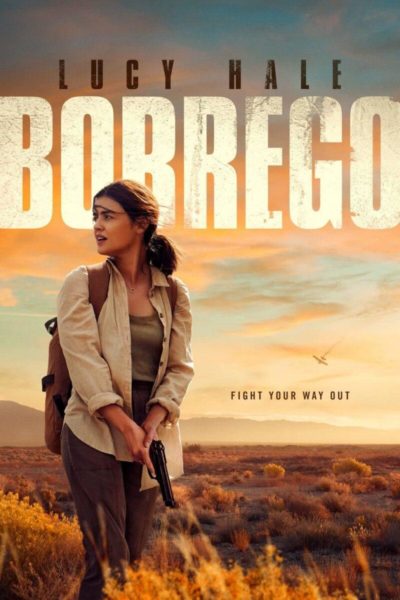 Sorry, couldn’t resist it. For the recent string of suboptimal Netflix movies continues with this tedious bit of work, which feels like the first journey across the South Californian desert filmed in real time. It begins with Ellie (Hale), a botanist carrying out a survey near the Mexican border. She meets a teenage girl, Alex (Trujillo), who is skipping school and the two have an awkward conversation. I initially thought its stilted nature was intended to tell us something about the two characters, but nope. All the conversations here are awkward. Writer-director Harris just has no ear for dialogue, which may explain why so much of this is people wandering about instead.
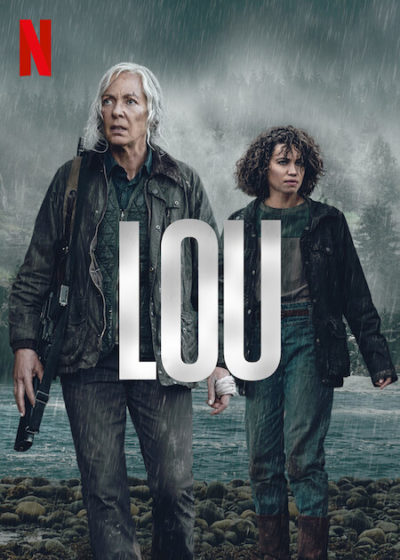 A Netflix original movie, the first thing to say is: thankfully, this is not as bad as
 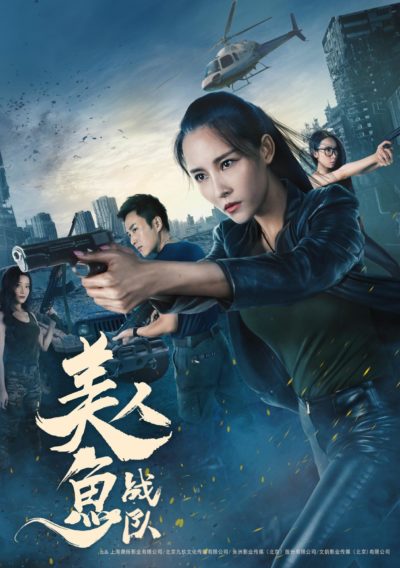 This feel like it could easily have come out of the nineties, with the distinct whiff of a throwback to the golden age of Hong Kong “girls with guns” movies. That is, of course, not a
 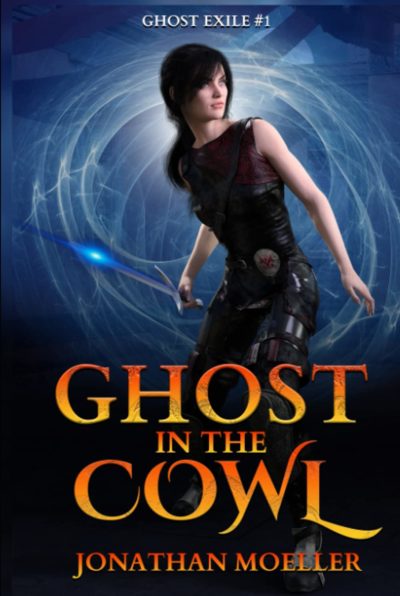 This one was probably teetering on the edge of a seal of approval, except one aspect. For what’s supposed to be book one in a series, the author spends a lot of time discussing events prior to the book getting under way, such as the tragic loss of the heroine’s true love. However, subsequent research revealed that this is not the start of Caina Amalas’s history. The Ghost Exile series is actually a sub-set of her saga, which appears to consist of no less than 26 primary works. According to
  When I reviewed Russian fencing film
 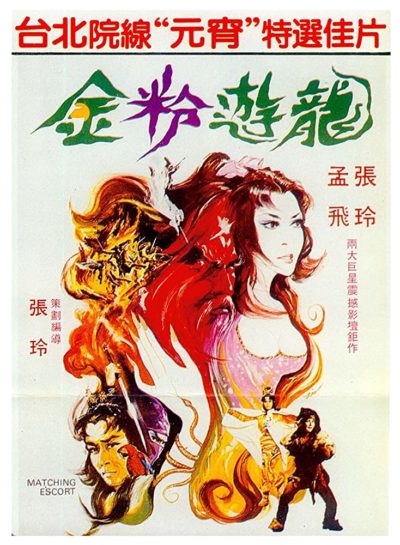 I was pleasantly surprised when this random kung-fu film found Tubi (under the Silver Fox title) turned out to be by the creator of
 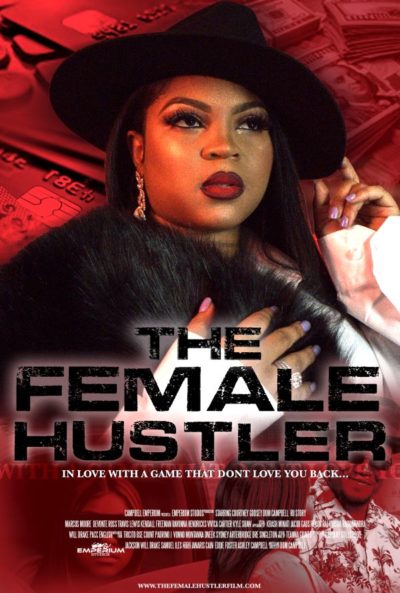 This is another one in the apparently endless series of low-budget urban movies, which focus on crime in the black community. Though this does actually have a couple of wrinkles which make it stand out, if not quite enough to make it a success for a wider audience outside its community. Columbus, Ohio is the setting, where Princess (Godsey) is struggling to make ends meet. She’s relying on handouts from her dodgy brother, Dae Dae, to make rent, and also wants to get her best friend away from her pimp. Opportunity comes knocking, in the shape of an Uber driver, Omar (Campbell), who brings her on board in his business, which he tells her has almost unlimited upside and growth potential.
 ★★½
★★½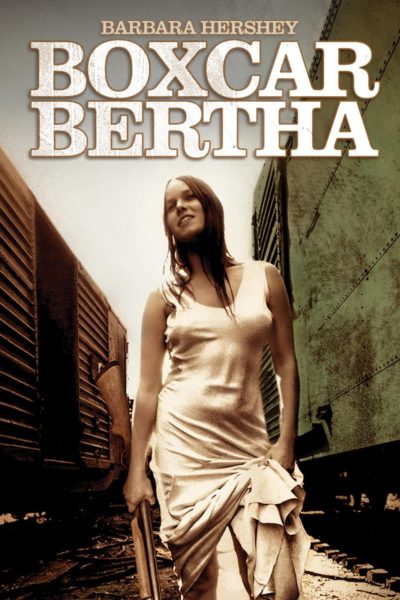 After the success of Bloody Mama, producer Roger Corman wanted to follow up with another film depicting lawlessness in the Depression. He found his source material in Sister of the Road, supposedly the autobiography of a thirties drifter called Boxcar Bertha. No such one person actually existed: it was assembled by the author, Dr. Ben L. Reitman, from multiple characters he met while helping women in trouble in Chicago (a fictionalized version of the doctor may appear in the movie). Corman hired the then almost unknown Martin Scorsese, who was directing his first commercial film; its predecessor, Who’s That Knocking at My Door, grossed only $16,085. Scorsese was given a schedule of 24 days and a budget of $600,000.