




Literary rating: ★★★
Kick-butt quotient: ☆☆☆
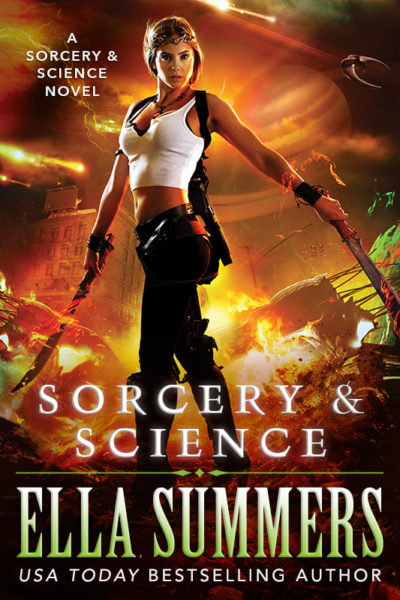 The blurb for this one reads, “Terra Cross is just your typical paranormal princess. She plays poker with goblins and leprechauns. She savors her morning muffin from the Pacific Sunrise Bakery in suburban California. She solves galactic crime cases. And on a particularly wild day, she can even see into the future.” It is somewhat inaccurate, at least as far as this novel goes. I don’t recall any poker at all, muffins appear once, and as for the crime-solving… Well, sorta but not really. There is, however, likely good reason, since the novel is a prequel to Summers’s “Sorcery and Science” series, in which I presume Terra does more of the above.
This is both a blessing and a curse. It allows this book to stand on its own: you reach the end, and there’s a fairly well-defined line drawn beneath the fates of most characters. On the other hand, it does require a clunky jump in the epilogue to tie into the body of the series. Not much more than, “we moved to the other end of the galaxy and started a private-eye business.” Wait, what? It almost works better if you skip that, and treat it as the first volume in its own, standalone series. The paranormal princess aspect makes more sense this way, in a universe where advanced technology and magic co-exist, and Earth is being carefully blocked from knowledge of both. Vampires, witches, elves, etc. all have their own realms, making varying use of the “sorcery and science” from the title.
Cross is the daughter of the mage’s king, but likes to sneak off on adventures with her best friend and mage enforcer, Jason. However, they bite off more than they can chew when chasing after a renegade scientist-wizard, Vib. He is creating an advanced breed of super-mages, with multiple, shared talents instead of the standard limit of one type of magic per person. Needless to say, this research – despite being way beyond the pale – is of great interest to the competing races. Terra and Jason find themselves not just fending off Vib’s creations; they also becomes pawns in the political battle for dominance between the various forces that seek to control the galaxy.
I generally enjoyed this, once I got past Summers’s fondness for prose which tends toward the over-descriptive, it seems especially when it comes to colours, for some reason. The world she crafts is quite an interesting one, and the techno-pagan blend of SF and fantasy is intriguing. While Jason is the more action-minded of the duo, Terra becomes more active later on, especially after taking one of Vib’s experimental concoctions, out of desperation. It allows her to use some of Jason’s talents, which are significant;y more combat-oriented than her precognitive ones.
The sudden right turn at the end, to tie it into the main body of the series, leaves me uncertain whether I would want to continue, since it appears potentially rather different in tone. Not least, I get the horrible feeling there’s going to be one of “those” love triangles, putting the heroine between Jason and the dark, brooding vampire commander she encounters. Fortunately, that was only hinted at in the prequel, and what’s here was, overall, pleasant enough.
Author: Ella Summers
Publisher: Currently only available as part of the Dominion Rising collection for Kindle.
 As a joke I saw on Facebook went, “With all these self-driving cars, it won’t be long before there’s a country song about your truck leaving you.” The rise of smart vehicles is inevitable, and likely, so are other films like this, which falls somewhere between Christine and 2001. In this case, mother Sandra (Bowden) is driving to see her husband, whom she suspects of cheating on her, with their young child David (played by the two Hodges brothers, whom I’m assuming are twins!) in the back seat. Her car is the state-of-the-art Monolith, equipped with every safety feature imaginable, and then some. But a series of events – a diversion, an encounter with roadkill on the hoof, and Sandra giving David her smartphone as a distraction – lead to a tricky situation. She is stuck on a remote desert road, outside of a car that has now entered its impenetrable “vault mode”, with David trapped in its interior.
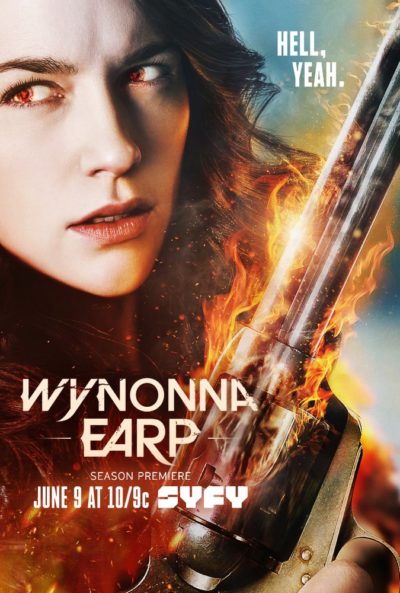 After a long absence, Wynonna Earp (Scrofano) returns to her home town of Purgatory, near the Rockies. There, we discover the truth about the death of her father and disappearance of her sister, events which precipitated Wynonna’s departure. Turns out the great-great-granddaughter of the legendary Wyatt Earp has a supernatural duty to fulfill, using her ancestor’s equally legendary 16-inch barrel “Peacemaker” revolver. Wyatt kept demons known as “revenants” in check, and the mission has been passed down the family line since, with Wynonna the current incumbent. Fortunately, mystical borders keep the revenants within the “Ghost River Triangle,” and she has the help of Deputy Marshal Xavier Dolls (Anderson), an agent in the “Black Badge” division of the US Marshals Service; Doc Holliday (Rozon), the now-immortal former friend of Wyatt; and Wynonna’s kid sister, Waverly (Provost-Chalkley).
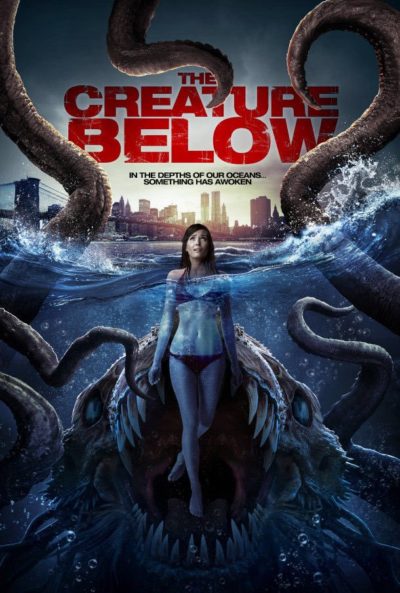 The mad scientist has been a staple of horror/SF for almost 200 years, since Victor Frankenstein first cranked up his machine. The worlds of literature and cinema have frequently returned to it since. A survey showed mad scientists or their creations to be the threat in 30% of horror films over a fifty-year period, and examples from one or other, include Dr. Moreau, Dr. Jekyll, Herbert West, and Rotwang in Metropolis. But they have been almost exclusively male: after Frankenstein, it was 75 years before any comparable female character existed, the title character in George Griffith’s Olga Romanoff, from 1893. They have been rare ever since, with only the occasional entry such as Lady Frankenstein to break male domination.
 I guess there is at least something logical about this, in how its heroine, Maggie Lee, becomes the assassin of the title. She takes on her first contract to pay the medical bills of her niece, left in a coma after a car accident which killed her parents and injured Maggie. That’s the kind of motivation which I can see, causing a person to take desperate steps. Unfortunately, it’s a rare island in a sea of largely implausible plotting and uninteresting characters.
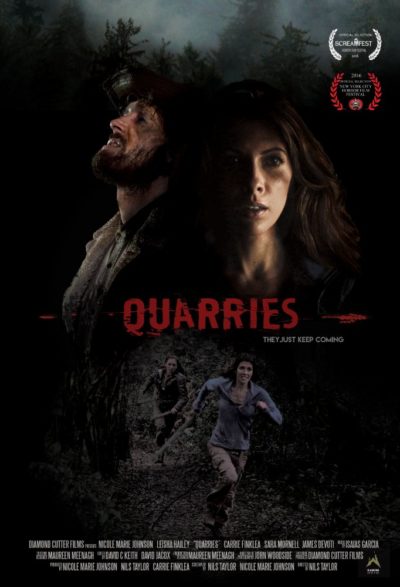 It’s not often a film manages to be under-written AND over-written. Yet this tale of wilderness survival does both. A group of women are out on what’s supposed to be an empowering hike through the forest, designed to boost self-reliance, esteem and all that good stuff. But they come under attack from a group of local men, apparently intent on a hunting expedition, with the woman as the prey. They’ll need to learn survival skills, that’s for sure.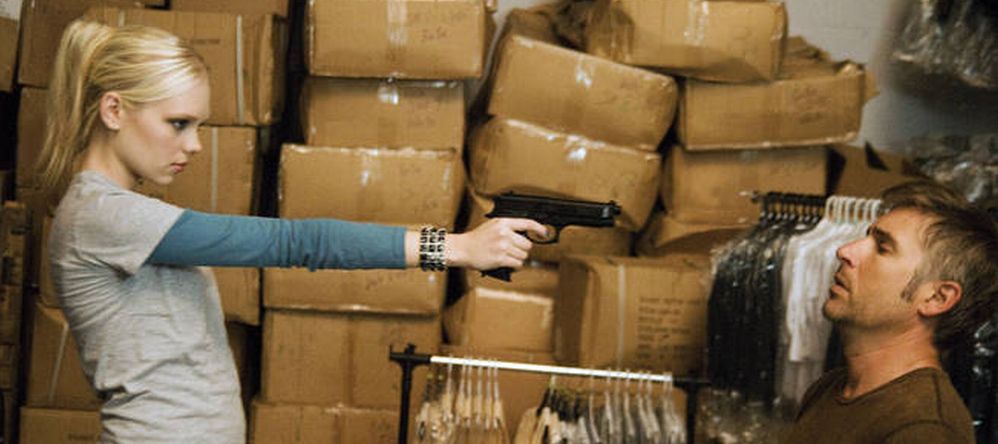
 When I told Chris the title of this one, I swear you could hear her eyes rolling at the mere thought of it. But by the end, even she had to admit to having been won over by its dark charms. Most obviously is the sense of black humour which isn’t just dry, it’s as arid as the Atacama Desert. Morgan (Jungermann) and Jean (Carr) are fascinated by female serial killers, running a podcast on the topic which has acquired its own, unique fanbase. Morgan falls for Simone (Vand), a colleague at the food co-operative where she works. But Jean – who is also Morgan’s ex – can’t help thinking there is something seriously off with Simone.