 ★★★
★★★
“Drawn that way.”
1995 possibly marked a recent low for the commercial appeal of action heroines in Hollywood. December would give us one of the biggest disaster movies of all time, in Cutthroat Island and March saw Tank Girl bomb. Together with this attempt to give the Western a female spin, the three movies had a combined budget of $155 million, but grossed less than $33 million. While Westerns were enjoying a return to popularity in the years after Unforgiven, it was almost as if Sony had learned nothing from Fox’s dud in the same area the previous year, Bad Girls. They instead doubled down on something which was not just a Western, but specifically a pastiche of the spaghetti Western subgenre.
In hindsight, its commercial failure was almost inevitable, even though after Basic Instinct in 1992, Sharon Stone was one of Hollywood’s hottest actresses. So when Sony bought Simon Moore’s script the following year, they approached her to star. She not only came on board as the lead actress, she also became one of the film’s producers, and had no hesitation in wielding that power. For example, she insisted that Sam Raimi – then, largely known only for his work on the Evil Dead trilogy – had to direct it, or she would not be involved. Similarly, she went to bat for then largely unknown actors Russell Crowe and Leonardo DiCaprio, going so far as to pay the latter’s salary herself. The subsequent Oscars for both men suggest she had a good eye for upcoming thespians.
 Moore was eventually fired, with the studio bringing John Sayles on board. However, Moore was re-hired three weeks before shooting was scheduled to start, due to the movie becoming excessively long: he simply discarded all of Sayles’s changes, and Sony accepted what was basically the original version. However, during shooting, Raimi realized he had an issue. “I came to the studio and said, can you find me a writer? I’ve shot this movie, and the end isn’t quite working… They suggested Joss Whedon, who was doing Buffy, so I met Joss and he saw the movie, and he helped me solve this ending in one afternoon,” adding one more name to the list of future stars who worked on the film.
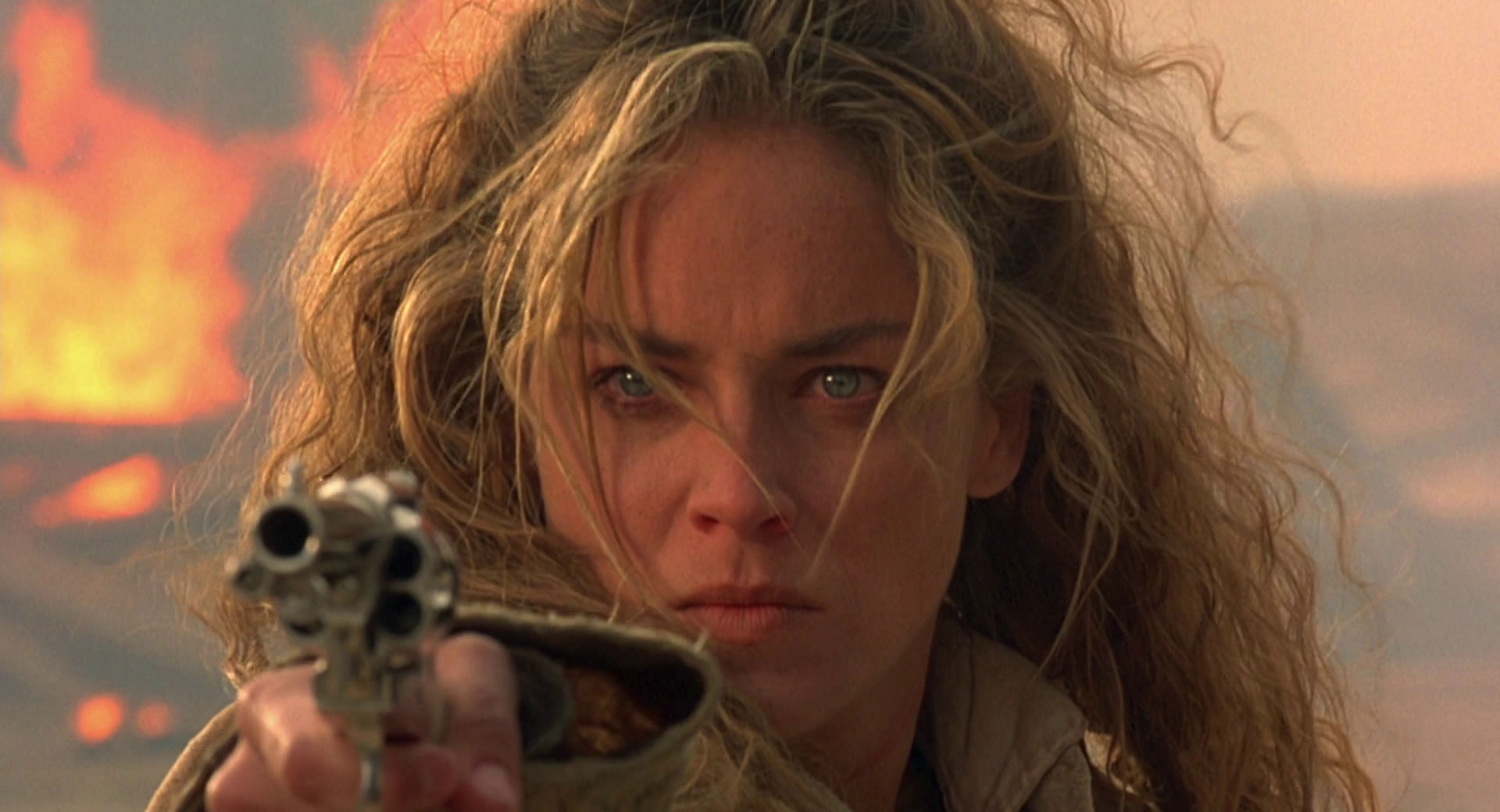
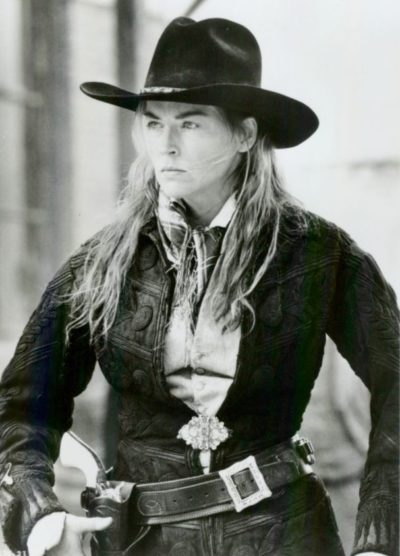
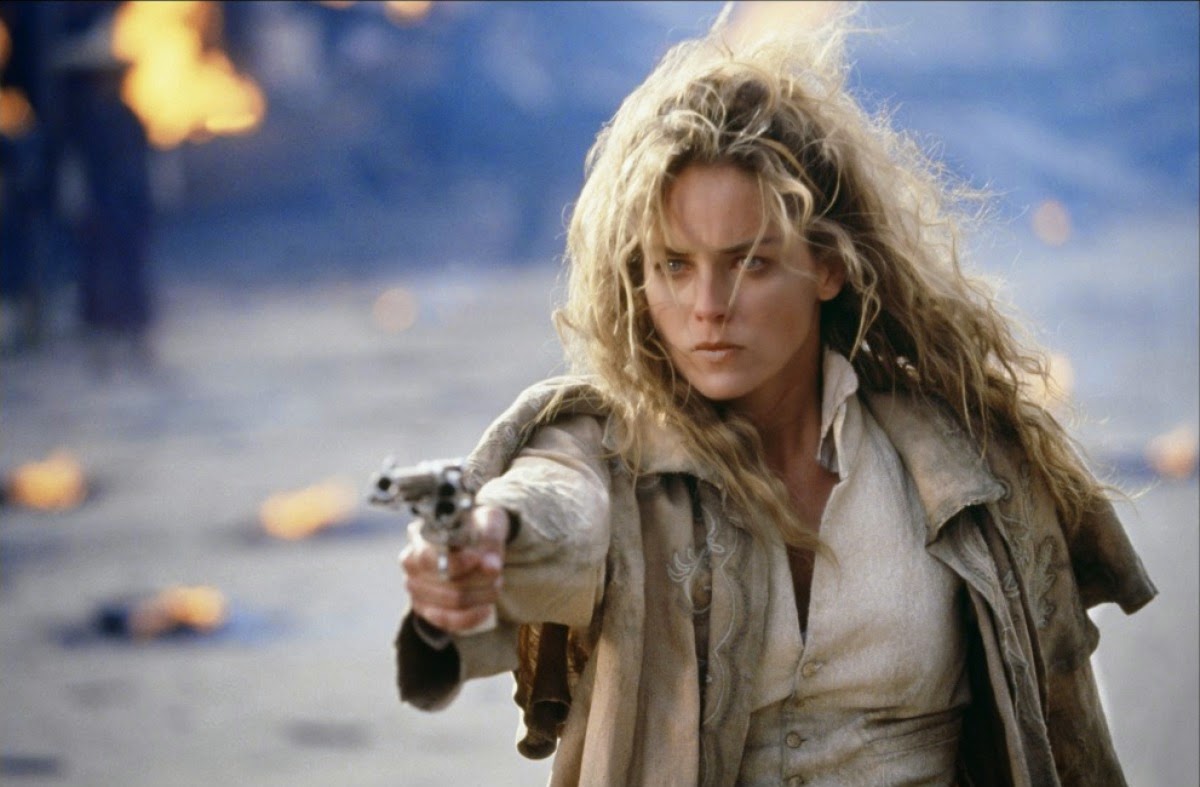
The concept here is pure gimmick. The town of Redemption lives under the iron hand of Herod (Hackman), who organizes an annual gunfight contest he always wins, partly to flush out anyone who might be plotting against him, mostly because he enjoys it. This time, 15 other entrants are drawn by the $100,000 prize, as well as other reasons. The more or less willing participants include Herod’s son (DiCaprio), former partner Cort (Crowe) and a mysterious woman (Stone), named in the credits as The Lady, actually called Ellen. She has a particular grudge against Herod, since his involvement in the death of her father, though things are more complex than you initially suspect. Getting revenge, however, requires Ellen to get through a tournament increasingly stacked against her.
The Variety review at the time nails the main problem: “Given the inevitability of an Ellen-Herod showdown, despite a couple of twists [Moore] has thrown into the last reel, the film quickly becomes hamstrung by the rigid dramatic constraints imposed upon it by the gun tournament format. No matter how many fancy ways Raimi invents to stage the shootouts, the tedium is quick in coming, and there’s nothing else going on between times to build up suspense, character or interest.” Moore has failed to grasp that while Westerns often climaxed in a gunfight, this does not mean that more gunfights = a better film. They are the full-stop at the end of a cinematic sentence. And like. Those, when. You use them. Too often, the. Results are jarring rather. Than effective.
 It’s a shame, because the supporting cast is quite stellar, and deserve better. Outside of those already mentioned, there’s also Tobin Bell, who’d go on to become horror icon Jigsaw in the Saw franchise; Lance Henriksen; Keith David; and, although his scenes were deleted, Raimi’s long-time friend, Bruce Campbell. Seeing the talent which gets rushed in and out of the story in about five minutes makes me wonder if a feature film was the best medium for the idea. It might have worked better as an ongoing television series, each episode telling the back story of the participants and ending in their duel. A rotating series of guest stars would have worked very nicely, with the season covering one of Herod’s contests, leading up to the final gunfight in the last installment.
I’m not certain Stone is perhaps the best candidate for the role, since she seems to think staring really hard is the key to dramatic success. You’d think she might have known better, given apparent action heroine ambitions from relatively early in her career. Even before breaking through to stardom in Total Recall, she was in her fair share of adventure flicks – albeit not very successful ones – such as King Solomon’s Mines and Allan Quatermain and the Lost City of Gold. Unlike Geena Davis, however, Stone didn’t seem to persist in her efforts: the critical acclaim she received the same year for Casino, pushed her career back toward more dramatic pastures. This therefore stands out as something of an oddity in her filmography.
Time has perhaps been slightly kinder to this than its companions in action heroine failure for the year. Raimi eventually showed an ability to deliver this kind of comic-book spectacle with his work on the Spiderman franchise, and that may have been a better home for his stylistically excess flourishes than this. Naturally, as an Arizona resident, this film now triggers a certain amount of native pride, having been filmed largely around the state, in particular at Old Tucson Studios [unfortunately, a good portion of which burned down a couple of months after Quick was released, forcing its closure for two years] and Mescal, 40 miles southeast of Tucson.
It may not be the greatest Western – or even a particularly good Western. Yet two decades later, it likely remains the biggest production in the genre with a female lead, and as such, it deserves a certain respect. Especially when the commercial failures in recent years of Jane Got a Gun and Woman Walks Ahead, suggest that position at the head of the class probably isn’t going to be under threat, any time soon.
Dir: Sam Raimi
Star: Sharon Stone, Gene Hackman, Russell Crowe, Leonardo DiCaprio


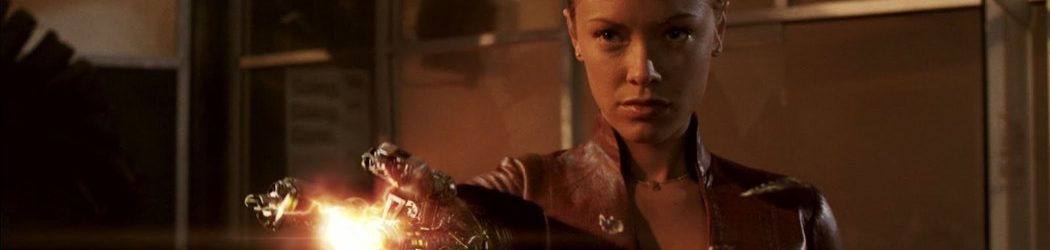

 The film begins with an Argentinian school-trip to a volcanic area, which goes badly wrong when one of the schoolgirls, Cornelia, vanishes. Despite an extensive search, all that’s found is her locket. 14 years later, the missing girl’s best friend, Pipa (Lopilato), is now a cop, channeling the guilt she still feels about Cornelia’s disappearance and her role in it, into work. After a mass to mark the anniversary of the incident, Cornelia’s mother visits Pipa, begging her to re-open the case. Despite initial qualms, she does so, only to find a restaurant-sized can of worms comes along with it. Pipa finds herself facing a serious criminal organization, under the control of a woman known as The Mermaid (Salamanca), whose tentacles stretch both around the world and into the past.
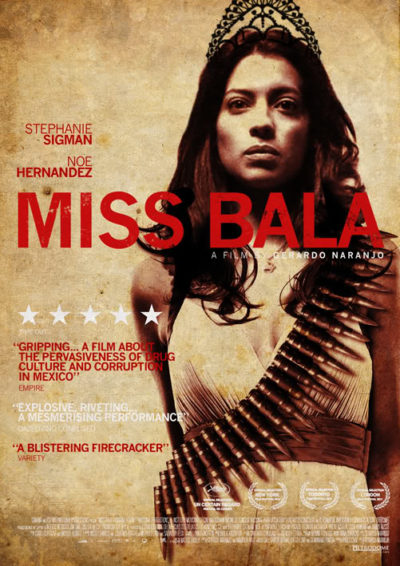 Pageants and drug cartels may not seem like topics that combine, but in South and Central America, they’re perhaps closer than you’d think. El Chapo’s third wife, Emma Coronel Aispuro, was a Mexican beauty queen. In 2013, the previous year’s winner of the “Sinaloa Woman” pageant, Maria Susana Flores, was killed in a clash with police.
 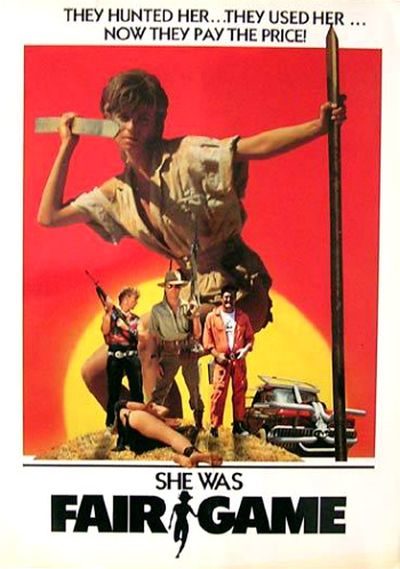 First off, this is not to be confused with the other Australian film of the eighties
 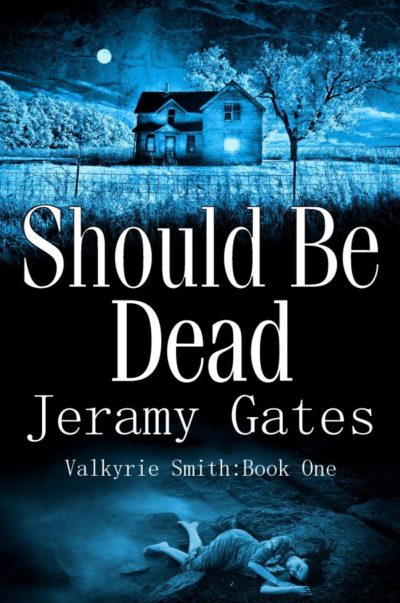 “Liberation, Val had learned, was not a simple matter of casting off stereotypes and social conventions. Nor was it a mere change in perspective. Rather, it was an evolution in state of being, a release not from consequences, but from fear.”
 Despite the male-oriented title, there’s no doubt who the star is: Vienna (Crawford), a former saloon girl who has clawed her way up to owning her own place, on the outskirts of an Arizona mining town. She has inside knowledge of the route the railroad is going to take, and chose her location with that in mind. But there’s stiff local opposition, from those who don’t want the railroad, or who object to her allowing the Dancing Kid (Brady) and his gang, suspects in a stagecoach robbery, to frequent her establishment. Leading those with a dim view of Vienna, is Emma Small (McCambridge), whose brother was killed in the robbery.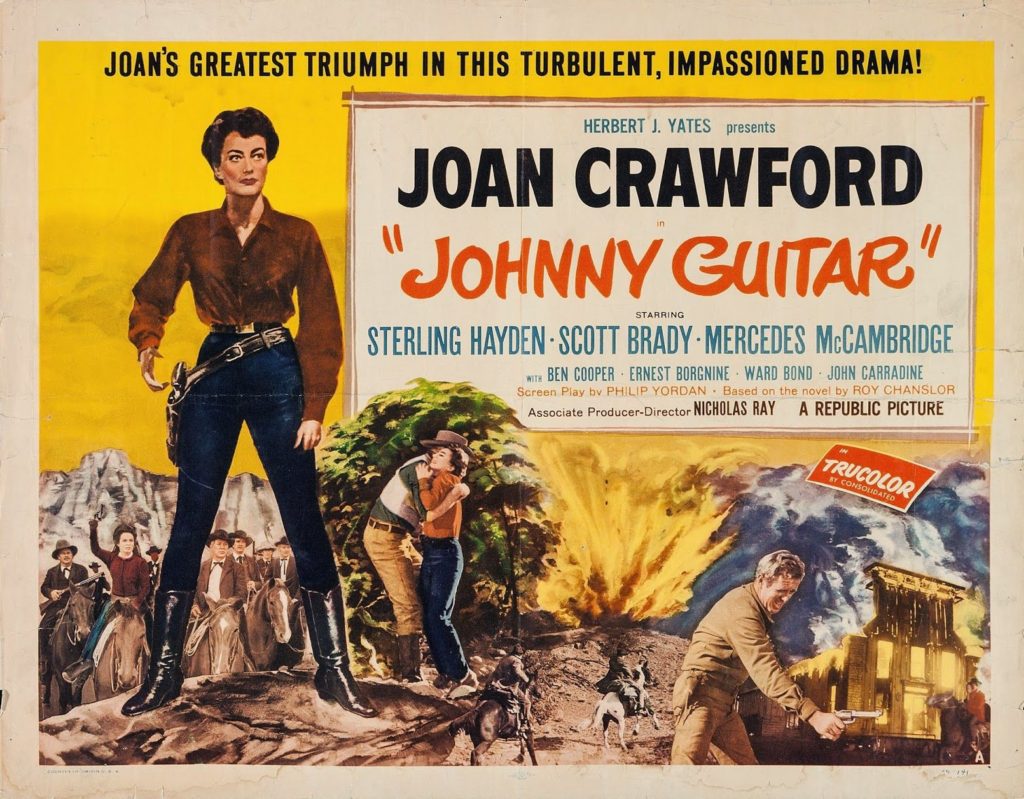
 If you think children are of one mind with regard to the gun debate, thanks to the zealots of Marjory Stoneman, the alternative view portrayed by this movie will feel amazingly transgressive and almost alien. The world it depicts is one where schools will actually teach kids how to use guns safely, handing out gun permits, and a teenage girl can receive a treasured family heirloom, in the shape of a .30-30 rifle, passed down the generations. Hunting is a way of life, and an important resource, with a particularly strong matriarchal tradition, in which three generations of women will be going into the woods together. For 12-year-old Florence (Abas), it’ll be her first excursion: in a not-too-subtle parallel, she also gets her first period.
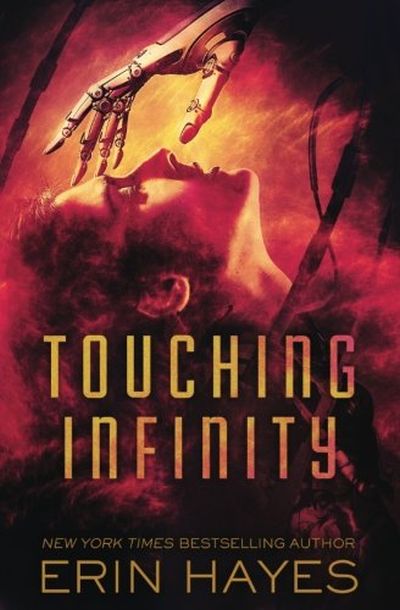 I will confess to a little post-read confusion here. Amazon calls this Volume 2 in the author’s Rogue Galaxy series – but I could find no information, there or elsewhere, regarding Volume 1. I suspect Amazon and Goodreads are wrong, and this is actually the first entry, as stated in the Dominion Rising collection. It certainly
 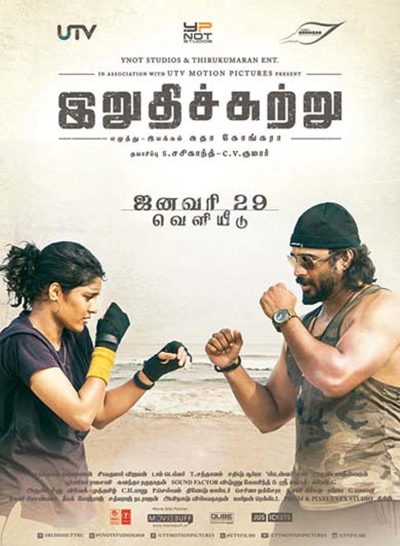 Despite thrashing virtually every sports cliché under the sun into the ground, this just about manages to skate by on the energy of its two central performances. Adi Tomar (Madhavan) is a boxing coach who gets hit with a trumped-up #MeToo charge by the head of the boxing association Dev Khatri (Hussain), and punted off to the backwoods of Chennai. There, however, he finds a raw jewel in Madhi (Singh), a fish-seller whose sister, Lakshmi (Sorcar), has been training as boxer with an eye to joining the police. But it’s Madhi’s aggression which attracts Adi’s attention, and he eventually convinces her to strap on the gloves.
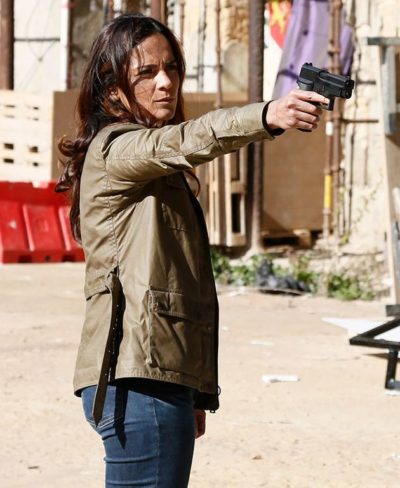 We arrived here with Teresa Mendoza (Braga) having gunned down Don Epifanio, and made an implacable enemy of his estranged wife, Camila Vargas (Falcon). Epifanio had become the Governor of Sinaloa, a position Camila took over, using it to buttress her position at the top. She formed alliances on both sides to assist her further: notably General Cortez (Arias), who provided military muscle, and with DEA agent Alonzo Loya, to whom she fed intelligence about her rivals. However, Camila’s increasingly strained relationship with her teenage daughter ends up being used against her.