




★★★
“Two Angels for Europol?”
“Brussels: home to many European authorities. This one is new. It’s an international combination of security forces from European countries: EUROPOL. For a long time the criminal underworld hasn’t respected borders, and continually develops new techniques. So crimes are often committed for which the usual police methods are not enough. In such cases, Europol has trained employees who are out of the ordinary. Unconventional cops, with unconventional methods, like us. Biggi. Conny. And our boss is a lady! Her name is S.I.R. – S for ‘Sicherheit’ (security), I as in ‘Information’, R for ‘Recht’ (justice).”
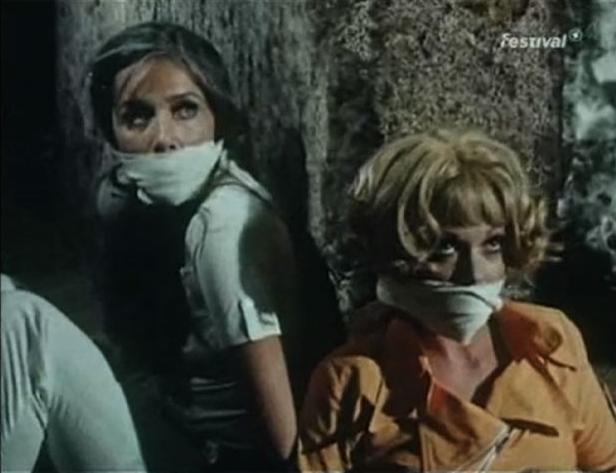 What sounds like a mid-60s promotion intro to The Avengers (John Steed + Emma Peel, not the other ones!) is indeed a spoken monologue. And it leads into one of the strangest oddities in the “girls with guns”-subgenre, which still can surprise me when I dig out something new. Now, I don’t want to summarize the whole of German film-making history, but I think a couple of words would actually be quite helpful in this case, before we get under way.
Early German movie-making had a very high interest in the fantastic film genre. Indeed, you could actually say the fantastic film was born in Germany with such early and successful cinematic efforts as Der Golem (1920), The Cabinet of Dr. Caligari (1920), the Doctor Mabuse films, Metropolis (1927), Die Nibelungen (1924) and Nosferatu (1922). With the rise of the National Socialists in the 1930s such topics suddenly became problematic. No oppressive regime ever likes people to be able to dream. The fantastic genre is a kind of escape no dictatorship can control, and that’s why they hate these things. However, the mindset stayed prevalent for a long time in Germany after World War II.
As a result, things such as comics or science fiction literature were usually seen as suspicious in the 1950s. Germany only slowly rediscovered its ability to dream on film and TV in the 1960s, during that beautiful period that gave us Karl May westerns, the Spessart Ghost comedies, new Doctor Mabuse movies and the Edgar Wallace series. It was really a very productive time in the German film industry. Then, suddenly, in the late 60s – not just here but worldwide – films seemed to hit a roadblock due to a stronger focus on politics than on popular culture by the younger generation. In Germany the old movies were abandoned as “Papas Kintopp” (“father’s cinema”). The young generation which discovered the Nazi era was being glossed over in their history classes, rejected what that generation offered, and went on to create their own movies in the 70s, very often politicized and dealing with “real life issues”.
 And while American cinema gradually got its mojo back, as film makers like Spielberg, Lucas and others fully reinvented the fantastic film, that never happened to Germany. It initially suffered from state-funded “author’s cinema”, resulting in very boring movies, mostly forgotten today. But it mainly degenerated into very average and (in my personal opinion, mostly lame) TV-crime shows. They lacked the wonderful mixture of over-the-top, unambiguous heroes and villains, uncanny horror-like atmosphere and outlandish plots of the Edgar Wallace movies of the 60s.
“Krimis” suddenly became some kind of social dramas, that were more about the depiction of society’s flaws and personal backgrounds of criminals then about the creation of suspense and imagination. The kind of crime drama the German public TV channels would usually co-produce, became as exciting as a visit to a tax office. They guaranteed “realism” and rejected as childish any depiction of outlandish things. When I look at today’s German TV programs, nothing has changed since then.
Given that, I was surprised to find this little campy gem of German TV-series. Produced between 1971-72, and shown on German TV between 1973 74, the series depicts two investigators Biggi (Anita Kupsch) and Conny (Monica Peitsch). [Quick aside: “Biggi” and “Conny” were also the names of two well-known German girl-comics in the 80s] They work for a mysterious lady (Anneliese Uhlig) who seems to have no real name and works under the alias of “S.I.R,” as discussed in the intro. She lives in a luxurious villa with candlesticks, a library and what we today would probably call a prototype version of a computer.
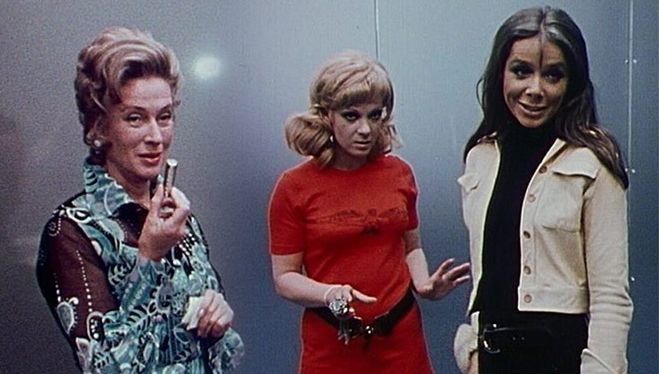 Upon closer inspection, I get the impression the makers of this show must have been inspired by shows from abroad. In the mid-60s, the Steed/Peel Avengers enjoyed great success on German TV screens. There was the similar themed Department S and I’m quite sure the original Mission Impossible series also ran on TV in the early 70s. Though, Okay, S.I.R. can’t for a moment compete with these much better shows, it is by German standards a miracle such a series was produced at all. The 70s in Germany still weren’t a time when anything fantastic would be embraced. Heck, when the first Star Wars came out, that movie was heavily lambasted by critics as “fascism in space” and “fantastical nonsense” that would spoil the youth.
In this TV series, the two good-looking girls usually get called to a new investigation by means of a beeping ring. They meet up with S.I.R., who comes across like a female “M”, 22 years before Judy Dench arrived on the scene. They’re then sent off to investigate strange occurrences. These usually turn out to be the machinations of criminals, using strange gadgets or methods that would make any John Steed-Emma Peel screenwriter happy.
Let me give you some examples. A computer which can hypnotize people; a club for people who enjoy stolen paintings; an artist who steals a woman’s hair; fake nuns that create fake relics, and so on. One episode features a female gang who use subliminal influence through television, in order to put women in top company positions. They do this to gain access to financial means and further feminism: I guess some things never get old! ;-)
The budget can’t have been high. Considering that these two investigators work for a European authority in Brussels, it’s strange how the series usually takes place in and around Munich – with the few exceptions when the show allowed them to look into a case in Italy! It has to be said, the girls don’t really go in with guns blazing. Usually they take weapons from the villains or their goons, to gain the upper-hand. Though it isn’t too difficult, since the villains in these 25-minute episodes are not so smart, and make mistakes that really make you shake your head. Mind you, the girls are not exactly subtle in their investigative technique either…
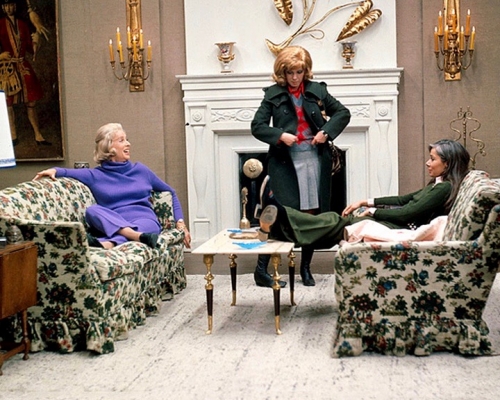 The series is mainly what we would call “camp” today. It’s a very odd TV relic from the early 70s, though I had a lot of fun watching the series. Just to see the hairstyles, fashion, cars or interior designs of that time is always a marvel to behold for me! The girls themselves… truth is, they both lack a bit charisma. One would wish for them to have some good banter, clever lines of dialogue, tongue-in-cheek humor – or at least some slightly believable fighting choreography, like Miss Peel in The Avengers.
But I can’t really judge such a series negatively on the basis of a comparison to British TV series, considering it essentially stands alone in German TV history [there were a couple of other series at the time that flirted with the fantastic, but as far as I know, this was the only one with female leads]. And as German TV of the time, they are sympathetic nevertheless, Biggi usually playing the decoy with her female charms. She’s a bit too confident of her appeal, but of course that’s entirely subjective.
I personally preferred Peitsch’s Conny, who sometimes also gets into a criminal group’s business, disguised and/or with an alias. Especially in the beginning, the stories unfold quickly, sometimes so quickly you wonder if they make much sense at all, or if some important explanations has been forgotten. It gets better as the series progresses. There is often a reward for the girls at the end of an episode, though for a number of reasons they aren’t allowed to take it, and S.I.R. invests it back into the organization.
Anita Kupsch, a Berlin theatre actress, would become more well-known at the end of the 80s when she played the secretary of Günther Pfitzmann in medical series Praxis Bülowbogen. I only know Monika Peitsch due to her damsel-in-distress role in Edgar Wallace movie The Hunchback of Soho (1966), which also featured Anneliese Uhlig, the S.I.R. of the series. The real famous name in the cast is music composer Klaus Doldinger, who would go on to compose soundtracks for movies such as Das Boot and The Neverending Story. There are also quite a number of well-known German actors guest-starring over the 32 episodes of the show, though none of international renown.
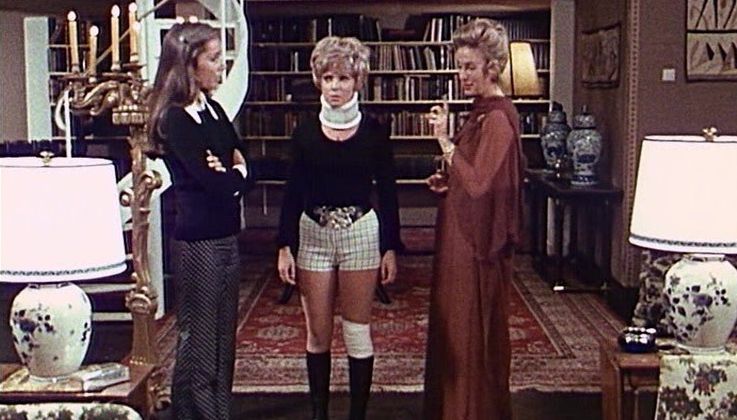 While today’s viewers may look, with some amusement, down on this strange German attempt at being different, at the time it was produced this was groundbreaking. The idea of women taking over the investigator’s job was absolutely unthinkable for Germany at that time. It would take five more years, until 1978, before the first female police inspector would appear in Tatort (an extremely long-running and realistic crime investigation series, still being made today). That would eventually help lead to a lot of TV-Krimi series of female police investigators in the 1990s.
Meanwhile, these two heroines very often worked “undercover”, used fake identities to get close to the baddies, had their own cars, flirted without marrying (yes, I know: scandalous!) and being… what we would call today a normal single woman. It’s easy to to forget how unusual such a life-style used to be, not that long ago. As ridiculous as this series may appear, it came out 3 years before Charlie’s Angels and 8 before Cagney & Lacey. At the time, it was quite unnatural for a “normal” TV show to feature women in this kind of position. Though, admittedly, British shows such as The Avengers, as well as American ones like The Girl from U.N.C.L.E. and Honey West had been there before – albeit with a much higher budget and often not having to deal with a 30 minutes limit for every episode.
Also, at the time of the series’ release (1973) the whole idea of “Europol” was indeed Science Fiction: In reality the decision to create this organization was made as late as 1992 and the authority didn’t became a reality until 1999. So, yes, one can actually call this series kind of prophetic! Overall, I give Okay, S.I.R. three stars. One for being ahead of its time, one for the wonderful weird campiness of the 70s style and one for trying to emulate the style of shows like The Avengers and Mission Impossible – even if they were, admittedly, better able to pull it off.
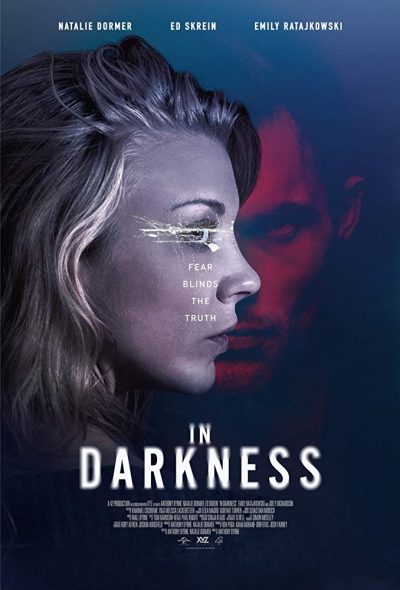 I literally had to check at the end of this, to see if M. Night Shyamalan had been involved. Because rarely since the likes of Signs – or, worse still, The Village – has a final twist so completely derailed a movie. As soon as it happened here, I was immediately listing off the scenes previously which now made absolutely no sense at all. While it’s hard to provide more information without massive spoilerage, it turned a film which was doing not badly, into one which is a poster-child for poorly-conceived ideas.
 Zemlya is a gigantic closed city, in the middle of the Arctic tundra, its ten million inhabitants entirely cut off from the outside world. Indeed, there may not be an outside world: no-one knows, for the authorities hunt down and terminate anyone who tries to leave. One of their hunters is Kate
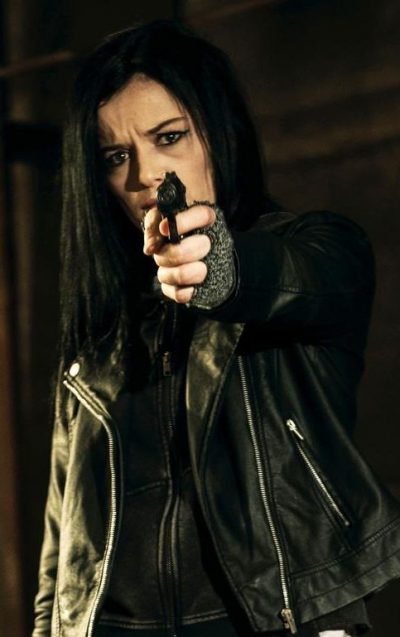
  Joan Butler (Bernadette) is an enforcer for mob boss Frank (Foster), with a zero-tolerance policy for those who disrespect her – whether they are on her side or not. When this eventually causes some of her gang to turn on Joan, she’s brutally beaten to a pulp, and apparently killed. However, she rises from the dead, now a figure who lives in the darkness, and one who has acquired the power to manipulate shadows. She sets about her mission of revenge against Frank and those who killed her. This is much to the distress of her on/off boyfriend Anthony (Celigo), a social worker. But her feelings for him and desire to protect the unfortunates with whom he works, puts them all at risk, when Frank realizes they represent her weak spot.
 This wasn’t quite what we expected. In fact, replace “quite” with “at all”. It starts off as looking like some kind of revenge porn, with pathologist Margaret Powers (Tyson) kidnapping Finnbar (Ward), the man she’s certain murdered her son. Finnbar was apparently able to get away with it, because he was the son of a notorious local criminal, Tommy O’Neil (Hayman). She wants Finnbar to confess to his crime, and recruits her son’s ex-girlfriend, Zoe (Jarvis) to help in getting her vengeance. Initially, the capture goes well, with the two women then holing up in an abandoned warehouse by the docks, to begin the interrogation. However, this is where the film starts to diverge from the expected, as it turns out Zoe’s intentions are not in line with Margaret’s, as they initially appeared.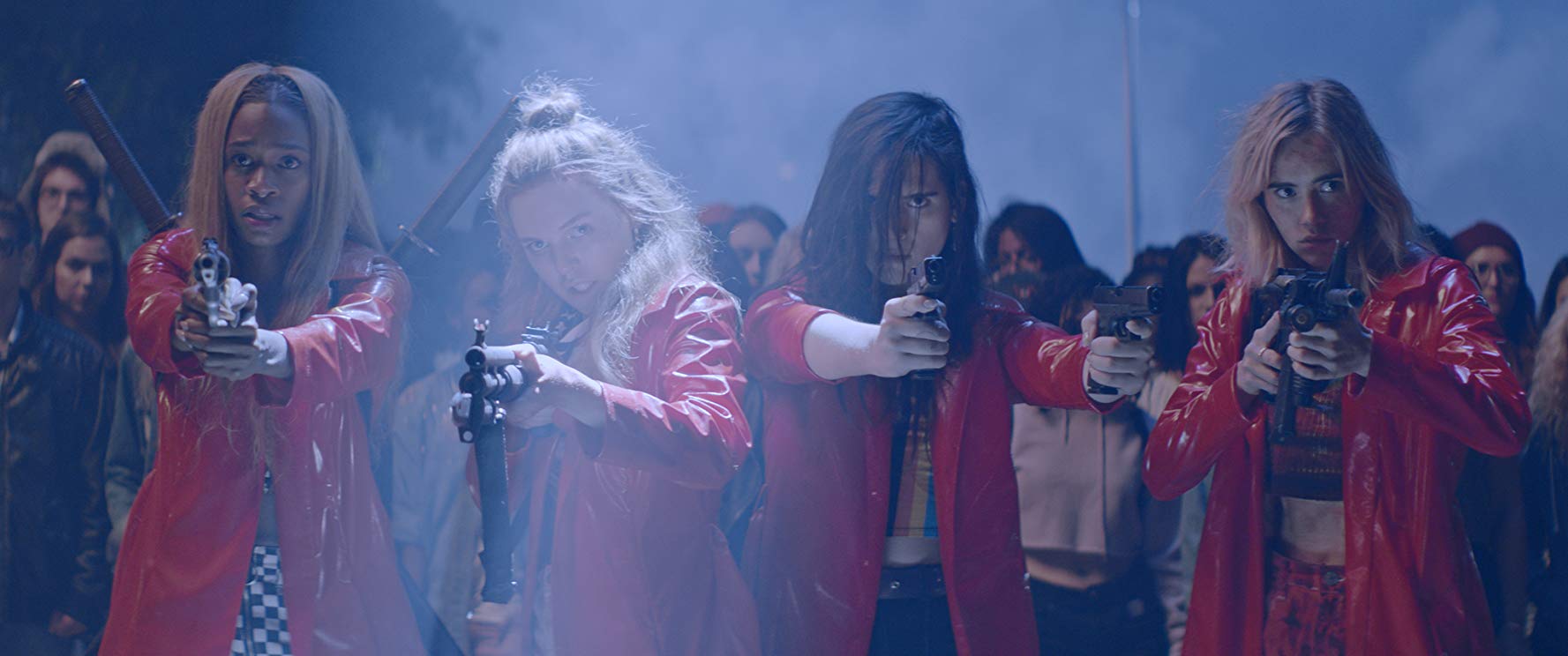
 This one might sound familiar, as I did previously review it
 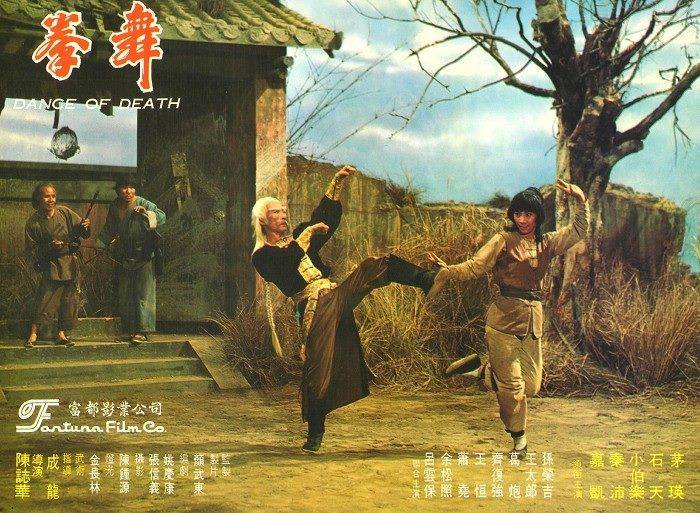 There were aspects which still befuddle me, such as most of the plot. Why, exactly, is Angela Mao pretending to be a boy? It’s completely unconvincing, and entirely unnecessary to the story-line. No-one ever discovers her true gender: it’s almost as if this were originally written for a man, then they got Mao, and in all the excitement, forgot (or, alternatively and equally credibly, couldn’t be bothered) to change the script. The rest of it is an odd mix. It’s partly vengeance with Fei Fei (Mao) out to pick up enough martial arts skill to take revenge on those who killed her family. Yet this sits alongside slapstick comedy which you’d not expect given the title, such as the two kung fu masters – one drunk, one stoner – whom she tricks into sharing her talents, or the villain with the world’s tiniest fan whom she defeats on her way to the big bad.
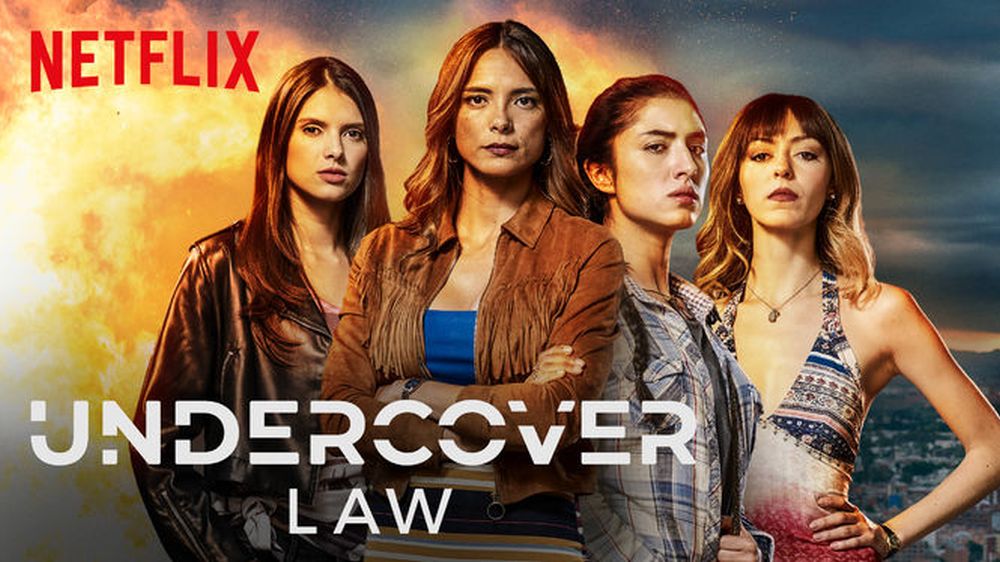 ★★½
★★½ Nova is a bounty hunter, smuggler and generally survivor of life in the grey areas of legality. In need of a quick buck to fix her space-ship, she takes on the hunt for a couple of escaped fugitives. She locates them working in an archaeological dig being run by the Confederacy – which is odd, since the planet in question was supposedly never inhabited. An unfortunate translation error ends up helping unleash a long-buried race of reptiloid extra-terrestrials, the Ancients – a species with both the inclination and the ability to wage genocidal war on the rest of the galaxy. And Nova is the only one left who can stop them.
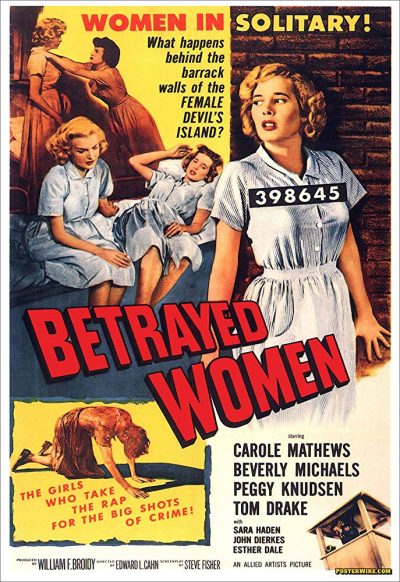 First, let me just say: that poster is a true work of art. Seriously, how can anyone look at that and