★★★½
“I can only apologize.”
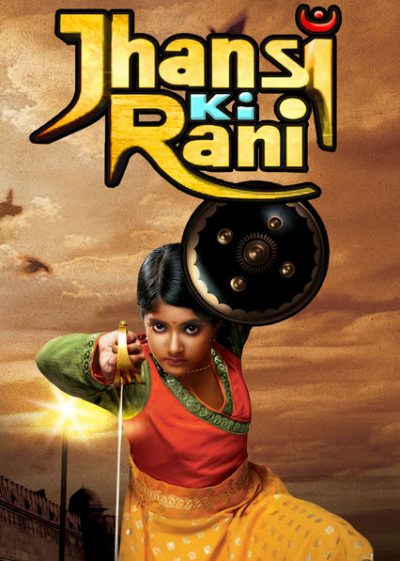 Not for the show, I should stress. But as a Brit… Wow, were were really such utter bastards to the Indians when the country was a colony? I was under the impression it was all tea and cricket. But the British, as depicted here, appear largely to be working entirely for the East Indian company, treating the local population with, at best, disdain, and often brutality. All the while, seeking to manipulate local politics (with, it must be said, the help of some Indians) to their own advantage. After 70 episodes of this, such is the guilt, I can barely enjoy my chicken tikka masala without giving it reparations.
I say 70 episodes, but the entire series is considerably longer. Wikipedia lists it as 408, but those are apparently 25-minute shows. Netflix seems to have doubled it up (bringing its length into line with the more traditional Hispanic telenovelas which I’ve previously reviewed). Yet even allowing for that, to this point they only seem to have about 30% of the show. They also shortened the title from its full name, Ek Veer Stree Ki Kahaani… Jhansi Ki Rani, which translates as Story of a Brave Woman… The Queen of Jhansi.
Simply based on the level of intrigue here, this feels like an Indian version of Game of Thrones. Albeit without the incest. Or the dragons. Or the budget. And is based on a real character, Lakshmibai. But it’s quite easy also to draw a line between Arya Stark and the teenage heroine here, Manikarnika (Gupta) a.k.a. Manu, neither caring one bit for ‘traditional’ behaviour. Manu, in particular, objects to the occupying British forces and their disrespectful treatment of the native population. So she crafts a secret identity, Kranti Guru, and uses this to fight back against the Brits, even (gasp!) desecrating the Union Jack. She’s helped by her mentor, Tatya Tope, who occasionally dons the mask as well, when necessary.
However, a literally stellar horoscope leads to Manu being betrothed to the Maharaja of Jhansi, Gangadhar Rao (Dharmadhikari). And this is my biggest issue. Cultural differences be damned, there is no way in which a prepubescent girl marrying a middle-aged man can seem appropriate, or other than incredibly creepy. Manu gets her first period in one of the final episodes, and the reaction of everyone can be summarised as, “Good, now you can give the king a heir.” [The reality was slightly less creepy: Lakshmibai did, indeed, marry the king at age 13. However, they didn’t have a son until she was in her twenties]
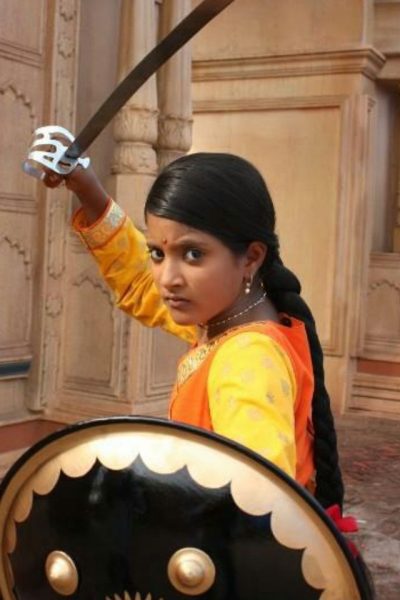 The British – already unhappy with Manu’s rebellious outbursts – are far from happy at the prospect of her marrying Gangadhar and continuing the line. Even before she arrives at the palace, there are backroom conspiracies involving some of his relatives (not least his own mother), who ally themselves with the colonialists for their mutual benefit. These schemes go up to and include multiple assassination plots against the king, and indeed, his bride-to-be. Time for Kranti Guru to come out again, particularly to face off against gold-toothed British psychopath Marshall (Verma). His relentless pursuit, without regard for who gets hurt, earns him Manu’s undying enmity. [Weirdly, he’s played by an Indian actor in “white face”, as are some – but not all – of the other English officers, some of whom are dubbed.]
To be honest, Manu’s action scenes are a bit crap, mostly consisting of her waving a sword around in severely choreographed battles. She’d last about two minutes against other teenage warrioresses, like Hanna or Hit-Girl. Still, she has a certain charm, not least for her razor-sharp intellect, which lets her argue with – and usually kick the mental ass of – religious scholars, politicians and the king. She also has an unshakeable faith that everyone is redeemable, and more than once, turns enemies into loyal allies. Most notable is dacoit (bandit) Samar Singh, initially hired to murder Manu. When the tables are turned, and she forgives him, he abandons his life of crime. That’s the level of devotion she inspires.
Run away, foreigner, run away!
This brave Manu riding the horse is Lakshmi Bai
Fire will rain on you, now you are doomed.
Look at the colourful India, India will defeat you.
She has come to claim your head, the Queen of Jhansi has come.
Run away foreigner, the Queen of Jhansi has come!
Despite its origins, there are no song-and-dance numbers, though the music still plays a significant, if repetitive part. The song quoted above shows up in every other episode, and the re-use of certain cues could be turned into a drinking game, e.g. take a shot every time that “sad trombone”-like arpeggio sting is heard. However, the most defining style element is the reaction shot. It seems nothing dramatic can happen without everyone present in the scene subsequently being ready for their close-up – sometimes multiple times. And considering how often such moments happen in the king’s court… it takes a while. This does lighten the intellectual burden required to keep up. Chris was usually present for only about one-third of the screen time each day, yet she was able to hang in there, with only minor explanations from me.
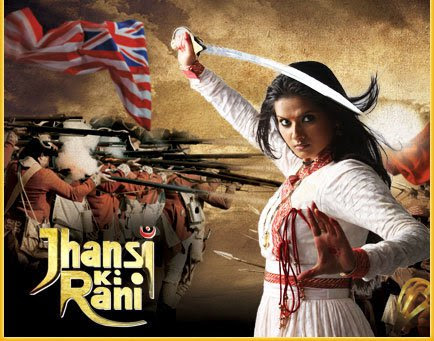 For the great majority of the time, it’s light stuff, with Manu escaping every pitfall her enemies set for her. Then, the hammer drops: to extend the GoT comparison, it’s the Rani equivalent of the Red Wedding. Fewer bodies, to be sure – just one – yet the resulting emotional wallop was still brutal, sending me through multiple stages of grief during the subsequent fall-out. “No… Surely they haven’t… It’s got to be a dream sequence.” All told, it was easily the most impactful death in any of the telenovelas I’ve watched, regardless of their origin, and the repercussions ran on for multiple episodes. As do the reaction shots. So. Many. Reaction. Shots.
I wonder if the 70-episode cutoff point was chosen by Netflix, being the point at which Manu “grows up”. It appears she is played by an older actress (right) in the latter stages of the series. As it stands, however, it’s an interesting approach to have a series apparently aimed at adults, with a 14-year-old character as the lead. While I can’t say it was wholly successful, it proved a remarkably easy watch, and I was genuinely sorry when I ran out of episodes.
Creative Director: Sujata Rao
Star: Ulka Gupta, Sameer Dharmadhikari, Vikas Verma, Ashnoor Kaur




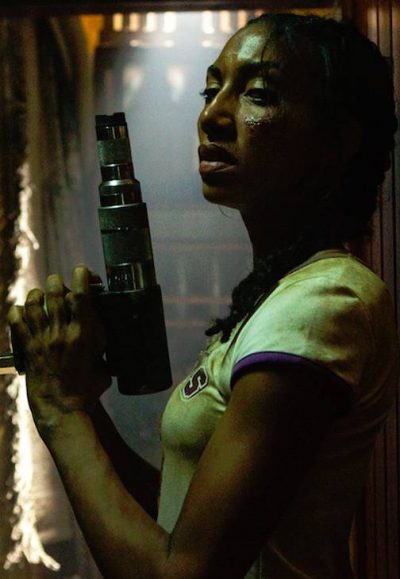
 Lurking behind one of the most cringeworthy titles I’ve ever seen, and a trailer that’s not much better, is a very pleasant surprise. Well, at least if you’re a fan of the “splatstick” genre, mixing over-the-top gore and comedy: Peter Jackson’s Brain Dead is the pinnacle of that genre. I certainly am, and consequently found this a real hoot. Girls volleyball team, the Falcons, are on their way home after their latest victory, when they end up diverted into a small town, populated entirely by inbred rednecks (or the Gallic version thereof). After an encounter in the hotel, they find themselves getting a night-time visit, and are soon being hunted down by the village’s residents. However, the biggest psycho may not be among the locals…
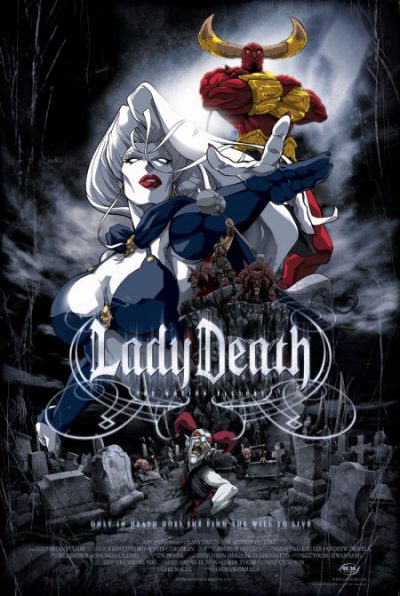 My first viewing of this was on a day off from work, when I was down with some sinusy thing, and dosed up on DayQuil. So I chalked my losing interest and drifting off to the meds, and once I felt better, decided this deserved the chance of a re-view. However, the result was still the same: even as a bright-eyed and bushy-tailed viewer, I found attention lapsing. For this animated version of a mature comic, might as well be a He-Man and the Masters of the Universe episode. Which is a shame. I wanted to like it, since the creator of Lady Death, Brian Pulido, is something of a local comics legend here in my adopted home state of Arizona. This should have been better.
 Is it possible for a homage to be too accurate? This could be the problem here. It’s clear that Bickert has a deep affection for the “women in prison” genre – yet, again, possibly too much so. For this is less a parody or a pastiche than a loving re-creation, and doesn’t understand that a lot of these movies… well, to be honest, they suck. Badly acted, poorly plotted, thinly-disguised excuses for porn. And that’s the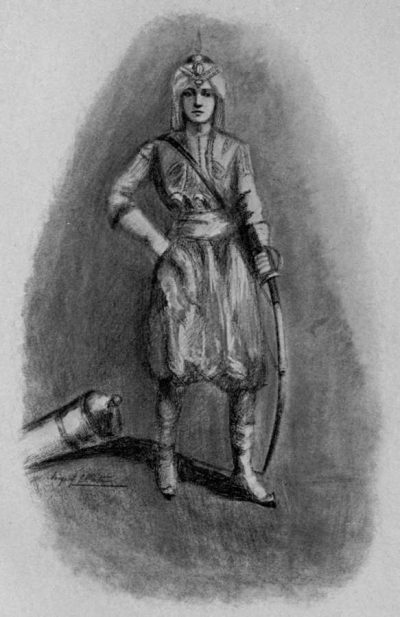
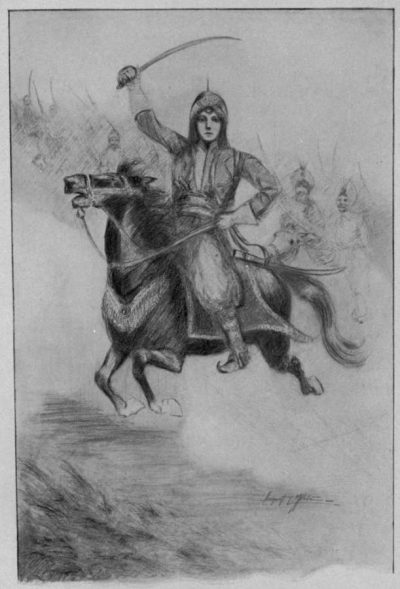
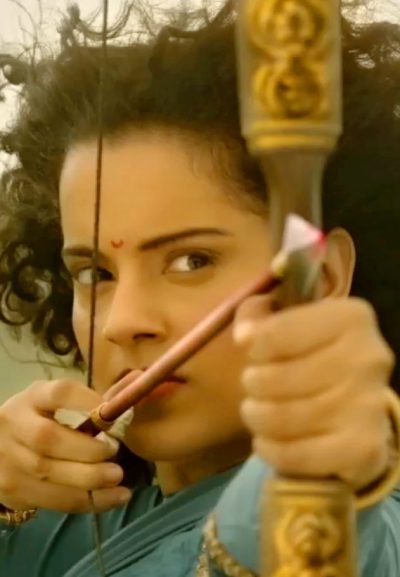 The movie opens with a particularly elaborate disclaimer, admitting that “certain cinematic liberties have been sought,” and that “this film does not claim historical authenticity.” Probably wise: Indians take their national heroes very seriously; just last year, another historical epic, Padmaavat,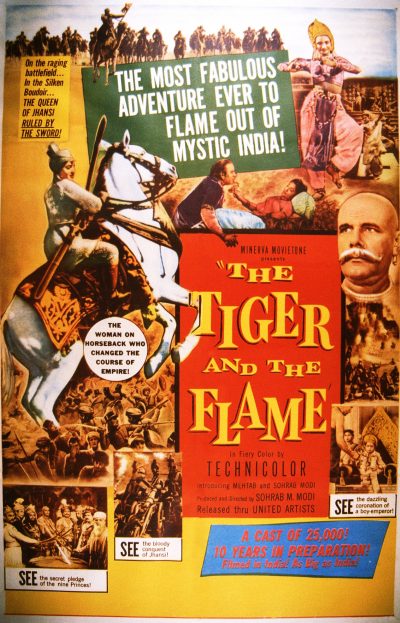
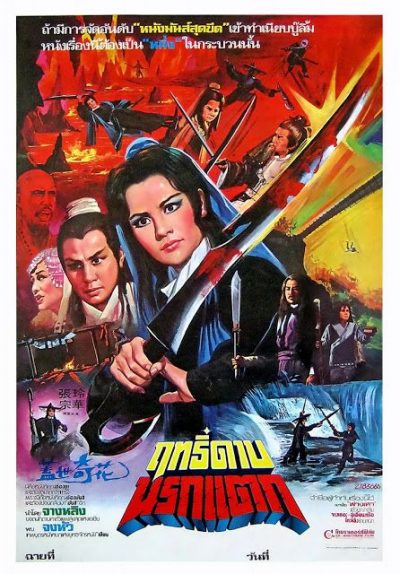 Another solid Pearl Chang movie – despite being mis-labelled as Wolf Devil Woman 3, it is in now way related to
 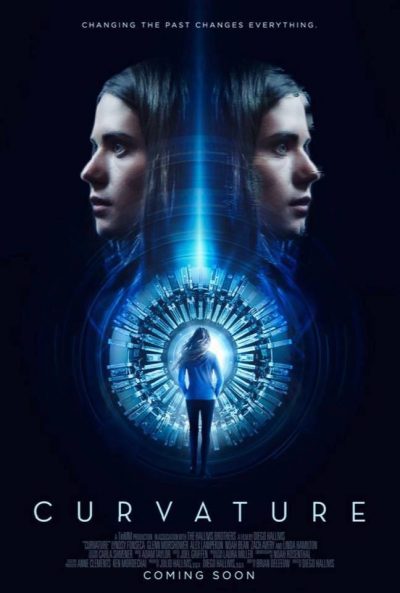 Helen (Fonseca) is struggling to come to terms with the sudden, unexpected death of her scientist husband, who was engaged on a top-secret project with his partner, Tomas (Morshower). Then things get truly weird: she experiences the mother of all blackouts, missing an entire week, and shortly afterward, Helen receives a phone-call warning her to get out of her house… from herself. It turns out, husband and Tomas had come up with a limited form of time-travel. As a result of this and subsequent events, there are now
 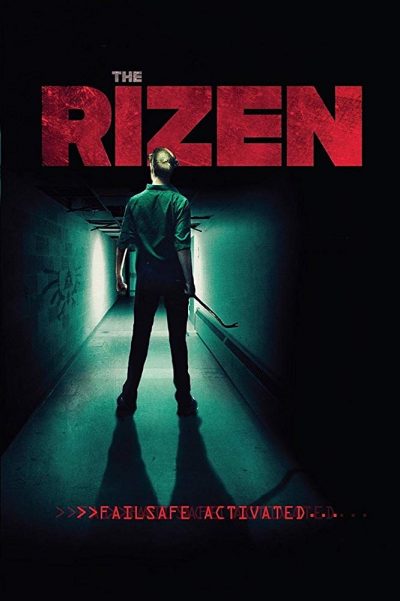 This is about the third Lovecraftian film I’ve seen with a heroine in the past year or so, after