




★★½
“Spectrally short of satisfying.”
 By coincidence, I watched this after Baby Assassins 3, without realizing the star here plays Chisato in that franchise; the director here was also its action director. Discovering the overlap is a minor demerit against Ghost Killer, because it counts as something of a waste of her talents. It’s a lovely idea – if you’re just an action fan in general, then it likely scores half a star higher. However, specifically as an action heroine film, there is room for improvement. It begins with the assassination of an assassin. Hideo Kudo (Mimoto) works for a criminal organization, and his death occurs in somewhat murky circumstances. The spent cartridge used to kill him, takes on his vengeful spirit, and the casing is picked up by an innocent college student Fumika Matsuoka (Takaishi).
After a period of mutual adjustment to being haunted and doing the haunting, Fumika agrees to help Kudo find out who was responsible for his murder, and take revenge. She is the only person who can see and talk to Kudo, and when she grasps his hand, that allows him to take over her body, with all the associated hitman abilities. Along the road to his vengeance, they will have to deal with a date-rapey triple tag-team, as well as another assassin in the same organization, a former student of Kudo, Toshihisa Kagehara (Kuroba). That pair’s relationship is a little fraught, even after Kagehara is convinced about the reality of what is happening.
The first half of this is very solid, highlighted by the performance of Takaishi as both a college student and a vengeful killer – simultaneously, which makes it all the more remarkable. It means she has to be an expert fighter, and somebody who wouldn’t say “Boo!” to a goose, as her and Kudo tussle for control. I feel as if that enough would have been sufficient to propel the narrative of the entire film. However, it ends up diverting into less interesting Yakuza-based activities in the middle, and it almost becomes easy to forget that Kudo is dead. There aren’t really any surprises once the framework of the situation has been established, heading towards the eventual and predictable confrontation between Kudo and his killer.
And that’s the problem. It’s between Kudo and his killer, not Fumika. It’s still “in her body,” and I enjoyed the scenes where Kudo is guiding her to hide – telling her when to go around a pillar, for example. But when battle is joined, the film shows Mimoto doing the fighting, not Takaishi. Don’t get me wrong: it’s a very good fight, and that’s why I’d say a general viewer is still likely to be satisfied by it. But I was looking forward to seeing the actress really getting to let loose. After all, having experienced the Baby Assassins trilogy, there’s no issue about her martial arts abilities. Seeing her largely sidelined at the end was a disappointing way to finish things off.
Dir: Kensuke Sonomura
Star: Akari Takaishi, Masanori Mimoto, Mario Kuroba
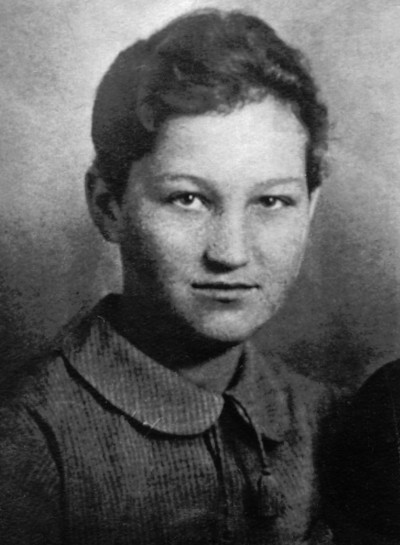 This was originally made under the working title of The Passion of Zoya, and the Joan of Arc reference is on point. Both were young warriors fighting against the occupation of their native land, captured by the enemy and tortured before being executed. But they became a rallying point for their country as it succeeded in expelling the invaders, and are now revered as national heroines. The real Zoya Kosmodemyanskaya (pictured) was an 18-year-old teenager in 1941, who signed up to be dropped behind the front-line as the Germans invaded Russia, and carry out missions of sabotage intended to make life difficult for the Nazi army. It did not end well, but she became the first woman Hero of the Soviet Union in WW2, less than three months after her death.
 Bridget ‘Briar’ Rose is a rarity: a woman who runs a canal boat, transporting cargo along the waterways which form the Ohio & Erie canal network. However, her livelihood is under threat. The increasing growth of the railway as an alternative method of transportation is increasingly a rival for the jobs she takes, and her cousin, Andrew, is looking to see her barge out from under Briar, so he can invest in the railways instead. However, she suspects he is working with an outlaw: a ferromancer, one of the mages who revolutionized industry in Europe, but who had supposedly been wiped out two decades ago due to the threat they posed.
 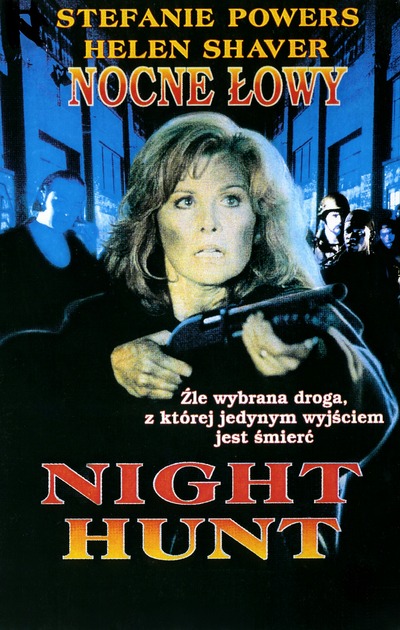 There’s a strong parallel between this TV movie and Judgment Night, a theatrical feature, also from 1993, starring Emilio Estevez and Cuba Gooding Jr. Both involve a group stranded in an urban war-zone who incur the enmity of a local gang, and consequently have to fight to eescape. The difference with this – and why it’s here – is the victims are three women: psychiatrist Victoria (Powers), her daughter Julie (Robertson) and sister Stacey (Helen Shaver). They are on their way home after a family Thanksgiving dinner, when a quest for fuel leaves them stranded in the South Bronx. That is just start of their problems, courtesy of Ice (Graham) and his vicious gang of thugs.
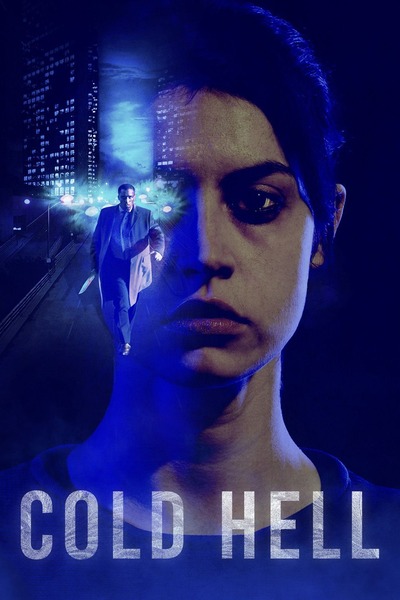 This an interesting entry, with a complex lead character who is quite some way from being conventionally “likeable”. Özge Dogruol (Schurawlow) is a Viennese taxi driver, who is harsh, abrasive and has severe anger issues. Indeed, anger is arguably among the least of her issues. She practices Thai boxing as an outlet. Or did, until a sparring session goes wrong, and she ends up breaking her partner’s nose in two places. One night, from her apartment, she sees the dead body of a woman in the opposite building, and the killer (Sheik) standing over the corpse. Unfortunately, he also sees Özge. The police won’t provide protection, and soon after, her cousin is murdered, in an apparent case of mistaken identity.
 Alma Siracine (Vacth) was a black ops agent for the French government, until an assignment in Syria went pear-shaped, and she resigned her position. Seven years later, she’s living quietly with her policeman husband in Morocco, until he’s the victim of a drive-by shooting. She finds the attackers and terminates them. Unfortunately, they are the sons of local arms dealer Manour Khoury (Dazi). Not helping, he is under the protection of the French government, being allowed to operate in exchange for funneling information to them about terrorist attacks. Spymaster Joanna Walter (Bercot) decides Alma is a loose end in need of tidying. Alma, naturally, is of a different opinion, and won’t be easy to clean up.
 If this seems familiar, it’s because we already reviewed the American remake of this Swedish film,
  ★½
★½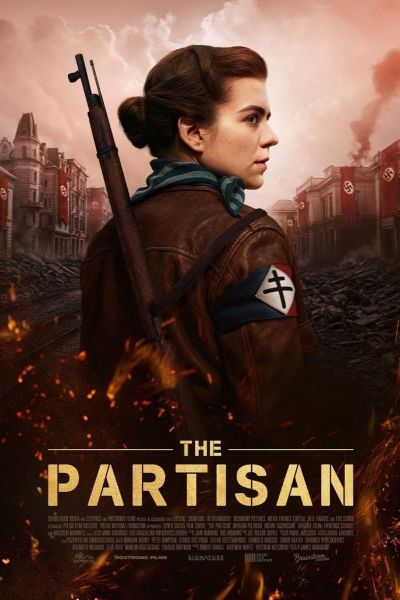 We have written about some of the women who worked behind enemy lines for British intelligence during World War II. Names like
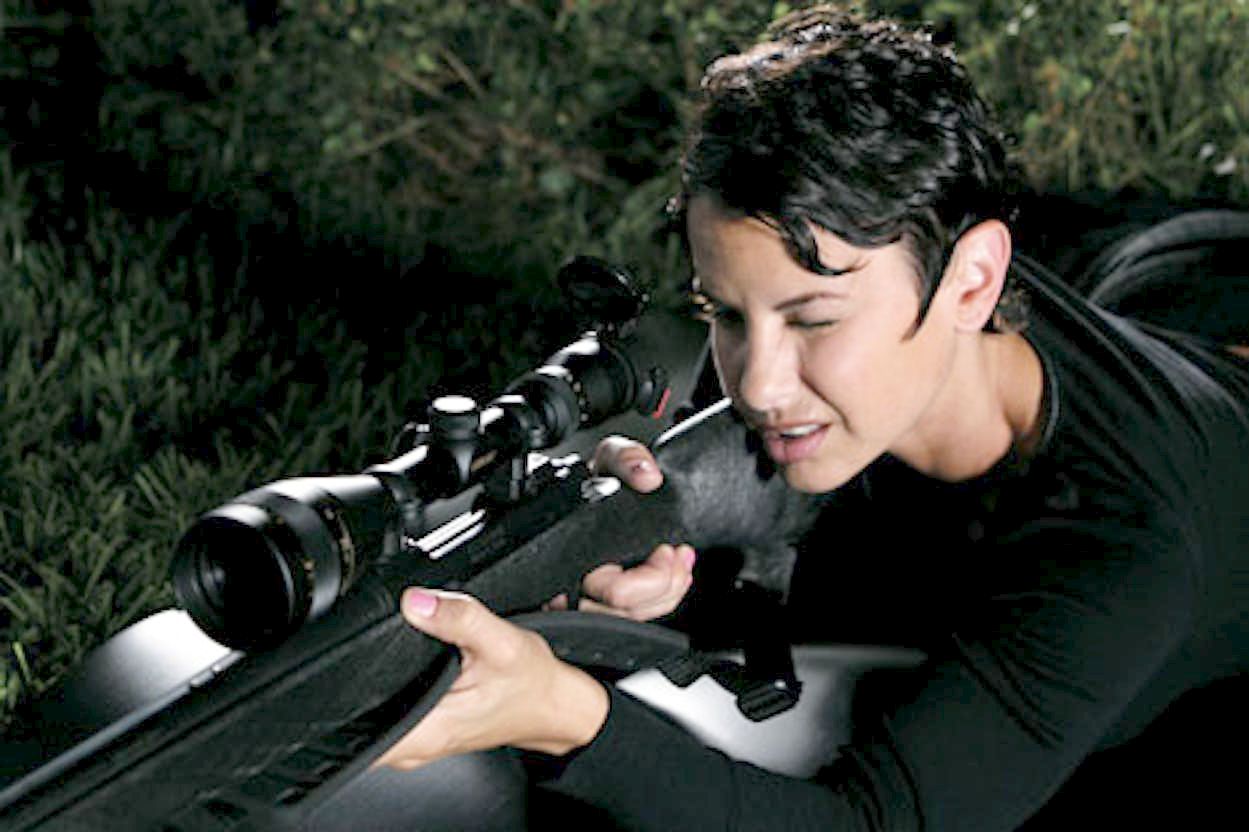
  There’s no denying that this is considerably weakened by coming in the wake of Ready or Not 2. There’s just too much similarity for it to be otherwise. A woman having to fight her way through a bunch of Satanists, in order to save her kid sister? Yeah, there’s a strong sense of deja vu, in its most literal meaning. Yet it would be unfair to write this off as some kind of mockbuster. While the “elevator pitch” may be similar, the details and the approach taken are different. This skews considerably more towards the horror elements. Many reviews cite Sam Raimi and Quentin Tarantino as influences, and that’s not wrong. To the point I might have used fewer homages, to be honest.