


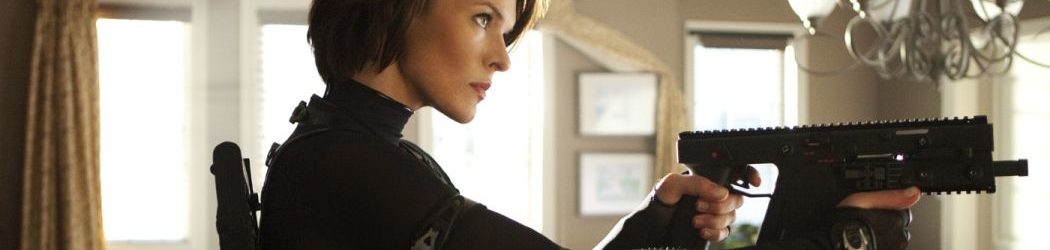

 It has been a long while since we have had two such similar action heroine films come out in theatres, so close to each other. The last time I can remember was back in 2006, when vampire GWG movies Underworld: Evolution and Ultraviolet came out just a few weeks apart. But the gap here was less still. Ready or Not 2: Here I Come was released on March 20th, and just one week later, They Will Kill You arrived. Both films also had a number of remarkably common elements. Hollywood has done this before, of course – even discounting the obvious “mockbusters” put out by the likes of The Asylum. “Twin films” have been around for over a century: two versions of Dr. Jekyll and Mr. Hyde came out in 1920. Since then? Armageddon vs. Deep Impact. Dante’s Peak vs. Volcano. Olympus has Fallen vs. White House Down.
It’s hard to ascertain who came first here. Obviously, the original Ready or Not was the groundbreaker, back in 2019. The sequel was first announced in October 2024, several months after word of They Will Kill You came out in June. But the sequel, involving the heroine’s sister, was not intended as one. Per Wikipedia, “Matt Bettinelli-Olpin and Tyler Gillett were developing an original movie with a sister story for Kathryn Newton and Samara Weaving to star in. When Searchlight Pictures asked Bettinelli-Olpin and Gillett to direct the sequel to Ready or Not, they offered to adapt their original sister story into the Ready or Not universe.” So their idea likely pre-dates the formal announcement in October. I do note that Ready or Not 2 brought its release date forward, apparently to beat its rival to screens.
Unfortunately, and in contrast to the examples above, the market didn’t find room for both, or even pick one to favour. Both films failed to find the hoped-for audience. They Will Kill You failed to cover its budget, taking in $19 million worldwide, while costing $20 million. Ready or Not 2 – perhaps using its advantage of previous name recognition – did better, with a $42 million gross, around three times its production budget. So, after other costs like promotion, it likely made a small profit. However, this was still more than $15 million below the take of the first movie, despite costing over twice as much. Prospects for any further entries in the Ready or Not Cinematic Universe are distinctly uncertain, at best.
But let’s take a look at each film in turn, and see how they stand up – both on their own, and against each other.
Ready or Not 2: Here I Come
★★★★
“Let the games begi… uh, continue!”
 Despite a slightly clunky title, I enjoyed this a little more than the original. It helps that there’s no need for build-up or explanations. We join things immediately after the end of part one, with Grace MacCaullay (Weaving) staggering outside the mansion where she battled and beat the Le Domas family. Understandably, she ends up in hospital and handcuffs, where her sister Faith (Newton) shows up. But it turns out the Le Domas family were just one part – albeit the head – of a larger, Satanic organization, the Council. The remaining families now need to determine a successor. Whoever kills Grace gets to take over, so the siblings are quickly abducted and taken to the Council’s country club complex.
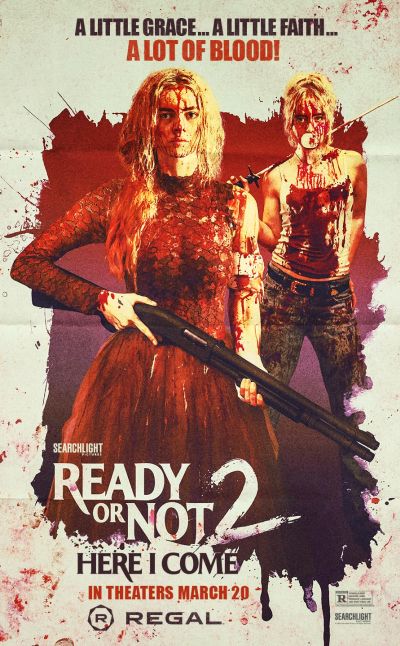 Grace refuses to take part, but using Faith as leverage, they compel her participation. The siblings must battle for survival and, again, try to survive to dawn against a litany of more or less competent adversaries. This was one my main criticisms about part one: the Le Domas members were so inept as to be no threat. While, in some ways, this is true again here, the film does at least lean into the humourous possibilities. The peak is likely reached when Grace has to face off against Francesca, her late husband’s ex. There’s some rocket launcher incompetence, followed by some pepper sprayage, which leaves the two adversaries thrashing about like blind squid, while an 80’s classic tune plays. It’s awesome.
There is a bit of a lull thereafter, because Faith is again used against her sister. This compels Grace, once more, to don bridal attire, as a means of avoiding further bloodshed. Well, “postponing” might be closer to the truth. The ceremony goes off about as well as a typical wedding held by a professional wrestling federation – though with considerably more blood than even the most hardcore fed. It’s all a lot of fun, with the Council families providing a slew of fun characters, in addition to its lawyer (Wood). It provides an interesting contrast in family dynamics between the MacCaullays and the Danforths, represented by Ursula (Sarah-Michelle Gellar – and, yes, there are some potential Buffy references) and her psycho brother, Titus (Hatosy).
I liked the fact that it kept any actual social commentary very much secondary. What makes the Council evil is not particularly race, class or money. It is that they are freakin’ Satanists. The film’s other main strength is Weaving, who cements her position as perhaps the best of the next generation for action heroines. She runs through the whole gamut of emotions here, and it is extremely easy to root for Grace. But let’s be honest, the actress would be forgiven if she had simply worn a “not this shit again” expression for one hundred and ten minutes. While the poor box-office here means it’s unlikely we’ll see a part three, long may Weaving’s shotgun continue to smoke.
Dir: Matt Bettinelli-Olpin and Tyler Gillett
Star: Samara Weaving, Kathryn Newton, Shawn Hatosy, Elijah Wood
They Will Kill You
★★★
“Ready or Not 3.”
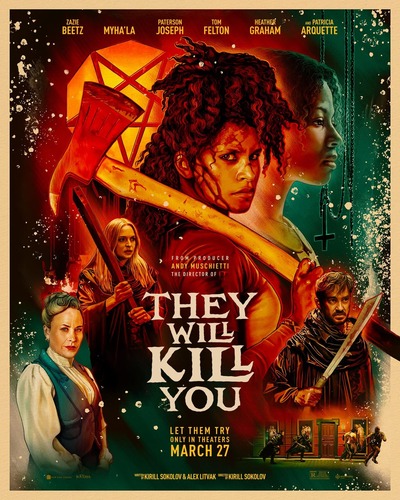 There’s no denying that this is considerably weakened by coming in the wake of Ready or Not 2. There’s just too much similarity for it to be otherwise. A woman having to fight her way through a bunch of Satanists, in order to save her kid sister? Yeah, there’s a strong sense of deja vu, in its most literal meaning. Yet it would be unfair to write this off as some kind of mockbuster. While the “elevator pitch” may be similar, the details and the approach taken are different. This skews considerably more towards the horror elements. Many reviews cite Sam Raimi and Quentin Tarantino as influences, and that’s not wrong. To the point I might have used fewer homages, to be honest.
The heroine is Asia Reaves (Beetz), who is jailed after trying to protect her sister, Maria (Myha’la) from their abusive father. Ten years later, she gets out of prison, and seeks to be reunited with Maria. The trail leads to The Virgil, a massive apartment building. Asia gets a job there as a maid, using an assumed identity, under the oversight of building supervisor Lilith Woodhouse (Arquette). It turns out, the building is home to a cult of Satan worshippers, who trade human sacrifices for immortality. But after a decade in the penal system, Asia has the skills to defend herself, and won’t let anyone – or anything – get in the way of her mission to rescue her sister.
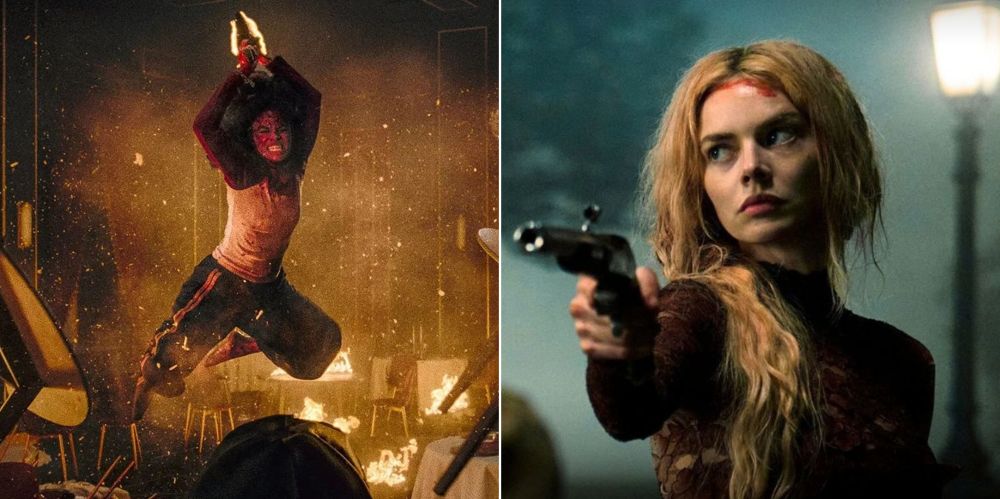
Save Kill Bill, I’m not a huge fan of Tarantino. It appears Sokolov is, going by the number of jarring needle-drops and, to be honest, shots of women’s feet. There are points where the style seems to be more important than the substance. However, there are some excellent sequences as well. The use by Asia of a fiery axe is top-tier carnage, and the near-unlimited ability of her opponents to take damage leads to some spectacular gore. They may be immortal: they still spray blood like enthusiastic geysers. When one has her head reduced to the consistency of porridge, one eyeball continues to operate on its own, independent basis.
I do think the immortality thing is a double-edged sword. It robs the fights of much impact, because decapitation is barely an inconvenience. Naturally, there is a solution, and I figured it out, more or less, as soon as it was mentioned. Beetz makes a fierce and unstoppable heroine, no mistake about it. You will also see things you have not witnessed before, especially during a thoroughly unhinged ending. It consequently makes Ready or Not 2 seem positively down to earth and realistic, so the stabs – word chosen advisedly – at social commentary consequently feel misplaced, even more than usual. I note Sokolov’s previous (non-GWG) film was called Why Don’t You Just Die! I’ve a feeling there may be a theme running through his work. Suspect I will still end up checking it out, hoping for the pure and undiluted carnage I didn’t quite get here.
Dir: Kirill Sokolov
Star: Zazie Beetz, Patricia Arquette, Myha’la, Tom Felton
As the above suggests, my personal preference was for Ready or Not 2 over They Will Kill You. Checking the scores online, here’s where the two movies stand in various metrics at the time of writing.
- IMDb rating (/10): RoN2: 6.5 – TWKY 6.3
- Letterboxd score (/5): RoN2: 3.3 – TWKY 3.0
- Rotten Tomatoes critics/audience (%): RoN2: 74/89 – TWKY 64/77
- MetaCritic (%): RoN2: 58 – TWKY 50
Which seems to confirm I’m in line with general opinion, all four sites showing a preference, to varying degrees, for Ready or Not 2. But let’s perhaps break it down a little further, and see which movie comes out ahead.
Lead actress. Samara Weaving vs. Zazie Beets. Yeah, regular readers will know my previously expressed affection for Weaving, so this category might be seen as confirmation bias. However, I think this illustrates exactly why she is among my favorite of the current generation of action actresses. In contrast, Beetz doesn’t yet have as much experience in the genre, and previously had been mostly limited to supporting roles i.e. Deadpool 2 and Bullet Train. She’s not bad here, but if you come for the queen, you’d better not miss. Advantage: Ready or Not 2.
Supporting cast. Both films are strong here. Of course, RoN2 brings us Buffy herself, but you also get Elijah Wood and, a very pleasant surprise, a small role for horror icon David Cronenberg. However, I wasn’t so impressed with Kathryn Newton, who made little impact. TWKY does well here too, with a particularly strong performance from Patricia Arquette, and good support from Heather Thomas. Advantage: Ready or Not 2, although it is very close.
Insanity. This is really why we are here. Both films promise an excess of over-the-top carnage. In RoN2, you get a lot of people exploding, when they break the rules by which the Council operate. That is about it, and while the finale certainly delivers in bulk, it is somewhat lacking in variety. On the other hand, there’s a point at TWKY suddenly decides to push the pedal to the metal, and it rarely lets up thereafter. The flaming axe battle may be my second favorite fire-related fight sequence of 2026. Advantage: They Will Kill You.
Messaging. You pay your money and you take your choice. Do you want the villains to be rich people, who happen to be Satanists? Then RoN2 is for you. Prefer the bad guys to be rich people who happen to be Satanists? Choose TWKY. It’s a small and subtle, but significant, difference in approach. TWKY is a bit more up front with its morality, though you’d have to be severely “anti-woke” to feel it got in the way of the bloody entertainment value. Advantage: a tie, largely because I don’t give a damn about the message in either.
I am sad that neither apparently found the hoped-for audience. Right now, we’re looking at another year where no action heroine film has reached $25 million at the North American box-office. While I’m sure Supergirl will cruise past that, can it provide a flashback to the days when comic-book films were a license to print money? We’ll find out later this month. With Fall 2 the only other GWG film I see scheduled for a wide release between now and the end of the year, there’s a lot riding for our genre on the shoulders of the Girl of Steel.
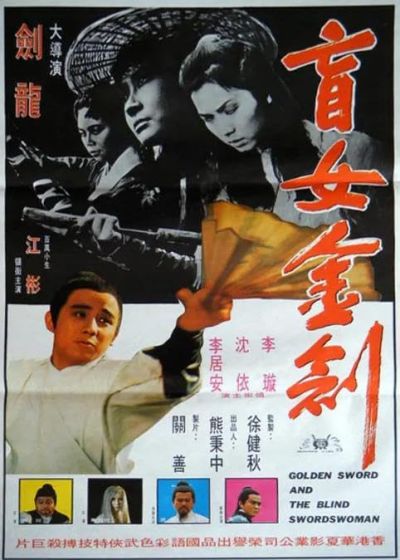 The rating above might actually be a little charitable, and would be for the film as originally released. The only version in which this is now apparently available, is both badly dubbed and pan-and-scanned to a 4:3 ratio. It certainly doesn’t help the film, when there are points at which all you can see of the participants in a conversation is an elbow, sticking in from one side of the screen. It’s close to unwatchable in this format, although I suspect it would barely pass muster, even in its original language and format. It feels like the Taiwanese makers saw
 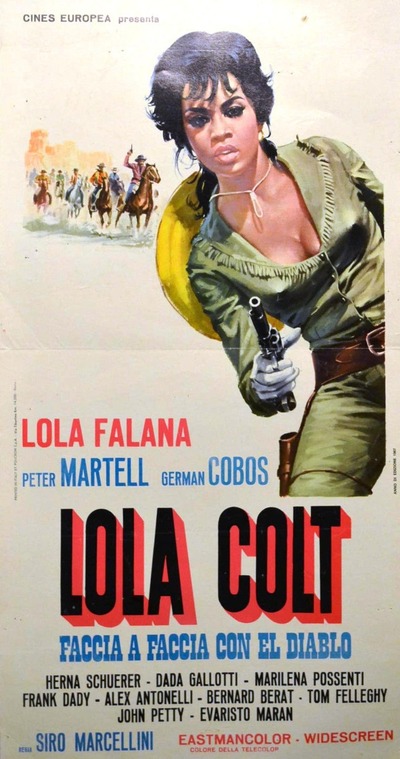 This spaghetti Western sees Lola (Falana) arrive in the town of Santa Ana with her troupe of dancing girls, after one of them falls ill. They need to stay there while she recuperates, under the care of the local not-quite-a-doctor-yet, Rod Strater (Martell). The town has bigger problems, being ruthlessly squeezed for every penny by El Diablo (Cobos). Lola lost her family to a not dissimilar band of outlaws, and is peeved that the menfolk are utterly cowed by El Diablo, even after Rod explains that the villains has taken hostages and is using them to compel the town’s good behaviour. But after a particularly tragic death, Lola has had enough, and rouses the town folk to action.
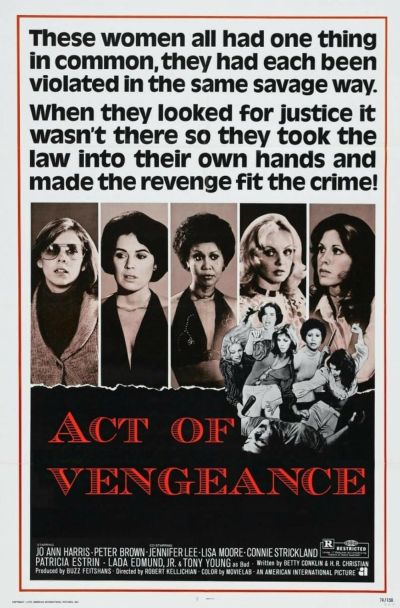 By pure coincidence, I watched this the same day as
  When it begins, the young heroine Caina Amalas is living a somewhat unhappy life, mostly due to her mother being borderline abusive. Eventually, there’s nothing “borderline”, as Mom uses dark magic to turn her husband into a vegetable, and sells his daughter off to sorcerer Maglarion. Caina’s virgin blood is very powerful for his arts, and she is “milked” for all she can provide, kept just this side of death. Fortunately, while the wizard is out, an attack on the facility frees Caina, and she is recruited and trained by the near-mythical group responsible, the Ghosts. These are the Emperor’s spies and assassins, who swear an oath to counter his enemies, by any means necessary.
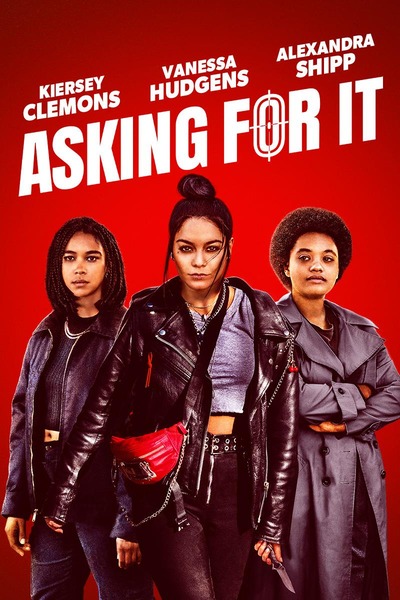 Not to be confused with the other
 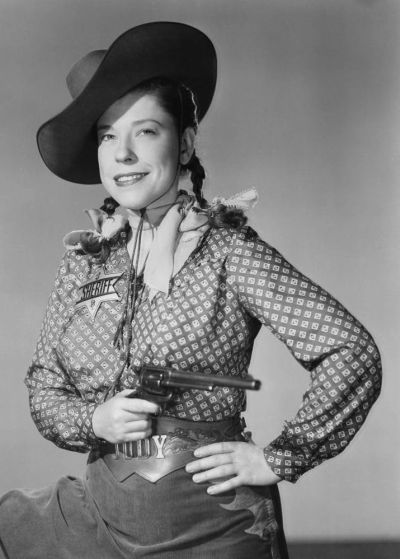 Judy Canova, known as ‘Queen of the Cowgirls’, was a popular star of radio and screen in the forties and fifties. She had a certain schtick: a homely but honest country gal, who stumbled into trouble – often with singing involved. I admit, the mere title of one such entity, Joan of Ozark, made me laugh. Here – despite the title – she plays a character called Judy, as she often did. The film’s name comes from Judy’s grandmother, who had been a much-feared sheriff. According to Judy, “The bad men in these parts were so scared of her, that they either plum reformed, or hung themselves by way of cooperating.” Judy now runs a trading post.
 Yonca is having an affair with the married man. But she has been able to leverage this into getting a job at the facility, as a cleaner, for the much quieter Sayara. Bari
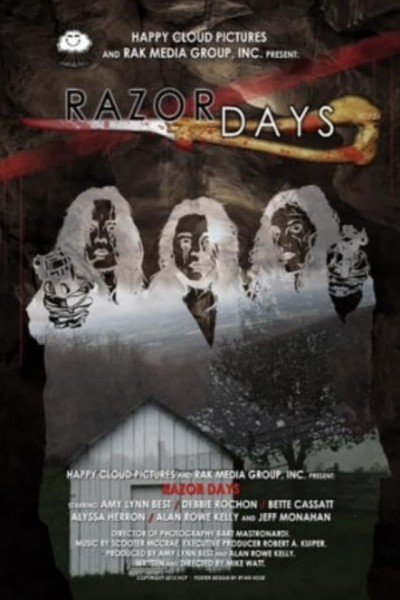 This was certainly not what I expected. That, in itself, would not have been a problem – I’m quite used to, and indeed do not mind, films which confound my preconceptions. I respect what this is attempting to do as well, which is a different take on the revenge movie. The problem here is fumbled execution: more on the directorial, writing and technical fronts, though in some of the performances too. Even allowing for the obviously limited resources this had to play with, by the end, it was definitely a struggle to get through, with a lack of narrative thrust in particular, meaning it failed to hold my attention. That’s a bit of a shame. Only a bit, mind you.