




Literary rating: ★½
Kick-butt quotient: ☆☆
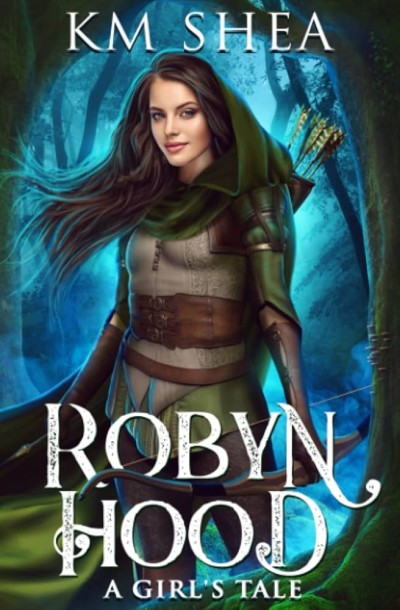 Despite being a short 158 pages, this definitely managed to out-stay its welcome. There’s books aimed at the young, and then there are books which leave you feeling like you have actively lost IQ points reading them. Guess what category this falls into? It’s not a terrible idea, taking Robin Hood and making her a woman. Could have been worse: she could have been a black, bisexual rapper too [I wish I was joking]. We have been somewhat here before, with The Adventures of Maid Marian, in which Marian takes over after Robin Hood goes off to join the Crusades. The problem here is, a gender switch is where the creativity stops.
The setting is the same: ye olde middle-ages England. Robyn is forced to flee after shooting with an arrow one of the Sheriff of Nottingham’s men. She hides out in nearby Sherwood Forest, stealing from the rich to give to the poor, and assembling a band of outlaws around her: Friar Tuck, Little John, various people called Will. There is an archery contest. In order words, pretty much all the stuff that happens in the original story, or one of the dozens of adaptations which are embedded deep in popular culture. Apart from RobYn, Shea does nothing interesting with the tropes. Life for the heroine is pretty, pretty easy, with the locals giving them everything necessary, and wannabe outlaws falling over themselves to become Merry Men.
Indeed, there’s only one point at which there is a genuine sense of danger, when the Sheriff’s men launch a surprise attack, where Robyn is thrown into a river and nearly drowns… until she is rescued by her horse. Yep. Said equine is certainly smarter than the antagonists here, who are mind-numbingly incompetent, when they aren’t being purely obnoxious. The ease with which Robyn is then able to rescue her captured henchmen renders their threat impotent. I get that this is not intended to be, in the slightest, a realistic depiction of the time. However, it’s not a convincing depiction of any time, and might as well take place as a skit at your local Renaissance Fair.
This volume ends with Robyn leaving the group, after being beaten in an archery contest by one of her men – under dubious circumstances. While it makes precious little sense, considering the slavish devotion they have shown to her up until that point, it’s the first time the author has done anything with the potential to be interesting. However, it comes far too late to salvage my interest in my going on to the second book. Which, given the short length, could easily have been combined into this volume. If you’re going in, to avoid disappointment I would suggest you expect something aimed at a slightly backward eleven-year-old. To be safe, maybe expect something which was written by one as well.
Author: K.M. Shea
Publisher: Self-published, available through Amazon, both as a paperback and an e-book
Book 1 of 2 in the Robyn Hood series.
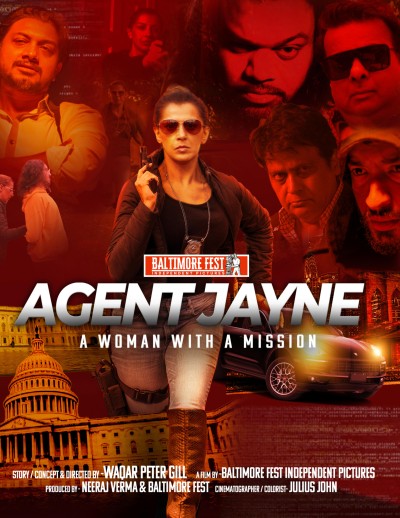 What’s unusual here is that, allow this is an American production, the cast and crew are almost entirely of South Asian origin. Which is fine, except that writer/director Gil has an imperfect grasp of English. Witness the opening voice-over, which I present verbatim: “There are three wants which can never be satisfied. That of the mastermind who want more, that of the peddler who pray for more, and that of the whistle stopper who don’t know when to say enough.” Um, yes? Fortunately, it’s not too dialogue-heavy, and the plot is mercifully basic, albeit needlessly cluttered up with jumps around in time of weeks, months or days, which a more skilled creator would have avoided.
 Coincidentally, I watched this the night after Sinners, another period piece which looks at the place of a specific culture in society. There, it was music in predominantly black society of the thirties; here, it’s professional wrestling in the overwhelmingly white society of the fifties [the presence of in this WWE champion Naomi as Ethel Johnson, feels very much a token gesture]. Definitely fewer vampires in this, however. It’s the story of Mildred Burke (Rickards), who went from working as a waitress in a diner, though wrestling at carnivals, to become one of the biggest draws in the ring of her time. The end of the film calls her the first woman to become a millionaire through sports.
  I’m not sure whether this is too long or too short for its own good. Could be a little bit of both. As the tag-line for this review suggests, it bears more than a superficial resemblance to
 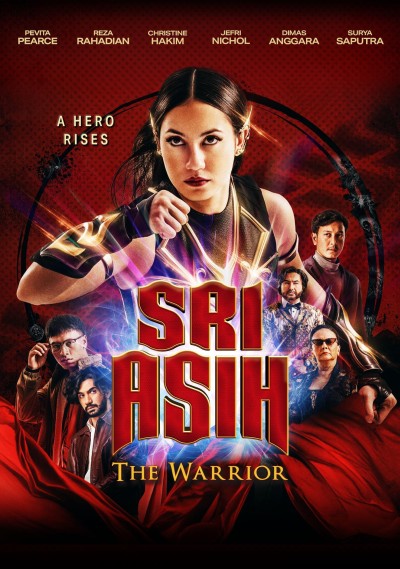 Turns out that Marvel and DC are not the only ones creating “cinematic universes” based on comic book. Another example can be found, perhaps surprisingly, in Indonesia. This film is part of the Bumilangit Cinematic Universe, and is a follow-up to 2019’s Gundala. I haven’t seen that, but I’m 99% sure that the scene in the end-credits is a direct cross-over to that, featuring its hero, given the apparent prediction late on of a team up to come between him and Sri Asih. Otherwise, though, this stands on its own, and you don’t need to have seen Gundala, or be familiar with the comic-book series about Sri Asih, created by R.A. Kosasih, and first published all the way back in 1954.
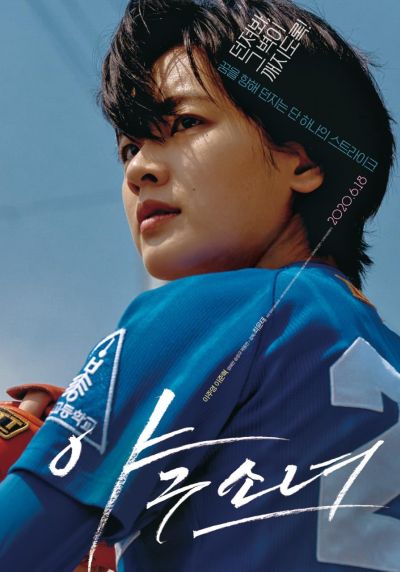 And if the above phrase doesn’t make any sense – it’s basically an underwhelming outcome during a baseball game – then you are probably not the target audience for this sporting drama. After almost a quarter-century living in America (much of it spent running a site about the local team as a sideline!), I’m fairly well-versed in baseball’s intricacies. But in contrast to some of the other Korean movies in this genre, such as
 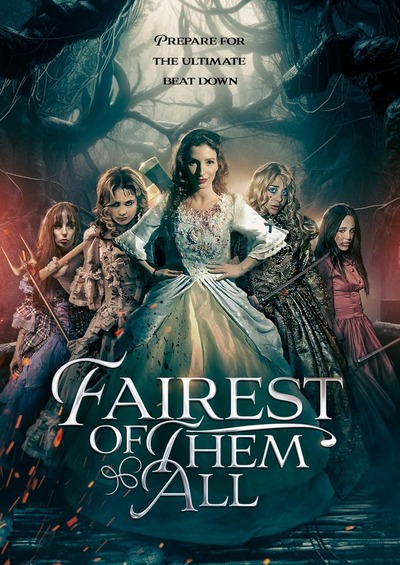 There’s a recent trend for horror films based on public domain characters. The most infamous is likely Winnie-the-Pooh: Blood and Honey, but traditional fairy tales have also been exploited to the same end. This is a sequel of sorts to the same studio’s Cinderella’s Curse (which I have not seen), but basically hurls every princess of legend into the mix. The excuse is Lewis Carroll’s Mad Hatter (Santer), who in this incarnation is a Joker-like psycho, who has kidnapped Alice (Desmond) and made her his slave, courtesy of his magic. He now wants a bride, and to this end abducts a selection of princesses and others e.g. Tinker Bell, as potential candidates. They will fight to the death. Last one alive becomes Mrs. Hatter.
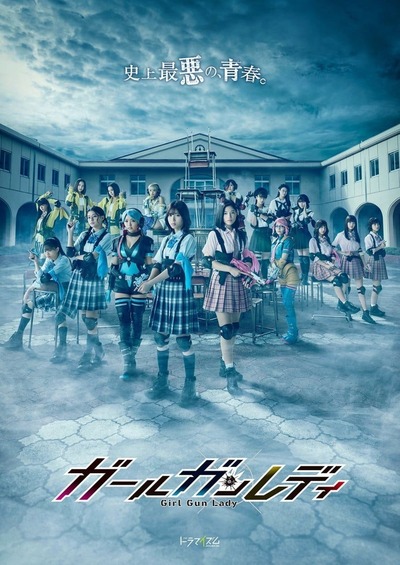 With its combination of alternate reality sci-fi and stylized action, this feels like it could have come from the mind of Mamoru Oshii, creator of things such as
 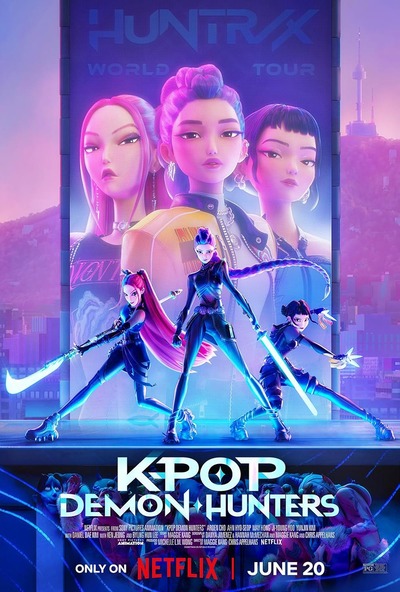 The appeal of K-Pop in the West baffles me. I mean, I have a fairly low tolerance for pop in general. So the appeal of a foreign version, born from a culture to which you have no connection… Yeah. Fortunately, you need no knowledge to be entertained by this Netflix animated movie. It’s also tongue in cheek enough to work for non-fans, poking self-deprecating fun at the obsessive nature of K-Pop fandom. The title alone is so direct as to indicate the attitude. It’s accurate though. Pop trio Huntr/x are also demon hunters. They are the latest generation, tasked with keeping the forces of darkness and their ruler Gwi-Ma, out of our world through a barrier called the Honmoon.
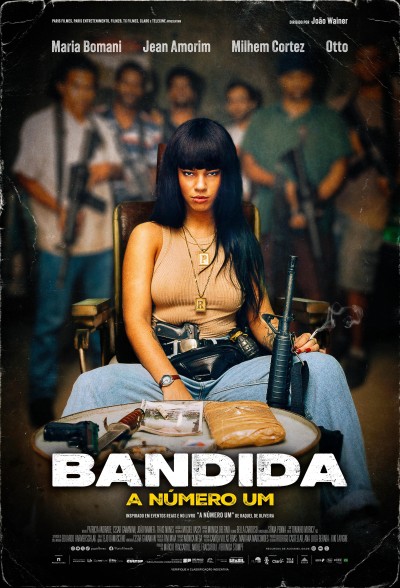 Interestingly, this is based on a somewhat true story, written by Raquel Santos de Oliveira. She comes from Rocinha, one of the most notorious slums in Rio, where she grew up on the streets. “By 11, I was already carrying a .38 revolver,”