



★★★
“Innocence behind bars.”
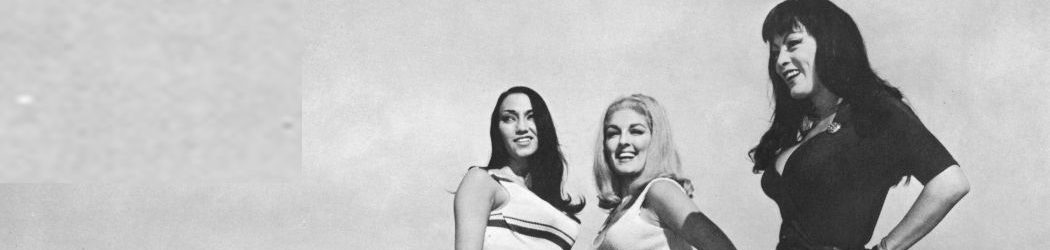
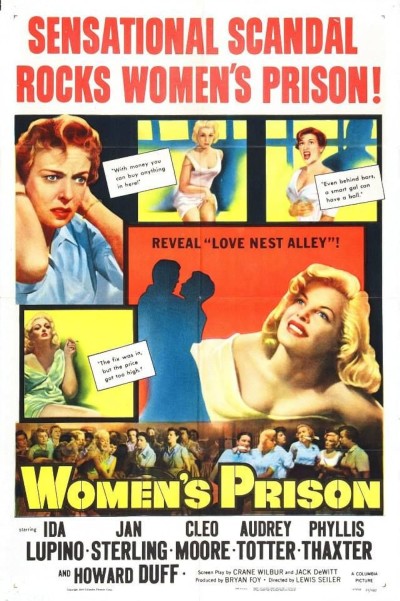 It’s always interesting to watch these early entries in the women-in-prison genre, and see the elements which are still staples of the genre, close to seventy years later. Well, some of the elements anyway: this dates from 1955, so is obviously tamer than a kitten on Valium in terms of sexual content. No strip searches. No prison showers. And when it’s revealed that one of the inmates is pregnant, it’s almost as much of a surprise to the audience as it is to the authorities. But it’s still recognizable as an ancestor, thanks to things like the sympathetic prison doctor, new inmate who shouldn’t be there, and the sadistic warden who rules things with an iron fist.
It is an ensemble piece, whose focus shifts throughout. Initially, it seems likely to be the story of “fresh meat” Helene Jensen (Thaxter), who is doing time for vehicular manslaughter, and has a tough time adjusting to life inside. Then it shifts to Joan Burton (Totter), an accomplice to her robber husband, Glen, who is doing time in the men’s prison next door. He has something vital to tell her, and makes repeated attempts to sneak across the border to visit Joan. On the other side of the bars is the power struggle between the warden, Amelia van Zandt (Lupino) and jail physician Dr. Crane (Duff). Her methods are anathema to Crane, who flat-out calls van Zandt a psychopath. He may have a point.
Despite the lack of salacious elements, this is still entertaining fodder. There are a lot of amusing characters among the inmates, from cheerful fraudster Brenda Martin through to black inmate Polyclinic Jones – named after the hospital where she was born! She’s played by Juanita Jones, who’d be Oscar nominated a few years later. Interestingly, despite this being years before the Civil Rights era, the prison is not segregated: the black inmates have their own cell, but otherwise mix freely with the white prisoners. Race is never even mentioned here. There’s an impressively meta moment too, when two guards are discussing a cinema trip. “They never get things right in prison pictures,” muses one, and is told, “I know, but I like to pick out the flaws.”
This happens just before another familiar element: the prisoners riot and take over, after being pushed too far. In this case, it’s van Zandt’s brutal interrogation of Burton which proves the tipping point. Or at least, “brutal” by fifties standards; it’s not much more than a bit of light slapping around. The rebellion leads to tear-gassing and hostage taking, as the women seek to make van Zandt pay, plus Glen roaming around with a pistol. Really, the men’s side need to look into their security protocols, I reckon. For all its innocence in many ways, bordering on naivety, there are still moments which have an emotional impact; I found the death of one inmate surprisingly affecting. Released in Germany as Revolte im Frauenzuchthaus, which I only mention, as “frauenzuchthaus” may be my new favourite German word.
Dir: Lewis Seiler
Star: Ida Lupino, Howard Duff. Audrey Totter, Phyllis Thaxter
 This is a rough, to the point of savage, piece of cinema. If you do not like seeing people get their head blown apart, you should stay away, because that happens more then once here. The provider thereof is Jessica Brok (Jones), who was once part of a black ops operation which went across the border from South Africa into Angola, in search of a poaching ring, only to find far worse. The subsequent ambush wiped out most of her team, though she was able to kill the brother of the poacher’s leader. Over a decade later, she is finished with the business, and living quietly with her young daughter, under a new identity. The business, however, is not finished with her.
 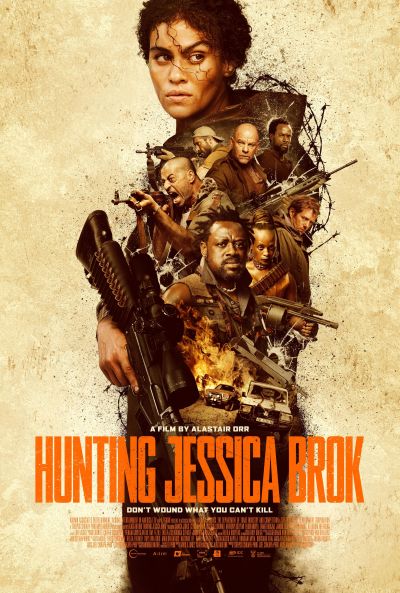 For the leader, Lazar Ipacs (Lukunku), has been harbouring a grudge against Jessica, and has finally tracked her down. With the help of a former colleague, Daniel (Berning), he lures her into a trap and prepares to make her regret… Absolutely everything. But Daniel has second thoughts, throwing Jessica a lifeline which lets her escape. The hunt is on. The only question is, who is the hunter and who is the hunted? After a few lower-tier henchmen are taken out, Lazar’s wife Sherri (Mboya) discovers Jessica has a daughter, and Lazar kidnaps her, intending to use the child as leverage. If you’re thinking that might be a bit of a poor decision, give yourself two points.
  I’m inclined to look kindly on this, because I suspect it was a local production, filmed here in Arizona. While the end credits are silent on the topic, there are enough saguaro cacti about, to make it likely the faux Western town and other locations used, were somewhere near me. I recognize an actor or two as well. Unfortunately, it’s not exactly a film I would hold up as a shining example of quality Arizona cinema. While clearly set in the Old West, the movie is stuffed with anachronisms, from haircuts through a terrible British accent to glasses. It consequently never succeeds in establishing a convincing sense of period. This is a bit of a shame, since the Western horror action heroine isn’t one we see often.
  I’m not sure I’ve read a book with a 16th-century action heroine before, so the setting here certainly appears a fresh one. Things take place during the reign of King Henry the Eighth of England, when Mary Fox had been brought up alongside her three older brothers. From them she had secretly learned how to wield a sword and ride a horse, among other unladylike skills. But having now reached adulthood, her father is intent on marrying her off, to the particularly repellent Sir Reginald de Courtney. Mary is having none of that, so packs her bags and leaves the family home.
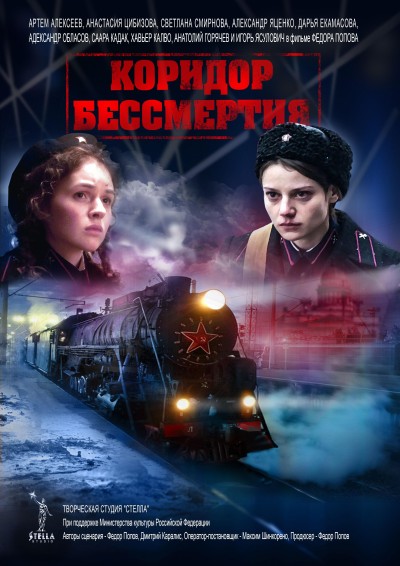 I guess this is a slightly different take on the typically heroic stories to come out of Russia concerning their battles against Germany in World War II. Rather than focusing on members of the military, it’s the story of civilians – many with little or no previous experience – who were brought in to keep the railway supply line to Leningrad open. These wee crucial to the city’s survival, as the Nazi blockade threatened to starve the city into submission, being responsible for thee-quarters of the resources going into the city. Naturally, the German forces wanted to cut this off, so subjected the tracks and trains to a relentless bombardment, from artillery, mortars and planes, placing those operating the trains in near-constant danger.
  I’ve seen a lot of reviews slagging this off as irredeemably bad, and that’s fair comment. Its execution is often lazy to the point of incompetence, and the talents of the cast are largely wasted. And, yet… Was I not entertained? More than I expected, reading those reviews. Oh, sometimes in the wrong way, certainly. But it’s clear the makers were in on the joke. To a certain degree, as with the likes of Sharknado, that critic-proofs it, because it is intended to be stupid and implausible. When you have a dog running around for half the film with a wine-bottle on its muzzle, or canines which can climb trees and ropes… Yeah, it’s clear the creators aren’t letting reality get in the way.
 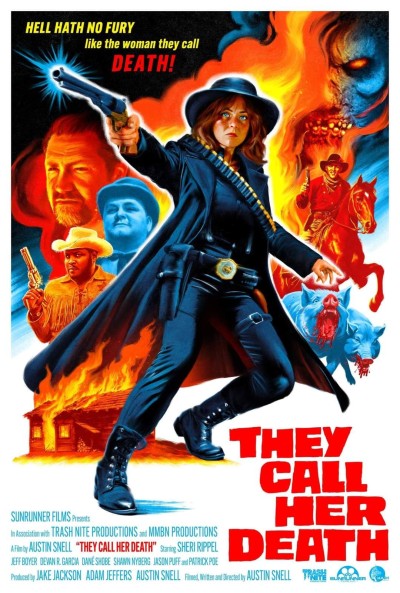 It’s clear what Snell is going for here. This is a throwback to the spaghetti Westerns of the seventies, along with Italian exploitation films from around the same time. I certainly admire the effort which went into this: for example, rather than shooting digitally and applying effects to imitate film, Snell actually shot on Kodak 16mm stock. I did not know that was still a thing, to be honest. Some of the other elements, like the music, also do a good job of reproducing the era – the movie poster is another one. I’ve seen enough of this kind of movie (mostly through
 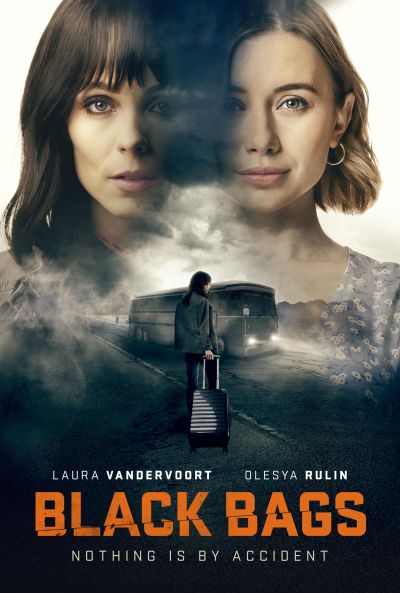 The first half of this is better than average, setting up an intriguing scenario that feels as if it might be going somewhere. Unfortunately, the second half manages to go almost nowhere, the hard edge honed to that point being severely blunted. We end in something which feels more appropriate for an “Aren’t All Men Bastards?” marathon on the Lifetime channel. It centres on Tess (Rulin), a pregnant woman returning to her new home in the countryside on the bus – her husband having forbidden her to drive. However, she ends up collecting the wrong suitcase, picking up an identical one belonging to another passenger. When she gets home and opens it, she finds a severed head. Worse, the case’s owner is now at her door.
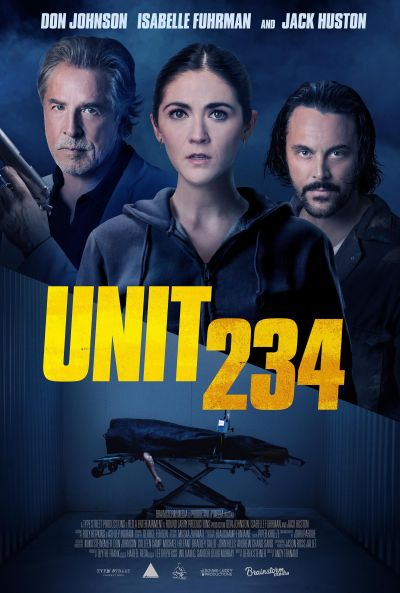 File this synopsis under technically true: “After the shocking discovery of an unconscious man in a locked unit, the lone employee of a remote storage facility must fight to survive the night against a ruthless gang, dead set on retrieving their precious cargo – at any cost.” I guess the word with which I have the most reason to quibble is probably “fight”. For heroine Laurie Saltair (Fugrman) is more from the Brave Sir Robin school of fighting, if you’ve ever seen Monty Python and the Holy Grail. She’s much more inclined to avoid confrontation than seek it out. Which perhaps making sense when facing a larger, better armed and more experienced enemy. But where’s the
 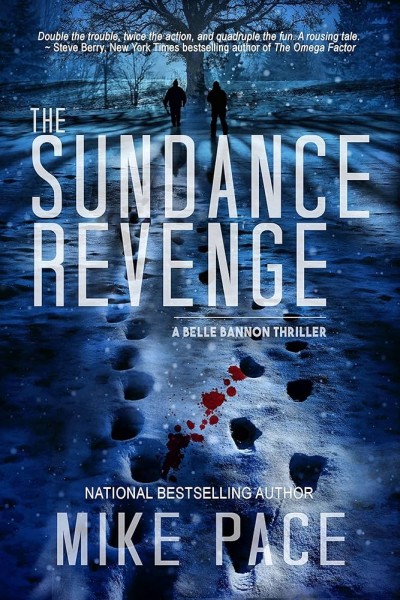 This takes place in the ski resort of Park City, during the event it’s best known for: the Sundance Film Festival. Beginning with a plummet from a chair lift, the town is plagued by a series of “accidents” – quotes used advisedly. For they are actually the work of a female vigilante calling herself the Sword of Justice, and dedicated to punishing men for their crimes against her gender. On the other side is Belle Bannon, a former Marine, who had anger issues even before going into the military. Now a hunting guide and member of the ski patrol, she is determined to find and stop the killer.