


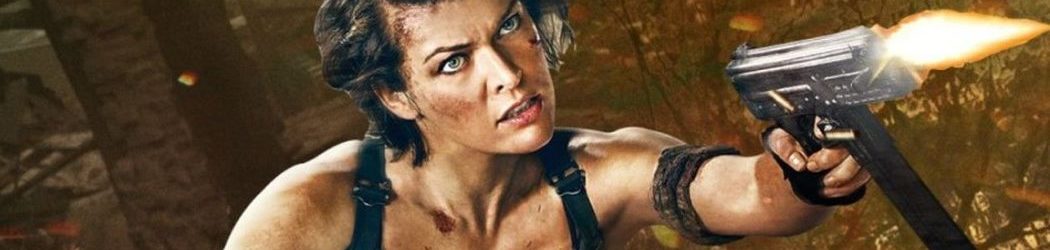

★★
To quote Marshall Fine: “Kaos would have saved everyone a lot of time and money by simply eliminating the stars and the story and releasing Ballistic as Giant Fireballs, Vol. 1.”
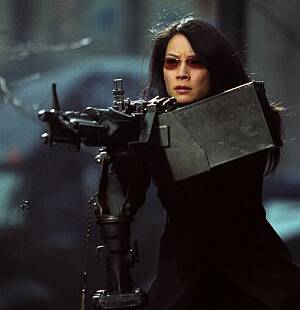 Despite the title, this movie rarely pits Ecks (Banderas) vs. Sever (Liu). The two spend more of the film teamed, up taking on the evil duo (Henry and Park) who killed Sever’s family and have kidnapped Ecks’ son – perhaps a spoiler, but anyone who didn’t see that one coming, was probably run over on the way to the cinema.
The film raises a number of interesting issues. Unfortunately, they stem more from the cinematic process, such as wondering why no-one taking part in the car-chases ever appears to drive faster than the speed limit. I know it’s Canada, but these are supposed to be characters living on the edge, not concerned with getting traffic tickets. And speaking of Canada, why are so many American government agencies operating in the open, blowing things up and shooting anyone in range, with barely a whimper from the locals?
The other problem is that no-one in the movie can act – we should perhaps exempt Liu, since she has barely a dozen lines. The scenes of Banderas and his wife (Soto) are woefully lacking in chemistry, and Ray Park is simply dreadful, despite looking so much like Oz from Buffy, that I kept expecting a full moon and a transformation. The plot is equally inept, tacking on an entire chunk about microscopic robotic assassins which is almost totally redundant. It’s nice that the studio changed Sever from male to female, but the results are…well, at time of writing, the Rotten Tomatoes review score runs 64-0 against the movie, which must be some kind of record. [Update, December 2013: Try 110-0!. Which is, indeed, the worst ever.]
There is one great sequence, when Sever is ambushed at a library, in which she mows down an entire army, picking up their weapons and turning them against their owners. This culminates in a fabulous shot from above of a victim dropping onto a car which you keep thinking is going to cut away – it doesn’t. That, however, is it, and despite such brief flashes of potential, this is largely lame, tame and full of unfulfilled possibilities. Ten years ago, it might have been a Hong Kong movie starring Simon Yam and Yukari Oshima – on the whole, that would have been much more entertaining.
Dir: Kaos
Star: Antonio Banderas, Lucy Liu, Gregg Henry, Ray Park
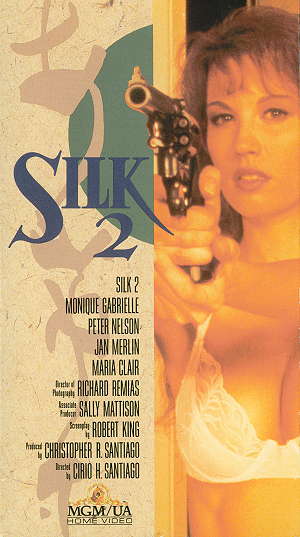 Was the world really crying out for a sequel? I guess Silk proved profitable enough for Gabrielle to replace Verrell as the titular cop, three years later and without any explanation. I’ve liked Gabrielle since her barnstorming double role in Deathstalker II, but even I have to admit she’s not really well-cast here, with her voice inappropriate for a supposedly tough crimefighter. Mind you, anyone would have problems with cliched aphorisms of the “Crime doesn’t pay” kind demanded by the dialogue.
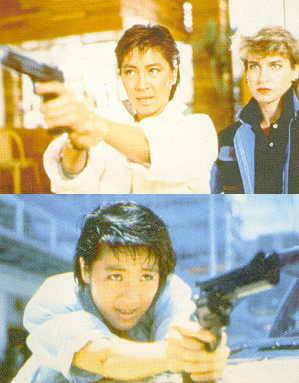 Purely on a historical level, this 1985 film merits attention since it started the whole action-heroine genre in Hong Kong cinema, which thrived for the next decade, producing some of the finest entries ever made. It also was, effectively, the start of the careers of Michelle Yeoh and Cynthia Rothrock. Interesting to see how they’ve since headed in opposite directions: Rothrock to low-budget erotic thrillers, Yeoh to the Academy Awards.
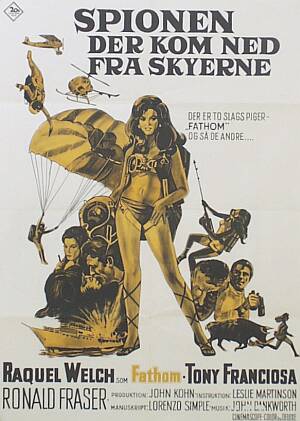 Released five years before Jennifer Garner was even born, there are some odd similarities between this 1960’s time-capsule and Alias:
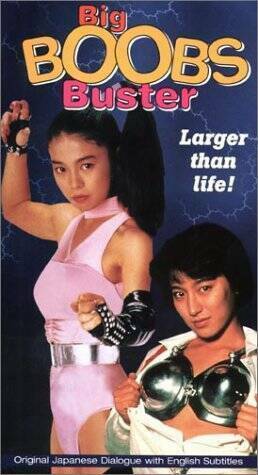 As you can probably surmise from the title, this is most emphatically
 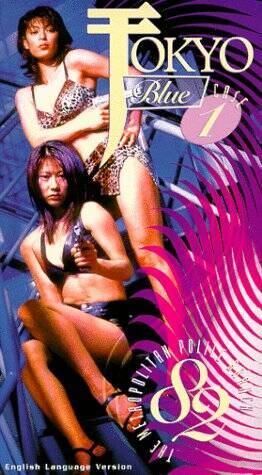 You know where you stand with this film inside five minutes, from the moment policewoman heroine Mika Hino (Shiratori) is made to strip off by bad guys hunting for a key – which she naturally is keeping in her lingerie. Mind you, this pales in comparison with where partner Rin Kakura (Kuribayashi) hides her gun… The problem with this tape is that such intimate details are far more interesting than the plot, a tired and severely uninteresting search for a master counterfeiter.
 Season Six was in trouble from the start, with the titular heroine (literally) dead and buried. Bringing Buffy back from beyond was a problem always likely to perplex, because once you start resurrecting characters, nothing is a threat any more. Although this was handled moderately well, the show really started to fall apart after the musical episode. This demonstrated one thing beyond all reasonable doubt – why the cast are actors. From then on, most of the stories seemed to have been cribbed from daytime soaps. Buffy has sex with Spike, feels bad about it, then does it again. Xander and Anya’s on-off-off-on-off wedding and relationship. Willow and Tara were no more solidly committed, and the clumsy “magic=drugs” story arc was the sort of thing I’d expect to see on Charmed. In addition, the main bad guys for 90% of the series were a trio of geeks, minor bit players from previous episodes, who were about as threatening as flies, albeit rather more annoying.
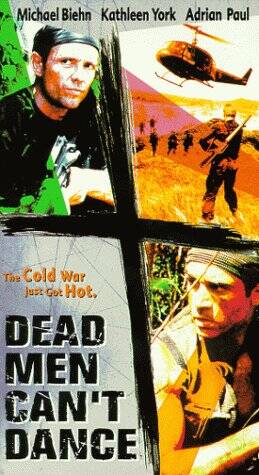 Plotwise, this is a by-the-numbers action thriller about a special forces group on a mission in the Korean Demilitarised Zone, who get embroiled in a CIA operation to retrieve nuclear triggers. Why it merits any coverage here, is because their command structure is matriarchal, from Brigadier General Burke (Zabriskie), through their operational leader and former agency operative Victoria Elliot (York), down to Staff Sergeant Rhodes (Barbara Eve Harris), who could give R. Lee Ermey a run for his money – Ermey, incidentally, turns up as the CIA boss.
 This teeters infuriatingly close to greatness, but eventually succumbs to mediocrity because of a tendency to juvenile smuttiness, that fatally weakens what is, at heart, an intriguing story and setting. The Warriors are a special police group – mostly female, with one token (lecherous) man – sent in to sort out nasty cases. The main thread in the four episodes here, is a virtual drug which can turn the consumer into a mind-controlled killer – or, presumably, anything else desired.
 Women-in-prison is not a genre greatly within our remit, since they’re often just an excuse for a bit of soft-core masochism. There are occasional exceptions, however, and this is one, with its origins as a network TV show forcing restraint of the more exploitative aspects, as well as permitting the characters to develop more fully than in a movie.