




★★
“So bad, it’s borderline painful – yet we will remember this, albeit for all the wrong reasons.”
 Let me be perfectly clear: one of the above stars is purely for entertainment value, since this is one of those movies which is so bad as to become enjoyable, purely on that level. There is hardly an aspect of this film which is not badly-executed: the script is badly thought-out, the performances are almost without exception woeful, and the continuity has to be among the worst of all time. One actress goes from a colored top and no bra, to a bra, to a white top and no bra, in successive scenes, while another enters a pool in a bikini, comes out topless, and five second later has the top back on and is dry. We laughed like drains, I tell you. Oh, you want the plot? Mousy scientist Helen (Kitchen) is trying to find a brain chemical that will unleash humanity’s psychic powers, using imprisoned serial-killer Horn (Marks) as her source. Even though the resulting chemical is green and glowing, in a way not seen since Re-Animator, she decides to test it on herself. This unleashes her alter-ego, Cassandra, who embarks on a plot to enslave mankind to her will. It’s up to her assistant Gary (Klitzner), along with a homicide detective (Rivers) to stop her.
Where to start? Kitchen is about the least-appalling thing the film has to offer, struggling bravely with two roles so under-developed that an Oscar nominee would have problems making them watchable, and occasionally manages to look like something other than a low-rent Xena. We’re convinced Klitzner is gay, which makes his success with just about every one of the laideez in this film, utterly implausible. Meanwhile, Marks’ psychopath chews scenery at a fearsome rate, making the later works of Anthony Perkins a masterpiece of understated subtlety in comparison. Our son strolled in while we were watching this, and was quite taken with Rivers [right, bottom] and her breasts – at that moment, being unveiled for his pleasure. He gave the breasts two enthusiastic thumbs-up, but then, he didn’t stick around for the rest of the movie. Score one for the wisdom of youth there.

 It should be entirely clear which series the distributors of Dark Queen are hoping you’ll mistake their film for an entry in. In reality, this is not fit to lick Natasha Henstridge’s boots; it’s really much closer to Dr. Jekyll and Sister Hyde, yet as such, is still a dismal failure – that whirring sound you hear is Robert Louis Stevenson spinning in his grave. However, even as it fails on just about every cinematic level, fans of bad cinema may find this has its merits. However, even there, it may still divide opinions: I had rather more fun with this than Chris [she, on the other hand, liked the midget-vampire movie, Ankle Biters, which I found almost unwatchable]. You can certainly sense where they were aiming with this; however, the execution is, frankly, so awful as to drain any potential from it, almost entirely.
Dir: Ken LaVan
Star: Tian Kitchen, Sean Klitzner, Michael Marks, Sheyenne Rivers
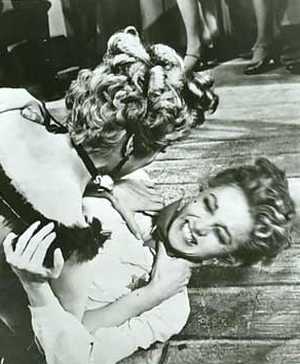 While Corman is better known now as a producer of schlock-horror, he has tried his hand at just about every genre in his time. This was his last stab at the Western, with Garland playing Rose Hood, who takes over as the marshal of Oracle, after her husband is gunned down. However, she incurs the wrath of local saloon-owner Erica Page (Hayes, best known for the title role in Attack of the 50 Ft. Woman), who is running a property-acquisition scheme, based on her hopes for the railroad to come to town. She brings hired killer Cane Miro (Ireland) up from Tombstone, only for him to fall for his intended victim, who is unaware of his mission. Which is surprising, since he is dressed from head to toe in black – even at age seven, when I used to watch The Virginian with my father, I knew this indicated an utterly irredeemable nature.
 If you thought the novel was a quick read, I got through Biohazards during lunch, and that’s only with 30 minutes. Still, being a comic-book, we must cut it some slack, though I can’t say I find action (and there’s a
  Coincidentally, a year after the first collection, I find the time to read volume two; this contains two stories rather than two-and-a-fragment, but weighs in at about forty pages or so longer. Same price though, I am pleased to note… The first, Legion, takes our FBI agent and her semi-vampiric colleagues off to the post-flood city of New Orleans where a demonic force has been unleashed, which is capable of transferring its presence from one body to another. Hmmm…sounds not unlike Fallen, perhaps? That aside, I did enjoy this one thoroughly: the pace is good and, if the eventual destination of the entity is not perhaps a surprise (it’s quite close to the pair, shall we say), it makes for some great set-pieces. The best of these involves a church where the possessed victim is resting up, which results in a hellacious battle that’s genuinely exciting. The story elements are tidied up nicely too, leaving this a self-contained and effective tale.
 This is almost unbearably creepy, in two different directions: however, it’s almost impossible to discuss this film in any meaningful way without spoilers, so you have been warned. The danger of online predators is well-known, and when fourteen-year old Hayley (Page) agrees to meet photographer Jeff (Wilson), who is in his thirties, alarm bells are ringing. They reach a piercing level after she goes to his house, starts drinking vodka and flirting outrageously. However, the tables are abruptly turned: she’s spiked Jeff’s drink, and he wakes to find himself tied-up, and entirely at Hayley’s mercy. He soon finds out that’s a quality she is very definitely
 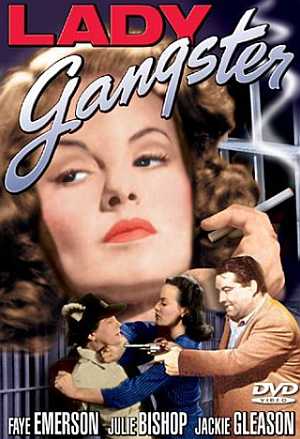 Having watched both Transformers and Miami Vice over the past week, it’s nice to see a film that doesn’t hang around: coming in at sixty-two minutes, Lady Gangster has hardly a line of dialogue that does not propel the story forward. Based on the play, Ladies They Talk About (previously a 1933 film starring Barbara Stanwyck), this centers on Dorothy Burton, member of a gang of bank-robbers. She takes the rap for one of their jobs, and goes to jail, but is also the only one who knows where the loot is hidden. Childhood friend Kenneth Phillips (Wilcox), now a renowned broadcaster, tries to help Dorothy get parole, but she has also made an enemy inside the prison, who is just as keen our heroine does not get released, and her former gang colleagues have their own interests, needless to say.
 I think I can safely say that this films fails miserably on just about every level. Now, I am probably not the target audience for this unashamedly ‘urban’ movie, but that didn’t stop me from enjoying the works of Pam Grier. This, on the other hand… Three women (Brown, Nurse and Sha – though I’ve my suspicions that one of them might just be a man) are arrested under dubious circumstances, but are bailed out to investigate the murder of one’s brother, a rising rapper. They get employed at his record-label, the questionably-spelled Murda Boi records, to scope out the suspects. Was it his partner in the label? The sleazy CFO? Or the mail-room man?
 Nita Daniels (Wagner) and her three girlfriends take a horseback trip up the mountain, expecting to meet their husbands at the top. However, the trip becomes a nightmare, as four members of the ‘Aryan Survivalist Brigade’ are holed up there, and decide to take out the women and their alcoholic guide, Ding (Skerritt). Initially, Ding takes the fore, but when he is injured it’s up to Nita and her pals to fight back. This TVM struggles, largely because of the lack of justification for the white supremacists: the entire party they attack are about as Aryan as they come, so why, exactly, should they be targeted for elimination? It would have been far more plausible had the party been ethnically-mixed, or even their guide been black – or, heck, Jewish.
 ★★★
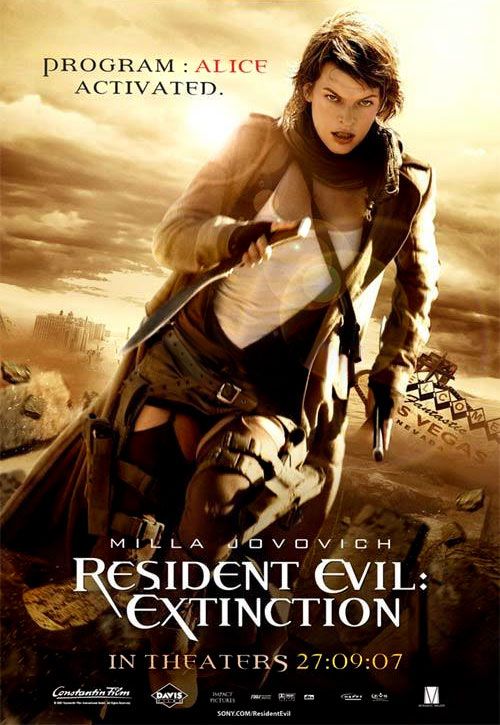
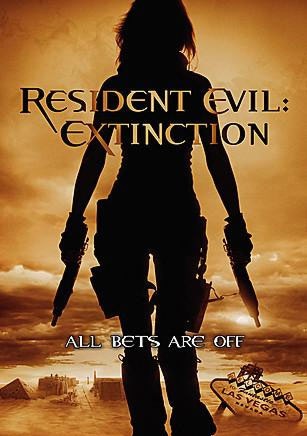
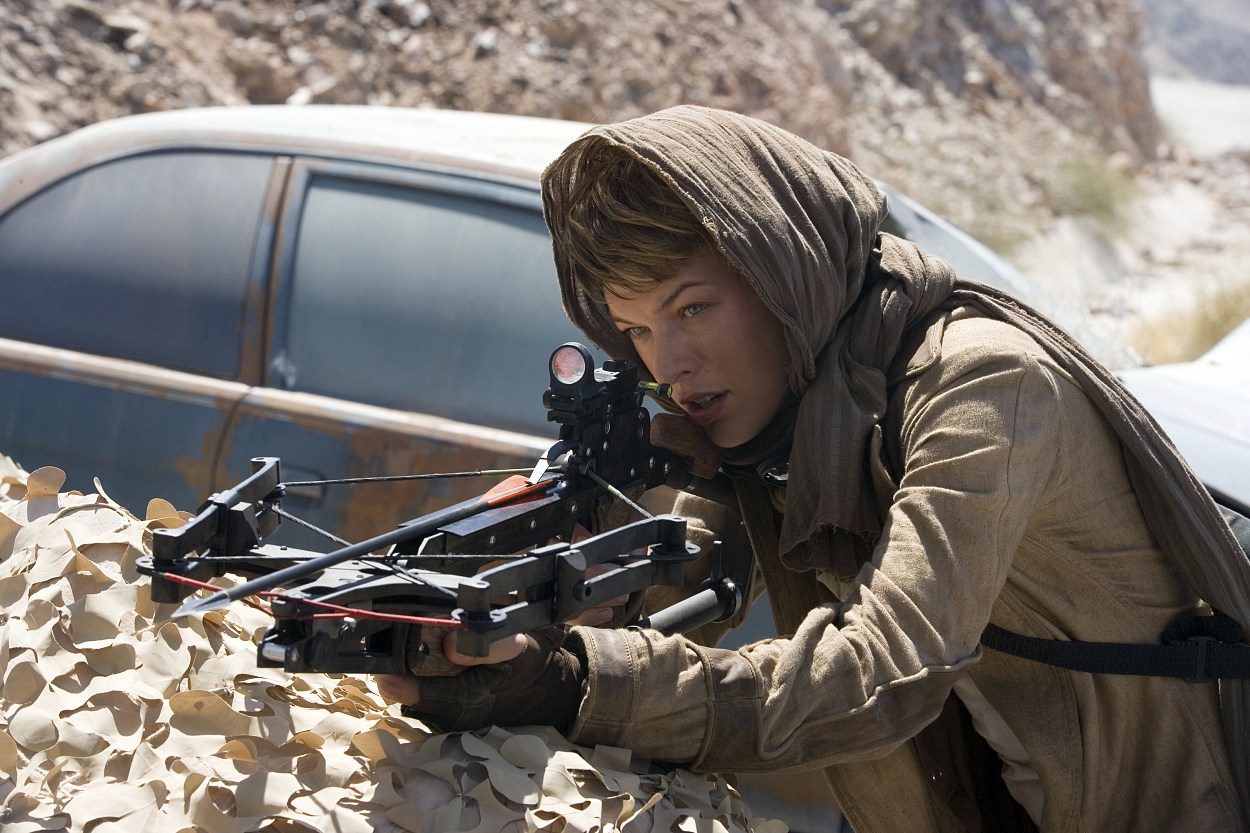
★★★ Has it really been three years since the last installment? Guess so. Therefore, about time for the most durable of the video-game to movie franchises, to pop up with another entry. Things continue to go from bad to worse as far as Planet Earth is concerned, with the T-virus, which spread from the complex to Raccoon City last time, now infecting the entire world. A few survivors roam the wastelands, such as in a convoy led by Claire Redfield (Larter), unable to stay in one place too long, because the zombies will locate them. Meanwhile, Dr. Isaacs (Glen) is working on reversing the virus, or at least making the zombies docile – though his approach to scientific teamwork leaves a little to be desired, shall we say. He also has a pit where he disposes of his raw material, an aspect that reminded me of the original Aeon Flux short films.
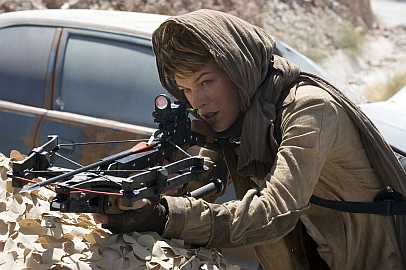 The main problem, I feel, is that giving Alice mental powers detracts from the physical side of action, which has always been a major part of this series’s appeal: watching Jovovich kick zombie butt. The Las Vegas battle is unquestionably the highlight of the film as far as that goes, with Alice adopting a no-nonsense, slice-and-dice approach, that’s a gleeful joy to watch. After it, however, things go somewhat wonky: the entire Redfield subplot is airily waved away, and then there’s the inevitable boss level fight – this time against the Tyrant [if you’ve played the games, you probably know what that is, which puts you one-up on me], a somewhat rubbery, tenticular beast that is not among Patrick Tatopoulos’s best work.
 Things do perk up at the very end. As in the first two films, there’s a grand final shot, which leaves you eagerly anticipating the next part – in this case, presumably called Resident Evil: Globapocarnarmagediediedie. Certainly, I wouldn’t be







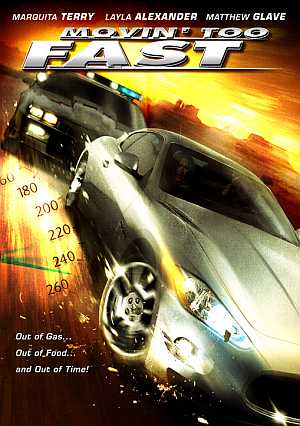 Yes, while there may not be a lot new here, the combination is at least somewhat interesting, and it’s put together solidly enough. Two students, Nina (Alexander) and Melissa (Terry) are on a cross-country drive, when they get stopped for speeding. Melissa makes a pass at the cop, but it’s an encounter that goes badly wrong, and she ends up beating him up with his own night-stick. When the duo get back on the road however, they find themselves being pursued by a police-car, which clearly has very bad intentions: with gas running low and – inevitably – no cellphone service to be found, can they survive?