 ★★★
★★★
“We have a mommy who slays the monsters for her daughter – but the monsters are real.” — Shane Black“
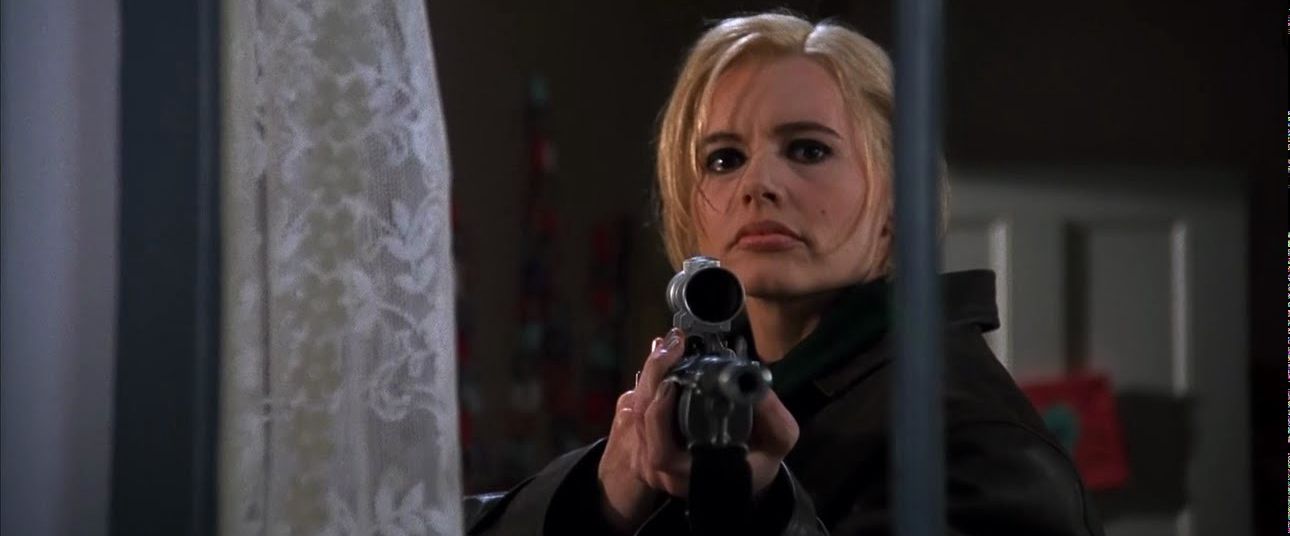
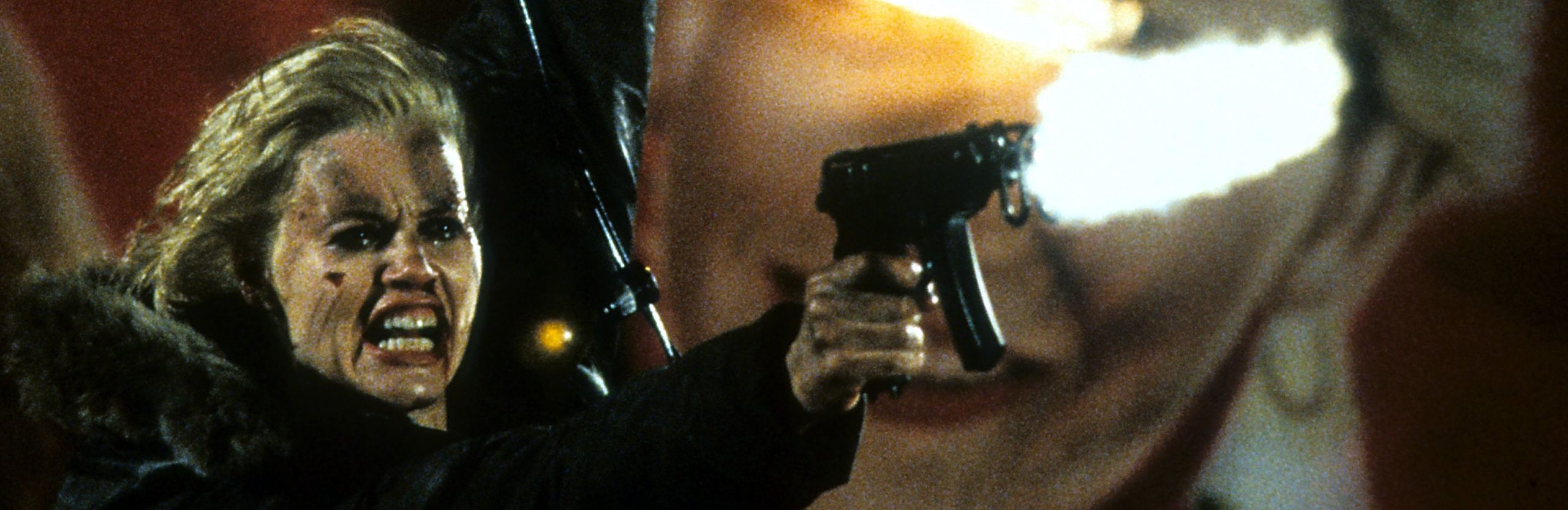
As mentioned in my review of Kate, I was startled to discover I had never reviewed this, since it is one of the most well-known entries in the action heroine genre of its time. Since its time was almost exactly 25 years ago – the movie was released on October 11, 1996 – now seems as good a point as any to rectify the omission. It was the second collaboration in our field between Renny Harlin and then-wife Geena Davis. The first was Cutthroat Island, a film whose troubled production and spectacular failure we have previously covered. But that did not dissuade either Harlin or studio New Line Pictures from trying again, albeit without the troublesome period setting and sea-going. As a result, the budget here was $65 million, a third lower than Cutthroat.
Some aspects were still not exactly cheap. Writer Shane Black was, at the time, a ‘rock star” screenplay author, having written Lethal Weapon – though subsequent efforts The Last Boy Scout and The Last Action Hero had not lived up to commercial expectations. Still, the script for this provoked a bidding war between New Line, Warner Brothers and Columbia Studios, eventually costing the first-named $4 million in July 1994, including a $500K producer’s fee for Black. That was a new record for a spec script, one which would last more than a decade, breaking the previous high of $3 million, paid to Joe Eszterhas for Basic Instinct. This was before filming on Cutthroat Island had even started, so production of Goodnight was put on the back-burner. Consequently, shooting did not begin until 18 months after the script was purchased.
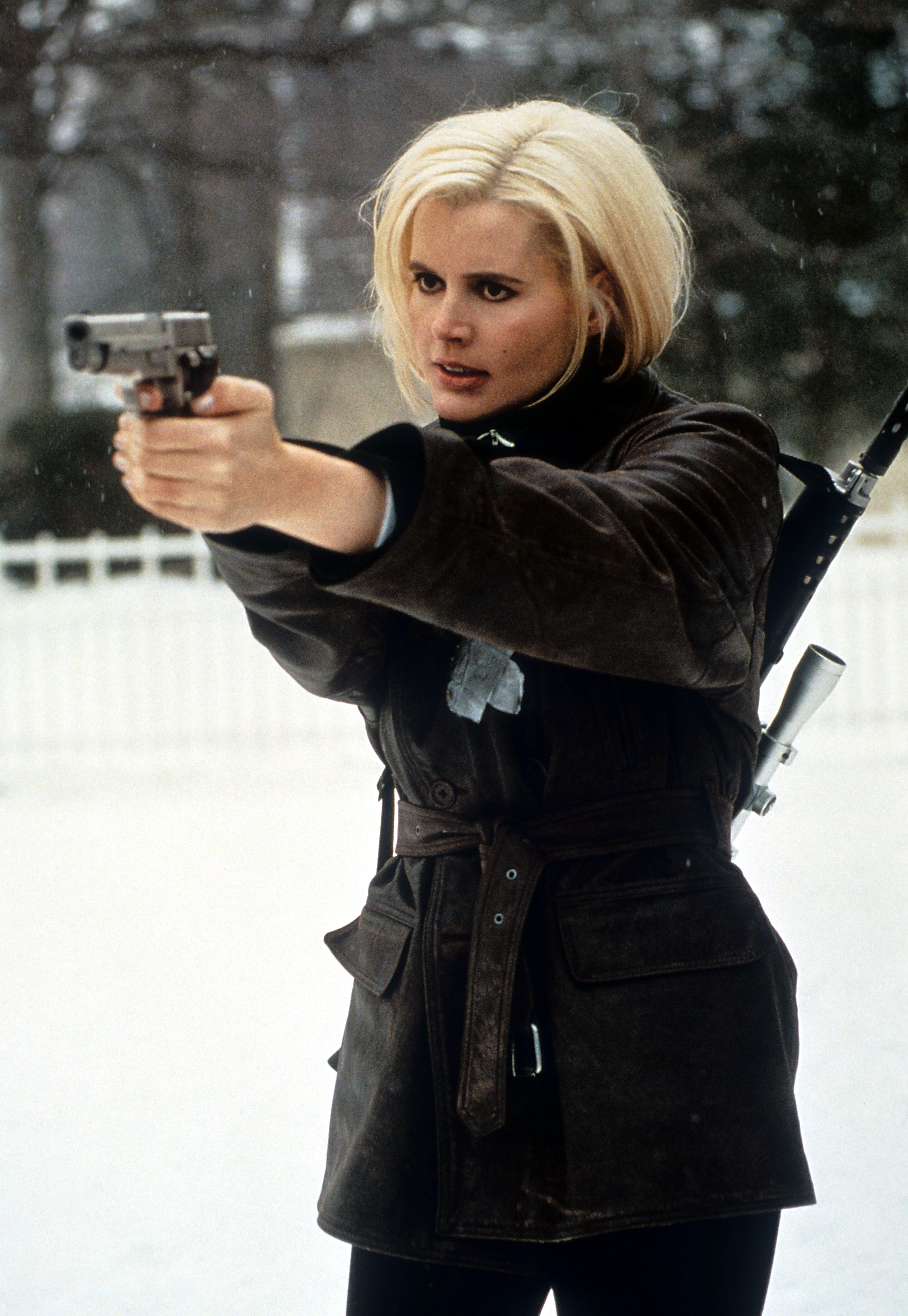
 It took place from January-May 1996 in Ontario, Canada, and the conditions posed many issues for the cast and crew. According to Harlin, “The coldest night was when we were working on the bridge in the end sequence. It was a night when the wind was blowing 70 miles an hour and it was minus 98 degrees with the wind chill.” Though it was probably Davis, who had to pretend she was unconscious and lie on the ground, who experienced the worst of it. Harlin had nothing but praise for her: “Geena’s particularly tough. She’s very athletic and very determined. So, if there’s anything she feels that she can’t do, she’ll put all her energies into making sure that she can learn it, and by the time it is needed, she can do it.”
Generally, however, production went smoothly – save for a historic location burning down. But if you read Black’s February 1995 script, you can see the violence has been significantly toned down by the time it reaches the screen. For example, this line depicting a character, shot in the head in a diner: “Mr. Shotgun dies on his feet. Outgoing matter. Flung. Spattered on the grill where it sizzles along with burnt hamburger.” Ick. A test screening also triggered a significant change. Jackson’s character, private eye Mitch Henessey, was originally intended to die, but the audience reaction was so negative, that Harlin went back and shot additional footage. “That’s right! You can’t kill me, motherfuckers!” now crows Henessey, as he comes back from the dead.
While not the disaster at the box-office which was Cutthroat Island, it wasn’t a great success. In its opening weekend, it came in at #3, well back of fellow new release The Ghost and the Darkness, and even behind The First Wives’ Club, in its fourth week out. By the end of its run, it had taken $33.4 million, though did better overseas, with $56 million. Still, that $89.4 million was not much more than the production budget and after promotion and other costs, profits will have been slim to non-existent. Was it a hang-over from Cutthroat? Poor marketing? Or simply having an action heroine? Black reckons “It might have made more money” with a male lead. That all said, how does it stand up, a quarter-century later?
Truth be told, I’ve seen this several times over the years: it always feels I should like it more than I do, and I come away feeling a little disappointed. Especially now, it is a product of its time, and certainly, pales in comparison to not dissimilar spy movies since, such as Salt or Atomic Blonde. The pacing feels particularly leisurely, with it being close to an hour before Samantha Caine (Davis) gets fully in touch with her inner assassin, “Charly” Baltimore. Charly suffered amnesia after a fall on a mission eight years previously, and had become happy housewife Samantha, complete with boyfriend and adorable little moppet. But a blow to the head reawakens Charley – much to the concern of a number of people, not least of whom are her former employers, to whom she could now become an embarrassment.
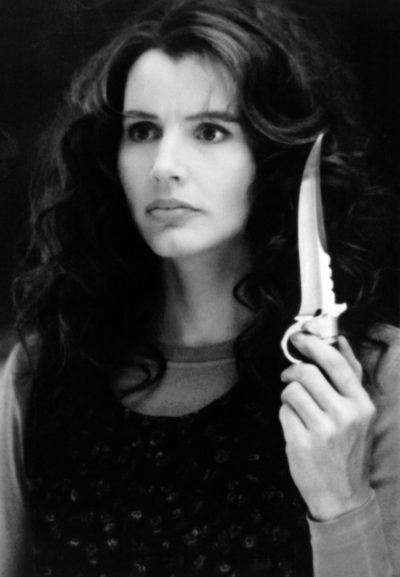 Firstly, what is it with Black and hyperviolent Christmas film? Like Die Hard, and much of his output, this takes place over the festive season because… I guess it’s a counterpoint to that hyperviolence. That aside, this is mostly the journey of Charly to rediscover her past, but the terrorist mission she was targeted with disrupting, is about to happen in a couple of days – what are the odds? – as a CIA false-flag operation, under Assistant Director Leland Perkins (Malahide). As leverage against her, Perkins’s minion (Bierko) kidnaps the moppet. Big mistake. Charly storms in and rescues her daughter, before having to stop the planned attack. I must say, the moppet is remarkably resilient, surviving being thrown through a hole in the wall of her house, and a hellacious tanker crash, with barely a scratch.
It might have been more fun to have sustained the housewife/spy duality for longer e.g. having Charly turn up at the PTA, or deal with the thousand and one microaggressions of everyday suburban life. Instead, we get rather too many scenes of her driving round with Henessey. These are kinda fun – there’s an entire film to be made about the shady PI, with his sideline in blackmail – yet in a movie that’s two hours long, feel like needless padding. The bad guys are basically stupid, wasting any number of opportunities to take care of the problem i.e. Charley, and go about their plot in a way that… well, let’s be charitable and say, maybe it made sense in the mid-nineties. That is not the only aspect to have dated poorly. The whole “false flag” thing now has the distinct scent of conspiracy nut to it, since we’ve heard this claimed for virtually every attack since 9/11.
It’s certainly not all bad though. Davis is great on both sides of her split personality, eventually merging them into a whole which feels comfortable. There’s no denying her derring-do, and on several occasions, Harlin shoots things so you feel certain it’s a stunt double assembling a gun, or ice-skating, only to pan up and show – nope, it was Geena. The final explosion at Niagara Falls is as spectacular a giant fireball as you could hope to see, and the action scenes in general are top-notch stuff, from a time before you assumed CGI was always involved. However, I think I preferred Cutthroat, not least due to its more consistent tone. Black always wants to seem both hard-edged and jokey; he doesn’t get it right here, leaving each side pointing a finger at the other, in accusatory fashion.
Both Jackson and Harlin speak fondly of the film. Jackson calls Long Kiss the favorite of his own films to watch, and Harlin agrees. Despite the initially underwhelming return, its cult status has helped to feed discussion of a sequel over the years, though Davis – long divorced from Harlin – would not be involved. The director said it would be about Jackson’s character crossing paths with an adult version of Davis’s daughter. Harlin now lives in China, where the film is apparently well-regarded and said that “Several people, producers and financiers, here in China have talked to me about doing either a Chinese remake or doing an English-language sequel.” As of June 2021, he still wants to make a second part.
Will it ever happen? Only time will tell, though given how long since the original movie, it seems doubtful. But we’ll always have that, and the moderate yet violent delights of Geena Davis as a home-maker turned lethal operative.
Dir: Renny Harlin
Star: Geena Davis, Samuel L. Jackson, Patrick Malahide, Craig Bierko



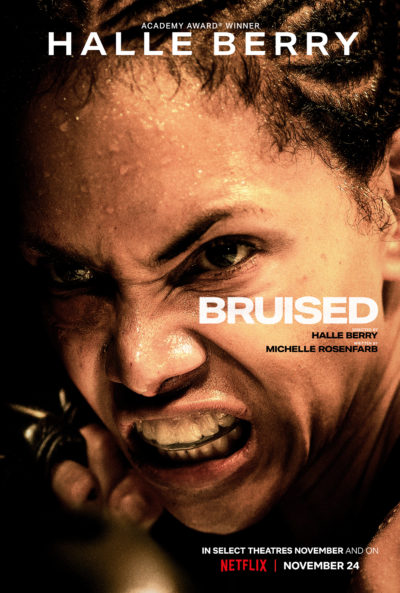 Halle Berry was born the same year I was. There is, however, just one of us that is capable of convincingly playing the role of a mixed martial artist. To give you another yardstick, the lead in this was originally going to go to Mrs. Ryan Reynolds, Blake Lively (The Shallows and The Rhythm Section), who is more than 20 years younger than Berry. I will admit, Chris did raise one of her sardonic eyebrows at the scene where Halle’s character buys Tampax, and the idea of her having a six-year-old son is perhaps a bit of a stretch. But if you didn’t know the actress has been AARP-eligible for over five years, you’d simply never guess.
 It’s never a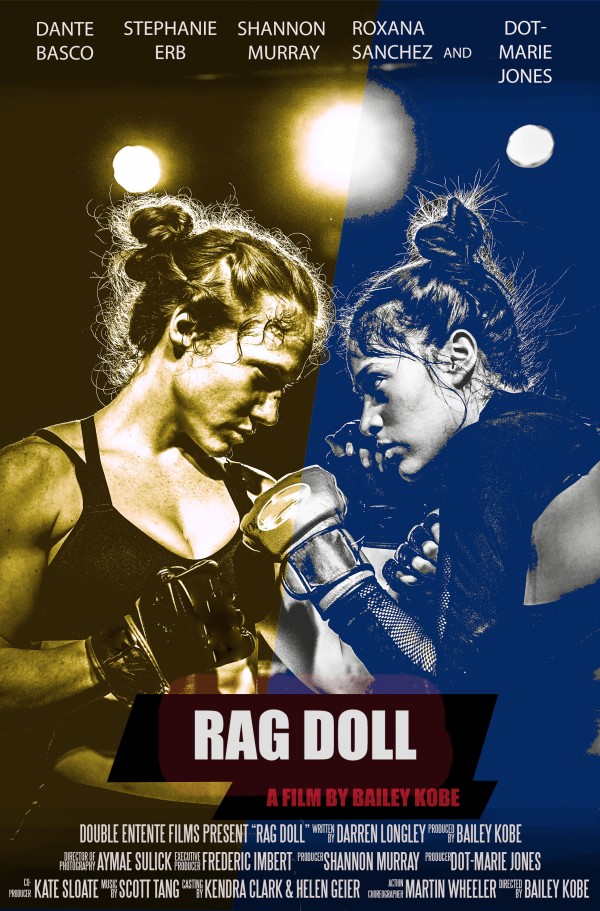
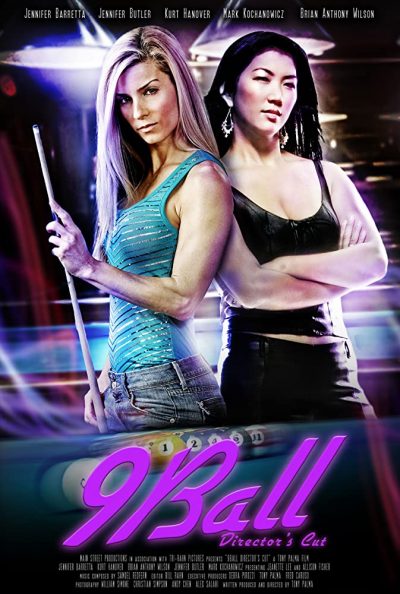 Oh, dear. There’s part of me which thinks this is what you get when you try and make actors out of pool players. For the star here, Barretta, is one of the top women cue artists in the world. She’s joined here by cameos from a couple of bigger pool stars i.e. people even I’ve heard of, in Jeanette ‘The Black Widow’ Lee and Allison Fisher, and you can’t really expect much out of any professional sportswomen, in terms of acting ability. However, she isn’t that bad, though this may just be relative to some of her fellow cast members. And, to be fair to the actors here, you could be an Oscar-winner, and still not be able to do anything with the wretched script, which is little more than a parade of cliches, when not being a shameless advert for the American Poolplayers Association and its leagues.

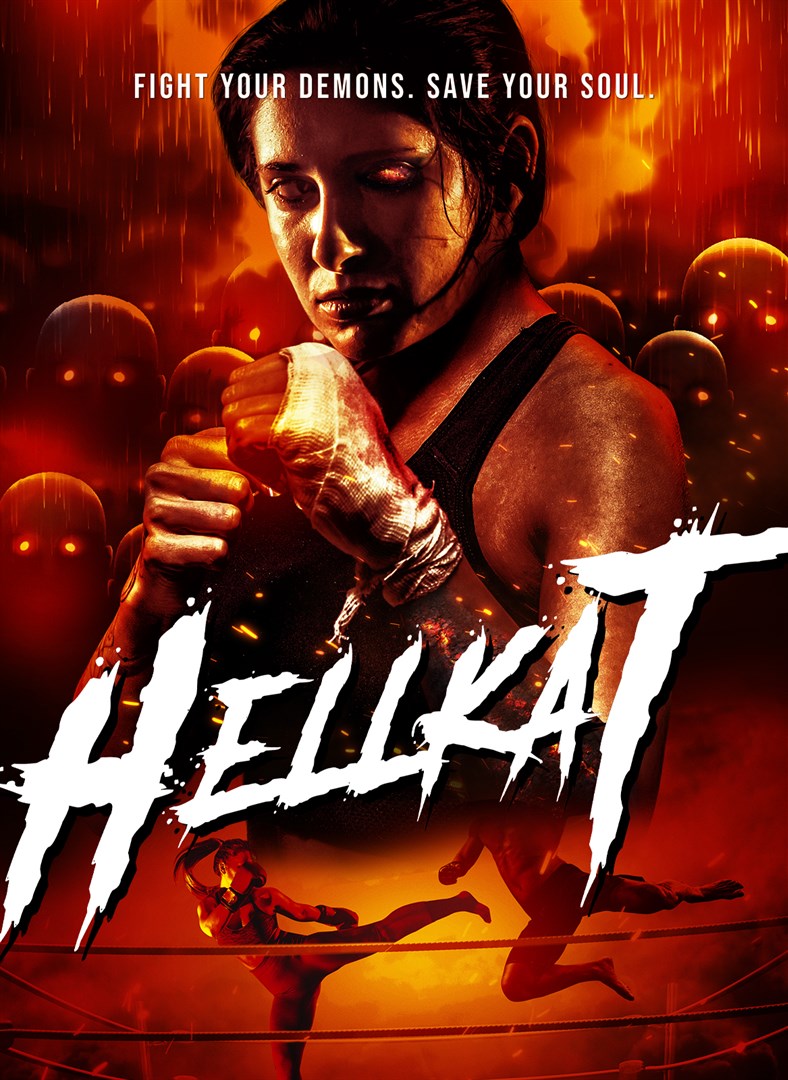
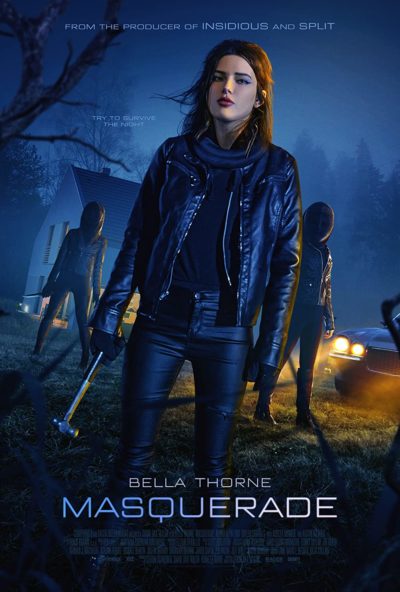
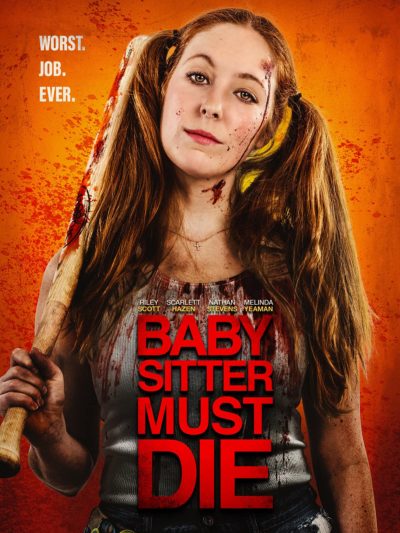 Josie (Scott) is a babysitter, though her real interest is her work as a leader in the Girl Guide-like “Mustard Seed” summer camp. In this she mentors young girls, and accumulates some nifty skills of her own. This is relevant, due to her current situation. She’s taking care of Sophie (Hazen), the youngest daughter of the Castillo family. The father is a rich music mogul, and they live in a remote mansion, deep in the Utah mountains. The family come back early, but before Josie can leave – she’s playing hide and seek with Sophie – there’s a home invasion by three people, under the leadership of The Woman (Yeaman). They’re no regular burglars, but members of a Satanic cult, intent on retrieving artifacts hidden in the house by its previous owners. These can then be used to sacrifice the inhabitants, and open a portal for… something not very nice to enter our world.